Apple and Google Still Generating Profits from Grok’s Sexualized Image Generation

It’s my rule. I’ll break it if I want.

Rules are made to be broken is the cliché. That’s a theme that’s running louder and wilder through much of life these days. Build complicated and successful things. Create rules to protect what you’ve built. Mass enough power and then bend or ignore the rules when they become inconvenient.

Image 4-15-26 at 07.50.

That theme surfaces frequently enough that it’s almost a meme. In politics it happens every day, enough to make a mocking myth of things like the rule of law and the constitution. We see it in religion. We see it in business, too frequently in the business of tech. When you’re big enough that you have to, and can create rules to protect what you’ve built against others, and yourself, you substitute the convenience of adhering to the rules for the inconvenience of principle.

Back in January, (damn that seems so long ago), Elon Musk’s Grok released an AI image editing feature that allowed users to create nonconsensual sexualized deepfakes. It was ugly and disgusting.

As with all new things tech, it caught on like wildfire, and then X took fire from many quarters including some governments. (Not ours — caterwauling congress critters no longer count.) Apple and Google also took hits for continuing to allow the app on their respective App stores in violation of existing rules. There were calls for both Apple and Google to follow those rules and take the app down. Something both companies have done for other rule violating apps with and without public punity.

That didn’t happen.

Yesterday, a report from NBC revealed that Apple, in a letter to U.S. Senators, claimed that it worked behind the scenes of the public uproar to demand that the developers “create a plan to improve content moderation.” According to The Verge, 

Throughout this covert back-and-forth, Grok and X appear to have remained live on the App Store, a drawn-out process that may help explain the confusing, haphazard rollout of moderation changes announced in real time. This included limiting Grok on X to paying subscribers and attempting to stop Grok from undressing women. Our investigations revealed that neither were particularly effective beyond making the tool a bit harder to access. Later interventions, like X letting users block Grok from editing their photos, are also easily circumvented.

Despite Apple’s approval and xAI’s claims it has tightened safeguards, Grok still appears to be able to generate sexualized deepfakes with relative ease.

So, essentially nothing of any real effect happened. Scratch that. Something did. X and Grok put the feature behind a paying subscription. One that Apple also reaped profits from and still does. As does Google.

The one rule this era has taught us is that if you’re big and rich enough, and can weather the storm of public scorn, you can essentially ignore the rules. Even those you’ve written yourself. With impunity.

You can also find more of my writings on a variety of topics on Medium at this link, including in the publications Ellemeno and Rome. I can also be found on social media under my name as above.


U.S. Treasury Wants Access To Mythos

What could possibly go wrong?

The kicker above says it all. According to Bloomberg, the CIO of the U.S. Treasury, Sam Corcos, is hoping to get his hands on Anthropics’s apparently super dangerous AI software, Mythos. The idea is to use Mythos to check and prepare for vulnerabilities. In any normal world that would make sense. We don’t live in that normal world.

Claude mythos.

Set aside that Anthropic and the U.S. Government are feuding over the government designating Anthropic a security threat and supply chain threat. The fact that Mythos can seek out and find vulnerabilities in software that humans apparently can’t, and has done so already for most operating systems and browsers currently in existence, is concerning in and off itself. Add to that what I’m reasonably sure is exploitable software the government is running, and this smells like a recipe for potential chaos. 

Anthropic did not want to release Mythos to the public, given its potential for harm in the wrong hands and formed Project Glasswing, inviting a number of tech companies and JP Morgan Chase into the fold so they could check out their systems. Other banks have since also begun testing. 

I don’t want to sound all doomy and gloomy, but however this story unfolds, it does appear there is enough there there to be skeptical and concerned. Even before the ongoing daily chaos and incompetence displayed by the second Trump administration, the U.S. government has a much deserved reputation for being slow on the uptake in the digital age. I know several folks working in various government agencies, any of whom could tell you horror stories. 

The fear obviously is what happens if Mythos gets into the wrong hands. I don’t know about you, but I think we certainly have enough of those running Washington DC currently. Bottom line, this bears watching and any number of fronts. 

You can also find more of my writings on a variety of topics on Medium at this link, including in the publications Ellemeno and Rome. I can also be found on social media under my name as above.

Sunday Morning Reading

Optimism comes every Spring, but Winter always nips at the edges

Temperatures are warming. Every day brings more daylight, more blooms in the gardens and trees Yet on the edges of two of my interests, politics and tech, things continue to darken a bit. The common denominator between the two? Humans. But then again, humans are the ones who read this Sunday Morning Reading column. As well as the bots that scrape it of course.

PXL 20260411 142247979.

Some of the big news in tech this week was about a new AI product from Anthropic called Mythos. So fraught with potential peril that Anthropic gathered together the major tech heads to form a consortium to keep lid on it. Monica Verma has a good run down with her piece Did Claude Mythos Break The Cybersecurity Industry.

M.G. Siegler’s The Causal Catastrophe of AI takes a look at maneuvering around Mythos as well. Call me crazy, but I don’t think there’s anything casual about this development.

The reason I’m a pessimist on this is that I agree with a comment from JA Westenberg,  “Being wrong about doom costs you nothing.” Check out Optimism Is Not A Personality Flaw. The piece walks a line. You should read it and walk it too.

Mike Elgan takes a look at Black Traffic: The Corporate Sabotage Technique You’ve Never Heard Of. Now you have.

Ng Chong examines The Echo Chamber In Your Pocket. Follow that up with this from Julie Jargon: Over 4,732 Messages, He Fell In Love With An AI Chatbot. Now He’s Dead.(That’s an Apple News lnk. This is an archived link.)

David Todd McCarty thinks one path to reclaiming power over information might be in The Return Of The Local Newspaper.You don’t know what you had until it’s gone.

This Is What Will Ruin Public Opinion Polling For Good. The “this,” according to Lief Weatherby, is something called silicon sampling. Yes, you guessed it. AI.

Coming back around to my comment at the top about not having faith in humans, OpenAI’s Sam Altman got his turn in the barrel (again) this week. Ronan Farrow and Andrew Marantz spent quite a bit of time putting this piece together. Check out Sam Altman May Control Our Future — Can He Be Trusted? FWIW, I don’t need much more time than it takes to put this column together every week to answer their question in the negative. And not just about Altman.

Mean while Altman responded on his blog, after someone tossed a Molotov cocktail at his house. He says “I have underestimated the power of words and narratives.” For someone who has scraped all the words he can off of the Internet and tried to turn them into something smarter than humans, you’d think his machines could have at least figured out that words have power.

Natasha MH sums up a lot of my lack of faith in humans in her piece, Stop Blaming The Chatbot. As she puts it, “AI didn’t make you stupid. You were already getting there.”

Sorry to be so negative this week, but that’s where I’m living., But to change the tone, Neil Steinberg turns around the Latin term, memto mori, (remember to die) around to memento vivere, or remember to live. A nice little bit of humanity to close out this week with Little LIfe.

(Photo from the author)

If you’re interested in just what the heck Sunday Morning Reading is all about you can read more about the origins of Sunday Morning Reading here. If you’d like more click on the Sunday Morning Reading link in the category column to check out what’s been shared on Sunday’s past. You can also find more of my writings on Medium at this link, including in the publications Ellemeno and Rome.


MacBook NEO: Had To Happen Eventually

New adventures

As I mentioned when Apple first introduced the MacBook NEO, it wasn’t going to be the laptop for me. I also mentioned that at a point sooner or later, one of the folks I support was going to want one, and I’d end up purchasing and setting it up for them. Today was that point. 

 I’ll do the drudge work (OS updates, etc…) of getting it up and running this afternoon and we’ll set things up the way they want this weekend.

Should be interesting.

You can also find more of my writings on a variety of topics on Medium at this link, including in the publications Ellemeno and Rome. I can also be found on social media under my name as above.

Sunday Morning Reading

A basket of good writing to share

For those who celebrate Easter and Passover, and all who do not celebrate either, may you find some bit of peace on this Sunday morning, however you see yourself and the world. I’d like to say this week’s edition of Sunday Morning Reading is filled with Easter eggs, but instead it’s just the usual basket stuffed with links to interesting topics and stories that I like to share. Enjoy.

PXL 20260403 165116674.PORTRAIT.

It’s good to be seen, certainly the way you see yourself. When seen by someone who doesn’t know you, that’s eye-opening. Check out Natasha MH’s The Taxi Driver Knew.

The war that isn’t a war in Iran continues. Whatever that story is, it is still being written. Given that this might be heading to the culmination of a conflict that has simmered, and occasionally boiled over, for decades if not longer, there are a few stories out there that offer preface. He Helped Stop Iran From Getting The Bomb by David D. Kirkpatrick is one worth reading.

JA Westenberg’s The “Passive Income” Trap Ate A Generation of Entrepreneurs is also one heckuva a read. There’s nothing passive about this take.

Seva Gunitsky takes on The Incel Global Order. Somebody needs to.

As the technology we use advances, in some spheres some are stepping back. Joshua Cohen takes a look in Sweden Goes Back To Basics, Swapping Screens For Books In The Classroom.

Social Media is under the microscope again after two recent court verdicts against Meta. Chris Castle takes a look with The Social Media Verdicts Are In. Now Ask The Hard Question: Where Was The Board? Counting the money, I imagine. Hat tip to Stan Stewart for this one.

In the category of no easy answers, Mathew Ingram also examines what’s going on in social media with Social Media May Be Bad For You But The Remedy Could Be Worse.

On the Artificial Intelligence front there are always interesting topics cooking as the AI purveyors cook the planet. I wrote about two fascinating pieces yesterday, and today I’m highlighting Angela Fu’s An AI Company Set Out To Fix News Deserts. Instead, It Copied Local Journalists Work. Something tells me we’re going to be seeing more of this going forward.

Apple is, I assume, winding up its week celebrating its 50th Anniversary. So much has been written on that topic because there is indeed much to celebrate and much history to contemplate while looking ahead. Here are four pieces that caught my eye, the first three primarily because they are more personal than historical, the fourth is a look ahead.

John Moltz gives us Missed Connections: Me and Apple.

James Thomson is one of my favorite Apple developers. His Apple At 50: Gonna Be, Gonna Be Golden is indeed a personal journey.

Adam and Tonya Engst have been writing Tidbits since 1990. I started reading it shortly thereafter. What Apple’s 50th Anniversary Misses is certainly different than most, but one that mirrors the thoughts of many on this anniversary.

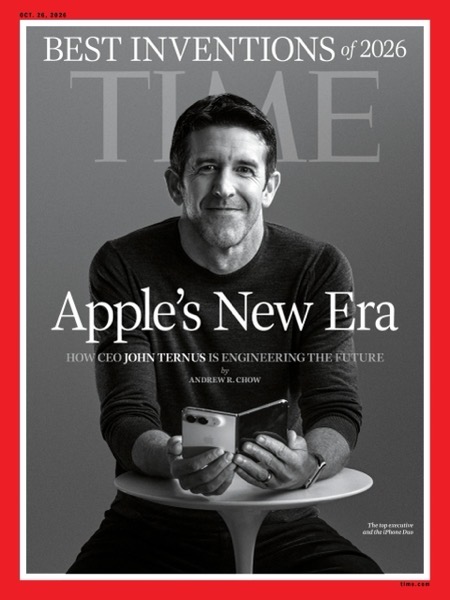
And Marco Arment, looking ahead, has penned A Letter To John Ternus, the guy everyone assumes will don the CEO mantle in the future.

Baseball is back. And every team and their fans are dreaming of a championship. David Todd McCarty spins a bit of fiction that’s baseball adjacent, but rooted deep in dreams in The Taste Of A Dream.

To conclude this week, this story by Audrey Pachuta very much sums up the contradictions we’re living through at the moment. Check out A Student Set A Goal To Run Every Street In Chicago And Inspired A City. Now He Must Leave The Country. 

May you find peace however you can.

(Photo from the author.)

If you’re interested in just what the heck Sunday Morning Reading is all about you can read more about the origins of Sunday Morning Reading here. If you’d like more click on the Sunday Morning Reading link in the category column to check out what’s been shared on Sunday’s past. You can also find more of my writings on Medium at this link, including in the publications Ellemeno and Rome.


Pinning Tails On AI Donkeys

Does authenticity matter?

Shortly after OpenAI fired the starting pistol for the AI race by releasing ChatGPT, I started saying that at some point the real money was going to be made by whatever company wins the horserace for identifying work created, regurgitated, or recycled by AI. Turns out I may have been wrong. In the face of what can be called abject surrender to an AI filled future, the sprint is now on to determine who has the best tool to identify what was created by humans. My money says everyone involved is running the Mongol Derby.

Erwan hesry ILOFQMEuUrQ unsplash.

Two very interesting recent articles caught my eye. The first is by Jess Weatherbed on The Verge. Riffing off a quote from Instagram’s Adam Mosseri that it will be “more practical to fingerprint real media than fake media,” the article delves into some of the companies working to authenticate human-made work and the challenges they are facing.

The second article is by JA Westenberg, called The AI Writing Witchhunt Is Pointless. Westenberg examines the unreliability of current AI detection tools, and the very reliable human instinct to jump on Internet band wagons loaded with pitchforks and torches at the ready, if they get any sniff of AI in any content.

Both pieces are worth your time.

As someone who has adapted Alexandre Dumas’ The Three Musketeers for the stage in both a musical and a dramatic version, in English and for Russian audiences, I really appreciate Westenberg using Dumas and his almost factory-like ways of cranking out his content and how that would most likely be received in today’s Internet world.

I also very much appreciate Westenberg’s conclusion, essentially saying that there’s no way we to tell how this all turns out. It’s too early in the race. I’m a bit more hard-nosed about accepting Weatherbed’s optimism that “maybe we can return to the days of trusting what we see with our eyes.” We’ve never been all that good at doing that.

At this moment, among admittedly many more moments to come in this saga, all of the major AI services come with the same kind of PAY ATTENTION warnings on some of their features, yet not so much when it comes to content. There’s really no incentive to do so. Mosseri’s Instagram makes money regardless of who or what creates whatever Reel you scroll by.

Outside of consumable and ad serving content, AI purveyors urge users to check sources because the output before them may be inaccurate in a search result, a math problem, or a medical diagnosis. Notice that the CEO of America’s largest public hospital system is ready to start replacing radiologists with AI. Every time I hear that AI will remove us from donkey-like drudge work, I hear AI will remove salaries, yet I somehow doubt the billing will change much.

We’ve never been good at heeding these types of warnings whether they come from Surgeon Generals, Terms of Service, or from our parents. We’re certainly not that adept at being able to separate fact from fiction, regardless of how it’s created.

It strikes me as a deeply ironic, and somewhat nihilistic question, that if Artificial Intelligence was as good as promised or continues as problematic as it is in its current form in any of its facets, would we even care? Yet, if it is good enough to plant seeds of doubt as to how a piece of content comes to be, does it even matter? Reminds me of the discussion between Oppenheimer and Einstein, teased early and then revealed at the end of the Oppenheimer.

I understand why human creators are concerned, but I’m afraid those concerns are being handicapped away from the pole position.  We’ve allowed our economies, both large and small, to be staked on the outcome of the race. On the other hand, if AI is so great, why the hell are AI advocates, running such a breathless and competitive race, so afraid of having anything it produces labeled as created by AI?

(Image from Erwan Hesry on Unsplash.

You can also find more of my writings on a variety of topics on Medium at this link, including in the publications Ellemeno and Rome. I can also be found on social media under my name as above.


Looks Like Thaw Will Be A Good Menu Bar Manager Solution For Mac OS 26

Melting the Ice

I use a lot of Menu Bar apps on my Macs. It looks like I may have found a new solution to managing those apps.

CleanShot 2026-04-03 at 17.10.

I had previously used Bartender to manage those, especially on the MacBook Air with a notch. But since the release of macOS 26, Bartender had run into some difficulties. I gave macOS 26’s new way of handling Menu Bar items a try, and that just didn’t work for me. I experimented with a few other Menu Bar managers and for a while settled on Ice.

Like Bartender, Ice also had its issues, and its developer has since halted updates. Turns out there’s an app that melts those issues away. It’s called Thaw.

Thaw, created by stonerl, is an open source fork of Ice, so much of what it offers is familiar and you can import your Ice settings. This article by Jannis explains why Ice, and I presume Bartender, ran into difficulties managing Menu Bar items.

So far things are working as expected. The idea is to hide Menu Bar icons that I don’t access frequently, yet make them available with a quick cursor flick to the Menu Bar.

As a side note on this, with the debut of macOS 26, it appeared Apple made was beginning to shift users away from using Menu Bar apps, favoring the Control Panel instead. I could easily get on board with that shift, but very few apps I use actually make Control Panel access available without creating a Shortcut to launch the app. That seems like a waste of time, but perhaps more apps will make accessing them through the Control Panel possible when we move to macOS 27.

You can also find more of my writings on a variety of topics on Medium at this link, including in the publications Ellemeno and Rome. I can also be found on social media under my name as above.


AntiFreeze: A Web Based Solution To Track ICE

Life and the web finds a way

Remember ICEBlock? The app created for iPhone users to track and alert others of ICE activities nearby? You know the one that Apple and Google blocked. There were several others that got blocked as well.

In this moment of something new and horrible to distract attention from the latest happening almost every hour, ICE activities might have faded from the headlines, but those activities haven’t ceased.

joshuahacks has created a progressive web app called AntiFreeze. From his post on Daily Kos:

AntiFreeze lets anyone anonymously report an ICE sighting. When someone submits a report, every user within five miles gets a push notification on their phone in real time. If ICE is spotted four blocks from your house while you’re making dinner, your phone buzzes and tells you.

But it’s not just alerts… Open the app and you can see a map or list of every reported sighting within 25 miles from the last 72 hours. So even if you missed a notification, you can check what’s been happening in your area before you head to work, drop your kids off at school, or go to the grocery store.

No login. No account. No personal data collected. Completely anonymous.

You can read all about it and find out how to use it on that post. As the developer and author says, “It works. It’s free. And nobdy can take it away from you.”

Who’d a thunk that the web could be the answer?

(images are from screenshots of The AntiFreeze app and website

You can also find more of my writings on a variety of topics on Medium at this link, including in the publications Ellemeno and Rome. I can also be found on social media under my name as above.


Joanna Stern Keeps on Keeping On

New roles and new platforms for one of tech coverage’s best

Tech keeps evolving and so does Joanna Stern. She just keeps on moving and I’m damn glad she does.

JOANNA_01 e1773767189762.After spending a decade at The Wall Street Journal she’s headed for new adventures after leaving the WSJ to create her own company covering tech while partnering with NBC. She’ll be moving up from her role as a contributor at NBC News to chief tech analyst and contributing correspondent, and coming this summer on her own site New Things With Joanna Stern. Axios describes it as a partnership between Stern’s company and NBC.

Before the WSJ, Joanna made her bones back in the days of netbooks and other tech working for the likes of Laptop Magazine, Engadget, and The Verge, and later joined ABC News as a technology editor.

I’m sure I’ve left something out, but I won’t leave out that Joanna has been one of the best at covering tech, whether she’s been writing about it or producing videos. If you search the pages here for her name I’m sure you’ll see a few links to some of her coverage. She has a unique and creative way of making tech accessible, cutting to the chase, all while producing entertaining content.

She has a book coming out in May, chronicling her adventures in exploring AI called I Am Not A Robot: My Year Using AI To Do (Almost) Everything. 

Variety also has a good writeup on what Joanna and NBC are unveiling.

I wish her all the best. We’ll all be better for her coverage.

You can also find more of my writings on a variety of topics on Medium at this link, including in the publications Ellemeno and Rome. I can also be found on social media under my name as above.


MacBook Neo-ing

Neo newness

On an errand with my wife I happened to be in the neighborhood of one of the two Apple Stores closest to me and decided to drop in and take a look at the new MacBook Neo. 

The Citrius MacBook Neo on display at the Apple Store

I’m decidedly not in the market for one of these, but I imagine one of the folks I support will find this more than suitable for their next computer. My intent was to just handle the machine a bit and see if the build felt as nice as most of the very raving reviews say it does. Bottom line, it does. 

As I said in an earlier post, I think all things being not equal, the price point is the feature of note for this device. And based on reviews I’m seeing, I think that more than holds.

Speaking of, you might want to check out Sam Henri Gold’s thoughts in This Is Not The Computer For You. I concur with his points on the impact this move by Apple is going to have. Here’s a brief excerpt:

Somewhere a kid is saving up for this. He has read every review. Watched the introduction video four or five times. Looked up every spec, every benchmark, every footnote. He has probably walked into an Apple Store and interrogated an employee about it ad nauseam. He knows the consensus. He knows it’s probably not the right tool for everything he wants to do.

He has decided he’ll be fine.

Lots of people are going to be fine with the MacBook Neo. And that’s fine.

It was tough to snap any good pictures that captured the colors of the new Neos (is that redundant?) on display because the Apple Store lighting, the new colors, and iPhone photography just weren’t working that well together. But I fired off the camera for a few you can see in the gallery below.

It’s a good thing they provided matching tinted display pads for each different color, except the Indigo model in the first picture. Almost as if they knew.

The next two shots in the top row feature the Blush and Citrus versions from the front and behind. The larger one show the size different between the Citrus flavored Neo and the MacBook Air.

On the way out of the store as we were passing the iPhone display, we noticed that the iPhones were synced to run the same ads for F1 that you see before any Apple TV offering of the moment. The different ad images race across each of the separated screens. Neat effect, but it made my wife, who, like I, is sick and tired of seeing these already, stifle a curse until we got out of the store.

You can also find more of my writings on a variety of topics on Medium at this link, including in the publications Ellemeno and Rome. I can also be found on social media under my name as above.