Sunday Morning Reading

A basket of good writing to share

For those who celebrate Easter and Passover, and all who do not celebrate either, may you find some bit of peace on this Sunday morning, however you see yourself and the world. I’d like to say this week’s edition of Sunday Morning Reading is filled with Easter eggs, but instead it’s just the usual basket stuffed with links to interesting topics and stories that I like to share. Enjoy.

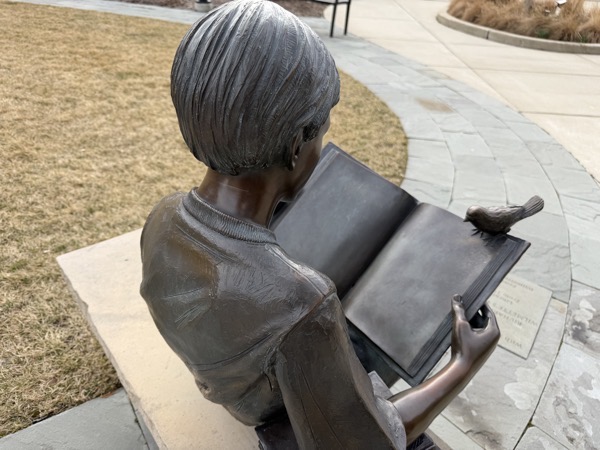
PXL 20260403 165116674.PORTRAIT.

It’s good to be seen, certainly the way you see yourself. When seen by someone who doesn’t know you, that’s eye-opening. Check out Natasha MH’s The Taxi Driver Knew.

The war that isn’t a war in Iran continues. Whatever that story is, it is still being written. Given that this might be heading to the culmination of a conflict that has simmered, and occasionally boiled over, for decades if not longer, there are a few stories out there that offer preface. He Helped Stop Iran From Getting The Bomb by David D. Kirkpatrick is one worth reading.

JA Westenberg’s The “Passive Income” Trap Ate A Generation of Entrepreneurs is also one heckuva a read. There’s nothing passive about this take.

Seva Gunitsky takes on The Incel Global Order. Somebody needs to.

As the technology we use advances, in some spheres some are stepping back. Joshua Cohen takes a look in Sweden Goes Back To Basics, Swapping Screens For Books In The Classroom.

Social Media is under the microscope again after two recent court verdicts against Meta. Chris Castle takes a look with The Social Media Verdicts Are In. Now Ask The Hard Question: Where Was The Board? Counting the money, I imagine. Hat tip to Stan Stewart for this one.

In the category of no easy answers, Mathew Ingram also examines what’s going on in social media with Social Media May Be Bad For You But The Remedy Could Be Worse.

On the Artificial Intelligence front there are always interesting topics cooking as the AI purveyors cook the planet. I wrote about two fascinating pieces yesterday, and today I’m highlighting Angela Fu’s An AI Company Set Out To Fix News Deserts. Instead, It Copied Local Journalists Work. Something tells me we’re going to be seeing more of this going forward.

Apple is, I assume, winding up its week celebrating its 50th Anniversary. So much has been written on that topic because there is indeed much to celebrate and much history to contemplate while looking ahead. Here are four pieces that caught my eye, the first three primarily because they are more personal than historical, the fourth is a look ahead.

John Moltz gives us Missed Connections: Me and Apple.

James Thomson is one of my favorite Apple developers. His Apple At 50: Gonna Be, Gonna Be Golden is indeed a personal journey.

Adam and Tonya Engst have been writing Tidbits since 1990. I started reading it shortly thereafter. What Apple’s 50th Anniversary Misses is certainly different than most, but one that mirrors the thoughts of many on this anniversary.

And Marco Arment, looking ahead, has penned A Letter To John Ternus, the guy everyone assumes will don the CEO mantle in the future.

Baseball is back. And every team and their fans are dreaming of a championship. David Todd McCarty spins a bit of fiction that’s baseball adjacent, but rooted deep in dreams in The Taste Of A Dream.

To conclude this week, this story by Audrey Pachuta very much sums up the contradictions we’re living through at the moment. Check out A Student Set A Goal To Run Every Street In Chicago And Inspired A City. Now He Must Leave The Country. 

May you find peace however you can.

(Photo from the author.)

If you’re interested in just what the heck Sunday Morning Reading is all about you can read more about the origins of Sunday Morning Reading here. If you’d like more click on the Sunday Morning Reading link in the category column to check out what’s been shared on Sunday’s past. You can also find more of my writings on Medium at this link, including in the publications Ellemeno and Rome.


Joanna Stern Keeps on Keeping On

New roles and new platforms for one of tech coverage’s best

Tech keeps evolving and so does Joanna Stern. She just keeps on moving and I’m damn glad she does.

JOANNA_01 e1773767189762.After spending a decade at The Wall Street Journal she’s headed for new adventures after leaving the WSJ to create her own company covering tech while partnering with NBC. She’ll be moving up from her role as a contributor at NBC News to chief tech analyst and contributing correspondent, and coming this summer on her own site New Things With Joanna Stern. Axios describes it as a partnership between Stern’s company and NBC.
Before the WSJ, Joanna made her bones back in the days of netbooks and other tech working for the likes of Laptop Magazine, Engadget, and The Verge, and later joined ABC News as a technology editor.

I’m sure I’ve left something out, but I won’t leave out that Joanna has been one of the best at covering tech, whether she’s been writing about it or producing videos. If you search the pages here for her name I’m sure you’ll see a few links to some of her coverage. She has a unique and creative way of making tech accessible, cutting to the chase, all while producing entertaining content.

She has a book coming out in May, chronicling her adventures in exploring AI called I Am Not A Robot: My Year Using AI To Do (Almost) Everything. 

Variety also has a good writeup on what Joanna and NBC are unveiling.

I wish her all the best. We’ll all be better for her coverage.

You can also find more of my writings on a variety of topics on Medium at this link, including in the publications Ellemeno and Rome. I can also be found on social media under my name as above.


Sunday Morning Reading

Life is a roll of the loaded dice

Nostalgia can be a mind fuck. Democracy, journalism, personal computing, they all feel like games with rules we all understood. No longer. Yes, the house always wins. Especially when everything feels like a war we’re not sure is beginning of ending. When all bets are off if feels more like sticking your head in the mouth of a tiger than a roll of the dice.  Yet we play on. Time for a little Sunday Morning Reading. 

Eyestetix studio m0EzHtexapU unsplash.

Kicking off is an excellent piece from JA Westenberg called Everything’s Casino. From Iran to the Dutch tulip crisis, with a dash of Dostoevsky. The section on When The Future Stopped Arriving is aces.

Follow that up Jon Ganz’s Command-Shift-War. Snake eyes.

Spend some time with this terrific series from Quinn Norton on Emptywheel that began a little over a year ago with A Normal Person’s Explainer On What Generative AI Is And Does. It concludes with an epilogue that is titled Small Models, Gently Loved, and subtitled An AI Speculative Fiction. It won’t spoil the rest of the series, so I’d suggest starting with that fictional epilogue, but also checking out Part 2, Part 3, Part 4, and Part 5.

John Gruber and Manton Reece both linked to this piece by Les Orchard called Grief And The AI Spit. I’m glad they did. You will be too.

Orchard’s piece above kicks off talking about how making computers do things is fun. Which is a nice companion to Sam Henri Gold’s reaction to Apple releasing the MacBook Neo called This Is Not The Computer For You. There’s nostalgia there, certainly. But I think it’s deeper than that. I’m betting Apple’s stake in the next game is solid.

Speaking of gambling, McKay Coppins was staked by his bosses at The Atlantic to a year long escapade to dive into the rise of gambling. His piece Sucker, tells the tale of his year as a degenerative gambler.

There’s an excellent series worth your attention from various writers on The Verge titled AI vs. The Pentagon: Killer Robots, Mass Surveillance, and The Red Lines. We sure are betting the farm on this, aren’t we?

If not advertising, then now what? That’s the question Hamilton Nolan poses in Patrons of Journalism.

In a piece on democracy dating back a few years, David Todd McCarty sticks his and our heads in the mouth of the tiger in Dreaming of Tigers. The house and the tiger always win.

(Image from Eyestetix Studio on Unsplash.)

If you’re interested in just what the heck Sunday Morning Reading is all about you can read more about the origins of Sunday Morning Reading here. If you’d like more click on the Sunday Morning Reading link in the category column to check out what’s been shared on Sunday’s past. You can also find more of my writings on Medium at this link, including in the publications Ellemeno and Rome.

Media Moves: Netflix Backing Out Should Accelerate The Inevitable

Will it be a comedy or a drama when it debuts on Netflix?

There’s no denying that the insane pedophile rampaging through the last decade of our lives has changed things. It’s unfortunate that we let that occur. While many of us may have seen the potential for all the damage he’s caused, you can say not enough did, but I’ll say instead that not enough cared.

Smartphone screen showing the Paramount logo in sharp focus in the foreground, with a blurred Netflix logo and other colorful streaming imagery in the background, suggesting competition between streaming services.

But here we are. Where is that exactly? We’re witnessing almost daily damage to most things around us that I think too many still think will get magically reversed when he leaves office or leaves this planet, whichever comes first. It will take a few generations to get back to whatever we believed normal was, although I’m not sure there ever was a normal because things always evolved, though by and large at a more sanely digestible pace.

Take for example what’s happening in the media landscape. News that Netflix was going to withdraw from a bidding war for Warner Brothers, effectively clearing the field for Paramount to win the deal is being discussed from a number of perspectives by all the usual and unusual suspects.

Those that wanted Netflix to rise to the challenge and succeed, keeping Warner Brothers away from the MAGAt supporting Ellison family, were depressed and angry. Those who see Netflix as just another evil media empire were oblivously happy. Most just want to know when the next and eventual price increases are coming.

Quite a few are quite concerned about what this will do to CNN and the news landscape. They needn’t be. That Punch and Judy network long since turned over the puppet strings to the wrong masters.

You can argue that this might have happened with or without Trump, but there’s no point in that. What you can’t argue is that this kind of wheeling and dealing will never be the same again now that the Oval Office has become the one stop shop for getting ahead.

I happen to think that in the long run, Netflix pulling out of the bidding is a good thing. The trend lines point away from what we have thought of as traditional media and entertainment. Now that news is entertainment and sports is politics, it’s a circle of cannibals feeding on each other.

As for those concerned about CNN and news coverage in the larger scheme, let’s get real. There are only so many corporate knees one can bend. Yes, CBS and CNN will essentially become the same, but that consolidation is going to be an accelerant tossed on two already burning corpses.

For those concerned about the picture beyond the news game, I think we’ll see the same sort of downward acceleration once things settle in, which won’t be for a while yet. Movies and other entertainment will still get made. We’re in an age of content abundance, yet keep in mind the real winner at the moment is probably YouTube, which continues to steal eyeballs from all the other sources. Note also that audio audiences are listening more to podcasts than talk radio according to some statistics.

My hunch is this latest episode will just quicken the decline for the capitulators and accelerate the trend of consumers making other choices. I can’t wait to watch the extended series about it all on Netflix.

That’s my $.02. It might not be worth half that.

You can also find more of my writings on a variety of topics on Medium at this link, including in the publications Ellemeno and Rome. I can also be found on social media under my name as above.

Train Dreams: A Review

“Every least thing’s important.”

So much can go wrong in life. Big things. Little things. Depending on your station in life what goes wrong determines so much of what comes after, it often tears at hope in our search for a peaceful existence. Train Dreams, directed and co-written by Clint Bentley, set in a more challenging era than our own, focuses on the big things and little things that shape us, in a revealing and poetic story of the life of one man.

A1bca8debcba0402af6c699f605f9e1a6d traindreamswar.2x.rsocial.w600.

In its small singular focus the film expansively embraces the life of an Idaho man who has never traveled far from home, through tough times, tragedies and the moments that define a life in the way trees populate a forest. If that sounds depressing, it’s the exact opposite. The cinematography by Adolpho Veloso and the acting take flight and lift the story far beyond the gritty and tangled undergrowth of the life it inhabits.

It’s a gorgeous film to watch that beautifully captures the mountainous northwest as it follows this lumberjack plying his trade, clearing trees to make lumber for the construction of the Spokane International Railway. It’s a dangerous life and one that takes him away for stretches of time from the family he eventually builds. The mostly peaceful vistas and views contrast with the travails seemingly necessary for this man to build a simple life, at times as sharply shocking as a gunshot in a quiet wilderness.  Yet we’re reminded that all of that work literally is overtaken as the years go by with new growth replacing old.

The cast is superb. Joel Edgerton plays the lead, Robert Grainer, in a brilliant performance proving less is always more. Felicity Jones plays his wife, breathing life into him and the story. William H. Macy is exquisite as an older logger in the camps dispensing well worn wisdom. Much of the story is accompanied by the best use of narration I’ve heard in a movie, voiced by Will Patton. It comes and goes like a breeze through the trees seemingly perfectly natural and undisturbing each time it wafts in.

This movie is not going to be for everyone simply because its success requires participation in an almost passive vein. It doesn’t propel us into story telling, it lays it out for us to observe like viewing a valley unfolding beneath from a mountain perch. It’s not fast paced. It’s revelations come in a visual poetry that astounds, capturing the complexity of nature and how simple our small part of it really is, no matter how large or important we view the roles we play in the dramas we create for ourselves.

In the insanely paced tumultuous times we now find ourselves it offers a moment of exquisite reflection exemplified by two mirroring lines of dialogue. “The world is intricately stitched together, boys. Every thread we pull, we know not how it affects the design of things,” says Macy’s character around a campfire. That echoes back again towards the end, when a Forest Service worker reminds Grainer and us that “every least thing’s important.”

Both challenge the wisdom behind the cliché that tells us we can’t see the forest for the trees. But then the bigger picture of a life is always made of smaller moments stitched together if we pay attention.

You can also find more of my writings on a variety of topics on Medium at this link, including in the publications Ellemeno and Rome. I can also be found on social media under my name as above.

My Viewing and Reading Picks for 2025

Another year of complex viewing and reading

Another year comes to an end. A new one gets ready to begin. 2025 felt less complex than 2024. Lines weren’t as blurry with one exception that I’ll get to later. In a year when the rush to redefine and compete for the lowest common denominator felt like a three-legged sack race over broken glass, complexity again drew my attention and stuck with me. There’s a great leveling happening, whether intentional or not. But as long as we can advertise against whatever the content is, it seems to matter less and less what the content is or how it’s made.

When it comes to viewing entertainment it was a year when the quality line between movies and streaming TV blurred even more as excellent series work competing with the big screen for some of my favorite viewing. The Pitt and Adolescence were two of the finest things I watched this year.

There are a number of titles in these lists that would qualify for what is being called Resistance Cinema. Each one is deserving of inclusion in that list for immediacy. Any lasting impact will only be determined with the passage of time and all of what we’re currently resisting either cements or cracks.

I don’t believe in “best of” lists. There’s good stuff being created amidst all of the mediocrity and my judgement on what’s good is probably not yours. I pick what attracts and holds my attention. I also don’t see or read everything and the holiday release schedule geared to coming in under the wire for awards recognition is a silly game for insiders and not for me. There also may be a title or two that I didn’t catch until 2025 even though it was released in previous years. Goodness knows there are books waiting to be read.

If there’s a link with a title, I took the time to write about it. I should have done that more. So here’s a list in no particular ranking order of what I found most intriguing throughout the year.

Movies
Streaming TV
Books
  • 1929 by Andrew Ross Sorkin
  • The Mission by Time Weiner
  • Apple In China by Patrick McGee
  • The Director by Daniel Kehlmann

Have a Happy New Year!

You can also find more of my writings on a variety of topics on Medium at this link, including in the publications Ellemeno and Rome. I can also be found on social media under my name as above.

The Netflix Paramount Media Money Muddle

Stay tuned

It was quite comedic to watch the reaction to the news at the end of last week that Netflix had won the bidding to take over Warner Brothers. There was indeed much celebrating. There as also quite a bit of consternation. The celebration was primarily because there is an abundant school of thought that no one wanted Paramount, now essentially another tentacle of the Trump administration, to win.

CleanShot 2025-12-09 at 14.59.44@2x.

I didn’t bite on the news celebrations or the consternation being the final chapter then. Of course it wasn’t. The Netflix bid parlayed out to $72 billion. On Monday, Paramount Skydance launched a hostile all cash takeover bid of $77.9 billion.

There’s only a roughly $5-6 billion difference between the two bids, but the Paramount bid seeks to swallow up the pieces of Warner Brothers/Discovery that Netflix apparently wasn’t interested in, including media properties such as CNN, TNT Sports, and Discovery. Netflix’s bid was for Warner’s Studio and HBO’s streaming business only. Note that Warner Brothers had previously announced that it planned to split up the combined businesses in just that vein.

So, what does it all mean?

First, it means a lot of lawyers and lobbyists are going to make a lot of money. There are political, marketplace, and money pieces moving around the board in what looks to be quite a saga that I imagine Hulu will end up making a series about within a couple of years.

Netflix is after the content. And the control. Ben Thompson has an excellent run down on that, and why Netflix’s delivery system makes it make sense. Netflix has created quite a war chest for its bid (which is both cash and stock), by building a relatively slick distribution system to deliver its already abundant content, plus whatever it continues acquiring. (How many TV remotes are there without a Netflix button these days?)

Paramount Skydance CEO David Ellison’s all cash bid includes quite a few players including his pop, Larry Ellison, both of whom are Trump supporters, as well as outlays from sovereign wealth funds of Saudi Arabia, Abu Dhabi, Qatar, and also Jared Kushner’s Affinity Partners. Without those partners Paramount, valued at around $15 billion, would have a hard time competing with Netflix’s roughly $400 billion war chest. (The Wall Street Journal has a decent rundown on more of the money specifics.)

Second, it means what was already a muddle the way most of these kind of things are, will get muddled up even more due to the politics of the moment. I’ll disagree with Ben Thompson’s analysis that points out that the President doesn’t have final say on this. That may have indeed been true in a past we’re no longer living in. Those old rules no longer apply. As we’ve been learning everyday since January 20, 2025.

Third, Hollywood also has its concerns. The traditional studio power structure is not enamored of Netflix and its heretofore disdain for theatrical releases, which also brings movie theatre owners into play. I’m not sure if the Netflix bid means the death of Hollywood as some claim, but it certainly would shift the pieces, the game board, and the power structure as what began as a tech company could end up controlling much of what we see on our smaller silver screens.

Big money is at stake obviously. But when big egos get involved the costs for everyone increase. Including those flipping through content consumption choices with their remotes.

Stay tuned. I’m guessing that Hulu series will be quite a watch when all is said and done.

You can also find more of my writings on a variety of topics on Medium at this link, including in the publications Ellemeno and Rome. I can also be found on social media under my name as above.

Finishing Ken Burns’ The American Revolution

The series is complete. As a nation the question remains open.

We completed watching Ken Burn’s excellent The American Revolution this week. Thank goodness for streaming, allowing us to view it on our schedule. Two spoiler alerts. First, we won the war. Second, we’re still struggling with many of the differences that made the formation (and perhaps the continuation) of what would become the Untied States such a close thing. 

 The series is excellent and I highly recommend it. Burns and his team do their expected thorough job of researching and producing the documentary. We’re lucky there were so many letters written by those beneath the status of the cast of characters most of us could identify at a glance, because that material provides much of the content and texture inside the frame. 

The production does it’s job so well that my hunch is some will come away learning things they never knew about a period of our history we’ve wrapped in so many myths it would keep troops at Valley Forge warm. I would also guess that in today’s political and social climate there will be far too many who tune out or don’t tune in because they prefer the comfort of the mythology. 

Which is a damned shame. As I said in an earlier post about the series:

I’m not hearing things differently, but I’m hearing how folks can take their own meaning out of many of the things written and said during that period that led to this country’s founding. History may indeed rhyme, but it also echoes. Often in strange ways.

If you have followed any of Burns’ work you know his approach to American history is to tell the parts of stories we leave out of the picture. I grew up in a part of the country where you could turn your head left or right, spit, and hit the history of the American Revolution or the Civil War. I count myself lucky that my 10th grade history teacher kept reminding us that there was so much more to discover about our past than he had the time to teach us, planting a seed of curiosity that continues to grow inside of me to this day decades later. 

Ken Burns and his team continue to keep that curiosity growing. We should all be grateful and unafraid that they do so.

You can also find more of my writings on a variety of topics on Medium at this link, including in the publications Ellemeno and Rome. I can also be found on social media under my name as above.

Watching Ken Burns’ The American Revolution

Context is everything

Started watching Ken Burns’ The American Revolution last night. It sounds almost trite, but it’s typical Ken Burns (and his collaborators) historical documentary excellence.

The american revolution film by ken burns 1280x720 1 600x338.

What struck me is how I’m hearing things I’ve read and heard over and over again about the period leading up to the American Revolution. So far, (only two episodes in) the history is as I studied it. And by studying it, I mean well below the surface of the myths folks of my generation were taught in school.

I’m not hearing things differently, but I’m hearing how folks can take their own meaning out of many of the things written and said during that period that led to this country’s founding. History may indeed rhyme, but it also echoes. Often in strange ways.

That’s certainly true if all you hang your tri-cornered hat on are the myths.

You can also find more of my writings on a variety of topics on Medium at this link, including in the publications Ellemeno and Rome. I can also be found on social media under my name as above.

Death By Lightning: A Mini-Review for a Mini-Success

Music, fighting, sausages

Candace Millard’s excellent non-fiction book Destiny of the Republic: A Tale of Madness, Medicine and the Murder of the President is often overlooked, though it was well received well when it debuted in 2011. I’m hoping that the new Netflix adaptation titled Death By Lightning will give Millard, her book, and the period of American history it chronicles more well deserved and appropriate notoriety.

Death by lightning.

Yes, this is one of those many cases where the original source material far outshines the film/TV version. That said, Death By Lightning is worth a watch, if nothing else for an entertaining opportunity to dip your toes into the historical waters that are still affecting much of what we’re wading through today in an age when those in control are so eager to pour cold water on the pieces of history they don’t like.

More to the point, Death By Lightning touches on a piece of history from a tumultuous time that seems largely forgotten, that we perhaps might have learned better from, even before we got into this current mess. A poignant, late scene sets this up wonderfully.

Created by Mike Makowsy and directed by Matt Ross, Death By Lightning is a limited Netflix series, that chronicles the unlikely rise of James Garfield to the presidency and his assassination by Charles Guiteau. (If you think anything in this brief review is a spoiler it proves my earlier point.)

There are four episodes and in the end that’s part of what weakens the series as it doesn’t allow much time for much of the depth of Millard’s book. Towards the end it feels like it’s rushing to a conclusion, leaving me wondering how much got left on the cutting room floor or chucked away in the C-suite.

An excellent cast largely rises to the occasion featuring Michael Shannon as Garfield and Matthew MacFadyen as an over the top Guiteau. That said, Guiteau was apparently quite over the top in real life according to many accounts, so much so that there are so many accounts. They are well supported by Betty Gilpin, Shea Whigham, Bradley Whitford, and especially Nick Offerman in a scenery and sausage chewing turn as Chester Arthur, who succeeded Garfield.

One of the wonders of Millard’s book is that it featured an intersection of so much of American life at the time following the Civil War, from politics to science and medicine. The battle between the politics of the spoils system and a desire for a less corrupt civil service system is well chronicled in both the book and the series and adds interesting context to our current tariff tangles that I’m guessing most will find surprising.

If you’re frustrated by recent happenings in our current day Congress and politics both the book and the series will add some historical (and often entertaining) context to the mess we’re in.

Less featured in the series are the conflicts in medicine with many American physicians of the day rejecting what had become largely accepted in Europe as a new approach to germs and sanitary surgical practices.  Not really a spoiler, Garfield was shot, but it wasn’t the bullet that killed him. He died from sepsis caused by infection due to unsanitary practices in the aftermath.  If you’re detecting hints of the medical madness we’ve been living through since the pandemic, you’re not wrong.

Alexander Graham Bell also makes an appearance with a new invention that could possibly detect the bullet lodged in Garfield’s gut, but the fuller story about his scientific advances and entrepreneurship, which runs on an almost parallel path to Garfield and Guiteau’s in the book, is mostly left as a footnote in the Netflix series.

Again, it’s by no means a perfect piece of streaming entertainment. I highly recommend the book on which it is based and I would mildly rate it better than most of the mundanity that fill our screens instead of the lists we curate. The cast and the exposure to a forgotten moment in American history that I’m certain many have no clue about makes it a good candidate for your watch list.

Besides just getting a chance to see Nick Offerman toss out the line, “Music, fighting, and sausages” is worth the time spent.

You can also find more of my writings on a variety of topics on Medium at this link, including in the publications Ellemeno and Rome. I can also be found on social media under my name as above.