The Not Always Serendipitous Bug When Text Messaging With Spouses

But honey, I didn’t get the text!

I enjoy driving long distances alone. One of the benefits is that it gives me time to catch up on podcasts and audio books, so there’s the bonus. Even though that doesn’t come close to making up for the current high prices of gas or driving through summer road construction.

Andrej lisakov XL hPDNeZvs unsplash.

My wife is in the final weekend of a production of Always Patsy Cline at Hope Summer Repertory about three hours away. This morning I left Chicago before the crack of dawn to avoid the current heat wave baking our glass bubble of a car and pass through the construction zones a little easier. The trip is to catch her last two performances, then pack her up and bring us back home after what will be two months of her being away and me traveling back and forth. We’re theatre folk so we’re used to that home again, away again lifestyle.

Here’s where the serendipity begins. While listening to the post-show portion of The Accidental Tech Podcast episode #698 (I subscribe to the podcast) host Casey Liss brought up an iPhone messaging bug that I’ve encountered for quite some time. One that would pop up again on this trip.

In essence the bug is this.

When his wife texts him on a solitary thread between the two of them, he will not receive a haptic tap on his Apple Watch. He does however receive the “tap-tap” as he calls it, if she is a part of a group thread. Liss’s thinking is that this has something to do with Focus modes. In those of which he runs, he has configured his wife to be able to break through with a haptic notification on his Apple Watch when she texts.

One of his other co-hosts Marco Arment also has the same issue. The third co-host John Siracusa has the problem but in reverse. He doesn’t wear an Apple Watch, but his wife does, and she claims she never gets an Apple Watch notification when he texts either.

I have the exact same problem. Like Liss I also have a specific self-designed haptic touch configured for my wife. I have seen this bug for so long that I’ve just relegated it to another that Apple will never fix. But there is a slight difference, which I’ll get to in a moment.

This morning’s serendipity wasn’t just hearing this issue discussed and getting the satisfying momentary knowledge that if these much more sophisticated tech guys than I can’t figure it out, I’m not crazy and I’m not alone. We’ve all been there in those moments of relief with our own tech frustrations. But the story continues with a bit of zemblanity. (Today’s word search was looking up the opposite of serendipity. Everyday is a good day when you learn something new, and also discover you’re not alone in your tech woes.)

While on this early morning drive, listening to this very section of the podcast, my wife texted me, asking me to stop off at the store when I hit town before heading to her company housing to pick up a few things. I never got the notification of her text on my Apple Watch, and didn’t see the one on my iPhone until after I had reached her residence, stopped the car, and began to unload.

Yup. I had to turn around and go back to the store.

During the ATP discussion of all of this much good natured back and forth was had about one spouse or the other not receiving these text message notifications and the “fun” it can cause in spousal relations when your only and honest answer is “Honey, I didn’t get your text!” Of course the logical next response that never works is “Blame Apple.”

As I mentioned earlier, Liss seems to think this has something to do with Focus modes. He may indeed be correct, but this happens to me whether I am running a Focus mode or not.

I long ago gave up on using Focus modes to any great degree. I just found them too complex to set up, and often not working as I expected. As an example, I no longer allow even the two I do use to flow through my chain of Apple Devices and none are turned on for my Macs. And yet, a Do Not Disturb mode will still launch on my iMac at odd hours on random days. Focus modes in my experience are just too fiddly and in my experience too buggy to be reliable.

The only Focus modes I currently use are the default Do Not Disturb and Sleep modes on the iPhone. I do have my wife, and several family members, set to break through those. Whether I’m running those modes or not, I do not get a “tap-tap” notification on my Apple Watch when my wife texts, unless, like Liss, my wife is part of a family group message thread, and then those come through as designed.

During her two month gig, my wife and I have resorted to “don’t text, call” as our way of reaching each other when some level of urgency or import arises. We’ve been through a few dicey family situations during her gig where I have resorted to turning off the Sleep focus at night. Breaking my wife’s habit of always texting first is a challenge in and of itself. But that’s another story.

Note that I always receive “tap-tap” notifications from all others I’ve set to break through Do Not Disturb or Sleep, or when I’m not running either Focus mode, which the majority of the time. This only happens with my wife.

I don’t know if this is the locus of the problem or not, but I would bet it floats somewhere in Apple’s iCloud. Focus modes, like Messages, flow through iCloud (assuming you have Messaging in iCloud turned on). Liss is convinced he’s configured something wrong. How notifications flow from one device or the other for those, like I, using multiple Apple devices, is also an inconsistent issue in my experience.

My guess, is anyone experiencing this at some point may have flipped a switch in an earlier generation of the software that has since changed, but there’s a flag set somewhere in that user’s iCloud account that’s hanging around causing the problem. 

I’ve experienced several issues with my specific iCloud account that required things to be reset on Apple’s end in the past to suspect this is the case. As a little birdie told me during all my iCloud adventures, keep in mind every time Apple updates the operating system for your device, updates are happening on the backend as well.

Perhaps this is one of the many bugs Apple may be cleaning up on the backend preparing for the release of iOS 27. If not, it should be. It certainly would make for happier households that use Apple’s products.

(Image from Andrej Lišakoy on Unsplash)

Thanks for reading. You can subscribe to this blog if you care to. You can also find more of my writings on a variety of topics on Medium at this link, including in the publications Ellemeno and Rome. I can also be found on social media under my name as above. This site does not use affilate links. 

More Thoughts On Apple’s Price Increases: The AI Tax

The AI Tax is about more than the cost of a computer

Now that the dust is settling a bit after Apple unsurprisingly announced price increases across its hardware lineup, I have to say that I’m quite bemused to see the pocket book hit being called the AI Tax

I wasn’t clever enough to use that descriptor when I posted about the news shortly after the announcement, but I had been paying enough attention to immediately point the finger of blame at the costs associated with Artificial Intelligence. I think Jonny Evans was the first to coin the phrase AI Tax. For what it’s worth, I hope the phrase AI Tax sticks. Sticks hard and deep. And twists the knife. Because it’s going to affect much more than just the cost of MacBooks, iPads, Apple TVs, and other gear designed in California.

While other tech companies had already started raising prices due to the AI Tax, (talk to anyone in the gaming market) Apple’s announcement is one that brought real shivers and shakes to consumers, the stock market, and boardrooms around the globe. Whether mostly myth or prescient business practices, Apple’s reputation for being ahead of the curve when it comes to purchasing large supplies of chips to withstand market pressures is and was such that tech companies in other sectors often found themselves facing sold out inventories or higher prices when it came time to make their orders. The “Apple Tax” extended far beyond the high cost of Apple products.

That rep and Apple’s stock took a dive on the news. Apple recorded its second biggest market drop in its history, dragging the NASDAQ down with it. Heading into the weekend there’s consternation brewing about all of the chip releated businesses going forward. (Hint: that’s most businesses these days.) But then again, the stock market is not much more than a wild ride in an aging prediction market, so who knows how that will unfold as a holiday week begins on Monday.

Word came via The Financial Times Friday night that Tim Cook was calling in some chits on chips with the Trump administration, attempting to circumvent chip bans balled up in the trade war to and fro with China. If successful, that would allow Apple to buy banned chips that the Pentagon is hesitant about, given that they are built by state controlled Chinese companies. According to the report this lobbying had been going on for a month or so prior to Cook’s first warning a week before the price hike announcement on Thursday. 

The timing hints at a bit of public hardball lobbying from Apple. (Note that the price increase announcement wasn’t a Friday news dump after the market closed. However, The Financial Times article came after no known action from the administration post Apple’s announcement.) Shake the markets and try to wrest the attention of the administration fighting losing battles of its own making with bodies of water in the Middle East and in its own backyard. I’m almost surprised Apple hasn’t been called a vandal yet.

As I said earlier, this is going to have far reaching implications beyond the consumer gadget markets. Chip capacity has to increase, or the demand for higher bandwidth memory has to decrease before any of the predictions that this will subside in a few years. (There’s a good read on this from Imran Valiani here.) On the current trajectory, fueled by still increasing hype to combat building blowback, I don’t see that timeline materializing. This news might bobble the bubble, but I don’t think it’s ready to pop.

Costs are going to rise across the board. It’s not just consumers that purchase computers who will take the hit. And it’s not just the purchase of computers that will drive an inflationary spiral. Yep, that’s the I-word that no one likes to hear, especially politicians. Everything is a computer these days, or at least has some form of chip in it. And, in my opinion, too many companies have jumped on the AI bandwagon far too soon to understand the long term ramificatinos. All of those costs will be passed down the line to consumer pocket books.

I also don’t think we’re going to see these price pressures subside to pre-AI Tax levels. I’m old enough to remember when new cars used to have price ranges well below $5,000. That obviously makes me prehistoric, but I can remember watching The Price is Right featuring cars as the grand prize with contestants guaranteeing at least their first guess was accurate by chosing the number two for cars that would be priced at $2995. That’s a memory that doesn’t require a chip. Although streaming those old shows does.

Like it or not, Apple’s success since the launch of the iPhone, has been a key piece of U.S and global economic growth with much of the tech sector following along and prospering in its wake. Apple’s recent announcements are probably one day going to be viewed as just as big a marker going forward as the release of that first iPhone.

It feels to me that we’re entering into a price curve trajectory for computing on all levels that will follow a similar trajectory as the automobile market. The financial markets will find ways to love it as financing will become a key driver to cover costs while the markets get used to price points for signature hardware starting much higher than the $1000 price point today. There’s got to be a way for the bankers to cover all of the borrowing associated with the build out of data centers.

Over the years the myths of Apple being doomed have largely been just that. Myths. Apple always found a way. This turbulence probably won’t change that. But the AI Tax will change things for all of us in ways that we’re just beginning to understand. Inept global political and corporate leadership easily taken advantage of by hype-masters and hucksters have paved the way to this moment. 

And all of this for a still largely unproven technology.

Thanks for reading. You can subscribe to this blog if you care to. You can also find more of my writings on a variety of topics on Medium at this link, including in the publications Ellemeno and Rome. I can also be found on social media under my name as above. This site does not use affilate links. 
Thoughts Before WWDC 2026

Looking ahead and looking back

Wait and see. 

That’s the summary of my thoughts for Apple’s World Wide Developer Conference this year. That event happens next week. The waiting and seeing will happen over the summer, possibly all the way until this time next year. 

I’m not talking about what Apple will talk about at the conference and in the keynote. I’m talking about what they actually deliver down the road and when they deliver it for the numerous operating systems with 27 tagged on at the end. Some will get love. Some won’t. That’s nothing new. (Ask iPad users.) For a company with so many resources each year’s releases always seem to curiously remind me that Apple picks a platform to focus on, and seems content to let others wither on the vine for a time. 

To be fair, I’ve always had a wait and see attitude towards most tech announcements, because what looks sexy and is hyped in the demos, press releases, and podcasts, sometimes makes it into the hands of users, sometimes not. Prior to 2024, Apple usually delivered on what it promised. But that changed with Apple Intelligence. A name I bet they wish they’d never let see the light of day. They didn’t deliver then and haven’t since. They promise they will this time, although who knows what that will really mean. The weight of wait and see has become heavier.

This also comes at a time when there’s a burgeoning backlash building among consumers against anything related to Artificial Intelligence. So the climate is not nearly as inviting as it was two years ago. For what’s it worth, I think it’s becoming harder and harder to sell any product or feature that guarantees its inaccuracy up front, promising to do better in the future. But there sure seem to be enough takers and talkers thinking different on that than I. 

Curiously, Apple seems to be hedging its bets, apparently set on using Google’s AI as the foundation. Some say that’s a place holder until Apple rolls its own AI after it’s mistaken first rollout, the way it did with Maps. Some say it’s a wise move for the future because it might save Cupertino some cash and more blowback from having to build out its own data centers. I say, wait and see.

From what I read Google may be reinventing itself and the Internet with its efforts, but those efforts aren’t meeting with thunderous applause and accolades. At least compared to Google’s competitors. Besides effectively putting Google in the catbird (chatbot?) seat driving all AI chatbot activity on the majority of handsets sold on the planet (Android and iOS), who knows how it will turn out. No chatbot can predict, nor can any human. That said, the marketing puzzle about what’s Apple and what’s Google is going to be fun to watch play out, even in the end it’s going to be meaningless to most consumers. 

There’s also word that this year’s OS releases will also focus on fixes and not new features the way Snow Leopard did for Leopard on Macs back in the day. Intriguingly there were quite a new features for Macs in that release. Speaking of Macs, there’s also talk that they will see more of Liquid Glass than we saw the first time around. To be honest, I’m grateful for last year’s comparative neglect of Liquid Glass on the Mac. I’m waiting and seeing with a bit of trepidation how attention is focused on that this year. I’m also waiting on the day when someone finds a way to sell me on rounded corners on rectangular displays.  

I would welcome fixes. Boy, would I welcome fixes. I’ve long maintained that the cadence of Apple’s OS release cycles is too rapid to allow it to effectively address problems. I get that there’s a long view and a necessity to look ahead, but when you’re hearing leaks about the next year’s efforts before this year’s are announced I think the tempo is too fast and it becomes too tempting to push things off until the next year.

I’ve written about a number of things that bug me off and on. Because they bug me off and on. I’ll list some that stand out that I wish would get attention. That said, most seem to fall back on issues with iCloud. Hearing talk that however Apple rolls out the new Siri or chatbot feature will allow that feature’s chat history to sync across devices via iCloud gives me a shutter. I’m guessing that will lead to more unexplainable stops and stutters in iCloud syncing in general. 

So, here’s a small list of things I hope, but am not counting on, seeing addressed.

iCloud syncing. Just make it reliable and give us Sync Now buttons. We get one is Messages. How about the rest of the core apps?

Perpetual Betas: I know, and respect that Apple is continuing to work on each new operating system throughout the year. Kudos. It can’t be easy. That said, find a way to keep from mucking things up on the backend for users who don’t participate in betas. Perpetual beta weirdness is hell for normal users.

Phone app. Apple made significant changes last year. They need to make more. There’s no reason in the world I can see for not going all in to help users more efficiently get rid of unwanted or fraudulent calls.

Error Messages. Tell us more. Yes, I know something failed. Tell me more about what failed and point to a solution or information that can help me find out more. 

Apple Mail. Rules in Apple Mail need to work consistently, or just be done away with. Features in Apple Mail on iPhones and Macs need to be brought into line with each other. It makes a mockery of trying to unify things between iOS and macOS.

Shortcuts. Yesterday’s future is probably some tomorrow’s further fading feature. Shortcuts are great when Apple doesn’t change things behind the scenes that cause them to break. That happens too often. Rumors that you’ll be able to create them via a chatbot sounds potentially promising. But if they are still going to randomly break, what really is the point?

Contacts. A small amount of attention could do wonders with this seemingly forgotten, yet essential app.

Apple Music on the Mac. Why is this app so bad for a company that says over and over again that it loves music? 

Reminder Notifications for Shared Reminders. There has to be a way to programmatically dismiss a shared reminder notification once it has been completed and marked off. Fix it. It is just simply annoying. Especially in the context of all of the improvements in the Reminders app the last few years.

App Store. For a company that spends untold amounts of money on its brick and mortar stores, I remain shocked at how they can be proud of the software versions of any of its App Stores. 

watchOS Software UI: We’ve already heard there won’t be much in the way of changes for the Apple Watch this year. But at least pay attention to some of the software design.

Settings. Find a way to clean up this mess. There has to be a way.

Note that many of the issues listed above are still hanging around and are the same as in my list last year.

As much as the attention will be on whatever Apple attempts with Apple Intelligence after WWDC 26, attention will also quickly pivot to the fall when new devices are announced. Given that we’ve heard countless times that devices like Apple TV and HomePods, and other home related products, are waiting in the wings for software focused on AI features to catch up, it will be curious to see what attention, if any, they get during WWDC. I don’t think those devices will be announced until the fall. I don’t expect any hardware announcements of any kind next week.  

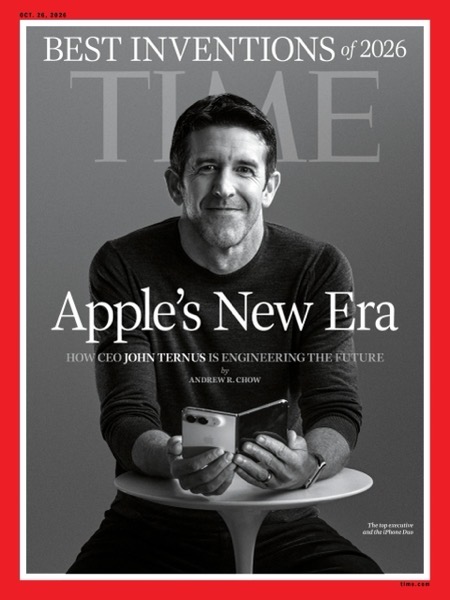
Speaking of waiting in the wings, much will also be made about this being Tim Cook’s final WWDC as CEO with John Ternus due to take spotlight this September. Much attention will be paid to the semiotics surrounding all of that during WWDC and after. That will be interesting to watch, but since WWDC 2026 feels more and more like a catch up year all around, I’m guessing next year’s event might be more telling. We’ll have to wait and see.

So, there’s my thoughts. That and nickel won’t buy you anything.  

You can also find more of my writings on a variety of topics on Medium at this link, including in the publications Ellemeno and Rome. I can also be found on social media under my name as above. This site does not use affilate links. 
MacBook Neo and iPad: Here We Go Again

Tired arguments get a new leash on life

When Apple released the MacBook Neo it was obvious to most that Apple had introduced a product that would shake up the larger laptop market. Lurking just underneath that obviousness was how it might or might not affect the iPad market. It was only a matter of time and timing, before those who, both rightly in some cases and wrongly in others, criticized Apple for not delivering the iPad of their dreams that could do anything and everything seized on the Neo’s success as a pivot point in the discussion.

An iPad Pro with a scribbled message that says iPads and Neos. There is an Apple Pencil laying on the iPad

The quest for the perfect device for everyone is and will always be an imperfect one. Much like the arguments. In addition to its impact on the laptop manufacturing markets, the MacBook Neo proves just how imperfect those arguments are. Yet, there’s already a large dollop of discourse saying that the Neo proves Apple’s iPad strategy needs adjusting. Add to that the rumors of a touchscreen Mac that continue to recirculate the same way the iPad discussion does just prior to WWDC each year.

On Michael Tsai’s Blog there’s an excellent collection of links and comments that’s worth a look if you’re at all interested in this ultimately meaningless debate. The links feed off a post from Craig Mod, titled MacBook Neo and How The iPad Could Be, that argues “iPads should be radically touch only and MacBooks should be keyboard-first.” I can’t say I disagree. But I think the discussion should go further than either/or.

There’s got to be several data centers worth of AI-scraped web articles on the ups and downs of the iPad floating around and how Apple’s strategy held it back. And yes, the iPad has had its ups and downs. But I would argue that’s mostly, not completely, a question of preference rather than any “the iPad should be this or that” win or lose proposition.

Being an iPad user since the first edition, I’ll say this. Most of the dissatisfaction I’ve seen over the years comes from those who wanted the iPad to be more like a Mac than those who used it primarily as a tablet. Without trying to be derisive, I’d venture to say that most who complained were keyboard jockeys by trade. I don’t begrudge them their complaints. From that perspective the complaints did and still do make sense. In many ways they were following Apple’s lead from the “What’s a computer?” days, before Apple abandoned that tack and sailed into broader and more lucrative waters with Apple Silicon.

Admittedly I’m showing my own preference here. I use an iPad as a tool in my work as a theatre practitioner. I’m on my feet with a script on my iPad, using an Apple Pencil to take notes. If I need to do keyboard work in the rehearsal room, I plop the iPad on a Magic Keyboard, do the keyboard related task, then pop the iPad off again and get back on my feet. When I’m back in my digs, I mostly work on a Mac. Apple’s ecosystem makes this all possible. When it works well.

Personally, I hope Apple keeps developing and delivering all of its current line of products. Stretch capabilities in some to the limit, and limit others with less.

The current lineup serves me well. Frankly, I can’t imagine any changes Apple could make that would alter how I work. I’d be content with that future, even though I know the tools I’m going to use are going to change regardless of my current comfort zone. If that future is all about creating hardware to run AI, as it appears to be, the decision points are  going to shift away from most of the spec and capability differences we’ve been accustomed to in the past anyway.

Craig Mod argues that “the specificity of our tools should be radically clear.” I buy the argument, but extending the discussion I’ll say it’s better to have more capability than less. Most users don’t touch anywhere near what even the most limited devices can offer. In my experience they find their way to whatever level they need, which is a much lower one than most realize. Those of us who may made need more, don’t understand that most users couldn’t care less.

Moving on, and with the “What’s a Computer?” miscues behind us, Apple’s current challenge and our headaches stem more from Apple trying to meld its operating systems into some sort of grand cohesive vision that feels the same across all of its devices. Admirable. But ultimately flawed in the same way that each different computing device Apple sells is as different as any two users who use that same device. Vive la différence.

I’m sure Apple gets that, but until the MacBook Neo that wasn’t quite as smack the Apple press in the face apparent, even though there have been lesser featured iPads at lower price points prior to the Neo. You could argue the same about the iPhone Air, but the higher price obscures the point.

With talk of higher priced “ultra” iPhones and who knows what else supposedly on the horizon, who knows where all of this really leads. I’m guessing Apple will be more than content to have a multi-layered series of price points attracting customers from both the low end and the high end. That all leads to more users spending money on Apple services and that’s the key to Apple’s continued growth. More hardware entry points (price) bring in more users than new features most won’t ever use. It’s simple math.

As long as Apple’s hardware profit margins can be maintained across its lineup, even with lower priced and perhaps less capable hardware, it’s pretty much a slam dunk. The success of the Neo not only points to this strategy, it should also point ahead to a diversified hardware lineup that fills many needs, as long as there is a clear and distinct choice for the toolsets that suits them best.

(image from the author)

You can also find more of my writings on a variety of topics on Medium at this link, including in the publications Ellemeno and Rome. I can also be found on social media under my name as above. This site does not use affilate links. 
 

More Thoughts On The Cook/Ternus Changeover

Honeymoon timing

Yesterday’s news of Tim Cook handing over the CEO mantle to John Ternus was news only in the sense of the timing. As I said then, it’s been expected for a while. It reminds me of any Apple rumor. It’s not true until it’s announced, even though most of the announcements turn into mostly confirmation these days. Note that Wall Street barely moved a tick on that news today. That tells you how well the ground was laid.

Apple ceo jpg.

Of course yesterday’s announcement has prompted exactly what you would expect, yielding tons of coverage on websites and podcasts. For Cook there have been accolades and brickbats, both deserved. For Ternus there has been excitement and a little caution.

Before I get to some thoughts of my own, here are a few links I found worthy of sharing because they stepped outside of the expected.

M.G. Siegler takes us on A Cook’s Tour.

Daryl Baxter saw more shock in the Apple community than I did. He reminds us that Tim Cook introduced the first Siri as part of his first iPhone event in 2011. He points ahead to this year’s announcement by John Ternus possibly poised to announce a promised better Siri. What goes around, might come around again. Let’s hope it doesn’t take another 15 years to get it right this time.

And Horace Dediu looks way ahead to 2040, when Ternus himself steps down to begin the transition to the next CEO. John Ternus Has Left Big Shoes To Fill is quite a trip into the future. You’ll get a chuckle or two.

The first of my thoughts has to do with timing. Not specifically the timing of the announcement, but the timing that any new leader gets when stepping into that role. There’s a window of time in which new leaders get a bit of grace. Most call it a honeymoon. While enjoying that honeymoon it’s perfectly acceptable to foist off blame for anything that goes wrong on the last guy.

That will obviously be difficult with Tim Cook stepping into the role of Executive Chairman of the Board. Sort of like going on your honeymoon with your significant other’s father tagging along. But it will be even more challenging given the apparently well deserved narrative being hyped about Ternus’ hardware smarts and his responsibilities in recent years. He’s had his hands on much of the Apple Silicon generation of products, almost presaging the announcement of his ascension to CEO with his role in the recent release of the MacBook Neo.

Adding to the challenge is the well known and well worn narrative about Apple’s long view roadmap of rolling out new products. The story is that Apple is always working ahead on the next generation of a product as it is preparing to release the newest version. What products will we see over the next period of time were green lighted by Cook?

Ternus’s prior role in overseeing hardware also means all of the products rumored to be in Apple’s pipeline for later this year and into next year will certainly feature his fingerprints. But they will also have Tim Cook’s. The question will one day be which product can the world accept as the first Ternus only product. Does it matter? Not really. But it will be treated as if it does. Ask Tim Cook about how that went once he assumed the CEO mantle.

We also all know that there are apparently hardware products (HomePods, Apple TV, other home products) waiting to be shipped once Apple gets its act together with whatever the new Siri is, and how well that works with whatever they will call what heretofore has been labeled Apple Intelligence.

In my way of scoring, the success or failure of those products will fall into the Tim Cook column, regardless of any contributions by Ternus. Again, does it matter? And again, not really. But there is much riding on that this year. One way or the other it will be an imprint on Ternus’ first efforts, whether that’s fair or not.

As to that last thought on Siri and Apple Intelligence, that’s software. That’s software holding back the release of hardware products for Apple, which is first and foremost a hardware company that relies on its own software.

As I’ve said many times, the hardware I’ve seen the since the dawn of the Apple Silicon era is very good, if not exceptional. The software needs lots of attention and work. It’s not just the design choices, it’s the chinks here and there in the armor that sour.

Ternus may be the hardware product guy, but he’s now going to be the guy responsible for the famous and coveted “whole widget.” Obviously that includes the software. And also, the marketing of that whole widget. Software design and implementation has been a bitter bite of the Apple lately, as has some of the marketing. As Ternus expands his view, I will be watching how Apple’s software develops under his leadership with a keen eye.

That expanded view also includes services. New CEOs always like to make a bold statement when they first sit in the chair. While there’s a lot being made of the semiotics trying to show continuity between Cook and Ternus,  I can think of one thing Ternus could do on September 1, that would immediately set him apart an Apple on a new course.

Announce an increase in the base amount of iCloud storage users get for free. 5GB hasn’t cut it for awhile. Cut and run from that legacy and begin making a bold new path.

You can also find more of my writings on a variety of topics on Medium at this link, including in the publications Ellemeno and Rome. I can also be found on social media under my name as above. This site does not use affilate links. 
 

MacBook Neo-ing

Neo newness

On an errand with my wife I happened to be in the neighborhood of one of the two Apple Stores closest to me and decided to drop in and take a look at the new MacBook Neo. 

The Citrius MacBook Neo on display at the Apple Store

I’m decidedly not in the market for one of these, but I imagine one of the folks I support will find this more than suitable for their next computer. My intent was to just handle the machine a bit and see if the build felt as nice as most of the very raving reviews say it does. Bottom line, it does. 

As I said in an earlier post, I think all things being not equal, the price point is the feature of note for this device. And based on reviews I’m seeing, I think that more than holds.

Speaking of, you might want to check out Sam Henri Gold’s thoughts in This Is Not The Computer For You. I concur with his points on the impact this move by Apple is going to have. Here’s a brief excerpt:

Somewhere a kid is saving up for this. He has read every review. Watched the introduction video four or five times. Looked up every spec, every benchmark, every footnote. He has probably walked into an Apple Store and interrogated an employee about it ad nauseam. He knows the consensus. He knows it’s probably not the right tool for everything he wants to do.

He has decided he’ll be fine.

Lots of people are going to be fine with the MacBook Neo. And that’s fine.

It was tough to snap any good pictures that captured the colors of the new Neos (is that redundant?) on display because the Apple Store lighting, the new colors, and iPhone photography just weren’t working that well together. But I fired off the camera for a few you can see in the gallery below.

It’s a good thing they provided matching tinted display pads for each different color, except the Indigo model in the first picture. Almost as if they knew.

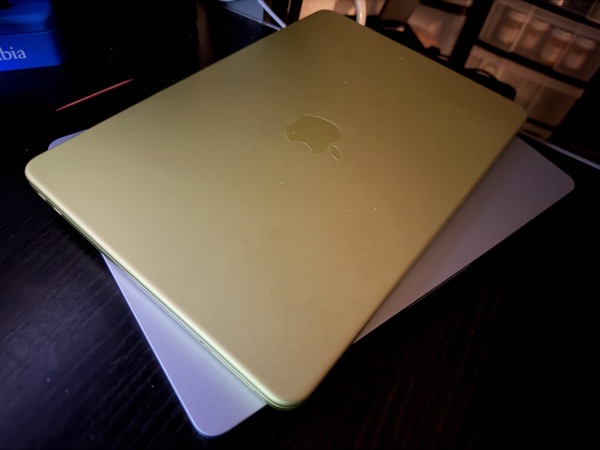
The next two shots in the top row feature the Blush and Citrus versions from the front and behind. The larger one show the size different between the Citrus flavored Neo and the MacBook Air.

On the way out of the store as we were passing the iPhone display, we noticed that the iPhones were synced to run the same ads for F1 that you see before any Apple TV offering of the moment. The different ad images race across each of the separated screens. Neat effect, but it made my wife, who, like I, is sick and tired of seeing these already, stifle a curse until we got out of the store.

You can also find more of my writings on a variety of topics on Medium at this link, including in the publications Ellemeno and Rome. I can also be found on social media under my name as above.


The Gadget Price Conundrum That Isn’t Really A Conundrum

A future of haves and have less

It’s always fun watching folks trying to shoehorn yesterday’s conventional wisdom into tomorrow’s reality. It might feel like dealing with a today thing, but it’s actually making the point by missing it.

Julia taubitz 3X8a5pxNG4k unsplash.

Recently I’ve seen lots of blogging and social media mouthing off that such and such a device is boring, or isn’t innovative enough, or just iterates on last year’s model. Pick a device category and you’ll find a chorus singing that song. In the wake of Apple releasing the $599 MacBook Neo this week, which as a device seems anything but boring, I’ve seen plenty of folks complaining about the tech Apple left out to hit that low price point.

But that low price point is the point. And it’s not just a way to expand the market to more cost conscious consumers. That will happen of course. But Apple is opening up a future of higher price points for newer tech by now selling these lower priced Macs and iPhones that are anything but the low priced junk it once dismissed.

In case you’ve missed it there’s been a lot of preparation to condition the market for more advanced and more innovative tech that’s going to cost considerably more than what the median has been for quite some time.

No one knows for sure, but folding iPhones are predictably going to rival folding smartphone price points of other makers, and be much more expensive than what most consumers (I’m not talking tech writers and gadget bloggers) are used to seeing.

Whether costs go up because of new tech and new innovations, DRAM shortages, tariffs, wars, or what have you, the point is Apple, Samsung, and others are seeding the low end of the pricing fields to create more room for more expensive tech in the higher, richer pastures. Tech is poised to make some bolder moves, or so they tell us, but not everyone is going to be able to afford to play on the high end. But there is an essential, increasingly more marginalized market, perhaps not as lucrative on the margins, but still worth harvesting.

It’s no different than seeing the mix of higher end vehicles in the same traffic jam alongside rusting out beaters on the highway.

It’s actually and accurately a pretty sober assessment of how the frame of income inequality is gaining a more intense focus lately, even though it’s been that way for quite some time. Unless we’re EMP’d back to the Stone Age, tactile tech in our hands is going to be a part of all of our lives for quite some time. (Call me when you can do a video doctor’s appointment on an AI pin.) We’re just going to see a broader gap between what’s essential to have and what’s nice to have if you can afford it.

(Image from Julia Taubitz on Unsplash

You can also find more of my writings on a variety of topics on Medium at this link, including in the publications Ellemeno and Rome. I can also be found on social media under my name as above.


Apple’s MacBook Neo Will Probably Hit Many Sweet Spots

The sweet spot that matters most is the price

I support a number of folks, both older and younger, who only use computers in the same basic way they use their smartphones. I’m thinking Apple’s new MacBook Neo, with a starting price of $599 will hit many of their sweet spots. 

Apple MacBook Neo color lineup

Of course, we’ll all have to wait for the reviews after the first wave of reviews, the ones that real users take the time to share before we really know what’s what. But if nothing else the pricing is going to be one of, if not the, winning feature. If the build quality lives up to what Apple usually provides I’m guessing it will be a hit, and sell millions, adding new opportunities for Apple Services revenue growth.

I saw someone somewhere yesterday say that you can buy an also newly introduced iPhone 17e alongside a MacBook Neo for the same price of the base MacBook Air. They are not far off. The number of iPhone users I know who have shied away from Mac computers, simply because of price, will I’m sure will be checking this out, especially since you’ll be seeing them on sale at Walmart, Best Buy and other outlets. Certainly given that possible customers will be able to see these computers in locations no where near Apple Stores.

Online chatter is about as you’d expect with both positive and negatives responses to the announcement. The negatives focus on what Apple did not include and lesser specs than existing MacBook lines. But in the end, the spec that matters is that $599 starting price. My guess is the online chatter and the reviews are going to be largely irrelevant regarding the success of this product.

You can watch Apple’s clever product intro video below.

You can also find more of my writings on a variety of topics on Medium at this link, including in the publications Ellemeno and Rome. I can also be found on social media under my name as above.


Apple’s Color Wheelies

Color me a gadget utilitarian

I’ve never been one to be that obsessed with the color of tech gadgets or any of the other tools I use. Sure, colors attract, and I’m all in for more color rather than less in many things, but I’ve never been one who has made a gadget purchase based on color.

CleanShot 2026-02-23 at 11.21.19@2x.

In fact, I usually shy away from bolder color choices. I’ve typically chosen whatever version Apple is marketing as black when it comes to iPhones and whatever case I bury them in. I do the same for laptops, not straying too far from silver or occasionally the variant of Space Black that seems to change more frequently than I imagine happens in the dark depths of space. I do own a Blue iMac 24, but the last time I really saw the “blue” on the rear of the enclosure was when I set up the device.

I feel the much the same when it comes to other non-computing tools. Walking through a hardware store I always view the bright green, bright orange, red, aqua, and other multi-color designs of drills, other hand held tools, lawn care equipment, etc… as somehow cheaper than those with a more muted approach. They look more utilitarian, and frankly, suggest longer lifespans. As my grandkids age and I shop for their gifts, the more brightly colored tools look like toys to me.

I know I’m probably the oddball when it comes to color coveting. There certainly seems to be a lot of excitement about Apple presumably releasing new products with a slew of new color options soon. But I think of my computing devices the same way I do other tools. I acquire and use them to complete a task. Many others see them as personal statements and that’s cool. More power to those who need that or appreciate that sort of whimsy.

Another way I think of this is that if a tool maker needs to market new colors to keep customers excited about their products, it means the product has probably reached maturity enough to more than prove its value. But that doesn’t always keep the marketers employed.

(Images from 9to5Mac and MacRumors)

You can also find more of my writings on a variety of topics on Medium at this link, including in the publications Ellemeno and Rome. I can also be found on social media under my name as above.


More Thoughts On iOS 26’s iPhone App Changes

Still very much a work in progress

Back last fall I wrote about the changes Apple made to the iPhone’s Phone app in iOS 26. I thought they were both helpful and confusing. I followed that up a month or so later suggesting that smartphone makers needed to make delete and report spam buttons more of a priority.

New Shareshot.

I still maintain the points I made in both of those posts, but here are some more thoughts after having used the Phone app since.

Regarding the Hold Assist Detection feature what I said earlier very much still applies.

It makes me think that the designers of this feature have never used the Phone app to call a pharmacy or a doctor’s office where the person answering the phone is so busy that when they answer they speak so fast that you can’t understand what they’re saying. In my experiences attempting to use this feature in cases like those, the person on the other end just hangs up and I have to make the call again.

Recently I spoke with a receptionist at one of my medical providers about this feature and her response I sums that up well from the other end of the line. Simply put she said, “I have no time for such nonsense.”

She said essentially the same thing about the Screen Unknown Callers feature that allows the call recipient to see who is calling or leaving a voicemail. As I previously mentioned I have the Ask Reason for Calling option selected. Early on there were a few callers that actually left a voicemail, but that seems to have diminished over time. My speculation is that those doing the calling have caught on and just continue down their call lists. With this same medical provider I missed several calls because she was using a different number assigned by their phone system than I had placed in my contacts and the call logged as Unknown.

As to making spam reporting a more prominent UI feature not buried under a series of menus and taps, if Apple (and others) were really serious about making life easier for their users they’d add a Delete and/or a Delete and Report Spam option to the notification of a call. I mentioned in that earlier post that this Call Filtering feature would probably lead to a whack-a-mole game with spam callers. Based on the increasing frequency of spam calls I’m receiving I think the spammers are currently on a trajectory to win that game.

I still don’t know why all phone calls I receive, welcome or unwelcome, are listed as a Priority Notification. Since last autumn I’ve changed my lazy habits with contacts and been diligent about providing good contact metadata for doctors and others I do business or social interactions with. At that point that appeared to be the best way to try and take advantage of the newer features. But honestly I don’t think it matters much at this point based on what I’m seeing.

I support several elderly relatives who use their iPhones for basic needs, communication being the primary one. Having had a chance over the holidays to physically examine their devices, I noticed little usage of the delete function in the Unknown Call Callers section of the Missed Calls list. There were long lists of unknown callers. I imagine at some point we’ll see articles on how to clean up those lists.

In summary, I’d say the new Phone app features are still helpful and still confusing. Like everything else with Apple these days they should be categorized as a work in progress.  Here’s hoping we won’t be on hold too long before we see progress happen.

You can also find more of my writings on a variety of topics on Medium at this link, including in the publications Ellemeno and Rome. I can also be found on social media under my name as above.