Social Media Influencers Left Adrift With The Odyssey

Perhaps this starts a new trend

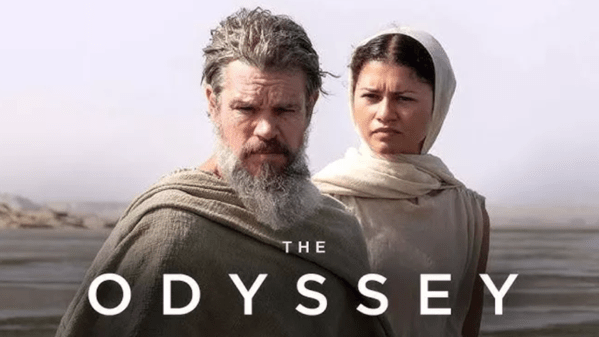
I find this move by movie maker Christopher Nolan to be quite fascinating. Prior to the opening of his next film, The Odyssey, Nolan is skipping the now usual round of screenings for social media influencers. In and of itself, it’s a great way to generate the same kind of annoying buzz that typically follows social media screenings. In the bigger picture, perhaps it’s the start of a healthier trend.

A Christopher Nolan film is going to generate its own momentum one way or the other these days, regardless of what critics and influencers say early on. So, you can argue that it’s a shrewd move for a movie that’s already generated quite a bit of social media furor over casting and other issues. That said, I hope this move starts a trend that has nothing to do with this particular movie.

Social media influencers, like critics, are by and large out for themselves, more than whatever they’re covering. They were born that way. Critics evolved into that mutation. What we used to call critics will say they are there for their readers, relying on that trope far too often. Social media influencers don’t even try to fall back on that concept as an excuse. It’s a hit and run business.

Those days when criticism on any level was an opinion to measure your own against are largely gone. The world wants others to form their opinions for them. Everyone’s just too busy. Taking the time to think on your own is too hard and time consuming. Heck, in that context, I wouldn’t be surprised if we don’t eventually see early takes on new films, books, theatre, etc… generated by Artificial Intelligence.

In my opinion, we’d all be better off forming our own opinions, but that’s not how the world works. I’ve often derided the Siskel and Ebertization of thumbs up, thumbs down movie criticism. The move to creating another substrate of quick hit takes via social media was both a logical and illogical extension of critics as personalities pleading for attention.

The equation is a simple one that falls back on the cliché that any mention, good or bad, is good for business as long as the name is spelled correctly. That’s still largely true, thus my opinion that this is a shrewd move on Nolan’s part as long as this game continues.  Since any level of criticism has become a sport, that cliché has opened the doors to rooms empty of thought, nuance, and dare I say, substance.

When criticism becomes a contact sport for attention it’s no longer criticism, no matter the form. 

That’s my critical opinion.

Thanks for reading. You can subscribe to this blog if you care to. You can also find more of my writings on a variety of topics on Medium at this link, including in the publications Ellemeno and Rome. I can also be found on social media under my name as above. This site does not use affilate links. 

Spider-Noir: A Mini Review

Not great, but great fun.

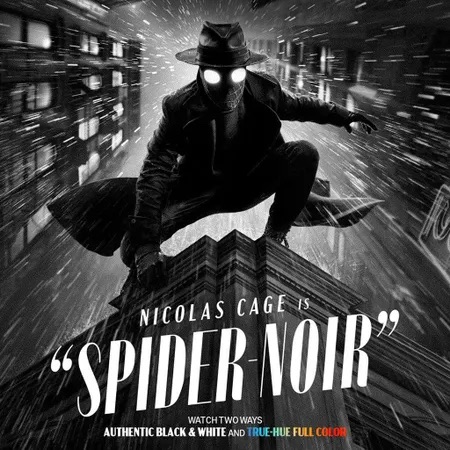
The Chicago Cubs have decided to essentially quit acting like a professional baseball team. Chock-full of talent, yet seemingly unable to play the game. My wife is away on a theatre gig. (The show opened wonderfully last night.) So I decided I needed an entertaining distraction and queued up Oren Uziel and Steve Lightfoot’s Spider-Noir, now streaming on Prime Video. Bottom line, it is a stylish, entertaining distraction, and a treat for fans of the noir genre. 

Spider man noir series_t2mj.jpg.

I won’t call the eight-episode series great by any means, but the fun makes up for it. Taking yet another Marvel Comics hero from yet another alternate Marvel universe, Spider-Man Noir, and bringing him to the screen minus the “man” in the name, this version follows an aging private investigator, who is also a web-slinging superhero, through a depression era New York City in the 1930’s. Fighting with his past and the bad guys, it’s a bit of a romp that at times can’t decide what it wants to be, but in the end sticks the landing.

You get a choice of two ways to view the series. In what the filmmakers call Authentic Black and White or True-Hue Color. I recommend the black and white version. I checked out the True-Hue Color but that’s not for me. Your mileage may vary, but hey, the word “noir” is in the damn title, so follow the lead you’re given.

Nicholas Cage stars as the troubled leading superhero who isn’t sure he wants to be one. Down on his luck. Tough times. Hard bitten. (Literally.) He’s at times a bit over the top in that Nicholas Cage kind of way, but weirdly it works as the choices largely hold up, even as they often veer the show into comedy more than the hard-boiled wit I associate with the genre.

Brendan Glesson gives a boffo performance as the big bad in the show. Jack Huston and Andrew Lewis Caldwell as Flint Marko/Sandman and Dirk Leydon/Megawatt bring fun and serious menace to their characters trapped and wrapped in one of the show’s central mysteries. The rest of the cast fills their roles nicely and everyone enjoys chewing the scenery at one point or the other.

As to the production, the black and white version looks terrific. It’s full of all the shadows, cigarette smoke, femme fatales, crooked pols, gangsters, grit, lots of rain, period music, and all the clichés you expect from a noir detective mystery. The occasional nods to other noir classics are added treats.

The story gets more convoluted and drawn out than I think it needs to, but that’s the name of the game in streaming entertainment these days. Even so, in the end, it’s a cut above the rest, and filled the bill I was looking for. Indeed, a fun and entertaining distraction. 

Thanks for reading. You can subscribe to this blog if you care to. You can also find more of my writings on a variety of topics on Medium at this link, including in the publications Ellemeno and Rome. I can also be found on social media under my name as above. This site does not use affilate links.
Sunday Morning Reading

Biker heroes, cheese thieves, and stupidity checklists

Sunday Morning Reading time with stories and good writing about crime, incompetence, technology, shifts and changes, and cheese. There’s also hope in and amongst the chaos. Add a slice of cheese to your morning repast and give a read.

A rustic indoor display features a wide variety of artisanal cheese wheels and blocks stacked tightly on wooden shelving. On the left, smooth, rectangular orange-brown blocks are piled horizontally. On the right and center, large round wheels of varying sizes are stacked vertically, displaying diverse rinds—ranging from textured dark brown and dusty gray to smooth ochre and patterned beige. Photo by Azzedine rouichi YW_5rJvAdKw unsplash.

Starting this week’s edition with a surprising feel good story that reminds us we shouldn’t judge books by covers. Marlon G. Baxter tells the tale of young hearing impaired child who was saved from being trafficked in a Walmart by what appeared to most as an unlikely hero. You need to read “Heroes Wear Leather Too”: How A Deaf Child And A Biker Stopped A Trafficking Plot.

UPDATE: This pisses me off. Apparently the feel good story linked above is fake. I and several others have looked into it and it’s not holding up. Pardon my swearing, but this is so goddamned frustrating. I’m leaving the link and my description in for two reasons. Pointing out that we can’t trust a damn thing on the Internet anymore. Secondly, that really sucks given we’re all in a posture of looking for hope whenever we can find it.

In the wake of what’s happening at the ICE Delaney Hall detention center internment camp in New Jersey, Josh Kovensky recounts the story of what happened in the courts after similar battles over humanity happened earlier in Chicago. Check out How The Broadview Six Fought The Trump DOJ—And Found Massive Wrongdoing In The Process. Tough to see hope in these horrible moments as they occur, and it’s hard to believe we have to rely on the incompetence of evil doers after the fact, but here we are.

Speaking of incompetence, there are stories and there are stories. Andrew Kersley’s The Body In The Wheelchair: How Did A Troubled Family Get Lost By the State? This a tough read to digest on a Sunday or any day, but definitely worth your time. 

On the arts and politics front, a court has ruled Trump has to take his name off of the Kennedy Center and not close it down for renovations. Sounds like a victory. In the long term it may be, but Janay Kingsbury tells us that in the immediate future the damage may already have been done in Trump Hasn’t Left Much Kennedy Center To Stay Open. So much of what’s happening these days hurts my heart, but this misadventure hits me where I live.

Everything is changing, like it or not. Sonny Bunch thinks Hollywood is standing on the doorstep of yet another pivotal moment. Check out Hollywood’s About To Change (Again).

As far as pivotal moments go, there are quite a few happening all around us. Especially regarding searching the Internet. Google is reinventing itself and the Internet, leaving an opening for companies like DuckDuckGo and Kagi. Doc Searls writes How DuckDuckGo Can Be A Hero. Let’s hope these search companies seize the moment that’s before them.

And while we’re on the topic of tech, John Siracusa has published The EV Stupidity Checklist, suggesting ways the EV industry might get back on track. John could and should publish one of these for so many things in the tech sector. Perhaps also for so many other sectors of our lives.

I’m a cheese fan, and I’ve been known to nick a slice or two off of the hors d’oeuvres tray before the guests arrive. Olivia Potts tells us how organized crime fell in love with cheese in The Grate Cheese Robbery. Who knew cheese was the most stolen food in the world?

(Image from Azzedine Rouichi on Unsplash)

If you’re interested in just what the heck Sunday Morning Reading is all about you can read more about the origins of Sunday Morning Reading here. If you’d like more click on the Sunday Morning Reading link in the category column to check out what’s been shared on Sunday’s past. You can also find more of my writings on Medium at this link, including in the publications Ellemeno and Rome. This site does not use affilate links. 
Lobsters, Steaks, and Grand Pianos Oh, My!

Excess always rises to the top

No one ever accused the bunch running the U.S into the ground of being smart. There’s proof enough every day to belay that notion. Yet we somehow pretend we’re surprised and outraged when these dumb grifters continually expose themselves as the dumbest collection of dumb grifters that ever took over a country and threatens the world.

Mauro mari kMwr4Z4i67E unsplash.

One (there are so many) of the latest outrages has to do with reports that the Department of War Mongering has been dropping large chunks of change on things like lobster tail, Alaskan King Crab legs, and steaks to chow down on, a Steinway baby grand piano, and lots of tech toys. Of course this report comes at a time when we’re at war, and after all of the tired talking points of ridding us of waste, fraud, and abuse that was DOGE. That seems so long ago.

Is it outrageous? Yes. Surprising? Not at all.

Excess always rises to the top. Always has, always will. I don’t care if it’s in government or business. There’s a sense of privilege and being owed that removes the shame shield once you’re making big bucks.

A few decades ago when I was working a temp job at a law firm I got to witness, and admittedly take advantage of it first hand. I, along with a small gang of theatre folk, was hired by a friend of one of that gang who happened to be a paralegal in charge of a document coding process in a large litigation case.

This was in the age before computers were on desktops. Paper was still king. We were set up on a large, unfinished floor of the building housing the law firm. Our job was to read thousands of documents, looking for references on certain subjects, names, transactions, etc… Each time we identified one that had a code we’d enter the document number and the code on a gridded sheet. At the end of the day those sheets went to data processing to be entered into a computer.

The point was to allow the attorney’s working on the case to request a printout of all documents relating to code xxx or yyy, and then send a file clerk to pull those documents. It seems archaic compared to today’s technology. It was actually just over the edge of ground breaking at the time.

The paralegal team in charge of overseeing us would also make up new codes if someone found something new that might relate, and then we’d go back over the already coded documents to see if any needed the new code.

This obviously involved lots of man hours. Like I said, there was a small army of theatre folk on the team. I was in the process of starting my first  theatre company at the time, and this gig was flexible enough for me to work as many hours as I needed or as few as I could get by with. Actors would come and go for auditions or other work. We were required to code 500 documents in a regular work day. I could do that pace in a couple of hours.

This temp gig paid very well. $10 bucks an hour. (Like I said it was a few decades ago.) If we worked overtime on a weekday it was time and a half. If we worked weekends it was double time. If we worked past 6:30 pm, dinner was on the client. Dinners weren’t fast food or pizza. We had plenty of surf and turf along with other good food from some of Chicago’s nicest restaurants. If we worked past 8pm the client paid for a taxi home.

I don’t recall anyone ordering a grand piano, but I’m sure the billing hours covered enough to put a few of the attorneys’ kids through school. The gig lasted about 15 months before the case was settled for millions of dollars.

I freely admit I made bank during those 15 months. I also found out later that the markup on the $10 bucks and hour I and others were making was marked up to $15 for each of us with a corresponding markup on overtime.

Excess at the top where amounts of money boggle the mind make it easy to justify the pampering and pilfering of clients, funders, and taxpayers. On the business side of the ledger it’s somewhat expected. On the public side we always seem surprised. We shouldn’t.

The only surprise should be that the folks taking advantage of the system are never smart enough not to get caught. But this current bunch might even take that bit of shock and awe off the table, the way they’re going.

(Image from mauro mari on Unsplash)

You can also find more of my writings on a variety of topics on Medium at this link, including in the publications Ellemeno and Rome. I can also be found on social media under my name as above.


Media Moves: Netflix Backing Out Should Accelerate The Inevitable

Will it be a comedy or a drama when it debuts on Netflix?

There’s no denying that the insane pedophile rampaging through the last decade of our lives has changed things. It’s unfortunate that we let that occur. While many of us may have seen the potential for all the damage he’s caused, you can say not enough did, but I’ll say instead that not enough cared.

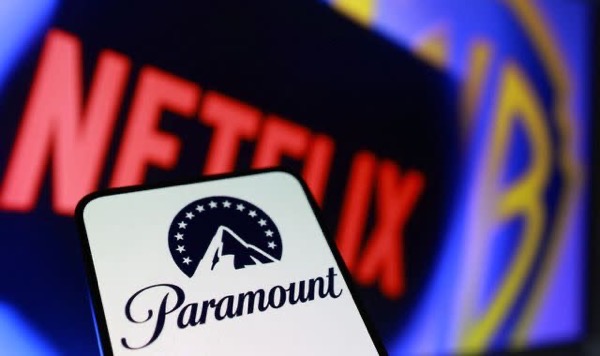
Smartphone screen showing the Paramount logo in sharp focus in the foreground, with a blurred Netflix logo and other colorful streaming imagery in the background, suggesting competition between streaming services.

But here we are. Where is that exactly? We’re witnessing almost daily damage to most things around us that I think too many still think will get magically reversed when he leaves office or leaves this planet, whichever comes first. It will take a few generations to get back to whatever we believed normal was, although I’m not sure there ever was a normal because things always evolved, though by and large at a more sanely digestible pace.

Take for example what’s happening in the media landscape. News that Netflix was going to withdraw from a bidding war for Warner Brothers, effectively clearing the field for Paramount to win the deal is being discussed from a number of perspectives by all the usual and unusual suspects.

Those that wanted Netflix to rise to the challenge and succeed, keeping Warner Brothers away from the MAGAt supporting Ellison family, were depressed and angry. Those who see Netflix as just another evil media empire were oblivously happy. Most just want to know when the next and eventual price increases are coming.

Quite a few are quite concerned about what this will do to CNN and the news landscape. They needn’t be. That Punch and Judy network long since turned over the puppet strings to the wrong masters.

You can argue that this might have happened with or without Trump, but there’s no point in that. What you can’t argue is that this kind of wheeling and dealing will never be the same again now that the Oval Office has become the one stop shop for getting ahead.

I happen to think that in the long run, Netflix pulling out of the bidding is a good thing. The trend lines point away from what we have thought of as traditional media and entertainment. Now that news is entertainment and sports is politics, it’s a circle of cannibals feeding on each other.

As for those concerned about CNN and news coverage in the larger scheme, let’s get real. There are only so many corporate knees one can bend. Yes, CBS and CNN will essentially become the same, but that consolidation is going to be an accelerant tossed on two already burning corpses.

For those concerned about the picture beyond the news game, I think we’ll see the same sort of downward acceleration once things settle in, which won’t be for a while yet. Movies and other entertainment will still get made. We’re in an age of content abundance, yet keep in mind the real winner at the moment is probably YouTube, which continues to steal eyeballs from all the other sources. Note also that audio audiences are listening more to podcasts than talk radio according to some statistics.

My hunch is this latest episode will just quicken the decline for the capitulators and accelerate the trend of consumers making other choices. I can’t wait to watch the extended series about it all on Netflix.

That’s my $.02. It might not be worth half that.

You can also find more of my writings on a variety of topics on Medium at this link, including in the publications Ellemeno and Rome. I can also be found on social media under my name as above.

The Roses: A Mini-Review

Black comedy served well done

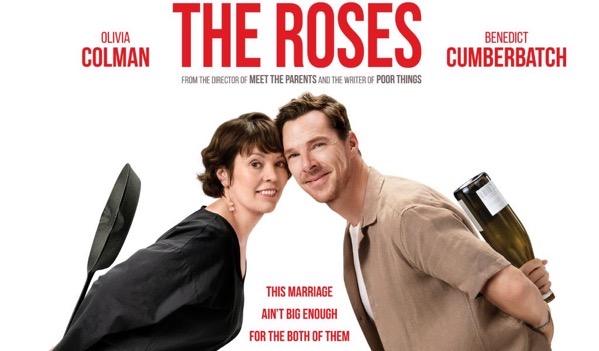
I often don’t find remakes of films to be worthwhile. That’s not the case with Jay Roach’s reimagining of the 1989 film The War of The Roses, based on Warren Adler’s book of the same name. Titled simply and tellingly, The Roses, this remake worked for me.

I enjoyed this version better than the much beloved original. Perhaps it’s the time or the timing, but the fact that the remake focuses more on the comedy and less on the black comedy is what won me over. Don’t get me wrong. I love black comedy and this film is still in that genre, but the brightness of the comedy is what makes it work.
The star pairing of Benedict Cumberbatch and Olivia Colman is sublime. As a couple who seem to have it all before they start tearing everything to shreds, Cumberbatch and Colman deliver as delicious a repartee as the dishes Colman’s character whips up with her cooking. Roach plants the moments for the payoffs perfectly, and even pays homage to the original with a few clever winks. Everything makes sense in the story’s update to our current era including a delightful spin on the perils of having a new home designed from the ground up with smart technology.

Fans of the original know where the story is going, but this time around I found myself almost rooting for a different ending, just to keep the banter going. Scathing wit hasn’t been this much fun since Hepburn and Tracy.

The supporting cast that includes among others Andy Samberg, Allison Janney, and Kate McKinnon is superb though a bit underutilized. Even so, they do deliver a delightful ensemble turn as Americans enjoying and being seduced by their own growing, yet completely naive awareness of the lead couple’s Britishness.

The Roses was released late in the summer of 2025 and I just caught up with it on streaming (Disney+) and I’m glad I did. Whether you’re a fan of the original or not, this remake is a good and funny diversion amidst all of the bad times we’re living through. To top it off, Colman and Cumberbatch deliver a master class in comedy.

You can also find more of my writings on a variety of topics on Medium at this link, including in the publications Ellemeno and Rome. I can also be found on social media under my name as above.

Train Dreams: A Review

“Every least thing’s important.”

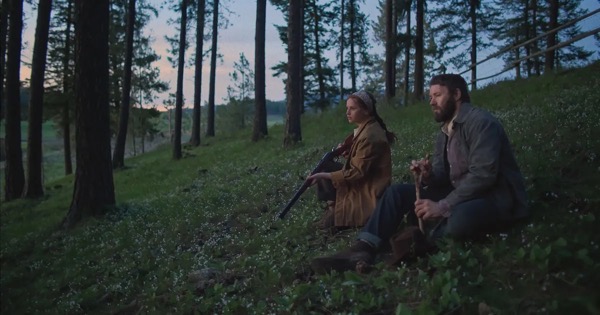
So much can go wrong in life. Big things. Little things. Depending on your station in life what goes wrong determines so much of what comes after, it often tears at hope in our search for a peaceful existence. Train Dreams, directed and co-written by Clint Bentley, set in a more challenging era than our own, focuses on the big things and little things that shape us, in a revealing and poetic story of the life of one man.

A1bca8debcba0402af6c699f605f9e1a6d traindreamswar.2x.rsocial.w600.

In its small singular focus the film expansively embraces the life of an Idaho man who has never traveled far from home, through tough times, tragedies and the moments that define a life in the way trees populate a forest. If that sounds depressing, it’s the exact opposite. The cinematography by Adolpho Veloso and the acting take flight and lift the story far beyond the gritty and tangled undergrowth of the life it inhabits.

It’s a gorgeous film to watch that beautifully captures the mountainous northwest as it follows this lumberjack plying his trade, clearing trees to make lumber for the construction of the Spokane International Railway. It’s a dangerous life and one that takes him away for stretches of time from the family he eventually builds. The mostly peaceful vistas and views contrast with the travails seemingly necessary for this man to build a simple life, at times as sharply shocking as a gunshot in a quiet wilderness.  Yet we’re reminded that all of that work literally is overtaken as the years go by with new growth replacing old.

The cast is superb. Joel Edgerton plays the lead, Robert Grainer, in a brilliant performance proving less is always more. Felicity Jones plays his wife, breathing life into him and the story. William H. Macy is exquisite as an older logger in the camps dispensing well worn wisdom. Much of the story is accompanied by the best use of narration I’ve heard in a movie, voiced by Will Patton. It comes and goes like a breeze through the trees seemingly perfectly natural and undisturbing each time it wafts in.

This movie is not going to be for everyone simply because its success requires participation in an almost passive vein. It doesn’t propel us into story telling, it lays it out for us to observe like viewing a valley unfolding beneath from a mountain perch. It’s not fast paced. It’s revelations come in a visual poetry that astounds, capturing the complexity of nature and how simple our small part of it really is, no matter how large or important we view the roles we play in the dramas we create for ourselves.

In the insanely paced tumultuous times we now find ourselves it offers a moment of exquisite reflection exemplified by two mirroring lines of dialogue. “The world is intricately stitched together, boys. Every thread we pull, we know not how it affects the design of things,” says Macy’s character around a campfire. That echoes back again towards the end, when a Forest Service worker reminds Grainer and us that “every least thing’s important.”

Both challenge the wisdom behind the cliché that tells us we can’t see the forest for the trees. But then the bigger picture of a life is always made of smaller moments stitched together if we pay attention.

You can also find more of my writings on a variety of topics on Medium at this link, including in the publications Ellemeno and Rome. I can also be found on social media under my name as above.

My Viewing and Reading Picks for 2025

Another year of complex viewing and reading

Another year comes to an end. A new one gets ready to begin. 2025 felt less complex than 2024. Lines weren’t as blurry with one exception that I’ll get to later. In a year when the rush to redefine and compete for the lowest common denominator felt like a three-legged sack race over broken glass, complexity again drew my attention and stuck with me. There’s a great leveling happening, whether intentional or not. But as long as we can advertise against whatever the content is, it seems to matter less and less what the content is or how it’s made.

When it comes to viewing entertainment it was a year when the quality line between movies and streaming TV blurred even more as excellent series work competing with the big screen for some of my favorite viewing. The Pitt and Adolescence were two of the finest things I watched this year.

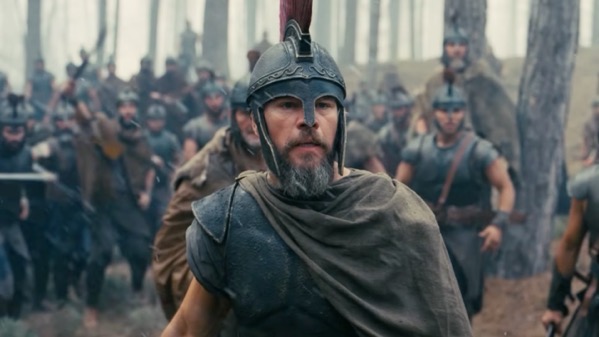
There are a number of titles in these lists that would qualify for what is being called Resistance Cinema. Each one is deserving of inclusion in that list for immediacy. Any lasting impact will only be determined with the passage of time and all of what we’re currently resisting either cements or cracks.

I don’t believe in “best of” lists. There’s good stuff being created amidst all of the mediocrity and my judgement on what’s good is probably not yours. I pick what attracts and holds my attention. I also don’t see or read everything and the holiday release schedule geared to coming in under the wire for awards recognition is a silly game for insiders and not for me. There also may be a title or two that I didn’t catch until 2025 even though it was released in previous years. Goodness knows there are books waiting to be read.

If there’s a link with a title, I took the time to write about it. I should have done that more. So here’s a list in no particular ranking order of what I found most intriguing throughout the year.

Movies
Streaming TV
Books
  • 1929 by Andrew Ross Sorkin
  • The Mission by Time Weiner
  • Apple In China by Patrick McGee
  • The Director by Daniel Kehlmann

Have a Happy New Year!

You can also find more of my writings on a variety of topics on Medium at this link, including in the publications Ellemeno and Rome. I can also be found on social media under my name as above.

The Netflix Paramount Media Money Muddle

Stay tuned

It was quite comedic to watch the reaction to the news at the end of last week that Netflix had won the bidding to take over Warner Brothers. There was indeed much celebrating. There as also quite a bit of consternation. The celebration was primarily because there is an abundant school of thought that no one wanted Paramount, now essentially another tentacle of the Trump administration, to win.

CleanShot 2025-12-09 at 14.59.44@2x.

I didn’t bite on the news celebrations or the consternation being the final chapter then. Of course it wasn’t. The Netflix bid parlayed out to $72 billion. On Monday, Paramount Skydance launched a hostile all cash takeover bid of $77.9 billion.

There’s only a roughly $5-6 billion difference between the two bids, but the Paramount bid seeks to swallow up the pieces of Warner Brothers/Discovery that Netflix apparently wasn’t interested in, including media properties such as CNN, TNT Sports, and Discovery. Netflix’s bid was for Warner’s Studio and HBO’s streaming business only. Note that Warner Brothers had previously announced that it planned to split up the combined businesses in just that vein.

So, what does it all mean?

First, it means a lot of lawyers and lobbyists are going to make a lot of money. There are political, marketplace, and money pieces moving around the board in what looks to be quite a saga that I imagine Hulu will end up making a series about within a couple of years.

Netflix is after the content. And the control. Ben Thompson has an excellent run down on that, and why Netflix’s delivery system makes it make sense. Netflix has created quite a war chest for its bid (which is both cash and stock), by building a relatively slick distribution system to deliver its already abundant content, plus whatever it continues acquiring. (How many TV remotes are there without a Netflix button these days?)

Paramount Skydance CEO David Ellison’s all cash bid includes quite a few players including his pop, Larry Ellison, both of whom are Trump supporters, as well as outlays from sovereign wealth funds of Saudi Arabia, Abu Dhabi, Qatar, and also Jared Kushner’s Affinity Partners. Without those partners Paramount, valued at around $15 billion, would have a hard time competing with Netflix’s roughly $400 billion war chest. (The Wall Street Journal has a decent rundown on more of the money specifics.)

Second, it means what was already a muddle the way most of these kind of things are, will get muddled up even more due to the politics of the moment. I’ll disagree with Ben Thompson’s analysis that points out that the President doesn’t have final say on this. That may have indeed been true in a past we’re no longer living in. Those old rules no longer apply. As we’ve been learning everyday since January 20, 2025.

Third, Hollywood also has its concerns. The traditional studio power structure is not enamored of Netflix and its heretofore disdain for theatrical releases, which also brings movie theatre owners into play. I’m not sure if the Netflix bid means the death of Hollywood as some claim, but it certainly would shift the pieces, the game board, and the power structure as what began as a tech company could end up controlling much of what we see on our smaller silver screens.

Big money is at stake obviously. But when big egos get involved the costs for everyone increase. Including those flipping through content consumption choices with their remotes.

Stay tuned. I’m guessing that Hulu series will be quite a watch when all is said and done.

You can also find more of my writings on a variety of topics on Medium at this link, including in the publications Ellemeno and Rome. I can also be found on social media under my name as above.

Filmmakers, Storytellers and The Resistance

Storytelling in conflict

Writing for Bloomberg, Mark Leydorf makes a case that movies are taking up the whistles of resistance in The Rise of Resistance Cinema in the Era of Trump. He’s right but he shortcuts the great history of storytelling.

Shutterstock 697665772.

He’s correct that there are a number of films being released, along with those already past their big screen sell by dates, featuring stories and themes that can’t help but strike resonant chords for those repelled by and rebelling against the current political moment we’re living in.

He doesn’t have to reach too far beyond his initial example of Wicked: For Good to create a long list of titles to support his thesis. A thesis I buy, even though I think it serves cinema history, and storytelling in general, a bit short in the end.

In compiling his list, Leydor says:

The list goes on:

Eddington, Bugonia, Sirāt— there’s a reason directors are digging into stories of conflict, paranoia and cataclysm. Taken together, these films, most of which were conceived and went into production during Donald Trump’s interregnum, between the insurrection of Jan. 6, 2021, and MAGA’s triumphant return to power, have coalesced into a troop of cinematic resistance amid the conflicts and crises defining his political era and the rightward, nationalistic turns happening broadly around the globe.

I’ll reach into that quote and point out that all successful storytelling, on the screen, on the page, on the stage, around campfires, or told sitting on bar stools involve some form of conflict, paranoia, and cataclysm. Even top rated fare on the feel good Hallmark Channel features conflict. Heck, they have to make it up on Reality TV. Without conflict you don’t really have much of a story. Goodness knows we’re overripe with enough conflict to tell thousands of stories at the moment.

While focusing on this current crop of films, Leydor is spotlighting a point in the long timeline of story telling. These current storytellers are doing what storytellers do, bringing their near term reactions to whatever is in the zeitgeist at the moment, following traditions established long before Hollywood executives ever got involved in a script conference or endings became focus group fodder.

Frankly, I’m glad to see such a strong list of filmmakers telling these stories at this moment. We need to see ourselves reflected back in the mirror we hold up to nature, before it’s all AI generated. The same is happening on stages, in late night television comedy, and from the keyboards of many authors. Given how none of us knows how this moment is going to play out, it’s fascinating.

Note that Leydor points out that most of these films were conceived and green lit after the first Trump administration and prior to this second one.

I had the privilege in the Fall of 2022 to direct three one-act plays from Ukrainian playwrights about the effects of the Russian invasion that had begun earlier that year in February. The writing was alive, fresh, and as urgent as the wounds were then. That writing still is today, even though now those stories are snippets of a longer story still unfolding to an end no one knows.

Historically few stories springing up in any current conflict, regardless of medium, retain staying power beyond almost artifact curiosity. It’s usually the stories told after the moment passes that last and define with more resilient resonances, even as their lessons are forgotten by those too eager to write what they think will be a different ending.

What will be more fascinating to watch is how many of these current films are remembered years or decades from now, once this historical moment does pass.

Whatever that turns out to be.

(Image from Skylines on Shutterstock)

You can also find more of my writings on a variety of topics on Medium at this link, including in the publications Ellemeno and Rome. I can also be found on social media under my name as above.