MacStories: Trouble In Apple Pundit Land

Changing, challenging, and sad times.

There’s no question that many of us are facing challenging times these days. On so many fronts. Given how nothing that once seemed remotely stable feels anywhere close to that anymore, I find myself alternating between being angry, sad, and numb with an increasing frequency that tends toward the numb end of the scale.

Ms opengraph.

However, there’s disconcerting news in Apple pundit land that leaves me more sad than numb or angry. MacStories, an Apple-centric blog I’ve followed and subscribed to for a long time is undergoing some changes that rub me the wrong way.

From what I’ve been able to gather from social media, and in a belated explanation post from the blog’s founder, Federico Viticci, several of the team’s members have quit over a recent decision by the organization to resurface the MacStories presence on Elon Musk’s X, which used to be Twitter, and remains nothing short of cesspool of depravity.

To give you an idea of the turmoil this is causing internally for the site that belated explanation post doesn’t appear on MacStories as of this writing, but on Viticci’s own blog. MacStories also didn’t put out its regular end of the week newsletter and several of its podcasts are on hiatus.

I’ll share some links from some of the employees leaving MacStories.

A blog post from Devon Dundee. 

A Mastodon post from Jonathan Reed.

A Mastodon post from Niléane.

From the sound of things it sounds like the MacStories decision was made without consulting other team members. That’s never a fun time. I know. I’ve experienced it myself. From both sides of the table.

I can’t and don’t pretend to speak to any more than what I’ve shared above regarding the decision making and the internal machinations. I can say that one of the reasons I’m saddened is that it points to puzzling moment for website that also hosts and generates several podcasts in which its talent feels free to judge and criticize corporate and tech screwups, with at times gleeful abandon. To my mind, this feels like one of those screwups, but who knows?

If I wanted to I guess I could gather some AI generated transcripts from past podcasts and offer some pretty damning quotes about Elon Musk and other tech titans as examples, but I won’t.

I guess this decision proves just how difficult it is to learn from the oft-repeated mistakes of others. At least I hope that’s what it means. Otherwise it borders on hypocrisy.

Perhaps this turnabout shouldn’t come as that much of a surprise. In the early days of this AI boom, MacStories was at the forefront of calling out how the industry was built on the outright theft of intellectual property. Going so far as to writing a letter to U.S. Senators saying that AI needed to be regulated.

MacStories was also quite vocal when it chose to leave Twitter and later Meta. Those choices fit well with the ethos Viticci and his co-editor John Voorhees had established in their writings and podcasts on their way to becoming legitimate superstars in the Apple pundit community. I eagerly anticipated their annual reviews of Apple operating systems, adventures with Shortcuts, coverage of apps that I might find of interest, and their news coverage.

But since those early days of AI skepticism, MacStories has become increasingly known for a site where Viticci and Voorhees have immersed themselves deeply in AI. To say they’re pushing the cutting edge would be accurate, and the website, and some of their other content has increasingly become more about those adventures.

More power to them if that’s where they want to take their endeavors. It’s their website and business. I will say though that this shift for MacStories feels as abrupt and expedient as how the tech bro community switched horses from essentially supporting the Democrats in the U.S to kneeling to Trump before and after his second election.

That said, I’ll admit I do enjoy reading about and listening to their recent AI exploits, even though I’m not directly interested in participating in the way I did with some of their pre-AI days.

I mean, I hate to say it, but this AI-shit on is on us, whether we like it or not, and my interest in listening is that I’d rather understand what it is I don’t like about it than not.

But the sadness I feel about this moment (and I think it will come to be seen as a defining moment in Apple punditry), has to do more with a bigger picture than just a potential shift in Apple tech coverage.

These mid-2020’s going into the 2030’s are going to be defined by and large by the tech oligarch takeover. We can yell all we want to about how corrupt, evil, and incompetent our politicians are, but what I think we’re just coming to realize is that in the end the politicians don’t matter. These new age robber barons have bought all the government(s) they need to essentially do whatever they want. Elon Musk in my view is the worst of the worst. I don’t support anything that supports anything he touches.

I’ve been saddened by watching more than I thought possible migrate back to X-Twitter after the great migration away from it.  I think I’ve been successful in unsubscribing from most publications that still use that platform to promote their material. I’m not going to spend my money for a subscription that will put more pennies into the pocket of a man who thinks allowing the creation of nonconsensual child and other pornography on his website is free speech and not a crime, much less one who revels in the power to destroy anything and everything his drug addled brain takes a fancy to.

I’ve made business decisions in my life I’m not proud of and lived to regret them. We all have choices to make and we’re defined by them. I’d like to say that I try not to judge a person or a business for making one they feel they need to even when those decisions disappoint me. That’s not always true. When a decision is made or being planned under what feels like the cover of darkness, it feels like all that’s being hidden might be their own sadness and guilt. At least I hope so.

So, I’m sad to dissociate myself with MacStories. I wish them well. I also wish good things in the future for those who obviously made the tough decisions to leave the publication in the midst of all of this. I wish more of us had that kind of courage.

All things must pass.

Thanks for reading. You can subscribe to this blog if you care to. You can also find more of my writings on a variety of topics on Medium at this link, including in the publications Ellemeno and Rome. I can also be found on social media under my name as above. This site does not use affilate links.


Connecting The Meta Privacy Dots

A poke in the eye with a sharp stick.

As dangerous as it is, I find it somewhat humorous to watch the reactions to some of the actions Meta is taking to gather up and reprocess what we see and hear. Especially from the always hungry for some new cool tech crowd. On the one hand you can’t blame someone from wanting the next new thing to play with. On the other you also can’t blame tech companies for taking advantage of hobbyists’ hunger.

How to Repair Glasses Frames Safe Home Fixes Guide 1500x1000.

Every where you turn on the Internet, everyone is posting about Meta changing its Instagram policy so that unless Instagram users opted out, any of their content on that platform was now free for the grabbing by anyone using Meta’s AI tools to create and distribute. You can imagine the possible nasty outcomes of what that would be like. Certainly if you’ve been paying even a smidgen of attention to the goings on with Grok.

It’s also been interesting to watch the small avalanche of users on other social media announcing that they are taking their Instagram accounts private, opting out by flipping the designated switches, or just bailing on Instagram altogether.

Almost parallel to this policy change happening word spread from Joanna Stern, among others, about a trend (and apparent underground business opportunity) of users of Meta’s smart glasses who were disabling the mechanism that displayed the warning light when the camera was recording. Talk about a poke in the eye with a sharp stick.

Meta quickly moved to put the kibosh on that with a software update that disabled the cameras if the warning light was tampered with. (I wonder if it works if you just taped over the camera?)

Privacy focused tech geeks were all over that, praising Meta for moving so swiftly to counter the hack.

But hold on a minute. These stories don’t end there. According to a report from The Financial Times, Meta is testing ‘super sensing’ AI glasses that can record video and audio continuously.

Here’s a quote:

The $1.5tn social media platform has been advancing a new hardware line of smart glasses that would continuously record audio while taking photos every few seconds, according to multiple people familiar with the matter. A user could then use AI to help query what they saw or heard, or recall their day.

And the worm continues to turn:

With Meta’s current AI smart glasses, an LED in the corner of the frame lights up to signal to others when a wearer is taking photographs or filming.

However, executives are currently planning not to activate the LED when the super-sensing features are being used, according to multiple people familiar with the matter. That would make it harder for bystanders to know when they were being recorded, potentially intensifying the privacy concerns surrounding the technology. Those plans could still change, however, several people said.

It’s pretty easy to connect the dots between these two stories. Mark Zuckerberg wants anything and everything he can on you, and he doesn’t care how it’s used once he has his paws on it and his data centers crunching it. The privacy implications are certainly real, even if you don’t use a Meta product but fall within camera or microphone range of someone who does.

We’ve heard all of this before in different contexts. Microsoft caught all kinds of hell for Windows Recall, a feature that continually monitored and recorded what was on your screen. I’m old enough to remember the hue and cry about Google Glasses back in the day.

It’s a bit eerie how those at the time very visceral reactions seem to have softened in this new era of folks rushing to turn over their data to the AI crunchers in order to better plan a party. Should be quite interesting to watch party videos if this prototype Meta is testing ever comes to reality and becomes accepted.

I predict we’re going to keep hearing about this kind of thing again and again as the tech companies keep thirsting after any morsel of data about you, what you do, and where you do it. For their purposes that thirst will never be quenched.

It used to be “their purposes” was simply defined as selling or brokering your data for advertising purposes, because despite all of the grand promises of how this can help users, it’s always been about making a buck hustling your data for advertisting. Add AI into the mix, and it’s also about continuing to feed and train that beast to help them with that same ultimate goal.

Apple is rumored to be working on a version of AirPods Pro that contains cameras, apparently for AI purposes. All the talk you hear about Apple and others creating pendants, pins, other wearables, and counter top robots all follow the track to the same end point regardless of how the user benefits are packaged and hyped. Even if some follow Apple’s announced approach of keeping your data on whatever device is recording your every moment, those that don’t, like Meta, will spoil any potential benefit. Heck, in the long run, that’s type of spoilage is probably going to be a good thing in this era of overreaching.

It’s a damn shame really. Because there are certainly legitimate accessibilty uses for this kind of technology. But I have to say, it sure feels like that’s going to be just another hyped up smokescreen to try and mask the real purposes behind all of this.

UPDATE: On Friday 7/10 Meta announced it was removing the feature mentioned above. I guess public pressure sometimes works.


Thanks for reading. You can subscribe to this blog if you care to. You can also find more of my writings on a variety of topics on Medium at this link, including in the publications Ellemeno and Rome. I can also be found on social media under my name as above. This site does not use affilate links.


Social Media Influencers Left Adrift With The Odyssey

Perhaps this starts a new trend

I find this move by movie maker Christopher Nolan to be quite fascinating. Prior to the opening of his next film, The Odyssey, Nolan is skipping the now usual round of screenings for social media influencers. In and of itself, it’s a great way to generate the same kind of annoying buzz that typically follows social media screenings. In the bigger picture, perhaps it’s the start of a healthier trend.

A Christopher Nolan film is going to generate its own momentum one way or the other these days, regardless of what critics and influencers say early on. So, you can argue that it’s a shrewd move for a movie that’s already generated quite a bit of social media furor over casting and other issues. That said, I hope this move starts a trend that has nothing to do with this particular movie.

Social media influencers, like critics, are by and large out for themselves, more than whatever they’re covering. They were born that way. Critics evolved into that mutation. What we used to call critics will say they are there for their readers, relying on that trope far too often. Social media influencers don’t even try to fall back on that concept as an excuse. It’s a hit and run business.

Those days when criticism on any level was an opinion to measure your own against are largely gone. The world wants others to form their opinions for them. Everyone’s just too busy. Taking the time to think on your own is too hard and time consuming. Heck, in that context, I wouldn’t be surprised if we don’t eventually see early takes on new films, books, theatre, etc… generated by Artificial Intelligence.

In my opinion, we’d all be better off forming our own opinions, but that’s not how the world works. I’ve often derided the Siskel and Ebertization of thumbs up, thumbs down movie criticism. The move to creating another substrate of quick hit takes via social media was both a logical and illogical extension of critics as personalities pleading for attention.

The equation is a simple one that falls back on the cliché that any mention, good or bad, is good for business as long as the name is spelled correctly. That’s still largely true, thus my opinion that this is a shrewd move on Nolan’s part as long as this game continues.  Since any level of criticism has become a sport, that cliché has opened the doors to rooms empty of thought, nuance, and dare I say, substance.

When criticism becomes a contact sport for attention it’s no longer criticism, no matter the form. 

That’s my critical opinion.

Thanks for reading. You can subscribe to this blog if you care to. You can also find more of my writings on a variety of topics on Medium at this link, including in the publications Ellemeno and Rome. I can also be found on social media under my name as above. This site does not use affilate links. 

Dear Algo Shenanigans

The joke has always been on us.

I’m looking for someone to tell me I’m wrong here. Then we’ll laugh together. At the moment I’m laughing alone at what I believe is a masquerade that’s hiding the ball while promising social media users new capabilities. 

According to reports, Threads, Instagram, and TikTok are offering ways for users to tune their own algorithms, providing better control over what they see in their feeds. 

That’s the masquerade. I’m sure users will have a ball jumping at the chance to fine tune their feeds. That may indeed prove beneficial, but the way I see it this is just a way for Meta (Threads and Instagram) and TikTok to fine tune user preferences for better and more specific data collection and targeting. 

I love this quote from the TechCrunch article:

The shift reflects an evolution in how recommendation systems work. Social media feeds are moving away from a one-size-fits-all TV channel and toward something more like a streaming service, where users can tune recommendations to their interests and have more control over what they see. 

Like that works so well on streaming media services.

The “Dear Algo” posts, which I’ve seen on Threads for a while now, may send a signal saying none of, or more of this or that, but a signal is a signal that throngs of users will think they control, but it’s serving the companies more than it ever will the users. It’s the same game as before. The house always wins.

Go ahead, call me crazy. But bad things get masked behind supposedly good things all the time. Oldest trick in a very thick book of tricks. 

Looking at the big picture and speculating further one could argue that this is a tacit admission that these tech companies have discovered better, perhaps or perhaps not more efficient ways to capture data than their algorithms ever provided. I’m guessing AI has something to do with it.

Actually, I’m not guessing.

(Image from the author)

Thanks for reading. You can subscribe to this blog if you care to. You can also find more of my writings on a variety of topics on Medium at this link, including in the publications Ellemeno and Rome. I can also be found on social media under my name as above. This site does not use affilate links. 

Indigo: A Well Designed Social Media App For Those Who Need It

Good design and execution matter.

Here’s something I’ve been recently thinking about software. There’s really nothing new under the sun. And the skies have been cloudy for a good while. It feels like we’ve reached a point where the only difference between apps within a category boil down to execution and design. Often not even then.

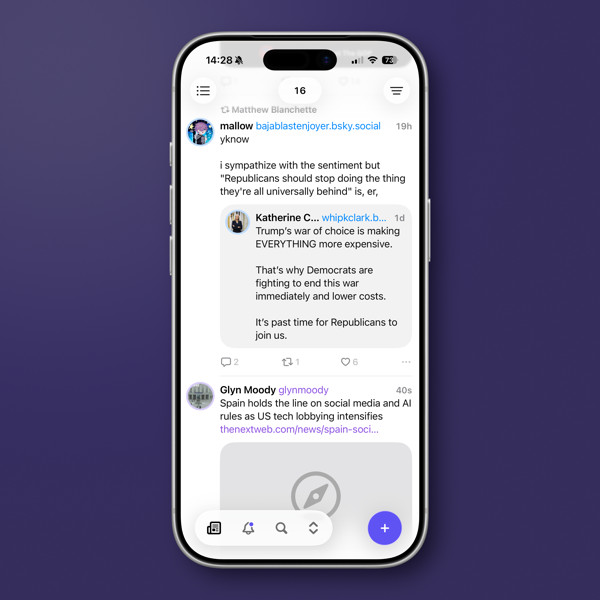
Screenshot of new social media app Indigo

Perhaps we’ve exhausted all of the ideas for what software can do and we’re just looking for a better iteration of what we already have at hand.

I’m talking on a consumer level. Beyond whatever AI supposedly offers, and the explosion of social media apps that happened when Twitter x-ed itself out, I can’t name an app or piece of software in the last few years that wasn’t a different version of something that already existed. Even AI software feels like it’s more of the same, just at a quicker pace.

Certainly there are nuances. But over time they tend to blur. As an example, take weather apps. They’ve all recently followed the leader (I don’t know which app that was) to display variable forecasts from different weather sources. It’s a good feature given that weather services can offer different forecasts. But as most weather apps have quickly adopted similar features, once again there isn’t much of a differentiator between them. Unless Carrot Weather’s bell weather use of insults is your cup of tea.

Don’t get me wrong. Execution and design can (and should) go a long way. Even more so when all things seem much the same or serve the same purpose. Beyond price, that’s really the only big differentiator.

It’s why I’ll try out an app that looks like it doesn’t offer anything beyond what I already have. Within that personal scope, let me say that the new social media browsing and crossposting app Indigo is worth your attention if its functionality fits how you use social media.

Indigo is the creation of Soapbox, the developers who created crossposting app Croissant. (I wrote about it when it released.) While Croissant allows you to cross post to Mastodon, Bluesky, and Threads, (functionality I find useful), Indigo is meant primarily to merge and scroll through a single timeline of your Mastodon and Bluesky feeds. You can also crosspost to both if that’s your desire. Threads isn’t included, as it doesn’t allow for viewing its timelines in the same way, which is curious as it is supposedly federated with Activity Pub.

If scrolling social media feeds is your thing, Indigo is certainly worth a look. It’s very well designed, and easy to discover its functionality.

It’s a first version of the app, and as one of the developers, Aaron Vegh says on his blog, “The Indigo we’re shipping today is going to be the worst version.” For the worst and first version, I believe Aaron and Ben McCarthy have done an excellent job. (You should read both Aaron’s and Ben’s blog posts. Ben’s describes the functionality quite well.) Having followed the development of Croissant since its release, I’ll say that the care they’ve used in the past with that app points to the same for the future of Indigo.

If you use both Mastodon and Bluesky, once you sign in to both through Indigo, you see your feeds merged together. You don’t need to use both social networks. The functionality is the same if you prefer only one of the two social networks. So, if you’re user of only one, it could replace whatever app you might currently be using.

One of the nicest design touches, and obviously an essential one, is that it’s easy to distinguish where things are coming from if you merge your timelines. Mastodon links are purple and those from Bluesky are, well they’re blue.

You can tell if a post is crossposted between the two networks, and another nice feature is that Indigo will merge the two in some cases (timing plays a part) so you don’t see them twice. You can switch between each version and take actions like quoting or replying to both at the same time.

If you’ve used Croissant to crosspost, doing so on Indigo will feel very familiar. Notifications, should you choose to receive them on your device, work as you would expect. The Notification tab in the app is quite well done and easy to understand.

The app is available for the iPhone, iPad, and Mac, and a single subscription covers you across devices. There is a free tier that’s read-only. If you’re interested in Indigo, the free tier is read only. That’s good way to determine if the excellent design of the app appeals to you.

If you use both social networks and would like to combine your feeds into one timeline I think Indigo is worth a look. Let me say this about Indigo and my social media usage. The single merged timeline feature has its attraction, but it’s not something that’s a high priority for me and that brings me back to the beginning of this post.

I like to keep my eye out for developers who focus on good design and good functionality. That’s the case with Indigo. As in this case, an app may not fit my needs, but I’ll remember the developers or company behind it. It’s much the same way I follow good theatre or film directors, and good writers.

I don’t see many new ideas or new needs to fill coming down the software or app pike in the near future. That may say more about me than it does the software market these days. Even so, that view of mine has me paying even closer attention to those who care about the look and feel of what they produce.

(image from the author)

You can also find more of my writings on a variety of topics on Medium at this link, including in the publications Ellemeno and Rome. I can also be found on social media under my name as above. This site does not use affilate links. 


Sunday Morning Reading

Sometimes a pear is just a pear.

Another Sunday dawns, so it must be time for Sunday Morning Reading. An interesting collection of pieces to share this week. On one hand it seems like any other week. On the other, this week’s edition offers a few nuggets worth chewing on. Don’t over think it. Enjoy.

Three green pears on a table top in various degrees of ripening. Photo by Tijana drndarski 3zmVSZQIozA unsplash.

Leading off, I’m highlighting an excellent series from The Baffler called The Profession That Does Not Exist. The Baffler bills itself as “America’s leading voice of incisive and unconventional left-wing criticism”, for what that’s worth. I find it an excellent source of good writing. Each of the pieces in the series that has the subhead “writing won’t make you a living”, is worth your time, but I’ll highlight two.

A Pear Is Just A Pear by Timmy Straw. Making your way in a crazy world you can find that sometimes a pear is just that. A pear.

Bertrand Cooper’s ISpyForGood recounts his experience as a social media investigator, a job that allowed the possibility of stepping out of poverty that entailed examining how others often scammed their ways to do the same.

Apparently the ruling class in Silicon Valley are worried that folks don’t take too kindly to their products or their ruling. David Wallace-Wells takes a look in A.I. Populism Is Here. And No One Is Ready. I guess when you threaten to turn the world upside down folks do get a bit antsy.

Open your arms and wave at just about anything happening around and to us and you can’t miss the obvious. Tom Wellborn takes it all on in The Frequency At Which Accountability Cannot Reach. Sometimes a pear is just a pear.

JA Westenberg says Outrage Is Letting Someone Else Set The Frame. Westenberg also offers up The War Between Fast And Legitimate Is Here. I suggest getting out of these messes we’re in calls for new frames or new acceptance of coloring outside the lines. Oh, wait. All the lines have been blurred.

James O’Sullivan thinks We’ll Soon Find Out What Is Truly Special About Human Writing. I suggest we’ll “rediscover” rather than finding out, but his point is spot on.

Meanwhile, Will Gottsegen says Sam Altman Wants To Know Whether You’re Human. It appears Altman and his ilk are looking at the problem through the wrong end of a telescope at a tiny mirror reflecting back.

On another front, Marianne Dhenin takes a look at The Small Wisconsin City That Defeated A Giant Data Center. I don’t think the robots will ever be able to muster this kind of civil action.

You, like I, may be overly tired of hearing anything having to do with the Epstein Files. Even so, I encourage you to take a look at this excellent piece from Gabrielle Glancy. I Grew Up With Epstein In Brooklyn. Our Neighborhood Held Dark Secrets not only tells a tale that should frighten, but one that I guess more might share than most ever want to acknowledge.

Happy Mother’s Day to all our mothers out there and all to come. Sometimes a pear is just a pear.

(Image from Tijana Drndarski on Unsplash)

If you’re interested in just what the heck Sunday Morning Reading is all about you can read more about the origins of Sunday Morning Reading here. If you’d like more click on the Sunday Morning Reading link in the category column to check out what’s been shared on Sunday’s past. You can also find more of my writings on Medium at this link, including in the publications Ellemeno and Rome. This site does not use affilate links. 

 

Sunday Morning Reading

It’s all a loop

Back from spending time with the grandkids and back for some Sunday Morning Reading. There’s an interesting context to the many issues we face that evolves while watching the little ones grow and learn. Things are happening that will affect their lives in the years ahead. Yet there’s a blissful innocence cocooning them from it all. At the moment.

In my reading, and in my sharing of that reading, I find I’m doing so mostly for the thousands of tomorrows they have in their future, much more so than for anything that will happen in this week’s tomorrows that might affect me in the moment. Read on.

Neil Steinberg’s Meet My Metaphors #5: ConAgra is about so much more than the agricultural giant moving to Chicago years ago. If you like metaphors, it’s a must read. If you’re approaching the last leg of the journey, it’s a must read. If you’re concerned about what you may leave behind, well, it’s a must read.

JA Westenberg posits that it’s all a loop. Joke’s on us, I guess. Check out The Loop: Everything Has Happened Before, And Everything Will Happen Again. 

Ky Decker wonders, Do I Belong In Tech Anymore? I find if you’re asking that question about anything, you already know the answer.

Wesley Hilliard thinks we should Stop With The Tech Celebrity Worship. I concur. AND I’m for knocking down all the pedestals we erect for celebrities to ascend in any and all fields of human endeavor.

Timothy Noah takes a look at How The Tech World Turned Evil. Pop the bubbles. Tear down the pedestals. Endless loops.

Meanwhile, Makena Kelly examines how Palantir Employees Are Talking About The Company’s Descent Into Fascism. 

Follow that up with Jasmine Sun’s piece, Silicon Valley Is Bracing For A Permanent Underclass. 

The previous four links speak to a much darker future in one way or the other. Read them. Then go back and re-read the first two links by Steinberg and Westenberg. Looping context.

Closing out this week, here’s a couple of links that feel a bit more uplifting. First up, check out Mat Duggan’s Boy Was I Wrong About the Fediverse. 

Then follow that up with David Todd McCarty’s Becoming A Local. Sometimes the horizon is much closer than you think.

If you’re interested in just what the heck Sunday Morning Reading is all about you can read more about the origins of Sunday Morning Reading here. If you’d like more click on the Sunday Morning Reading link in the category column to check out what’s been shared on Sunday’s past. You can also find more of my writings on Medium at this link, including in the publications Ellemeno and Rome. This site does not use affilate links. 

 

Apple and Google Still Generating Profits from Grok’s Sexualized Image Generation

It’s my rule. I’ll break it if I want.

Rules are made to be broken is the cliché. That’s a theme that’s running louder and wilder through much of life these days. Build complicated and successful things. Create rules to protect what you’ve built. Mass enough power and then bend or ignore the rules when they become inconvenient.

Image 4-15-26 at 07.50.

That theme surfaces frequently enough that it’s almost a meme. In politics it happens every day, enough to make a mocking myth of things like the rule of law and the constitution. We see it in religion. We see it in business, too frequently in the business of tech. When you’re big enough that you have to, and can create rules to protect what you’ve built against others, and yourself, you substitute the convenience of adhering to the rules for the inconvenience of principle.

Back in January, (damn that seems so long ago), Elon Musk’s Grok released an AI image editing feature that allowed users to create nonconsensual sexualized deepfakes. It was ugly and disgusting.

As with all new things tech, it caught on like wildfire, and then X took fire from many quarters including some governments. (Not ours — caterwauling congress critters no longer count.) Apple and Google also took hits for continuing to allow the app on their respective App stores in violation of existing rules. There were calls for both Apple and Google to follow those rules and take the app down. Something both companies have done for other rule violating apps with and without public punity.

That didn’t happen.

Yesterday, a report from NBC revealed that Apple, in a letter to U.S. Senators, claimed that it worked behind the scenes of the public uproar to demand that the developers “create a plan to improve content moderation.” According to The Verge, 

Throughout this covert back-and-forth, Grok and X appear to have remained live on the App Store, a drawn-out process that may help explain the confusing, haphazard rollout of moderation changes announced in real time. This included limiting Grok on X to paying subscribers and attempting to stop Grok from undressing women. Our investigations revealed that neither were particularly effective beyond making the tool a bit harder to access. Later interventions, like X letting users block Grok from editing their photos, are also easily circumvented.

Despite Apple’s approval and xAI’s claims it has tightened safeguards, Grok still appears to be able to generate sexualized deepfakes with relative ease.

So, essentially nothing of any real effect happened. Scratch that. Something did. X and Grok put the feature behind a paying subscription. One that Apple also reaped profits from and still does. As does Google.

The one rule this era has taught us is that if you’re big and rich enough, and can weather the storm of public scorn, you can essentially ignore the rules. Even those you’ve written yourself. With impunity.

You can also find more of my writings on a variety of topics on Medium at this link, including in the publications Ellemeno and Rome. I can also be found on social media under my name as above.


Sunday Morning Reading

A basket of good writing to share

For those who celebrate Easter and Passover, and all who do not celebrate either, may you find some bit of peace on this Sunday morning, however you see yourself and the world. I’d like to say this week’s edition of Sunday Morning Reading is filled with Easter eggs, but instead it’s just the usual basket stuffed with links to interesting topics and stories that I like to share. Enjoy.

PXL 20260403 165116674.PORTRAIT.

It’s good to be seen, certainly the way you see yourself. When seen by someone who doesn’t know you, that’s eye-opening. Check out Natasha MH’s The Taxi Driver Knew.

The war that isn’t a war in Iran continues. Whatever that story is, it is still being written. Given that this might be heading to the culmination of a conflict that has simmered, and occasionally boiled over, for decades if not longer, there are a few stories out there that offer preface. He Helped Stop Iran From Getting The Bomb by David D. Kirkpatrick is one worth reading.

JA Westenberg’s The “Passive Income” Trap Ate A Generation of Entrepreneurs is also one heckuva a read. There’s nothing passive about this take.

Seva Gunitsky takes on The Incel Global Order. Somebody needs to.

As the technology we use advances, in some spheres some are stepping back. Joshua Cohen takes a look in Sweden Goes Back To Basics, Swapping Screens For Books In The Classroom.

Social Media is under the microscope again after two recent court verdicts against Meta. Chris Castle takes a look with The Social Media Verdicts Are In. Now Ask The Hard Question: Where Was The Board? Counting the money, I imagine. Hat tip to Stan Stewart for this one.

In the category of no easy answers, Mathew Ingram also examines what’s going on in social media with Social Media May Be Bad For You But The Remedy Could Be Worse.

On the Artificial Intelligence front there are always interesting topics cooking as the AI purveyors cook the planet. I wrote about two fascinating pieces yesterday, and today I’m highlighting Angela Fu’s An AI Company Set Out To Fix News Deserts. Instead, It Copied Local Journalists Work. Something tells me we’re going to be seeing more of this going forward.

Apple is, I assume, winding up its week celebrating its 50th Anniversary. So much has been written on that topic because there is indeed much to celebrate and much history to contemplate while looking ahead. Here are four pieces that caught my eye, the first three primarily because they are more personal than historical, the fourth is a look ahead.

John Moltz gives us Missed Connections: Me and Apple.

James Thomson is one of my favorite Apple developers. His Apple At 50: Gonna Be, Gonna Be Golden is indeed a personal journey.

Adam and Tonya Engst have been writing Tidbits since 1990. I started reading it shortly thereafter. What Apple’s 50th Anniversary Misses is certainly different than most, but one that mirrors the thoughts of many on this anniversary.

And Marco Arment, looking ahead, has penned A Letter To John Ternus, the guy everyone assumes will don the CEO mantle in the future.

Baseball is back. And every team and their fans are dreaming of a championship. David Todd McCarty spins a bit of fiction that’s baseball adjacent, but rooted deep in dreams in The Taste Of A Dream.

To conclude this week, this story by Audrey Pachuta very much sums up the contradictions we’re living through at the moment. Check out A Student Set A Goal To Run Every Street In Chicago And Inspired A City. Now He Must Leave The Country. 

May you find peace however you can.

(Photo from the author.)

If you’re interested in just what the heck Sunday Morning Reading is all about you can read more about the origins of Sunday Morning Reading here. If you’d like more click on the Sunday Morning Reading link in the category column to check out what’s been shared on Sunday’s past. You can also find more of my writings on Medium at this link, including in the publications Ellemeno and Rome.


Meta’s Not So Smart Approach To Smart Glasses With Facial Recognition

Leave the timing to comedians

If you’re a comedian, timing is everything. But not so much if you’re SOBs who don’t give a damn about anything other than feathering your own nest at the expense of everyone else’s safety and privacy. Or if you have employees who leak memos to the press.

Alireza heidarpour FiafJwLQfR4 unsplash.

The New York Times has a report on Meta’s second attempt at launching facial recognition, this time with smart glasses. The idea is sketchy enough, but according to a memo that the NYT obtained Meta thinks our political and social turmoil might just provide the right timing. Here’s the money quote:

We will launch during a dynamic political environment where many civil society groups that we would expect to attack us would have their resources focused on other concerns

I’m not so sure civil society groups will take their eye off of the ball now, no matter how much Meta helps the administration continue to stir things up.

There are already reports of people using smart glasses photography for what sounds very much like the reason Mark Zuckerberg created Facebook as Facemash in the first place as a  “hot or not” game. It doesn’t take any leap of imagination to know what kind of mischief this will cause once facial recognition is added into the mix.

The Electronic Frontier Foundation says, There are Seven Billion Reasons For Facebook To Abandon Its Face Recognition. 

But as we continue to see, but never learn, some prepubescent boys with toys will never grow up, always remaining prebubescent boys, even if they accumulate wealth enough to do better things.

There might be money in smart glasses, but if you ask me there might be more money in creating some sort of gadget that we can all carry or wear that blurs our faces and interferes with this kind of photography.

(Photo by Alireza heidarpour on Unsplash

You can also find more of my writings on a variety of topics on Medium at this link, including in the publications Ellemeno and Rome. I can also be found on social media under my name as above.