More Thoughts On The Cook/Ternus Changeover

Honeymoon timing

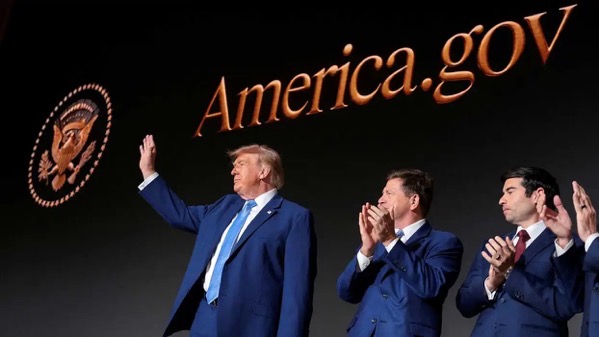
Yesterday’s news of Tim Cook handing over the CEO mantle to John Ternus was news only in the sense of the timing. As I said then, it’s been expected for a while. It reminds me of any Apple rumor. It’s not true until it’s announced, even though most of the announcements turn into mostly confirmation these days. Note that Wall Street barely moved a tick on that news today. That tells you how well the ground was laid.

Apple ceo jpg.

Of course yesterday’s announcement has prompted exactly what you would expect, yielding tons of coverage on websites and podcasts. For Cook there have been accolades and brickbats, both deserved. For Ternus there has been excitement and a little caution.

Before I get to some thoughts of my own, here are a few links I found worthy of sharing because they stepped outside of the expected.

M.G. Siegler takes us on A Cook’s Tour.

Daryl Baxter saw more shock in the Apple community than I did. He reminds us that Tim Cook introduced the first Siri as part of his first iPhone event in 2011. He points ahead to this year’s announcement by John Ternus possibly poised to announce a promised better Siri. What goes around, might come around again. Let’s hope it doesn’t take another 15 years to get it right this time.

And Horace Dediu looks way ahead to 2040, when Ternus himself steps down to begin the transition to the next CEO. John Ternus Has Left Big Shoes To Fill is quite a trip into the future. You’ll get a chuckle or two.

The first of my thoughts has to do with timing. Not specifically the timing of the announcement, but the timing that any new leader gets when stepping into that role. There’s a window of time in which new leaders get a bit of grace. Most call it a honeymoon. While enjoying that honeymoon it’s perfectly acceptable to foist off blame for anything that goes wrong on the last guy.

That will obviously be difficult with Tim Cook stepping into the role of Executive Chairman of the Board. Sort of like going on your honeymoon with your significant other’s father tagging along. But it will be even more challenging given the apparently well deserved narrative being hyped about Ternus’ hardware smarts and his responsibilities in recent years. He’s had his hands on much of the Apple Silicon generation of products, almost presaging the announcement of his ascension to CEO with his role in the recent release of the MacBook Neo.

Adding to the challenge is the well known and well worn narrative about Apple’s long view roadmap of rolling out new products. The story is that Apple is always working ahead on the next generation of a product as it is preparing to release the newest version. What products will we see over the next period of time were green lighted by Cook?

Ternus’s prior role in overseeing hardware also means all of the products rumored to be in Apple’s pipeline for later this year and into next year will certainly feature his fingerprints. But they will also have Tim Cook’s. The question will one day be which product can the world accept as the first Ternus only product. Does it matter? Not really. But it will be treated as if it does. Ask Tim Cook about how that went once he assumed the CEO mantle.

We also all know that there are apparently hardware products (HomePods, Apple TV, other home products) waiting to be shipped once Apple gets its act together with whatever the new Siri is, and how well that works with whatever they will call what heretofore has been labeled Apple Intelligence.

In my way of scoring, the success or failure of those products will fall into the Tim Cook column, regardless of any contributions by Ternus. Again, does it matter? And again, not really. But there is much riding on that this year. One way or the other it will be an imprint on Ternus’ first efforts, whether that’s fair or not.

As to that last thought on Siri and Apple Intelligence, that’s software. That’s software holding back the release of hardware products for Apple, which is first and foremost a hardware company that relies on its own software.

As I’ve said many times, the hardware I’ve seen the since the dawn of the Apple Silicon era is very good, if not exceptional. The software needs lots of attention and work. It’s not just the design choices, it’s the chinks here and there in the armor that sour.

Ternus may be the hardware product guy, but he’s now going to be the guy responsible for the famous and coveted “whole widget.” Obviously that includes the software. And also, the marketing of that whole widget. Software design and implementation has been a bitter bite of the Apple lately, as has some of the marketing. As Ternus expands his view, I will be watching how Apple’s software develops under his leadership with a keen eye.

That expanded view also includes services. New CEOs always like to make a bold statement when they first sit in the chair. While there’s a lot being made of the semiotics trying to show continuity between Cook and Ternus,  I can think of one thing Ternus could do on September 1, that would immediately set him apart an Apple on a new course.

Announce an increase in the base amount of iCloud storage users get for free. 5GB hasn’t cut it for awhile. Cut and run from that legacy and begin making a bold new path.

You can also find more of my writings on a variety of topics on Medium at this link, including in the publications Ellemeno and Rome. I can also be found on social media under my name as above. This site does not use affilate links. 
 

Sunday Morning Reading

“Scars speak more loudly than the sword that caused them.” – Paulo Coelho

It figures. You plan a weekend of yard work and Mother Nature reminds you she controls more than you do. In these parts that makes this a perfect chilly Sunday for a little Sunday Morning Reading. I’m not sure how, but a theme emerges in the collection of links I’m sharing this weekend, somehow suggesting that regardless of our feelings, the forces that seem to be conspiring against us just keep rolling. At some point, just like with the shifts in the weather, you just want some unshifting force to make it all stop.

A dark bronze sculpture of a young boy with shaggy hair, wearing a t-shirt, jeans, and sneakers, sitting and reading a book on a light stone bench in a park setting. He is focused on an open book he holds in both hands, on which a small bronze bird is perched on the upper edge. A stack of four bronze books is tucked behind his right arm. His left leg is crossed over his right, revealing a highly detailed molded bronze sneaker. In the background, a curved stone path is lined with two white, pebble-shaped benches and a dormant lawn leading to a paved road, a church building, and a blue sign with text. The sky is overcast, and a dark sedan is visible on the street.

Here in Chicago we’re seeing a number of theatre spaces closing. (We’re also seeing a few open.) On the national stage, we’re  watching with dismay, anger, and sadness as The Kennedy Center is being shut down by cultural barbarians. Josef Palermo had an inside seat to that dismantling and tells the story in My Front-Row Seat To The Kennedy Center Implosion. 

And while Madison Square Garden is more a venue for pure entertainment than the arts, the story about how its owner is using surveillance on its patrons and employees that upset the powers that be is a harbinger of things to come in all arenas of our lives. Check out The Shocking Secrets of Madison Square Garden’s Surveillance Machine by Noah Shachtman and Robert Silverman.

Having experimented a bit with Artificial Intelligence in seeking information about a statue this weekend, my ongoing suspicions that this “way of the future” isn’t ready for today, much less tomorrow. The technology might be not ready for prime time, but the hype has never been. Kyle Chayka says A.I. Has A Message Problem Of It’s Own Making. I like this quote in the subhead, “If you tell people that your product will upend their way of life, take their jobs, and possibly threaten humanity, they might believe you.” True enough. And if those things are as incompetent as humans, what’s the damn point?

It’s all math. That’s one way to sum up any computing activity. Unless it comes to emotion. And yet, some think feelings are somewhere in the numbers. Mike Elgan writes, No, Math Doesn’t Have Feelings in response to those who must not have any feelings of their own, but are trying to add that into the AI equation.

Gaby Del Valle, says The Only Way To Fight Deepfakes Is By Making Deepfakes. Sounds like an arms race to me. We should be up in arms about it.

Speaking of arms races, Gideon Lewis-Kraus looks at AI in the war that isn’t a war, that’s over every week, but begins again every weekend once the markets close in How Project Maven Put AI Into The Kill Chain.

Apologies for so much AI linkage this week, but it’s been on my mind lately, especially since the news of Mythos broke. It’s the latest demon to fly out of Pandora’s box, and I’m afraid it’s not the last. Margie Murphy, Jake Bleiberg, and Patrick Howell O’Neill examine How Anthropic Learned Mythos Was Too Dangerous For The Wild.

CNN has a report by Saskya Vandoorne, Kara Fox, Niamh Kennedy, Eleanor Stubbs, and Marco Chacon called Exposing A Global Rape Academy. It’s a hard, but I think necessary read considering the topic is just how horrible humans can be to one another. Maybe we should hope the robots develop feelings. Too many humans seem to have stopped developing theirs.

Gail Beckerman says If You Want A Better World, Act Like You Live In It. I concur.

And to close out this week, Scars is a short story by Sigrid Nunez. Some scars can’t be seen. The ones we’re watching form daily, can be.

(Photo by the author.)

You can also find more of my writings on a variety of topics on Medium at this link, including in the publications Ellemeno and Rome. I can also be found on social media under my name as above.


They Mystery of Magdalene, My Skepticism, and AI

A journey with with public art and AI

I love a good mystery. Especially when it is in public view, like the statue pictured below. (Click to enlarge.)

While in downtown Chicago yesterday I had some time on my hands and took a stroll along Michigan Avenue south of the Chicago River. As I said here, I felt like a tourist in my own town. I stumbled across a statue that seemed new to me.

I was so taken by the statue and its placement between, and prominently in front of, two iconic statues from the 1920’s called The Bowman and The Spearman, that I wanted to know more about what I thought was newer artwork. Given that there was no identification plaque anywhere near the statue, I decided to do what most of us do these days and look up information on the Internet.

I plopped a copy of the photo I took into a Google search box and the result yielded the name of the statue as Magdalene by Dessa Kirk. That’s a link to a Facebook profile. Intriguingly Kirk doesn’t seem to have a website I can find, and examining her photos, I saw only one reference to the statue in question. As a spoiler, it appears Dessa Kirk is indeed the sculptor of this statue called Magdalene. But it took me a while to confirm that.

Magdalene can be found at the intersection of the Congress Parkway and Michigan Avenue in Chicago, and was installed in 2005. Sculpted with a combination of woven wood, branches, and found materials (recycled hoods and fenders of old cars,) combined with weathered metal. The “skirt” of the statue is filled with live flowers and climbing vines, which change the statue’s appearance with the seasons. On my visit I could see a few green sprouts starting to spring up.

Here is a link about the statue on the Chicago Park’s District website that lists her as the artist with a brief bio. I did not find that until after I had gone down the few rabbit holes I mention below.

In this age of dis- and mis- information, AI hallucinations, and AI everywhere — including Google’s search results — I’ve grown increasingly skeptical of just about everything.

Given my age, I’ve also grown increasingly less trusting of my own memory and powers of observation. Something rattling around in my brain didn’t quite sit right about the 2005 installation date. I’ve driven by and through that intersection many times since my return to Chicago in 2013 and I don’t recall seeing the statue. 

Before turning into bed for the night, I decided to do another search, this time instead of using Google’s regular old search box, I used Google’s Gemini. It turned up a completely different result, saying the statue was named Terra Nuestra by Hector Gomez and was a part of the Chicago Park District and Chicago Department of Cultural Arts Monument Response Project which just recently launched April 8th of this year. 

CleanShot 2026-04-18 at 12.17.Checking out the link to the Monument Response Project I found no mention of this particular statue at this particular site, although there was information about Gonzalez and Tierra Nuestra at another site. 

So, at this moment I had two conflicting pieces of information from Google using different access to seek more information. Though Google’s search results presented the Dessa Kirk info in its AI summary at the top of the search results, I was still skeptical.

My initial thought was that if this was a part of an art installation project that had just begun 10 days ago, perhaps local news media, which yielded no results, and Google’s crawlers were just behind the curve. As was the Park District’s website. 

The AI generated description along with the project’s narrative that these pieces of artwork were meant to counter existing narratives made perfect sense. Descriptions of this statue, very feminine, nurturing, and a rising from the earth’s posture made, in my mind, a perfect contrast to the often criticized go west young man mythology of the two behind it.

I queried Google’s Gemini further, saying that I didn’t think Gomez’s sculpture was correct and it yielded this correction.

CleanShot 2026-04-18 at 12.30.

Another artist, another statue, correct location, same city-wide initiative. I queried Gemini further and got another correction.

CleanShot 2026-04-18 at 12.32.

Different results. Then, another attempt.

CleanShot 2026-04-18 at 12.34.

And again with different results.

CleanShot 2026-04-18 at 12.35.

And then again.

CleanShot 2026-04-18 at 12.36.

I then preceded to query ChatGPT and Claude. Here’s the first Claude response. Another artist enters the picture.

CleanShot 2026-04-18 at 12.38.

And again later.

CleanShot 2026-04-18 at 12.38.

ChatGPT did no better, no worse, and like the others proved of no use.

The bottom line is that my skepticism and distrust are more than well founded. What triggered me to go down these AI rabbit holes was that there was something logical about a statue I thought was new, that I kept getting conflicting results about, that pointed to a brand new city-wide art project. It made some sense in my growing skepticism. I wasn’t the only one going down rabbit holes.

What disappoints me, and I think should disappoint and be a warning to us all, is that a photo of something — in this case a public artwork that has existed since 2005 — should come up in any of these AI searches with relevant information. There’s an entire industry being built with smartphones, smart glasses and pins, on a feature that tells us to point at anything and the robots will tell you what it is.

I should have trusted the first plain old Google search box even with the AI generated search summary at the top of the page. But long before this little search mystery I’d given up on that, given many of the previous errors that have yielded in the past. Tech companies relying on AI can throw up all the caveats about possible inaccuracies they want to. I’d venture that it’s almost too late, because their initial promises, having been so broken that they now require those caveats, have already sculpted such a deeper narrative of mistrust in most minds, that they’ll live on as long as stone statues.

As to Magdalene and Dessa Kirk, I’m still very taken with the artwork. Another thing this episode tells me is that artists are going to need to be extremely diligent in crafting websites and publicity about their efforts going forward. They only have themselves to trust.

You can also find more of my writings on a variety of topics on Medium at this link, including in the publications Ellemeno and Rome. I can also be found on social media under my name as above.


Apple and Google Still Generating Profits from Grok’s Sexualized Image Generation

It’s my rule. I’ll break it if I want.

Rules are made to be broken is the cliché. That’s a theme that’s running louder and wilder through much of life these days. Build complicated and successful things. Create rules to protect what you’ve built. Mass enough power and then bend or ignore the rules when they become inconvenient.

Image 4-15-26 at 07.50.

That theme surfaces frequently enough that it’s almost a meme. In politics it happens every day, enough to make a mocking myth of things like the rule of law and the constitution. We see it in religion. We see it in business, too frequently in the business of tech. When you’re big enough that you have to, and can create rules to protect what you’ve built against others, and yourself, you substitute the convenience of adhering to the rules for the inconvenience of principle.

Back in January, (damn that seems so long ago), Elon Musk’s Grok released an AI image editing feature that allowed users to create nonconsensual sexualized deepfakes. It was ugly and disgusting.

As with all new things tech, it caught on like wildfire, and then X took fire from many quarters including some governments. (Not ours — caterwauling congress critters no longer count.) Apple and Google also took hits for continuing to allow the app on their respective App stores in violation of existing rules. There were calls for both Apple and Google to follow those rules and take the app down. Something both companies have done for other rule violating apps with and without public punity.

That didn’t happen.

Yesterday, a report from NBC revealed that Apple, in a letter to U.S. Senators, claimed that it worked behind the scenes of the public uproar to demand that the developers “create a plan to improve content moderation.” According to The Verge, 

Throughout this covert back-and-forth, Grok and X appear to have remained live on the App Store, a drawn-out process that may help explain the confusing, haphazard rollout of moderation changes announced in real time. This included limiting Grok on X to paying subscribers and attempting to stop Grok from undressing women. Our investigations revealed that neither were particularly effective beyond making the tool a bit harder to access. Later interventions, like X letting users block Grok from editing their photos, are also easily circumvented.

Despite Apple’s approval and xAI’s claims it has tightened safeguards, Grok still appears to be able to generate sexualized deepfakes with relative ease.

So, essentially nothing of any real effect happened. Scratch that. Something did. X and Grok put the feature behind a paying subscription. One that Apple also reaped profits from and still does. As does Google.

The one rule this era has taught us is that if you’re big and rich enough, and can weather the storm of public scorn, you can essentially ignore the rules. Even those you’ve written yourself. With impunity.

You can also find more of my writings on a variety of topics on Medium at this link, including in the publications Ellemeno and Rome. I can also be found on social media under my name as above.


U.S. Treasury Wants Access To Mythos

What could possibly go wrong?

The kicker above says it all. According to Bloomberg, the CIO of the U.S. Treasury, Sam Corcos, is hoping to get his hands on Anthropics’s apparently super dangerous AI software, Mythos. The idea is to use Mythos to check and prepare for vulnerabilities. In any normal world that would make sense. We don’t live in that normal world.

Claude mythos.

Set aside that Anthropic and the U.S. Government are feuding over the government designating Anthropic a security threat and supply chain threat. The fact that Mythos can seek out and find vulnerabilities in software that humans apparently can’t, and has done so already for most operating systems and browsers currently in existence, is concerning in and off itself. Add to that what I’m reasonably sure is exploitable software the government is running, and this smells like a recipe for potential chaos. 

Anthropic did not want to release Mythos to the public, given its potential for harm in the wrong hands and formed Project Glasswing, inviting a number of tech companies and JP Morgan Chase into the fold so they could check out their systems. Other banks have since also begun testing. 

I don’t want to sound all doomy and gloomy, but however this story unfolds, it does appear there is enough there there to be skeptical and concerned. Even before the ongoing daily chaos and incompetence displayed by the second Trump administration, the U.S. government has a much deserved reputation for being slow on the uptake in the digital age. I know several folks working in various government agencies, any of whom could tell you horror stories. 

The fear obviously is what happens if Mythos gets into the wrong hands. I don’t know about you, but I think we certainly have enough of those running Washington DC currently. Bottom line, this bears watching and any number of fronts. 

You can also find more of my writings on a variety of topics on Medium at this link, including in the publications Ellemeno and Rome. I can also be found on social media under my name as above.

Sunday Morning Reading

Optimism comes every Spring, but Winter always nips at the edges

Temperatures are warming. Every day brings more daylight, more blooms in the gardens and trees Yet on the edges of two of my interests, politics and tech, things continue to darken a bit. The common denominator between the two? Humans. But then again, humans are the ones who read this Sunday Morning Reading column. As well as the bots that scrape it of course.

PXL 20260411 142247979.

Some of the big news in tech this week was about a new AI product from Anthropic called Mythos. So fraught with potential peril that Anthropic gathered together the major tech heads to form a consortium to keep lid on it. Monica Verma has a good run down with her piece Did Claude Mythos Break The Cybersecurity Industry.

M.G. Siegler’s The Causal Catastrophe of AI takes a look at maneuvering around Mythos as well. Call me crazy, but I don’t think there’s anything casual about this development.

The reason I’m a pessimist on this is that I agree with a comment from JA Westenberg,  “Being wrong about doom costs you nothing.” Check out Optimism Is Not A Personality Flaw. The piece walks a line. You should read it and walk it too.

Mike Elgan takes a look at Black Traffic: The Corporate Sabotage Technique You’ve Never Heard Of. Now you have.

Ng Chong examines The Echo Chamber In Your Pocket. Follow that up with this from Julie Jargon: Over 4,732 Messages, He Fell In Love With An AI Chatbot. Now He’s Dead.(That’s an Apple News lnk. This is an archived link.)

David Todd McCarty thinks one path to reclaiming power over information might be in The Return Of The Local Newspaper.You don’t know what you had until it’s gone.

This Is What Will Ruin Public Opinion Polling For Good. The “this,” according to Lief Weatherby, is something called silicon sampling. Yes, you guessed it. AI.

Coming back around to my comment at the top about not having faith in humans, OpenAI’s Sam Altman got his turn in the barrel (again) this week. Ronan Farrow and Andrew Marantz spent quite a bit of time putting this piece together. Check out Sam Altman May Control Our Future — Can He Be Trusted? FWIW, I don’t need much more time than it takes to put this column together every week to answer their question in the negative. And not just about Altman.

Mean while Altman responded on his blog, after someone tossed a Molotov cocktail at his house. He says “I have underestimated the power of words and narratives.” For someone who has scraped all the words he can off of the Internet and tried to turn them into something smarter than humans, you’d think his machines could have at least figured out that words have power.

Natasha MH sums up a lot of my lack of faith in humans in her piece, Stop Blaming The Chatbot. As she puts it, “AI didn’t make you stupid. You were already getting there.”

Sorry to be so negative this week, but that’s where I’m living., But to change the tone, Neil Steinberg turns around the Latin term, memto mori, (remember to die) around to memento vivere, or remember to live. A nice little bit of humanity to close out this week with Little LIfe.

(Photo from the author)

If you’re interested in just what the heck Sunday Morning Reading is all about you can read more about the origins of Sunday Morning Reading here. If you’d like more click on the Sunday Morning Reading link in the category column to check out what’s been shared on Sunday’s past. You can also find more of my writings on Medium at this link, including in the publications Ellemeno and Rome.


Taking Flight On A Glasswing

With the fragility of egos as a pilot

Every time I hear the warnings about the current or next big thing in Artificial Intelligence, I’m reminded of the Surgeon General’s warnings that are printed on packs of cigarettes. I’m also reminded of every new fad I’ve seen in my lifetime, that might have inched over into a trend, but eventually ended up waiting for its turn on the nostalgia wheel of time.

Claude mythos.

As the world was holding its breath from the civilization destroying threats that sprung forth from the mind of the U.S. President, and then exhaling as they turned into the latest episode of “Bluff, Bluster, and Bullshit,” we were learning about a new AI leap and threat from Anthropic, potentially as dire, called Claude Mythos Preview. To get ahead of any damage this coming attraction might visit upon us Anthropic created Project Glasswing. Given that the raving lunatic in the White House came to power a second time with a civilization destroying manual in hand called Project 2025, I’m more than a bit leery of anything with a title that leads with the word “Project.”

From what I’ve read, Mythos is the latest innovation in Anthropic’s flavor of Artificial Intelligence. It is so powerful that it has sought out and found vulnerabilities in so much of the software the world runs on, that Anthropic is only releasing it to a hand full of companies (Apple, Microsoft, Google, Broadcom, JPMorganChase, the Linux Foundation, NVIDIA, and more.) That’s Project Glasswing. Tech overlords uniting to protect us from their sloppy software. (The lawyers will have a field day.)

Anthropic, having been declared by the U.S. as an unacceptable national security threat and supply chain risk, nevertheless is also working with the same U.S. Government looking ahead to the threats. Somehow security and existential threats always seem to become negotiating partners with their foes when money is at stake. Also occasionally when global annihilation is knocking on the door.

The way I interpret the idea behind Project Glasswing is that these companies, and presumably governments, might use Mythos to seek out all of the vulnerabilities, and perhaps obliterate them (I use that term in the Trumpian and Hegsethian sense) before they can filter down into things like power grids, banking systems, and consumer use. It can supposedly do this at a scale humans can’t. Note that Mythos discovered problems in every operating system and, on a level both big and small, the constantly updating browsers we use on our computers.

During our testing, we found that Mythos Preview is capable of identifying and then exploiting zero-day vulnerabilities in every major operating system and every major web browser when directed by a user to do so. The vulnerabilities it finds are often subtle or difficult to detect.

I think of it this way. Announcing the existence of Mythos is akin to living the moments of terror those responsible for our safety have in House of Dynamite, once they realize the gig is up, misses are inbound, and the interceptors have failed. I’d call it an “Oh, shit” moment.

If you ask me Mythos is also exposing more than a few myths as well as vulnerabilities. The sound you hear is PR slide decks about security enhancements in the latest releases of current software being furiously redone.

As M.G. Siegler puts it,

Historically, many vulnerabilities have been fixed only after someone exploited them in some way. Again, that’s because the incentives are in favor of the attacker versus the defender. If and when Mythos-caliber tools are put in the hands of hackers… yeah.

That’s obviously exactly why Anthropic isn’t releasing Mythos to the public and also why they’ve set up Glasswing. While the company may be first to such capabilities, they won’t be the last. They probably don’t even have long to try to get ahead of the situation. While I generally dislike the nuclear weapons analogy for AI, I must admit, this all does feel a bit Manhattan Project-y. The good guys are racing against the clock to implement a new technology before the bad guys catch up. But they will. They always do.

Yeah, that sounds problematic.

Paul Krugman took a break from agonizing and writing about the situation in the Middle East and weighed in with this,

The good news is that Anthropic discovered in the process of developing Claude Mythos that the A.I. could not only write software code more easily and with greater complexity than any model currently available, but as a byproduct of that capability, it could also find vulnerabilities in virtually all of the world’s most popular software systems more easily than before.

The bad news is that if this tool falls into the hands of bad actors, they could hack pretty much every major software system in the world, including all those made by the companies in the consortium.

So, there’s plenty of doom floating around, along with the now clichéd approach to all things AI, that there’s good tech behind all of the bad things that the tech can do. Note that the profits from tobacco helped found the U.S. and twisted science and politics into knots trying not to end up on the ash heap.

I’ve largely stayed away from playing with any of these AI tools and toys, but I follow the news of the advances on all fronts, and those who do play around with it. Like it or not, those who run the world have decided this is our future.

I’ll be honest. Hallucinations aside, I don’t know enough rather or not to trust the software. I have my doubts and I do have fears about the tech. Project Glasswing might be a noble effort. Yet, with a clear mind, I do know enough not to trust any of the humans running the show. Frankly, it feels like they don’t know enough to trust the software either, much less to protect their and our systems from being destroyed by some kid in a basement.

As Natasha MH puts it, not writing about Mythos specifically, but about Artificial Intelligence in general, AI didn’t make you stupid. You were already getting there.

You can also find more of my writings on a variety of topics on Medium at this link, including in the publications Ellemeno and Rome. I can also be found on social media under my name as above.


Sunday Morning Reading

A basket of good writing to share

For those who celebrate Easter and Passover, and all who do not celebrate either, may you find some bit of peace on this Sunday morning, however you see yourself and the world. I’d like to say this week’s edition of Sunday Morning Reading is filled with Easter eggs, but instead it’s just the usual basket stuffed with links to interesting topics and stories that I like to share. Enjoy.

PXL 20260403 165116674.PORTRAIT.

It’s good to be seen, certainly the way you see yourself. When seen by someone who doesn’t know you, that’s eye-opening. Check out Natasha MH’s The Taxi Driver Knew.

The war that isn’t a war in Iran continues. Whatever that story is, it is still being written. Given that this might be heading to the culmination of a conflict that has simmered, and occasionally boiled over, for decades if not longer, there are a few stories out there that offer preface. He Helped Stop Iran From Getting The Bomb by David D. Kirkpatrick is one worth reading.

JA Westenberg’s The “Passive Income” Trap Ate A Generation of Entrepreneurs is also one heckuva a read. There’s nothing passive about this take.

Seva Gunitsky takes on The Incel Global Order. Somebody needs to.

As the technology we use advances, in some spheres some are stepping back. Joshua Cohen takes a look in Sweden Goes Back To Basics, Swapping Screens For Books In The Classroom.

Social Media is under the microscope again after two recent court verdicts against Meta. Chris Castle takes a look with The Social Media Verdicts Are In. Now Ask The Hard Question: Where Was The Board? Counting the money, I imagine. Hat tip to Stan Stewart for this one.

In the category of no easy answers, Mathew Ingram also examines what’s going on in social media with Social Media May Be Bad For You But The Remedy Could Be Worse.

On the Artificial Intelligence front there are always interesting topics cooking as the AI purveyors cook the planet. I wrote about two fascinating pieces yesterday, and today I’m highlighting Angela Fu’s An AI Company Set Out To Fix News Deserts. Instead, It Copied Local Journalists Work. Something tells me we’re going to be seeing more of this going forward.

Apple is, I assume, winding up its week celebrating its 50th Anniversary. So much has been written on that topic because there is indeed much to celebrate and much history to contemplate while looking ahead. Here are four pieces that caught my eye, the first three primarily because they are more personal than historical, the fourth is a look ahead.

John Moltz gives us Missed Connections: Me and Apple.

James Thomson is one of my favorite Apple developers. His Apple At 50: Gonna Be, Gonna Be Golden is indeed a personal journey.

Adam and Tonya Engst have been writing Tidbits since 1990. I started reading it shortly thereafter. What Apple’s 50th Anniversary Misses is certainly different than most, but one that mirrors the thoughts of many on this anniversary.

And Marco Arment, looking ahead, has penned A Letter To John Ternus, the guy everyone assumes will don the CEO mantle in the future.

Baseball is back. And every team and their fans are dreaming of a championship. David Todd McCarty spins a bit of fiction that’s baseball adjacent, but rooted deep in dreams in The Taste Of A Dream.

To conclude this week, this story by Audrey Pachuta very much sums up the contradictions we’re living through at the moment. Check out A Student Set A Goal To Run Every Street In Chicago And Inspired A City. Now He Must Leave The Country. 

May you find peace however you can.

(Photo from the author.)

If you’re interested in just what the heck Sunday Morning Reading is all about you can read more about the origins of Sunday Morning Reading here. If you’d like more click on the Sunday Morning Reading link in the category column to check out what’s been shared on Sunday’s past. You can also find more of my writings on Medium at this link, including in the publications Ellemeno and Rome.


Pinning Tails On AI Donkeys

Does authenticity matter?

Shortly after OpenAI fired the starting pistol for the AI race by releasing ChatGPT, I started saying that at some point the real money was going to be made by whatever company wins the horserace for identifying work created, regurgitated, or recycled by AI. Turns out I may have been wrong. In the face of what can be called abject surrender to an AI filled future, the sprint is now on to determine who has the best tool to identify what was created by humans. My money says everyone involved is running the Mongol Derby.

Erwan hesry ILOFQMEuUrQ unsplash.

Two very interesting recent articles caught my eye. The first is by Jess Weatherbed on The Verge. Riffing off a quote from Instagram’s Adam Mosseri that it will be “more practical to fingerprint real media than fake media,” the article delves into some of the companies working to authenticate human-made work and the challenges they are facing.

The second article is by JA Westenberg, called The AI Writing Witchhunt Is Pointless. Westenberg examines the unreliability of current AI detection tools, and the very reliable human instinct to jump on Internet band wagons loaded with pitchforks and torches at the ready, if they get any sniff of AI in any content.

Both pieces are worth your time.

As someone who has adapted Alexandre Dumas’ The Three Musketeers for the stage in both a musical and a dramatic version, in English and for Russian audiences, I really appreciate Westenberg using Dumas and his almost factory-like ways of cranking out his content and how that would most likely be received in today’s Internet world.

I also very much appreciate Westenberg’s conclusion, essentially saying that there’s no way we to tell how this all turns out. It’s too early in the race. I’m a bit more hard-nosed about accepting Weatherbed’s optimism that “maybe we can return to the days of trusting what we see with our eyes.” We’ve never been all that good at doing that.

At this moment, among admittedly many more moments to come in this saga, all of the major AI services come with the same kind of PAY ATTENTION warnings on some of their features, yet not so much when it comes to content. There’s really no incentive to do so. Mosseri’s Instagram makes money regardless of who or what creates whatever Reel you scroll by.

Outside of consumable and ad serving content, AI purveyors urge users to check sources because the output before them may be inaccurate in a search result, a math problem, or a medical diagnosis. Notice that the CEO of America’s largest public hospital system is ready to start replacing radiologists with AI. Every time I hear that AI will remove us from donkey-like drudge work, I hear AI will remove salaries, yet I somehow doubt the billing will change much.

We’ve never been good at heeding these types of warnings whether they come from Surgeon Generals, Terms of Service, or from our parents. We’re certainly not that adept at being able to separate fact from fiction, regardless of how it’s created.

It strikes me as a deeply ironic, and somewhat nihilistic question, that if Artificial Intelligence was as good as promised or continues as problematic as it is in its current form in any of its facets, would we even care? Yet, if it is good enough to plant seeds of doubt as to how a piece of content comes to be, does it even matter? Reminds me of the discussion between Oppenheimer and Einstein, teased early and then revealed at the end of the Oppenheimer.

I understand why human creators are concerned, but I’m afraid those concerns are being handicapped away from the pole position.  We’ve allowed our economies, both large and small, to be staked on the outcome of the race. On the other hand, if AI is so great, why the hell are AI advocates, running such a breathless and competitive race, so afraid of having anything it produces labeled as created by AI?

(Image from Erwan Hesry on Unsplash.

You can also find more of my writings on a variety of topics on Medium at this link, including in the publications Ellemeno and Rome. I can also be found on social media under my name as above.


Sunday Morning Reading

There be dragons, dogs, and humans. Trust the dogs.

Time for some Sunday Morning Reading.

There’s a great lyric and greater question in Lin-Manuel’s musical retelling of American history, “Who lives, who dies, who tells your story?” Control is a crazy concept. We strive to control what we can, while we’re around. Too often we delude ourselves into thinking we control more than we actually do. No one wants to define themselves or be defined as lacking control, much less under the control of others. We may think we’re masters and mistresses of our own universes and control our own narrative. Yet too often, when we do have control and things go askew, we foist the responsibility (blame) off on others. That may be essential to surviving on the paths we choose. But it’s not easy to control the reactions a dog may have to who’s good or who’s not, a dragon, or much less the demons of our own making.

Shutterstock 1766228261.

Kicking off this week is Natasha MH asking the question, What’s The Best Story You’ve Been Told About Yourself? There be dragons.

The Guardian published an editorial on the ‘unmasking’ of anonymous artists in the wake of the second unmasking of Bansky and the reveal of a hoax surrounding the death of Italian novelist writing under the nom-de-plume Elena Ferrante. Regarding Banksy, The Guardian opines that “his mask is his art — let’s not destroy it.”

I don’t often link to book reviews in this column, but this one struck my fancy. A.O. Scott’s A Treacherous Secret Agent, examines How Literature Spoke Truth To Power During The Red Scare. I’m looking forward to reading this.

Jason Perlow’s The Well We Never Tapped is a sequel to an earlier piece he wrote about the future of science fiction. He argues that in the runaway world of big sci-fi franchises like Star Trek and Star Wars  the answer to controlling the future of these and other properties isn’t retooling or reimagining, but perhaps to stop for a while.

Speaking of science fiction and stopping, on the Artificial Intelligence front a number of things happening in that wannabe industry that can’t really find a purchase beyond the flimflammery of the financial markets and bean counting boardrooms, have been prompting some interesting writing of late. kstenerud on the yoloai blog writes Why Your AI Agents Will Turn Against You. There be lobsters and dragons.

Kevin Baker takes a look at how AI Got The Blame For The Iran School Bombing. Follow that up with Anna Moore’s piece Marriage Over, €100,000 Down The Drain: The AI Users Whose Lives Were Wrecked By Delusion. Makes one suspect that we’re not looking for ways to better exert control over our lives, but to more easily avoid taking the rap when things inevitably go wrong.

Big news last week got kind of mushed about in wish casting about Facebook killing off the Metaverse. That sort of did and didn’t happen. Regardless, Neil Stephenson’s My Prodigal Brainchild caught quite a bit of attention.

Apple is celebrating its 50 year anniversary and there’s lots being written about its history and it’s present. Everyone’s vying for control of that story. Harry McCracken’s How Apple Became Apple: The Definitive Oral History Of The Company’s Earliest Days is worth a read.

So too is David Sparks’ The MacBook Neo’s Unfair Advantage and the Stephen Sinofsky piece he links to, Mac Neo And My Afternoon Of Reflection and Melancholy. The damn thing hasn’t even been on sale for a month, yet we’re already trying to define its legacy.

Two political pieces to conclude with after all of the good feelings surrounding yesterday’s No Kings Rallies. (Watch for the comical battle to control the narrative over that moment this week.)  Lydia Polgreen says what I’ve been saying for over a decade now. It’s Not Trump, It’s America. It’s hard to come out from under the burden of a myth.

Mike Lofgren’s How Trump Fits The “Great Man” Theory of History — Sort Of, taps into Hegel, Asimov, and the wisdom of dogs. He concludes his piece with:

History as we experience it at the sharp end is the aggregation of moral choices made by individual human beings. When those choices become corrupted by fear, resentment or inexcusable stupidity, and then amplified by mass suggestion, we get a creature like Trump, the reflection of a people’s image.

I’ll leave it at that this week.

(Image from Daniele Gay on Shutterstock

If you’re interested in just what the heck Sunday Morning Reading is all about you can read more about the origins of Sunday Morning Reading here. If you’d like more click on the Sunday Morning Reading link in the category column to check out what’s been shared on Sunday’s past. You can also find more of my writings on Medium at this link, including in the publications Ellemeno and Rome.