Downtown Day

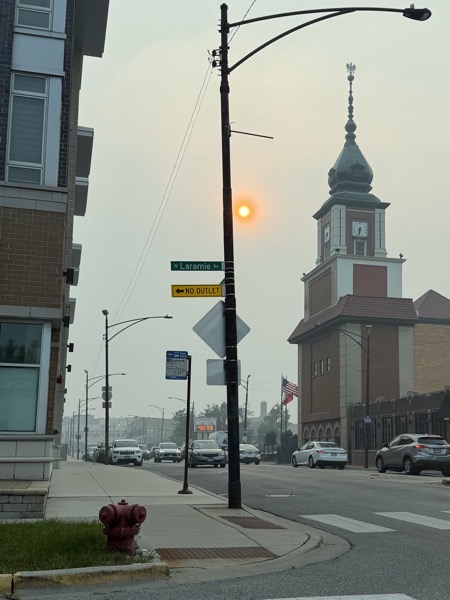
I had a series of meetings in downtown Chicago today about a possible project. During our break I took a good long stroll along Michigan Avenue. Haven’t done that in a while. Beautiful day for it. 

Sort of weird feeling like a tourist in your own town.

Here’s hoping something comes of the meetings. Regardless something came from enjoying the walk. 

You can also find more of my writings on a variety of topics on Medium at this link, including in the publications Ellemeno and Rome. I can also be found on social media under my name as above.

Sunday Morning Reading

Optimism comes every Spring, but Winter always nips at the edges

Temperatures are warming. Every day brings more daylight, more blooms in the gardens and trees Yet on the edges of two of my interests, politics and tech, things continue to darken a bit. The common denominator between the two? Humans. But then again, humans are the ones who read this Sunday Morning Reading column. As well as the bots that scrape it of course.

PXL 20260411 142247979.

Some of the big news in tech this week was about a new AI product from Anthropic called Mythos. So fraught with potential peril that Anthropic gathered together the major tech heads to form a consortium to keep lid on it. Monica Verma has a good run down with her piece Did Claude Mythos Break The Cybersecurity Industry.

M.G. Siegler’s The Causal Catastrophe of AI takes a look at maneuvering around Mythos as well. Call me crazy, but I don’t think there’s anything casual about this development.

The reason I’m a pessimist on this is that I agree with a comment from JA Westenberg,  “Being wrong about doom costs you nothing.” Check out Optimism Is Not A Personality Flaw. The piece walks a line. You should read it and walk it too.

Mike Elgan takes a look at Black Traffic: The Corporate Sabotage Technique You’ve Never Heard Of. Now you have.

Ng Chong examines The Echo Chamber In Your Pocket. Follow that up with this from Julie Jargon: Over 4,732 Messages, He Fell In Love With An AI Chatbot. Now He’s Dead.(That’s an Apple News lnk. This is an archived link.)

David Todd McCarty thinks one path to reclaiming power over information might be in The Return Of The Local Newspaper.You don’t know what you had until it’s gone.

This Is What Will Ruin Public Opinion Polling For Good. The “this,” according to Lief Weatherby, is something called silicon sampling. Yes, you guessed it. AI.

Coming back around to my comment at the top about not having faith in humans, OpenAI’s Sam Altman got his turn in the barrel (again) this week. Ronan Farrow and Andrew Marantz spent quite a bit of time putting this piece together. Check out Sam Altman May Control Our Future — Can He Be Trusted? FWIW, I don’t need much more time than it takes to put this column together every week to answer their question in the negative. And not just about Altman.

Mean while Altman responded on his blog, after someone tossed a Molotov cocktail at his house. He says “I have underestimated the power of words and narratives.” For someone who has scraped all the words he can off of the Internet and tried to turn them into something smarter than humans, you’d think his machines could have at least figured out that words have power.

Natasha MH sums up a lot of my lack of faith in humans in her piece, Stop Blaming The Chatbot. As she puts it, “AI didn’t make you stupid. You were already getting there.”

Sorry to be so negative this week, but that’s where I’m living., But to change the tone, Neil Steinberg turns around the Latin term, memto mori, (remember to die) around to memento vivere, or remember to live. A nice little bit of humanity to close out this week with Little LIfe.

(Photo from the author)

If you’re interested in just what the heck Sunday Morning Reading is all about you can read more about the origins of Sunday Morning Reading here. If you’d like more click on the Sunday Morning Reading link in the category column to check out what’s been shared on Sunday’s past. You can also find more of my writings on Medium at this link, including in the publications Ellemeno and Rome.


The Wrecking Ball Comes For The Theatre Building

End of an era

A friend and fellow theatre professional, Walter Stearns, took this sad photo today. It marks the end of an era, the end of a theatre (multiple ones under one roof), and the closing of a chapter in my life.

The Theatre Building, later Stage 773, and even later WHIM, has finally come under the wrecking ball.

If you were a theatre practitioner in any of its disciplines, I’m betting you worked on one of its three stages. Big name stars worked there before they were big names, just like many others less famous doing their thing.

If you think of what has become known as Chicago theatre, The Theatre Building was one of the venues that made theatre in Chicago, Chicago Theatre. I was privileged to produce and direct shows on each of those three stages, was a tenant, worked on staff for a period of time, and helped manage a major renovation in the 90’s.

We’ve known this has been coming for a while now, but seeing this photo of the demolition sharply marks the end. The site of so much theatre magic and home to so many Chicago theatre companies will now be developed into residential units.

Here’s a link to a Chicago Tribune article from last summer announcing the impending final curtain.

I’d take a drive by today, but feel I would be too emotional. Instead I’ll commiserate with some theatre friends tonight when we see Walter’s latest show in another part of town.

Sad day for many.

You can also find more of my writings on a variety of topics on Medium at this link, including in the publications Ellemeno and Rome. I can also be found on social media under my name as above.


Sunday Morning Reading

A basket of good writing to share

For those who celebrate Easter and Passover, and all who do not celebrate either, may you find some bit of peace on this Sunday morning, however you see yourself and the world. I’d like to say this week’s edition of Sunday Morning Reading is filled with Easter eggs, but instead it’s just the usual basket stuffed with links to interesting topics and stories that I like to share. Enjoy.

PXL 20260403 165116674.PORTRAIT.

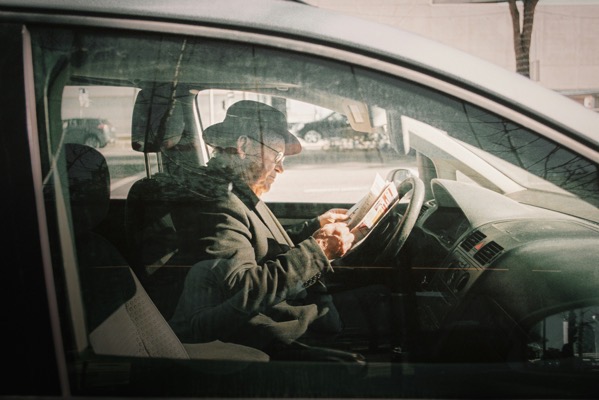
It’s good to be seen, certainly the way you see yourself. When seen by someone who doesn’t know you, that’s eye-opening. Check out Natasha MH’s The Taxi Driver Knew.

The war that isn’t a war in Iran continues. Whatever that story is, it is still being written. Given that this might be heading to the culmination of a conflict that has simmered, and occasionally boiled over, for decades if not longer, there are a few stories out there that offer preface. He Helped Stop Iran From Getting The Bomb by David D. Kirkpatrick is one worth reading.

JA Westenberg’s The “Passive Income” Trap Ate A Generation of Entrepreneurs is also one heckuva a read. There’s nothing passive about this take.

Seva Gunitsky takes on The Incel Global Order. Somebody needs to.

As the technology we use advances, in some spheres some are stepping back. Joshua Cohen takes a look in Sweden Goes Back To Basics, Swapping Screens For Books In The Classroom.

Social Media is under the microscope again after two recent court verdicts against Meta. Chris Castle takes a look with The Social Media Verdicts Are In. Now Ask The Hard Question: Where Was The Board? Counting the money, I imagine. Hat tip to Stan Stewart for this one.

In the category of no easy answers, Mathew Ingram also examines what’s going on in social media with Social Media May Be Bad For You But The Remedy Could Be Worse.

On the Artificial Intelligence front there are always interesting topics cooking as the AI purveyors cook the planet. I wrote about two fascinating pieces yesterday, and today I’m highlighting Angela Fu’s An AI Company Set Out To Fix News Deserts. Instead, It Copied Local Journalists Work. Something tells me we’re going to be seeing more of this going forward.

Apple is, I assume, winding up its week celebrating its 50th Anniversary. So much has been written on that topic because there is indeed much to celebrate and much history to contemplate while looking ahead. Here are four pieces that caught my eye, the first three primarily because they are more personal than historical, the fourth is a look ahead.

John Moltz gives us Missed Connections: Me and Apple.

James Thomson is one of my favorite Apple developers. His Apple At 50: Gonna Be, Gonna Be Golden is indeed a personal journey.

Adam and Tonya Engst have been writing Tidbits since 1990. I started reading it shortly thereafter. What Apple’s 50th Anniversary Misses is certainly different than most, but one that mirrors the thoughts of many on this anniversary.

And Marco Arment, looking ahead, has penned A Letter To John Ternus, the guy everyone assumes will don the CEO mantle in the future.

Baseball is back. And every team and their fans are dreaming of a championship. David Todd McCarty spins a bit of fiction that’s baseball adjacent, but rooted deep in dreams in The Taste Of A Dream.

To conclude this week, this story by Audrey Pachuta very much sums up the contradictions we’re living through at the moment. Check out A Student Set A Goal To Run Every Street In Chicago And Inspired A City. Now He Must Leave The Country. 

May you find peace however you can.

(Photo from the author.)

If you’re interested in just what the heck Sunday Morning Reading is all about you can read more about the origins of Sunday Morning Reading here. If you’d like more click on the Sunday Morning Reading link in the category column to check out what’s been shared on Sunday’s past. You can also find more of my writings on Medium at this link, including in the publications Ellemeno and Rome.


The Presumption of Looking Ahead: Chicago In 2050

Don’t leapfrog the current moment as we look ahead

In today’s insanity that tears at every thread of fabric we have, there’s optimism. There’s hope. And then there’s a presumptive impulse to embrace both and take a look ahead. The Chicago Tribune is running a series called Chicago 2050: Envisioning The City in 25 years.

Shutterstock 1106009873.

From the article announcing the series:

Voices from around the city will explore what Chicago could and should look like in 2050 in a series of essays. These pieces will publish each Sunday through May 10.

This collection represents a collaboration between Tribune Opinion and World Business Chicago, whose Horizon Lines: Visions for Chicago 2050 initiative also includes a design competition inviting the public to share the bold ideas and civic investments Chicago could make in the next 25 years.

The first two essays I’ve read do in fact put forth bold visions for the future. Laura Washington Wants To Bring Glittering Downtown Institutions To The City’s Neighborhoods. 

Tracy Baim Writes About The City’s Next Transformational ‘Great Migration’ sees a city where people move to Chicago for a variety of reasons, including access to reproductive and other health care, and a safer refuge from immigration crackdowns; all seeking a better life. Baim imagines the city passed a Bill of Rights for Chicagoans in 2027 that sparked the migration and the following investment needed to make it possible.

I applaud the Chicago Tribune for launching the series and look forward to reading more. It is important to look ahead and imagine a future beyond this current moment.

That said, I’d love to see the Tribune launch a similar series on how to confront the current realities of almost daily crisis we face as a city and as a country. Leapfrogging over those obstacles that blur any new vision for the future feels almost akin to looking at the city’s glorious skyline on a foggy day.

(Image from blvdone on Shutterstock.

You can also find more of my writings on a variety of topics on Medium at this link, including in the publications Ellemeno and Rome. I can also be found on social media under my name as above.


Baseball Is Back

Play Ball!

Baseball is back. Or so they tell me. Opening day kicks off today and the long hard march begins to whatever the season will yield.

Wrigley Field 3 _ED45DFF7 AB11 43F6 BF313F2C8618680C_f06b4426 1453 44cf 9fac9bd4ccdef67f.

While I primarily root for the Chicago Cubs I’m a baseball fan and like with most sports I follow, I’m most interested in a good game more than I am rooting for a particular team or matchup. I like to see close contests and races, not runaway division races.

I follow the White Sox as well, because hey, I live in a town with both American and National League clubs. Interleague play  between the American and National leagues has taken some of the specialness out of that. And since the White Sox have felt like a minor league team for so long it’s a change in the game that works in my favor.

Chicago papers used to have great baseball writers. Those days are gone. But this column from Paul Sullivan caught my eye as we head into the season. I don’t think it ranks up there with the best of years ago, but  Baseball Returns After A Long, Hard Winter, And We’re Grateful To Welcome It Home, does sum up how most Chicagoans feel as we approach opening day in a game that keeps changing, but never changes.

But for much of the next seven months, a three-hour game provides a temporary respite from spiking gas prices, growing airport lines, conflicts abroad and madness at home. Any chance to ignore the real world and immerse ourselves into a fantasy world, even one with nonstop gambling ads, is most welcome.

No, the game is not as good as it used to be. Just ask your parents.

He captures the feelings, the changes, and the feelings about the changes well. When he says radio is still the best medium to enjoy the game, I agree. I listen to the radio broadcast most times I’m watching a game because TV commentators are more carnival barkers than they are baseball announcers.

It also reminds me of my younger years when that was the only way I could catch a game except for the Game of The Week on Saturdays. That always felt like a terrible Catch 22. I’d rather be out playing the game on a Saturday afternoon and would have to give that up to watch a game with my grandfather.

When cable TV game along to our neck of the woods, so too did Chicago’s WGN which brought Cubs games into my world. So I became a long suffering fan long before I moved to the Windy City in an apartment eight blocks from Wrigley Field.

The Cubs were terrible then, and if you waited until after the beginning of the third inning you could saunter into ball park and watch the rest of the game without a ticket. A friend and I did that often.

Of course living in Chicago in later years and watching the Cubs finally win a World Series a decade ago was one of the sports highlights of my life. Those were certainly different days in what seems like a different world.

But a triple is still one of the most exciting plays in sports. The games are back. Let’s hope for some good ones and a few triples along the way.

Play ball!

You can also find more of my writings on a variety of topics on Medium at this link, including in the publications Ellemeno and Rome. I can also be found on social media under my name as above.


Took A Little Trip Into The Theater of the Mind

Take me to the water

My wife and I took a little trip downtown today to check out David Byrne and Mala Gaonkar’s immersive theater production, Theater of the Mind. I’ll be writing my thoughts up about it soon. I will say it’s quite an experience. 

Until then, enjoy the juxtaposition of these signs and banners for Theater of the Mind and the next door World of Whirlpool. As we walked up I found the proximity more than amusing, and somehow fitting given the body of Byrne’s work and the fact that both are housed in historic Reid Murdoch Building adjacent to the Chicago River.

The latter is not a theater experience. But then again, who knows? 

Below is a promo for Theater of the Mind.

You can also find more of my writings on a variety of topics on Medium at this link, including in the publications Ellemeno and Rome. I can also be found on social media under my name as above.

No Kings Rally Returns March 28

We’re protesting against desperate foes. We need to become just as desperate.

The windup for another No Kings rally is heating up for March 28th. As I have been for the previous No Kings events, I’m of two minds.

Digital graphic split in half: on the left, large bold black text on a light gray background reads “IN AMERICA, WE HAVE NO KINGS.” followed by smaller text about showing up together on March 28 and defending communities from an unjust administration, saying America does not belong to strongmen or greedy billionaires but to the people. On the right, a protest scene shows an American flag and a crowd holding signs, with the most prominent black sign in the foreground displaying a crossed-out gold crown illustration and the white text “NO KINGS NO TRUMP TAKEOVER.”

First, it’s good to see this happening. I encourage and support the effort. Certainly since last fall’s event we’ve been through even more hell to have plenty to protest. Protests do make a statement.

Secondly, as I’ve repeatedly said about the previous protests, until they spill over into the work week I’m not sure what ultimate effect they have. Again, protests are statements. Statements are important. Statements some times lead to action. But as we’ve seen in other countries, it isn’t until large crowds gather in force for successive days and nights that anything beyond demonstrating solidarity actually happens.

Don’t get me wrong when I say that. I’m glad to see these events organized and happening. I hope they continue. I hope the crowds grow.  I’d just like to see the effort continue with a greater sense of desperation.

My sense is that too many take too much comfort from feeling they are not alone and that it strengthens resolve as they gear up to vote in November. We probably will get that chance to vote. Although if you’ve been paying attention, that’s not guaranteed. I’m also not sure the results or the chaos around the results are going to provide the answers we need.

These are a desperate bunch of folks who can’t afford to lose. They know what they’ve done, and the only chance to save their skins is to stay in power. They continue to rig the game and the pace of those efforts is quickening.

I believe we have to become just as desperate.

You can check out the information on No Kings Rallies planned for your area at the No Kings website.

You can also find more of my writings on a variety of topics on Medium at this link, including in the publications Ellemeno and Rome. I can also be found on social media under my name as above.


Sunday Morning Reading

“The life of a man is of no greater importance to the universe than that of an oyster.” -David Hume

On the weekend when some parts of the world think they can alter time by simply changing the clocks, I’m reminded of the biggest lesson most learn in life: we’re each not the center of the universe. Most learn it. Some never do, or if they do, they continue to operate under that delusion. We pretty good at setting up systems and structures that reinforce and rely on that delusional thinking. Somehow that seems to be the theme running through the articles and writing I collected this week for this edition of Sunday Morning Reading. 

Bronze statue of a child sitting on an outdoor stone bench with legs crossed, reading an open book that rests on their lap, a small bird perched on the top edge of the book, and a stack of books beside them, with a paved walkway, grass lawn, and buildings in the background.Kicking things off is the story of how Humanity Altered an Asteroid’s Orbit Around The Sun by Becky Ferreira. The article links to the ScienceAdvances abstract on the nudge that might be as good as a wink.

Last week the war in the Middle East had just kicked off as I was publishing this column. This week it continues. And, yes, it’s a war, regardless of the stupid debate. Jonathan Taplin looks at The Terrifying New Era of American Imperialism, and Jay Caspian Kang examines The No-Explanation War.

“Society grows great when old men plant trees who shade they’ll never sit under” and the opposite of that wisdom is how Scott Galloway kicks off his piece on Role Models.

Ali Breland takes a looks at those yearning for a return to McCarthyism in ‘We Need To Do McCarthyism to the Tenth Power.’ Turning back time only works as a song lyric.

JA Westenberg offers up a A Soft-Landing Manual For The Return To The Second Gilded Age. It’s tough to avoid the usual hard crashes.

The Dodgy Code examines The Great AI Arbitrage: Making A Killing Before Your Client Wises Up. The inevitable turnaround on this is going to be something to see.

Before we get to that turnaround, Mathew Ingram says The Danger Posed By AI Just Got A Lot More Real All Of A Sudden. Going to be interesting to watch AI bots fighting each other to be the center of the universe. If we’re around to see it.

David Todd McCarty is Searching For Originality In A Sea of Slop. Even on dry land that’s tough.

I’ve been revisiting a lot of Shakespeare of late, so this piece by Alice Cunningham caught my eye. Check out Author To Revive Shakespeare Club After 300 Years. We could all do with revisiting the his works.

And to conclude this week, James Verini brings us the wild tale of The Man Who Broke Into Jail.

(Photo taken by the author.)

If you’re interested in just what the heck Sunday Morning Reading is all about you can read more about the origins of Sunday Morning Reading here. If you’d like more click on the Sunday Morning Reading link in the category column to check out what’s been shared on Sunday’s past. You can also find more of my writings on Medium at this link, including in the publications Ellemeno and Rome.


Sunday Morning Reading

Slicing life close to the bone

It could be said that the world is off its axis. Or it could be said that we’re just slicing the meat closer and closer to the bone. Because we don’t know what we don’t know about the war the U.S and Israel launched against Iran I’ll leave off any direct links on that topic for this week’s Sunday Morning Reading. Be warned though, some might be peripherally related. Things happen that way. I’m sure there will be plenty to share in the weeks to come. Meanwhile, here is the usual serving of links on a variety of topics that caught my eye this week. You’re on your own for the tzatziki.

Parthenon 14.

David Todd McCarty is bringing his writings from other platforms to his own site, and some of his earlier writings often strike with new currency. This piece, Defiantly Daft, Duplicity Delicious is certainly one that does.

What is journalism for? Good question these days, but it’s actually been an important one for quite awhile. Take a look at this piece from 1989 from Janet Malcolm called The Journalist And The Murder-I.

Journalism, like everything else, might be under fire at the moment, some of it friendly, some of it not so. Check out Zack Whittaker’s adventure in FBI Agents Visited My Home About An Article I Wrote, And Now I Can’t Go To Mexico.

Tom Nichols says The Republican Party Has A Nazi Problem. Well, duh.

One of the many charges against Artificial Intelligence is what it will do to the cost of the energy needed to power it. Chris Castle takes a look in Update: Trump’s “Ratepayer Protection” Pitch Becomes A Private Power Plan for AI — But Grassroots Revolt Won’t Fade. Hat tip to Stan Stewart for this one.

Apple is about to release a number of products this week at a time that it is under increased criticism on a number of fronts. Recently, Jason Snell of Six Colors released The Six Colors Report Card, in which he surveys a number of the Apple faithful on how things went in the last year and compares that to year’s previous. The scores are always interesting, but the commentary is even more so, which you can read here. Also of interest is Kieran Healy’s charting out the bad vibes based on that commentary. 

Speaking of Apple, Wesley Hilliard takes a look at some of those bad vibes in Apple’s Week February 27: Chasing The Puck.

On a local Chicago front and also on the tech beat, The Chicago Tribune’s Editorial Board takes on a local (yet owned by Albertsons) grocery store’s shopping app in Fix Your Lousy Shopping App, Jewel-Osco! Having suffered through using this app, and watching store personnel and other customers show their distaste for it, I can agree. Fix the lousy app.

Libraries, like so much else, are under attack these days. So this piece from 2017 from Eliza McGraw reminds us of a bit of history. Check out Horse-Riding Librarians Were The Great Depression’s Bookmobiles. Knowledge, like life, finds a way.

If you’re interested in just what the heck Sunday Morning Reading is all about you can read more about the origins of Sunday Morning Reading here. If you’d like more click on the Sunday Morning Reading link in the category column to check out what’s been shared on Sunday’s past. You can also find more of my writings on Medium at this link, including in the publications Ellemeno and Rome.