AI Smoothing The Rise of Fascism

The proliferation of greater fools

This a quick link to a great piece by David Todd McCarty called The AI Ponzi Scheme And The Greater Fool. Go read it.

Annie spratt JcIPxdGuE_Y unsplash.

Although the piece is richer and deeper than the point I’m singling out, McCarty ties the proliferation of Artificial Intelligence to rise of fascism, neatly summed up by this quote from the piece:

“Once we get to a point where nothing is trustworthy, an authoritarian regime is free to lie with impunity.”

I concur.

I will also go a bit further and say we’ve already reached that point. It’s how we handle it now that we’re here that matters.

Again, go read the piece.

Image from Annie Spratt on Unsplash.

Sunday Morning Reading

The ant hill of humanity

Crazy travel rhythms this summer. Spending time at the lake this weekend. The good thing about lake time is there’s time to do some reading. Here’s some good stuff I stumbled onto, worth sharing for this week’s edition of Sunday Morning Reading.  Quite a bit revolving around Artificial Intelligence and other mind games. There’s also ants.

For some inexplicable reason defining what it means to be an American has actually become a chore these days. It shouldn’t be. Kieran Healy has written a piece simply titled American that recounts his thoughts and feelings on becoming an American citizen. Well worth your time, espeically in these crazy times.

“Memory isn’t linear; it’s relational.” That’s the thought NatashaMH leaves us with in her piece The Mind’s Mischief. The mind is indeed a curious thing.

Matteo Wong says the AI Doomers Are Getting Doomier. I don’t know about you, but if we’re all doomed at the hands of AI (does AI have hands?) human intelligence never really advanced as far as I thought it did. Or maybe we just hit the ceiling.

Speaking of AI doom, Charlie Warzel wonders why one of the impacts of AI it to make us feel like we’re losing it in  AI Is A Mass-Delusion Event. I get the points and they’re well made. Referring back to my comment from the previous entry, if we’re such easy marks for this kind of delusion… well…we are such easy marks.

David Todd McCarty argues why we should resist AI with ecclesiastical fervor, especially those who create for a living. Check out The Moral Failure Of Using AI In Your Art.

Reece Rogers is marking yet another change brought about by AI. Take a look at The AI-Powered PDF Marks The End of An Era.

Barry Betchesky tells us that It Took Many Years And Billions of Dollars, But Microsoft Finally Invented A Calculator That Is Wrong Sometimes. You read that right. The money quote is:

“But now we have Microsoft apparently determining that ‘unpredictability’ was something that some number of its customers wanted in their calculators.”

Rounding out this collection of links on AI, is another article by NatashaMH where she says instead of Fearing the Machinery, Interrogate The Mindset. Excellent piece. The underlying current is something I’ve been thinking about a lot. We’re creating these machines in our own images. Or at least the images we imagine of ourselves. Humans are far too human, even when we look past or try to accelerate beyond our humanity.

One of the joys of spending time in the great outdoors is that it reminds you we’re not the only intelligent species on the planet. Although as the theme of this week’s reading has emerged, we might want to reevaluate that, just not with Microsoft’s math tools. On another front, in politics it’s certainly easy to argue for a reevaluation. Kate Knibbs takes a swipe at it in a look at how Government Staff Cuts Have Fueled An Ant-Smuggling Boom.

I told you there’d be ants.

If you’re interested in just what the heck Sunday Morning Reading is all about you can read more about the origins of Sunday Morning Reading here. If you’d like more click on the Sunday Morning Reading link in the category column to check out what’s been shared on Sunday’s past. You can also find more of my writings on Medium at this link, including in the publications Ellemeno and Rome.

Who Controls History If AI Is In The Mix

Time in a bottle of bits

One of the scariest things about this insane period we’re living through is the attempt by those in power to rewrite, alter, or just get rid of history they don’t like. Whether it’s banning books, changing curriculums, forcing the closures of libraries, or what museums can display, I find it a cowardly, yet effective way to hide heads in the sand, bury the sins of the past, and admit we’re actually ashamed of ourselves.

Peter herrmann 9_FK2Tp kLA unsplash.

I know this because I have lived this. My early education certainly tilted the American narrative towards the mythology of the Old South. It wasn’t until I left home, and got involved in the theatre that I discovered just how much I hadn’t learned, how much more I needed to, and how the future depends on the past, no matter how complicated it was.

Fortunately the information was there. It was up to me to do the work.

What happens when it’s not there? Or it’s wrong?

I find It hard to imagine that large chunks of the world’s history can be erased, growing up in an era when my access to it seemed to expand exponentially. But it’s been tried before. It’s succeeded with entire generations of populations. Now we’re facing the very real possibility of it happening again in this digital age with the aid of Artifical Intelligence.

There’s an interesting piece by Benji Edwards in Ars Technica about a college student who trained a small AI model that he called TimeCapsuleLLM on Victorian texts. During his experiments his time capsule spit out some actual history he didn’t know about real protests during the era. He checked into the info and the LLM was indeed accurate.

At first glance, that feels like a very positive AI story. Discovering lost history is a good thing. However, with the way I understand AI training it all depends on what data it’s trained on. That leaves things up to who controls the training data. Leave out, change or bias the historical record and…

Well, you can see the problem.

Elon Musk has already hinted at this kind of manipulation. I’m sure there are others thinking the same. They say history repeats itself. Actually history doesn’t. Humans do. History is just the record of the repetition. Humans just use newer and different tools to mold the past into something more comfortable. I may be mistaken, but I think history, in the long run, also proves that never really works out.

Correcting and rewriting history is not for the faint of heart. But when there is no heart, there’s a problem.

Time machines and time travel have always been fraught with danger in the history of science fiction. So has Artificial Intelligence. I’m reasonably sure we’re not smart enough to walk whatever fine lines might exist in a future when the past can be more easily manipulated. We haven’t been in the past when the erasing was harder. But I am dead certain we’re going to be facing this unreal reality.

Again.

Just with newer methods.

Without anything resembling Artficial Intelligence, we’ve managed to forget, alter, or set aside many of the horrible lessons of human history. Why should any new tool we create be any different? I’m sure these AI geeks think they can strip ego and emotion out of these robots they are building.

I doubt they will ever remove hubris.

(Image from Peter Herrman on Unsplash.)

You can also find more of my writings on a variety of topics on Medium at this link, including in the publications Ellemeno and Rome. I can also be found on social media under my name as above. 

Craig Hockenberry’s Take on the Why of Liquid Glass

Is Liquid Glass an edge case?

There is a quote largely attributed to Robert F. Kennedy. No not the one rampaging through the U.S. healthcare system. It goes “some men see things as they are and ask why. I dream things that never were, and ask why not?” But, it actually came first from George Bernard Shaw in his play Back to Methuselah. 

Apple WWDC25 Liquid Glass hero 250609_big.jpg.large_2x.

The text gets mangled often enough as does the attribution. Regardless, the point is made. In my experience as a theatre producer/director/designer/playwright the biggest part of the game is the “dreaming” part. The next hurdle is finding a way to turn that into reality. The dreams often come when least expected, occasionally after many attempts at finding a solution, and sometimes at random moments. They sometimes come into focus as almost impossible, or perhaps wrong-headed. 

Typically, in something completely uncharacteristic for me, when I find I can’t articulate what I’m feeling or seeing, I know I’m on to something, and that’s the moment to ask “why not?” rather than “why?”

I’m also very familiar with the desire or temptation to do something new instead of doing again what I know works. Speaking from my experience that’s yielded both positive and negative results. There’s a reason some things are called “tried and true.” There’s also a reason to hold your breath, roll the dice and gamble it all on something new.

Honestly, either way is a risk. And that’s how it should be. But if you feel the need for change, go for it and don’t reverse course. 

But what do I know? I’m just a theatre guy who’s produced hits and flops along the way and comfortable taking slings and arrows along with occasional accolades. I’m not sure what feels better, being admired for a courageous leap of faith, or feeling accomplished for sticking the landing. In the end, I’m not sure it matters.

Liquid Glass 

A lot has already been said, good, bad, or indifferent about how Apple’s designers dreamed up its new Liquid Glass design approach. But that doesn’t answer the “why?” Was it a compulsion for something new? Time for a change? A diversion to distract? Or a romantic new vision spurred on by a heavy new headset?

App developer and designer Craig Hockenberry of the

, in an interesting post recently asked that question and provided what he thinks is a possible answer. It’s titled simply Liquid Glass. Why? I don’t want to spoil the post. You should go read it yourself. But his answer points to a possible future of devices “with screens that disappear seamlessly into the physical edge.” 

A cautionary note here. For several years Apple trumpeted “edge-to-edge screens” that still had bezels. Marketing mavens often outrace product dreamers to the destination.

I joked with Craig on Mastodon that he should have subtitled the piece Liquid Glass is an Edge Case. 

The joke may indeed prove to be true, but it’s a truth we’ll live with in some form or fashion for the next few years, edge case or not, regardless of the good, bad, or indifferent reactions.

Anyway, go read Craig’s piece. However Liquid Glass is received in a few weeks, I’m looking forward to discovering it myself.

I mean, why not?

You can also find more of my writings on a variety of topics on Medium at this link, including in the publications Ellemeno and Rome. I can also be found on social media under my name as above. 

Sunday Morning Reading

The lazy days of Summer

We’re technically out of the Dog Days of Summer, but it doesn’t feel much like it. It’s the kind of hot Summer I remember as a kid when the dogs would spend the hot part of the day lazing under the porch. I’m spending mine traveling (too much traveling) and sharing what I can here and there. Find some shade and check out this week’s Sunday Morning Reading.

Shutterstock 2623809139.

Peter Wehner thinks the only way out of the wreckage we’re in is to rewrite the cultural script. Tall task. He spells it out in The Virtue of Integrity.

Knowing is half the battle. What you do with knowledge is an altogether different story as knowing and knowledge are two different things. Check out Jim Stewartson’s piece The War on Knowing. 

Somehow in all of the wreckage we’re sorting through, empathy became a bad thing for those doing the wrecking. NatashaMH thinks this crazy Artificial Intelligence race we’re in is taking the human out of being human. If you ask me it’s all a bit too human as we look to foist off responsibility for the choices we make. The Risks of Synthetic Empathy is a great piece. Give it a read.

Then take a look at Mathew Ingram’s piece, People Fall In Love With All Kinds of Things Including AI Chatbots. When chatbots start filing for divorce I think we might have created Artificial Generative Intelligence.

Kyle Chayka is exploring The Revenge of Millennial Cringe. Home may be where the heart is, but it was a terrible song.

Stephen Marche is talking about Profound and Abiding Rage: Canada’s Answer to America’s Abandonment.  Abandonment is a good way to describe what we’re all feeling these days.

Apple’s about to unleash new operating systems for its devices in a few weeks and the one that has my interest is for iPads. From what I’ve seen (I don’t run the betas) the changes to the multi-tasking capabilities will be a positive step forward. Craig Grannell takes a look at how long it took for Apple to finally make these changes in Apple Finally Destroyed Steve Jobs’ Vision of the iPad. Good.

Chicago’s Uptown Theatre celebrated 100 years this week. Robert Loerzel takes a look in Uptown Theatre: 100 Years of Glory and Decay. 

When you think you’re the center of the universe it can rock your world when you find out you’re not. Kids learn this. Republicans in the current administration have not. Eric Berger writes about NASA’s Acting Chief Calls For the End of Earth Science at the Space Agency.

(Image from Machekhin Evgenii on Shutterstock.)

If you’re interested in just what the heck Sunday Morning Reading is all about you can read more about the origins of Sunday Morning Reading here. If you’d like more click on the Sunday Morning Reading link in the category column to check out what’s been shared on Sunday’s past. You can also find more of my writings on Medium at this link, including in the publications Ellemeno and Rome.

Change Is Hard

Why hasn’t AI figured this out yet?

Change may be inevitable but change is hard. Change becomes harder when those making the change, for whatever reasons, don’t remember change is hard. The only thing that doesn’t change is how easily we forget that change is hard.

Linus nylund Q5QspluNZmM unsplash.

OpenAI met with some real friction after announcing its big changes last week. Apple is going to meet some when it doles out its new operating systems with Liquid Glass next month. HBO changes its name so often it can’t even get it right in press releases. The list is as long as history. Every company faces this. Some do it well. Others not so.

As  M.G. Siegler points out in this column if you’ve been around long enough you learn to recognize the patterns. You have to be willfully blind or consumed by ego not to. In fact, the problems with instituting change are so predictable it makes one wonder why these AI engines, endlessly regurgitating whatever human wisdom they can scrape and scrounge, don’t caution against it. I’m sure somewhere in all the words and wisdom created by humans “change is hard” has been said before.

If we’re marching towards an advanced AGI with PhD level knowledge that can reason better than humans, I think the masters of the AI universe need to solve that problem before anyone can make a claim that we might someday get there.

Call me when that happens.

It’s like watching a new edition to the Alien franchise hoping one actually turns out to be more than a repeat. Or watching an American football team with a bad offensive line try to run the ball up the middle over and over again. Or thinking that once inflation retreats that prices will come down. Or thinking humans will one day be smart enough not to fall for obvious con games.

The unsolvable riddle about change involves the variables and vagaries of human nature. That’s a constant that will never change.

You can also find more of my writings on a variety of topics on Medium at this link, including in the publications Ellemeno and Rome. I can also be found on social media under my name as above. 

(Image from Linus Nylund on Unsplash)

The Quest for the Unicorn AI Device

Hyping a tech war that won’t ever happen

Reporters love to declare war, crown winners and dismiss losers. Except of course when it comes to shooting wars and the rhetoric that often leads to them. But that’s not what this post is about. Tim Higgins of The Wall Street Journal, and his headline writers, are declaring that Mark Zuckerberg Just Declared War on the iPhone. 

I usually expect this kind of nonsense from the half-a-gazillion blogs and social media accounts out there that like to ginny up controversy to generate clicks. With AI glasses will clicks become blinks?

Now that I think about it, I’m wrong in my expectations because the WSJ, like most of the mainstream media is trying hard (too hard) to follow that pattern these days. It’s an easy game to play in the short term, but then so is the game of companies and governments making big announcements about the future. Remember the “pivot to video?” Remember “virtual reality?” The faux legs went out from underneath that pretty quick.

Higgins does and mentions those failures to capture marketshare beyond the initial hype and funding fevers. Nevertheless, he forgets a few simple things during his embedded tour on this march to the promise of “Personal Super Intelligence.” (That’s this fiscal quarter’s new label.) Zuckerberg might indeed be banging the war drums by propagandizing AI glasses as the latest form factor of mass destruction, but it’s too much hype without enough rhythm to marshall the troops. And to be fair, most of Higgins’ column is just regurgitating old news (AI summary?) that has been bouncing around in what passes for new news these days, tacking Zuckerberg’s recent announcement on as the headline war cry.

Bottom line in my opinion, we’re not going to see any new form factor take down iPhones, smartphones as a category, or computers, as the way we live, work and play in any near future. Folks have been waiting for all kinds of second comings for quite awhile now. I love how even the coming of advanced AI is now referred to as “near emergence.”

One day perhaps. Long after most of us interested in what this technological moment might eventually yield will have forgotten what Medicare and Medicaid were actually about. If and when that day arrives, the real clicks (blinks?)  will be in tutorials on how to turn off all of the notifications and other distractions and keep the tech from tracking you.

I’m old enough to remember when FourSquare came on the scene. The promise was you’d walk down the street and receive a notification from the coffee shop you just passed about the daily special. That never really materialized, but the tech was different then. Google and Waze later tried that and just annoyed any driver who stopped at stoplights looking for their next turn.

When the marketing survelllance mavens can figure out how not to send me ads for something I just bought I think there might actually be a chance for that kind of thing to work. A small chance, but a chance. But they’re not even close to that on the backend, let alone integrating them into some device that might pinch your nostrils after wearing them for too long.

Don’t get me wrong. I think it is indeed cool when companies create niche products that give some people joys and hobbies. Bits and pieces of that kind of innovation often creep into bigger things that do help our lives somewhere down the road. Even if they become creepy. Obviously I’d prefer they not become creepy, but that’s where the money is and the creeps always follow the money.

I’d much prefer to see the money and the hype meisters follow something like this that could probably actually help humanity. But even that kind of innovation can attract the creep factor.

Call me when a reporter can research, write, and submit for editing a column like this one I’m complaining about with a pair of AI glasses, an Alexa device, or a pendant, or any other smart device currently in the works.

Call me again, when the AI summary machines can actually deliver an accurate summarization of that article.

You can also find more of my writings on a variety of topics on Medium at this link, including in the publications Ellemeno and Rome. I can also be found on social media under my name as above. 
Sunday Morning Reading

Roads traveled too well

Some things defy understanding. Others appear less murky. Occasionally some hit the target. That’s why I read. That’s why I share. I’m still traveling and on the road for a bit, but there’s plenty to share in this week’s Sunday Morning Reading. Tomatoes and potatoes may be involved.

Shutterstock 1781559542.

Phillip Bump recently accepted a buyout from The Washington Post and hasn’t announced new plans yet. But he’s still writing. Glad he is. He has always been one of my favorite writers and chroniclers. Check out his latest piece Humans Didn’t Evolve To Understand Our World.

When you reach a certain age (certain is alwasy self-defined) you start looking back to the beginning and wonder what will mark the ending. Cris Andrei calls them Bookends. This piece hit the target given that I’m visiting some old haunts on this trip. Oh, and approaching a certain age (self-defined.)

Tuning out news, noise and distractions is never easy. NatashMH takes a look through the marking of Ozzy Osbourne’s passing and other recent cultural touchpoints in Fractals of Modern Life. If you don’t look too hard, all the news, noise and distractions don’t really touch or point towards much in the grand scheme of things. But are we entertained or just dulled into carrying on?

Sometimes writers write just for the fun of it. David Todd McCarty says that’s where this piece, Killing Time Waiting for Friend, came from. I need to find more of the fun of it. Anyway his piece, gave me a chuckle. I did not read it at Denny’s, although I visited one of my favorite locations of the past during my travels.

I’ve linked to and written about Cory Doctorow’s theory of enshittification quite a bit. I’m doing so again with this piece You Can’t Fight Enshittification. I don’t think it’s a question of not fighting, I think it’s a question of not knowing there was a fight to begin with.

Staying in the tech vein, I’ve been linking to Mathew Ingram and others who are talking about the demise of Google Search. Take a look at Pete Pachal’s piece, What Content Strategy Looks Like In The Age of AI. Look beyond the headline on this one.

Speaking of Mathew Ingram, you should read Social Media Didn’t Start The Fire, It Just Fanned The Flames. I agree. That said, if you drink acclerants through a firehose you’re bound to bust.

On the political beat, Jon Pavlovitz offers up Everyone Believes They’re Esssentially A Good Human Being.  Actors who play villains will always say that they look for what’s good in their evil character. It’s a form of coping. I happen to think this bunch of performance artists trying to burn down the country never bothered looking beyond the glee they take from their villainy. Apologies to real performance artists.

And to close things out on a competely different note, check out Will Dunham’s piece on the Evolutionary Origins of the Potato Revealed — and a Tomato Was Involved. Some things do defy understanding.

(Image from Mr. Abstract on Shutterstock.)

If you’re interested in just what the heck Sunday Morning Reading is all about you can read more about the origins of Sunday Morning Reading here. If you’d like more click on the Sunday Morning Reading link in the category column to check out what’s been shared on Sunday’s past. You can also find more of my writings on Medium at this link, including in the publications Ellemeno and Rome.

Mark Zuckerberg Says We All Need AI Glasses

The blind leading the blind-to-be

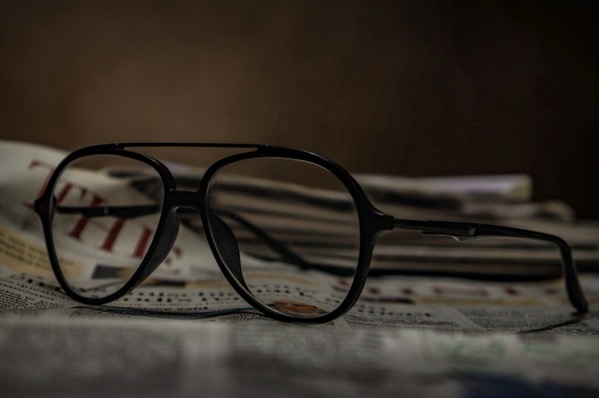
Mark Zuckerberg, trying to see his way clear to dominating the Artificial Intelligence race, is now saying that those of us who don’t use AI glasses will be at a disadvantage in the future. Reminds me of the X-Ray glasses hype from my childhood.

X ray man 1.

When you consider Zuckerberg’s checkered legend with starting what would eventually become Facebook, after running a college website called FaceSmash to rate girls, the comparison to the come on for X-Ray glasses does have a prurient parallel to many an adolescent boy’s fantasies.

I guess Zuckerberg needs to justify all of the money he’s spent building out AI infrastructure and wooing talent but it also is very reminiscent of the days he mucked up the media by declaring text was out and the pivot to video was in. In fact, much of this AI race feels very much like that. Sure, some of that stuck, but it mostly just made a mess and the legacy of that pivot left more than a few scars.

This entire AI race feels like that to me at the moment. I believe some of it is going to stick around and actually be useful. But mostly it’s just messing things up at the moment as everyone jumps into the deep end of a pool hoping to learn a new way to swim.

I’ve dealt with a few different companies of late trying to help some elder clients cut down on bills and solve some issues. Several of those companies have been switching much of their customer service to AI chatbots and the like. In those transitions they’ve more than made a mess of things for their customers and their employees who are left trying to clean up the mess.

I’m not completely down on Artificial Intelligence. I can see some benefits from the technology. At this point in the game it’s tough to sort out what that might be from the hype that seems to be authored by the folks who keep promising self-driving cars and those that promised X-Ray glasses.

You’d think by now someone would have developed an AI platform for investors and corporations that could see through the hype.

You can find more of my writings on a variety of topics on Medium at this link, including in the publications Ellemeno and Rome. I can also be found on social media under my name as above. 

Sunday Morning Reading

A bit of this, a bit of that. All good bits.

It’s the Dog Days of Summer and it’s been a hot one so far. We’re traveling again, but there’s still some interesting Sunday Morning Reading to share. Some of it hopeful, some elegiac. Some just geeky and fun. Enjoy.

Milen kolev zs9jdUCaP_4 unsplash.

Kicking things off is a piece in The Atlantic from Anna Deavere Smith called When You Don’t Look Like Anything. She’s a singular artist always worth paying attention to. Her story of her 50-year search for the American character is certainly more than worth your time. Damn good stuff.

A.R. Moxon popped up on my radar this week with a piece called Total Eclipses. It’s part 2 of a series, the first being Be Bolder, Not a Boulder. If you’re like me and looking for any light at the end of any tunnel these days, do give both pieces a read.

NatashaMH offers up An Ode To The Poetic Detours. It’s about writing and where she finds inspiration, but more broadly, it’s about observing, noticing, listening, seeing, and feeling between the lines we sometimes get trapped within.

Will Dunn asks Are Emoji’s Killing Language? I’ve been saying they are for quite some time. For the life of me I don’t understand why we seem intent on regressing back to an age of hieroglyphics instead using the complex beauty of words and language.

Mathew Ingram says The Google Link Economy Is Dying and It’s Not Coming Back. He’s not wrong. Actually, he’s very right.

Health is a big deal in tech these days, especially when it comes to adding features to improve monitoring what’s going on in our bodies. Frankly, as someone who uses medical devices for monitoring my diabetes, the promises to add that kind of monitoring to smart devices, along with blood pressure and other conditions, sound hollow, seeming as realistic to me as self-driving cars. We may get there one day, but for now it’s mostly a clever way to market something new to increase the bottom line. Victoria Song takes a look at Samsung’s recent effort to check out our level of antioxidants with their smartwatch in I ‘Fooled’ Samsung’s New Antioxidant Feature With a Cheez-It. 

Much has been made of Paramount’s caving to Donald Trump, leading to the firing of late not comedian Stephen Colbert. That was quickly followed up by the Trey Parker and Matt Stone’s skewering new season opener of South Park. Paramount paid up, got its merger, and in an Aristotelian, if not Mel Brooksian sense there’s some grand comedy in the entire thing. I’m a fan of Alexandra Petri’s piece examining the moment pre-South Park titled Are You Laughing Yet?

Sometimes we just need to laugh at what feels like no laughing matter.

(Image from Milen Kolev on Unsplash)

If you’re interested in just what the heck Sunday Morning Reading is all about you can read more about the origins of Sunday Morning Reading here. If you’d like more click on the Sunday Morning Reading link in the category column to check out what’s been shared on Sunday’s past. You can also find more of my writings on Medium at this link, including in the publications Ellemeno and Rome.