Warning. This is going to be a very long, very personal and very cynical take. A lot of this has been bubbling in my gut for far too long, and I’m tired of the taste in my mouth when it regurgitates. So I write.
A couple of weeks ago I wrote a piece titled Resilience Is Our Strength But Also Our Weakness. The slug line for the piece was “Time to break a few things.” I stand by the title, the slug line, and the content.
That said, I’m going to write further based on a conversation generated from the piece on Mastodon with fellow Mastodonians David Todd McCarty and Denny Henke. Henke, while admiring the piece, took me to task for not offering specifics about what to tear down. He was correct. I didn’t. I’ll offer what few I think there are throughout and towards the end of this essay.
Nasty hint. I don’t think there are many. That’s one reason it’s taken me so long to think and write this essay. There are questions. Nothing I’m going to say here should come as a surprise. Anyone reading this has probably already had many of the same thoughts. If you haven’t I don’t know why you’re here.
Before I get into that, let me toss out a few links for context for anyone interested. First, take a look at McCarty’s piece linked to in my previous piece called A Quiet Truth, and also his attempt to answer Henke’s response in this piece Democratic Socialism: Keeping The Great American Experiment Alive.
I’ll also reprint Henke’s intial thoughts in his response to me below:
Great post Warner and I generally agree but you don’t offer much detail. You’re focused on the Reconstruction and the historical rooting of our current moment in the Confederacy, which I would interpret as the unresolved issues of 150ish years ago.
But shouldn’t we go back 250 years? That would seem to get us closer to the foundational problems.
Also, coming back to today and the notion of breaking things. What is it you want to break? What do you see as being the goal? And how do you see us getting there?
I’d ask the same of DTM. You both SEEM to be calling for a sort of soft revolution without really saying it. And though you both seem to be rejecting the previous normal, you’re seemingly okay with many aspects of what we had.
What level of inequality are you willing to accept or is it none? What level of general social-ecological-economic violence are you willing to accept or is it none?
History
Both McCarty and Henke mention my historical references to our country’s capacity for compassion and resilience in my earlier piece, specifically how we as a nation chose a path of reconciliation over one of punishment after the American Civil War. History can nag, and be both instructive and problematic. I’m not one who thinks looking past the past, or picking your past (as I did) helps tremendously, though it instructs if you pay attention. Otherwise why would the dark hearted forces that seize control keep trying to erase or change it every time the cycle swings them back into power? History doesn’t only contain a recounting of events, it contains what’s behind those events should you care to look.
We may not step foot in the same river twice, but we keep recycling the water in history’s reflecting pools.
In my view, as a species (expand for a moment those borders and blinders beyond the U.S.) we’ve more than proven that we’re incapable of the persuasion necessary to promote positive change in the grand scheme of things. We’re also incapable of enough horror to counter dark underlying forces eager to exploit., explode and yes, extinguish in their quest for power and dominion. We don’t want to be the monsters we need to counter.
It’s a doom loop humans have been caught in long before anyone reading this was born. And it’s a loop so overstuffed with doom that we want to physiologically and psychologically wipe it from our memories the moment we begin coming up for air after one catastrophe or the other. It’s amazing how we even find ways to ignore the scar tissue.
For the moment then , set aside history. Why continue to dissect it to death for no great real benefit? Set aside also discussions of racism, religious intolerance, class warfare, and all flavors of hatred of the other. More words have been written about those topics, some here, and in countless other places by countless other writers. None seeming to have any real lasting effect beyond blowing off steam on trains stalled on the tracks. Words do have meaning. Meaning meanders through the mediums and get muddled in the summaries.
Dig beneath to what in my opinion is the rotten root behind most of the ills humans continue to bring on one another. The thirst for dominion reveals dark hearts fueled with an appetite for self aggrandizement that makes the sin of gluttony feel like a mild teenage eating disorder. You can’t read a history of any civilization without finding that to be the case. Oh, shit. There’s history again.
What? Too big? Too broad a topic? Too much to tackle?
Spot on.
It is too big. Also too unsolvable. Too deep. You can erase moments of history. You can’t erase who we are. It is who we are. At least as demonstrated by a collective human history of repeating and revisiting the motivations behind the moments that stand out on the surface, that iceberg-like signal greater horrors underneath. Perhaps we’re waiting for some AI to solve it. That’s only partially a joke. Easier to laugh than accept responsibility.
Not recognizing the enormity of the larger root cause makes it far too easy to focus on what comparatively is the day-to-day (these days overwhelming) minutiae of corrupt and poisonous politics, legal morasses, greed in all forms, and debates over a constitution that has essentially been abused as much as the people it supposedly protects. Every day there’s a moment that feels crucial (it is always the most important election of our lifetime!), always feels pressing, and always ends up, in the grand scheme of things, rewarding a few while screwing over the rest. Always.
Admitting the larger problem is indeed too much, but also too much a condemnation of us all. And we generally shy away from that. Focusing on the immediate threat always and often more urgently satisfies the emotional need to rage against that which can’t be changed or controlled. And that brings me to violence.
Violence and Monsters
I’m not advocating violence. I’m not a violent person. I have resorted to it a couple of times to defend myself and loved ones. Beyond self defense, (too often a convenient excuse) I am acknowledging that violence is usually what most of what we’re experiencing evolves (devolves?) into. Not always. But usually. And usually when it counts.
Frankly, in my world view, if you’re not prepared for a violent outcome you’re being naive in the best case. In the worst, you’re just a willing victim and actually a part of the problem. Regardless, those willing to accept violence as a piece of the puzzle are at least the ones who have chance of winning each moment’s argument.
Yes, violence begats an endless cycle. One good deed may deserve another, but one bad one too often breeds many more. But without the threat of violence or punishment, power and the restriction of it is essentially meaningless.
Reiterating, I’m not advocating violence. I just think we need to be prepared for it. Frankly, I’m surprised we haven’t already seen it on a larger scale in this country in the reactions to the violence visited on us by our government. To say you’re incapable of it, means you’ve never been under serious threat, real or imagined. Reason is always preferred. Until you confront the unreasonable.
But what about the important non-violent movements throughout history? Gandhi? Martin Luther King and civil rights? Labor strikes? What about Victor Orban stepping down after being defeated in an election?
Don’t kid yourself. While non-violent organizers fighting for civil rights practiced and preached non-violence, realize in most situations they were prepared to have violence done on them. Those organizers were no fools. In too many cases throughout history (damn, there it is again) it wasn’t until things turned violent that things begin to change. The presence of cameras made a difference during the US civil rights struggles of the 1960’s. They don’t seem to do so with the same result in the 2020’s. It takes sociopaths to not blanche at the sight of bloodshed of others. It takes courage to bleed for them.
But what about Orban? Perhaps the most sensible tyrant in history. He read the writing on the wall, knew he’d already made his bundle, and had changed the structure of his country in ways that will take decades to fix and tie his opponents into knots. He got out while the getting was good. It’s a rare villain who knows to quit when he’s ahead. Or still has one. U.S. tyrant hopefuls who have been taking cues from Orban should heed his last one.
This country just quasi-celebrated its 250th anniversary of the Declaration of Independence. If it wasn’t for a group of men willing to publicly sign their name to a document at the risk of being hung for treason, who knows what this continent would have become? Would you have signed it with your neck on the line?
Violence is being done on citizens of this country almost daily by its government, as well as on others around the world. Dark hearted monsters have more than proven their lust for it. As for the rest of us?
With the possible exception of some citizens in cities invaded by ICE, I’m not sure enough are willing to stand in the way when the guns come out. Certainly that would require sacrifice in such action. Would you be willing to make it?
The fact that ICE murders haven’t yet turned the tide is something I find hard to grasp in the same way a collective catastrophe like COVID did not. When it is easy to exploit death and destruction for selfish gain we’ve turned a corner into a very dark alley.
As twisted as all of this is, it’s also become some sort of an even more twisted spectator sport to watch the clock hopefully run out on Trump one way or the other. Allies and enemies abroad have joined in on the watching, waiting for a flashpoint or an act of God that may or may not come before too much more damage is done. Meanwhile the violence continues.
I’m not condemning anyone by saying that. I’m just acknowledging that we’re more willing spectators than we are victims watching a losing match, while somehow still trying to manage our lives, than we might believe. Much like the small folk in any Game of Thrones episode helplessly watching dragons fly overhead.
And therein lies one of my larger points.
It pisses me off when I hear criticisms about those who are too comfortable to do what it takes to change things. Certainly there are those who don’t want their comfort zones turned upside down. They deserve condemnation. But there are far too many just trying to provide for their families and get through the day-to-day. I know quite a few for whom that struggle is as all consuming as any political struggle.
It also pisses me off that those who do have enough capacity to work for change have chosen to do so so weakly. They piss me off more than those that willingly attach to the predators like remorseless remoras.
Folks may be willing to boycott a retailer, or a streaming service, or attend a weekend march for a few hours. But I don’t see any concerted actions or desire to do what the Albanians are currently doing to protest their government’s collusion with the Kushner/Trump family attempts to steal and develop a piece of that country’s shoreline. I think the Albanians have now been in the streets for longer than 40 days. That’s a long weekend that’s not short on courage.
So, as to one specific. Until a large enough portion of the population of this country is willing to stand in the streets for periods longer than a few hours on a weekend afternoon, I don’t think on the whole we’re ready for the moment, or the struggle. Those afraid of losing their comfort and those willing to enable by sitting on the sidelines don’t deserve a voice in fixing what has been broken, if or when the time comes.
The citizens of Minnesota and other cities invaded by ICE showed great resilience in the face of government violence. Tragically, it wasn’t enough. That winter furor cooled off as warmer spring temperatures crept in, though it seems to be sparking anew in the heat of the summer after similar recent government sponsored murders in Texas and Maine. I have my doubts.
It’s monstrous what’s happening. And we need to meet the monsters where they are. There’s a great theme in Emily St. John Mandel’s novel, Station Eleven, later made into a streaming series. “To the monsters, we’re the monsters” is perhaps more proverb than theme. There’s always fear on either side of a conflict. Do we need to be more monstrous?
For those who think this sounds like anarchy, you’re probably correct in the strict sense of the term. Here’s the thing. I happen to believe that active tyranny is worse than anarchy. I’m not alone in that. Anarchy is chaos without control. Active tyranny is chaos under the guise of control. That’s where we are. Both bring chaos. Both bring horror.
We’re living under active tyranny masquerading as a constitutional republic that controls too many of the world’s purse strings, constantly tilting every axis it can find, led by a decadent decaying thug, held up and held together by sniveling supplicants, none of whom know when or how to quit, or desire to. Trading one flavor of chaos for another often sounds appealing. It usually never is. Until there is no alternative.
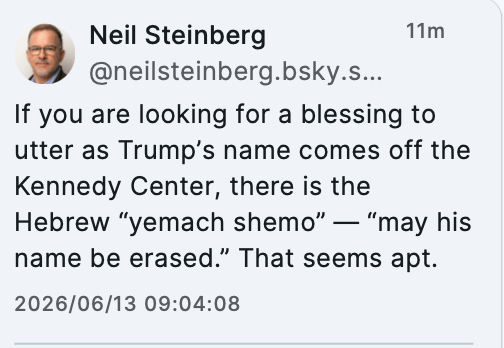
Damnatio Memoriae
The condemnation of memory is an ancient practice of wiping the memory banks clean. The Romans get first credit for attempting to remove all instances of those no longer in favor. Rather than be faced with reminders of those unwanted, remove all instances of their likeness and wipe them from the history books. Don’t mention their names. Damnatio Memoriae resurfaces throughout history like a bad memory popping up out of nowhere, as those controlling the roads patch over the potholes created by the destruction of those who stood in their path. Sorry. History rearing its ugly head again.
I was in Russia directing an American musical when the statue of the founder of the KGB, Felix Dzerzhinksy, was removed from the square in Moscow bearing his name. Joshua Yaffa has an interesting take on the moment, the history, and its aftermath. Here’s a quote:
…in a civic culture that placed more emphasis on forgetting than remembering its more painful moments, Memorial never became part of the mainstream. In 1992, an investigation into the legality of the Communist Party’s actions ended with a whimper. There was never any formal reckoning or judgment on seventy years of Communist rule and those who carried it out.
I grew up in the South in the era when those with long memories and lingering hatreds began turning their dream of rising again into the ugly reality that has led us to where we are now. It was subtle, insidious, and largely ignored outside of the region.
The same media institutions we rightfully condemn for their capitulation today essentially did the same thing during and after the civil rights struggles in the 1960’s. Sainted as they may be for turning their cameras on the Bull Conners and the Edmund Pettus Bridge, they largely ignored the raising of statues and Civil War memorials celebrating traitors, hiding as easily as behind a hood, a politician’s platform, or the masks today’s ICE goons wear in cowardice. The media treats losing soccer coaches with more disdain than it has the legacy of losers who ripped a country apart once and are doing so again.
Politics
In Conor McPherson’s underrated musical Girl From The North Country, featuring the music of Bob Dylan, one of the characters speaking to another, his face pummeled from a boxing match, says:
Marianne: Boxing is so foolish. They say that in the bible, you know?
Scott: Yeah?
Marianne: Leviticus. Chapter 3 verse 4.
Scott: What?
Marianne: I’m making it up. You can say anything is in Leviticus.
The same is true about politics. You can say anything in politics. It’s in the bible. I’m making that up. The opposite is true and you can find it hanging on the walls of schoolhouses in some states. Irony isn’t dead, it just can’t outrun political comedy.
Built into the Constitution since its ratification, the speech and debate clause allowed members of Congress to lie through their teeth while working during attendance at sessions. It’s expanded well beyond the wells of congressional chambers, but then the constitution itself, much like the bible, expands and contracts depending on the moment, the speaker, and the number of social media followers.
One of the cardinal rule of politics is to make your opponent spend time and resources defending themselves. As to one of those specifics I left out, we don’t practice that skill enough. The monsters do. We do not. We need to.
Call me crazy, but as the Democratic Party searches in vain to try and grab a coherent message, their consultant driven attempts keep missing the mark against opponents tossing slop at them from the gutter. If you didn’t want to wrestle the pig on his home turf, you should have never gotten into politics.
The consultants want to call the intersection where the right and left meet a horseshoe. It’s actually a circle. But closing that gap rhetorically might just mean making those who hate each other for different reasons find too many similarities to make the comfortable classes uncomfortable, and put the consultant class out of work.
To me, there is only one message that should be leveled in any and all attacks. “You want the shootings in our streets to stop? You want health care? You want to afford a living for you and your family? You want an expanded Supreme Court? You want..(fill in the blank with any other issue currently sizzling on the hot plate)? Then first you have to vote these criminals and cowards out of office.”
If you’re not calling them a criminal and a coward every time you speak, in exactly those terms, you’re missing the moment. And if your candidate refuses to do so, find another one who will.
I hate to say it about myself, but I look several family members in their face on Zoom calls and bluntly say, “when you stop supporting pedophiles, rapists, and criminals, then we’ll talk.” I hate being brought to that place. It’s damn painful. But here we are.
The dark hearted monsters have made sure there is no longer a middle road. We need to quit looking for one. Stop also looking for the high road. Everyone is in the same ditch. Don’t debate nonsense. Don’t try to reason with the unreasonable. If your compassionate muscle begins to twitch, exercise it in support of those who literally find it hard to manage through a day or a week, and can’t find the time or energy for anything else.
Henke asked me “What level of inequality am I willing to accept, or is it none?” I’d love to say it was none, but that would be naive. Like Thomas More I don’t think there could ever be a Utopia. There is always going to be inequality. Thinking equality for everyone is a fiction that can really only be achieved from a perch above those you want to help. There’s irony in there somewhere.
The question isn’t what level of inequality would you accept, the question is what levels of support for those on the lower rungs of the ladder are you willing to pay for.
For some, politics may be about creating equality, opportunity, or possibility. We like to hear that. Some desperately want to believe that. And yes, laws do matter. But laws can be undone. More swiftly than they can be created. Laws can be evil. Slavery was legal. Laws can be ignored. But at its root, politics is, and always was, about dividing up what resources are available or finding new ones when those run out. If you think it’s about anything else, you’re wrong.
More Specifics and Breaking Things
I promised to list some specifics beyond the few sprinkled above. And here you go.
As to the upcoming elections.
Pay Attention: There are no secrets. We’re told and we see daily what the plans are. If you dismiss them as the ravings of a lunatic, you’re wrong. Pay attention.
Vote. The only way to defend the right to vote is to vote. That sounds easy and trite. I don’t think it will be for some this year. Whatever obstacles (and there are quite a few) that the president has declared he wants to throw in your path need to be overcome. Voting is going to be more of an act of defiance than it has ever been.
Organize. Yes, it helps. But it only helps if you do so strategically with the simple goal of tossing the bums out. Everything else is secondary. Certainly if we lose.
Be ready to protest after the election and whatever bullshit the coward and criminal-in-chief tries to pull to keep himself in power and out of jail. The largest mistake we made after the 2024 election was staying in shock and not causing trouble in the immediate aftermath. We allowed the criminals the time to carry out the plans they had made very public for all to see. None of what we are seeing should be a surprise. If it is or was, you weren’t paying attention.
Sharpen your steel. The steel in your spine. Know you’re already under attack and know what you stand for or don’t. Know what you’re willing to compromise on and what you’re willing to sacrifice and what you’re not. That won’t be easy. It never is.
Call and write your representatives. Or visit their local offices. Certainly call and write them on an issue and how you feel about it. But let whomever answers the phone or greets you at reception that your support stops depending on how they fight. More importantly tell them straight up that if they want a donation they have to ask in person and be prepared to stand accountable. Remind them that the country you want them to fight for was birthed by a minority who pledged it all and that you expect them to do the same.
Write. Not just on social media. Not just your representatives. Not just on the Internet. Write your friends. Write your family. Write the CEOs of companies you do business with. Turn your mind into one that isn’t afraid to make waves. Let whomever you write know that you hold them responsible as the ones that broke the dam and caused the damage. Put them on the defensive. If they are going to tell you to get lost, they are already lost to you. Don’t try to reason with the unreasonable. Write them off and let them know you’ve done so.
As to breaking things.
The only reason the president hasn’t declared some sort of state of emergency and taken complete control is it would bring political fundraising to a halt. Not just for him. He doesn’t need it while he sits in office and collects the bribes that spill over his desk like golden showers. But it would end most political fundraising for the rest of the hangers on and lickspittles. That of course would be a blow to the media as well, because that’s where the dollars raised mostly go after the consultants take their cut.
I have no doubt in my mind that Trump will do some such action either before or after the election. At that point the money will have already been raised and spent and it’s one of the few gambits he has left.
“Things” are already broken. Congress. The Courts. The Justice Department. The Constitution. The economy. Global alliances. The list is too long before you even get to the defacing destruction of Washington DC and the White House.
I’m reminded of when now senator Mark Warner was elected governor of Virginia in 2002. (Sorry, not sorry, but it’s another history moment.) He came to power to discover that the Republican Party had been essentially cooking the books. Warner had to scale back some of his plans to put the state’s finances back together. It wasn’t easy. But he largely succeeded by setting aside some of his promised priorities.
That pales in comparison to what whomever is elected in 2028 will face, or assuming the democrats come back into the majority in Congress after the midterms.
Like Orban’s Hungary, so much is broken it is going to take years if not generations to restore. I’d suggest restoration shouldn’t be the goal. Neither should reconciliation.
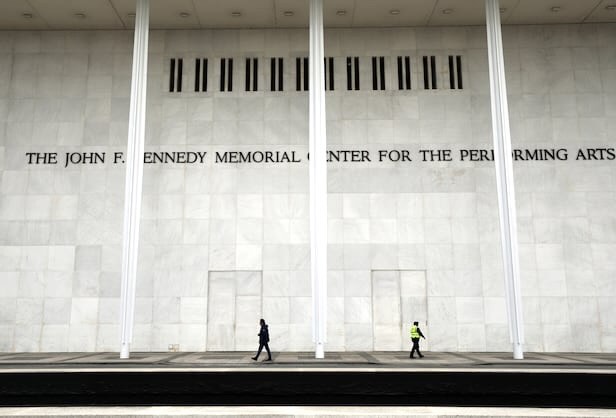
Sure, we’d all like to see some of the physical manifestations of Trump’s classless remodeling of the capital city and other places torn down and ripped asunder. That would probably feel good, and provide a cathartic cleansing. A symbolic, yet perhaps necessary one. But we should never attempt to erase the memory of what we’re living through. Don’t damn the memory, damn those who created them and forever remember their evil. At least for seventy or 80 years or so. That seems to be our capacity.
Certainly we’d like to see many of these barbarians sent to jail for their crimes. If we don’t, forget about the current system of laws that they’ve already spit on and torn asunder. The criminals have. We should too.
The harder work will be in closing the holes that our constitutional republic has left open that let this madman run through and over. Those holes exist because the founding fathers believed in honor, checks and balances, and to some extent the will of the people. This decade has more than proven that we don’t care so much about honor, much less checks and balances or the will of the people.
Break what’s left, and I’d suggest taking advantage of the opportunity to make something new. If it requires a constitutional convention, do it. If it requires being more monstrous to meet the monsters where they are, do so. It can’t be any messier or more dangerous than things stand now.
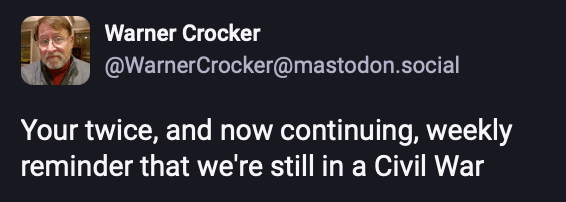
I’ll close with something I post on social media twice a week.
Act like it.
(Image from Halinskyi Max on Shutterstock)
Thanks for reading. You can subscribe to this blog if you care to. You can also find more of my writings on a variety of topics on Medium at this link, including in the publications Ellemeno and Rome. I can also be found on social media under my name as above. This site does not use affilate links.