More Thoughts on Resilience as Our Strength and Our Weakness

The damnation of short and painful memories.

Warning. This is going to be a very long, very personal and very cynical take. A lot of this has been bubbling in my gut for far too long, and I’m tired of the taste in my mouth when it regurgitates. So I write.

A couple of weeks ago I wrote a piece titled Resilience Is Our Strength But Also Our Weakness. The slug line for the piece was “Time to break a few things.” I stand by the title, the slug line, and the content.

That said, I’m going to write further based on a conversation generated from the piece on Mastodon with fellow Mastodonians David Todd McCarty and Denny Henke. Henke, while admiring the piece, took me to task for not offering specifics about what to tear down. He was correct. I didn’t. I’ll offer what few I think there are throughout and towards the end of this essay.

Nasty hint. I don’t think there are many. That’s one reason it’s taken me so long to think and write this essay. There are questions. Nothing I’m going to say here should come as a surprise. Anyone reading this has probably already had many of the same thoughts. If you haven’t I don’t know why you’re here.

Before I get into that, let me toss out a few links for context for anyone interested. First, take a look at McCarty’s piece linked to in my previous piece called A Quiet Truth, and also his attempt to answer Henke’s response in this piece Democratic Socialism: Keeping The Great American Experiment Alive. 

I’ll also reprint Henke’s intial thoughts in his response to me below:

Great post Warner and I generally agree but you don’t offer much detail. You’re focused on the Reconstruction and the historical rooting of our current moment in the Confederacy, which I would interpret as the unresolved issues of 150ish years ago.

But shouldn’t we go back 250 years? That would seem to get us closer to the foundational problems.

Also, coming back to today and the notion of breaking things. What is it you want to break? What do you see as being the goal? And how do you see us getting there?

I’d ask the same of DTM. You both SEEM to be calling for a sort of soft revolution without really saying it. And though you both seem to be rejecting the previous normal, you’re seemingly okay with many aspects of what we had.

What level of inequality are you willing to accept or is it none? What level of general social-ecological-economic violence are you willing to accept or is it none?

History

Both McCarty and Henke mention my historical references to our country’s capacity for compassion and resilience in my earlier piece, specifically how we as a nation chose a path of reconciliation over one of punishment after the American Civil War. History can nag, and be both instructive and problematic. I’m not one who thinks looking past the past, or picking your past (as I did) helps tremendously, though it instructs if you pay attention. Otherwise why would the dark hearted forces that seize control keep trying to erase or change it every time the cycle swings them back into power? History doesn’t only contain a recounting of events, it contains what’s behind those events should you care to look.

We may not step foot in the same river twice, but we keep recycling the water in history’s reflecting pools.

In my view, as a species (expand for a moment those borders and blinders beyond the U.S.) we’ve more than proven that we’re incapable of the persuasion necessary to promote positive change in the grand scheme of things. We’re also incapable of enough horror to counter dark underlying forces eager to exploit., explode and yes, extinguish in their quest for power and dominion. We don’t want to be the monsters we need to counter.

It’s a doom loop humans have been caught in long before anyone reading this was born. And it’s a loop so overstuffed with doom that we want to physiologically and psychologically wipe it from our memories the moment we begin coming up for air after one catastrophe or the other. It’s amazing how we even find ways to ignore the scar tissue.

For the moment then , set aside history. Why continue to dissect it to death for no great real benefit? Set aside also discussions of racism, religious intolerance, class warfare, and all flavors of hatred of the other. More words have been written about those topics, some here, and in countless other places by countless other writers. None seeming to have any real lasting effect beyond blowing off steam on trains stalled on the tracks. Words do have meaning. Meaning meanders through the mediums and get muddled in the summaries.

Dig beneath to what in my opinion is the rotten root behind most of the ills humans continue to bring on one another. The thirst for dominion reveals dark hearts fueled with an appetite for self aggrandizement that makes the sin of gluttony feel like a mild teenage eating disorder. You can’t read a history of any civilization without finding that to be the case. Oh, shit. There’s history again.

What? Too big? Too broad a topic? Too much to tackle?

Spot on.

It is too big. Also too unsolvable. Too deep. You can erase moments of history. You can’t erase who we are. It is who we are. At least as demonstrated by a collective human history of repeating and revisiting the motivations behind the moments that stand out on the surface, that iceberg-like signal greater horrors underneath. Perhaps we’re waiting for some AI to solve it. That’s only partially a joke. Easier to laugh than accept responsibility.

Not recognizing the enormity of the larger root cause makes it far too easy to focus on what comparatively is the day-to-day (these days overwhelming) minutiae of corrupt and poisonous politics, legal morasses, greed in all forms, and debates over a constitution that has essentially been abused as much as the people it supposedly protects. Every day there’s a moment that feels crucial (it is always the most important election of our lifetime!), always feels pressing, and always ends up, in the grand scheme of things, rewarding a few while screwing over the rest. Always.

Admitting the larger problem is indeed too much, but also too much a condemnation of us all. And we generally shy away from that. Focusing on the immediate threat always and often more urgently satisfies the emotional need to rage against that which can’t be changed or controlled. And that brings me to violence.

Violence and Monsters

I’m not advocating violence. I’m not a violent person. I have resorted to it a couple of times to defend myself and loved ones. Beyond self defense, (too often a convenient excuse) I am acknowledging that violence is usually what most of what we’re experiencing evolves (devolves?) into. Not always. But usually. And usually when it counts.

Frankly, in my world view, if you’re not prepared for a violent outcome you’re being naive in the best case. In the worst, you’re just a willing victim and actually a part of the problem. Regardless, those willing to accept violence as a piece of the puzzle are at least the ones who have chance of winning each moment’s argument.

Yes, violence begats an endless cycle. One good deed may deserve another, but one bad one too often breeds many more. But without the threat of violence or punishment, power and the restriction of it is essentially meaningless.

Reiterating, I’m not advocating violence. I just think we need to be prepared for it. Frankly, I’m surprised we haven’t already seen it on a larger scale in this country in the reactions to the violence visited on us by our government. To say you’re incapable of it, means you’ve never been under serious threat, real or imagined. Reason is always preferred. Until you confront the unreasonable.

But what about the important non-violent movements throughout history? Gandhi? Martin Luther King and civil rights? Labor strikes? What about Victor Orban stepping down after being defeated in an election?

Don’t kid yourself. While non-violent organizers fighting for civil rights practiced and preached non-violence, realize in most situations they were prepared to have violence done on them. Those organizers were no fools. In too many cases throughout history (damn, there it is again) it wasn’t until things turned violent that things begin to change. The presence of cameras made a difference during the US civil rights struggles of the 1960’s. They don’t seem to do so with the same result in the 2020’s. It takes sociopaths to not blanche at the sight of bloodshed of others. It takes courage to bleed for them.

But what about Orban? Perhaps the most sensible tyrant in history. He read the writing on the wall, knew he’d already made his bundle, and had changed the structure of his country in ways that will take decades to fix and tie his opponents into knots. He got out while the getting was good. It’s a rare villain who knows to quit when he’s ahead. Or still has one. U.S. tyrant hopefuls who have been taking cues from Orban should heed his last one.

This country just quasi-celebrated its 250th anniversary of the Declaration of Independence. If it wasn’t for a group of men willing to publicly sign their name to a document at the risk of being hung for treason, who knows what this continent would have become? Would you have signed it with your neck on the line?

Violence is being done on citizens of this country almost daily by its government, as well as on others around the world. Dark hearted monsters have more than proven their lust for it. As for the rest of us?

With the possible exception of some citizens in cities invaded by ICE, I’m not sure enough are willing to stand in the way when the guns come out. Certainly that would require sacrifice in such action. Would you be willing to make it?

The fact that ICE murders haven’t yet turned the tide is something I find hard to grasp in the same way a collective catastrophe like COVID did not. When it is easy to exploit death and destruction for selfish gain we’ve turned a corner into a very dark alley.

As twisted as all of this is, it’s also become some sort of an even more twisted spectator sport to watch the clock hopefully run out on Trump one way or the other. Allies and enemies abroad have joined in on the watching, waiting for a flashpoint or an act of God that may or may not come before too much more damage is done. Meanwhile the violence continues.

I’m not condemning anyone by saying that. I’m just acknowledging that we’re more willing spectators than we are victims watching a losing match, while somehow still trying to manage our lives, than we might believe. Much like the small folk in any Game of Thrones episode helplessly watching dragons fly overhead.

And therein lies one of my larger points.

It pisses me off when I hear criticisms about those who are too comfortable to do what it takes to change things. Certainly there are those who don’t want their comfort zones turned upside down. They deserve condemnation. But there are far too many just trying to provide for their families and get through the day-to-day. I know quite a few for whom that struggle is as all consuming as any political struggle.

It also pisses me off that those who do have enough capacity to work for change have chosen to do so so weakly. They piss me off more than those that willingly attach to the predators like remorseless remoras.

Folks may be willing to boycott a retailer, or a streaming service, or attend a weekend march for a few hours. But I don’t see any concerted actions or desire to do what the Albanians are currently doing to protest their government’s collusion with the Kushner/Trump family attempts to steal and develop a piece of that country’s shoreline. I think the Albanians have now been in the streets for longer than 40 days. That’s a long weekend that’s not short on courage.

So, as to one specific. Until a large enough portion of the population of this country is willing to stand in the streets for periods longer than a few hours on a weekend afternoon, I don’t think on the whole we’re ready for the moment, or the struggle. Those afraid of losing their comfort and those willing to enable by sitting on the sidelines don’t deserve a voice in fixing what has been broken, if or when the time comes.

The citizens of Minnesota and other cities invaded by ICE showed great resilience in the face of government violence. Tragically, it wasn’t enough. That winter furor cooled off as warmer spring temperatures crept in, though it seems to be sparking anew in the heat of the summer after similar recent government sponsored murders in Texas and Maine. I have my doubts.

It’s monstrous what’s happening. And we need to meet the monsters where they are. There’s a great theme in Emily St. John Mandel’s novel, Station Eleven, later made into a streaming series. “To the monsters, we’re the monsters” is perhaps more proverb than theme. There’s always fear on either side of a conflict. Do we need to be more monstrous?

For those who think this sounds like anarchy, you’re probably correct in the strict sense of the term. Here’s the thing. I happen to believe that active tyranny is worse than anarchy. I’m not alone in that. Anarchy is chaos without control. Active tyranny is chaos under the guise of control. That’s where we are. Both bring chaos. Both bring horror.

We’re living under active tyranny masquerading as a constitutional republic that controls too many of the world’s purse strings, constantly tilting every axis it can find, led by a decadent decaying thug, held up and held together by sniveling supplicants, none of whom know when or how to quit, or desire to. Trading one flavor of chaos for another often sounds appealing. It usually never is. Until there is no alternative.

Damnatio Memoriae

The condemnation of memory is an ancient practice of wiping the memory banks clean. The Romans get first credit for attempting to remove all instances of those no longer in favor. Rather than be faced with reminders of those unwanted, remove all instances of their likeness and wipe them from the history books. Don’t mention their names. Damnatio Memoriae resurfaces throughout history like a bad memory popping up out of nowhere, as those controlling the roads patch over the potholes created by the destruction of those who stood in their path. Sorry. History rearing its ugly head again.

I was in Russia directing an American musical when the statue of the founder of the KGB, Felix Dzerzhinksy, was removed from the square in Moscow bearing his name. Joshua Yaffa has an interesting take on the moment, the history, and its aftermath. Here’s a quote:

…in a civic culture that placed more emphasis on forgetting than remembering its more painful moments, Memorial never became part of the mainstream. In 1992, an investigation into the legality of the Communist Party’s actions ended with a whimper. There was never any formal reckoning or judgment on seventy years of Communist rule and those who carried it out.

I grew up in the South in the era when those with long memories and lingering hatreds began turning their dream of rising again into the ugly reality that has led us to where we are now. It was subtle, insidious, and largely ignored outside of the region.

The same media institutions we rightfully condemn for their capitulation today essentially did the same thing during and after the civil rights struggles in the 1960’s. Sainted as they may be for turning their cameras on the Bull Conners and the Edmund Pettus Bridge, they largely ignored the raising of statues and Civil War memorials celebrating traitors, hiding as easily as behind a hood, a politician’s platform, or the masks today’s ICE goons wear in cowardice. The media treats losing soccer coaches with more disdain than it has the legacy of losers who ripped a country apart once and are doing so again.

Politics

In Conor McPherson’s underrated musical Girl From The North Country, featuring the music of Bob Dylan, one of the characters speaking to another, his face pummeled from a boxing match, says:

Marianne: Boxing is so foolish. They say that in the bible, you know?

Scott: Yeah?

Marianne: Leviticus. Chapter 3 verse 4.

Scott: What?

Marianne: I’m making it up. You can say anything is in Leviticus.

The same is true about politics. You can say anything in politics. It’s in the bible. I’m making that up. The opposite is true and you can find it hanging on the walls of schoolhouses in some states. Irony isn’t dead, it just can’t outrun political comedy.

Built into the Constitution since its ratification, the speech and debate clause allowed members of Congress to lie through their teeth while working during attendance at sessions. It’s expanded well beyond the wells of congressional chambers, but then the constitution itself, much like the bible, expands and contracts depending on the moment, the speaker, and the number of social media followers.

One of the cardinal rule of politics is to make your opponent spend time and resources defending themselves. As to one of those specifics I left out, we don’t practice that skill enough. The monsters do. We do not. We need to.

Call me crazy, but as the Democratic Party searches in vain to try and grab a coherent message, their consultant driven attempts keep missing the mark against opponents tossing slop at them from the gutter. If you didn’t want to wrestle the pig on his home turf, you should have never gotten into politics.

The consultants want to call the intersection where the right and left meet a horseshoe. It’s actually a circle. But closing that gap rhetorically might just mean making those who hate each other for different reasons find too many similarities to make the comfortable classes uncomfortable, and put the consultant class out of work.

To me, there is only one message that should be leveled in any and all attacks. “You want the shootings in our streets to stop? You want health care? You want to afford a living for you and your family? You want an expanded Supreme Court? You want..(fill in the blank with any other issue currently sizzling on the hot plate)? Then first you have to vote these criminals and cowards out of office.”

If you’re not calling them a criminal and a coward every time you speak, in exactly those terms, you’re missing the moment. And if your candidate refuses to do so, find another one who will.

I hate to say it about myself, but I look several family members in their face on Zoom calls and bluntly say, “when you stop supporting pedophiles, rapists, and criminals, then we’ll talk.” I hate being brought to that place. It’s damn painful. But here we are.

The dark hearted monsters have made sure there is no longer a middle road. We need to quit looking for one. Stop also looking for the high road. Everyone is in the same ditch. Don’t debate nonsense. Don’t try to reason with the unreasonable. If your compassionate muscle begins to twitch, exercise it in support of those who literally find it hard to manage through a day or a week, and can’t find the time or energy for anything else.

Henke asked me “What level of inequality am I willing to accept, or is it none?” I’d love to say it was none, but that would be naive. Like Thomas More I don’t think there could ever be a Utopia. There is always going to be inequality. Thinking equality for everyone is a fiction that can really only be achieved from a perch above those you want to help. There’s irony in there somewhere.

The question isn’t what level of inequality would you accept, the question is what levels of support for those on the lower rungs of the ladder are you willing to pay for.

For some, politics may be about creating equality, opportunity, or possibility. We like to hear that. Some desperately want to believe that. And yes, laws do matter. But laws can be undone. More swiftly than they can be created. Laws can be evil. Slavery was legal. Laws can be ignored. But at its root, politics is, and always was, about dividing up what resources are available or finding new ones when those run out. If you think it’s about anything else, you’re wrong.

More Specifics and Breaking Things

I promised to list some specifics beyond the few sprinkled above. And here you go.

As to the upcoming elections.

Pay Attention: There are no secrets. We’re told and we see daily what the plans are. If you dismiss them as the ravings of a lunatic, you’re wrong. Pay attention.

Vote. The only way to defend the right to vote is to vote. That sounds easy and trite. I don’t think it will be for some this year. Whatever obstacles (and there are quite a few) that the president has declared he wants to throw in your path need to be overcome. Voting is going to be more of an act of defiance than it has ever been.

Organize. Yes, it helps. But it only helps if you do so strategically with the simple goal of tossing the bums out. Everything else is secondary. Certainly if we lose.

Be ready to protest after the election and whatever bullshit the coward and criminal-in-chief tries to pull to keep himself in power and out of jail. The largest mistake we made after the 2024 election was staying in shock and not causing trouble in the immediate aftermath. We allowed the criminals the time to carry out the plans they had made very public for all to see. None of what we are seeing should be a surprise. If it is or was, you weren’t paying attention.

Sharpen your steel. The steel in your spine. Know you’re already under attack and know what you stand for or don’t. Know what you’re willing to compromise on and what you’re willing to sacrifice and what you’re not. That won’t be easy. It never is.

Call and write your representatives. Or visit their local offices. Certainly call and write them on an issue and how you feel about it. But let whomever answers the phone or greets you at reception that your support stops depending on how they fight. More importantly tell them straight up that if they want a donation they have to ask in person and be prepared to stand accountable. Remind them that the country you want them to fight for was birthed by a minority who pledged it all and that you expect them to do the same.

Write. Not just on social media. Not just your representatives. Not just on the Internet. Write your friends. Write your family. Write the CEOs of companies you do business with. Turn your mind into one that isn’t afraid to make waves. Let whomever you write know that you hold them responsible as the ones that broke the dam and caused the damage. Put them on the defensive. If they are going to tell you to get lost, they are already lost to you. Don’t try to reason with the unreasonable. Write them off and let them know you’ve done so.

As to breaking things.

The only reason the president hasn’t declared some sort of state of emergency and taken complete control is it would bring political fundraising to a halt. Not just for him. He doesn’t need it while he sits in office and collects the bribes that spill over his desk like golden showers. But it would end most political fundraising for the rest of the hangers on and lickspittles. That of course would be a blow to the media as well, because that’s where the dollars raised mostly go after the consultants take their cut.

I have no doubt in my mind that Trump will do some such action either before or after the election. At that point the money will have already been raised and spent and it’s one of the few gambits he has left.

“Things” are already broken. Congress. The Courts. The Justice Department. The Constitution. The economy. Global alliances. The list is too long before you even get to the defacing destruction of Washington DC and the White House.

I’m reminded of when now senator Mark Warner was elected governor of Virginia in 2002. (Sorry, not sorry, but it’s another history moment.) He came to power to discover that the Republican Party had been essentially cooking the books. Warner had to scale back some of his plans to put the state’s finances back together. It wasn’t easy. But he largely succeeded by setting aside some of his promised priorities.

That pales in comparison to what whomever is elected in 2028 will face, or assuming the democrats come back into the majority in Congress after the midterms.

Like Orban’s Hungary, so much is broken it is going to take years if not generations to restore. I’d suggest restoration shouldn’t be the goal. Neither should reconciliation.

Sure, we’d all like to see some of the physical manifestations of Trump’s classless remodeling of the capital city and other places torn down and ripped asunder. That would probably feel good, and provide a cathartic cleansing. A symbolic, yet perhaps necessary one. But we should never attempt to erase the memory of what we’re living through. Don’t damn the memory, damn those who created them and forever remember their evil. At least for seventy or 80 years or so. That seems to be our capacity.

Certainly we’d like to see many of these barbarians sent to jail for their crimes. If we don’t, forget about the current system of laws that they’ve already spit on and torn asunder. The criminals have. We should too.

The harder work will be in closing the holes that our constitutional republic has left open that let this madman run through and over. Those holes exist because the founding fathers believed in honor, checks and balances, and to some extent the will of the people. This decade has more than proven that we don’t care so much about honor, much less checks and balances or the will of the people.

Break what’s left, and I’d suggest taking advantage of the opportunity to make something new. If it requires a constitutional convention, do it. If it requires being more monstrous to meet the monsters where they are, do so. It can’t be any messier or more dangerous than things stand now.

I’ll close with something I post on social media twice a week.

Act like it.

(Image from Halinskyi Max on Shutterstock)

Thanks for reading. You can subscribe to this blog if you care to. You can also find more of my writings on a variety of topics on Medium at this link, including in the publications Ellemeno and Rome. I can also be found on social media under my name as above. This site does not use affilate links. 
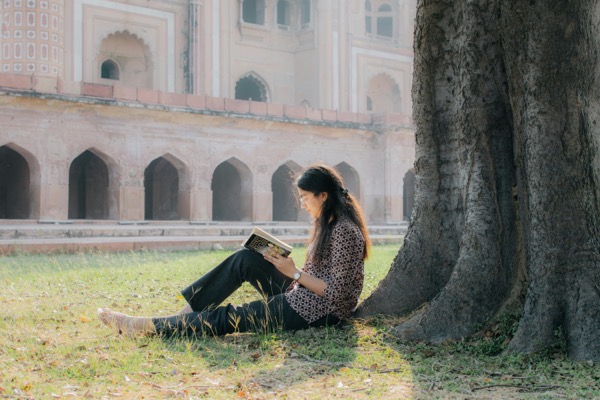
Sunday Morning Reading

Still milling milestones

It’s a Sunday. It’s a Sunday when I can say I’ve hung around for seven decades as the clock ticked past 70 yesterday. Spending the weekend celebrating with the grandkids, dodging in an out of pockets of time when the air is breathable, so there’s only a few links to share in this week’s Sunday Morning Reading. Hope you enjoy them as much as I have spending it with two innocents watching them approach the world from that perspective. When they look to you for answers, it’s awesomely terrifying.

David Todd McCarty thinks We’re Teaching Our Kinds The Wrong Lessons. As someone who wonders why we spend so much time teaching them not to lie in a world that rewards liars, I often think the same.

NatashaMH writes about An Artist’s Search For Meaning. The quote below she included from Viktor E. Frankel, hit in a different way on this birthday weekend.

“It did not really matter what we expected from life, but rather what life expected from us. We needed to stop asking about the meaning of life, and instead to think of ourselves as those who were being questioned by life — daily and hourly.”

It wouldn’t be a Sunday Morning Reading column without at least one nod to politics, Her’s the nod from Carlyn Beccia, wondering Has America Crossed The Asshole Threshold? I would argue yes, but wouldn’t limit it to just America.

Claire Stapleton worked at Google. She saw most of it. She tells what she saw in The Voice Of Google in a piece that is so much more than just about Google and the tech culture.

Thanks for reading. Feel free to subscribe if you want. It’s free. If you’re interested in just what the heck Sunday Morning Reading is all about you can read more about the origins of Sunday Morning Reading here. If you’d like more click on the Sunday Morning Reading link in the category column to check out what’s been shared on Sunday’s past. You can also find more of my writings on Medium at this link, including in the publications Ellemeno and Rome. This site does not use affilate links.


Sunday Morning Reading

Reading is a gateway drug. Get your buzz on.

Sunday Morning Reading is about…well, it’s about reading. In my personal opinion some don’t read nearly enough. Read. Read those you agree with. Just as important, read those you disagree with. Stretch those reading muscles and stretch your mind.

I linked to a Rose Horowitch piece earlier in the week entitled The End of Reading Is Here. It’s controversial. I don’t agree completely. But that’s the point of reading. If that’s still a thing.

Follow that piece up with Sonny Bunch’s R.I.P. Attention Span. Closing his essay he says “The end of reading may be here. But so too might be the end of watching anything that lasts longer than the time it took you to read this sentence.”

In an age where some are eager to ban books (surprised we haven’t seen any book burnings yet) Mendel Uminer chose to move rather than reduce his collection of books after his landlord complained. Check out Alex Vadukul’s story Too Many Books.

You know that reading can satisfy curiosity. It can also raise it to new levels. Neil Steinberg’s Etymological Field Notes tells such a tale. Do you flânuer?

And for those who tell you not to believe everything you read, here’s John Semley on The Fanfare Around The Band Geese Actually Was a Psyop.

In the wake of all of the seemingly unending horrible daily doping of bad political news, (some about wakes to be, some about wakes possibly delayed), James L. Bruno writes The “Last Best Hope On Earth” Crashes & Burns.

With the act and art of reading being in question, especially when it comes to the news, the click matters more than the content now that most of what we’re presented isn’t worth being displayed in a supermarket checkout line tabloid rack. Or does it? According to Pete Pachal when it comes to the news Speed Still Matters In News, But The Prize Is No Longer The Click. Maybe there never was a prize.

Speaking of prizes. Winning isn’t everything. Unless it is. JA Westenberg reminds us that A Battle Won Is A Terrible Thing.

Rob Urie tells us Why AI Doesn’t Think, Cannot Reason, Isn’t Intelligent and Will Never Achieve Consciousness. It’s not magic.

(image from the author)

Thanks for reading. Feel free to subscribe if you want. It’s free. If you’re interested in just what the heck Sunday Morning Reading is all about you can read more about the origins of Sunday Morning Reading here. If you’d like more click on the Sunday Morning Reading link in the category column to check out what’s been shared on Sunday’s past. You can also find more of my writings on Medium at this link, including in the publications Ellemeno and Rome. This site does not use affilate links.


Sunday Morning Reading

Sometimes a pear is just a pear.

Another Sunday dawns, so it must be time for Sunday Morning Reading. An interesting collection of pieces to share this week. On one hand it seems like any other week. On the other, this week’s edition offers a few nuggets worth chewing on. Don’t over think it. Enjoy.

Three green pears on a table top in various degrees of ripening. Photo by Tijana drndarski 3zmVSZQIozA unsplash.

Leading off, I’m highlighting an excellent series from The Baffler called The Profession That Does Not Exist. The Baffler bills itself as “America’s leading voice of incisive and unconventional left-wing criticism”, for what that’s worth. I find it an excellent source of good writing. Each of the pieces in the series that has the subhead “writing won’t make you a living”, is worth your time, but I’ll highlight two.

A Pear Is Just A Pear by Timmy Straw. Making your way in a crazy world you can find that sometimes a pear is just that. A pear.

Bertrand Cooper’s ISpyForGood recounts his experience as a social media investigator, a job that allowed the possibility of stepping out of poverty that entailed examining how others often scammed their ways to do the same.

Apparently the ruling class in Silicon Valley are worried that folks don’t take too kindly to their products or their ruling. David Wallace-Wells takes a look in A.I. Populism Is Here. And No One Is Ready. I guess when you threaten to turn the world upside down folks do get a bit antsy.

Open your arms and wave at just about anything happening around and to us and you can’t miss the obvious. Tom Wellborn takes it all on in The Frequency At Which Accountability Cannot Reach. Sometimes a pear is just a pear.

JA Westenberg says Outrage Is Letting Someone Else Set The Frame. Westenberg also offers up The War Between Fast And Legitimate Is Here. I suggest getting out of these messes we’re in calls for new frames or new acceptance of coloring outside the lines. Oh, wait. All the lines have been blurred.

James O’Sullivan thinks We’ll Soon Find Out What Is Truly Special About Human Writing. I suggest we’ll “rediscover” rather than finding out, but his point is spot on.

Meanwhile, Will Gottsegen says Sam Altman Wants To Know Whether You’re Human. It appears Altman and his ilk are looking at the problem through the wrong end of a telescope at a tiny mirror reflecting back.

On another front, Marianne Dhenin takes a look at The Small Wisconsin City That Defeated A Giant Data Center. I don’t think the robots will ever be able to muster this kind of civil action.

You, like I, may be overly tired of hearing anything having to do with the Epstein Files. Even so, I encourage you to take a look at this excellent piece from Gabrielle Glancy. I Grew Up With Epstein In Brooklyn. Our Neighborhood Held Dark Secrets not only tells a tale that should frighten, but one that I guess more might share than most ever want to acknowledge.

Happy Mother’s Day to all our mothers out there and all to come. Sometimes a pear is just a pear.

(Image from Tijana Drndarski on Unsplash)

If you’re interested in just what the heck Sunday Morning Reading is all about you can read more about the origins of Sunday Morning Reading here. If you’d like more click on the Sunday Morning Reading link in the category column to check out what’s been shared on Sunday’s past. You can also find more of my writings on Medium at this link, including in the publications Ellemeno and Rome. This site does not use affilate links. 


Bumper Cars and Grocery Carts

We’re an angry lot these days

We’ve been away for a week, so we had a number of errands to run in order to restock the home larder, pick up the dry cleaning, etc.. It’s a Saturday and a sunny one at that. Cooler than I’d like, but reasonably pleasant. Unfortunately, the cooler temperatures and bright sunshine aren’t leading to cooler heads.

An high angle, wide shot of an old black and white photograph captures the interior of a grocery store where shoppers wait in line at checkout stands.

The nice weather means everyone and their extended families in Chicago has decided to get in their cars and drive today. Add to that, the outbreak of road construction sites that have popped up like spring flowers and you’ve got your typical tangled traffic mess.

One of the things that always gets me is how considerate drivers never focus their consideration beyond what’s in front of them. A considerate driver will pause to let another motorist entering from a side street, or trying to change lanes, not recognizing the line of cars behind them that they are holding up by doing so. It can be aggravating.

It’s different in the grocery store. It’s usually considerate to let someone who might have one item jump in front of you if you’ve got a reasonably full cart. But in my experience, that doesn’t happen if there’s a long line of folks behind them. Spatial and situational awareness is a little more acute when you’re not behind the wheel of a car, instead surrounded by other humans.

Today I witnessed that break down. One customer with a line behind him, decided to let another customer with only a gallon of milk, cut in front of him. It lead to quite a loud chorus of complaints from other customers standing behind the gentleman. The considerate customer fired back with a retort and, well, let’s just say verbal chaos ensued. The cashier and eventually the manager got involved.

Obviously the difference between grocery carts and cars is that you’re not protected by metal and other materials that entomb us in cars. You might hear car horns blaring, but you don’t hear the shouts of other angry customers, separated only by the length of a grocery cart or two or three.

When I came out of the grocery store, the argument had continued in the parking lot. Fortunately, the offending gentleman and the most vociferous objector to his consideration were parked in separate parking lot lanes meaning they were headed in different directions once they got in their cars, doors slamming, to depart.

I’ll leave it this way. We’re an angry lot these days. With all of what we’re dealing with as a society, rising prices certainly being one of them, everybody more than willing to express their anger, regardless of whatever armor they may be incased in.

(Image from the Boston Public Library on Unsplash)

You can also find more of my writings on a variety of topics on Medium at this link, including in the publications Ellemeno and Rome. I can also be found on social media under my name as above. This site does not use affilate links. 

 

The Potholes of the Internet

“Your Frustration Is The Product”

Some call it enshittification. I largely agree with that when it comes to the Internet. But that’s true in most endeavors that result in building something. Anything made for good, can and will be used in ways that turn it into a shitty experience.

20160824 121009.

I’m not just talking about advertising and how it’s junked up the web. I’m also talking about human nature, and how there’s a part of too many of us that see something wonderfully created to solve a problem, who then consequently turn it into a range of unintended consequences that leave us mourning our losses at the expense of somebody else’s gain.

Any one of us could run down a list of things in each of our lives that demonstrate that history, so I won’t even begin to spool one out. Have at it yourselves.

In the majority of instances the road to ruin is typically a path worn thin by greed and there’s never been a road we travel that doesn’t eventually fill with potholes. But back to the Internet and enshittification.

If this excellent post by Shubham Bose called The 49MB Web Page doesn’t make you yearn for a simpler age, I’m not sure what will, assuming you were alive and on the Internet before things went south. Remember, there’s a generation for which the way things are today on the Internet is the way things always have been.

Here’s Bose’s lede:

If active distraction of readers of your own website was an Olympic Sport, news publications would top the charts every time.

I went to the New York Times to glimpse at four headlines and was greeted with 422 network requests and 49 megabytes of data. It took two minutes before the page settled. And then you wonder why every sane tech person has an adblocker installed on systems of all their loved ones.

It is the same story across top publishers today.

The entire piece is worth your time if for no other reason than that misery loves company. We’re all in that same boat and there does’t seem to be any shoreline in view, given how the waters are being churned up anew by Artificial Intelligence.

As Bose puts it:

Your frustration is the product.

Back in the day I can remember getting a credit for complaining that my newspaper was delivered wet and unreadable. Good luck finding someone to express your frustration to these days.

(Photo by the author)

You can also find more of my writings on a variety of topics on Medium at this link, including in the publications Ellemeno and Rome. I can also be found on social media under my name as above.


Sunday Morning Reading

Slicing life close to the bone

It could be said that the world is off its axis. Or it could be said that we’re just slicing the meat closer and closer to the bone. Because we don’t know what we don’t know about the war the U.S and Israel launched against Iran I’ll leave off any direct links on that topic for this week’s Sunday Morning Reading. Be warned though, some might be peripherally related. Things happen that way. I’m sure there will be plenty to share in the weeks to come. Meanwhile, here is the usual serving of links on a variety of topics that caught my eye this week. You’re on your own for the tzatziki.

Parthenon 14.

David Todd McCarty is bringing his writings from other platforms to his own site, and some of his earlier writings often strike with new currency. This piece, Defiantly Daft, Duplicity Delicious is certainly one that does.

What is journalism for? Good question these days, but it’s actually been an important one for quite awhile. Take a look at this piece from 1989 from Janet Malcolm called The Journalist And The Murder-I.

Journalism, like everything else, might be under fire at the moment, some of it friendly, some of it not so. Check out Zack Whittaker’s adventure in FBI Agents Visited My Home About An Article I Wrote, And Now I Can’t Go To Mexico.

Tom Nichols says The Republican Party Has A Nazi Problem. Well, duh.

One of the many charges against Artificial Intelligence is what it will do to the cost of the energy needed to power it. Chris Castle takes a look in Update: Trump’s “Ratepayer Protection” Pitch Becomes A Private Power Plan for AI — But Grassroots Revolt Won’t Fade. Hat tip to Stan Stewart for this one.

Apple is about to release a number of products this week at a time that it is under increased criticism on a number of fronts. Recently, Jason Snell of Six Colors released The Six Colors Report Card, in which he surveys a number of the Apple faithful on how things went in the last year and compares that to year’s previous. The scores are always interesting, but the commentary is even more so, which you can read here. Also of interest is Kieran Healy’s charting out the bad vibes based on that commentary. 

Speaking of Apple, Wesley Hilliard takes a look at some of those bad vibes in Apple’s Week February 27: Chasing The Puck.

On a local Chicago front and also on the tech beat, The Chicago Tribune’s Editorial Board takes on a local (yet owned by Albertsons) grocery store’s shopping app in Fix Your Lousy Shopping App, Jewel-Osco! Having suffered through using this app, and watching store personnel and other customers show their distaste for it, I can agree. Fix the lousy app.

Libraries, like so much else, are under attack these days. So this piece from 2017 from Eliza McGraw reminds us of a bit of history. Check out Horse-Riding Librarians Were The Great Depression’s Bookmobiles. Knowledge, like life, finds a way.

If you’re interested in just what the heck Sunday Morning Reading is all about you can read more about the origins of Sunday Morning Reading here. If you’d like more click on the Sunday Morning Reading link in the category column to check out what’s been shared on Sunday’s past. You can also find more of my writings on Medium at this link, including in the publications Ellemeno and Rome.


Sunday Morning Reading

Big stuff is happening.

Something big is happening. Everywhere all at once. At a pace that seems like it’s uncontrollable. We can either try to keep up, or tune out. Those are the options. I choose to try and keep up, try and stay aware. Mostly just try. That’s one of the reason this Sunday Morning Reading column exists. To share some of the writing about some of things that I think keep me aware. Hope you agree.

Person in a bright yellow hoodie and jeans sits on a floor covered with newspaper pages, holding an open newspaper in front of their face so it hides their identity, with a wall of newspapers behind them. Photo by Egor vikhrev IFdQ6ea7r0s unsplash.

I took the first sentence of the above paragraph from the excellent post from Matt Shumer. Yes, it’s called Something Big Is Happening. Because there are so many big things happening. As a spoiler, Matt’s post addresses Artificial Intelligence. Pay attention.

“Art begins when the words stop.” That’s a quote from the excellent Every Brushstroke Is A Philosophy In Motion by Natasha MH. It’s the text of a Valentine’s Day speech of hers. Read these first two pieces back to back. Connect the dots. Pay attention.

A Great Social Rewilding Is Coming. So says, David Todd McCarty. So say I as well.

Wonderful actor Bob Odenkirk tells us what his agenda will be in I Will Be Your Next President. He nails the moment. If he ran I’m sure he’d get votes. Probably mine. Can’t be much worse than what we’ve recently seen.

Mike Elgan writes Why There’s No ‘Screenless’ Revolution. I happen to agree that there won’t be one. Anyone still watching 3D TV?

Curtis McHale takes on Binary Bias, Cancel Culture, and the Death of Nuance. Sadly, it wasn’t a quick or a painless death.

There’s no question that journalism is in as big a mess as most everything else. David Brooks Sucks. This Is Who Should Replace Him by John Warner lays out the case for the first sentence. But read it for the links to those who he thinks should replace him.

The surveillance state is going to the dogs thanks to a Super Bowl ad. Mathew Ingram tells us about Building the Panopticon: The Doorbell Camera Version.

It’s been quite a cold winter, though it’s warming up a bit in these midwestern parts, but apparently this cold weather across most of the U.S. led to increased demand for firewood and just about anything that will burn. Neil Vigdor writes about it Shivering Americans Snap Up Firewood As Winter Grinds On.

And since this is Valentine’s Day weekend, I’ll close the circle with Catherynne M. Valente’s piece, On Valentine’s Day. There are indeed worse things to feast over.

(Photo  by Egor Vikhrev on Unsplash)

f you’re interested in just what the heck Sunday Morning Reading is all about you can read more about the origins of Sunday Morning Reading here. If you’d like more click on the Sunday Morning Reading link in the category column to check out what’s been shared on Sunday’s past. You can also find more of my writings on Medium at this link, including in the publications Ellemeno and Rome.

Sunday Morning Reading

Boulder bustling

The world prepares to begin a new year and wakes up to an entirely new world. Or does it?

You go to bed on a Friday night with the holiday season inching to a close and wake up on Saturday morning and your country is running Venezuela after invading it and kidnapping its president and his wife. Or so the narrative on Sunday morning goes. I’m sure it will change by the time we get to midweek. Yeah, it was that kind of weekend and that will be reflected in this week’s Sunday Morning Reading along with a host of other topics.

Main-9 24-Nov-2.

I’ll lead off with a few in the moment takes on what happened in Venezuela yesterday. Note that in the moment takes often fade once the moment has its moment.

First up, David Frum says that Trump’s Critics Are Falling Into An Obvious Trap. Frankly, whether you’re a critic or a MAGA hat wearing supporter we’ve all fallen for so many obvious traps, what’s one more?

Thinking bigger picture, Tom Nichols thinks Maybe Russia and China Should Sit This One Out. They need to stop laughing first.

In the wake of the news, Carole Cadwalladr sees “a mass propaganda event” about to engulf the US in her piece, The Threat From America. She’s correct.

Written before the events of this weekend, Mathew Walther’s The Strange Death of Make America Great Again may seem out of place and time as it focuses on the MAGA culture wars within itself. I would venture that it is not, so stay tuned.

Turning to more local concerns that resonate alongside the global news, the folks at Block Club Chicago including Francia Garcia Hernádez and Madison Savedra have an excellent look at How Operation Midway Blitz Changed Our City in Chicago Under Siege.

As if not to be left out of the making bad news moment, Elon Musk’s back in the swing of things with his AI tool Grok allowing users to essentially turn X into a porn machine using photos of real folks to wreak havoc. Just note that X is still the social media platform of choice for far too many. Matteo Wong has the story in Elon Musk’s Pornography Machine.

Cory Doctorow published the text of a recent speech called A Post-American, Enshittification-Resistant Internet. He continues fighting the good fight like Sisyphus with that boulder.

JA Westenberg makes The Case For Blogging In The Ruins.

And to close out the week when holiday close out sales come to an end, Jake Lundberg takes a look at The Cult of Costco. Great piece whether you shop there or not.

If you’re interested in just what the heck Sunday Morning Reading is all about you can read more about the origins of Sunday Morning Reading here. If you’d like more click on the Sunday Morning Reading link in the category column to check out what’s been shared on Sunday’s past. You can also find more of my writings on Medium at this link, including in the publications Ellemeno and Rome.

Sunday Morning Reading

Sharing thoughts about big ideas and little things

Sunday Morning Reading is back from a two-week hiatus in which we watched the grandkids while their parents began moving into what will be their new house after the first of the year. It was a big deal featuring lots of little things with the little ones. As usual the column this week presents some interesting reading and writing that I think worth sharing. Big topics side by side with little things.

As the Christmas season I knew growing up begins to wind down and everyone begins gearing up for the New Year, I ran across Matthew Cooper’s Why We Need A New Dickens. He makes a good argument, but in my experience everyone loves reading what Dickens chronicled, but somehow it never really catches on.

Keeping somewhat in the Christmas vein The Guardian View On Far-Right Perversions Of The Christmas Message: Promoting A Gospel Of Hate by the Guardian’s editorial department hits its target, but in a glancing blow that proves my point from the link above.

NatashaMH takes on The Great Wall Of Honesty with blunt truths, bear hugs, and a bit of resilience.

JA Westenberg points out that we never pay much attention to the tech folks who do the grunt work behind the scenes to keep things running in The Rime Of The Ancient Maintainer. That’s the little story behind most of the big things we take for granted.

Illustrator Lauren Martin writes On The Pitfalls Of Saying Yes To Everything. Hat tip to Stan Stewart for this one.

I don’t usually link to book reviews in this column, but this one by Dorian Lynskey of Sven Beckert’s book Capitalism: A Global History made me buy the book. Check out Capitalism by Sven Beckert Review — An Extraordinary History Of The Economic System That Control Our Lives. (FWIW there are no affiliate links on this site.)

Speaking of the little things, David Todd McCarty enjoys The Casual Comfort Of Champagne And French Fries.

This piece by Josh Marshall has been sitting in my Sunday Morning Reading queue during the aforementioned hiatus and it’s certainly lost none of its luster with time. Check out Will The 21st Century Nabobs Win Their War On Public Accountabilty?

I’ve followed and linked to a number of Denny Henke’s posts about how he’s changing his personal computing habits this year. His 2025 End Of Year Personal Computing Check-In is worth a read even if you haven’t been paying attention up until now.

Neil Steinberg notices things big and small and occasionally writes about those he hasn’t seen in a while. Check out his observations on seeing an Armored Car.

And to close out this week and this year’s Sunday Morning Reading, here’s a piece that good friend Sumocat linked to that is indeed an obituary. One worth a look even if you never noticed or took for granted what the deceased created, The Moylan Arrow. Take a look at The Inventor Of The Little Arrow That Tells You What Side The Fuel Filler Is On Has Died by Daniel Golson.

It’s the little things that make a difference in this big world. Have a happy turn of the New Year.

If you’re interested in just what the heck Sunday Morning Reading is all about you can read more about the origins of Sunday Morning Reading here. If you’d like more click on the Sunday Morning Reading link in the category column to check out what’s been shared on Sunday’s past. You can also find more of my writings on Medium at this link, including in the publications Ellemeno and Rome.