Sunday Morning Reading

So what is this future we’re heading into anyway?

If you’re observing Memorial Day weekend in the U.S. I hope you have had a pleasant one. Even if the weather isn’t cooperating, seemingly echoing the threats of seeing that tradition, like so many others, diminished. We’re on the road again for a dear friend’s memorial service, but there’s still time for a little Sunday Morning Reading. Mostly tech related this week, some politics, and of course some cultural happenings. If you’re paying attention, it’s all intertwining. Listening to a lot of Bruce Springsteen. Enjoy.

Adding to what’s becoming a recurring theme in this column, Ian Dunt is looking for ways to get the most out of our digital lives while taking back a bit of control from the tech god wanna-be’s. Check out Taking Back Control of Our Digital Life.

Matthew Ingram wonders If AI Helps To Kill The Open Web What Will Replace It? Excellent piece and excellent topic, because like it or not, it’s the current and next movement we on the ground are going to have to contend with. Pay attention.

Neil Steinberg, one of my favorite of a dying breed of Chicago journalists, gives his take on the recent Chicago Sun-Times AI flap in The AI Genie Is Out of The Bottle, and the Granted Wish Often Brings Trouble.

Lucy Bannerman takes on the AI’s abuse of copyright and artists rights in Nick Clegg: Artists’ Demand Over Copyright Are Unworkable. They aren’t. Those demands just cost more than folks counting the beans want to pay.

Lynette Bye’s Misaligned AI Is No Longer Just Theory raises up that specter that haunts this entire episode of our life across all spectrums that seems easy to fall prey to or dismiss, depending on which side of the coin you’re on. Frankly, if you don’t think the future of this can be manipulated, you’re not paying attention.

Jason Snell’s take on the recent announcement that OpenAI has bought Jony Ive’s company to produce new hardware for AI I think is the correct one. Check out Sam and Jony and Skepticism.

Chloe Rabinowitz fills us in on the outgoing president of the Kennedy Center’s response to the bullshit coming out of the White House. in Deborah Rutter Releases Statement In Response to Trump Kennedy Center Allegations.

The real boss, Bruce Springsteen, continues to piss off the orange buffoon in the White House and I’m glad to see it. So is Eric Alterman in a guest essay in The New York Times proclaiming Bruce Springsteen Will Never Surrender to Donald Trump. We need more of this.

And to wrap up this week, here’s NatashaMH wondering Do We Really Need To Have This Discussion? No hints. No clues. Just good stuff for you to read.

If you’re interested in just what the heck Sunday Morning Reading is all about you can read more about the origins of Sunday Morning Reading here. You can also find more of my writings on Medium at this link, including in the publications Ellemeno and Rome.

John Siracusa on Changes Needed at Apple

The time is ripe.

Apple is taking it on the chin lately. Deservedly so. Although some of the pounding is from external sources (Tump’s not happy with Tim Cook apparently,) most of the blows are entirely self-inflicted. Among those critics is noted Apple pundit and podcaster, John Siracusa, who delivered a piece on how he sees Apple’s current predicament. His post, Apple Turnover, essentially says it’s time for a leadership change in the C-Suite. I think he’s correct and his post is worth a read. 

AppleWorm copy.

Nothing lasts forever, as Siracusa nicely sums it up. Change happens. Life goes on whether that change is planned, forced, or fumbled into; a sort of a reverse echo of Shakespeare’s funniest villain Malvolio telling us that “some are born great, some achieve greatness, and some have greatness thrust upon them.” His display of hubris comes before his comic comeuppance. Apple’s won’t yield as much comedy. 

Quoting from his piece: 

…the only truly mortal sin for Apple’s leadership is losing sight of the proper relationship between product virtue and financial success—and not just momentarily, but constitutionally, intransigently, for years. Sadly, I believe this has happened.

The preponderance of the evidence is undeniable. Too many times, in too many ways, over too many years, Apple has made decisions that do not make its products better, all in service of control, leverage, protection, profits—all in service of money.

You can certainly argue that Apple achieved greatness and now appears like it’s reached a critical juncture on many fronts, including falling behind in Artificial Intelligence and trying to ring every ounce of worth it can from every penny its users might be willing to pay for its goods and services. I won’t go into any detail on any of that here because whether it’s AI, App Store business practices, or developer relationships, it’s all been chronicled well enough for most of those paying attention to recite like a catechism. The question is, are the high priests in the C-Suite paying attention?

A few years ago I wrote a piece about how I thought Apple had built itself into a design trap. Here’s a quote from that piece: 

The larger and more precarious point with this tangent is that Apple’s rich design expectations, as powerful as they are, are also Apple’s Achilles heel. Great artists aren’t afraid to fail. Great product makers who use great art as a selling point need to tread more carefully to avoid the level of disappointment that can turn a legacy into a burden.

I think they’ve built themselves a similar sort of trap in their business model(s) that comes from the same sort of reliance on their legacy of success and the hubris that’s engendered. You can easily argue that Apple’s business prowess, akin to its design prowess have both yielded unparalleled results feeding each other and fueling the company’s growth. 

Joan Westenberg has an excellent piece called Apple’s Diet of Worms that touches on this. But to a certain extent it goes well beyond that. Apple is well known to take a long view, and by and large that’s paid off. They’ve been able to afford that long view historically, even though there have been grumblings along the way. However, I don’t believe Apple is dictating the terms or the timeline any longer. 

In the case of Artificial Intelligence, as an example, who knows how that is going to play out for any of the players currently on the field or yet to come. But you can’t deny how OpenAI has changed the pace of things or how Google, and everyone else, is trying to play catch up. The recent announcement that OpenAI was purchasing Jony Ive’s design company to collaborate on what looks like new hardware, coming chock-a-block on top of Google’s mostly AI IO conference announcements, certainly changed the conversation. But then again it might be all smoke and mirrors, no matter how anxious everyone seems to be for some kind of new gadget of the future. Personally, I still think much on this AI front is a race without a finishing line or even a destination beyond collecting data for dollars.

That said, Apple is in it, perhaps thrust into the fray or perhaps fumbling along. Regardless, in my opinion any future achievements are going to require leadership change at the top. 

You can find more of my writings on a variety of topics on Medium at this link, including in the publications Ellemeno and Rome. I can also be found on social media under my name as above. 

 

Sunday Morning Reading

Paying attention for the next generation.

Good morning. Visiting the grandkids this weekend, so this will be a short stack of links to share. Fair warning ahead most are on the darker side of the ledger. The links. Not the grandchildren. They are the light. The grandchildren are why I pay attention.

First up is a piece on despair from Dean Pritchard titled Despair, What Is It Good For. He calls it a hopeless call to action. I’m not sure it’s hopeless at all. Just another step in finding what may or may not turn out to be answers. As long as we keep stepping.

NatashaMH says that social media addiction isn’t just about us, it’s about the people around us in Unread, Unavailable and Unbothered. I’ve never been one to buy into the social media addiction theory. It’s too damn easy to put down the damn phone. But I take her points because it’s too damn easy to keep hoping to find new ways to avoid despair.

Lauren Goode takes on Deepfakes, Scams, and the Age of Paranoia. Somebody needs to.

Tom Schaller and Paul Waldman say that Trump is betraying the voters who elected him in The White Rural Reckoning. They are correct. But we knew that would happen. Scum likes to remove itself from other scum once it’s done scumming around.

Joan Westenberg compares the comeuppance moment Apple is enduring to Martin Luther’s reformation moment in Apple’s Diet of Worms. Given the abundance of fanatics there’s more than a little truth here.

Playwright Sara Ruhl is one of my favorites. Charles McNulty takes a look at what she has to say in her new book In ‘Lessons From My Teachers,’ Playwright Sarah Ruhl Finds Wisdom In Art, Motherhood, Even Grief.

And as for weathering despair, check out Lost At Sea by Alec Frdyman. Excellent reading about a scary adventure.

And to close out this weekend I’ll leave you with this uncredited thought that pops up every now and then on social media.

And just remember who the tax breaks are targeted for.

Peace.

If you’re interested in just what the heck Sunday Morning Reading is all about you can read more about the origins of Sunday Morning Reading here.  You can also find more of my writings on Medium at this link, including in the publications Ellemeno and Rome.

Sunday Morning Reading

Happy Mother’s Day reading.

Time for some Sunday Morning Reading on this Mother’s Day, with a short stack of culture, some tech, some politics, and the Ziegfeld Follies tossed in for good measure.

First up is a good long read from Spencer Kornhaber wondering if we’ve entered a cultural dark age. Provocative in parts, predictable in others, it’s worth your time for the journey it takes. Check out Is This The Worst-Ever Era of American Pop Culture?

Kaitlyn Tiffany says We’re Back to the Actually Internet. It’s about fact checking, the need for fact checking, and actually about how fact checking doesn’t really matter.

We may have beat the term fascism to death long before the real beating actually begins, and it’s the Bible thumpers who seem far too eager for the end times with their wishes for some sort of Armageddon beat down. Naomi Klein and Astra Taylor take a look at The Rise of End Times Fascism.

The Apple enthusiast world is still going through some things and will continue to for the foreseeable future. Denny Henke at Beardy Guy Musings is chronicling his thoughts about his move away from using Apple products. His latest, Are Apple Enthusiasts Miserable? takes a look at some of the angst and tensions he sees.

Indie app Developer Thomas Ricourad, the developer of the app Ice Cubes for Mastodon, among other apps, is searching. He’s not alone. Check out Having A Clear Vision In A Blurred World.

Matthew Gurewitsch takes a quick look The Story of a Rose, an upcoming look at an almost forgotten era in A Ziegfeld Girl Recalls The Forgotten War.

Happy Mother’s Day to all.

(image from Aga Putra on Unsplash)

If you’re interested in just what the heck Sunday Morning Reading is all about you can read more about the origins of Sunday Morning Reading here.  You can also find more of my writings on Medium at this link, including in the publications Ellemeno and Rome.

Apple’s Long Term Challenges Complicate The Short Term

It’s not easy to sell a waiting game.

Mark Gurman offers up a relatively thorough summary of the number of challenges Apple is facing going forward in his weekly Power On column. Things always go forward. The question is always how.

The original link above is paywalled, but here’s a web archive link to the story.

And here’s the summary:

CleanShot 2025-05-05 at 09.41.06@2x.

Gurman calls this point in Apple’s history a “critical juncture.” I would agree. The many moving parts, both surrounding Apple, and of its own making, have put Cook and company squarely in that critical juncture. This comes as Apple and those that make their living talking about Apple are gearing up for this year’s World Wide Developer’s Conference (WWDC) next month.

Gurman delivers the punchline well below the headline that neatly summarizes why WWDC is not going to be able to address all of these challenges, but also why the turmoil is going to continue.

Speaking specifically about Apple’s race to catch up in the AI realm he says:

it’s going to be a while before we can tell if Apple is heading in the right direction

Perhaps that should have been the lede. He could have easily said the same about each of these challenges he enumerates.

But there’s also a larger, more encompassing challenge that makes surmounting each even more difficult. The tech world is moving at a pace that Apple is unaccustomed to. Apple’s historic long view has served it well over the years, but the window on that long view is increasingly narrowing its aperture.

Apple may spend its June introducing and setting the table for what’s coming later this year, but already most of the smart players who follow and promote Apple are shifting their focus to the bigger, and more critical, table stakes coming long after this year’s summer and fall hype cycles end. The now familiar “coming later this year” now means much less when the real issues may only begin to be addressed further down the road.

Waiting “a while” is not an easy sell. Especially these days.

You can find more of my writings on a variety of topics on Medium at this link, including in the publications Ellemeno and Rome. I can also be found on social media under my name as above. 

Arrogance Is Not A Good Look

Especially when you’re falling to Earth

Arrogance is never a good look. We all wear it to a degree. Too many think they wear it well. Until they don’t. When whatever flavor of arrogance they’ve draped themselves in trips them up, the fall makes Icarus look he’s still soaring.

 The lessons of history, literature, religion, heck — even cartoons — tell us that all inflated egos, like balloons, either pop or fizzle. As long as the balloon can be kept aloft, life’s a party. Funny how we’re able to brush that all aside. Arrogantly so.

Seeing Apple get a real courtroom comeuppance yesterday, tech titans in general thinking they can out reason human reasoning, and the continual display of cock and bull topsy-turvying in the political world, one would think that most sensible people, especially those with armies of lawyers on retainer, would begin to sense a few chinks in their armor long before they become dangerous vulnerabilities. They’d probably be served better employing fools or court jesters. 

Oh, wait….Trump cabinet meeting.

Given how we’ve turned gambling into the national sport, it makes one wonder how long before we gamify the entire human experience and begin betting on the timing of career stumbles and failures beyond what already happens in the stock market. Predictable as they are though, the odds wouldn’t offer much change of a big payout.

Then again, keep in mind what Terry Pratchett says:

Modesty is only arrogance by stealth.

You can find more of my writings on a variety of topics on Medium at this link, including in the publications Ellemeno and Rome. I can also be found on social media under my name as above. 

Dan Moren Questions What It Means To Be An Apple Fan These Days

Core questions for Apple users

The headline of Dan Moren’s final column for MacWorld says it all: I’m An Apple Fan In 2025. What Does That Even Mean?

Apple fanboy.

Moren has been writing for MacWorld and been a sensible voice inside the Apple community for close to 20 years. He’s signing off his regular column gig for MacWorld, but he’ll still be around on the likes of Six Colors, podcasts, and I’m sure other places. Which is good, because his voice is an important and reliable one.

In his farewell, he raises the question many are asking of themselves, and the questions many are asking of Apple in its current state and our own state of affairs. As he puts it in a nutshell of a statement:

As Apple started becoming more and more successful, I’ve become increasingly skeptical that one should ever really consider oneself a “fan”of a company.

It’s a well thought out and well reasoned post and one that I think should be read by anyone considering themselves a fan, or a no longer fan, or even someone who just doesn’t care for Apple or its products.

A big part of the self-examination I know quite a few folks are going through in assessing their current relationship with Apple deals with issues bigger than just the products. For lack of a better description call them corporate issues. Even using that label — corporate — feels dirty to type in ways that seem damning in more dangerous ways these days. But that’s a fungible feeling and thinking that’s becoming increasingly tangible.

Here’s the thing. Technology advances. Humans advance. Nothing that feels foundational or allegiance adhering, or even worth being infatuated about is going to ever stay the same. Nor are our feelings about what we first might have fallen in love with, regardless of how the object of that affection itself grows and changes. Change is constant.

Microsoft had my allegiance back in the Tablet PC days because they won it when those much maligned devices provided a better, more productive way to do my work. Microsoft changed. I did too. iPads replaced what Tablet PCs were for me in my work and my play, and those are the tools I still use today. Do I think that will be forever? Not a chance. I mourned the loss of Tablet PCs. I’m sure if Apple stopped making iPads, I’d go through a similar grieving process. But again, that’s change. That’s life.

That’s also growth. But growth on the human side of the ledger rarely equals growth on the corporate side. In my brief time on this planet the two have never added up to successful equation that yields anything other than diverging results. That’s one thing I don’t ever expect to change.

Kudos to Dan on a job and career well done, (and still going) and kudos for a lovely farewell column in MacWorld.

You can find more of my writings on a variety of topics on Medium at this link, including in the publications Ellemeno and Rome. I can also be found on social media under my name as above. 

Distrust-By-Default

Donning a new armor for protection

In a typically thorough article on Ars Technica about Microsoft preparing to reintroduce the Recall feature to Windows 11, Andrew Cunningham sums up his, and I think many of our, queasy feelings about these kind of feature and marketing failures we’ve recently seen from the likes of Microsoft, Apple and others, using the phrase distrust-by-default.

 Here’s the quote in context:

This was a problem that Microsoft made exponentially worse by screwing up the Recall rollout so badly in the first place. Recall made the kind of ugly first impression that it’s hard to dig out from under, no matter how thoroughly you fix the underlying problems. It’s Windows Vista. It’s Apple Maps. It’s the Android tablet.

And in doing that kind of damage to Recall (and possibly also to the broader Copilot+ branding project), Microsoft has practically guaranteed that many users will refuse to turn it on or uninstall it entirely, no matter how it actually works or how well the initial problems have been addressed.

Unfortunately, those people probably have it right. I can see no signs that Recall data is as easily accessed or compromised as before or that Microsoft is sending any Recall data from my PC to anywhere else. But today’s Microsoft has earned itself distrust-by-default from many users, thanks not just to the sloppy Recall rollout but also to the endless ads and aggressive cross-promotion of its own products that dominate modern Windows versions. That’s the kind of problem you can’t patch your way out of.

Briefly, Recall is the Windows 11 feature that was built to capture and recall almost all of what you do on your PC via snapshots, making it available for recall later. After substantial promotion, Microsoft pulled and delayed the rollout last year after security concerns were raised. Skepticism was high even before the security issues were raised that caused the delay. Cunningham’s article provides an excellent rundown on that and I encourage you to read the full thing.

I think Andrew is spot on calling the uneasy feeling many of us have distrust-by-default. Certainly when it comes to this specific Microsoft moment and other tech companies. Zooming out, I think it also describes well the armor we’re all adopting on any number of issues in these moments of mistrust we seem to be facing on so many fronts in our lives.

(Image from Atmospher1 on Shutterstock)

You can find more of my writings on a variety of topics on Medium at this link, including in the publications Ellemeno and Rome. I can also be found on social media under my name as above. 

iHostage Review: Not A Good Trip To The Apple Store

Apple Store takes center stage in this hostage drama.

I’m guessing iHostage is a flick you’ll never see on Apple TV+ even though it features the Amsterdam Apple Store as a prominent character in the story. iHostage, directed by Bobby Boerman is currently streaming on Netflix and is based on an actual hostage situation that took place at the Apple Store in Leidseplein in 2022.

Ihostage netflix movie review.

As far as hostage films go it isn’t bad nor is it great. These things typically only end one way, and of course if you have any familiarity (I did not) with the actual events you already know how things turn out in this case. But as to the entertainment value there’s good fun to be had as the director and his cameras look for every conceivable angle to shoot within and without the Apple Store. AirPods play an important role early on. Also interesting is watching some of the hostages use an Apple Watch to check whether or not another was having a heart attack. (For the record, an Apple Watch can’t detect underlying causes of a heart attack, but it can detect irregular rhythms.)

The acting, visuals, and direction are generally good, keeping the tension going as we cut back and forth between the hostage taker and his primary hostage, and those on the police side trying to bring about an end to the event. But again, these stories have a formula about them that to some extent just requires a plug-and-play approach with all the necessary elements of filmmaking. I’d say everyone pulls their job off well with the sort of cleanliness you’d expect in an Apple Store. In the end it’s all a bit too clean.

You can read about the true story behind the movie here and watch the trailer below. I’d say it’s a fun watch if this kind of story is your kind of thing, or you just want to tour an Apple Store in Amsterdam.

You can find more of my writings on a variety of topics on Medium at this link, including in the publications Ellemeno and Rome. I can also be found on social media under my name as above. 
Resurrecting Trust Is A Tall Order

You can fool some of the people all of the time…or maybe not.

It might be easier to resurrect the dead than it is to restore trust. One way or the other, we move on from death, but moving on from any relationship once trust is busted is a tough slog for those still among the living. I’m not just talking about politics. I’m referring to the relationships we have in most of the spheres of life we interact with each and every day.

Certainly that’s true in politics and governing. Those currently in charge of sinking the ship of state want you to think the water inching over your shoe tops isn’t a problem. And if we go under, well that’s the last guy’s fault. So is the fact that we don’t have enough lifeboats. Sorry. Hope you can swim.

The same is true in technology, entertainment, business, religion, and the list goes on and on. Superhero comic book creators would call this world of competing realities a multi-verse, but even that concept doesn’t really hold enough water to drink, fantasy that it may be.

If you feel like you’re wading through swamps of bullshit trying to find morsels of truth it is because you are. The powers that be have realized (again) they can get away with calling day night if they say it often and loud enough with enough assists from a cowering media that loves its microphones more than its freedom to exist. And when some bit of truth pokes its head above the surface it’s quickly washed over and submerged by another pounding wave of new stories or new product updates. Think waterboarding with quicksand.

This distortion swamp is full of mirages reflected back into our eyeballs like a thousand suns reflecting off an endless body of water. There’s nothing to anchor to.

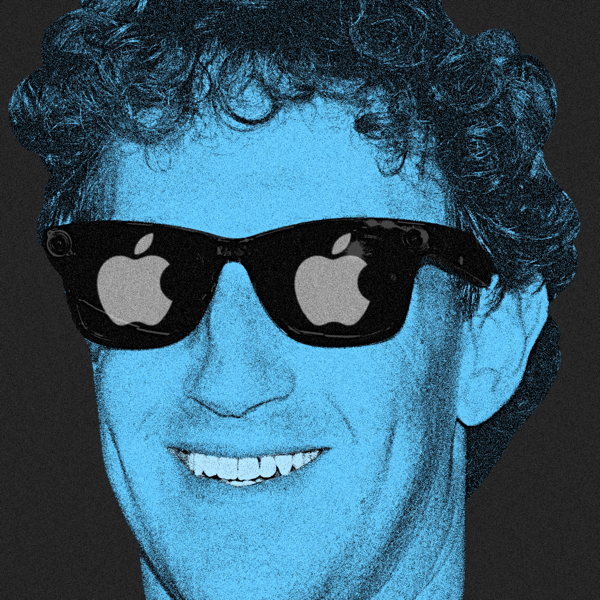
Set the politics aside and focus for the moment on the ongoing saga about Apple’s delaying of Apple Intelligence features it unveiled almost a year ago at WWDC. A recent NY Times column by Tripp Mickle dropped two new grains of salt into the still open wounds of that debate. First up, Mickle seems to want to lay the blame on former Apple CFO Luca Maestri for changing up a plan to increase Apple’s budget for purchasing the chips apparently needed to ramp up for the Apple Intelligence push.

Here’s the quote:

Mr. Cook approved a plan to double the team’s chip budget, but Apple’s finance chief, Luca Maestri, reduced the increase to less than half that, the people said. Mr. Maestri encouraged the team to make the chips they had more efficient.

The lack of GPUs meant the team developing A.I. systems had to negotiate for data center computing power from its providers like Google and Amazon, two of the people said. The leading chips made by Nvidia were in such demand that Apple used alternative chips made by Google for some of its A.I. development.

The next grain of sand has launched a thousand blog posts (including this one) by saying that the previously delayed Apple Intelligence features will now launch this fall.  Mickel says that’s according to three sources. Regardless of the quantity of sources, that report has generated more use of the words “may” and “possibly” in following headlines than I’ve seen in some time.

The tech press has either caught on and is choosing to not grant Apple the usual slack after feeling more than a bit betrayed. Or it’s pretending to hide beyond an endless streak of optimism. Either way Apple is currently mired in a trust swamp of its own making. Tangentially, and for what’s it’s worth, the same could be said of The NY Times.

My point here, isn’t to debate the sourcing, the reporting, or even the timing of when Apple may or may not launch new features. The long preamble to get to this Apple “news” should have been your first clue to that. My point is that once any authority fractures trust whether it be a company, a government, an official, a teacher, a parent, or a news organization, all sides lose. You can work to regain trust over time, but the stain will always remain and there’s very little anyone can do to remove it. You can learn to live with it, but you can’t erase it. 

Or as Lady Gaga says, “Trust is like a mirror, you can fix it if it’s broken, but you can still see the crack in that mother fucker’s reflection.”

There’s an entire industry full of PR professionals and crisis managers lurking, just waiting to make bank on these kind of mistakes, anxious to be called in to try and resurrect a brand or a reputation. But they are really just good makeup artists capable of masking scars. If the art of “spin” was ever a currency, it is has more than lost any value it may have once had.

In an attempt to steer this full circle, if there’s a silver lining in all of this, the raging egos we’ve put in charge of things bigger than consumer electronics can’t keep their mouths shut to their own detriment and perhaps the benefit of those of us on the ground. Their continual yapping and yipping is exposing not just their own ineptitude in governing, but the entire rigged game that everyone in these industries of make believe rely on, whether it be politics, iPhones or punditry.

I’m beginning to hope the immediate damage from these flapping maws will have more impact than any tariff upheaval, leading us all to a healthier and more skeptical view of the world we live in. The world they are tearing to shreds is beginning to feel like one that might not deserve to be saved any longer.

(Image from ChiccoDodiFC on Shutterstock)

You can find more of my writings on a variety of topics on Medium at this link, including in the publications Ellemeno and Rome. I can also be found on social media under my name as above.