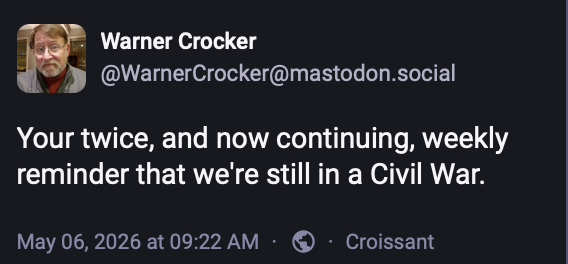
There are two big conversations popping around the political universe these days. Both seem to miss not only the larger point, but the stakes.
The first is how the Democratic Party is trying to still figure out what it wants to be in the wake of progressive victories in recent primaries. The centrists are appalled. The progressives are ecstatic. The people are pissed off. The politicians are clueless. This post isn’t really about that fight, only to say that it provides some context to the second.
The second conversation takes place on the larger battleground heading into the midterms and beyond. No, that’s not the inevitable mud fight between what was once the Republican Party and the clueless Democrats. It’s yet another intra-party scrap on the Dem side.
There are those who think we need to restore to what we had before. Achieve some sort of balance again. There are those, like me, that think playing that game is not only equally clueless, but is trying to pretend we can put all of the dismantling and destruction aside and find some sort of way forward in some semblance of what we used to call unity. As I said, I’m not buying into that myth. Reconstruction didn’t work the first time around. It won’t this time either.
The reconstruction and balance crowd makes a sadly profound observation about the electorate. As pissed off as most people are, the movers and shakers are counting on the resilience of the American people. Sad fact, the bad guys now in power and trying to desperately hang on to it out of fear of retribution, continue to count on that same resilience.
Resilience doesn’t always mean a stiffer spine. Many times it means hanging in and taking care of the immediate business of living day to day. When that daily struggle is the focus, it’s no surprise the bigger picture gets lost, or muddled up over passionate issues that in the larger scheme of things mean less than those that take advantage of them push like dope.
Yes, we are a resilient people. We can withstand a lot. But that resilience also makes us far too compliant, hoping that the next election, or some court decision will change things the way they always have in American politics. Those legal and civilized ways of bringing change have often, albeit slowly worked, but we’re finding that given everything that is broken, those same legal and civilized tools can be used to quash that progress at a quicker pace.
While we haven’t yet launched into a full-blown shooting Civil War, the damage that has been done since the Confederacy rose again and took over the federal government under the leadership of a Queens, New York conman and pedophile (something that strikes me as ironic and on the surface just damn funny) is in many ways just as damaging as was the end of the first Civil War, if not more so, because many of the institutions and norms that helped the Union survive have been and continue to be dismantled.
At the conclusion of that war in 1865 there was a great debate about how to handle the states and its leaders that formed the Confederacy. One side wanted retribution and punishment, the other not so much. Equal to our resilience is our capacity for compassion and our compunction to think that dark hearts can be changed. The compassionate side largely won out in an attempt to heal the nation’s wounds. Sad to say, here we are again.
The difference this time around is that on top of the fight for freedom, civil rights, and equality, we’re fighting a government that’s largely owned by a handful of billionaires. Many of which were on the other side of things not too long ago. Money talks and bullshit walks. They’ve largely made their haul, so the only reason I can see for them to continue what they’r doing is they’re also afraid of retribution.
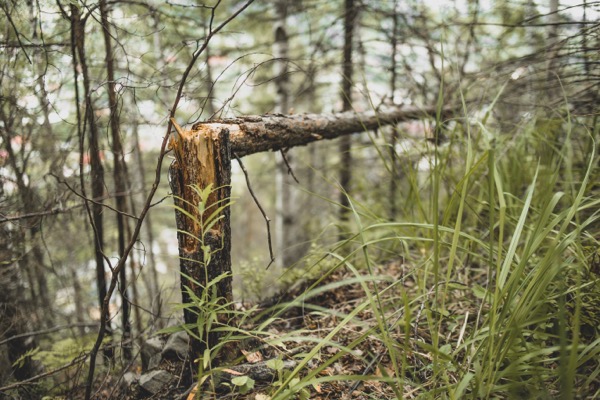
In a brief conversation earlier today with friend David Todd McCarty after reading a new piece of his called The Quiet Truth, I remarked that his citing of the quote from Confucius about a willow that bends being stronger than the mighty oak that breaks in the storm, got me thinking. Those willows are indeed resilient. That same story appears in many cultures, proving its own resilience. But I’ve come to believe the only way out of this mess we’ve allowed ourselves to be in is going to require some breakage. Breakage that must require building something new, not restoring the old.
We made that mistake after the American Civil War. The country literally broke in two. In attempting to heal it, we proved our resilience as a people, but unfortunately left two many places for the losers to hide and lurk in the resilient reeds. They have resurfaced a few times since in our history, but have always been beaten back. Each time accepted back into the fold with that same practical compassion and resilience.
They’ve been openly enjoying breaking things. We might not enjoy it, but we need to break a few things with equal desperation and energy, before too much more is broken.
(Image from Halinskyi Max on Shutterstock)
Thanks for reading. You can subscribe to this blog if you care to. You can also find more of my writings on a variety of topics on Medium at this link, including in the publications Ellemeno and Rome. I can also be found on social media under my name as above. This site does not use affilate links.