Streaming Video Drowns Itself By Flooding The Zone

Netflix is making big changes

I’m old enough to remember when it seemed like all of sudden, seemingly overnight, everyone owned a VHS machine. Sure, some owned a BetaMax, but VHS was the thing. Video rental shops popped up everywhere and we’d see our neighbors there more frequently than at the grocery store, browsing the titles.
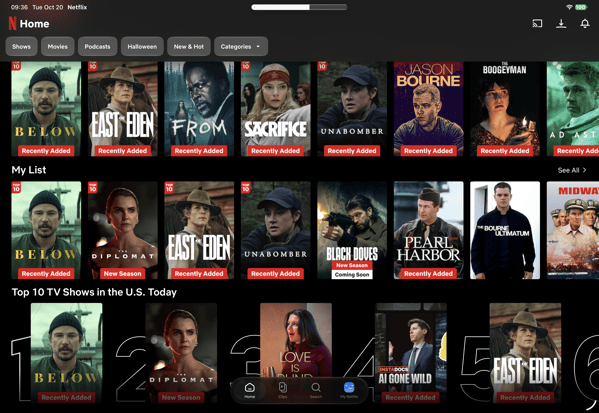
a screenshot of the Netflix home screen on an iPad. It displays rows of movie and TV show titles, including "Below," "East of Eden," and "The Diplomat," under categories like "My List" and "Top 10 TV Shows in the U.S. Today."

There was an old barn at the far end of the town that had sat empty for ages on a narrow, overgrown with honeysuckle corner curve in my small country hometown for ages. In the age before pop-up stores became popular someone popped it open as a video store, creating one of the first congested traffic nightmares that town had ever seen as folks parked along both sides of the shoulderless curve to rent a video.

Whether it was the local mom and pop video rental shop or later the BlockBusters, the display racks were bulging with titles. You’d walk in and be overwhelmed with the choices. To a degree that was the point. Flood the zone with more possibilities than anyone could keep track of to keep customers coming back. There may have been a pony or two in there, but eventually you realized that most of what was on the shelves wasn’t worth your time or money and the off the road parking on the curve eased.

When the next big hit finally made it into stores, the curve got crowded again as the aisles would fill up again while folks browsed, waiting for someone to return what they were really after, endlessly reading and rereading plot descriptions on the backs of boxes, hoping they were next on the waiting list.

VHS tapes became disks. Then along came Netflix.

Once Netflix moved into the video rental by mail business everything changed and the pop-ups pooped out, the video rentals that had become prevalent in grocery stores, pharmacies, and just about any other store that had a smidgen of floor space to offer them faded, and eventually so too did the big chains. The honeysuckle eventually reclaimed it’s territory.

And then along came streaming and the zones really flooded.

If you browse any of the streaming websites or apps today it’s like walking into one of those extinct video stores. Title card after title card scroll by in a waterfall of numbing repetition, often with the same title repeated line after line, category after category, too often in a weird trend that some marketing maven landed on of changing the cover art, hoping to get your eyeballs to land on a new image. It’s the same flood the zone approach.

When you flood the zone, eventually those you hope to lure in tire of treading water and turn their attention elsewhere. It happens in every sphere of human commerce, politics, art, music, you name it. Too much of a good thing becomes a problem when everything is just, well too much.

Now that just about every streaming service offers the same titles with the same upsell it’s overwhelming to the point of overdone.

I took the above trip around a winding corner curve in my memory lane after seeing news that Netflix, the company that changed it all by first flooding mailboxes and then streaming is wading into trouble waters. According to that article “user engagement has stalled due to a lack of popular content.”

There are many factors, but in my view that translates into an overabundance of quantity, not enough quality. There are big changes afoot as Netflix has fired Dan Lin, the head of its film division, along with six percent of its employees.

Netflix isn’t alone. It’s always been a leader, and leaders falter and flounder just like the rest of the pack. I certainly can’t say any of its competitors are that much better, but to my mind Apple TV has put out the best quality this year. After the Paramount/Warner Brothers merger that resulted in Skydance, with its promise of more movies each year who knows what the future will yield. I doubt quality will be the result.

That said, we started watching the 4th season of The Diplomat last night on Netflix, and it’s excellent. So there are gems that occasionally surface.

As all of the streaming services try to offer more, whether that be sports, or gaming, or just more of what the algorithm says enough want, they actually end up providing less, because the quality can too easily get swallowed in the flood zone.

It’s a tough job to program. As someone who has programmed seasons for live theatres I know you miss as much or even more often as you hit. It’s easy to get trapped into a formula when you find success. I’ve been there. It’s much harder to understand when a successful formula begins to fade. But when you focus on producing more rather than producing better, it’s easy to become mediocre, or worse, boring.

Rising prices and ridiculously programmed ad insertions certainly don’t help Netflix or any of its competitors either. Eventually it all becomes as numbing as the waterfall of titles that scroll down screens, like all of those titles on all of those old video store shelves. What quality there is too easily gets lost, even with the hype of a new release, when viewers have to wade through a flood of content that all looks the same.

Thanks for reading. You can subscribe to this blog if you care to. You can also find more of my writings on a variety of topics on Medium at this link, including in the publications Ellemeno and Rome. I can also be found on social media under my name as above. This site does not use affilate links.
 

The Odyssey: A Review

A good, but not great film.

Have you ever had one of those moments in life that at the time felt like a great victory, but then turned sour later on, leading to regret? I have. It’s no fun to look back on. It can hurt worse to look in the mirror.

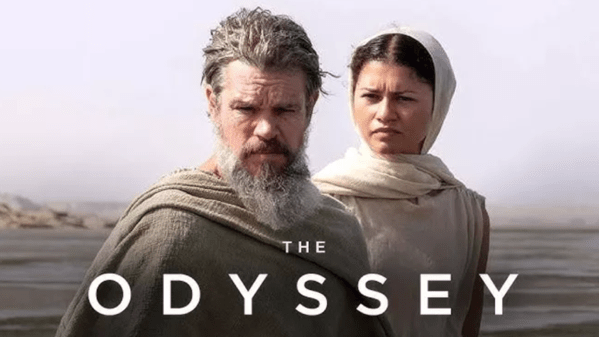
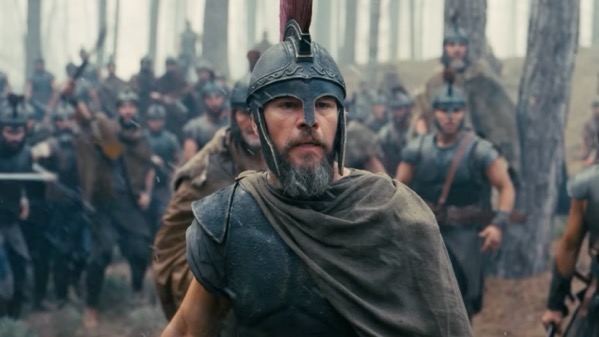
Screenshot 2025-12-23 at 2.09.57 pm of a promotional poster for The Odyssey

Sure you can go into therapy to help you feel better about your choices and the ramifications. But first you have to face them, own them, and accept responsibility.

Or you could try to bury them in the bottle. Or drugs, illicit or otherwise. Or some other way of trying to keep them from resurfacing. Or you could just throw up your hands, blame the gods. Perhaps defy them. But in the end the choices you make define you. How you deal with the definition tells your story.

That’s essentially the story of Christopher Nolan’s The Odyssey. Much the same as it was with Oppenheimer. Do a thing. Do it well. Succeed. Then realize what you’ve done has unleashed problems bigger than the one you set out to overcome.

Is The Odyssey a good film? In my opinion, yes. Bordering on being very good one. It’s not a great one. You can see Nolan’s affection for the story he’s telling and his passion for the techniques he’s using to do so in every frame. That passion for filmmaking his way is also what keeps The Odyssey from being a great film.

In general I blow hot and cold on Nolan’s work. While he can create some thrilling cinema, his attention to his process creates an almost Brechtian alienation, while still embracing the story he’s trying to tell. And make no mistake this Odyssey is Nolan’s story more than it is Homer’s. There’s nothing wrong with that. It is a movie after all, and a story to tell the way he wants too. But in most of his movies, his love for his craft and artistry is too distancing to lure me in.

As to the story, the similarities between The Odyssey and Oppenheimer are easy to see. Man uses his ingenuity to do the impossible, man ends up regretting the result. Nolan told that story better in Oppenheimer.

Both films contain big moments of spectacle alternating with more intimate scenes. I walked away from Oppenheimer less impressed with the apparent painstaking to create explosions than I was with the more intimate scenes which I found infinitely more frightening and revealing. I don’t feel the same way about The Odyssey, although the work to create the Cyclops and Circe’s turning Odysseus’ men into swine pays off very well. The intimate scenes in The Odyssey did not capture me the way I think Nolan thought they would. The spectacle largely worked well. Which brings me to Matt Damon.

I don’t think Damon was the best choice for the lead. Given the framing that Nolan chose to wrap his story in, he certainly wasn’t. Following the poem’s lead in alternating timelines, Damon seemed to be the same throughout most of the film, until his return home.

Damon’s known for his straight ahead with purpose presence on screen, plowing through any obstacle in his path, typically with a strong resolve that’s unyielding. Prior to seeing the film I thought the casting made great sense. Yet it did not in practice. I never felt Damon transition from a “something’s really bothering me about all of this” gest into a leader of confidence and cunning until the final act. He just seemed bothered.

Part of that is certainly in the writing, both Nolan’s and Homer’s, given that the story is more about looking back in the aftermath. That makes sense while he’s trying to come to grips with all he’s wrought after the sack of Troy, but not in the early stages of his adventure, which we’re treated to in flashbacks. There’s no self-accomplished, self-aggrandizing height from which he can fall. His compatriots around him acted as if they were seeing something out of the ordinary, yet we never really saw what bonded their allegiance to him in the first place.

The other aspect of The Odyssey that keeps it from being a great film is the Netflix-like don’t trust your audience to pay attention restating of Zeus’ law, which grounds Odysseus’ guilt. The point that Zeus’s golden rule (be kind to strangers and guests-you never know they may be a god in disguise) is repeated so frequently, it often feels like Nolan the screenwriter didn’t trust it as the central motivating point for his character’s actions and struggles.

On the plus side, Nolan has assembled an incredible cast of actors around Damon that we’re used to seeing carry their own films and that largely pays off. Although some seem underused. The visual and aural experience can be stunning. I particularly like the choice of orchestrations in the soundtrack. The special effects have their special moments.

Is it worth seeing? I’d say yes. I’d also say that what it offers will not be substantially different once it becomes a streaming success than it is in the theaters, especially the limited number of venues that show it in the format the director wishes.

I won’t get into the squabbles that have surrounded this film with more free publicity than you can shake a stick at. With one exception. I keep reading and hearing folks saying Nolan’s version of The Odyssey is as much about today as it is about the age the story takes place in. Of course in today’s world that means some love that and some hate that. That has more to do with Homer than it has to do with Nolan.

The reason many of certain generations are at least tangentially familiar with The Odyssey is Homer wrote a story about humankind that is as enduring as the flaws and faults we as a species share and keep repeating. It’s a mirror that exposes those flaws that we really work hard to avoid looking into. It’s a difficult story that needs telling in and of itself, and has found itself as the foundation of many different variants in other forms. Funny thing is, we never seem to learn from it, regardless of its trappings.

Thanks for reading. You can subscribe to this blog if you care to. You can also find more of my writings on a variety of topics on Medium at this link, including in the publications Ellemeno and Rome. I can also be found on social media under my name as above. This site does not use affilate links.
 

Social Media Influencers Left Adrift With The Odyssey

Perhaps this starts a new trend

I find this move by movie maker Christopher Nolan to be quite fascinating. Prior to the opening of his next film, The Odyssey, Nolan is skipping the now usual round of screenings for social media influencers. In and of itself, it’s a great way to generate the same kind of annoying buzz that typically follows social media screenings. In the bigger picture, perhaps it’s the start of a healthier trend.

A Christopher Nolan film is going to generate its own momentum one way or the other these days, regardless of what critics and influencers say early on. So, you can argue that it’s a shrewd move for a movie that’s already generated quite a bit of social media furor over casting and other issues. That said, I hope this move starts a trend that has nothing to do with this particular movie.

Social media influencers, like critics, are by and large out for themselves, more than whatever they’re covering. They were born that way. Critics evolved into that mutation. What we used to call critics will say they are there for their readers, relying on that trope far too often. Social media influencers don’t even try to fall back on that concept as an excuse. It’s a hit and run business.

Those days when criticism on any level was an opinion to measure your own against are largely gone. The world wants others to form their opinions for them. Everyone’s just too busy. Taking the time to think on your own is too hard and time consuming. Heck, in that context, I wouldn’t be surprised if we don’t eventually see early takes on new films, books, theatre, etc… generated by Artificial Intelligence.

In my opinion, we’d all be better off forming our own opinions, but that’s not how the world works. I’ve often derided the Siskel and Ebertization of thumbs up, thumbs down movie criticism. The move to creating another substrate of quick hit takes via social media was both a logical and illogical extension of critics as personalities pleading for attention.

The equation is a simple one that falls back on the cliché that any mention, good or bad, is good for business as long as the name is spelled correctly. That’s still largely true, thus my opinion that this is a shrewd move on Nolan’s part as long as this game continues.  Since any level of criticism has become a sport, that cliché has opened the doors to rooms empty of thought, nuance, and dare I say, substance.

When criticism becomes a contact sport for attention it’s no longer criticism, no matter the form. 

That’s my critical opinion.

Thanks for reading. You can subscribe to this blog if you care to. You can also find more of my writings on a variety of topics on Medium at this link, including in the publications Ellemeno and Rome. I can also be found on social media under my name as above. This site does not use affilate links. 
Spider-Noir: A Mini Review

Not great, but great fun.

The Chicago Cubs have decided to essentially quit acting like a professional baseball team. Chock-full of talent, yet seemingly unable to play the game. My wife is away on a theatre gig. (The show opened wonderfully last night.) So I decided I needed an entertaining distraction and queued up Oren Uziel and Steve Lightfoot’s Spider-Noir, now streaming on Prime Video. Bottom line, it is a stylish, entertaining distraction, and a treat for fans of the noir genre. 

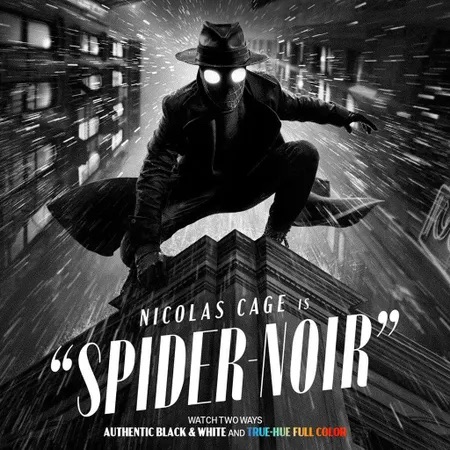
Spider man noir series_t2mj.jpg.

I won’t call the eight-episode series great by any means, but the fun makes up for it. Taking yet another Marvel Comics hero from yet another alternate Marvel universe, Spider-Man Noir, and bringing him to the screen minus the “man” in the name, this version follows an aging private investigator, who is also a web-slinging superhero, through a depression era New York City in the 1930’s. Fighting with his past and the bad guys, it’s a bit of a romp that at times can’t decide what it wants to be, but in the end sticks the landing.

You get a choice of two ways to view the series. In what the filmmakers call Authentic Black and White or True-Hue Color. I recommend the black and white version. I checked out the True-Hue Color but that’s not for me. Your mileage may vary, but hey, the word “noir” is in the damn title, so follow the lead you’re given.

Nicholas Cage stars as the troubled leading superhero who isn’t sure he wants to be one. Down on his luck. Tough times. Hard bitten. (Literally.) He’s at times a bit over the top in that Nicholas Cage kind of way, but weirdly it works as the choices largely hold up, even as they often veer the show into comedy more than the hard-boiled wit I associate with the genre.

Brendan Glesson gives a boffo performance as the big bad in the show. Jack Huston and Andrew Lewis Caldwell as Flint Marko/Sandman and Dirk Leydon/Megawatt bring fun and serious menace to their characters trapped and wrapped in one of the show’s central mysteries. The rest of the cast fills their roles nicely and everyone enjoys chewing the scenery at one point or the other.

As to the production, the black and white version looks terrific. It’s full of all the shadows, cigarette smoke, femme fatales, crooked pols, gangsters, grit, lots of rain, period music, and all the clichés you expect from a noir detective mystery. The occasional nods to other noir classics are added treats.

The story gets more convoluted and drawn out than I think it needs to, but that’s the name of the game in streaming entertainment these days. Even so, in the end, it’s a cut above the rest, and filled the bill I was looking for. Indeed, a fun and entertaining distraction. 

Thanks for reading. You can subscribe to this blog if you care to. You can also find more of my writings on a variety of topics on Medium at this link, including in the publications Ellemeno and Rome. I can also be found on social media under my name as above. This site does not use affilate links.
Sunday Morning Reading

Looking beyond and beneath the words on the page

Good writing is good writing. But underneath the surface or the subject matter of good writing, you find subtext, perhaps buried, that surprises beyond the words on the page, the summaries, and the top lines that often reduce more than broaden. That’s the case with this week’s edition of Sunday Morning Reading. Read on, dig beneath, and enjoy.

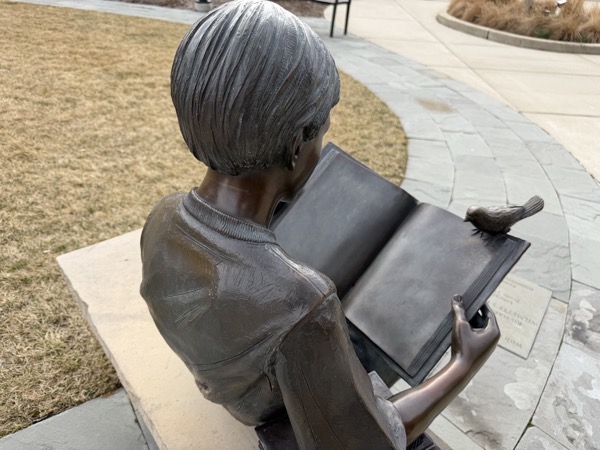
An over-the-shoulder view of a bronze statue depicting a young person with short hair sitting on a stone bench and reading a large open book. A small bronze bird is perched on the top right corner of the book's pages. The statue is situated outdoors in a paved park area with grass visible in the background.

First up, is a piece by film critic Sonny Bunch, discussing The Weird Right-Wing Freakout Over ‘They Odyssey’ Yes, it’s about casting and race and history and myths and all those things. On the surface a tired argument. Dig below the controversy, and you might find a morsel or two worth chewing on, but in reality only being upset about if you believe in exercising or conjuring demons through outrage. Maybe someday we’ll all eventually end up back where we started from. But like Odysseus, the homecoming might feel as hazardous as the journey we’re putting ourselves through to get there.

Things are certainly screwed up in U.S. Politics, but we’re not alone. In fact, we’ve got more than enough company. Great Britain is having its moment as well. Ian Dunt’s piece There Is A Light That Never Goes Out is one heckuva piece of writing that beneath the stormy surface of British politics, points to the problems far and wide and far below, regardless of what flag your ship might be flying when it sinks.

The trial between Elon Musk and Sam Altman over OpenAI and whatever the hell all of that means, sounds like a circus where the clowns won’t leave the center ring. M.G. Siegler takes a look at some of the shenanigans in Take Me Down To The “Amateur City.” 

Rex Reed was, if nothing else, a show into and of himself as a film critic. I always found him both entertaining and I occasionally agreed with his acerbic criticism. For better or worse he set a standard that presaged much of what passes for criticism today. He passed away this week. Merin Curotto has written quite a remembrance piece that’s so much more than about the one man. The Rex Reed I Knew (1938-2026) is worth a read even if you weren’t a fan or don’t have any sense of who Rex Reed was.

Alessandra Ram explores what happens when you might be married to a man who is smitten with AI in Meet The Sad Wives Of AI. I think this could also apply across any way the genders choose to partner. I’m sure there’s a promise out there somewhere that AI will fix all of this. Right?

Chicago baseball is having a moment with both of its major league teams doing reasonably well and playing each other in the Crosstown Classic. There were and are great expectations for the Chicago Cubs, not so much for the Chicago White Sox, which is why the exciting level of play on the South Side is capturing some of the North Siders glow. In the midst of all of that, this week marked the passing of Sam Sianis, the legendary owner of the Billy Goat Tavern, who placed a curse on the Chicago Cubs back in 1945 when the owner wouldn’t let him bring his goat into the stadium. Paul Sullivan has a great write up on the history, the myths, and the lore. Check out Sam Sianis And The Curse Of The Billy Goat Remind Chicago Fans Why We Love Baseball And It’s Myths. 

When you do look beneath the surface of a moment, a life, an obituary, or perhaps even the remains of what’s left, sometimes you find more than you might have imagined. Archaeologists Find Egyptian Mummy Buried With The ‘Iliad’ by Franz Lidz tells such a tale.  Homer says, “the sort of words a man says is the sort he hears in return.”

I’ll add, the sort one reads to that as well.

(Photo by the author)

If you’re interested in just what the heck Sunday Morning Reading is all about you can read more about the origins of Sunday Morning Reading here. If you’d like more click on the Sunday Morning Reading link in the category column to check out what’s been shared on Sunday’s past. You can also find more of my writings on Medium at this link, including in the publications Ellemeno and Rome. This site does not use affilate links. 


The Roses: A Mini-Review

Black comedy served well done

I often don’t find remakes of films to be worthwhile. That’s not the case with Jay Roach’s reimagining of the 1989 film The War of The Roses, based on Warren Adler’s book of the same name. Titled simply and tellingly, The Roses, this remake worked for me.

I enjoyed this version better than the much beloved original. Perhaps it’s the time or the timing, but the fact that the remake focuses more on the comedy and less on the black comedy is what won me over. Don’t get me wrong. I love black comedy and this film is still in that genre, but the brightness of the comedy is what makes it work.
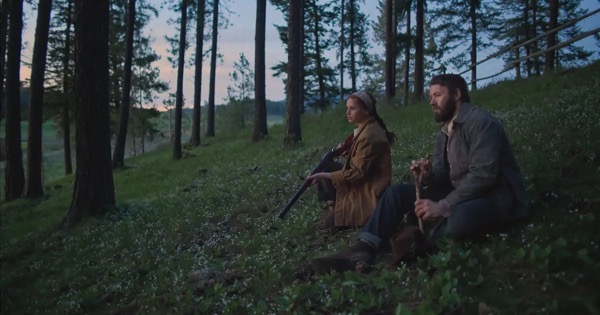
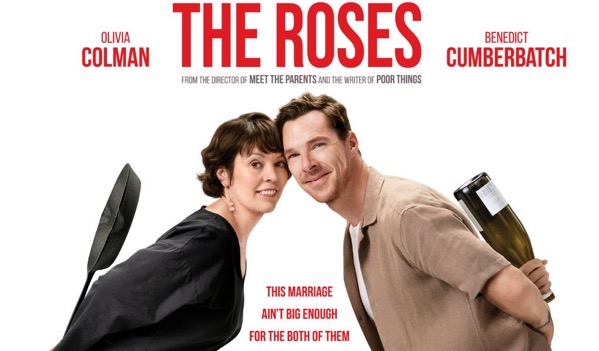
The star pairing of Benedict Cumberbatch and Olivia Colman is sublime. As a couple who seem to have it all before they start tearing everything to shreds, Cumberbatch and Colman deliver as delicious a repartee as the dishes Colman’s character whips up with her cooking. Roach plants the moments for the payoffs perfectly, and even pays homage to the original with a few clever winks. Everything makes sense in the story’s update to our current era including a delightful spin on the perils of having a new home designed from the ground up with smart technology.

Fans of the original know where the story is going, but this time around I found myself almost rooting for a different ending, just to keep the banter going. Scathing wit hasn’t been this much fun since Hepburn and Tracy.

The supporting cast that includes among others Andy Samberg, Allison Janney, and Kate McKinnon is superb though a bit underutilized. Even so, they do deliver a delightful ensemble turn as Americans enjoying and being seduced by their own growing, yet completely naive awareness of the lead couple’s Britishness.

The Roses was released late in the summer of 2025 and I just caught up with it on streaming (Disney+) and I’m glad I did. Whether you’re a fan of the original or not, this remake is a good and funny diversion amidst all of the bad times we’re living through. To top it off, Colman and Cumberbatch deliver a master class in comedy.

You can also find more of my writings on a variety of topics on Medium at this link, including in the publications Ellemeno and Rome. I can also be found on social media under my name as above.

Train Dreams: A Review

“Every least thing’s important.”

So much can go wrong in life. Big things. Little things. Depending on your station in life what goes wrong determines so much of what comes after, it often tears at hope in our search for a peaceful existence. Train Dreams, directed and co-written by Clint Bentley, set in a more challenging era than our own, focuses on the big things and little things that shape us, in a revealing and poetic story of the life of one man.

A1bca8debcba0402af6c699f605f9e1a6d traindreamswar.2x.rsocial.w600.

In its small singular focus the film expansively embraces the life of an Idaho man who has never traveled far from home, through tough times, tragedies and the moments that define a life in the way trees populate a forest. If that sounds depressing, it’s the exact opposite. The cinematography by Adolpho Veloso and the acting take flight and lift the story far beyond the gritty and tangled undergrowth of the life it inhabits.

It’s a gorgeous film to watch that beautifully captures the mountainous northwest as it follows this lumberjack plying his trade, clearing trees to make lumber for the construction of the Spokane International Railway. It’s a dangerous life and one that takes him away for stretches of time from the family he eventually builds. The mostly peaceful vistas and views contrast with the travails seemingly necessary for this man to build a simple life, at times as sharply shocking as a gunshot in a quiet wilderness.  Yet we’re reminded that all of that work literally is overtaken as the years go by with new growth replacing old.

The cast is superb. Joel Edgerton plays the lead, Robert Grainer, in a brilliant performance proving less is always more. Felicity Jones plays his wife, breathing life into him and the story. William H. Macy is exquisite as an older logger in the camps dispensing well worn wisdom. Much of the story is accompanied by the best use of narration I’ve heard in a movie, voiced by Will Patton. It comes and goes like a breeze through the trees seemingly perfectly natural and undisturbing each time it wafts in.

This movie is not going to be for everyone simply because its success requires participation in an almost passive vein. It doesn’t propel us into story telling, it lays it out for us to observe like viewing a valley unfolding beneath from a mountain perch. It’s not fast paced. It’s revelations come in a visual poetry that astounds, capturing the complexity of nature and how simple our small part of it really is, no matter how large or important we view the roles we play in the dramas we create for ourselves.

In the insanely paced tumultuous times we now find ourselves it offers a moment of exquisite reflection exemplified by two mirroring lines of dialogue. “The world is intricately stitched together, boys. Every thread we pull, we know not how it affects the design of things,” says Macy’s character around a campfire. That echoes back again towards the end, when a Forest Service worker reminds Grainer and us that “every least thing’s important.”

Both challenge the wisdom behind the cliché that tells us we can’t see the forest for the trees. But then the bigger picture of a life is always made of smaller moments stitched together if we pay attention.

You can also find more of my writings on a variety of topics on Medium at this link, including in the publications Ellemeno and Rome. I can also be found on social media under my name as above.

My Viewing and Reading Picks for 2025

Another year of complex viewing and reading

Another year comes to an end. A new one gets ready to begin. 2025 felt less complex than 2024. Lines weren’t as blurry with one exception that I’ll get to later. In a year when the rush to redefine and compete for the lowest common denominator felt like a three-legged sack race over broken glass, complexity again drew my attention and stuck with me. There’s a great leveling happening, whether intentional or not. But as long as we can advertise against whatever the content is, it seems to matter less and less what the content is or how it’s made.

When it comes to viewing entertainment it was a year when the quality line between movies and streaming TV blurred even more as excellent series work competing with the big screen for some of my favorite viewing. The Pitt and Adolescence were two of the finest things I watched this year.

There are a number of titles in these lists that would qualify for what is being called Resistance Cinema. Each one is deserving of inclusion in that list for immediacy. Any lasting impact will only be determined with the passage of time and all of what we’re currently resisting either cements or cracks.

I don’t believe in “best of” lists. There’s good stuff being created amidst all of the mediocrity and my judgement on what’s good is probably not yours. I pick what attracts and holds my attention. I also don’t see or read everything and the holiday release schedule geared to coming in under the wire for awards recognition is a silly game for insiders and not for me. There also may be a title or two that I didn’t catch until 2025 even though it was released in previous years. Goodness knows there are books waiting to be read.

If there’s a link with a title, I took the time to write about it. I should have done that more. So here’s a list in no particular ranking order of what I found most intriguing throughout the year.

Movies
Streaming TV
Books
  • 1929 by Andrew Ross Sorkin
  • The Mission by Time Weiner
  • Apple In China by Patrick McGee
  • The Director by Daniel Kehlmann

Have a Happy New Year!

You can also find more of my writings on a variety of topics on Medium at this link, including in the publications Ellemeno and Rome. I can also be found on social media under my name as above.

Filmmakers, Storytellers and The Resistance

Storytelling in conflict

Writing for Bloomberg, Mark Leydorf makes a case that movies are taking up the whistles of resistance in The Rise of Resistance Cinema in the Era of Trump. He’s right but he shortcuts the great history of storytelling.

Shutterstock 697665772.

He’s correct that there are a number of films being released, along with those already past their big screen sell by dates, featuring stories and themes that can’t help but strike resonant chords for those repelled by and rebelling against the current political moment we’re living in.

He doesn’t have to reach too far beyond his initial example of Wicked: For Good to create a long list of titles to support his thesis. A thesis I buy, even though I think it serves cinema history, and storytelling in general, a bit short in the end.

In compiling his list, Leydor says:

The list goes on:

Eddington, Bugonia, Sirāt— there’s a reason directors are digging into stories of conflict, paranoia and cataclysm. Taken together, these films, most of which were conceived and went into production during Donald Trump’s interregnum, between the insurrection of Jan. 6, 2021, and MAGA’s triumphant return to power, have coalesced into a troop of cinematic resistance amid the conflicts and crises defining his political era and the rightward, nationalistic turns happening broadly around the globe.

I’ll reach into that quote and point out that all successful storytelling, on the screen, on the page, on the stage, around campfires, or told sitting on bar stools involve some form of conflict, paranoia, and cataclysm. Even top rated fare on the feel good Hallmark Channel features conflict. Heck, they have to make it up on Reality TV. Without conflict you don’t really have much of a story. Goodness knows we’re overripe with enough conflict to tell thousands of stories at the moment.

While focusing on this current crop of films, Leydor is spotlighting a point in the long timeline of story telling. These current storytellers are doing what storytellers do, bringing their near term reactions to whatever is in the zeitgeist at the moment, following traditions established long before Hollywood executives ever got involved in a script conference or endings became focus group fodder.

Frankly, I’m glad to see such a strong list of filmmakers telling these stories at this moment. We need to see ourselves reflected back in the mirror we hold up to nature, before it’s all AI generated. The same is happening on stages, in late night television comedy, and from the keyboards of many authors. Given how none of us knows how this moment is going to play out, it’s fascinating.

Note that Leydor points out that most of these films were conceived and green lit after the first Trump administration and prior to this second one.

I had the privilege in the Fall of 2022 to direct three one-act plays from Ukrainian playwrights about the effects of the Russian invasion that had begun earlier that year in February. The writing was alive, fresh, and as urgent as the wounds were then. That writing still is today, even though now those stories are snippets of a longer story still unfolding to an end no one knows.

Historically few stories springing up in any current conflict, regardless of medium, retain staying power beyond almost artifact curiosity. It’s usually the stories told after the moment passes that last and define with more resilient resonances, even as their lessons are forgotten by those too eager to write what they think will be a different ending.

What will be more fascinating to watch is how many of these current films are remembered years or decades from now, once this historical moment does pass.

Whatever that turns out to be.

(Image from Skylines on Shutterstock)

You can also find more of my writings on a variety of topics on Medium at this link, including in the publications Ellemeno and Rome. I can also be found on social media under my name as above.

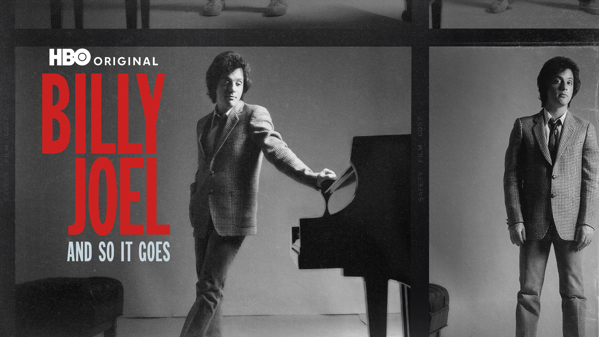
A Trip Worth Taking: Billy Joel Documentary ‘And So It Goes’

Terrific trip down my lanes of memories.

Talk about bringing back the memories and the feels. The excellent Billy Joel documentary, And So It Goes, is a must watch if you’re a fan. Or even if you’re not. I am a fan and have been since I worked a load-in, load-out shift for a Billy Joel concert back in my college days and partied with his road crew.

82fe8509 4fdb 4308 b4ae 295cd7fb0bf9.

The excellent two-part documentary chronicles the ups, downs, and of course there’s plenty of Joel’s music, because it’s always about the music and where it took Joel and those of us who grew up with him. It’s more than a trip down memory lane, the four hours is a well spent vacation back in time. I highly recommend this.

It’s interesting, and I dare say rewarding, that two of the music artists I grew up with, Joel and Bruce Springsteen, have had excellent recent documentaries about their careers. As they and I both hit later decades of life it’s a good way to look back and dredge up memories often buried in the hurly burly of the current day to day. I consider these documentaries on HBO (or whatever it calls itself this week) gifts well received.

For those interested further, there’s a playlist of the music from And So It Goes available on all the usual music streaming services. If your library, like mine, is filled with the entire catalog of Joel’s music, it’s worth adding just to track and hear how some of his songs have matured, yet not lost any of relevance, and even gained both relevance and resonance with time.

You can find more of my writings on a variety of topics on Medium at this link, including in the publications Ellemeno and Rome. I can also be found on social media under my name as above.