Sunday Morning Reading

Slicing life close to the bone

It could be said that the world is off its axis. Or it could be said that we’re just slicing the meat closer and closer to the bone. Because we don’t know what we don’t know about the war the U.S and Israel launched against Iran I’ll leave off any direct links on that topic for this week’s Sunday Morning Reading. Be warned though, some might be peripherally related. Things happen that way. I’m sure there will be plenty to share in the weeks to come. Meanwhile, here is the usual serving of links on a variety of topics that caught my eye this week. You’re on your own for the tzatziki.

Parthenon 14.

David Todd McCarty is bringing his writings from other platforms to his own site, and some of his earlier writings often strike with new currency. This piece, Defiantly Daft, Duplicity Delicious is certainly one that does.

What is journalism for? Good question these days, but it’s actually been an important one for quite awhile. Take a look at this piece from 1989 from Janet Malcolm called The Journalist And The Murder-I.

Journalism, like everything else, might be under fire at the moment, some of it friendly, some of it not so. Check out Zack Whittaker’s adventure in FBI Agents Visited My Home About An Article I Wrote, And Now I Can’t Go To Mexico.

Tom Nichols says The Republican Party Has A Nazi Problem. Well, duh.

One of the many charges against Artificial Intelligence is what it will do to the cost of the energy needed to power it. Chris Castle takes a look in Update: Trump’s “Ratepayer Protection” Pitch Becomes A Private Power Plan for AI — But Grassroots Revolt Won’t Fade. Hat tip to Stan Stewart for this one.

Apple is about to release a number of products this week at a time that it is under increased criticism on a number of fronts. Recently, Jason Snell of Six Colors released The Six Colors Report Card, in which he surveys a number of the Apple faithful on how things went in the last year and compares that to year’s previous. The scores are always interesting, but the commentary is even more so, which you can read here. Also of interest is Kieran Healy’s charting out the bad vibes based on that commentary. 

Speaking of Apple, Wesley Hilliard takes a look at some of those bad vibes in Apple’s Week February 27: Chasing The Puck.

On a local Chicago front and also on the tech beat, The Chicago Tribune’s Editorial Board takes on a local (yet owned by Albertsons) grocery store’s shopping app in Fix Your Lousy Shopping App, Jewel-Osco! Having suffered through using this app, and watching store personnel and other customers show their distaste for it, I can agree. Fix the lousy app.

Libraries, like so much else, are under attack these days. So this piece from 2017 from Eliza McGraw reminds us of a bit of history. Check out Horse-Riding Librarians Were The Great Depression’s Bookmobiles. Knowledge, like life, finds a way.

If you’re interested in just what the heck Sunday Morning Reading is all about you can read more about the origins of Sunday Morning Reading here. If you’d like more click on the Sunday Morning Reading link in the category column to check out what’s been shared on Sunday’s past. You can also find more of my writings on Medium at this link, including in the publications Ellemeno and Rome.


Buttons, Buttons, Who Designs These Buttons?

Designing for dummies

Tossing this tidbit on the growing bonfire that burns around Apple’s design flaws, this Apple Watch screen drives me nuts.

Close-up of a person’s wrist wearing an Apple Watch displaying a bright orange screen that reads “Timer Done 3 MIN,” with cancel and repeat icons, in a cluttered home office setting.

It shows up when a Timer expires. I get that there needs to be two options: stop the Timer or reset it to go round again, but if that gigantic circle in the middle doesn’t scream STOP, I don’t know what else does. I reach to press it each time.

And in the context of design being not just about how something looks, but also how it works, there is that repeat button. Its functionality doesn’t make sense. If I set a Timer for something I’m cooking for 20 minutes or so, why would I want it to completely reset to 20 minutes if I determine whatever I’m cooking needs another minute or two?

Also interesting, if you use the Wrist Flick gesture it doesn’t provide you with options, it just stops the Timer. It’s not that I think options are needed, but if the only one besides stopping the Timer is to repeat the full Timer than the watch face UI makes no sense to me.

I think the entirety of this needs to be rethought.

You can also find more of my writings on a variety of topics on Medium at this link, including in the publications Ellemeno and Rome. I can also be found on social media under my name as above.

Apple’s Color Wheelies

Color me a gadget utilitarian

I’ve never been one to be that obsessed with the color of tech gadgets or any of the other tools I use. Sure, colors attract, and I’m all in for more color rather than less in many things, but I’ve never been one who has made a gadget purchase based on color.

CleanShot 2026-02-23 at 11.21.19@2x.

In fact, I usually shy away from bolder color choices. I’ve typically chosen whatever version Apple is marketing as black when it comes to iPhones and whatever case I bury them in. I do the same for laptops, not straying too far from silver or occasionally the variant of Space Black that seems to change more frequently than I imagine happens in the dark depths of space. I do own a Blue iMac 24, but the last time I really saw the “blue” on the rear of the enclosure was when I set up the device.

I feel the much the same when it comes to other non-computing tools. Walking through a hardware store I always view the bright green, bright orange, red, aqua, and other multi-color designs of drills, other hand held tools, lawn care equipment, etc… as somehow cheaper than those with a more muted approach. They look more utilitarian, and frankly, suggest longer lifespans. As my grandkids age and I shop for their gifts, the more brightly colored tools look like toys to me.

I know I’m probably the oddball when it comes to color coveting. There certainly seems to be a lot of excitement about Apple presumably releasing new products with a slew of new color options soon. But I think of my computing devices the same way I do other tools. I acquire and use them to complete a task. Many others see them as personal statements and that’s cool. More power to those who need that or appreciate that sort of whimsy.

Another way I think of this is that if a tool maker needs to market new colors to keep customers excited about their products, it means the product has probably reached maturity enough to more than prove its value. But that doesn’t always keep the marketers employed.

(Images from 9to5Mac and MacRumors)

You can also find more of my writings on a variety of topics on Medium at this link, including in the publications Ellemeno and Rome. I can also be found on social media under my name as above.


Sunday Morning Reading

Weird plants, weird politics, and weird tech

Winter’s back. Though less here in the Midwest than it looks to be on the Atlantic Coast. And it’s another Sunday. So time for some Sunday Morning Reading between shoveling sessions.This day of rest features a collection of writing on tech, politics, science, botany, and bots. There’s even a bit of satire. All written by humans. Not sure who hired them though.

Shutterstock 232794637.Writing satire is tough these days with the world being what it is. David Todd McCarty found a way with The Risk Of Inflation In The Age of Plutocracy. You don’t always get what you overpay for.

Speaking of overpaying, Ed Zitron takes a look at what he sees is a yet another looming financial crisis. This one is The AI Data Center Financial Crisis. It is intriguing that we haven’t heard much about how AI might help fix the rigged accounting game. I mean “fix” as in actually make the numbers resemble reality. h/t to Ian Robinson for that one.

Imagine that. A scientist has discovered a way to harvest water from dry air in the desert. Natricia Duncan takes on the discovery in ‘Reimagining Matter’: Nobel Laureate Invents Machine That Harvests Water From Dry Air. A boon to humanity if it scales. Next work on doing the same for political hot air.

Meet Strongylodon Macrobotrys. Or rather let Neil Steinberg introduce you to the botanical find and the entomological roots of this plant that has its roots in the “intersection of botany and colonialism.” It’s also an interesting story in accountability which seems as rare as that plant these days.

Mike Elgan asks Is AI Killing Technology? The headline might challenge the Betteridge Law of Headlines depending on what vibe you have about AI.

Continuing on the Artificial Intelligence beat for a beat, Kyle MacNeill takes a look at The Rise of RentAHuman, The Marketplace Where Bots Put People To Work. I’ve often said the place to start with replacing humans in the workforce is at the top.

Political winds might seem like they are shifting faster than anyone can predict these days. One thing’s for certain, neither U.S. party owns the mantle of most incapable. Mark Leibovich thinks The Democrats Aren’t Built For This. I happen to agree. But then is anybody? Because who knows what “this” is? It certainly isn’t politics. Bean bag, hardball, or otherwise.

Apple seems to want to change things up with its iPhone hardware lineup over the next few years. Of course that means changes to software as well. Matt Birchtree thinks it’s inevitable that Apple Will Kill iPadOS. I think that’s correct as far as how we think of that OS today.

Whether it’s the Olympics or any other form of competition, once you reach the top, the air is always rare. But it eventually becomes stale. David Pierce takes a look at what it means to be number one on the Apple App Store in The Biggest App In The Whole Wide World. 

The Chicago Bears have turned football into a hot political potato with news that they might be moving to Hammond, Indiana. Is it a negotiating tactic or the real deal? Nobody really knows. The Editorial Board of the Chicago Tribune like everyone else is confused saying The Chicago Bears of Hammond, Indiana, Is Bad News For Illinois. But What About Chicago? Oh. In case you didn’t know, we’ve got an election for governor happening in Illinois. Fumbling will occur.

(Image from ppl on Shutterstock)

If you’re interested in just what the heck Sunday Morning Reading is all about you can read more about the origins of Sunday Morning Reading here. If you’d like more click on the Sunday Morning Reading link in the category column to check out what’s been shared on Sunday’s past. You can also find more of my writings on Medium at this link, including in the publications Ellemeno and Rome.


More Thoughts On iOS 26’s iPhone App Changes

Still very much a work in progress

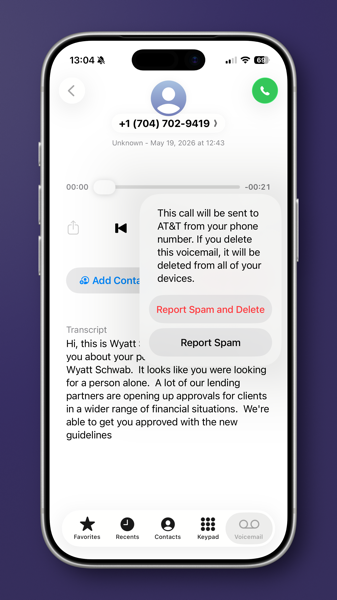
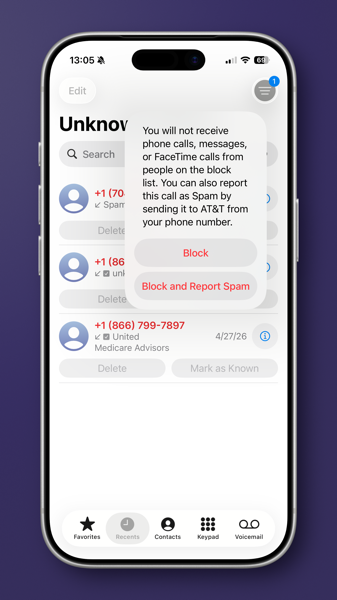
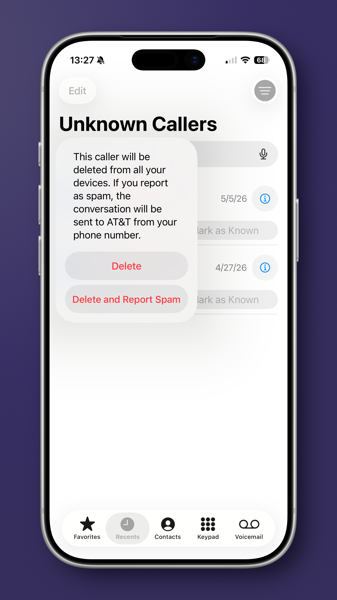
Back last fall I wrote about the changes Apple made to the iPhone’s Phone app in iOS 26. I thought they were both helpful and confusing. I followed that up a month or so later suggesting that smartphone makers needed to make delete and report spam buttons more of a priority.

New Shareshot.

I still maintain the points I made in both of those posts, but here are some more thoughts after having used the Phone app since.

Regarding the Hold Assist Detection feature what I said earlier very much still applies.

It makes me think that the designers of this feature have never used the Phone app to call a pharmacy or a doctor’s office where the person answering the phone is so busy that when they answer they speak so fast that you can’t understand what they’re saying. In my experiences attempting to use this feature in cases like those, the person on the other end just hangs up and I have to make the call again.

Recently I spoke with a receptionist at one of my medical providers about this feature and her response I sums that up well from the other end of the line. Simply put she said, “I have no time for such nonsense.”

She said essentially the same thing about the Screen Unknown Callers feature that allows the call recipient to see who is calling or leaving a voicemail. As I previously mentioned I have the Ask Reason for Calling option selected. Early on there were a few callers that actually left a voicemail, but that seems to have diminished over time. My speculation is that those doing the calling have caught on and just continue down their call lists. With this same medical provider I missed several calls because she was using a different number assigned by their phone system than I had placed in my contacts and the call logged as Unknown.

As to making spam reporting a more prominent UI feature not buried under a series of menus and taps, if Apple (and others) were really serious about making life easier for their users they’d add a Delete and/or a Delete and Report Spam option to the notification of a call. I mentioned in that earlier post that this Call Filtering feature would probably lead to a whack-a-mole game with spam callers. Based on the increasing frequency of spam calls I’m receiving I think the spammers are currently on a trajectory to win that game.

I still don’t know why all phone calls I receive, welcome or unwelcome, are listed as a Priority Notification. Since last autumn I’ve changed my lazy habits with contacts and been diligent about providing good contact metadata for doctors and others I do business or social interactions with. At that point that appeared to be the best way to try and take advantage of the newer features. But honestly I don’t think it matters much at this point based on what I’m seeing.

I support several elderly relatives who use their iPhones for basic needs, communication being the primary one. Having had a chance over the holidays to physically examine their devices, I noticed little usage of the delete function in the Unknown Call Callers section of the Missed Calls list. There were long lists of unknown callers. I imagine at some point we’ll see articles on how to clean up those lists.

In summary, I’d say the new Phone app features are still helpful and still confusing. Like everything else with Apple these days they should be categorized as a work in progress.  Here’s hoping we won’t be on hold too long before we see progress happen.

You can also find more of my writings on a variety of topics on Medium at this link, including in the publications Ellemeno and Rome. I can also be found on social media under my name as above.


Sunday Morning Reading

Football, opera, dying newspapers and politics are on the menu

Somehow amidst all we’re living through in the dual state of America it’s the Sunday of the Super Bowl. A dual state that will feature dueling half time spectacles. Apparently we have nothing better to fight over. Go figure. Even so, there’s Sunday Morning Reading to share on a variety of topics amidst it all. I’m avoiding links on Artificial Intelligence this Sunday, because I shared a few in a post on that topic earlier. If you’re interested you can find that here. So, onward.

Kicking off, Jason Snell penned a post on Apple’s Long History With The Super Bowl. Call me old fashioned but when a sports contest becomes as much about the commercials and half-time shows, I don’t think anybody wins regardless of how many points anyone scores.

If football or sports aren’t your cup of tea, perhaps the arts are. Ronald Blum tells us about ‘Monster’s Paradise,’ Lampooning US President Donald Trump, Has World Premiere At Hamburg Opera. It’s inspired by Alfred Jarry’s play “Ubu Roi.” I imagine it will be quite some time, if ever, we see this on an American opera stage. Although I can dream of seeing it at the Kennedy Center, restored from Trump’s desecrations long after he’s gone. (This week’s image above is a publicity still from the Hamburg State Opera.)

Media attention on ICE atrocities may be fading at the moment, but ProPublica continues to do excellent investigative work on the subject even after the headlines fade. Check out The Real Story Behind The Midnight Immigration Raid On A Chicago Apartment Building by Melissa Sanchez and Jodi S. Cohen.

It’s tough to keep up with the avalanche of things rolling our way. That’s certainly been true with the torrent of news surrounding the partial release of the Epstein files. There’s so much information that I can’t imagine anyone trying to sum it all up, and yet, Elizabeth Lopatto might have come damn near close in her piece, How The Men In The Epstein Files Defeated #MeToo. It’s a bigger article with an even more powerful scope than the #MeToo in the headline suggests.

Also addressing the scope of that mess, Anand Giridharadas says It’s So Much Bigger Than Epstein. I agree.

JA Westenberg tackles The Coherence Premium. No real hints here beyond this quote: “When I say coherence, I mean something specific: the degree to which every part of an operation derives from the same understanding, the same model of reality and set of priorities and tradeoffs.”

Ashley Parker writes about The Murder of The Washington Post

Meanwhile, David Todd McCarty suggests that The Return of The Local Newspaper may be the path to reclaiming power over information and securing democracy. It certainly might beat the ways we seem to be trying now

If you’re interested in just what the heck Sunday Morning Reading is all about you can read more about the origins of Sunday Morning Reading here. If you’d like more click on the Sunday Morning Reading link in the category column to check out what’s been shared on Sunday’s past. You can also find more of my writings on Medium at this link, including in the publications Ellemeno and Rome.


The Power Users Have With Subscriptions

Unsubscribing is a vote

I was not a fan of app subscriptions initially. I long ago rethought my position. I continue to think it’s the best option for users. That belief is becoming more entrenched now that we’re entering into whatever the future will be with Artificial Intelligence and it takes constant cash to continue to burn the planet.

Apple Creator Studio hero_571x321.jpg.large.

Whether it’s this week’s flavor of AI chatbots, Apple’s new Creator Studio, or any other new app or service, most now require a subscription to take advantage of new features as they roll out. In most cases the offer is pay $XX a month or $XX a year, with the yearly price being discounted by the cost of a month or more. Even so, we’re already seeing premium subscriptions that add on costs for more features and I think that trend will only accelerate. Welcome to the land of upsell.

Although much less than I used to, I will subscribe to a new app or service that attracts my interest for a month to check it out. I’ll set a reminder a few days before the end of the month and then take a little inventory to see if it’s worth continuing. If not, I’ll unsubscribe.

If the app or service is truly worth my while I may subscribe for the yearly price after determining it’s something I value, but that’s becoming rarer. Frankly, there just aren’t many new apps and services that seem worth even a monthly try out these days, much less paying for a yearly subscription. There have been a few apps that, although they didn’t really fit my needs, I have paid for a yearly subscription to support the developer. But that’s even rarer.

In those cases with apps, newsletters and other services, I think of those more as tips or a donation than I do entering into an ongoing relationship. I’ve even subscribed on occasion and immediately canceled with just that thought in mind. I’m all for supporting good work by good people. I admit it’s a bit unfair to a good app that doesn’t fit my needs, but it’s still a signal that I think is worth sending.

Here’s the key. Large companies (Apple, Microsoft, Google, etc…) and independent developers, writers, etc, notice when the turnstile rotates in reverse because someone unsubscribes. It’s a metric they pay attention to. They count on inertia and waning attention spans. You might think they don’t notice, but they do. As a user I look at unsubscribing as my vote up or down. Again, maybe unfair, but as I said, it’s a signal worth sending.

With the recent release of Apple’s Creator Studio suite of apps I found it remarkable that much of the commentary included mentions that users could try things out and turn off the subscription payments if they didn’t find things suitable for their purposes. Or, if they needed one of the apps for a short project that they could check in and out of the bundle for the duration of the project. I highly recommend that kind of thinking.

For what it’s worth I chose not to subscribe and try out the new Creator Studio. I thought about it, but have long since discovered other tools that fit what I might need from those apps.

In this hyper political age, we talk a lot about voting. That’s always a choice. Using the choice to subscribe and unsubscribe from apps and services can be one as well.

You can also find more of my writings on a variety of topics on Medium at this link, including in the publications Ellemeno and Rome. I can also be found on social media under my name as above.


Matt Gemmell on “The Fallen Apple”

Dissatisfaction with the familiar breeds contempt

Matt Gemmell begins with an understatement. “It’s a troubling time to be a long-term Apple customer.” It doesn’t get any easier to read after that. Nor should it.

Shutterstock 1478322374.

Like many Apple users these days, including myself, Matt is expressing his dissatisfaction with Tim Cook’s Apple. Misery loves company. So does commiseration.  The Fallen Apple is a powerful read, and I suggest you do so.

Yes, he points to Cook’s knee-bending and kowtowing that betrays much of the carefully cultivated culture Apple spent untold sums creating over the years, now tossed aside like a decaying FineWoven iPhone case. Perhaps with a sparing nod to rationality Gemmell calls it an act of “corporate sacrifice.”

But this paragraph is particularly damning:

I sometimes think about the full-page, black-background Steve Jobs memorial on the Apple site, with the list of tributes you could send submissions for. Then I try to imagine the same thing for Cook, and I find that it only cheapens the original. The Tim Cook of the Trump era is the erasure of a man who previously could do little wrong, but I think that ultimately it has also laid bare a person whose goals and even motives are as far from Apple’s erstwhile values as it’s possible to be. While Jobs gets to be remembered with artful aphorisms and elaborate hagiographies, surely Cook’s epitaph must be something along the lines of “another record quarter”.

Corporate rationality, like it or leave it, is often as distasteful as it is easy to comprehend. But in my view it requires the wrong kind of different thinking when you’ve built a company on creating an emotional connection with your users.

One thing leads to another. Gemmell points not just to the cultural upheaval and downward spiral, but also to a future that appears uncertain. As he puts it, “More perniciously, Apple is also hemorrhaging people and knowledge.” It makes one wonder if Apple University is still in existence.  If so, what exactly are they teaching these days?

But, and to the larger point, he correctly states Apple isn’t hemorrhaging profit.

I hope very much to be wrong, but I fear that Apple’s skyrocketing revenue masks a steep institutional decline that is already well underway, propelled by the fact that success itself, improperly managed, is a poison.

It must be something for folks like Cook, Trump, Musk, etc… to sit atop such vast piles of money, knowing how much dislike and distaste they engender and how it undermines the thrones they cling to. Apples ripen and fall. Unless they are harvested. Either way, there’s an end.

Read the rest here.

(image from Johann Lensless on Shutterstock

You can also find more of my writings on a variety of topics on Medium at this link, including in the publications Ellemeno and Rome. I can also be found on social media under my name as above.


Sunday Morning Reading

Small Pieces Loosely Joined

Connecting the dots can be one helluva hard game when you have so many dots. The volume of dots and the plots might seem overwhelming, but, if you care to look, it’s easy to find the connective threads, thin though they may be. String them together and the picture becomes clearer. Take a look at the links shared in this Sunday Morning Reading column. If you can’t find the connections, I suggest you’re not even trying to look.

Different colored strands of yarn woven together into a strong strand. Shutterstock 504091696.

Dave Winer writes of Small Pieces Loosely Joined, what he considers the best description of the web. It fits for the web. It fits for most things.

JA Westenberg discusses Why Intelligence Is A Terrible Proxy For Wisdom. Smart.

Backseat Software. That’s how Mike Swanson sees the state of things with software that is constantly interrupting us. As he puts it, “the slow shift from software you operate as a tool to software as a channel that operates you.” Excellent read.

John Gruber thinks we should shift from calling the bad guys Nazis and facists, instead use The Names They Call Themselves. Come to think of it, not sure why it’s so hard to do so given the dictates of the brander-in-chief.

Good dots among the bad are easy to spot. Ava Berger tells the story of how A Red Hat, Inspired By A Symbol Of Resistance To Nazi Occupation, Gains Traction In Minnesota.

In the boiling battle that is Canada and the U.S., Cory Doctorow is elbows up with another of his speeches on enshittifcation. (I’m glad he publishes these.) Check out Disenshittification Nation.

If you’re looking for an antidote to all that’s flying around and at us, it’s tough. Gal Beckham says we can connect those dots through what we’re seeing in Minneapolis. She finds the right word to describe the activism, protests, political opposition, neighborism, and resistance. I won’t spoil it, but she threads them all together in There Is A Word For What Is Happening In Minneapolis. 

David Todd McCarty suggests America is a dual state in Then They Came For Me.

Steven Levy says After Minneapolis, Tech CEOs Are Struggling To Stay Silent. Silence speaks volumes. So do actions. So too do “tepid free-floating empathy” memos that mean nothing. Nothing will come of nothing. Speak again.

Joshua Panduro Preston tells the story of John Carter Of Minnesota: The “Convict Poet” Who Won His Freedom.

Pro football fans, especially those in Chicago know Charles ‘Peanut’ Tillman and the “peanut punch” well. Most don’t know that after his gridiron career he became a FBI agent. Even more don’t know that he walked away from that second career after the immigration raids started. Dan Pompeo connects the dots in After Charles Tillman Transformed Football, He Joined The FBI. Then The Immigration Raids Started.

(image from RA2016 on Shutterstock)

If you’re interested in just what the heck Sunday Morning Reading is all about you can read more about the origins of Sunday Morning Reading here. If you’d like more click on the Sunday Morning Reading link in the category column to check out what’s been shared on Sunday’s past. You can also find more of my writings on Medium at this link, including in the publications Ellemeno and Rome.

Promises, Promises

Harold Hill never had such easy marks

Years ago when I ran professional theatres my principal responsibility was picking a season of plays and/or musicals, then pulling things together to actually produce that season. Planning was based on quite a few variables and data, but you never knew how things were actually going to play out in the end. Show business can be cruel.

The Music ManThere were always surprises. Some good and some bad. Some shows would become surprise runaway hits, others that seemed like sure things would flop. Lose a weekend due to a snowstorm and the bottom line got hit hard.

Of course the choice of plays was always the key variable. I remember sitting in a particularly contentious board of directors meeting as we were nearing a season announcement and a board member was pushing back hard on our revenue and expense projections for what we had planned. He pounded the table and asked, “How can you know what will sell tickets a year from now?” I told him I could project, but I couldn’t know and that I always went into each season saying that if we succeeded as much as .300 hitters in baseball we’d be superstars.

Well, we weren’t baseball players, but we still usually came out ahead of the game with more hits some seasons than others. We held our own. The not-for-profit theatre version of the game I was playing relied on picking and announcing a season a year or so in advance. You’d promote and sell that season to subscribers to accumulate cash and support up front, and then once you were in the season proper you’d push hard for single ticket sales and then after they got a taste, try to convert them into subscribers, then donors.

It was always risky, just like many business propositions. I remember asking that same board member if his business would be comfortable announcing his plans and projecting sales a year in advance knowing all of the risks. It was a rhetorical question on my part because I knew his business couldn’t operate that way. Most can’t.

The entire thing was based initially on a promise, and each new season announcement was a new promise. Each time you delivered a promised season the theatre built or kept trust with that subscriber base. That loyal base would resubscribe based on that trust. Those customers knew there may be a play or two in the season they didn’t care for, but they came back season after season based on the quality of what we offered, and also that we delivered on what we initially sold and promoted.

As an artistic director (CEO) I was the one who was responsible for that trust and never took that responsibility lightly. Yes, there were times we had to change our plans, but the trust engendered along the way helped weather those moments as long as we were honest with our customers and donors.

The above is a long wind up to something I’ve been thinking about lately and spurred by an article I saw on Elon Musk’s latest promises about delivering robots “next year.”

No one thinks that’s real. For the life of me, I doubt he does. Given how many “promises” this guy has made and broken I don’t understand how reasonably intelligent (I assume they are reasonably intelligent) reporters and investors don’t just burst out laughing when the next one self-drives out of the empty garage that is his mouth. But then again, everyone is in on the con.

Musk isn’t alone these days when it comes to talking out of more orifices than human anatomy provides. Our politicians do it. Relentlessly. As do Tech and other corporate CEOs. The politicians you can almost understand because they are allowed to say whatever the hell they want under the Speech and Debate clause of the Constitution, granting them immunity for anything they say while doing their legislative duties. Unfortunately that seems to have spread a bit outside of the original boundaries through various court rulings and a willingness to boldly and brazenly lie at the drop of a hat.

But CEOs are supposed to be under more scrutiny. From their shareholders. From various regulatory agencies. And yet, those like Musk and many of the Artificial Intelligence promoters seem to be able to promise the Moon (or Mars) without ever delivering.

As I said earlier, at some point you’d think intelligent folks would catch on and actually run these Harold Hills out of town, instead of allowing them to continue courting the librarians they want to take jobs away from. If the regulators aren’t regulating and the shareholders keep writing checks I guess those of us watching shouldn’t care if they all end up playing air trombones. (Bonus points for those who get The Music Man references.)

There’s a truism in my business that nobody ever starts out to do a bad show. Yet, some shows flop. I used to believe that no one ever started a business to be a bust. But the flimflammery we’re seeing these days makes me wonder. As long as you can continue to fleece the flock along the way, does it really matter if you ultimately succeed in producing what you promised as long as you score along the way?

Set aside for the moment that anything, well intentioned or not, can fail. But after delivering a string of broken promises you’d think there’d be enough erosion of trust that only fools would continue to pony up their money. Perhaps I’ve just underestimated the number of fools.

My business was disposable. Technology isn’t. Essential as the arts are to our collective humanity, the arts are always the first to feel financial hits in tough times, and generally the last to recover. Technology keeps playing an increasing role in all of our lives and is becoming dangerously essential. Lord help us if an EMP ever goes off.  Watching this new rush into the a world of Artificial Intelligence it’s frightening to contemplate even a small portion of what the promises offer, even as some have already collapsed under their own weight. It’s even more challenging to contemplate what the remaining ones might actually turn into.

It’s one thing to run a smartphone on a beta OS. It’s another when it runs your life for you.

Frankly, I don’t buy all of the promises. The ones that I think offer possible benefits I’m skeptical about. And that’s because I don’t trust the folks offering the promises, the folks funding them, or those rushing to implement them. They’ve all had their chance to earn my trust. There are very few remaining that haven’t squandered it.

You can also find more of my writings on a variety of topics on Medium at this link, including in the publications Ellemeno and Rome. I can also be found on social media under my name as above.