Segmenting The Future Of Computing

The days when the costs of technology decreasing over time have passed.

I’ve been writing a small bit about the segmentation I see coming in how we currently think of computing. Yes, it’s about Artificial Intelligence, and yes, it’s about money. There’s no question that we’re already seeing price increases due to chip shortages, but I’m thinking that’s just the beginning of what will make Apple’s reputation of shipping too expensive computers, prior to the MacBook Neo, seem like a memory.

A close-up photograph of overlapping neon signs illuminating a dark background. In the foreground, a prominent bright green neon sign is shaped like a dollar symbol ($\$$) by Aedrian salazar Wy7Gy8ZcW1M unsplash.

There’s no question that the cost associated with Artificial Intelligence is driving this and will continue to do so. The question is how much? Note that in the latest announcements from Google, Microsoft, and Nvidia heralding what’s coming that price tags weren’t revealed. Quite frankly from the way I’m reading the tea leaves scattered among the press releases, most of these companies are skittish because they don’t even know how high the cost curve is going to bend. Or they’re afraid of the sticker shock once they do find the courage to announce them.

The way I see it, the next period of time is going to be one where if you can afford the steeper prices of hardware and AI services, you’ll be able to play on that level. Those that can’t, and may not even need to, will be gradually left behind. Although for many that won’t prove to be that much of a problem given their needs. Initially.

Tell me honestly, what has any AI company promised, prior to this coming age of agents, that most computers can’t already do? Heck, even some of the promises agents can supposedly deliver don’t seem to offer that much more, unless you’re a software developer or in math sciences.

That said, operating systems and software are all being geared up along with consumer hardware to make the expensive side of the equation be the standard. 

Already we’re seeing moves away from AI robots doing their work in the various clouds. Companies are prepping local AI models to be installed on devices. Those local models are going to require memory and processing power that’s going to further drive up the hardware costs while possibly reducing the token tax. Gaming hardware is about to become really expensive. Back in the cloud, eventually we’re all going to be paying for search. Probably sooner, rather than later, if you want decent results. 

Speaking of taxes. Governments are starting to sniff around with their divining rods, sensing new money reservoirs to be tapped, while watching water resources stretched thin. There’s obviously a thirst. If, when, and where that happens will just add costs to be passed down the line. 

Take a look at this quote from Microsoft’s Satya Nadella:

“There are really two stories people can tell about this moment. One is that technology concentrates power, reduces human agency, and leaves to society to absorb the consequences. The other is that we use this next wave to unlock opportunity for developers, scientists, enterprises, and every community. And our job is to make the second story true.”

On the surface it sounds like there’s opportunity for what’s coming to be all inclusive. Clever. Beneath that surface I think Nadella is hinting that unless your computing needs are in fields of endeavor that will require AI to be competitive, you’re at the tail end of that second story and will probably be on the outside looking in while absorbing the consequences. There’s really only one story.

As I mentioned earlier, there are plenty of users who don’t need the latest and greatest hardware and will probably be just fine without. For a time. Unless the big players create operating systems and hardware that segment out some of what will only become compute heavy advances, consumers will eventually find today’s tasks more challenging and less secure as existing hardware slows down and future security updates are released on slower schedules. 

Of course that also leaves an opening. 

Perhaps companies that offer hardware and services that don’t push whatever current AI envelope is being pushed, might find a willing market. You could argue that Apple’s MacBook Neo, and Dell and others’ recent announcements to counter that somewhat surprising move, might presage this. Without lower entry price points, who knows, a lot of users might just return back to the days of envelopes and snail mail.

That’s probably too extreme a reaction, but we’ve seen similar reactions to technology in the past, some quite recent, once the gee whiz factor has worn off like the letters on cheap keyboards on even expensive computers. Think touch screen displays instead of buttons and dials in cars. Think home automation. Think the Metaverse. Think talking appliances. Think cars and machinery that require maintenance contracts. Think 3D TVs.

Those that love to dabble and explore frontiers and have the money to do so will always seek the next adventure. Go for it. Those who just want to send a birthday greeting, create a holiday card, share a calendar, proofread a document, or search for a local merchant don’t want a hustle or a hassle, or the increased expense that’s obviously coming.

For the moment, the days when the costs of technology decreasing over time have passed.

(Image from Aedrian Salazar on Unsplash)

You can also find more of my writings on a variety of topics on Medium at this link, including in the publications Ellemeno and Rome. I can also be found on social media under my name as above. This site does not use affilate links. 

Microsoft Raises Surface PC Prices Due To Increasing RAM Costs

No mystery under the surface here.

No doubt about it, this one will sting for those interested in Microsoft’s Surface line of computers. Microsoft is putting the blame squarely on the AI-fueled increasing costs of RAM according to a report on Windows Central.

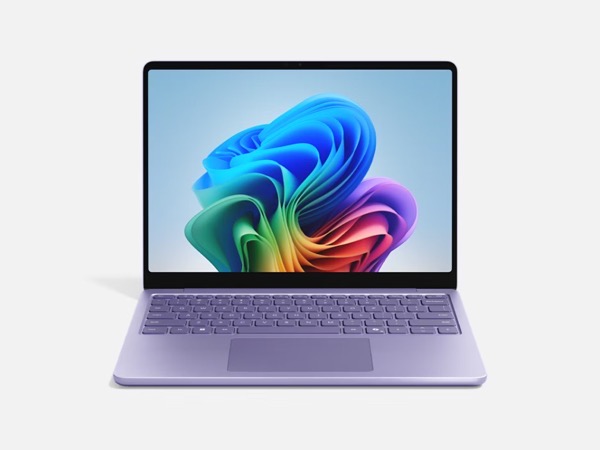
B00 Surface Laptop 13 inch 1Ed Rational Violet Front.

According to a statement to Windows Central:

“Due to recent increases in memory and component costs, Surface is updating pricing on Microsoft.com for its current‑generation hardware portfolio,We remain committed to delivering value to customers and partners while upholding our standards for quality and innovation.”

The Surface Pro 11 and the Surface Laptop 7 now cost $500 more than their original price. Other Suface computers in the line up including the 12-inch Surface Pro and the 13-inch Surface laptop have also seen a hike in prices. In fact the entire Surface line has seen increases.

When it comes to competition, this puts some of Microsoft’s Surface line into a higher cost category than the equivalent range of Apple’s Macs.

Note that this comes before the next edition of Surface PCs is unveiled this Spring and Summer, which is often preceded by a drop in prices on last year’s editions.

It’s getting expensive out there and we don’t have to look to far beneath the surface of the news to wonder why.

You can also find more of my writings on a variety of topics on Medium at this link, including in the publications Ellemeno and Rome. I can also be found on social media under my name as above.


Dan Moren Questions What It Means To Be An Apple Fan These Days

Core questions for Apple users

The headline of Dan Moren’s final column for MacWorld says it all: I’m An Apple Fan In 2025. What Does That Even Mean?

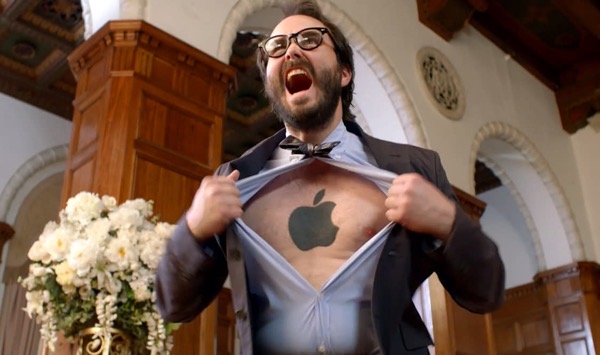
Apple fanboy.

Moren has been writing for MacWorld and been a sensible voice inside the Apple community for close to 20 years. He’s signing off his regular column gig for MacWorld, but he’ll still be around on the likes of Six Colors, podcasts, and I’m sure other places. Which is good, because his voice is an important and reliable one.

In his farewell, he raises the question many are asking of themselves, and the questions many are asking of Apple in its current state and our own state of affairs. As he puts it in a nutshell of a statement:

As Apple started becoming more and more successful, I’ve become increasingly skeptical that one should ever really consider oneself a “fan”of a company.

It’s a well thought out and well reasoned post and one that I think should be read by anyone considering themselves a fan, or a no longer fan, or even someone who just doesn’t care for Apple or its products.

A big part of the self-examination I know quite a few folks are going through in assessing their current relationship with Apple deals with issues bigger than just the products. For lack of a better description call them corporate issues. Even using that label — corporate — feels dirty to type in ways that seem damning in more dangerous ways these days. But that’s a fungible feeling and thinking that’s becoming increasingly tangible.

Here’s the thing. Technology advances. Humans advance. Nothing that feels foundational or allegiance adhering, or even worth being infatuated about is going to ever stay the same. Nor are our feelings about what we first might have fallen in love with, regardless of how the object of that affection itself grows and changes. Change is constant.

Microsoft had my allegiance back in the Tablet PC days because they won it when those much maligned devices provided a better, more productive way to do my work. Microsoft changed. I did too. iPads replaced what Tablet PCs were for me in my work and my play, and those are the tools I still use today. Do I think that will be forever? Not a chance. I mourned the loss of Tablet PCs. I’m sure if Apple stopped making iPads, I’d go through a similar grieving process. But again, that’s change. That’s life.

That’s also growth. But growth on the human side of the ledger rarely equals growth on the corporate side. In my brief time on this planet the two have never added up to successful equation that yields anything other than diverging results. That’s one thing I don’t ever expect to change.

Kudos to Dan on a job and career well done, (and still going) and kudos for a lovely farewell column in MacWorld.

You can find more of my writings on a variety of topics on Medium at this link, including in the publications Ellemeno and Rome. I can also be found on social media under my name as above. 

Distrust-By-Default

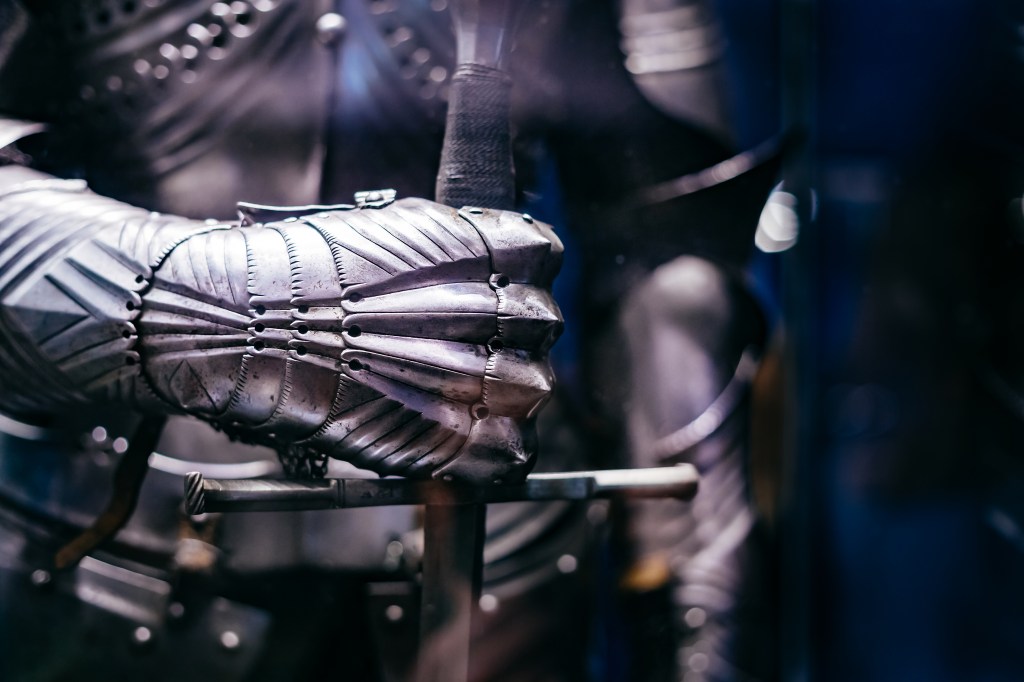
Donning a new armor for protection

In a typically thorough article on Ars Technica about Microsoft preparing to reintroduce the Recall feature to Windows 11, Andrew Cunningham sums up his, and I think many of our, queasy feelings about these kind of feature and marketing failures we’ve recently seen from the likes of Microsoft, Apple and others, using the phrase distrust-by-default.

 Here’s the quote in context:

This was a problem that Microsoft made exponentially worse by screwing up the Recall rollout so badly in the first place. Recall made the kind of ugly first impression that it’s hard to dig out from under, no matter how thoroughly you fix the underlying problems. It’s Windows Vista. It’s Apple Maps. It’s the Android tablet.

And in doing that kind of damage to Recall (and possibly also to the broader Copilot+ branding project), Microsoft has practically guaranteed that many users will refuse to turn it on or uninstall it entirely, no matter how it actually works or how well the initial problems have been addressed.

Unfortunately, those people probably have it right. I can see no signs that Recall data is as easily accessed or compromised as before or that Microsoft is sending any Recall data from my PC to anywhere else. But today’s Microsoft has earned itself distrust-by-default from many users, thanks not just to the sloppy Recall rollout but also to the endless ads and aggressive cross-promotion of its own products that dominate modern Windows versions. That’s the kind of problem you can’t patch your way out of.

Briefly, Recall is the Windows 11 feature that was built to capture and recall almost all of what you do on your PC via snapshots, making it available for recall later. After substantial promotion, Microsoft pulled and delayed the rollout last year after security concerns were raised. Skepticism was high even before the security issues were raised that caused the delay. Cunningham’s article provides an excellent rundown on that and I encourage you to read the full thing.

I think Andrew is spot on calling the uneasy feeling many of us have distrust-by-default. Certainly when it comes to this specific Microsoft moment and other tech companies. Zooming out, I think it also describes well the armor we’re all adopting on any number of issues in these moments of mistrust we seem to be facing on so many fronts in our lives.

(Image from Atmospher1 on Shutterstock)

You can find more of my writings on a variety of topics on Medium at this link, including in the publications Ellemeno and Rome. I can also be found on social media under my name as above. 

Picking Your Tech Poison

It’s not easy loving tech these days.

There are no good options when it comes to choosing your tech these days. Let me rephrase that slightly, if you’re hesitant or resistant to AI taking over your tech there are no good options these days. Whether it be mobile devices, laptops, or desktop rigs, the makers of the major operating systems have all jumped on the Artificial Intelligence band wagon and are doing really poor Harold Hill impersonations trying to sell us on it. Sure there are different flavors, but they’ve become or are becoming intrusively the default. We all know where this appears to be heading. Computing devices without AI will be the flip phones of tomorrow, If they are even available. Apple has turned on Apple Intelligence by default, (even though it is still in beta). Microsoft is forcing Copilot into Office 365 and its operating system and charging you more for it, wanted or not. (There are ways to ditch it.) Google is doing the same thing with Android. Even if you don’t use an Android device, but use Google services, Google’s AI now accompanies anything you do with those services. Of course other smartphone users that rely on Android are following along, but there’s really no choice. If Artificial Intelligence was a virus, we’ve all been infected and there’s no vaccine to argue over, nor will wearing a mask help, because it extends beyond our own computing lives to the interactions we have with our doctors, banks, any form of customer service, and other affiliations of our daily lives. Yes, there are still refuges where you can attempt to avoid AI, but that’s not the real world of daily commerce and daily personal interaction. Now, it sounds like I’m 100% in the anti-AI camp. I’m not. I think there are legitimate uses. Some are even quite good. Some offer promise. I actually experiment with some of that. But I also think that there’s too much that isn’t useful, too much that just doesn’t work as advertised (beta or not), and too much that’s more than potentially harmful, especially in greedy hands. I can get excited about the technology, especially on some of the exciting hardware we now see. I just consider it a shame that all of that computing power is going to be put to the uses it appears we’re in for. We’ve been here before with new technology. First it’s a curious trickle then it becomes a tidal wave that sweeps us along in its path.  It’s tough to live daily life without a smartphone these days. That’s a more recent fact than many want to acknowledge. There’s another factor. Part of the hesitancy and resistance I know I’m feeling is that I don’t feel like I can trust the likes of Apple, Google, and Microsoft, much less the social networks and other applications that run on their hardware. I’ve always been skeptical, but that trust level took a knock with the recent knee-bending by these companies, trading cash for favors from the evil regime now in place in the U.S. I’m not sure how much more capitulation will be required, but I’m betting the folks trying stay in the game will find themselves laying prostrate before this is all over. I’ve used Apple products and have been a fan for quite some time. I imagine I will continue to be a user of those products going forward, given the investment I have in that ecosystem. But I also use Microsoft and Google products and support a coterie of folks who do as well. I also use services on my Apple devices by both Google and Microsoft. In order to support the folks I do, I keep up to speed with this increasing and haphazard pace we’re all forced into. The questions I deal with lately focus on how to remove or prevent these AI features more than they do about how to guide them through new features. When every day users are asking those questions there’s obviously a problem. As for me, tasting the poison in order to understand the which antidote is needed feels unhealthy, a bit dangerous, and just plain dirty. So, I’m starting to check out other hardware to become even more familiar, but also to look at my own options. Again, there’s no easy choice. I picked up a Pixel Pro 9 recently and am checking that out. Does that mean I’m thinking of changing horses in this stream we’re in? Probably not. As I said, there are no good choices. It really is a pick your poison era we’re in. I’m not happy about it. I’ve always been tech curious, it’s just sad my current curiosity is bred from such distaste, distrust, and disgust. You can find more of my writings on a variety of topics on Medium at this link, including in the publications Ellemeno and Rome. I can also be found on social media under my name as above. 

Sunday Morning Reading

Good reading and good writing is just a heartbeat away in this week’s Sunday Morning Reading

What do Aristotle, Katherine Hepburn, Garth Hudson, beautiful minds, and ugly hearts have in common? They all make an appearance in this week’s Sunday Morning Reading. Or at least writers doing their thing and writing about them do. Hearts can be ugly things, yet they draw our poets, songwriters, and story tellers like moths to a flame. NatashaMH flutters around the heat in The Beautiful Mind Of An Ugly Heart. Speaking of ugly hearts, quite a few of them are on appearing on shirt sleeves alongside all the chest thumping and Nazi salutes going on here in the U.S (and elsewhere). We’re only a week into the victory laps and lapses of humility, yet already writers are wearing out keyboards with words of resistance. Ian Dunt has penned How To Resist The Tech Overlords. In this new and hot category of writing, let’s hope none of this seems like fiction down the road. Another way to resist the tech overlords is to just say no when they overreach. Microsoft overstepped by raising everyone’s Office 365 subscription prices on the inclusion, wanted or not, of its Microsoft 366 Copilot AI features. There’s a way to avoid the price hike written up by Mark Hachman on PC World. You might want to check that out. For a good read on the entire Microsoft situation, Ed Bott chronicles the story of Microsoft’s latest AI unintelligent move in The Microsoft 365 Copilot Launch Was A Total Disaster. Meanwhile the Chinese might have found a way to fight the AI money grab and spend long before we reach the cash out stage. Zeyi Yang lays it out in How Chinese AI Startup DeepSeek Made A Model That Rivals OpenAI. The sexy stories about TikTok might be taking a back seat to this one. Alex Himelfarb tells us The Politics of “Common Sense” Is Making Us Meaner. He’s right. Joan Westenberg takes it all on in Clash: Power, Greed, And The Fight For a Fair Future. If you’re concerned about what the tech side of all of these moments of madness we’re living through might mean, remember it’s not the tech and it is. Check out Nina Metz’s review of the Katherine Hepburn and Spencer Tracy flick Desk Set. As Ms. Metz puts it, This Movie With Katherine Hepburn And Spencer Tracy Anticipated Anxieties About The Internet And AI. Oh, also check out the flick. You won’t be sorry. There really is nothing new under the sun, including cribbing and cropping from the work of others. Massimo Pugliucci takes a look at Ayn Rand’s Objectivist theories and her claims to be influenced by Aristotle. As he puts it well, “one can hardly imagine what possible points of contact the two might have.” Take a look at On Ayn Rand and Aristotle. These are indeed challenging times and often they feel quite dark. Alexander Verbeek gives us the always needed reminder that When Darkness Returns, Art Exists. And on that note, and since we lost one of the greatest musical artists of my generation, Garth Hudson, this week, Check out Amanda Petrusich’s Remembering Garth Hudson, The Man Who Transformed The Band. Remember many of Hudson’s and The Band’s creations came in another turbulent era in our history. A beautiful musician and beautiful mind. If you’re interested in just what the heck Sunday Morning Reading is all about you can read more about the origins of Sunday Morning Reading here.  You can also find more of my writings on Medium at this link, including in the publications Ellemeno and Rome. You can also find me on social networks under my own name.

Artificial Intelligence is No Match for Human Goofiness

Everyone’s intelligence is being challenged given the decidely human drama going on over OpenAI’s adventures in whatever it is adventuring in. The story’s not over by any stretch of the imagination (or hallucinating) but from what we know it only proves that anything humans touch, humans can screw up.

Shutterstock 2245159551

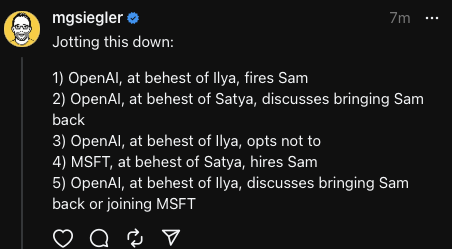
Here’s a link to a story on TechCrunch about what, at the time of its publishing, was the latest news that Microsoft. CEO Satya Nadella,  exercising the muscles Microsoft built up with its 10 billion dollar investment in the company, hired Altman and the company president Greg Brockman after a weekend of boards, CEOs, directors, and investors doing what they typically do. Employees of OpenAI have signed a letter saying they’ll leave unless Altman is brought back. Even the guy who suggested outing Altman has signed on to do so. Goofy? You bet.

CleanShot 2023 11 20 at 08 46 39

But I’m thinking all the horses are out of the barn into more Azure pastures.

All of this is about AI, a powerful and world changing technology, fraught with possibly as much potential harm as promise. That genie is out of the bottle, never to be put back in with a future no human or AI model can really predict. This story will continue to unfold, as will the technology. What won’t change is what I said in the opening paragraph: Anything humans touch, humans can screw up.