Apple works to make good on Apple Intelligence with Siri AI
At WWDC 26 Apple today announced new operating systems all ending in OS27. (The numbering thing drives me nuts.) The entire keynote felt different to me from recent years. I’m not talking about the presentation organization that strayed from the usual by device format. Rather it felt like Apple felt a bit humbled. Almost as if Apple is in a we’re in a thinking different mode these days. I may be reading more into that than is real, but I’m usually pretty good at sniffing these things out.
Apple chose the name Golden Gate for its macOS 27 version this year, and it looks like the folks in Cupertino heard the criticisms about Liquid Glass and have taken some steps to correct what I and many other consider design flaws. I’ve seen as many negative as positive reactions to the design changes, so we’ll see how that goes throughout the summer.
There was also quite a bit of time devoted to Parental Controls. Given the political heat big tech in general is taking politically here in the US and elsewhere that’s probably a smart move. The announcement stirred up a bit of controversy from folks not in favor of efforts like age verification. The devil will be in the details.
The big push though is all about Apple Intelligence and the New Siri, now called Siri AI. Trying to play catch up and recover from the mistakes of two years ago, Apple showed off some live demos in a separate meeting from the keynote. You can read about that on The Verge. So you have to consider showing live demos a plus over two years ago, although it was still in a protected environment. I’ll be looking for users to do the same as the betas roll out, even if it appears that there’s a waiting list for the New Siri. So, we’ll see how that goes.
The announcements were solid. They appeared to address past problems of Apple’s own making, user complaints about recent design changes, and the promise of under the hood bug busting. Announcing speed increases across the platforms is promising. But we’ve been here before. Every keynote from every company makes promises. The devil is always in the details, and when life is a beta, you never know what’s final and when. Especially when you’re in a mode of trying to rebuild trust.
You can check out the entire keynote reduced to 26 minutes, also from The Vergehere. And Jonny Evans has a nice collection of the headline announcements from the keynote here.
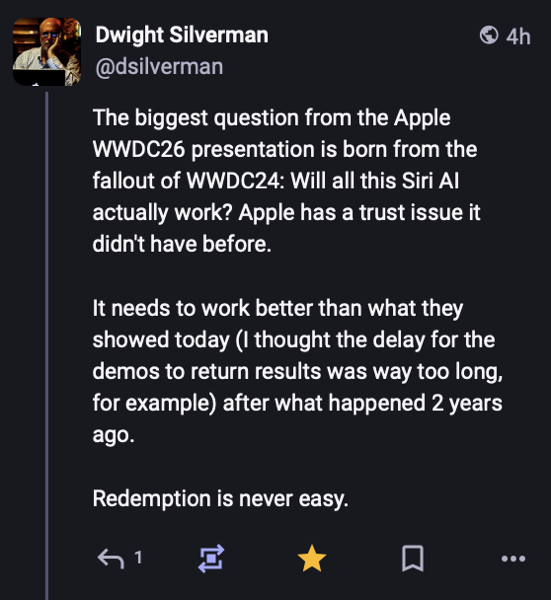
And this Mastodon post from Dwight Silverman sums up my some of my early thoughts as well.
To further sum it up my early thoughts, I’ll just say this. It’s going to be an interesting summer watching folks hammer on the betas, the first of what was released to developers today. The public betas will roll out in July. But we’ll have some early indications later in the week as developers begin working with the betas.
Thanks for reading. You can subscribe to this blog if you care to.You can also find more of my writings on a variety of topics on Medium at this link, including in the publications Ellemeno and Rome.I can also be found on social media under my name as above. This site does not use affilate links.
That’s the summary of my thoughts for Apple’s World Wide Developer Conference this year. That event happens next week. The waiting and seeing will happen over the summer, possibly all the way until this time next year.
I’m not talking about what Apple will talk about at the conference and in the keynote. I’m talking about what they actually deliver down the road and when they deliver it for the numerous operating systems with 27 tagged on at the end. Some will get love. Some won’t. That’s nothing new. (Ask iPad users.) For a company with so many resources each year’s releases always seem to curiously remind me that Apple picks a platform to focus on, and seems content to let others wither on the vine for a time.
To be fair, I’ve always had a wait and see attitude towards most tech announcements, because what looks sexy and is hyped in the demos, press releases, and podcasts, sometimes makes it into the hands of users, sometimes not. Prior to 2024, Apple usually delivered on what it promised. But that changed with Apple Intelligence. A name I bet they wish they’d never let see the light of day. They didn’t deliver then and haven’t since. They promise they will this time, although who knows what that will really mean. The weight of wait and see has become heavier.
This also comes at a time when there’s a burgeoning backlash building among consumers against anything related to Artificial Intelligence. So the climate is not nearly as inviting as it was two years ago. For what’s it worth, I think it’s becoming harder and harder to sell any product or feature that guarantees its inaccuracy up front, promising to do better in the future. But there sure seem to be enough takers and talkers thinking different on that than I.
Curiously, Apple seems to be hedging its bets, apparently set on using Google’s AI as the foundation. Some say that’s a place holder until Apple rolls its own AI after it’s mistaken first rollout, the way it did with Maps. Some say it’s a wise move for the future because it might save Cupertino some cash and more blowback from having to build out its own data centers. I say, wait and see.
From what I read Google may be reinventing itself and the Internet with its efforts, but those efforts aren’t meeting with thunderous applause and accolades. At least compared to Google’s competitors. Besides effectively putting Google in the catbird (chatbot?) seat driving all AI chatbot activity on the majority of handsets sold on the planet (Android and iOS), who knows how it will turn out. No chatbot can predict, nor can any human. That said, the marketing puzzle about what’s Apple and what’s Google is going to be fun to watch play out, even in the end it’s going to be meaningless to most consumers.
There’s also word that this year’s OS releases will also focus on fixes and not new features the way Snow Leopard did for Leopard on Macs back in the day. Intriguingly there were quite a new features for Macs in that release. Speaking of Macs, there’s also talk that they will see more of Liquid Glass than we saw the first time around. To be honest, I’m grateful for last year’s comparative neglect of Liquid Glass on the Mac. I’m waiting and seeing with a bit of trepidation how attention is focused on that this year. I’m also waiting on the day when someone finds a way to sell me on rounded corners on rectangular displays.
I would welcome fixes. Boy, would I welcome fixes. I’ve long maintained that the cadence of Apple’s OS release cycles is too rapid to allow it to effectively address problems. I get that there’s a long view and a necessity to look ahead, but when you’re hearing leaks about the next year’s efforts before this year’s are announced I think the tempo is too fast and it becomes too tempting to push things off until the next year.
I’ve written about a number of things that bug me off and on. Because they bug me off and on. I’ll list some that stand out that I wish would get attention. That said, most seem to fall back on issues with iCloud. Hearing talk that however Apple rolls out the new Siri or chatbot feature will allow that feature’s chat history to sync across devices via iCloud gives me a shutter. I’m guessing that will lead to more unexplainable stops and stutters in iCloud syncing in general.
So, here’s a small list of things I hope, but am not counting on, seeing addressed.
iCloud syncing. Just make it reliable and give us Sync Now buttons. We get one is Messages. How about the rest of the core apps?
Perpetual Betas: I know, and respect that Apple is continuing to work on each new operating system throughout the year. Kudos. It can’t be easy. That said, find a way to keep from mucking things up on the backend for users who don’t participate in betas. Perpetual beta weirdness is hell for normal users.
Phone app. Apple made significant changes last year. They need to make more. There’s no reason in the world I can see for not going all in to help users more efficiently get rid of unwanted or fraudulent calls.
Error Messages. Tell us more. Yes, I know something failed. Tell me more about what failed and point to a solution or information that can help me find out more.
Apple Mail. Rules in Apple Mail need to work consistently, or just be done away with. Features in Apple Mail on iPhones and Macs need to be brought into line with each other. It makes a mockery of trying to unify things between iOS and macOS.
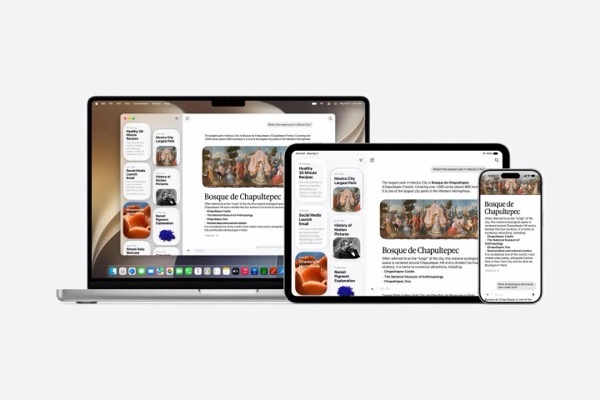
Shortcuts. Yesterday’s future is probably some tomorrow’s further fading feature. Shortcuts are great when Apple doesn’t change things behind the scenes that cause them to break. That happens too often. Rumors that you’ll be able to create them via a chatbot sounds potentially promising. But if they are still going to randomly break, what really is the point?
Contacts. A small amount of attention could do wonders with this seemingly forgotten, yet essential app.
Apple Music on the Mac. Why is this app so bad for a company that says over and over again that it loves music?
Reminder Notifications for Shared Reminders. There has to be a way to programmatically dismiss a shared reminder notification once it has been completed and marked off. Fix it. It is just simply annoying. Especially in the context of all of the improvements in the Reminders app the last few years.
App Store. For a company that spends untold amounts of money on its brick and mortar stores, I remain shocked at how they can be proud of the software versions of any of its App Stores.
watchOS Software UI: We’ve already heard there won’t be much in the way of changes for the Apple Watch this year. But at least pay attention to some of the software design.
Settings. Find a way to clean up this mess. There has to be a way.
Note that many of the issues listed above are still hanging around and are the same as in my list last year.
As much as the attention will be on whatever Apple attempts with Apple Intelligence after WWDC 26, attention will also quickly pivot to the fall when new devices are announced. Given that we’ve heard countless times that devices like Apple TV and HomePods, and other home related products, are waiting in the wings for software focused on AI features to catch up, it will be curious to see what attention, if any, they get during WWDC. I don’t think those devices will be announced until the fall. I don’t expect any hardware announcements of any kind next week.
Speaking of waiting in the wings, much will also be made about this being Tim Cook’s final WWDC as CEO with John Ternus due to take spotlight this September. Much attention will be paid to the semiotics surrounding all of that during WWDC and after. That will be interesting to watch, but since WWDC 2026 feels more and more like a catch up year all around, I’m guessing next year’s event might be more telling. We’ll have to wait and see.
So, there’s my thoughts. That and nickel won’t buy you anything.
You can also find more of my writings on a variety of topics on Medium at this link, including in the publications Ellemeno and Rome.I can also be found on social media under my name as above. This site does not use affilate links.
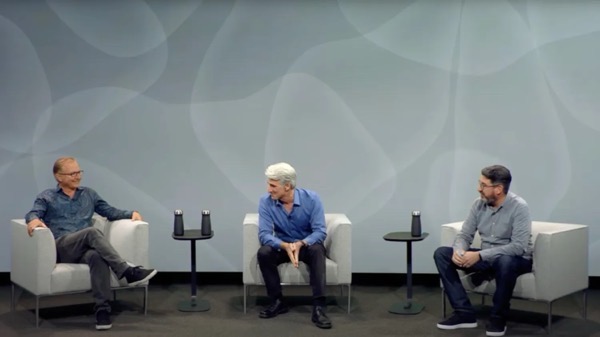
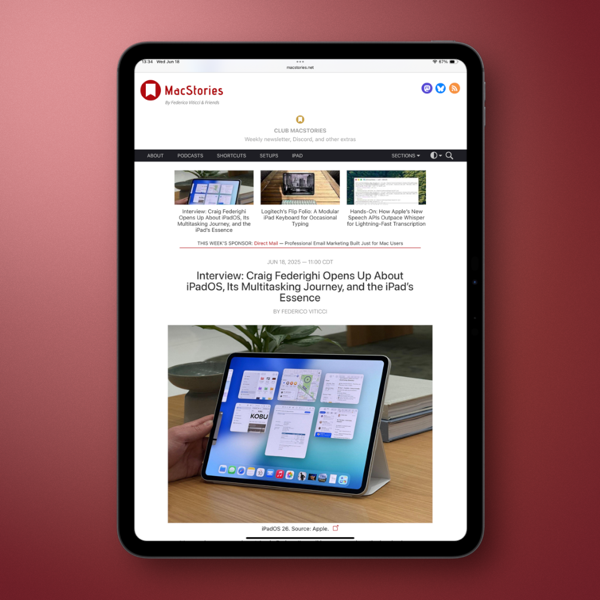
There has been much consternation and tension among iPad fans over the last few years. Viticci has long been an iPad advocate and had, like many seen his ardor cool while Apple seemingly was cooling its jets on the platform. Federighi sitting down with Viticci is quite a PR move on Apple’s part.In and of itself is a signal by choosing the iPad’s most ardent supporter and vociferous critic.
There’s a chance Apple has jumpstarted those jets a bit based on the iPadOS 26 announcements at WWDC, and from some of the early reactions we’ve seen from some developers and users. While those reactions seem genuinely positive, we’ll need to see how things shape up as the summer beta season rolls along.
The one thing is certain, there will be new life in the iPad discussion after iPadOS 26. Viticci’s article has laid great groundwork on which that discussion can take place.
Load it up on your iPad and give it a read.
You can find more of my writings on a variety of topics on Medium at this link, including in the publications Ellemeno and Rome.I can also be found on social media under my name as above.
Changes look promising. Wait and See is the operative condition.
Apple announced what it has in store for the next versions of all of its operating systems during it’s annual World Wide Developers Conference this week. Or rather Apple put out a pretty nice commercial for some of what it has in store. But that’s the way of these things whether pre-taped or live. The beta testers and pundits are off and running looking into every nook and cranny of the code, celebrating, criticizing, and screenshotting. That will go on deep into the summer.
The biggest, most observable change is the new design language, Liquid Glass, that is intended to bring all of Apple’s operating systems into a more unified look and feel, sorta, kinda based on the Vision Pro. Who knew that headset would provide new Vistas ahead?
They also unified the current OS numbering system, ditching the previous version numbers. Now each operating system will increase by the last two digits of each year ahead, as in iOS 26, watchOS 26, etc… We’re going to get to iOS 50 sooner than we thought.
I no longer play the beta game with my devices so I haven’t seen anything first hand, beyond the reactions of others that range from it’s terrible to the best thing since sliced bread. Keep in mind that any reactions you see following the release of the first developer beta should always include the caveat that what you see now will probably evolve over the course of the summer. Wait and see is the operative condition that needs to be set.
As far as I’m concerned the big news was about the iPad and what iPadOS 26 is promised to offer. There has been lots of back and forth about trying to define the iPad ever since there have been iPads. But certainly since Apple, in the pre-M1 chip era, put out the What’s a Computercampaign in 2018. There were quite a few loud voices always wanting more than Apple delivered in terms of making the iPad more like a Mac. And in recent conversations many of those loud voices were putting down their megaphones and were moving on from those iPad as their main computer dreams.
But this year Apple seems to be promising most of the changes those users have been clamoring for. They include a multiple windowing UI, much more similar to MacOS than any of the previous multi-tasking attempts. There’s even a menu bar, the inclusion of a new Preview app and more Finder-like functionality in the Files app. Better background processing and enhancements to the audio system are sure to make podcasters happy. There are a host of other new tidbits as well. There are also casualties. Many are already mourning the loss of Slide Over.
To give you an idea of how big a deal this change is, noted Windows advocate, Paul Thurrott ended his first look piece with “I may need to get a Smart Cover. Or whatever it’s called. This changes everything.”
The cynic in me has to say that the depth and breadth of these new iPad features makes me suspicious as to why Apple didn’t take this path earlier. It seems obvious that it had been thought through. The hardware has certainly been capable. Regardless of those suspicions, Apple has set up another new iPad story to keep us chattering.
So, iPads are being dusted off again. Soon, and more importantly deeper into the summer, we’ll hear how successful these features may be in fulfilling the desires of those who want the iPad to be more like a Mac. What we won’t have to wait for is the debates around the iPad to heat up.
I’ve never been one that felt disappointed by the iPad’s less than Mac-like features. For my work it has always served me well and gotten better in doing so over its evolution. Stage Manager was never my thing, but Slide Over worked well for my usage as my primary multi-tasking metaphor. Will I miss it? I’m sure I will. But I’ll wait and see what this new multi-tasking UI offers before rendering judgment.
But that’s me and I’m not everybody. So, as I look forward to living vicariously through the summer as others poke around these new changes, let me close with this. Regardless of whatever differences exist between the iPad and the Mac they always had one great similar strength that these new changes appear poised to make stronger still. Different users with different needs can use an iPad or a Mac for just about anything they want and need to do.
You can find more of my writings on a variety of topics on Medium at this link, including in the publications Ellemeno and Rome.I can also be found on social media under my name as above.
A new coat of paint won’t fix the cracks in the wall.
In a week Apple will unveil what it has in store for us during its annual World Wide Developer’s Conference (WWDC). Beginning June 9, the microscope will be focused more intently and with a greater scrutiny given the myriad of issues Apple is facing. That scrutiny might just overwhelm any message Apple has planned for the year ahead depending on how Apple handles it.
The reason I titled this post “Thoughts and Prayers Heading into WWDC 2025” isn’t that I’m offering up good vibes for Apple as they try to work out of the messes they’ve mostly created for themselves. I’m actually hoping — most likely against hope — that Apple will finally clean up some of the annoyances they’ve neglected over several generations of iOS and macOS.
I’m not going to discuss the bigger picture issues Apple is facing here. I’ve written about some already, as have many others. Instead I’m going to focus on the smaller software reliability annoyances that add up to make me think Apple just doesn’t care.
It’s become almost a running joke that Apple allows some of these flaws to continue year over year. But I don’t find it funny. You can put new wallpaper over a water damaged section of a wall, but if you don’t fix the leak then the problem isn’t the stain on the wall, it’s you not caring. Or maybe you don’t have the money to get it fixed. Apple certainly has the money. As John Siracusa says in an excellent post called Apple Turnaround:
It’s been 15 years since Apple’s leadership last demonstrated that it’s willing to emphasize software reliability at the cost of new features. Since then, bugs in major features have been allowed to fester, unfixed, for years on end.
I’ll quibble with John on one point. If you allow a reliable, yet ignored “bug” to remain through several operating systems, it essentially becomes a feature the longer it’s not addressed.
I’m a stubborn old coot in my life as a theatre director. Deeply ingrained in my way of directing is something a mentor laid on me year’s ago. “If it’s on the stage it’s yours. If it fails or distracts, it’s your failure.”
Here’s a short list of bugs and annoyances that have existed over several versions of the operating systems and several versions of Apple’s hardware that I encounter routinely. That’s based on how I work and play with Apple hardware and software. I’m sure there are many more depending on how others use their devices.
Focus
I know there are folks who swear by the Focus feature, but to me it’s one of those features that works and then randomly doesn’t. I’d call it unfocused. I keep trying to use it, but abandoning it because I already have enough random failures in my life.
Shared Reminders Notifications
I’ve written about this previously. Shared Reminders are terrific for grocery lists and other things, especially of a checklist nature. But when you complete a Reminder, the notification needs to disappear for all of the users who are sharing the Reminder. I’ve had Shared Reminders hang around for hours after I’ve checked it off of a list.
Syncing Photos
This one just gets more and more puzzling and has become the butt of so many jokes, it’s almost become a part of the Apple brand. You take a photo on your iPhone and whenever it syncs to iCloud and subsquently to other devices is a wild guess. I get that if you’re running low on battery you may want to delay syncing. But if my iPhone is plugged in telling me that it won’t sync so that it can optimize battery it is a little silly. Also telling me syncing is paused for “optimizing the system” makes me wonder just what system is being optimized. Apple’s or mine?
Bluetooth Connectivity and AirPods
I’m a big fan of AirPods. I’m also a big fan of AirPods and the way they are designed to work within Apple’s ecosystem. When they work as designed it’s magic. When not, it is frustrating. Again, random failures to disconnect, which always seem to come at just that moment when you need to quickly plop them in your ears for a phone call are never fun. Neither is it a good time when one of your devices you might have previously been connected to refuses to let go of the connection.
Deleting Media from Messages
I support a few family members who keep their Messages set to retain their Messages forever. That’s all well and good, except this can quickly fill up storage on an iPhone. Apple needs to make it possible for users to select and bulk delete media on an iPhone the same way you can in Mail. The UI looks like you can swipe down the list of circles, but you can’t. The fact that you can only view these attachments sorted by size also makes it a more difficult chore to remove unwanted media attachments.
Shortcuts
I have a love/hate relationship with Shortcuts. Love it when they work. Hate it when something changes and a Shortcut I’ve relied on suddenly stops working or stops appearing in Spotlight. This happens more frequently in beta season even though I don’t run betas.
Beta Badness
Again, I don’t run betas on any of my devices. That said, I’ve been told by Apple Support personnel that changes are always happening behind the scenes on the backend during beta season that can sometimes affect all users. That stands to reason, given how much of what you do on an Apple device is tied into Apple’s servers and iCloud. I suspect this may only become more prevalent with Apple Intelligence as Apple tries to remain competitive with other AI providers that seem to constantly be updating their software. Perhaps there needs to be a way to create a wall or silo off users running betas from those who do not.
App Store
With M-series chips we’re able to get great performance and fast loading times from apps. With one notable exception being Apple’s own App Stores. For the life of me I don’t understand why they can’t improve performance on their own point-of-sale outlets. It’s like not cleaning the glass on the front of your storefront.
Settings and Permissions
I get that there are a large number of Settings. I don’t get that there’s such a haphazard way of addressing the problem of making them discoverable. I’m sure it’s a challenge, but the only way to address a challenge is to set it as a priority. The same is true with Permissions. Certainly there’s a way to force developers (including Apple) to send us to the correct Permissions screen to choose to make a selection.
Rules in Mail
I’ve set up a number of Rules in Mail in macOS over the years. Currently they all seem to be non-functioning, or randomly functioning. I have a suspicion this may have something to do with Apple’s tinkering with Apple Intelligence based mail categories (a feature I tried but turned off). Having to manually choose to Apply Rules is not the same as having a Rule that runs automatically. It defeats the purpose. Let’s face it, no company has found a way to win the cat and mouse game of spam filtering. I doubt they ever will even with AI. The Rules feature wasn’t perfect, but when it worked it was a help in weeding out some of the spam.
Consistency between iOS and macOS
Speaking of Mail, I’d like to see consistency across the board regarding features between the macOS and iOS versions. In fact, I’d like to see consistency across the board in all of Apple’s native apps. This is especially true given that there is a rumor that Apple is redesigning most of its operating system user interfaces to try and unify the look and feel between different device categories. Carry that through with how you treat app functionality between platforms. Other examples include Shortcuts and Apple News+. I enjoy being able to open an article via the Share Menu from Apple News in Safari on a Mac. I should have the same option on iOS and iPadOS.
As I said, these are mostly annoyances. But I’m annoyed that no one at Apple seems to be annoyed enough to take care of them.
You can find more of my writings on a variety of topics on Medium at this link, including in the publications Ellemeno and Rome.I can also be found on social media under my name as above.
Is Apple simply missing an opportunity or heading into the bunker?
This is significant. Apple — under fire from many directions — is opting out of having executives participating in a now decade-long tradition on John Gruber’s The Talk Show Live podcast. Gruber made the announcement on his blog, Daring Fireball.
On the one hand, given the number of fires the folks at Cupertino are fighting at the moment, it’s easy to say you can’t fault the decision. To my way of thinking though, that’s an injured hand you’re afraid to show. If it were my decision — and granted I certainly do not know what the folks at Apple know — I’d use the other hand, with a whip in it.
Here’s why.
There’s nothing that each of the audiences Apple plays to at WWDC aren’t aware of. Who are those audiences? There are the fans, the developers, the media, and Wall Street. Like it or not each of those audiences already have enough awareness of Apple’s problems delivering Apple Intelligence, tariff battles, developer relations, and court and regulatory actions. They each come in with their own set of expectations and agendas.
I would also suggest that those paying attention at WWDC — and who have read Patrick McGee’s new book Apple in China — will be approaching whatever Apple announces this year and going forward in a new context. That book not only alters the Apple narratives; in my opinion, it forces a reset.
Already I’ve seen several in the community respond to the news that Apple is forgoing an opportunity to put on a human face and connect in the midst of all that’s going on. Here’s Marco Arment and Parker Ortolani to link to two.
These Talk Show Live events have indeed been a welcome side show — an opportunity to catch a glimpse of a bit of the humanity behind the corporate front. By and large I think the history of the Gruber’s event has been a net positive. Think of it like seeing the filmmakers on stage after a screening. To a certain degree I also think those days are over with the current leadership.
In this moment of high stakes on so many fronts, Apple has obviously calculated that not putting its executives in the relatively warm seat — no offense to Gruber, but the past questions and follow up have usually not been too tough — is the better bet than attempting to meet things head on.
Again, I’d argue for the head-on approach. If you ignore what your audience is already thinking you essentially ignore (and further offend) them. If ever there was a crowd that might be receptive to some honesty (admittedly PR-coached,) Gruber’s forum would be the place to find it. Does Apple need to issue some mea culpas? Maybe, maybe not. But even well coached honesty in a discussion can go a long way to creating good will. If you ask me, Apple needs more than a little of that presently.
In my professional life I’ve faced some high-stakes presentations. None on this level certainly. I may have been working to save a theatre or two, but my success or failure never had a large piece of the world’s economy depending on it. Still, the minute stakeholders assemble for such an event you only have several choices. Distract. Deny. Or be honest.
WWDC is going to happen. Arms among the audiences will be crossed, waiting for answers and clues. Apple will certainly have enough well-packaged announcements to distract at WWDC. They can’t deny their way out of the problems they brought on themselves. Being honest, however, can’t cause any more damage than has already been done.
I certainly wouldn’t want to be involved in the planning or presenting of this year’s WWDC event — even if it is pre-taped and packaged within an inch of its life. Apple has made its choice for The Talk Show Live. While the big packaged show always takes precedence, this year seems very ripe for a side show that clears the air a bit. As Parker Ortolani says, not having that will speak volumes. It is already a very loud signal about how things might play out going forward.
You can find more of my writings on a variety of topics on Medium at this link, including in the publications Ellemeno and Rome.I can also be found on social media under my name as above.
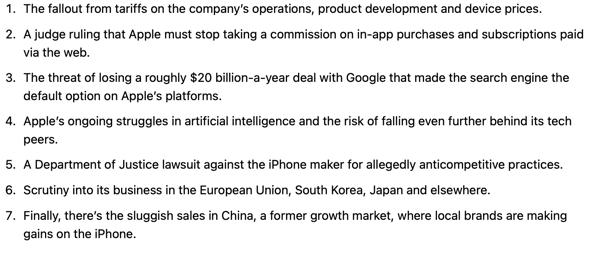
Mark Gurman offers up a relatively thorough summary of the number of challenges Apple is facing going forward in his weekly Power On column. Things always go forward. The question is always how.
Gurman calls this point in Apple’s history a “critical juncture.” I would agree. The many moving parts, both surrounding Apple, and of its own making, have put Cook and company squarely in that critical juncture. This comes as Apple and those that make their living talking about Apple are gearing up for this year’s World Wide Developer’s Conference (WWDC) next month.
Gurman delivers the punchline well below the headline that neatly summarizes why WWDC is not going to be able to address all of these challenges, but also why the turmoil is going to continue.
Speaking specifically about Apple’s race to catch up in the AI realm he says:
it’s going to be a while before we can tell if Apple is heading in the right direction
Perhaps that should have been the lede. He could have easily said the same about each of these challenges he enumerates.
But there’s also a larger, more encompassing challenge that makes surmounting each even more difficult. The tech world is moving at a pace that Apple is unaccustomed to. Apple’s historic long view has served it well over the years, but the window on that long view is increasingly narrowing its aperture.
Apple may spend its June introducing and setting the table for what’s coming later this year, but already most of the smart players who follow and promote Apple are shifting their focus to the bigger, and more critical, table stakes coming long after this year’s summer and fall hype cycles end. The now familiar “coming later this year” now means much less when the real issues may only begin to be addressed further down the road.
Waiting “a while” is not an easy sell. Especially these days.
You can find more of my writings on a variety of topics on Medium at this link, including in the publications Ellemeno and Rome.I can also be found on social media under my name as above.
A relaxed Tim Cook talks Apple Intelligence with MKBHD
There are several Tim Cook interviews bouncing around the Internet while Apple’s WWDC is ongoing this week. They focus on all of what Apple has publicly announced, and it doesn’t take artificial intelligence to know a big part of the discussion is Apple Intelligence.
Prolific YouTuber Marques Brownlee (MKBHD) sat down with Tim Cook in one of the most relaxed interviews I’ve ever seen Apple’s CEO give. Given the promotional nature and pace during WWDC week, I think that’s a bit of a rarity. So credit to MKBHD.
Yes, the interview covers Apple Intelligence, but it’s fun to watch MKBHD challenge Cook to a blind ranking of Apple products. Cook doesn’t take the bait of picking favorites, but does talk about the five products MKBHD brings up and it is especially fun to watch Cook’s reaction as he spins a bit about the Magic Mouse.
All in all it’s well worth watching and Cook’s answers to MKBHD’s questions do shed a bit more light on what Apple is thinking about Apple Intelligence and where that might take technology.
You can find more of my writings on a variety of topics on Medium at this link, including in the publications Ellemeno and Rome.I can also be found on social media under my name as above.
Apple has wrapped up its WWDC 2024 keynote address unveiling a number of new features for most of its platforms and devices. The wraps were also taken off of Apple Intelligence, Apple’s move into AI. I’m still processing all that was talked about, but here’s a short video summary Apple released.
Who knows which AI engine Apple used to create this, or if it was done the old-fashioned way.
You can find more of my writings on a variety of topics on Medium at this link, including in the publications Ellemeno and Rome.I can also be found on social media under my name as above.
A reading list of predictions and commentary heading into WWDC 2024.
There are always lots of predictions about what Apple will announce at its annual World Wide Developer’s Conference each year and this year is no different. I’ve written a few of them myself. Here’s a quick list of some pieces from others and myself that I think provide a good pre-WWDC reading list.
Gurman also expands on his thoughts about Apple Intelligence here.
As a companion to that check out John Gruber’s take on Gurman’s Epic Pre-WWDC Leak Report. Gruber seems to think it’s indeed a leak and the folks inside Apple aren’t too happy. IYKYK
Since Artificial Intelligence, or as it appears soon to be christened Apple Intelligence, seems to be the order of the day, Craig Grannell has some intriguing thoughts on how Apple can avoid the pitfalls others have made in this great AI gold rush.
It’s always interesting to see what comes out of each year’s WWDC announcements because one way or the other they set much of the agenda for the next year and beyond.
You can find more of my writings on a variety of topics on Medium at this link, including in the publications Ellemeno and Rome.I can also be found on social media under my name as above.


 Shortcuts