Observations And Questions After Apple’s Latest iPhone Duo and Apple Watch Event

Waiting to see how things unfold

I’ve got questions, some observations, and a few thoughts after Apple’s latest product announcements. In my opinion this was the best product introduction, canned or live, that Apple has done in quite some time. It makes a difference that they actually had something new to show off.

And there is newness. There’s also quite a bit of new work for developers ahead.

gettyimages-2294367938.jpg

iPhone Pro

There’s nothing really to say about the iPhone 18 Pro and Pro Max models beyond steady as she goes. Apple changed some colors, added some camera updates, a few other new features internally along with the latest generation chip, and incrementally advanced the very successful iPhone 17 Pro. The 17 Pro is one of the best iPhones I’ve owned and probably Apple’s peak for that design. Nothing about the 18 Pro versions seem likely to change that. Only reinforce it.

But in all the hype about the shiny new iPhone Duo much of that will be largely ignored.

iPhone Duo

It’s both tiresome and accurate to say Apple is playing follow the leader as a late entry into the minuscule market (<2%) that is the folding smartphone game. Samsung and others have been trying to make creases disappear for some time now. Crease or no, I believe the jury is still out on whether or not folding smartphones will ever be more than a niche market. If that proves to be the case there’s nothing wrong with that, though I think Apple has more hopeful thoughts.

However this new chapter turns out, it begins with Apple replaying the same game of catchup they played after Samsung introduced large smartphones. Remember when they were called phablets? Quite frankly, I imagine Samsung and the rest are glad Apple is entering this segment because it might spark new life for the concept of folding smartphones, which hasn’t caught fire like larger smartphones did.

To lay out my bias up front, I’ve never been attracted to the folding phone concept. I’m an iPad guy and if I need a larger screen that’s my weapon of choice. And when I’m wielding an iPad I don’t want my iPhone near me, or any of the distractions like notifications I use my iPhone or Apple Watch for. Apple isn’t hyping the Duo as an iPad and that’s a good thing. That hasn’t and won’t stop the comparisons from others, although it may herald the end of the iPad mini down the road.

So, that’s my preference and my choice. And I’m both sure and glad that others have different preferences and make different choices. With that in mind, I’m glad that Apple is offering a new category of smartphone for those who do see their technology worlds unfolding differently than I do. I’m glad Apple’s competitors do as well.

I took a look at some of the earlier foldables when they started hitting the market years ago and largely wrote them off. This summer I took a look at Samsung’s most recent foldables and was actually quite surprised with the quality of the tech. I imagine once I get a chance to fondle the iPhone Duo in a store that my response will be much the same. Impressive tech, but not something I have a need for, no matter how cool it may be.

The iPhone Duo does indeed look cool. If nothing else, Apple knows how to market a product. As I’ve said many times before, the verdict on the Duo’s success or failure will be determined at a later date once we see how Apple’s claims about durability and the display hold up. Early reviews will be just that. Early. I’m also guessing there will be some attacking that screen and hinge to check out Apple’s durability claims. October is going to be an interesting month for those who follow these things.

What stood out most was Apple’s “own the whole widget” reimagining of the iPhone UX/UI to take advantage of the new device. It looks both new and familiar. Doing some reading post event I can see how much work developers have ahead of them to fully take advantage of the new device. Here’s hoping most do, because some of what I’ve seen about apps that aren’t tuned to the new device leave a lot to be desired, reminding me of how insufficient and wrong iPhone apps looked on iPads in the early days. Remember when Apple sold using iPhone apps on the iPad as a feature?

Apple’s developer website promises workshops and labs, but the Xcode 27.1 beta for developing apps for the Duo is listed as coming later this month. I’m guessing it’s going to be a challenging transition. For some, a long one.

Speaking of transitions, the fancy fading transition between the closed and open screen is not only impressively eye-catching, and speaks to the aspiration of Apple’s designers and is certainly not something we’ve seen from any competitors. Time will tell where that takes us beyond the wow factor of that first introduction.

To Crease Or Not To Crease

Apple’s engineers seem to have done a good job of hiding the crease. It’s still there, but hidden under a “perpetually flat matte surface” under a nano-texture finish. Perhaps we now know why Apple recently and surprisingly reduced by half the price of the Apple Polishing Cloth that was first introduced alongside the first nano-texture screens on the Pro Display XDR.

Left and Right Handedness

One of the questions I have that I’ve yet to see an answer for has to do with that new UI/UX. Apple claims that like the iPad, the iPhone Duo can be used in any orientation. Part of the UI/UX reimagining places the dock and controls in most images on the right of the display(s) away from the hinge. I’ve seen one image from Apple that places a menu on the left in landscape mode when two apps are in split view.

Landscape  f7x2oe1oxemy large 2x.

I haven’t seen any that might do so when the device is closed and the indications from what I’ve seen is that the controls and dock mostly stay situated on the curved edge, whether the display is open or closed. This raises a question about right and left handed usage. This question came to me last night as I was using my iPhone to scroll through some reading about the Duo and realized that though I’m right-handed, I more often than not hold the iPhone in my left hand when reading or scrolling. I do the same with my iPad mini. I’m reasonably certain that if I ever purchased an iPhone Duo I would adjust. I’m not sure if the same is true for left-handers or how much it matters, even with what appears to be a very “hold it in your right hand” approach for the Duo when it is closed. I’m sure we’ll hear about it from left-handers if it does.

FaceID is one of the features iPhone and iPad users have become accustomed to. The iPhone Duo does not have FaceID, instead reverting back to TouchID for identification purposes. I’m not sure how many this might be a deal breaker for, if any. Quite a few folks are saying that if you’re wearing an Apple Watch you can use the unlock feature similarly to how you can use an Apple Watch to unlock a Mac. That might work. Although in my usage the feature worked so sporadically in unlocking my Mac that I turned it off. Maybe it’s been improved. We’ll have to wait and see.

iPhone Handoff

It’s often easy to forget that The iPhone Duo, like the iPhone Pro and other models that will be released next spring are phones. But they are. I remember when we called them cell phones rather than smartphones. Intriguing that I don’t recall seeing any imagery during the presentation of someone using the Duo to make a phone call.

Apple introduced an interesting feature that might appeal to some and might see some turbulence among carriers.

In these days of eSIMs, iPhone Handoff allows the use of one phone number between two devices so a user can switch back and forth whenever they want. I’m not sure what the demand for this will be, but some will certainly enjoy the feature. Depending on if the carriers can get their acts together.

At launch only T-Mobile and Germany’s Telekom support the feature, with Verizon saying they will later this year. AT&T apparently has some work to do on its infrastructure to make the feature possible.

Given how carriers love their ridiculous fees when you activate a new phone I wonder how this will get priced out. As I got ready to publish this, I noticed T-Mobile has announced that it will charge $5 a month for the feature.

Apple Watch Health and Privacy

Both the Apple Watch and the Apple Watch Ultra got updates to Series 12 and Ultra 4 respectively. Both also increased RAM from 4GB to 2GB. Apple continues its push into Health and Fitness in these next editions. Both got improved, but not new, health sensors to go along with a slew of new health features in the Health app, including something Apple calls Readiness that will let you know if you’re ready to take on whatever task or adventure awaits you or take it easy for the day.

There’s also a new Longevity tab that includes a feature called Health Age that lets you compare your statistics relative to others. Apple has entered into a partnership with Quest Diagnostics so that you can order a comprehensive lab test for $119 directly through the app to use as a baseline. This is sure to trigger a raft of social media posts bragging or complaining about how people’s Health Age scores compare in the way we have with sleep scores since that feature was introduced.

All of these features continue Apple’s forays into health guidance with wearables and are now promoted as being made possible by Apple Intelligence.

Speaking of Apple Intelligence, there’s also a controversial couple of new audio features for the Apple Watch that can record conversations. The privacy conscious, legal beagles, and pervert glasses foes have already begun stirring the pot and sounding alarms in this age when any kind of always on surveillance draws increasingly extreme negative pushback. Throw AI in the mix and the brew boils a lot faster.

Live Rewind lets you transcribe the last 15 seconds of a conversation you might have missed. The transcription can be saved to the new Siri app for viewing later. Siri Recap is an always listening feature that that uses ambient listening to take notes of conversations, summaries of which again can also be reviewed in the Siri App.

With Apple’s traditional bent towards privacy protection, they swear up and down that users are in control and that any of the summaries can only be viewed by you, are not accessible by Apple, and that audio is not recorded or stored. All of these features are opt-in and can be turned off. Apple also suggests “Be mindful of those around you. While audio is not recorded and stored, and no speakers are attributed, consider those around you where conversations might be private or sensitive.”

Seriously.

Siri recap with iphone.

My bottom line observation here is that this move into wearable AI by Apple is seeding the ground before Apple does or does not roll out any of the products we’ve heard rumored such as AirPods with cameras and its own smart glasses. Apple’s moves here, while cloaked in its usual privacy protection mantra comes at a time when there’s a growing distaste for anything AI related, a real backlash against smart glasses and any other surveillance tech no matter how cool or how beneficial it may be to those with accessibility challenges, and a blatant lack of trust for anyone on any level these days, especially big tech. That’s a broad brush to tar with, but it’s one that’s fully loaded and dripping these days.

It’s an old story now that Apple is behind when it comes to Artificial Intelligence. It’s not just the technology that’s lagging. It’s also that Apple has let others with much less social awareness define use cases in ways that turn off potential customers.

Even if this tech is only audio related, and all of Apple’s privacy claims prove out, I certainly don’t think Apple wants people to associate its popular Apple Watch brand with the toxicity of pervert glasses. And that’s before we get to the legal issues given how different states have different laws about the recording of conversations. Glenn Fleishman has an excellent article about this that you should read.

Timing is everything and I just don’t think this is the time, nor will there ever be a time when this kind of thing is accepted by a majority of users. Just because you can, doesn’t mean you should.

A few other topics that caught my eye were announced during the day.

AppleCare One Family Plan

Apple has been offering AppleCare One allowing users to insure and get support for up to three devices for $19.99 and add other eligible devices for a cost. Apple’s new family plan will allow users who are or start a shared family group to ensure all eligible devices for each family member for $50 a month. This is a potential for real savings for some.

Apple Reference Image

This is a good thing that I wish wasn’t necessary. But these are the times we live in. Apple Reference Image is a way of providing proof that a photo was captured on an iPhone, and not an AI generated image. From Apple’s website:

Users can now prove the authenticity of a photo taken on iPhone 18 Pro models with Apple Reference Image, powered by the new sensor in the Main camera that can sign every pixel it sees. When a photo is taken in the new Reference mode, the camera captures signed sensor data that Private Cloud Compute develops into an unalterable reference image. Reference images can be viewed in the Photos app alongside the main image, like a digital negative, to visually compare the two assets and determine if any edits were made. APIs are available in iOS, iPadOS, and macOS 27 for third-party apps to enable viewing of these reference images.

Image metadata and upcoming support for the SynthID standard can also help users identify images generated or edited with AI. Together with Apple Reference Image, this set of features represents a multifaceted approach to image authenticity — vital for photojournalists, photographers, and everyday viewers.

The Debut of John Ternus as CEO

Ternus did an admirable job in the canned presentation, though at times he looked a little gun shy. The opening film featuring a clever hand off from Tim Cook to Ternus was well done. Although it felt like it was two beats too long and would have been better served by getting to the punch line sooner. What’s apparent from how the event was structured is that Apple is loudly saying that they have a product guy at the top again. Ternus is “the guy” and there’s no doubt the pressure is now on for him to deliver.

As I said earlier. I felt Apple’s event was well done and the best it has done in some time. Picking a nit though, I was not a fan of all of the extras walking through the various locations while information was being presented. Each time someone walked through in the background it pulled my focus. The idea certainly established a nice mise-en-scène, but I largely found the extraneous traffic distracting.

It’s going to be interesting to follow how all of this continues to roll out. We won’t begin to hear real substance about the Duo from reviewers and users until October. That gives developers time to try and catch up, and it also will put the focus on Apple Intelligence and Siri AI as the operating systems that end in OS27 roll out next week for those with devices that support it. Note that most older Apple Watches do not support a lot of the new features. New Apple Watches and iPhone Pros will be getting in users’ hands late next week as well.

My hunch is there will be a lot of news unfolding this fall.

Thanks for reading. You can subscribe to this blog if you care to. You can also find more of my writings on a variety of topics on Medium at this link, including in the publications Ellemeno and Rome. I can also be found on social media under my name as above. This site does not use affilate links.
 

Report: Apple To Launch Subscription Services for Devices

Softening the price increase blow and segmenting the marketplace.

As I have been saying for quite some time, even before Apple announced its recent price increases, Apple is, according to Bloomberg, getting ready to announce what amounts to a subscripton service for some Apple devices.

There have been rumors of Apple offering hardware subscriptions for some time, but with the costs of hardware rising due to the consumer device RAM shortages brought about by the demand for more AI ready chips for data centers and the like, the timing seems right that we were going to see some sort of financing type arrangement for computers beyond credit cards and others that currently exist.

While there are not many details in the Bloomberg report, I’m sure these will roll out eventually, but the one detail mentioned (assuming it is correct) is this:

The Apple Upgrade service will work like a subscription and users can pay off the device early during their term, upgrade early to a new model or keep it at the end of the leasing period. In certain cases, those transactions will incur an additional fee. Like a car lease, it can also be returned at the end of the term.

Leases for iPhones and Apple Watches will run for 24 months, while Mac and iPad plans will run for 36 months. Users will need to be approved for the program via a soft credit check.

Again, this is just a report, but what I find interesting is that Apple is leaning into the 2 and 3 year cycle for users leasing devices, while at the same time Apple and all of the AI bros are pushing technology in what seems like a race with no finish line that will inevitably require newer and faster chips more quickly than the duration of those leasing cycles

The Bloomberg report says that the program won’t include AppleCare, and also that the Apple Watch SE, entry level iPad, iPhone 16, and MacBook Neo will not be eligible.

As I’ve been saying, we’re heading into an age of segmented computing, dividing the “able to haves” from “those not able.” While this may look, feel and be marketed like a way to lower the cost of computing close to the edge and trend lines, in the end, and as always, those who control financing operations will be the winners.

Thanks for reading. You can subscribe to this blog if you care to. You can also find more of my writings on a variety of topics on Medium at this link, including in the publications Ellemeno and Rome. I can also be found on social media under my name as above. This site does not use affilate links.
 

Bushels of Apple’s Public OS 27 Betas Released

Adventures forthcoming

Apple released the public betas of its next round of operating systems, all ending with OS27 today for Mac, iPhones, iPads, Apple Watches, and goodness knows what else.

Following close on the heels of the release, a slew of reviews and first looks were published on the usual blogs and websites, with I’m sure more to come. All of that will make interesting reading in the days ahead, but as to the big SiriAI come from behind update it appears from quick glances at some of those articles that things are very much on the right track, but not quite there yet. Most of that is being chalked up to things still being in beta. Keep in mind that SiriAI itself is also still a beta, nestled within a beta. It’s suspected to be released as a beta this fall when the official release happens.

I don’t find that strange, because regarding anything AI these days, things change so much so frequently that it seems like all of those who are chasing the constant changes for the other AI platforms are perpetually running in beta mode, even though the software is not advertised as such.

But to a large degree, we’ve all been in a perpetual beta mode with most software releases since before the AI explosion hit. It’s not that I expect things to ever be “finished.” But I do expect things to at least move forward and not break what was working before. “New” is only great if it works. Who knows, perhaps one day we’ll retire the beta label as meaningless.

As for me, this is going to be one of the first years in a long time that I install a beta. After buying and setting up a MacBook Neo for a client earlier this year, I picked up one for myself just to run the macOS Golden Gate beta. Fortunately, before the price hike. Given that I have some travel to do in the next few weeks, I’ll probably wait until the next public beta version is released before giving it a go.

It will be an adventure, I’m sure.

Thanks for reading. You can subscribe to this blog if you care to. You can also find more of my writings on a variety of topics on Medium at this link, including in the publications Ellemeno and Rome. I can also be found on social media under my name as above. This site does not use affilate links.
 

Thoughts Before WWDC 2026

Looking ahead and looking back

Wait and see. 

That’s the summary of my thoughts for Apple’s World Wide Developer Conference this year. That event happens next week. The waiting and seeing will happen over the summer, possibly all the way until this time next year. 

I’m not talking about what Apple will talk about at the conference and in the keynote. I’m talking about what they actually deliver down the road and when they deliver it for the numerous operating systems with 27 tagged on at the end. Some will get love. Some won’t. That’s nothing new. (Ask iPad users.) For a company with so many resources each year’s releases always seem to curiously remind me that Apple picks a platform to focus on, and seems content to let others wither on the vine for a time. 

To be fair, I’ve always had a wait and see attitude towards most tech announcements, because what looks sexy and is hyped in the demos, press releases, and podcasts, sometimes makes it into the hands of users, sometimes not. Prior to 2024, Apple usually delivered on what it promised. But that changed with Apple Intelligence. A name I bet they wish they’d never let see the light of day. They didn’t deliver then and haven’t since. They promise they will this time, although who knows what that will really mean. The weight of wait and see has become heavier.

This also comes at a time when there’s a burgeoning backlash building among consumers against anything related to Artificial Intelligence. So the climate is not nearly as inviting as it was two years ago. For what’s it worth, I think it’s becoming harder and harder to sell any product or feature that guarantees its inaccuracy up front, promising to do better in the future. But there sure seem to be enough takers and talkers thinking different on that than I. 

Curiously, Apple seems to be hedging its bets, apparently set on using Google’s AI as the foundation. Some say that’s a place holder until Apple rolls its own AI after it’s mistaken first rollout, the way it did with Maps. Some say it’s a wise move for the future because it might save Cupertino some cash and more blowback from having to build out its own data centers. I say, wait and see.

From what I read Google may be reinventing itself and the Internet with its efforts, but those efforts aren’t meeting with thunderous applause and accolades. At least compared to Google’s competitors. Besides effectively putting Google in the catbird (chatbot?) seat driving all AI chatbot activity on the majority of handsets sold on the planet (Android and iOS), who knows how it will turn out. No chatbot can predict, nor can any human. That said, the marketing puzzle about what’s Apple and what’s Google is going to be fun to watch play out, even in the end it’s going to be meaningless to most consumers. 

There’s also word that this year’s OS releases will also focus on fixes and not new features the way Snow Leopard did for Leopard on Macs back in the day. Intriguingly there were quite a new features for Macs in that release. Speaking of Macs, there’s also talk that they will see more of Liquid Glass than we saw the first time around. To be honest, I’m grateful for last year’s comparative neglect of Liquid Glass on the Mac. I’m waiting and seeing with a bit of trepidation how attention is focused on that this year. I’m also waiting on the day when someone finds a way to sell me on rounded corners on rectangular displays.  

I would welcome fixes. Boy, would I welcome fixes. I’ve long maintained that the cadence of Apple’s OS release cycles is too rapid to allow it to effectively address problems. I get that there’s a long view and a necessity to look ahead, but when you’re hearing leaks about the next year’s efforts before this year’s are announced I think the tempo is too fast and it becomes too tempting to push things off until the next year.

I’ve written about a number of things that bug me off and on. Because they bug me off and on. I’ll list some that stand out that I wish would get attention. That said, most seem to fall back on issues with iCloud. Hearing talk that however Apple rolls out the new Siri or chatbot feature will allow that feature’s chat history to sync across devices via iCloud gives me a shutter. I’m guessing that will lead to more unexplainable stops and stutters in iCloud syncing in general. 

So, here’s a small list of things I hope, but am not counting on, seeing addressed.

iCloud syncing. Just make it reliable and give us Sync Now buttons. We get one is Messages. How about the rest of the core apps?

Perpetual Betas: I know, and respect that Apple is continuing to work on each new operating system throughout the year. Kudos. It can’t be easy. That said, find a way to keep from mucking things up on the backend for users who don’t participate in betas. Perpetual beta weirdness is hell for normal users.

Phone app. Apple made significant changes last year. They need to make more. There’s no reason in the world I can see for not going all in to help users more efficiently get rid of unwanted or fraudulent calls.

Error Messages. Tell us more. Yes, I know something failed. Tell me more about what failed and point to a solution or information that can help me find out more. 

Apple Mail. Rules in Apple Mail need to work consistently, or just be done away with. Features in Apple Mail on iPhones and Macs need to be brought into line with each other. It makes a mockery of trying to unify things between iOS and macOS.

Shortcuts. Yesterday’s future is probably some tomorrow’s further fading feature. Shortcuts are great when Apple doesn’t change things behind the scenes that cause them to break. That happens too often. Rumors that you’ll be able to create them via a chatbot sounds potentially promising. But if they are still going to randomly break, what really is the point?

Contacts. A small amount of attention could do wonders with this seemingly forgotten, yet essential app.

Apple Music on the Mac. Why is this app so bad for a company that says over and over again that it loves music? 

Reminder Notifications for Shared Reminders. There has to be a way to programmatically dismiss a shared reminder notification once it has been completed and marked off. Fix it. It is just simply annoying. Especially in the context of all of the improvements in the Reminders app the last few years.

App Store. For a company that spends untold amounts of money on its brick and mortar stores, I remain shocked at how they can be proud of the software versions of any of its App Stores. 

watchOS Software UI: We’ve already heard there won’t be much in the way of changes for the Apple Watch this year. But at least pay attention to some of the software design.

Settings. Find a way to clean up this mess. There has to be a way.

Note that many of the issues listed above are still hanging around and are the same as in my list last year.

As much as the attention will be on whatever Apple attempts with Apple Intelligence after WWDC 26, attention will also quickly pivot to the fall when new devices are announced. Given that we’ve heard countless times that devices like Apple TV and HomePods, and other home related products, are waiting in the wings for software focused on AI features to catch up, it will be curious to see what attention, if any, they get during WWDC. I don’t think those devices will be announced until the fall. I don’t expect any hardware announcements of any kind next week.  

Speaking of waiting in the wings, much will also be made about this being Tim Cook’s final WWDC as CEO with John Ternus due to take spotlight this September. Much attention will be paid to the semiotics surrounding all of that during WWDC and after. That will be interesting to watch, but since WWDC 2026 feels more and more like a catch up year all around, I’m guessing next year’s event might be more telling. We’ll have to wait and see.

So, there’s my thoughts. That and nickel won’t buy you anything.  

You can also find more of my writings on a variety of topics on Medium at this link, including in the publications Ellemeno and Rome. I can also be found on social media under my name as above. This site does not use affilate links. 
Buttons, Buttons, Who Designs These Buttons?

Designing for dummies

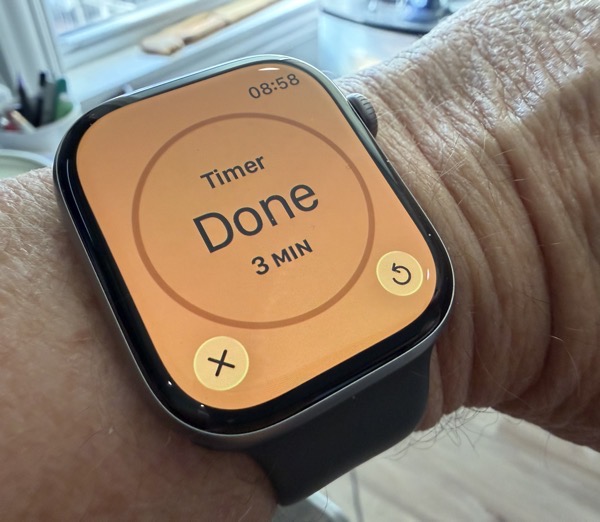
Tossing this tidbit on the growing bonfire that burns around Apple’s design flaws, this Apple Watch screen drives me nuts.

Close-up of a person’s wrist wearing an Apple Watch displaying a bright orange screen that reads “Timer Done 3 MIN,” with cancel and repeat icons, in a cluttered home office setting.

It shows up when a Timer expires. I get that there needs to be two options: stop the Timer or reset it to go round again, but if that gigantic circle in the middle doesn’t scream STOP, I don’t know what else does. I reach to press it each time.

And in the context of design being not just about how something looks, but also how it works, there is that repeat button. Its functionality doesn’t make sense. If I set a Timer for something I’m cooking for 20 minutes or so, why would I want it to completely reset to 20 minutes if I determine whatever I’m cooking needs another minute or two?

Also interesting, if you use the Wrist Flick gesture it doesn’t provide you with options, it just stops the Timer. It’s not that I think options are needed, but if the only one besides stopping the Timer is to repeat the full Timer than the watch face UI makes no sense to me.

I think the entirety of this needs to be rethought.

You can also find more of my writings on a variety of topics on Medium at this link, including in the publications Ellemeno and Rome. I can also be found on social media under my name as above.

My Year In The Apple Fruit Basket 2025

Not a good fruit crop yield for Apple

2025 was an odd year toiling in Apple’s orchard.

Shutterstock 1478322374.

Getting this out of the way upfront, it was a year that Apple’s corporate behavior, personalized by Tim Cook, made me think seriously about looking to fill my computing needs and habits elsewhere. That’s an ongoing discussion I’m having with myself. As it rattles around my brain, I don’t see an alternative that is any better or any worse from a corporate posture point of view. Apple has plenty of company.

From a technology point of view I also don’t see any better alternative beyond reliving my past hobbyist days with Linux that I’m far too old to contemplate. I used to be that geek. I’m not anymore. Aside from communal political knee bending, every tech company’s plunge into the Artificial Intelligence swamp has mucked up everything, everywhere all at once, in one way or another.

I have to touch Windows now and again and every time I do I feel like I need to take a purgative and wash my hands. I feel much the same about Google’s products. Life as a geek was already becoming increasingly more distasteful in the days when it was just the algorithms that enshittified everything, but adding Artificial Intelligence into the mix has created a slop that even hogs are beginning to turn away from. I know that’s all here to stay and I’m honestly sad that it is.

Hardware

This was the first year that I didn’t upgrade much Apple hardware. I don’t think it was a conscious choice correlating with Apple’s corporate behavior, but I won’t rule out my subconscious working against my small contribution to Apple’s bottom line. Let’s put it this way, I didn’t feel the usual gadget lust tugs and twinges over anything Apple announced this year.

I did upgrade to an iPhone 17 Pro and didn’t even think twice about taking a serious look at the iPhone Air. Apparently I wasn’t the only one. There’s nothing really remarkable to say about the 17 Pro. It’s as good and solid as it’s predecessor and if that’s incremental, than incremental is more than enough for me. I think that’s also true for most users.

I did pick up a pair of AirPods Pro 3 and wrote a quick review that you can read here. The battery life on the AirPods Pro 2 was approaching end of life, so it was time, and I use AirPods a lot.

I also upgraded to the Apple Watch Series 11 from the Series 10. It’s not that the Series 11 does anything more remarkable from a technology perspective. It doesn’t. But I’m in sort of a trap of upgrading every year due to the technology I use to monitor my diabetes.

I use the Dexcom G7 sensor that pairs with both my iPhone and Apple Watch to show me and my doctor how I’m doing with my blood sugar readings. I’ve come to rely on the constant monitoring on the Apple Watch app more than I do on the iPhone. But the two devices and their apps are married. On the Apple Watch that constant monitoring takes a heavy toll on Battery Life and Battery Health. Since I’ve been using that technology Battery Health can degrade at or below 70% in a year. That’s enough for me to upgrade every year.

That is an excellent example of one of the pitfalls of Apple’s development pace that drops new operating systems annually, but trickles out fixes over the course of a year. Dexcom developers take quite a bit of time to catch up with new hardware and software. They have to. They are a medical device company. That lag is certainly more acute with a device that monitors medical conditions, but this year’s round of operating system changes have been challenging for developers in all software categories leading us all into a perpetual year of beta software.

Summing up what I feel about Apple’s 2025 hardware releases I’ll leave it this way. Apple continues to make good improvements with each hardware iteration. Quite frankly, I’d be content to see Apple continue iterating the way it has since the dawn of the M-series chip change, but the many voices continually calling for something newer and bolder seem like they’ll have their day in the next few hardware cycles.

The current crop of Apple hardware has matured into the best I’ve seen on the market. Here’s hoping all that’s rumored continues that trend. That said, I don’t really see the appeal of a vastly more expensive folding iPhone beyond it being a regressive retro move and small enough to make it easier to stuff in a pocket. I guess the next big retro innovation will be to bring back mechanical keyboards. But, hey the Commodore 64 also made a come back this year. I’m guessing a folding iPhone will be enough to excite the faithful. For a few months.

Software

Software provided the real color on Apple’s fruit plate this year with what they shipped and what they still haven’t. The Apple Intelligence slices are browning around the edges, leaving an unappetizing anticipation for what may or may not be unveiled. I say “may not” because in Apple’s announcement last spring delaying the rollout of how Apple Intelligence integrates with the “new Siri” there was an important word that most seem to have overlooked. Here’s the statement:

“Siri helps our users find what they need and get things done quickly, and in just the past six months, we’ve made Siri more conversational, introduced new features like type to Siri and product knowledge, and added an integration with ChatGPT. We’ve also been working on a more personalized Siri, giving it more awareness of your personal context, as well as the ability to take action for you within and across your apps. It’s going to take us longer than we thought to deliver on these features and we anticipate rolling them out in the coming year.”

The key word in that statement is “anticipate.” Most conventional assumption makers believe whatever Apple is working on will roll out sometime in the first half of 2026. But that word “anticipate” is a great hedge that only a PR professional or lawyer could love. I don’t doubt the pressure is on to release something. I wouldn’t bet a dime on it happening before WWDC 2026.

As for what Apple Intelligence is currently, it’s still nothing to write home about. Notification summaries remain a comedy gold mine. I think I’ve touched the Writing Tools a few times, but fall back on other proofreading habits and tools. Whatever Siri is or is not doing, it’s gotten worse and even less predictable than it was before. Every time an accidental touch of the camera button light’s up the border of the screen it’s more a reminder of what’s not there than what it was promised to do. Whatever Apple is planning, the current iteration feels like it’s been largely abandoned like a rotting piece of fruit.

Liquid Glass was the feature that did ship. Countless words have proliferated around the Internet about the design change. I’ve written a few myself. My take at year end is that Liquid Glass is neither here nor there.

Legibility issues and design disasters need lots of work and attention, most of which won’t come while the number 26 is still affixed to the operating systems. Devices still work, even though I’m seeing more and more haphazard weirdness as app developers try to play catch up while Apple itself is still trying to chase down its own problems.

Given the leadership turmoil within Apple who knows what Liquid Glass may or may not become in the future. But then who knows what it was actually intended to be in the first place, beyond a distraction from the Apple Intelligence miss. It certainly wasn’t designed to fulfill anything Apple’s marketers thought it might. If there’s harmony in trying to unify things across platforms, someone needs a basic course in music theory.

While I don’t hate Liquid Glass my continuing impression is that it still feels childish in a bubbly sort of way that doesn’t jive with the sophistication that the advanced hardware platforms seem to beg for. That was my first impression when Liquid Glass rolled out, and it was solidified after spending a large junk of time with my grandkids and other relatives’ kids watching them play children’s games on their non-Apple tablets over the holidays.

CleanShot 2025-12-30 at 15.43.21@2x.

It may look cool to some, but it feels like undercarriage lighting on a car to me.

There Were Some Good Things

The most important operating system change that Apple made was iPadOS 26, finally instituting, and then continuing to iterate on, a much better windowing system for iPads. 

And, the best new feature on any of the Apple devices I use the most is the Wrist Flick to dismiss a notification on my Apple Watch. It’s simple, it’s effective, it makes sense on all levels. It should have existed earlier. And it should be what Apple aspires to with everything it creates.

Spotlight was given an overhaul offering new features like a clipboard manager. I’m still experimenting with it, but can see how it might replace Raycast in the future if Apple continues iterating on it. It’s a good addition that still needs work.

I think Apple is on to something with the changes it made for the Phone app to try and help alleviate spam calls. I hope they continue to improve this, because as good an effort as it is, I and others still find it confusing. 

Perhaps the best thing about the OS 26 releases beyond that is that all of my devices are working as I anticipate if I look past (not through) Liquid Glass and avoid Apple Intelligence.

Summing Up

In the end, I think 2025 will be considered a lost year for Apple. I maintain that Apple’s ability to take the long view strategically hindered more than it helped. And I think that some of the executive level changes reflect that. But the fact that it takes a long time to see any new substantial change in an already crowded and confused orchard didn’t argue well for the year to be a success. The political posturing alongside the product missteps has led to my personal disgruntlement and I know it has for many others as well.

One of the many Apple mantras that we’ve become accustomed to is that Apple designs its products for 90% of its users. That may indeed still be true. As much as I feel comfortable with steady iteration in hardware and software, it feels to me increasingly that Apple is reaching more and more for innovations that excite the remaining 10%. I get that. And to a degree it’s commendable. But in my experience with the users I support, the majority of those in that 90% probably never even attempt to use many of these new innovations. It’s not a case of reach exceeding grasp in my opinion. Rather, it’s reaching in the wrong direction.

Apple has already made some noise that the next OS versions will be more fixing and futzing rather than feature rich. How could it not be? By the same token, how could it be if, I as feel is increasingly likely, it will be the first time we see what the new Siri and Apple Intelligence will really offer.

I also think Apple and the other tech companies need to pay attention to the warning signs that are starting to bubble up about Artificial Intelligence. I think most of the growing distaste of AI comes not from what these tech companies are offering on computing platforms, but from the day to day encounters people are experiencing in their daily lives as more and more non-tech companies roll out versions of AI support. The way I’m hearing and feeling it, jokes and complaints about AI at holiday gatherings this year are starting to compete in numbers with ones about government and politics.

I don’t think that’s an accomplishment that augurs well.

(First image from Johann Lensless on Shutterstock)

You can also find more of my writings on a variety of topics on Medium at this link, including in the publications Ellemeno and Rome. I can also be found on social media under my name as above.

Things Apple Won’t Fix In The Next Round of OS 26 Updates

I’d bet money these issues persist after new OS releases

Apple is announcing new iPhones, Apple Watches and possibly other things today. They’ll also announce the release date for the operating systems for all of those new devices and previous generations already in use. All of the focus is going to be on everything new, improved, changed and Liquid Glassed.

55b31eb4ba867b00263c62f538280311 XL.

I’m sure I’ll write about some of that down the road. For today I’m writing about the things I’m thinking Apple won’t address in any of the new operating systems. These are lingering issues that in some cases have not been corrected over the life of multiple operating systems. As much as I get excited about a new software release I remain frustrated year after year when Apple steps forward while dragging its feet on correcting existing problems.

Believe me, I get that Apple has created such a large ecosystem that it is impossible to pay attention to every detail and correct every mistake. I get it, but I don’t sympathize with it. Introducing new operating systems pumped out on what seems like an impossible to meet annual cycle creates other issues that need to be addressed and it is apparently too easy to just let the older ones go unattended. And from what I’ve seen from developers I follow, there are going to be a host of new issues that are going to need to be resolved over the next year. Or longer. The longer you let an existing issue hang around without attention, the more the “control the whole widget” promises seem not quite in control.

Certainly it’s a question of priorities. How the priorities are set makes me question the priorities of those that set them.

Some of these issues I’ve highlighted before, others I have not. Here are a few that continue my questioning of Apple’s priorities. I’m sure there are some that others experience that fall into the same category of hoping Apple pays attention to them someday.

Syncing

I’ve seen a decrease in syncing issues with iCloud in general. That’s a good thing. But Apple still insists on syncing Photos on its own schedule. Whether it’s battery life optimization or system optimization the delay is never optimized for the user experience.

Shared Reminder Notifications

I’ve written about this before. The fact that this one hasn’t been corrected since Shared Reminders became a thing undercuts all of the very good work Apple has done with the Reminders app in general.

Bluetooth Weirdness

I don’t know how else to describe this other than it’s just weird. There are times when Bluetooth connectivity works as designed with my AirPods and other peripherals. There are times when things just go bonkers especially with AirPods. Things will work as designed for days on end, then they won’t. AirPods switch between devices as designed, but then stop doing so. Adaptive Listening will work well sometimes and sometimes not. Connectivity with my car works well and then it doesn’t. My car isn’t smart by any stretch of the imagination and gets no software updates so it makes sense to me that it’s a Bluetooth issue on the iPhone. Note that it happens at random times unrelated to iOS updates or those mysterious AirPod firmware updates. The Magic Trackpad works 98% of the time. Then not. It’s weird.

Shortcuts

It’s become either a legend or a joke that every time Apple releases a new update (full release or point release) something goes wrong with Shortcuts. Either way it’s a problem for “the future of automation.” I particularly love it when a Shortcut just hangs with no indication that there’s a problem after working well for days on end. This inconsistent problem is consistent.

The App Store

Apple’s biggest retail outlet is the slowest loading and buggiest piece of software it has ever designed. It’s also designed abysmally.

Focus Modes

I use very few Focus Modes. I do not share them between devices. Sometimes they work. Sometimes they don’t. I’ve never set a Sleep Focus on my iMac. Yet one mysteriously appears at random during the day about twice a month. The Focus I’ve set for listening to Podcasts inconsistently fails to kick in.

Mail Rules

I think Apple has just given up on Mail Rules because the ones I’ve built just don’t work anymore.

Apple News

I enjoy that on my Mac I can choose to open an article in Safari or that I can open a webpage in Apple News. I don’t understand why that can’t happen on the iPhone.

Notification Summaries

I long ago turned Notification Summaries off because they were just confusing and caused more work than just dealing with the Notification. I recently turned them back on to check and see if there had been any improvement. There has not.

As I said, I don’t anticipate Apple fixing any of the above with all of the new ’26 releases. I’ve learned to work around them the same way I work around the passenger side backdoor on my car won’t open from the inside and I have to open it from the outside whenever I’ve got a back seat passenger. It’s a walk around workaround. It’s not ideal. And each time I have to do it I’m reminded just how imperfect things are and can be. I’m sure it will diminish the value of the car when I do decide to trade it in, but it’s already reduced the value of it in my mind.

I feel the same way when Apple doesn’t address longstanding issues that I and others have brought to their attention. Here’s hoping Apple addresses some of these issues. Here’s hunching they won’t.

You can also find more of my writings on a variety of topics on Medium at this link, including in the publications Ellemeno and Rome. I can also be found on social media under my name as above. 

Blood Glucose Monitoring on the Apple Watch Is Probably A Long Way Off

The annual hope and hype cycle

Every year as we near Apple’s iPhone and Apple Watch announcements rumors circulate and recirculate about Apple including a blood glucose monitor for the Apple Watch. It would be great if that happens someday. In my view it’s probably a lot further off than most of those hoping it happens want it to be. Here’s why I think that.

I’m a Type 2 diabetic. Checking my blood sugars has been a part of my life for 14 years or so. I’m painfully familiar with the prick your finger method and relied on it until a new endocrinologist prescribed a Dexcom G6 sensor. I’m now using a Dexcom G7 sensor. I don’t use an automatic insulin pump, just the sensors for monitoring via my iPhone and Apple Watch. I treat my condition with injected medication, both insulin and GLP-1.

The Dexcom sensors (both generations) were indeed a plus in my life as they provided a better way of monitoring, allowing me to better gauge diet and exercise, which will always be the biggest part of any diabetic’s regime.

But neither Dexcom model was a fire and forget it solution. There are times when I have to check my blood sugar with a finger prick because there are so many variables that can affect your glucose levels. The Dexcom system does provide a method to calibrate and recalibrate based on actual readings from a finger prick. I experience periods when I don’t need to recalibrate often and periods when I do.

If I’m traveling for a more than a day or so I have to pack my kit for finger pricks, because travel can be one of those variables. An inadvertent bump of the sensor on my arm can throw readings off for the remaining life of that sensor. (You have to change to a new sensor every 10 days.) AND to be frank, the tech is still far from perfect. Sensors fail occasionally and, as is the case with all tech that fails, it happens at the most inappropriate time.

Dexcom’s sensors are classified as a minimally invasive medical device. The device inserts a small filament under the skin, and yes it feels like a small needle insertion. That filament takes its reading from the interstitial fluid between cells. It does not read directly from the bloodstream. The device is held on by an adhesive patch.

When Dexcom introduced its Apple Watch app it was a decided monitoring improvement over the iPhone App which I viewed via a widget on my iPhone Home Screen. The iPhone widget far too frequently needed a touch of the screen which opened the app to update the reading.

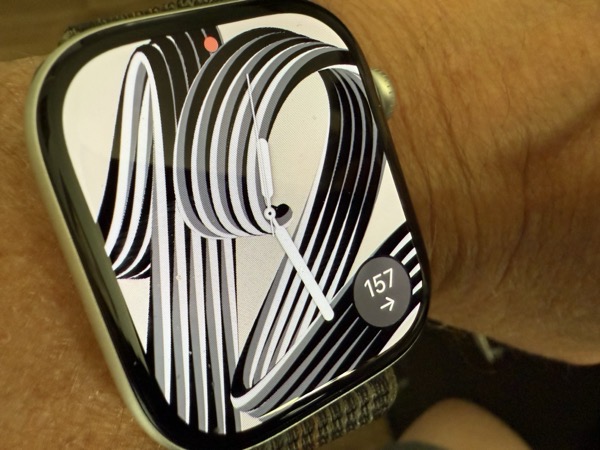
The Apple Watch app offers a complication that displays data more consistently, needing less frequent touches to refresh the readings. (The complication is visible in the photo above showing a reading of 157.) That said, the Apple Watch tends to disconnect too easily from the sensor, defaulting back to displaying readings from the iPhone when that occurs.

I also find that the Apple Watch app reading is more current than what the iPhone is showing, but you do still need the iPhone app to communicate readings with your endocrinologist.

In some instances I’ll need to reboot both devices to reconnect things up on both my iPhone and Apple Watch. Dexcom technicians have told me these disconnections have to do with Bluetooth connection issues and are subject to the same vagaries and variables that exist with many other Bluetooth connections. I also need to be aware of which arm I have the sensor attached. I wear my Apple Watch on my left arm and if the sensor is on my right arm there will be more frequent disconnections. I don’t sleep with my Apple Watch on, so waking in the morning requires a waiting period for the watch app to reconnect.

The goal behind the push to include blood glucose monitoring on an Apple Watch (or any other smart device) is obviously to cut down on the need for finger pricks and possibly the use of minimal invasive medical devices. But also, in theory an on device sensor communicating directly with watchOS should show readings more consistently and be much less subject to the vagaries of Bluetooth connectivity.

I certainly can’t prejudge any new system or technology that hasn’t surfaced yet. Certainly I’m one who hopes Apple or some other company can eventually tackle this issue and provide a workable solution. That said, convenient as this annual rumor always seems to be, I believe blood glucose monitoring on the Apple Watch is a lot further off than most hope or think it might be. I’m also reasonably sure that finger pricks will still be needed if for no other reason than to calibrate sensor readings with actual blood glucose levels.

You can also find more of my writings on a variety of topics on Medium at this link, including in the publications Ellemeno and Rome. I can also be found on social media under my name as above. 

Apple Brings Back Blood Oxygen Feature to the Apple Watch

Apple breathing easier with friends in high places

Apple Watch users can breathe easier again. Or at least measure their blood oxygen levels with their Apple Watches.

Lcimg 25fea456 08ef 45e8 9b0e bab9eb7f8b13.

Apple today announced that an update to Apple Watches and iPhones (16.1) to be released today will bring a redesigned Blood Oxygen feature for those with the Series 9, Series 10, and Apple Watch Ultra 2 users.

This comes after a long legal fight with Masimo, a health technology company, over a patent dispute that required Apple to deactivate the feature on Apple Watches in the U.S. that included the feature. Apple had to stop selling Apple Watches without the feature intact, but got a pause on that import ban for the Christmas season in 2023.

The patent case is still under appeal by Apple, but Apple is saying that the move comes after a U.S. Customs ruling that allows Apple to once again import Apple Watches with the Blood Oxygen feature.

I may be speculating, (I doubt it) but it sounds like a friends in high places who like gifts moment to me.

You can also find more of my writings on a variety of topics on Medium at this link, including in the publications Ellemeno and Rome. I can also be found on social media under my name as above. 

Apple’s 2025 Black Unity Collection Announced Amidst An Age Of Disunity

Timing is everything in this political circus Apple fans find themselves in.

What a planet we’ve landed on. It’s certainly a different one than a few months ago. Or is it? Apple Watch Black Unity Collection hero_big.jpg.large_2x. Today Apple announced its 2025 Black Unity collection including a new Apple Watch Band and watch face in addition to wallpapers to honor Black History Month. This has become an annual Apple tradition since 2021, and is typically met with some, but not large, fanfare given that it can be classified as an appeal to a specific segment of the market. That said, it has historically been one of Apple’s signature signals about where it’s cultural (some say woke) heart lies. But that landscape has changed a bit with the election of the new oligarchic, nakedly racist regime in the United States, and with Tim Cook’s decision to donate $1 million dollars to the inauguration and attend that knee bending ceremony. Cook’s decisions will cast shadows on any Apple announcements going forward, certainly those that historically Apple has painted as a part of its civic and human consciousness. Many Apple fans, I count myself among them, are asking tough questions of themselves and Apple. The questions are tough, everyone is touchy, and feelings are raw. As an example, The MacRumors article announcing Apple’s announcement this morning illustrates just how touchy an issue is. Take a look at the footnote to their article below. CleanShot 2025-01-27 at 08.19.33@2x.I’m not judging anyone for what had to be a tough editorial decision, but the decision to move the discussion thread to the Political News section of the MacRumors forum speaks to the moment. Timing is everything in life, with or without punch lines. Black History Month  is always in February and for those counting the bruises on Apple, unfortunately February follows an ugly inauguration month. In order for there to be a punch line though, you first need to have a joke, and sadly, we’re not in joking territory as we muddle our way through this. You can find more of my writings on a variety of topics on Medium at this link, including in the publications Ellemeno and Rome. I can also be found on social media under my name as above.