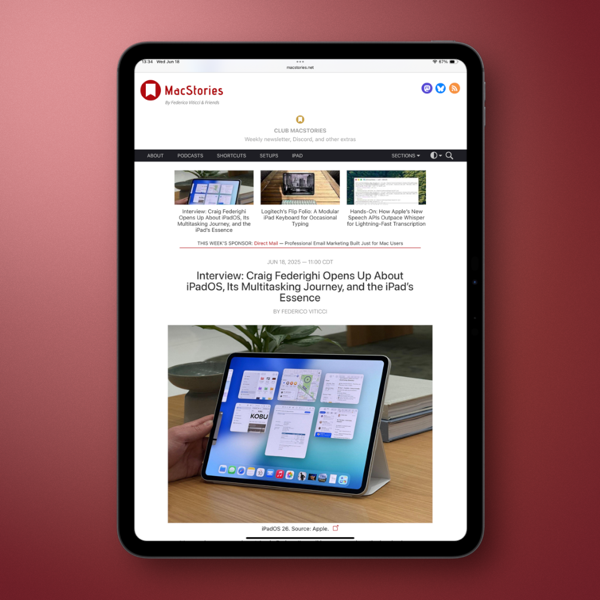
Thoughts and Prayers Heading into WWDC 2025

A new coat of paint won’t fix the cracks in the wall.

In a week Apple will unveil what it has in store for us during its annual World Wide Developer’s Conference (WWDC). Beginning June 9, the microscope will be focused more intently and with a greater scrutiny given the myriad of issues Apple is facing. That scrutiny might just overwhelm any message Apple has planned for the year ahead depending on how Apple handles it.

WWDC 2025 Apple Logo

The reason I titled this post “Thoughts and Prayers Heading into WWDC 2025” isn’t that I’m offering up good vibes for Apple as they try to work out of the messes they’ve mostly created for themselves. I’m actually hoping — most likely against hope — that Apple will finally clean up some of the annoyances they’ve neglected over several generations of iOS and macOS.

I’m not going to discuss the bigger picture issues Apple is facing here. I’ve written about some already, as have many others. Instead I’m going to focus on the smaller software reliability annoyances that add up to make me think Apple just doesn’t care.

It’s become almost a running joke that Apple allows some of these flaws to continue year over year. But I don’t find it funny. You can put new wallpaper over a water damaged section of a wall, but if you don’t fix the leak then the problem isn’t the stain on the wall, it’s you not caring. Or maybe you don’t have the money to get it fixed. Apple certainly has the money. As John Siracusa says in an excellent post called Apple Turnaround:

It’s been 15 years since Apple’s leadership last demonstrated that it’s willing to emphasize software reliability at the cost of new features. Since then, bugs in major features have been allowed to fester, unfixed, for years on end.

I’ll quibble with John on one point. If you allow a reliable, yet ignored “bug” to remain through several operating systems, it essentially becomes a feature the longer it’s not addressed.

I’m a stubborn old coot in my life as a theatre director. Deeply ingrained in my way of directing is something a mentor laid on me year’s ago. “If it’s on the stage it’s yours. If it fails or distracts, it’s your failure.”

Here’s a short list of bugs and annoyances that have existed over several versions of the operating systems and several versions of Apple’s hardware that I encounter routinely. That’s based on how I work and play with Apple hardware and software. I’m sure there are many more depending on how others use their devices.

Focus

I know there are folks who swear by the Focus feature, but to me it’s one of those features that works and then randomly doesn’t. I’d call it unfocused. I keep trying to use it, but abandoning it because I already have enough random failures in my life.

Shared Reminders Notifications

I’ve written about this previously. Shared Reminders are terrific for grocery lists and other things, especially of a checklist nature. But when you complete a Reminder, the notification needs to disappear for all of the users who are sharing the Reminder. I’ve had Shared Reminders hang around for hours after I’ve checked it off of a list.

Syncing Photos

This one just gets more and more puzzling and has become the butt of so many jokes, it’s almost become a part of the Apple brand. You take a photo on your iPhone and whenever it syncs to iCloud and subsquently to other devices is a wild guess. I get that if you’re running low on battery you may want to delay syncing. But if my iPhone is plugged in telling me that it won’t sync so that it can optimize battery it is a little silly. Also telling me syncing is paused for “optimizing the system” makes me wonder just what system is being optimized. Apple’s or mine?

Bluetooth Connectivity and AirPods 

I’m a big fan of AirPods. I’m also a big fan of AirPods and the way they are designed to work within Apple’s ecosystem. When they work as designed it’s magic. When not, it is frustrating. Again, random failures to disconnect, which always seem to come at just that moment when you need to quickly plop them in your ears for a phone call are never fun. Neither is it a good time when one of your devices you might have previously been connected to refuses to let go of the connection.

Deleting Media from Messages

I support a few family members who keep their Messages set to retain their Messages forever. That’s all well and good, except this can quickly fill up storage on an iPhone. Apple needs to make it possible for users to select and bulk delete media on an iPhone the same way you can in Mail. The UI looks like you can swipe down the list of circles, but you can’t. The fact that you can only view these attachments sorted by size also makes it a more difficult chore to remove unwanted media attachments.

Shortcuts

I have a love/hate relationship with Shortcuts. Love it when they work. Hate it when something changes and a Shortcut I’ve relied on suddenly stops working or stops appearing in Spotlight. This happens more frequently in beta season even though I don’t run betas.

Beta Badness

Again, I don’t run betas on any of my devices. That said, I’ve been told by Apple Support personnel that changes are always happening behind the scenes on the backend during beta season that can sometimes affect all users. That stands to reason, given how much of what you do on an Apple device is tied into Apple’s servers and iCloud. I suspect this may only become more prevalent with Apple Intelligence as Apple tries to remain competitive with other AI providers that seem to constantly be updating their software. Perhaps there needs to be a way to create a wall or silo off users running betas from those who do not.

App Store 

With M-series chips we’re able to get great performance and fast loading times from apps. With one notable exception being Apple’s own App Stores. For the life of me I don’t understand why they can’t improve performance on their own point-of-sale outlets. It’s like not cleaning the glass on the front of your storefront.

Settings and Permissions

I get that there are a large number of Settings. I don’t get that there’s such a haphazard way of addressing the problem of making them discoverable. I’m sure it’s a challenge, but the only way to address a challenge is to set it as a priority. The same is true with Permissions. Certainly there’s a way to force developers (including Apple) to send us to the correct Permissions screen to choose to make a selection.

Rules in Mail

I’ve set up a number of Rules in Mail in macOS over the years. Currently they all seem to be non-functioning, or randomly functioning. I have a suspicion this may have something to do with Apple’s tinkering with Apple Intelligence based mail categories (a feature I tried but turned off). Having to manually choose to Apply Rules is not the same as having a Rule that runs automatically. It defeats the purpose. Let’s face it, no company has found a way to win the cat and mouse game of spam filtering. I doubt they ever will even with AI. The Rules feature wasn’t perfect, but when it worked it was a help in weeding out some of the spam.

Consistency between iOS and macOS

Speaking of Mail, I’d like to see consistency across the board regarding features between the macOS and iOS versions. In fact, I’d like to see consistency across the board in all of Apple’s native apps. This is especially true given that there is a rumor that Apple is redesigning most of its operating system user interfaces to try and unify the look and feel between different device categories. Carry that through with how you treat app functionality between platforms. Other examples include Shortcuts and Apple News+. I enjoy being able to open an article via the Share Menu from Apple News in Safari on a Mac. I should have the same option on iOS and iPadOS.

As I said, these are mostly annoyances. But I’m annoyed that no one at Apple seems to be annoyed enough to take care of them.

You can find more of my writings on a variety of topics on Medium at this link, including in the publications Ellemeno and Rome. I can also be found on social media under my name as above. 

Sunday Morning Reading

When caring becomes a commodity, should we care more or less?

Lots to care about. On all the usual fronts. But in the grand scope of the universe does much of it really matter? Some interesting links to share in this week’s Sunday Morning Reading.

Dan Sinker, taking a look at The Chicago Sun-Times AI flaps calls it The Who Cares Era. His theory is that along the way, nobody cared. I’d venture they cared about the wrong things.

Apple’s annual developer conference WWWDC is a week away and given the many issues the company is confronting lots of folks care and are curious about how Apple begins to address them. Some don’t see Apple changing how it deals with developers, like Aaron Vegh in his post, They’re Not Going to Change.

Some, like John Siracusa, are rooting for Apple and even offering advice. Siracusa’s piece Apple Turnaround is a companion to his recent previous post Apple Turnover. All worth a read, regardless of how you feel about the predicaments Apple finds itself in.

The tech bros who seem to be in the pole position running to rule the world may be making bank, but they’re not winning any friends in the process. They most likely don’t care given that they think they’re on their way to conquering the universe. John Kaag is offering up A Reality Check For Tech Oligarchs. Frankly, I don’t think they live in anything close to reality.

Meanwhile, down here on planet reality, some are looking for ways to survive and perhaps beat the odds seemingly stacked against us. A.M. Hickman lays out a vision for How To Live on $432 a Month In America.

Much of what’s going on around us might seem profane and vulgar, leading to quite a few expletives coming out of our mouths as we cope. David Todd McCarty takes us on an exploration of his love of four-letter words in Frequently Profane But Never Vulgar. For what it’s worth, all words have value in my opinion. Hiding from them is fucking stupid.

Natasha MH is Reclaiming the Joy of Struggle in an AI-Driven World. Better grab that joy while we can, because that struggle is only going to become more intense.

Just when you thought we might have begun to figure out the new landscape of insanity we’re currently struggling through, comes along Ross Anderson who informs us about The Nobel Prize Winner Who Thinks We Have The Universe All Wrong. It may someday stop expanding the way we thought and might just remain stagnant for longer than originally theorized, allowing intelligent life to continue longer than we thought. One may ask, should we care?

(Photo from Vincent Nicolas on UnSplash.)

If you’re interested in just what the heck Sunday Morning Reading is all about you can read more about the origins of Sunday Morning Reading here. You can also find more of my writings on Medium at this link, including in the publications Ellemeno and Rome.

Apple Opts Out of John Gruber’s Talk Show Live at WWDC

Is Apple simply missing an opportunity or heading into the bunker?

This is significant. Apple — under fire from many directions — is opting out of having executives participating in a now decade-long tradition on John Gruber’s The Talk Show Live podcast. Gruber made the announcement on his blog, Daring Fireball. 

The talk show wwdc.

On the one hand, given the number of fires the folks at Cupertino are fighting at the moment, it’s easy to say you can’t fault the decision. To my way of thinking though, that’s an injured hand you’re afraid to show. If it were my decision — and granted I certainly do not know what the folks at Apple know — I’d use the other hand, with a whip in it.

Here’s why.

There’s nothing that each of the audiences Apple plays to at WWDC aren’t aware of. Who are those audiences? There are the fans, the developers, the media, and Wall Street. Like it or not each of those audiences already have enough awareness of Apple’s problems delivering Apple Intelligence, tariff battles, developer relations, and court and regulatory actions. They each come in with their own set of expectations and agendas.

I would also suggest that those paying attention at WWDC — and who have read Patrick McGee’s new book Apple in China — will be approaching whatever Apple announces this year and going forward in a new context. That book not only alters the Apple narratives; in my opinion, it forces a reset.

Already I’ve seen several in the community respond to the news that Apple is forgoing an opportunity to put on a human face and connect in the midst of all that’s going on.  Here’s Marco Arment and Parker Ortolani to link to two.

These Talk Show Live events have indeed been a welcome side show — an opportunity to catch a glimpse of a bit of the humanity behind the corporate front. By and large I think the history of the Gruber’s event has been a net positive. Think of it like seeing the filmmakers on stage after a screening. To a certain degree I also think those days are over with the current leadership.

In this moment of high stakes on so many fronts, Apple has obviously calculated that not putting its executives in the relatively warm seat  — no offense to Gruber, but the past questions and follow up have usually not been too tough — is the better bet than attempting to meet things head on.

Again, I’d argue for the head-on approach. If you ignore what your audience is already thinking you essentially ignore (and further offend) them. If ever there was a crowd that might be receptive to some honesty (admittedly PR-coached,) Gruber’s forum would be the place to find it. Does Apple need to issue some mea culpas? Maybe, maybe not. But even well coached honesty in a discussion can go a long way to creating good will. If you ask me, Apple needs more than a little of that presently.

In my professional life I’ve faced some high-stakes presentations. None on this level certainly. I may have been working to save a theatre or two, but my success or failure never had a large piece of the world’s economy depending on it. Still, the minute stakeholders assemble for such an event you only have several choices. Distract. Deny. Or be honest.

WWDC is going to happen. Arms among the audiences will be crossed, waiting for answers and clues. Apple will certainly have enough well-packaged announcements to distract at WWDC. They can’t deny their way out of the problems they brought on themselves. Being honest, however, can’t cause any more damage than has already been done.

I certainly wouldn’t want to be involved in the planning or presenting of this year’s WWDC event — even if it is pre-taped and packaged within an inch of its life. Apple has made its choice for The Talk Show Live. While the big packaged show always takes precedence, this year seems very ripe for a side show that clears the air a bit. As Parker Ortolani says, not having that will speak volumes. It is already a very loud signal about how things might play out going forward.

You can find more of my writings on a variety of topics on Medium at this link, including in the publications Ellemeno and Rome. I can also be found on social media under my name as above. 

You Will Be Assimilated as OpenAI Seeks Single Sign On Capabilities

Resistance to Single Sign On is not futile

News on so many fronts is fast and furious these days and this little Artificial Intelligence nugget seemed to skirt around quite a few radars. OpenAI, the purveyors of ChatGPT is working on a Sign In with ChatGPT feature. 

OpenAI logo

As I said on social media when this news broke, we’ve seen this movie before. It’s a complex plot, that never seems to work out in the end. Signing in with Beginning what seems like a generation ago, Facebook, Twitter, Google, and the like proliferated and many users joined the parade out of convenience. Apple has its own Sign in with Apple feature, and swears up and down that it doesn’t share your data. That may be true, but we now know different about most, if not all of the others.

Like what happens with most new technology, we jump into the pool without really knowing what lurks beneath, and once it became more apparent how single sign in allowed companies to track you across most online activities folks began changing their habits. Swimming with sharks is never fun.

The tracking is the key. So is the passage of time. There’s an entire new generation of users who have embraced Artificial Intelligence, OpenAI’s ChatGPT in particular. TechCrunch cites that there are 600 million monthly active users of ChatGPT. I’d wager that a large number of those users were too young to experience the last generation of the single sign in revolution years ago.

As I said, we’ve seen this movie before, and by and large it never ends well. Data is tracked, traded — and now with AI used for training — in ways that should cause greater care when it comes to the tradeoff for convenience when consenting to those user agreements no one ever reads.

As the TechCrunch article points out the intent here is to use that data for commercial purposes supposedly to “help people with a wide range of online services.” That’s the pitch. But it’s a knuckle ball that is difficult to control, much less swing at. It’s always about the money and data is money.

OpenAI may be the first of the AI companies vying to sign you in, it won’t be the last. In my opinion the safest bet in the big data casino is to always create a separate sign in for each online service you use. Don’t let the convenience factor outweigh what little control you do have over how your data is used and abused.

You can find more of my writings on a variety of topics on Medium at this link, including in the publications Ellemeno and Rome. I can also be found on social media under my name as above. 

Review: Apple In China by Patrick McGee

An excellent read about Apple and America’s acquiescence to China.

Timing is everything. As I began to write this short review of Patrick McGee’s new book Apple in China, this article, Auto Shangai 2025 Wasn’t Just a Car Show. It Was a Warning to the West, popped up on my radar. Let’s just say, they are nice companion pieces, given what I think the real message of McGee’s book is all about.

Cover page for Patrick McGee's Apple in China

I highly recommend McGee’s Apple in China. It not only provides some rich history and context to much of the hurly burly news we follow about Apple and its relationship with China, but beneath that surface it provides a deeper warning about the failures of capitalism — Apple and American style — in general.

Not only does it hit that crucially important overlay of the story, it provides some fascinating, and at times frightening detail in many of the design, engineering, corporate, and political maneuverings far beneath the surface of all the machinations we read about on our iPhones.

In my opinion, that’s where the real magic is in the story. Given the amount of detail, McGee had access to some excellent sources. He’s an excellent writer. Portions of the story read with the pace, suspense, and scope of an adventure novel.

The focus of the book — and any of the praise and criticism of it — is obviously Apple. The gist is that Apple essentially trained up China to such a point, that with the pull of a plug, China can cut it off, and take what it has learned to dominate the world’s manufacturing sectors. His arguments are persuasive, and since Apple is — and has been — such a crucial focus since the dawn of the iPhone age, that focus makes sense. But lurking beneath those headlines, are other American companies, occasionally mentioned, who might not have gained the same notoriety, but essentially followed the same path. Check out the article I linked to earlier about the Shanghai Auto Show.

If there’s a villain in the story, it’s China. If there’s a useful idiot, it’s Apple, along with other shareholder valuing and profit loving American companies. Think of the parable of The Scorpion and the Frog.

Certainly Tim Cook plays a central role in all of this, but I have to say outside of some of the details, his obsequious compromises and acquiescence throughout comes as no more of surprise revelation as does his knee-bending to the Trump regime’s recent bullying. That’s all been on transparent display for anyone who has paid the slightest bit of attention, which makes any and all of it seem nothing short of a foolish farce, albeit a lucrative one.

In fact, I think you learn more about Foxconn’s Terry Gou than you do about Tim Cook.

If there is one big surprise that I think pierces the Apple aura, it’s just how little central control and understanding of what was happening on the ground in China in the helter-skelter days of early iPhone growth. What on the surface may have seemed like, and been adopted almost as mantra-like by the tech press, a giant corporation with a vision pushing buttons in Monday morning executive meetings, often feels like a company reacting to forces beyond its control that it brought into the tent.

The fact that Apple was as completely overwhelmed by early iPhone sales volume in China is quite frankly astounding, given what most have believed was a generally good central command of inventory control and marketing predictions. Certainly no one can predict everything, but it seems Apple wasn’t even close to understanding, much less predicting, what might happen in that market. Even as it was unfolding.

Obviously Apple won most of those skirmishes and battles. The question the book raises is will Apple have what it takes to win the larger war that it helped set the battlefield for.

(I don’t do affiliate links to products mentioned in any article.)

You can find more of my writings on a variety of topics on Medium at this link, including in the publications Ellemeno and Rome. I can also be found on social media under my name as above. 
Sunday Morning Reading

So what is this future we’re heading into anyway?

If you’re observing Memorial Day weekend in the U.S. I hope you have had a pleasant one. Even if the weather isn’t cooperating, seemingly echoing the threats of seeing that tradition, like so many others, diminished. We’re on the road again for a dear friend’s memorial service, but there’s still time for a little Sunday Morning Reading. Mostly tech related this week, some politics, and of course some cultural happenings. If you’re paying attention, it’s all intertwining. Listening to a lot of Bruce Springsteen. Enjoy.

Adding to what’s becoming a recurring theme in this column, Ian Dunt is looking for ways to get the most out of our digital lives while taking back a bit of control from the tech god wanna-be’s. Check out Taking Back Control of Our Digital Life.

Matthew Ingram wonders If AI Helps To Kill The Open Web What Will Replace It? Excellent piece and excellent topic, because like it or not, it’s the current and next movement we on the ground are going to have to contend with. Pay attention.

Neil Steinberg, one of my favorite of a dying breed of Chicago journalists, gives his take on the recent Chicago Sun-Times AI flap in The AI Genie Is Out of The Bottle, and the Granted Wish Often Brings Trouble.

Lucy Bannerman takes on the AI’s abuse of copyright and artists rights in Nick Clegg: Artists’ Demand Over Copyright Are Unworkable. They aren’t. Those demands just cost more than folks counting the beans want to pay.

Lynette Bye’s Misaligned AI Is No Longer Just Theory raises up that specter that haunts this entire episode of our life across all spectrums that seems easy to fall prey to or dismiss, depending on which side of the coin you’re on. Frankly, if you don’t think the future of this can be manipulated, you’re not paying attention.

Jason Snell’s take on the recent announcement that OpenAI has bought Jony Ive’s company to produce new hardware for AI I think is the correct one. Check out Sam and Jony and Skepticism.

Chloe Rabinowitz fills us in on the outgoing president of the Kennedy Center’s response to the bullshit coming out of the White House. in Deborah Rutter Releases Statement In Response to Trump Kennedy Center Allegations.

The real boss, Bruce Springsteen, continues to piss off the orange buffoon in the White House and I’m glad to see it. So is Eric Alterman in a guest essay in The New York Times proclaiming Bruce Springsteen Will Never Surrender to Donald Trump. We need more of this.

And to wrap up this week, here’s NatashaMH wondering Do We Really Need To Have This Discussion? No hints. No clues. Just good stuff for you to read.

If you’re interested in just what the heck Sunday Morning Reading is all about you can read more about the origins of Sunday Morning Reading here. You can also find more of my writings on Medium at this link, including in the publications Ellemeno and Rome.

John Siracusa on Changes Needed at Apple

The time is ripe.

Apple is taking it on the chin lately. Deservedly so. Although some of the pounding is from external sources (Tump’s not happy with Tim Cook apparently,) most of the blows are entirely self-inflicted. Among those critics is noted Apple pundit and podcaster, John Siracusa, who delivered a piece on how he sees Apple’s current predicament. His post, Apple Turnover, essentially says it’s time for a leadership change in the C-Suite. I think he’s correct and his post is worth a read. 

AppleWorm copy.

Nothing lasts forever, as Siracusa nicely sums it up. Change happens. Life goes on whether that change is planned, forced, or fumbled into; a sort of a reverse echo of Shakespeare’s funniest villain Malvolio telling us that “some are born great, some achieve greatness, and some have greatness thrust upon them.” His display of hubris comes before his comic comeuppance. Apple’s won’t yield as much comedy. 

Quoting from his piece: 

…the only truly mortal sin for Apple’s leadership is losing sight of the proper relationship between product virtue and financial success—and not just momentarily, but constitutionally, intransigently, for years. Sadly, I believe this has happened.

The preponderance of the evidence is undeniable. Too many times, in too many ways, over too many years, Apple has made decisions that do not make its products better, all in service of control, leverage, protection, profits—all in service of money.

You can certainly argue that Apple achieved greatness and now appears like it’s reached a critical juncture on many fronts, including falling behind in Artificial Intelligence and trying to ring every ounce of worth it can from every penny its users might be willing to pay for its goods and services. I won’t go into any detail on any of that here because whether it’s AI, App Store business practices, or developer relationships, it’s all been chronicled well enough for most of those paying attention to recite like a catechism. The question is, are the high priests in the C-Suite paying attention?

A few years ago I wrote a piece about how I thought Apple had built itself into a design trap. Here’s a quote from that piece: 

The larger and more precarious point with this tangent is that Apple’s rich design expectations, as powerful as they are, are also Apple’s Achilles heel. Great artists aren’t afraid to fail. Great product makers who use great art as a selling point need to tread more carefully to avoid the level of disappointment that can turn a legacy into a burden.

I think they’ve built themselves a similar sort of trap in their business model(s) that comes from the same sort of reliance on their legacy of success and the hubris that’s engendered. You can easily argue that Apple’s business prowess, akin to its design prowess have both yielded unparalleled results feeding each other and fueling the company’s growth. 

Joan Westenberg has an excellent piece called Apple’s Diet of Worms that touches on this. But to a certain extent it goes well beyond that. Apple is well known to take a long view, and by and large that’s paid off. They’ve been able to afford that long view historically, even though there have been grumblings along the way. However, I don’t believe Apple is dictating the terms or the timeline any longer. 

In the case of Artificial Intelligence, as an example, who knows how that is going to play out for any of the players currently on the field or yet to come. But you can’t deny how OpenAI has changed the pace of things or how Google, and everyone else, is trying to play catch up. The recent announcement that OpenAI was purchasing Jony Ive’s design company to collaborate on what looks like new hardware, coming chock-a-block on top of Google’s mostly AI IO conference announcements, certainly changed the conversation. But then again it might be all smoke and mirrors, no matter how anxious everyone seems to be for some kind of new gadget of the future. Personally, I still think much on this AI front is a race without a finishing line or even a destination beyond collecting data for dollars.

That said, Apple is in it, perhaps thrust into the fray or perhaps fumbling along. Regardless, in my opinion any future achievements are going to require leadership change at the top. 

You can find more of my writings on a variety of topics on Medium at this link, including in the publications Ellemeno and Rome. I can also be found on social media under my name as above. 
 

Sunday Morning Reading

Paying attention for the next generation.

Good morning. Visiting the grandkids this weekend, so this will be a short stack of links to share. Fair warning ahead most are on the darker side of the ledger. The links. Not the grandchildren. They are the light. The grandchildren are why I pay attention.

First up is a piece on despair from Dean Pritchard titled Despair, What Is It Good For. He calls it a hopeless call to action. I’m not sure it’s hopeless at all. Just another step in finding what may or may not turn out to be answers. As long as we keep stepping.

NatashaMH says that social media addiction isn’t just about us, it’s about the people around us in Unread, Unavailable and Unbothered. I’ve never been one to buy into the social media addiction theory. It’s too damn easy to put down the damn phone. But I take her points because it’s too damn easy to keep hoping to find new ways to avoid despair.

Lauren Goode takes on Deepfakes, Scams, and the Age of Paranoia. Somebody needs to.

Tom Schaller and Paul Waldman say that Trump is betraying the voters who elected him in The White Rural Reckoning. They are correct. But we knew that would happen. Scum likes to remove itself from other scum once it’s done scumming around.

Joan Westenberg compares the comeuppance moment Apple is enduring to Martin Luther’s reformation moment in Apple’s Diet of Worms. Given the abundance of fanatics there’s more than a little truth here.

Playwright Sara Ruhl is one of my favorites. Charles McNulty takes a look at what she has to say in her new book In ‘Lessons From My Teachers,’ Playwright Sarah Ruhl Finds Wisdom In Art, Motherhood, Even Grief.

And as for weathering despair, check out Lost At Sea by Alec Frdyman. Excellent reading about a scary adventure.

And to close out this weekend I’ll leave you with this uncredited thought that pops up every now and then on social media.

And just remember who the tax breaks are targeted for.

Peace.

If you’re interested in just what the heck Sunday Morning Reading is all about you can read more about the origins of Sunday Morning Reading here.  You can also find more of my writings on Medium at this link, including in the publications Ellemeno and Rome.

Sunday Morning Reading

Happy Mother’s Day reading.

Time for some Sunday Morning Reading on this Mother’s Day, with a short stack of culture, some tech, some politics, and the Ziegfeld Follies tossed in for good measure.

First up is a good long read from Spencer Kornhaber wondering if we’ve entered a cultural dark age. Provocative in parts, predictable in others, it’s worth your time for the journey it takes. Check out Is This The Worst-Ever Era of American Pop Culture?

Kaitlyn Tiffany says We’re Back to the Actually Internet. It’s about fact checking, the need for fact checking, and actually about how fact checking doesn’t really matter.

We may have beat the term fascism to death long before the real beating actually begins, and it’s the Bible thumpers who seem far too eager for the end times with their wishes for some sort of Armageddon beat down. Naomi Klein and Astra Taylor take a look at The Rise of End Times Fascism.

The Apple enthusiast world is still going through some things and will continue to for the foreseeable future. Denny Henke at Beardy Guy Musings is chronicling his thoughts about his move away from using Apple products. His latest, Are Apple Enthusiasts Miserable? takes a look at some of the angst and tensions he sees.

Indie app Developer Thomas Ricourad, the developer of the app Ice Cubes for Mastodon, among other apps, is searching. He’s not alone. Check out Having A Clear Vision In A Blurred World.

Matthew Gurewitsch takes a quick look The Story of a Rose, an upcoming look at an almost forgotten era in A Ziegfeld Girl Recalls The Forgotten War.

Happy Mother’s Day to all.

(image from Aga Putra on Unsplash)

If you’re interested in just what the heck Sunday Morning Reading is all about you can read more about the origins of Sunday Morning Reading here.  You can also find more of my writings on Medium at this link, including in the publications Ellemeno and Rome.

Apple’s Long Term Challenges Complicate The Short Term

It’s not easy to sell a waiting game.

Mark Gurman offers up a relatively thorough summary of the number of challenges Apple is facing going forward in his weekly Power On column. Things always go forward. The question is always how.

The original link above is paywalled, but here’s a web archive link to the story.

And here’s the summary:

CleanShot 2025-05-05 at 09.41.06@2x.

Gurman calls this point in Apple’s history a “critical juncture.” I would agree. The many moving parts, both surrounding Apple, and of its own making, have put Cook and company squarely in that critical juncture. This comes as Apple and those that make their living talking about Apple are gearing up for this year’s World Wide Developer’s Conference (WWDC) next month.

Gurman delivers the punchline well below the headline that neatly summarizes why WWDC is not going to be able to address all of these challenges, but also why the turmoil is going to continue.

Speaking specifically about Apple’s race to catch up in the AI realm he says:

it’s going to be a while before we can tell if Apple is heading in the right direction

Perhaps that should have been the lede. He could have easily said the same about each of these challenges he enumerates.

But there’s also a larger, more encompassing challenge that makes surmounting each even more difficult. The tech world is moving at a pace that Apple is unaccustomed to. Apple’s historic long view has served it well over the years, but the window on that long view is increasingly narrowing its aperture.

Apple may spend its June introducing and setting the table for what’s coming later this year, but already most of the smart players who follow and promote Apple are shifting their focus to the bigger, and more critical, table stakes coming long after this year’s summer and fall hype cycles end. The now familiar “coming later this year” now means much less when the real issues may only begin to be addressed further down the road.

Waiting “a while” is not an easy sell. Especially these days.

You can find more of my writings on a variety of topics on Medium at this link, including in the publications Ellemeno and Rome. I can also be found on social media under my name as above.