Sunday Morning Reading

Happy Mother’s Day reading.

Time for some Sunday Morning Reading on this Mother’s Day, with a short stack of culture, some tech, some politics, and the Ziegfeld Follies tossed in for good measure.

First up is a good long read from Spencer Kornhaber wondering if we’ve entered a cultural dark age. Provocative in parts, predictable in others, it’s worth your time for the journey it takes. Check out Is This The Worst-Ever Era of American Pop Culture?

Kaitlyn Tiffany says We’re Back to the Actually Internet. It’s about fact checking, the need for fact checking, and actually about how fact checking doesn’t really matter.

We may have beat the term fascism to death long before the real beating actually begins, and it’s the Bible thumpers who seem far too eager for the end times with their wishes for some sort of Armageddon beat down. Naomi Klein and Astra Taylor take a look at The Rise of End Times Fascism.

The Apple enthusiast world is still going through some things and will continue to for the foreseeable future. Denny Henke at Beardy Guy Musings is chronicling his thoughts about his move away from using Apple products. His latest, Are Apple Enthusiasts Miserable? takes a look at some of the angst and tensions he sees.

Indie app Developer Thomas Ricourad, the developer of the app Ice Cubes for Mastodon, among other apps, is searching. He’s not alone. Check out Having A Clear Vision In A Blurred World.

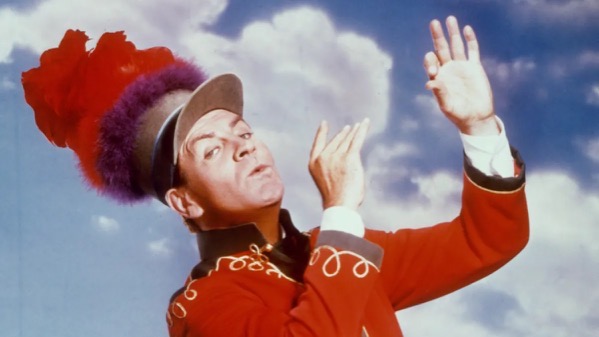
Matthew Gurewitsch takes a quick look The Story of a Rose, an upcoming look at an almost forgotten era in A Ziegfeld Girl Recalls The Forgotten War.

Happy Mother’s Day to all.

(image from Aga Putra on Unsplash)

If you’re interested in just what the heck Sunday Morning Reading is all about you can read more about the origins of Sunday Morning Reading here.  You can also find more of my writings on Medium at this link, including in the publications Ellemeno and Rome.

Apple’s Long Term Challenges Complicate The Short Term

It’s not easy to sell a waiting game.

Mark Gurman offers up a relatively thorough summary of the number of challenges Apple is facing going forward in his weekly Power On column. Things always go forward. The question is always how.

The original link above is paywalled, but here’s a web archive link to the story.

And here’s the summary:

CleanShot 2025-05-05 at 09.41.06@2x.

Gurman calls this point in Apple’s history a “critical juncture.” I would agree. The many moving parts, both surrounding Apple, and of its own making, have put Cook and company squarely in that critical juncture. This comes as Apple and those that make their living talking about Apple are gearing up for this year’s World Wide Developer’s Conference (WWDC) next month.

Gurman delivers the punchline well below the headline that neatly summarizes why WWDC is not going to be able to address all of these challenges, but also why the turmoil is going to continue.

Speaking specifically about Apple’s race to catch up in the AI realm he says:

it’s going to be a while before we can tell if Apple is heading in the right direction

Perhaps that should have been the lede. He could have easily said the same about each of these challenges he enumerates.

But there’s also a larger, more encompassing challenge that makes surmounting each even more difficult. The tech world is moving at a pace that Apple is unaccustomed to. Apple’s historic long view has served it well over the years, but the window on that long view is increasingly narrowing its aperture.

Apple may spend its June introducing and setting the table for what’s coming later this year, but already most of the smart players who follow and promote Apple are shifting their focus to the bigger, and more critical, table stakes coming long after this year’s summer and fall hype cycles end. The now familiar “coming later this year” now means much less when the real issues may only begin to be addressed further down the road.

Waiting “a while” is not an easy sell. Especially these days.

You can find more of my writings on a variety of topics on Medium at this link, including in the publications Ellemeno and Rome. I can also be found on social media under my name as above. 
Sunday Morning Reading

We’re always chasing bubbles.

Back from a brief hiatus, there’s plenty to read and share. It feels like it’s becoming increasingly important, and perhaps more urgent to do both. I promise there’s some happiness amidst all of the Strum and Drang down the page.

First up, Canadian Stephen Marche is singing the Red, White and Blues. It’s easy to look from the outside in, or even from within and be dismayed at what’s going on in this country. Because it’s so damn easy to see. Unless of course you’re still in shock, or choosing to ignore it. Marche’s tune doesn’t hit a false note as he says America was a “country of bubbles.”

David Todd McCarty is back Poking The Bear. It’s good seeing him write about politics again.

Drik de Klein of History of Sorts wrote Evil, I Think, Is The Absence of Empathy back in 2019, using Captain G.M. Gilbert’s quote from the Nuremberg trials as the headline. I remember reading it a while ago and it resurfaced this week, proving, as always, just how short our attention spans are. Or perhaps our comprehension and retention capabilities.

NatashaMH says, “I can’t stand people being ignorant bastards” in her excellent piece Our Modern Discontents. Again, a viewpoint from outside the red, white, and blue bubble that feels like it’s ready to pop.

Jacob Silverman’s Welcome To The Slop World: How The Hostile Internet Is Driving Us Crazy is an invitation to a party that turned into something nobody was expecting.

Speaking of bubbles, big tech is in hot water of its own boiling these days. Google is facing anti-trust charges and a possible breakup that probably won’t happen. Wendy Grossman takes a look at Three Times A Monopolist.

Who’d a thunk it? Bot Farms Invade Social Media To Hijack Popular Sentiment. Eric Schwartzman does some digging in those all too fertile fields.

This past week we celebrated William Shakespeare’s birthday. As usual lots of words were written about the writer who used them better than anyone else to describe the human condition. One of the accepted parts of the Bard’s legacy is that he was an absent husband that left his family behind to pursue his calling. But a discovery of a letter might just change that. Check out what Ephrat Livini has to say about the possibility in an Overlooked Letter Rewrites History of Shakespeare’s Bad Marriage.

And for that happiness I promised, I’ll stick with Shakespeare and Cora Fox with ‘I Were Happy But Little Happy, If I Could Say How Much’; Shakespeare’s Insights On Happiness Have Held Up For More Than 400 Years. We often focus on his tragedies, but he reveled in the joys of life as well. Keep those happy bubbles afloat as long as you can. Pop the bad ones.

(Image from Rey Seven on Unsplash)

If you’re interested in just what the heck Sunday Morning Reading is all about you can read more about the origins of Sunday Morning Reading here.  You can also find more of my writings on Medium at this link, including in the publications Ellemeno and Rome.

Time For The Shibboleth of Targeted Ads To Die

It’s always the data.

We all fell for it. We all thought it would be beneficial to us as users. I don’t want to say we were all suckers, so I’ll just say we were naive. But in the end we were all suckers. Targeted advertising was supposed to cater to our needs, desires, and wishes. Surfacing what we were interested in out of the clutter was a hope and a promise that died in colliding avalanches of greed and gluttony.


St,small,507x507 pad,600x600,f8f8f8.

To be fair some ad targeting actually works. To also be fair, even a broken clock is right twice a day. But the money came rolling in and the temptation to grab it all became far too much and made it far too easy to let slip those early promises.

Now the brains behind Artificial Intelligence are doing what many suspected from the get go and edging their way into the browser wars. TechCrunch has an interesting post talking about Perplexity’s plans to get to know us better by building a better browser.

Here’s the money quote:

“That’s kind of one of the other reasons we wanted to build a browser, is we want to get data even outside the app to better understand you,” Srinivas said. “Because some of the prompts that people do in these AIs is purely work-related. It’s not like that’s personal.”

Focus on the “personal” part.

Both Perplexity and OpenAI have made statements they would be interested in buying Google’s Chrome browser should Google be forced into a breakup for anti-trust reasons. But that’s years away. So why wait? Better to get in the game now before the regulators catch up. Or before all the data that’s good to grab gets grabbed and starts feeding on itself.

There’s irony in all of this that underlies and underlines the dissembling behind it that might just be seeping into the open. One of the promises of this new technology is that it will free us from drudgery, giving us all more time for creative pursuits and more balanced lifestyles. But the underlying goal is the same. Grab as much data as possible, especially “personal” data. That’s the currency. That will always be the currency.

Here’s the second money quote from Perplexity’s Aarvind Srinivasa:

“On the other hand, what are the things you’re buying; which hotels are you going [to]; which restaurants are you going to; what are you spending time browsing, tells us so much more about you.”

AI might continue its move into the enterprise, but that’s not enough. And if the corporate mindset of using AI to replace workers continues, that equation points to diminishing returns eventually, even if the advertisers never catch on.

We all know how this story plays out. Because it’s a rerun. And too often a plagiarized one as well.

You can find more of my writings on a variety of topics on Medium at this link, including in the publications Ellemeno and Rome. I can also be found on social media under my name as above. 
All The World’s His Stage. Happy Birthday (We Think) to William Shakespeare

We’re merely players.

William Shakespeare is the playwright and poet that described us all. He did so with intelligence and wit. Today, April 23, is the day most mark as his birthday. The record of his baptism is April 26th, so it’s a decent bet the date is close enough.

Shakespeare William _ banner.

There really is nothing new in human behavior under the sun. In his plays and poems I don’t think he missed much in describing every thing good, bad, noble, and foolish about how we operate with each other and within the world. In my view, it’s a shame more of us don’t pay enough attention to his cataloging of humanity. But then he predicted that as well.

Here’s an intriguing side note on this very intelligent man’s celebrated birth date. I asked several AI engines on what day was he born. Gemini, ChatGPT, Perplexity, and DeepSeek returned April 23rd as the likely date with the typical (and mostly accepted) disclaimers that we celebrate that day, but there’s no definitive proof it was the actual date. I asked Siri and Alexa, both returned April 23 as the definitive date. Intriguing that Siri didn’t try to pass that off to ChatGPT. I’m sure Amazon will now offer me all kind of suggestions to purchase anything Shakespeare.

So, I’ll amend slightly my statement about the Bard describing us all and there being nothing new under the sun. He’s correct in that we’re both smart and too often not smart enough to understand what we do and do not know, but he might have missed the mark when it comes to artificial intelligence. Or did he did he?

I’m reasonably certain his works have been fed into AI engines and Chatbot training given that they are long in the public domain. I’m also reasonably certain they ignore his nothing new under the sun descriptions of human interactions in the same way those of us still walking around do.

“Lord, what fools we mortals be!”

You can find more of my writings on a variety of topics on Medium at this link, including in the publications Ellemeno and Rome. I can also be found on social media under my name as above. 
Carole Cadwalladr’s Final Column for The Observer

But she hasn’t stopped observing.

A couple of weeks ago I linked to Carol Cadwalladr’s recent return to the TED conference to deliver a speech entitled This Is What A Digital Coup Looks Like. It’s worth a watch if you care about such things. Heck, it should be required reading if you care at all about what’s happening in our digital and non-digital lives. 

338cfa0c 2594 4944 9b79 5074a2e166c3_4032x3024.

This post is linking to her farewell column in The Observer, the Sunday sister paper to The Guardian and The Guardian Weekly papers in Britain. Like all media outlets it’s been through some things in recent years. The Observer was purchased late in 2024 and like all such transactions that prompted staff layoffs and terminations, including Carole Cadwalladr and a number of her colleagues. You can read all about that on in her post Fuckty bye in How To Survive The Broligarchy. I suggest you do that as well as read her final Observer column It’s Not Too Late To Stop Trump and The Tech Broligarchy From Controlling Our Lives, But We Must Act Now.

I happen to believe she’s fighting the good fight. That last column provides some excellent behind the scenes during her preparation and anxiety leading up to that recent TED speech, as well as some reactions she received while at the conference, including an interchange between her and OpenAI’s Sam Altman, in addition to making the important case she continues to make. 

She’s paying attention and raising alarm bells. We should too. She’s standing in the way. We should too.

You can find more of my writings on a variety of topics on Medium at this link, including in the publications Ellemeno and Rome. I can also be found on social media under my name as above. 

Distrust-By-Default

Donning a new armor for protection

In a typically thorough article on Ars Technica about Microsoft preparing to reintroduce the Recall feature to Windows 11, Andrew Cunningham sums up his, and I think many of our, queasy feelings about these kind of feature and marketing failures we’ve recently seen from the likes of Microsoft, Apple and others, using the phrase distrust-by-default.

 Here’s the quote in context:

This was a problem that Microsoft made exponentially worse by screwing up the Recall rollout so badly in the first place. Recall made the kind of ugly first impression that it’s hard to dig out from under, no matter how thoroughly you fix the underlying problems. It’s Windows Vista. It’s Apple Maps. It’s the Android tablet.

And in doing that kind of damage to Recall (and possibly also to the broader Copilot+ branding project), Microsoft has practically guaranteed that many users will refuse to turn it on or uninstall it entirely, no matter how it actually works or how well the initial problems have been addressed.

Unfortunately, those people probably have it right. I can see no signs that Recall data is as easily accessed or compromised as before or that Microsoft is sending any Recall data from my PC to anywhere else. But today’s Microsoft has earned itself distrust-by-default from many users, thanks not just to the sloppy Recall rollout but also to the endless ads and aggressive cross-promotion of its own products that dominate modern Windows versions. That’s the kind of problem you can’t patch your way out of.

Briefly, Recall is the Windows 11 feature that was built to capture and recall almost all of what you do on your PC via snapshots, making it available for recall later. After substantial promotion, Microsoft pulled and delayed the rollout last year after security concerns were raised. Skepticism was high even before the security issues were raised that caused the delay. Cunningham’s article provides an excellent rundown on that and I encourage you to read the full thing.

I think Andrew is spot on calling the uneasy feeling many of us have distrust-by-default. Certainly when it comes to this specific Microsoft moment and other tech companies. Zooming out, I think it also describes well the armor we’re all adopting on any number of issues in these moments of mistrust we seem to be facing on so many fronts in our lives.

(Image from Atmospher1 on Shutterstock)

You can find more of my writings on a variety of topics on Medium at this link, including in the publications Ellemeno and Rome. I can also be found on social media under my name as above. 

Resurrecting Trust Is A Tall Order

You can fool some of the people all of the time…or maybe not.

It might be easier to resurrect the dead than it is to restore trust. One way or the other, we move on from death, but moving on from any relationship once trust is busted is a tough slog for those still among the living. I’m not just talking about politics. I’m referring to the relationships we have in most of the spheres of life we interact with each and every day.

Certainly that’s true in politics and governing. Those currently in charge of sinking the ship of state want you to think the water inching over your shoe tops isn’t a problem. And if we go under, well that’s the last guy’s fault. So is the fact that we don’t have enough lifeboats. Sorry. Hope you can swim.

The same is true in technology, entertainment, business, religion, and the list goes on and on. Superhero comic book creators would call this world of competing realities a multi-verse, but even that concept doesn’t really hold enough water to drink, fantasy that it may be.

If you feel like you’re wading through swamps of bullshit trying to find morsels of truth it is because you are. The powers that be have realized (again) they can get away with calling day night if they say it often and loud enough with enough assists from a cowering media that loves its microphones more than its freedom to exist. And when some bit of truth pokes its head above the surface it’s quickly washed over and submerged by another pounding wave of new stories or new product updates. Think waterboarding with quicksand.

This distortion swamp is full of mirages reflected back into our eyeballs like a thousand suns reflecting off an endless body of water. There’s nothing to anchor to.

Set the politics aside and focus for the moment on the ongoing saga about Apple’s delaying of Apple Intelligence features it unveiled almost a year ago at WWDC. A recent NY Times column by Tripp Mickle dropped two new grains of salt into the still open wounds of that debate. First up, Mickle seems to want to lay the blame on former Apple CFO Luca Maestri for changing up a plan to increase Apple’s budget for purchasing the chips apparently needed to ramp up for the Apple Intelligence push.

Here’s the quote:

Mr. Cook approved a plan to double the team’s chip budget, but Apple’s finance chief, Luca Maestri, reduced the increase to less than half that, the people said. Mr. Maestri encouraged the team to make the chips they had more efficient.

The lack of GPUs meant the team developing A.I. systems had to negotiate for data center computing power from its providers like Google and Amazon, two of the people said. The leading chips made by Nvidia were in such demand that Apple used alternative chips made by Google for some of its A.I. development.

The next grain of sand has launched a thousand blog posts (including this one) by saying that the previously delayed Apple Intelligence features will now launch this fall.  Mickel says that’s according to three sources. Regardless of the quantity of sources, that report has generated more use of the words “may” and “possibly” in following headlines than I’ve seen in some time.

The tech press has either caught on and is choosing to not grant Apple the usual slack after feeling more than a bit betrayed. Or it’s pretending to hide beyond an endless streak of optimism. Either way Apple is currently mired in a trust swamp of its own making. Tangentially, and for what’s it’s worth, the same could be said of The NY Times.

My point here, isn’t to debate the sourcing, the reporting, or even the timing of when Apple may or may not launch new features. The long preamble to get to this Apple “news” should have been your first clue to that. My point is that once any authority fractures trust whether it be a company, a government, an official, a teacher, a parent, or a news organization, all sides lose. You can work to regain trust over time, but the stain will always remain and there’s very little anyone can do to remove it. You can learn to live with it, but you can’t erase it. 

Or as Lady Gaga says, “Trust is like a mirror, you can fix it if it’s broken, but you can still see the crack in that mother fucker’s reflection.”

There’s an entire industry full of PR professionals and crisis managers lurking, just waiting to make bank on these kind of mistakes, anxious to be called in to try and resurrect a brand or a reputation. But they are really just good makeup artists capable of masking scars. If the art of “spin” was ever a currency, it is has more than lost any value it may have once had.

In an attempt to steer this full circle, if there’s a silver lining in all of this, the raging egos we’ve put in charge of things bigger than consumer electronics can’t keep their mouths shut to their own detriment and perhaps the benefit of those of us on the ground. Their continual yapping and yipping is exposing not just their own ineptitude in governing, but the entire rigged game that everyone in these industries of make believe rely on, whether it be politics, iPhones or punditry.

I’m beginning to hope the immediate damage from these flapping maws will have more impact than any tariff upheaval, leading us all to a healthier and more skeptical view of the world we live in. The world they are tearing to shreds is beginning to feel like one that might not deserve to be saved any longer.

(Image from ChiccoDodiFC on Shutterstock)

You can find more of my writings on a variety of topics on Medium at this link, including in the publications Ellemeno and Rome. I can also be found on social media under my name as above. 


Carole Cadwalladr: This Is What A Digital Coup Looks Like

You need to watch and share this.

The subhead above says you need to watch this. I’m repeating that here. You do.

Carole Cadwalladr on stage for there 2025 TED Talk saying we are facing a digital coup.

Carole Cadwalladr tells it like she sees it. More importantly how many of us see it. But she is brave enough to speak it.

In her post announcing the release of this video of her TED Talk this year, she recounts how she knocked the Silicon Valley World off its axis with her 2019 TED Talk implicating Facebook, and Silicon Valley as a whole, for their role in Brexit. She’s back and talking about the ever increasing dangerous threats we’re facing today given how much we’ve already surrendered and those in control of our digital lives have capitulated to those in control of our politics. Or is it the other way around? As she puts it “a digital coup.”

Of course, I think she’s spot on.

I could go on and on, with words describing her thoughts, but your time would be better spent watching and listening.

You should also read her post, Speaking Truth To Tech Gods: I Return To TED.

A big hat tip to Ian Robinson for sharing these links on Mastodon.

You can find more of my writings on a variety of topics on Medium at this link, including in the publications Ellemeno and Rome. I can also be found on social media under my name as above. 

Sunday Morning Reading

A bit of politics, a bit of tech, and a bit of hope and coping. All tariff free.

This week’s Sunday Morning Reading is tariff free. As usual, even in unusual times there’s some politics, some tech, and things pulled from the cultural file. Enjoy.

Apparently folks in the tech industry can’t stand to look at themselves in the mirror. Issie Lapowsky isn’t. Take a look at ‘The Terror Is Real’: An Appalled Tech Industry Is Scared To Criticize Elon Musk.

For some good context that gets lost in all of what’s washing over us, Jill Lapore takes a look at The Failed Ideas That Drive Elon Musk. Everything old is new again is the saying, even bad things.

Trying to pin down any real coherent details or point of view about what’s happening in the economy is a fool’s game played by the foolish at this point. But context does help. Hamilton Nolan thinks the recent foolish moves will eventually make the rich poorer. I agree. Take a look at what he calls “a deep, dark ocean of harm” in Divergence From The Interests of Capital.

Like the political world, the tech world is seeing its myths and myth makers exposed for the frauds they often are with new layers of the onion peeled back daily. Joanna Stern in the Wall Street Journal takes a look the erosion of trust in her piece, Apple and Amazon Promised Us Revolutionary AI. We’re Still Waiting. It’s a soft headline. Here closing line hits harder, “Where’s the trust?”

Andrew Lanxon wonders Is Technology Actually Terrible Or Am I Just A Grumpy Old Man? He’s not the only one who’s grumpy.

But perhaps, all is not lost. Yet. Nate Anderson takes a look at Unshittification: 3 Tech Companies That Recently Made My Life…Better.

Flipping back to politics a bit for another positive note, Tiffany Stanley tells the tale of how A Historic Black Church Took The Proud Boys To Court. Now It Controls Their Trademark. Take victories when we can.

Lest we forget that our culture and society is one weird, yet overly predictable wrestling match over how to, or not to control our animal impulses, comes word that Hooters is filing for bankruptcy. Annie Joy Williams takes a look at The End of Hooters.

We’re all staring at everything we’re facing hoping, perhaps against hope, that none of it will lead to any permanent damage, yet teetering on the verge of grief because we recognize our personal impermanence means it might be permanent enough in our short respective lifetimes. That strikes home when someone brave talks about a moment of personal grief. Check out Death Comes Gently Into The Night by NatashaMH.

Image from Michael Constantine on Unsplash

If you’re interested in just what the heck Sunday Morning Reading is all about you can read more about the origins of Sunday Morning Reading here.  You can also find more of my writings on Medium at this link, including in the publications Ellemeno and Rome.