Read ’em. Maybe Weep. Maybe Get Pissed Off. But Read ’em

Blood, some boiling, some cold, but killer writing.

Life on the Wicked Stage readers will be familiar with the Sunday Morning Reading column wherein I share good writing and interesting topics. Sometimes things fly across my radar after I’ve published the week’s column. Three pieces hit and hit hard late on Sunday after the Chicago Bears continued a mysterious, but gratifying winning streak. I’m going to share those stories here, on a Monday. The writing is too hot to let cool, and the subject matter burns even hotter.

Shutterstock 518101168.

First up, is an excellent piece by Will Bunch called The Night America’s Doomed Ruling Glass Gorged On Lamb, Blood, and Oil. Bunch puts the elite on the menu and carves them up with a bone saw.

Next, check out Anand Girdhardas’ excellent How The Elite Behave When No One Is Watching: Inside the Epstein Emails. A vivisection that exposes what we all imagine.

Finally, read Tatiana Schlossberg’s A Battle With My Blood. A Kennedy family member, dying of incurable blood cancer eloquently tells her story, and ours.

You might think these pieces tilt into the category of just another round of depressing news and commentary. Partly that’s true. But it’s a small part for small minds. I find each of them reassuring. Reassuring that smart people, spilling words like blood on digital paper, can pour out the pain we’re all living through personal pain of their own, and decipher the day-to-day charades even as the current deadly and dangerous game continues.

I’d say the writing is courageous, but that’s obvious. The real courage comes in reading what’s written and paying enough attention to make it matter. Perhaps sharing them around this Thanksgiving week when we give thanks for our blessings with family and friends. Especially those we disagree with.

Be thankful. Be courageous.

(Image from Militarist on Shutterstock)

You can also find more of my writings on a variety of topics on Medium at this link, including in the publications Ellemeno and Rome. I can also be found on social media under my name as above.
If you’re interested in just what the heck Sunday Morning Reading is all about you can read more about the origins of Sunday Morning Reading here. If you’d like more click on the Sunday Morning Reading link in the category column to check out what’s been shared on Sunday’s past. You can also find more of my writings on Medium at this link, including in the publications Ellemeno and Rome.

Sunday Morning Reading

Art matters. If you listen.

It’s another Sunday in this insane world, so it’s time for some Sunday Morning Reading. It won’t cure what ails you, or the world. But there are those who are listening. Listen as you read.

Roman kraft _Zua2hyvTBk unsplash 1.

Aren’t You Tired Of Feeling Insane All The Time? Marie Le Conte asks that question. I’m not sure anyone can plug the hole in that boat, but acknowledging that we’re sinking is the first step.

David Todd McCarty tackles The Lost Art of Listening.

NatashaMH recently launched an exhibition of her art. Launching anything can take life out of you, launching any display of art exacts even more of the soul than it does the physical being. But as she says in The Social Life of Art, “art demands resilience, and resilience demands a sense of humor.”

I wrote a bit this week about what Mark Leydorf has to say about The Rise of Resistance Cinema In The Era of Trump. It’s worth highlighting his piece again here.

I’ve been watching the Apple TV series Pluribus with great curiosity. If nothing else, the show echoes Mr. McCarty’s opening to his piece linked above. (Warning. Don’t watch the show with my wife.) Dani Di Placido thinks he’s got it all figured out in What Is ‘Pluribus’ Really About?  Perhaps he does. I’m not so sure. I’m also not sure the show’s success or failure relies on figuring it out in the end.

I’ve been linking to some of the goings on at The Kennedy Center under this corrupt administration. Trust me when I say what’s happening there is causing shock waves across board rooms in arts institutions across the country as everyone looks to uncertain and unknown futures with no script to follow. It’s affecting the art. It’s affecting the business of art. It will affect the art in ways we can’t begin to imagine. Janay Kingsberry examines how Senate Democrats Are Investigating Kennedy Center’s Deals And Spending. 

Most of the links this week touch on the arts in one way or the other. In a way this tech topic does as well, given that so many want to turn emoji’s into some form of art. Benji Edwards examines the origins of this move back to hieroglyphics with the piece, In 1982, A Physics Gone Wrong Sparked The Invention Of The Emoticon. Art by accident often is the art that sticks.

(Image by Roman Kraft on Unsplash)

If you’re interested in just what the heck Sunday Morning Reading is all about you can read more about the origins of Sunday Morning Reading here. If you’d like more click on the Sunday Morning Reading link in the category column to check out what’s been shared on Sunday’s past. You can also find more of my writings on Medium at this link, including in the publications Ellemeno and Rome.

Filmmakers, Storytellers and The Resistance

Storytelling in conflict

Writing for Bloomberg, Mark Leydorf makes a case that movies are taking up the whistles of resistance in The Rise of Resistance Cinema in the Era of Trump. He’s right but he shortcuts the great history of storytelling.

Shutterstock 697665772.

He’s correct that there are a number of films being released, along with those already past their big screen sell by dates, featuring stories and themes that can’t help but strike resonant chords for those repelled by and rebelling against the current political moment we’re living in.

He doesn’t have to reach too far beyond his initial example of Wicked: For Good to create a long list of titles to support his thesis. A thesis I buy, even though I think it serves cinema history, and storytelling in general, a bit short in the end.

In compiling his list, Leydor says:

The list goes on:

Eddington, Bugonia, Sirāt— there’s a reason directors are digging into stories of conflict, paranoia and cataclysm. Taken together, these films, most of which were conceived and went into production during Donald Trump’s interregnum, between the insurrection of Jan. 6, 2021, and MAGA’s triumphant return to power, have coalesced into a troop of cinematic resistance amid the conflicts and crises defining his political era and the rightward, nationalistic turns happening broadly around the globe.

I’ll reach into that quote and point out that all successful storytelling, on the screen, on the page, on the stage, around campfires, or told sitting on bar stools involve some form of conflict, paranoia, and cataclysm. Even top rated fare on the feel good Hallmark Channel features conflict. Heck, they have to make it up on Reality TV. Without conflict you don’t really have much of a story. Goodness knows we’re overripe with enough conflict to tell thousands of stories at the moment.

While focusing on this current crop of films, Leydor is spotlighting a point in the long timeline of story telling. These current storytellers are doing what storytellers do, bringing their near term reactions to whatever is in the zeitgeist at the moment, following traditions established long before Hollywood executives ever got involved in a script conference or endings became focus group fodder.

Frankly, I’m glad to see such a strong list of filmmakers telling these stories at this moment. We need to see ourselves reflected back in the mirror we hold up to nature, before it’s all AI generated. The same is happening on stages, in late night television comedy, and from the keyboards of many authors. Given how none of us knows how this moment is going to play out, it’s fascinating.

Note that Leydor points out that most of these films were conceived and green lit after the first Trump administration and prior to this second one.

I had the privilege in the Fall of 2022 to direct three one-act plays from Ukrainian playwrights about the effects of the Russian invasion that had begun earlier that year in February. The writing was alive, fresh, and as urgent as the wounds were then. That writing still is today, even though now those stories are snippets of a longer story still unfolding to an end no one knows.

Historically few stories springing up in any current conflict, regardless of medium, retain staying power beyond almost artifact curiosity. It’s usually the stories told after the moment passes that last and define with more resilient resonances, even as their lessons are forgotten by those too eager to write what they think will be a different ending.

What will be more fascinating to watch is how many of these current films are remembered years or decades from now, once this historical moment does pass.

Whatever that turns out to be.

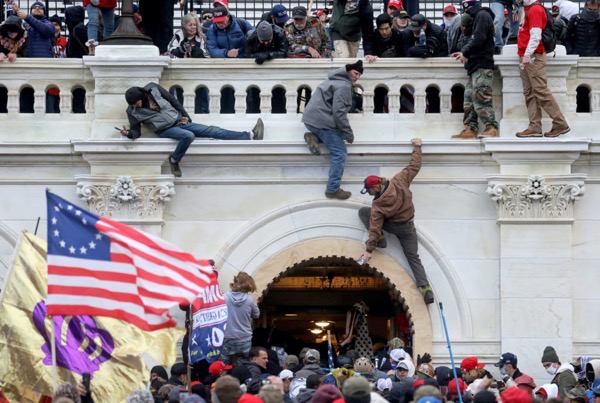
(Image from Skylines on Shutterstock)

You can also find more of my writings on a variety of topics on Medium at this link, including in the publications Ellemeno and Rome. I can also be found on social media under my name as above.
Scene Painting a History of Hamlets at The National Theatre

Hamlets watching Hamlet

I’ve done some scene painting in my day, but nothing like this. Actually nothing even approaching anything like this. 

Hamlet 2.jpg.

In Robert Hatcher’s production of Shakespeare’s Hamlet at Britain’s National Theatre Ben Stones’ scenery features a gigantic mural that surrounds the set that includes the faces of actors who have played Hamlet through the ages. The picture above doesn’t do that description or the concept justice. 

The faces woven into the Danish artwork are the ultimate theatrical Easter egg. While Stones keeps the full cast list close to his chest, he confirms that they are all there – a complete history of the role.

“They’re all hidden in there. Everybody who’s been in it… even Tinuke Craig’s schools Hamlets, the three boys who played on that tour. We were very clear that if we include, we are including everyone who’s ever spoken those words in any version of this kind of play.”

As a statement on the play and its theatricality that’s cool in and of itself. The ghost visages of previous Hamlets watching what can be described as a ghost story has a meta appeal.

What also attracted my attention to this article — and why I’m sharing it — is that it puts the spotlight on scenic painting, somewhat of a lost art in this day of projected backgrounds and digital printing. This theatrical work of art required 920 hours to complete. 

There’s a terrific little video that gives you an idea of the scale and scope of the painting requirement. Unfortunately it’s filmed in vertical mode so you don’t get the grand finale the same way on a computer webpage that you might on a smartphone. Even on smaller screens it has an impact.

 It made me recall my days directing theatre in Omsk, Russia when the scene painting loft was at the top of the building. There, drops would be stretched on a frame that would rise and descend through an opening in the floor allowing the scenic artists to stand on the floor as they painted. There were some amazing scenic painters in that loft. 

The article also gives credit to the scenic artists who did the work for Hamlet at the National. Well deserved.

You can also find more of my writings on a variety of topics on Medium at this link, including in the publications Ellemeno and Rome. I can also be found on social media under my name as above.
Thieves Get Picky And Only Want iPhones

Picky pickpockets

I find this story funny. I shouldn’t. But I do.

Shutterstock 1675274494.

Apparently thieves are picky when it comes to the smartphones they steal. According to this report in London Centric:

The thieves took Sam’s phone, his camera and even the beanie hat off his head. After checking Sam had nothing else on him, they started to run off.

What happened next was a surprise. With most of the gang already heading down the Old Kent Road, one turned around and handed Sam back his Android phone.

The thief bluntly told him why: “Don’t want no Samsung.”

As I said, I shouldn’t find anyone who finds themselves in this sort of misfortune funny. The victims. Not the thieves, obviously.

Discerning criminals are all about the resale value apparently. Which, if all of the analysts and fanboys get smart about it, might be a new metric to score the ridiculous game of which smartphones are better than another.

(Image from Donenko Okeksli on Shutterstock)

You can also find more of my writings on a variety of topics on Medium at this link, including in the publications Ellemeno and Rome. I can also be found on social media under my name as above.
Find Beauty When and Where You Can

Stop and smell the roses

A Mastodon user sent me a direct message the other day asking why I felt so comfortable doing what I do every morning, which is posting a “Good Morning” toot featuring photos I’ve taken of flowers, tree leaves changing color, other shots of nature, holiday ornaments, etc….

CleanShot 2025-11-17 at 12.25.20@2x.

The context of the query was criticizing how I could continue to do that every morning given all of the terrible things going on in the United States, things I also rightfully describe on social media as horrors.

I get it. Believe me I get it. I’m overwhelmed at times as well. But my response was and is simple.

Stop and smell the roses.

While there are indeed horrors happening in the world there is always beauty. If we don’t take a moment to see and acknowledge the beauty around us and the spontaneity of discovering it, whether it be in nature, in very human moments, in a museum, a gallery, a stage, a movie theater, a concert hall, a photograph, a child’s laugh, or in a story, then what the hell are we fighting for?

I’m convinced those we are fighting against don’t see or even care to see the beauty around and within us, unless it involves increasing their bank account balances.

Sometimes you need to stop and smell the roses. I prefer doing so in the mornings, before I put on my armor to meet the challenges of the day.

You can also find more of my writings on a variety of topics on Medium at this link, including in the publications Ellemeno and Rome. I can also be found on social media under my name as above.
Watching Ken Burns’ The American Revolution

Context is everything

Started watching Ken Burns’ The American Revolution last night. It sounds almost trite, but it’s typical Ken Burns (and his collaborators) historical documentary excellence.

The american revolution film by ken burns 1280x720 1 600x338.

What struck me is how I’m hearing things I’ve read and heard over and over again about the period leading up to the American Revolution. So far, (only two episodes in) the history is as I studied it. And by studying it, I mean well below the surface of the myths folks of my generation were taught in school.

I’m not hearing things differently, but I’m hearing how folks can take their own meaning out of many of the things written and said during that period that led to this country’s founding. History may indeed rhyme, but it also echoes. Often in strange ways.

That’s certainly true if all you hang your tri-cornered hat on are the myths.

You can also find more of my writings on a variety of topics on Medium at this link, including in the publications Ellemeno and Rome. I can also be found on social media under my name as above.
macOS 26.1 Seems To Have Fixed the iconservicesagent Memory Leak

A bug fix. But who did the fixing?

A little follow up.

A few weeks back before Apple released the non-beta version of macOS 26.1 I wrote up some observations about macOS 26. One of those observations was about memory leaks.

Cleanshot 2025 10 17 at 09.35.13402x.

I cited one example I was seeing frequently with iconservicesagent, a process that the system uses to read and generate icon images. When it goes awry because of a corrupted icon or corrupted icon cache then the memory leak occurs. You can kill the process and it will restart, but that wasn’t fixing the problem and the memory leak would reoccur.

Tracking down what might be a corrupted icon is beyond my skill level, so I was hoping this was a bug that would eventually get fixed by Apple, or an app developer who might clean up an errant icon.

Apparently that happened because I haven’t seen the memory leak reoccur since installing macOS26.1. Of course quite a few apps have updated in the meantime as well. So, there’s no way for me to really know whether the fix was on Apple’s end or an app developer’s without doing some digging I don’t have time for. Nor would most users.

Keep in mind, Apple created an entirely new method for developers to build icons this year. Some developers have used the new Icon Composer already, some have not. It’s caused a few developer headaches, especially for app developers who offer multiple icon choices as a part of their app and general disgruntlement with the icons Apple itself has released. Note Apple hasn’t as of yet updated all of its own icons.

I’m glad the bug has been fixed. Whether the fault was on Apple’s end or a developer’s it points to the catch up that Apple has to do to solidify things in macOS 26 Tahoe with app developers having to follow behind as it does so. We’ll see how many other bugs get quashed in the months ahead with macOS 26.2 presumably coming sometime before the end of the year and successive  point releases following in the first half of the next year.

You can also find more of my writings on a variety of topics on Medium at this link, including in the publications Ellemeno and Rome. I can also be found on social media under my name as above.
Sunday Morning Reading

Small acts

It’s only business they say. Nothing personal. That’s the way the world works. Well, what I share each week in Sunday Morning Reading always comes from a place of personal interest. That may not be how the world works, but it works for me and I hope it does for you. Call it a small act.

Ganesh narayanan SU3zvkxttrE unsplash.

In the wake of the continuing and confounding ICE occupation of Chicago comes a terrific piece by Kyle Kingsbury called I Want You To Understand Chicago.

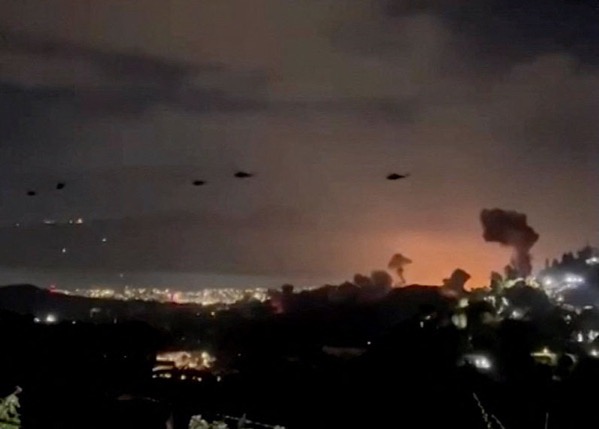
Follow that up with a ProPublica piece by Melissa Sanches, Jodi S. Cohen, T. Christian Miller, Sebastian Rotella and Mariam Elba about the nighttime raid on a Chicago apartment building that featured men rappelling from Black Hawk helicopters, and all of the residents emptied on to the streets with many of their belongings. The punchline is in the article’s title, “I Lost Everything”; Venezuelans Were Rounded Up In A Dramatic Midnight Raid But Never Charged With A Crime. 

A Nation of Heroes, A Senate Of Cowards by Will Bunch calls it like it is and much the way I see things after last weekend’s actions in the U.S. Senate.

Growing up, I never understood the cliché, “it’s nothing personal, it’s only business.” Frankly I still don’t. It excuses too much that I find wrong about the way the world works. Charles Broskoski examines the personal side in Personal Business.

And speaking of the way the world works (or doesn’t) in the midst of the Epstein fever I don’t think we’ll ever shake, Sarah Lyons points out that the violence in his and others’ actions is something we all live with in This Is How The World Works. It shouldn’t be.

Corbin Trent says We Didn’t Kill American Manufacturing—We Let It Die. He’s spot on.

Mark Jacob tells us How News Coverage Eases Us Into Tyranny.  However this saga we’re living through ends up, one thing is for certain. The media has killed any chance of returning to what it once was.

Hardly a day goes by that we don’t read of some nefarious business practice spilling out of Mark Zuckerberg’s Meta. Turns out Meta is knowingly leeching off of scammers to the tune of about 10 percent of its revenue. I guess that makes Meta and Zuckerberg a scammer too. Cath Virginia has the writeup with Meta Must Rein In Scammers — Or Face Consequences. I doubt they will.

The Internet Archive is under attack in the same way libraries, media organizations, and text book publishing is. It shouldn’t be. Mathew Ingram has the lowdown in The Internet Archive Should Be Protected Not Attacked.

On a more positive note, Jeff Veen tells us how Small Acts Build Great Cultures. Boy, do we need lots of small acts these days.

To close out, did you ever wonder where collective nouns like “a watch of nightingales” or “an ostentation of peacocks” come from? For many years it was assumed that the anonymous author of this collection of collective nouns was the work of a “gentleman of excellent gifts” written down in one of the first books printed after the invention of The Gutenberg Press, The Book of Hawking, Hunting, and Blazing of Arms. Turns out the author was a woman named Juliana Barnes. Maria Popova has the story in A Parliament of Owls And A Murder Of Crows: How Groups Of Birds Got Their Names, With Wondrous Vintage Illustrations By Brian Wordsmith. 

(Image form Ganesh Narahanan on Unsplash)

If you’re interested in just what the heck Sunday Morning Reading is all about you can read more about the origins of Sunday Morning Reading here. If you’d like more click on the Sunday Morning Reading link in the category column to check out what’s been shared on Sunday’s past. You can also find more of my writings on Medium at this link, including in the publications Ellemeno and Rome.

Little Feat Wraps It Up

Feats never let me down

News this week that one of my favorite bands of all time, Little Feat, is retiring after a final tour brought back quite a few memories. The Last Farewell Tour will kick off next spring and run through two years, promoting the band and their latest album, Strike Up The Band.

Little Feat - Feats Don't Fail Me Now.

As for those memories, in what seems like a lifetime ago when I was in college I had an assistantship in the theatre department’s scene shop. When touring acts came to campus we’d sometimes be assigned to help with load in and load out, and occasionally help run the show.

Little Feat was promoting what would become one of my favorite of their albums, Feats Don’t Fail Me Now, while opening for Joe Cocker, another of my favorites. I got the assignment to run follow spot for the gig. Up until that point I wasn’t familiar with Little Feat’s music, but that concert turned me on and I’ve been a fan ever since. They rocked the house as the warm up act and the crowd wasn’t ready for their set to end.

They certainly weren’t ready for what came next.

During the changeover a roadie came out and set two cases of Budweiser beer on the stage by the central microphone. Cocker’s band came on, tuned up a bit, the lights went down, the band kicked off the intro, at the conclusion of which Cocker was supposed to enter, which was my first cue of the set. The band was still using the intro from Cocker’s Mad Dogs and Englishmen days and all of the stage mechanics happened as planned, the crowd was pumped, but there was no Joe Cocker.

After a few moments delay we got the message to reset and we did it all again. This time Joe Cocker appeared on cue with a fifth of whiskey in his hands. He stumbled to the mic, and promptly threw up all over the stage. Yep, I had my follow spot lighting up the entire thing.

That was the end of the concert. Cocker was escorted offstage as the band played the Mad Dogs and Englishmen intro once again, then said good night and left the stage. The crowd was understandably upset with the headliner, but in the days that followed the talk was all about Little Feat’s music.

That was a moment to remember and a memory to laugh at certainly. But as well as I remember that I’ll never forget my introduction to Little Feat and their music. The band’s roster has changed throughout the years (most of the current members are in their 70’s) and the band’s songbook has journeyed its way through different American music genres. Their final album, Strike Up The Band,  lands with a return to their original sound, albeit matured and nurtured from steps along the journey. It brings back memories.

There’s a brief, but good write up about the band’s retirement decision and final tour in Rolling Stone here.

You can also find more of my writings on a variety of topics on Medium at this link, including in the publications Ellemeno and Rome. I can also be found on social media under my name as above.