Sunday Morning Reading

So what is this future we’re heading into anyway?

If you’re observing Memorial Day weekend in the U.S. I hope you have had a pleasant one. Even if the weather isn’t cooperating, seemingly echoing the threats of seeing that tradition, like so many others, diminished. We’re on the road again for a dear friend’s memorial service, but there’s still time for a little Sunday Morning Reading. Mostly tech related this week, some politics, and of course some cultural happenings. If you’re paying attention, it’s all intertwining. Listening to a lot of Bruce Springsteen. Enjoy.

Adding to what’s becoming a recurring theme in this column, Ian Dunt is looking for ways to get the most out of our digital lives while taking back a bit of control from the tech god wanna-be’s. Check out Taking Back Control of Our Digital Life.

Matthew Ingram wonders If AI Helps To Kill The Open Web What Will Replace It? Excellent piece and excellent topic, because like it or not, it’s the current and next movement we on the ground are going to have to contend with. Pay attention.

Neil Steinberg, one of my favorite of a dying breed of Chicago journalists, gives his take on the recent Chicago Sun-Times AI flap in The AI Genie Is Out of The Bottle, and the Granted Wish Often Brings Trouble.

Lucy Bannerman takes on the AI’s abuse of copyright and artists rights in Nick Clegg: Artists’ Demand Over Copyright Are Unworkable. They aren’t. Those demands just cost more than folks counting the beans want to pay.

Lynette Bye’s Misaligned AI Is No Longer Just Theory raises up that specter that haunts this entire episode of our life across all spectrums that seems easy to fall prey to or dismiss, depending on which side of the coin you’re on. Frankly, if you don’t think the future of this can be manipulated, you’re not paying attention.

Jason Snell’s take on the recent announcement that OpenAI has bought Jony Ive’s company to produce new hardware for AI I think is the correct one. Check out Sam and Jony and Skepticism.

Chloe Rabinowitz fills us in on the outgoing president of the Kennedy Center’s response to the bullshit coming out of the White House. in Deborah Rutter Releases Statement In Response to Trump Kennedy Center Allegations.

The real boss, Bruce Springsteen, continues to piss off the orange buffoon in the White House and I’m glad to see it. So is Eric Alterman in a guest essay in The New York Times proclaiming Bruce Springsteen Will Never Surrender to Donald Trump. We need more of this.

And to wrap up this week, here’s NatashaMH wondering Do We Really Need To Have This Discussion? No hints. No clues. Just good stuff for you to read.

If you’re interested in just what the heck Sunday Morning Reading is all about you can read more about the origins of Sunday Morning Reading here. You can also find more of my writings on Medium at this link, including in the publications Ellemeno and Rome.

Mozilla Finally To Shut Down Pocket

End of an era.

Add another marker in the Internet/Tech graveyard. Mozilla has announced that it will shutting down Pocket on July 8th. Nothing lasts forever.

It’s not a surprise to me given how poorly the app was treated after Mozilla took it over in 2017. The read it later service became almost unusable and I had gradually moved away from my reliance on it for bookmarking web links. My move away quickened once they decided to discontinue the Mac app.  Making it a web only app ironically led to a pretty horrible user experience.

Pocket joins other apps like Evernote that were once old standbys that in order to grow and sustain felt like they needed to add feature upon feature in order to compete and attract funding and subscribers. You can’t blame anyone for trying to make a buck and run a company. You can blame them for doing such a poor job of it.

Mozilla has made a way for users to archive links they’ve saved with instructions to be found in their post about closing the doors. Users have until October 8th to export their data.

Update: On Friday Digg co-founder Kevin Rose has offered to step in and take over Pocket to save it from its demise. Anything’s possible I guess.

You can find more of my writings on a variety of topics on Medium at this link, including in the publications Ellemeno and Rome. I can also be found on social media under my name as above. 

We’re Losing The Battle Over What’s Real and What’s Not

The Chicago Sun-Times publishes AI generated fiction as fact

The Chicago Sun-Times is going to go through some things. Is AI the culprit? Business model? Lack of editorial oversight? The answer doesn’t really matter in the grand scheme of things when it comes to the struggle to understand what’s real and what’s not.

CleanShot 2025-05-20 at 09.26.11@2x.

The paper published a summer activities guide called the Chicago Sun-Times Heat Index that contained a reading list of books that included real authors, but some of the titles were entirely fictional. As in not real titles at all. Just made up. Five of the titles actually exist. Ten do not.

This episode lead most to immediately speculate that the article was generated by Artificial Intelligence and that there was no editorial oversight of what actually made it into print. I don’t know about you, but I’d call those assumptions more than an early warning sign.

According to 404 Media the Heat Index was published by King Features which is owned by Hearst Newspapers. The guide was licensed by the Sun-Times apparently for the Sunday print and online editions.

The Sun-Times issued an early statement saying they are looking into the matter as referenced below, promising more info to be released soon.

CleanShot 2025-05-20 at 09.32.34@2x.

To their credit they did. VP of marketing and communications for Chicago Public Media, which owns the Sun-Times stated to 404 Media that no one at Chicago Public Media reviewed the section, which follows a pattern used with similar such inserts saying that “historically, we don’t have editorial review…because it comes from a newspaper.” That statement of course includes the promise of a change in policy going forward and an investigation to see if there is other inaccurate information. You can read the full Chicago Sun-Times statement released later here.

The Sun-Times was not the only paper to license and publish the paper according to NPR.

That NPR report also says that writer Marco Buscaglia claimed responsibility for the guide and did acknowledge that it was partly generated by Artificial Intelligence.

Ah, well. All of those worst case assumptions were not a mass hallucination, I guess.

There were years that I bought both the Chicago Sun-Times and the Chicago Tribune every morning and got to work early enough to read them both. Those days are long gone, mostly thanks to the Internet and the changes that wrought on the newspaper publishing industry. We’ve all seen this next chapter coming. I guess it’s here.

Here’s the thing. The cold hard fact that most leapt to the assumption that this is some form of AI generated content proves the battle, and perhaps the war has already been lost, regardless of how this did or didn’t happen. It will happen again.

We’ve been heading into the land of make believe where facts don’t matter for some time now. It’s sad that what once were venerated media sources have been helping to lead the charge, especially in an era when governments feel free to make up things as they go along.

You can find more of my writings on a variety of topics on Medium at this link, including in the publications Ellemeno and Rome. I can also be found on social media under my name as above. 

Sunday Morning Reading

Paying attention for the next generation.

Good morning. Visiting the grandkids this weekend, so this will be a short stack of links to share. Fair warning ahead most are on the darker side of the ledger. The links. Not the grandchildren. They are the light. The grandchildren are why I pay attention.

First up is a piece on despair from Dean Pritchard titled Despair, What Is It Good For. He calls it a hopeless call to action. I’m not sure it’s hopeless at all. Just another step in finding what may or may not turn out to be answers. As long as we keep stepping.

NatashaMH says that social media addiction isn’t just about us, it’s about the people around us in Unread, Unavailable and Unbothered. I’ve never been one to buy into the social media addiction theory. It’s too damn easy to put down the damn phone. But I take her points because it’s too damn easy to keep hoping to find new ways to avoid despair.

Lauren Goode takes on Deepfakes, Scams, and the Age of Paranoia. Somebody needs to.

Tom Schaller and Paul Waldman say that Trump is betraying the voters who elected him in The White Rural Reckoning. They are correct. But we knew that would happen. Scum likes to remove itself from other scum once it’s done scumming around.

Joan Westenberg compares the comeuppance moment Apple is enduring to Martin Luther’s reformation moment in Apple’s Diet of Worms. Given the abundance of fanatics there’s more than a little truth here.

Playwright Sara Ruhl is one of my favorites. Charles McNulty takes a look at what she has to say in her new book In ‘Lessons From My Teachers,’ Playwright Sarah Ruhl Finds Wisdom In Art, Motherhood, Even Grief.

And as for weathering despair, check out Lost At Sea by Alec Frdyman. Excellent reading about a scary adventure.

And to close out this weekend I’ll leave you with this uncredited thought that pops up every now and then on social media.

And just remember who the tax breaks are targeted for.

Peace.

If you’re interested in just what the heck Sunday Morning Reading is all about you can read more about the origins of Sunday Morning Reading here.  You can also find more of my writings on Medium at this link, including in the publications Ellemeno and Rome.

Sunday Morning Reading

Happy Mother’s Day reading.

Time for some Sunday Morning Reading on this Mother’s Day, with a short stack of culture, some tech, some politics, and the Ziegfeld Follies tossed in for good measure.

First up is a good long read from Spencer Kornhaber wondering if we’ve entered a cultural dark age. Provocative in parts, predictable in others, it’s worth your time for the journey it takes. Check out Is This The Worst-Ever Era of American Pop Culture?

Kaitlyn Tiffany says We’re Back to the Actually Internet. It’s about fact checking, the need for fact checking, and actually about how fact checking doesn’t really matter.

We may have beat the term fascism to death long before the real beating actually begins, and it’s the Bible thumpers who seem far too eager for the end times with their wishes for some sort of Armageddon beat down. Naomi Klein and Astra Taylor take a look at The Rise of End Times Fascism.

The Apple enthusiast world is still going through some things and will continue to for the foreseeable future. Denny Henke at Beardy Guy Musings is chronicling his thoughts about his move away from using Apple products. His latest, Are Apple Enthusiasts Miserable? takes a look at some of the angst and tensions he sees.

Indie app Developer Thomas Ricourad, the developer of the app Ice Cubes for Mastodon, among other apps, is searching. He’s not alone. Check out Having A Clear Vision In A Blurred World.

Matthew Gurewitsch takes a quick look The Story of a Rose, an upcoming look at an almost forgotten era in A Ziegfeld Girl Recalls The Forgotten War.

Happy Mother’s Day to all.

(image from Aga Putra on Unsplash)

If you’re interested in just what the heck Sunday Morning Reading is all about you can read more about the origins of Sunday Morning Reading here.  You can also find more of my writings on Medium at this link, including in the publications Ellemeno and Rome.

Apple’s Long Term Challenges Complicate The Short Term

It’s not easy to sell a waiting game.

Mark Gurman offers up a relatively thorough summary of the number of challenges Apple is facing going forward in his weekly Power On column. Things always go forward. The question is always how.

The original link above is paywalled, but here’s a web archive link to the story.

And here’s the summary:

CleanShot 2025-05-05 at 09.41.06@2x.

Gurman calls this point in Apple’s history a “critical juncture.” I would agree. The many moving parts, both surrounding Apple, and of its own making, have put Cook and company squarely in that critical juncture. This comes as Apple and those that make their living talking about Apple are gearing up for this year’s World Wide Developer’s Conference (WWDC) next month.

Gurman delivers the punchline well below the headline that neatly summarizes why WWDC is not going to be able to address all of these challenges, but also why the turmoil is going to continue.

Speaking specifically about Apple’s race to catch up in the AI realm he says:

it’s going to be a while before we can tell if Apple is heading in the right direction

Perhaps that should have been the lede. He could have easily said the same about each of these challenges he enumerates.

But there’s also a larger, more encompassing challenge that makes surmounting each even more difficult. The tech world is moving at a pace that Apple is unaccustomed to. Apple’s historic long view has served it well over the years, but the window on that long view is increasingly narrowing its aperture.

Apple may spend its June introducing and setting the table for what’s coming later this year, but already most of the smart players who follow and promote Apple are shifting their focus to the bigger, and more critical, table stakes coming long after this year’s summer and fall hype cycles end. The now familiar “coming later this year” now means much less when the real issues may only begin to be addressed further down the road.

Waiting “a while” is not an easy sell. Especially these days.

You can find more of my writings on a variety of topics on Medium at this link, including in the publications Ellemeno and Rome. I can also be found on social media under my name as above. 
Dan Moren Questions What It Means To Be An Apple Fan These Days

Core questions for Apple users

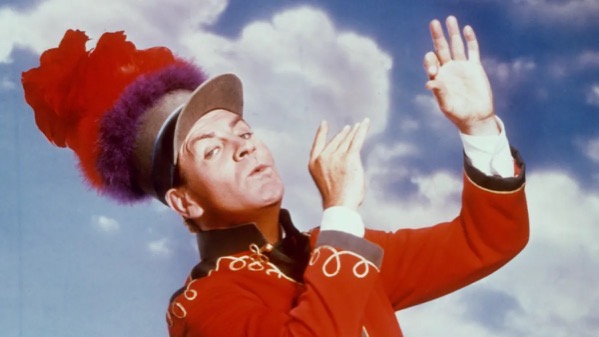
The headline of Dan Moren’s final column for MacWorld says it all: I’m An Apple Fan In 2025. What Does That Even Mean?

Apple fanboy.

Moren has been writing for MacWorld and been a sensible voice inside the Apple community for close to 20 years. He’s signing off his regular column gig for MacWorld, but he’ll still be around on the likes of Six Colors, podcasts, and I’m sure other places. Which is good, because his voice is an important and reliable one.

In his farewell, he raises the question many are asking of themselves, and the questions many are asking of Apple in its current state and our own state of affairs. As he puts it in a nutshell of a statement:

As Apple started becoming more and more successful, I’ve become increasingly skeptical that one should ever really consider oneself a “fan”of a company.

It’s a well thought out and well reasoned post and one that I think should be read by anyone considering themselves a fan, or a no longer fan, or even someone who just doesn’t care for Apple or its products.

A big part of the self-examination I know quite a few folks are going through in assessing their current relationship with Apple deals with issues bigger than just the products. For lack of a better description call them corporate issues. Even using that label — corporate — feels dirty to type in ways that seem damning in more dangerous ways these days. But that’s a fungible feeling and thinking that’s becoming increasingly tangible.

Here’s the thing. Technology advances. Humans advance. Nothing that feels foundational or allegiance adhering, or even worth being infatuated about is going to ever stay the same. Nor are our feelings about what we first might have fallen in love with, regardless of how the object of that affection itself grows and changes. Change is constant.

Microsoft had my allegiance back in the Tablet PC days because they won it when those much maligned devices provided a better, more productive way to do my work. Microsoft changed. I did too. iPads replaced what Tablet PCs were for me in my work and my play, and those are the tools I still use today. Do I think that will be forever? Not a chance. I mourned the loss of Tablet PCs. I’m sure if Apple stopped making iPads, I’d go through a similar grieving process. But again, that’s change. That’s life.

That’s also growth. But growth on the human side of the ledger rarely equals growth on the corporate side. In my brief time on this planet the two have never added up to successful equation that yields anything other than diverging results. That’s one thing I don’t ever expect to change.

Kudos to Dan on a job and career well done, (and still going) and kudos for a lovely farewell column in MacWorld.

You can find more of my writings on a variety of topics on Medium at this link, including in the publications Ellemeno and Rome. I can also be found on social media under my name as above. 

Sunday Morning Reading

We’re always chasing bubbles.

Back from a brief hiatus, there’s plenty to read and share. It feels like it’s becoming increasingly important, and perhaps more urgent to do both. I promise there’s some happiness amidst all of the Strum and Drang down the page.

First up, Canadian Stephen Marche is singing the Red, White and Blues. It’s easy to look from the outside in, or even from within and be dismayed at what’s going on in this country. Because it’s so damn easy to see. Unless of course you’re still in shock, or choosing to ignore it. Marche’s tune doesn’t hit a false note as he says America was a “country of bubbles.”

David Todd McCarty is back Poking The Bear. It’s good seeing him write about politics again.

Drik de Klein of History of Sorts wrote Evil, I Think, Is The Absence of Empathy back in 2019, using Captain G.M. Gilbert’s quote from the Nuremberg trials as the headline. I remember reading it a while ago and it resurfaced this week, proving, as always, just how short our attention spans are. Or perhaps our comprehension and retention capabilities.

NatashaMH says, “I can’t stand people being ignorant bastards” in her excellent piece Our Modern Discontents. Again, a viewpoint from outside the red, white, and blue bubble that feels like it’s ready to pop.

Jacob Silverman’s Welcome To The Slop World: How The Hostile Internet Is Driving Us Crazy is an invitation to a party that turned into something nobody was expecting.

Speaking of bubbles, big tech is in hot water of its own boiling these days. Google is facing anti-trust charges and a possible breakup that probably won’t happen. Wendy Grossman takes a look at Three Times A Monopolist.

Who’d a thunk it? Bot Farms Invade Social Media To Hijack Popular Sentiment. Eric Schwartzman does some digging in those all too fertile fields.

This past week we celebrated William Shakespeare’s birthday. As usual lots of words were written about the writer who used them better than anyone else to describe the human condition. One of the accepted parts of the Bard’s legacy is that he was an absent husband that left his family behind to pursue his calling. But a discovery of a letter might just change that. Check out what Ephrat Livini has to say about the possibility in an Overlooked Letter Rewrites History of Shakespeare’s Bad Marriage.

And for that happiness I promised, I’ll stick with Shakespeare and Cora Fox with ‘I Were Happy But Little Happy, If I Could Say How Much’; Shakespeare’s Insights On Happiness Have Held Up For More Than 400 Years. We often focus on his tragedies, but he reveled in the joys of life as well. Keep those happy bubbles afloat as long as you can. Pop the bad ones.

(Image from Rey Seven on Unsplash)

If you’re interested in just what the heck Sunday Morning Reading is all about you can read more about the origins of Sunday Morning Reading here.  You can also find more of my writings on Medium at this link, including in the publications Ellemeno and Rome.

Carole Cadwalladr’s Final Column for The Observer

But she hasn’t stopped observing.

A couple of weeks ago I linked to Carol Cadwalladr’s recent return to the TED conference to deliver a speech entitled This Is What A Digital Coup Looks Like. It’s worth a watch if you care about such things. Heck, it should be required reading if you care at all about what’s happening in our digital and non-digital lives. 

338cfa0c 2594 4944 9b79 5074a2e166c3_4032x3024.

This post is linking to her farewell column in The Observer, the Sunday sister paper to The Guardian and The Guardian Weekly papers in Britain. Like all media outlets it’s been through some things in recent years. The Observer was purchased late in 2024 and like all such transactions that prompted staff layoffs and terminations, including Carole Cadwalladr and a number of her colleagues. You can read all about that on in her post Fuckty bye in How To Survive The Broligarchy. I suggest you do that as well as read her final Observer column It’s Not Too Late To Stop Trump and The Tech Broligarchy From Controlling Our Lives, But We Must Act Now.

I happen to believe she’s fighting the good fight. That last column provides some excellent behind the scenes during her preparation and anxiety leading up to that recent TED speech, as well as some reactions she received while at the conference, including an interchange between her and OpenAI’s Sam Altman, in addition to making the important case she continues to make. 

She’s paying attention and raising alarm bells. We should too. She’s standing in the way. We should too.

You can find more of my writings on a variety of topics on Medium at this link, including in the publications Ellemeno and Rome. I can also be found on social media under my name as above. 

Distrust-By-Default

Donning a new armor for protection

In a typically thorough article on Ars Technica about Microsoft preparing to reintroduce the Recall feature to Windows 11, Andrew Cunningham sums up his, and I think many of our, queasy feelings about these kind of feature and marketing failures we’ve recently seen from the likes of Microsoft, Apple and others, using the phrase distrust-by-default.

 Here’s the quote in context:

This was a problem that Microsoft made exponentially worse by screwing up the Recall rollout so badly in the first place. Recall made the kind of ugly first impression that it’s hard to dig out from under, no matter how thoroughly you fix the underlying problems. It’s Windows Vista. It’s Apple Maps. It’s the Android tablet.

And in doing that kind of damage to Recall (and possibly also to the broader Copilot+ branding project), Microsoft has practically guaranteed that many users will refuse to turn it on or uninstall it entirely, no matter how it actually works or how well the initial problems have been addressed.

Unfortunately, those people probably have it right. I can see no signs that Recall data is as easily accessed or compromised as before or that Microsoft is sending any Recall data from my PC to anywhere else. But today’s Microsoft has earned itself distrust-by-default from many users, thanks not just to the sloppy Recall rollout but also to the endless ads and aggressive cross-promotion of its own products that dominate modern Windows versions. That’s the kind of problem you can’t patch your way out of.

Briefly, Recall is the Windows 11 feature that was built to capture and recall almost all of what you do on your PC via snapshots, making it available for recall later. After substantial promotion, Microsoft pulled and delayed the rollout last year after security concerns were raised. Skepticism was high even before the security issues were raised that caused the delay. Cunningham’s article provides an excellent rundown on that and I encourage you to read the full thing.

I think Andrew is spot on calling the uneasy feeling many of us have distrust-by-default. Certainly when it comes to this specific Microsoft moment and other tech companies. Zooming out, I think it also describes well the armor we’re all adopting on any number of issues in these moments of mistrust we seem to be facing on so many fronts in our lives.

(Image from Atmospher1 on Shutterstock)

You can find more of my writings on a variety of topics on Medium at this link, including in the publications Ellemeno and Rome. I can also be found on social media under my name as above.