The End of Reading?

Let’s not make it so. At least until you read this piece.

File this one in the “Depressing If True” category. Rose Horowitch has written an excellent piece for The Atlantic entitled The End Of Reading Is Here. Yes, you read the title correctly. Unless you’ve already given up on reading you should give the piece more than just a look. If you have given up, try to remember how.

I’m not sure I’d agree completely that we’ve reached or are nearing the end point of reading, but I have to admit that we sure seem to be rushing headlong to cliff noting, bullet pointing, and summarizing everything to a point that it’s far too easy for some to break the habit and shy away from reading as a way to discover knowledge, new ideas, and well…advance ourselves and civilization while understanding from whence we came.

An excerpt:

Reading has never been natural. Humans have no innate cognitive machinery designed to string letters into words and connect them to their real-world analogues. To read, people had to repurpose regions of their brain used for speech and object recognition. The practice first emerged 6,000 years ago in Mesopotamia. 

Horowitch traipses through the history of the written word hitting the high and low water marks, many easily recognizable, some not nearly as discernible, pointing to an age when Marshall McLuhan predicted we would become “post-literate.” He predicted that in 1962. She marches on from there.

The usual, and occasionally unusual, list of the enemies of writing and reading make their appearance on her march through the ages, but Horowitch lays them out, dare I say, in only the way a writer could. And yes, AI makes its appearance on that list. For it is not just reading, it’s also the writing of the words we read that is under threat. 

Another excerpt:

The written word is fundamentally different from oral language. Writing detaches the message from the messenger, allowing for a more dispassionate spread of information than was possible in oral societies. Because writing a phrase takes longer than speaking it, writing forces the author to slow down and reflect. Written language tends to employ more complex sentence structures and vocabulary than spoken language. And unlike speech, it doesn’t disappear into the ether.

In her conclusion Horowitch reminds us that in our digital age we have the capability to read much more than at any point in human history.

When the Library of Alexandria disappeared, the knowledge inscribed on its scrolls was lost forever. We can only guess what else Eratosthenes and Euclid might have written. The text turned to dust. That won’t happen today; all of the words in the great library could be stored on a single computer chip. Nowadays, even the most obscure academic monographs are scanned and digitized. Google Books and the Internet Archive represent libraries of unfathomable proportions. We can navigate to them with a few keystrokes, not a perilous journey across the Mediterranean. There’s little risk of their texts succumbing to humidity or mice.

But the threat of apathy remains. What we’re losing is the ability and inclination to read those texts. An astonishing wealth of information and wisdom has been bequeathed to us. What we’ll do with this inheritance is up to us.

That makes it all a choice, does it not?

I won’t question the assumptions, nor the excellent way she has written them. I will add that if we are indeed reaching the end of reading, the logical next step is the end of thinking. 

The piece is more than worth your time, should you have in the inclination to read it. I hope you do. It might actually make you think.

Thanks for reading. You can subscribe to this blog if you care to. You can also find more of my writings on a variety of topics on Medium at this link, including in the publications Ellemeno and Rome. I can also be found on social media under my name as above. This site does not use affilate links. 

Sunday Morning Reading

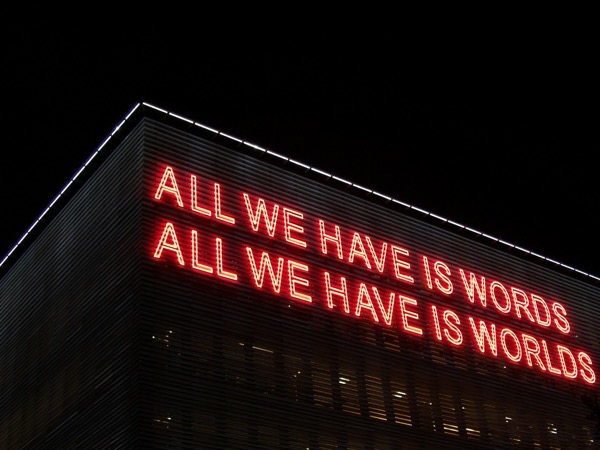
Words, words, words…

Meaning. It means so much. So do the words that deliver it to us. But remember, there was meaning before we constructed words into language. This week’s Sunday Morning Reading comes on the final day of a weird and wacky 4th of July weekend in the U.S when an often mean Mother Nature reminded us who is really in control no matter which words we choose or manipulate to pretend we are. It was kinda fun to watch. There’s also a few interesting pieces about America’s founding, and the myths and the meaning behind it all.

Alexandra JYBBcCbRaFc unsplash.

Kicking it off is a short piece from JA Westenberg asking Remember When Words Had Meaning? What comes first the distortion of language or the devaluing of the culture that employs them?

Speaking of meaning, Jack Loftus gives us The U.S. Constitution Is For Simple Folk Still Burdened By The Belief That Words Have Meaning. You can argue it was always thus, but we sure do spend an awful amount of time, energy and money arguing the opposite.

In this age of WTF, it has become an accelerating trend to see pieces disemboweling many of the myths we assign to the founding of America around the 4th of July. We used to share common myths more than we did a common history, but now even the myths get mangled. So it’s no surprise when the powers that currently be toil to rewrite both. Noah Berlatskys The Constitution Sucks is a good example of how we can forever flip the coin looking for the right result, ignoring the edge. 

T.H. Breen takes a look at some of the too often un-heralded folks and local movements during America’s revolutionary war period in It Wasn’t Just The Founders

John Warner offers up For The Fourth, 9 Books For Your Sense Of Patriotism, saying “I’ve come to (personally) understand patriotism as a not a fan-like allegiance to a team, but a responsibility to understand the country’s history, warts and all as we pursue the illusive promise of life, liberty and happiness for all from the Declaration.” The key is knowing we all “come” to understanding.

Will Frivolous Charges Be Brought Against Future Ex-POTUSes? That’s Okay Too by Josh Marshall offers up an excellent piece on how we can twist and morph words in a legal context that shift the ground under most mythical mountains like “no man is above the law. “

Speaking of words and meaning, the bad guys seeking to survive a legal onslaught ahead of what they fear is a political tsunami coming for them are trying to rekindle old fears about communism and socialism as their latest talking points. Not sure those old saws will cut the same way they used to, but it demonstrates just how limited the dictionary is. David Todd McCarty takes a look behind the hooting and hollering in Democratic Socialism: Keeping The Great American Experiment Alive.

And in a quasi-hysterical look at shifting meanings and changing words, Rogé Karma is wondering Why Everyone Is Suddenly Talking About ‘Universal Basic Capital’. The quasi-hysterical part is that it’s coming from the AI market masters and a few politicians substituting the word “capital” for “income” following the words “universal basic.” Language is hard. When you can say anything to get what you want. 

And in another word substitution, Doc Searls suggests we shift from an “attention economy” to an “intention economy.” Check out The First Source Of Personal Intent. I’m not sure the meaning changes with the substitution. 

(Image from Alexandra on Unsplash)

Thanks for reading. Feel free to subscribe if you want. It’s free. If you’re interested in just what the heck Sunday Morning Reading is all about you can read more about the origins of Sunday Morning Reading here. If you’d like more click on the Sunday Morning Reading link in the category column to check out what’s been shared on Sunday’s past. You can also find more of my writings on Medium at this link, including in the publications Ellemeno and Rome. This site does not use affiliate links. 

Sunday Morning Reading

Comings and goings as life goes on.

It’s a Sunday, so it’s time for a little Sunday Morning Reading. As usual, I’m sharing a collection of links and once again they somehow touch one upon another. Funny how that happens. Some point to big issues. Some about the comings and goings of life. Some about its shifts. Take a look. Take a read. Happiness is a choice.

a bronze statue depicting a young boy sitting on a stone ledge and reading a book. He sits cross-legged, leaning slightly forward, with a large open book resting on his lap. Perched on the open page of the book is a small, detailed bronze bird looking back toward him. The boy's right arm rests on a stack of four large bronze books piled beside him on the stone ledge.

David Todd McCarty’s On Being Good At Life talks about abandoning the quest of success, fame, fortune, and just being better at life. Deciding how one defines life is always the first obstacle.

If you read one piece among those shared this week, read Josh Marshall’s Google, AI, Oligarchy and the End of the ‘Open Web’. I’ve been writing about Google’s recent moves and how they will change the web as we know it. Josh nails it better than I ever did. Some think we’re ready for this. I’m not one of those.

We lost a one of the good ones this week when Om Malik died. By all accounts a great human being and a giant in tech for so many years in so many spheres. Om’s writing has been featured in this column many times. As a human he was so much more than just his achievements. Two great pieces about Om that you should take the time to read. John Gruber’s simply titled Om, and Mathew Ingram’s Om Malik 1966-2026. Sail on, good sir.

Tom Wellborn takes a look at The Art of the Fail. You can guess his target. You should read his piece.

JA Westenberg takes on the pursuit of optimization and the cult of the extreme in The Extreme Is The Easy Way Out. Choosing a middle path is also not necessarily easy.

Mike Masnick tells us How The Internet Became A Tool For Domination and Control Instead of Liberation. Joke’s on us. I’m not laughing. 

Ken White’s not laughing either. Or maybe he is. There’s always some kind of fracas happening in social media, regardless of the platform. When you step back, it’s weird that we designed something to explode and exploit that kind of chaos. Weirder still that we think we can control what people say or social media or anywhere else by banning them. Ken White of PopeHat fame was recently suspended from Bluesky and writes about his thoughts in A Bit of Tedious Drama At Bluesky. The piece is much more than just about those circumstances and worth your time. You are what you think and say. Ken defines it well.

A tip of the hat to Dwight Silverman who’s retiring (again) after a terrfic career writing about tech. I have always enjoyed Dwight’s work because he kept the focus of his tech adventures on the user, while having a firm grasp of the bigger picture. Check out The Grand Finale (for real this time): My 30+ year column ends, It’s exit heralded by AI, and also his thoughts about his retiring on his personal blog. I’m guessing (and hoping) we haven’t seen the last of what Dwight has to say.

Thanks for reading. Feel free to subscribe if you want. It’s free. If you’re interested in just what the heck Sunday Morning Reading is all about you can read more about the origins of Sunday Morning Reading here. If you’d like more click on the Sunday Morning Reading link in the category column to check out what’s been shared on Sunday’s past. You can also find more of my writings on Medium at this link, including in the publications Ellemeno and Rome. This site does not use affilate links. 

The Smartest Thing I’ve Read In A Long Time

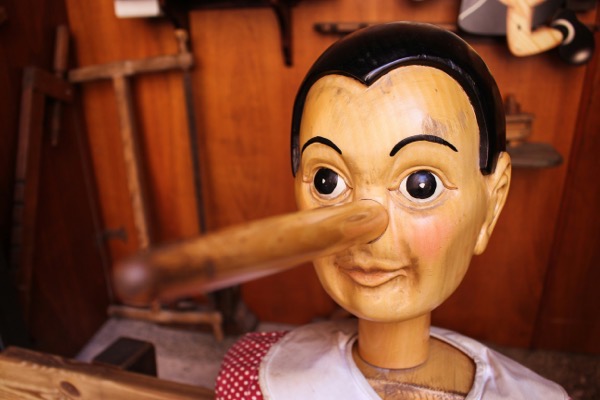
We Are Living In Pinocchio’s World

I read a lot. It’s so ingrained in me it’s become part of my DNA. Good writers and writing are like magnets. I’m drawn to it. I live to read something that strikes me upside the head, or cuts deep in the heart. Om Malik’s piece, We Are Living In Pinocchio’s World, struck hard and cut deep. Go read it. 

Jametlene reskp Q79XFGuTFfM unsplash.Om is a writer I’ve paid attention to for quite a while. What he thinks and writes is alway informative. Typically his topics are tech related. But in this piece he’s done what I often attempt to do, (not nearly as well as he), weaving together the common threads about tech and politics, or more importantly the people behind them both, that bind one to another into a whole with the precision of a finely tuned instrument. In this case, a pen. You have to read it. 

Here’s an excerpt:

Most people remember Pinocchio as a story about lying. The nose grows. You get caught. Lesson learned. But that reading misses almost everything Collodi was actually doing. The book is a close study of a society where deception has gone ambient, woven into every institution, every transaction. Courts punish victims. Authority figures perform competence without exercising it. Experts are decorative. Society holds together through spectacle and habit rather than accountability. Into this environment, a naive creature is released, constitutionally unable to resist a good story about easy reward.

The nose is the least interesting lie in the book. The interesting lies are the ones that work.

You need to read Om’s piece to discover which are the lies that work. If you’re a fan of the story you can probably guess or recollect, but the writing here takes you there in wonderful ways. Either way, you’ll come away thinking that they are as plainly visible as the nose on your face. Yet somehow our gaze always seems focused to look past that.

Pinocchio is a favorite story of mine. I’ve directed a play version in the past. Perhaps Malik’s piece hit me so squarely because I spent time with the book during my preparation for that gig. It was a production for young audiences. The kids always loved it. Their parents or accompanying adults always seemed a little agitated after the performances. Thought of as the children’s story it was originally written as, it contains truth we adults conveniently forget or choose to ignore. Even in the much reduced stage version for young audiences the theme reveals its mark as squarely as it hits it.

As Malik puts it “Pinocchio is a story about a society organized around deception.”

He’s dissected the story, originally published in serial form, and reassembled and animated the core of its humanity in ways that not only meet our moment, but distill the chaos into a sublime simplicity. Much the way any skilled wood carver and maker of puppets would be envious of. 

I won’t say any more. I’ll just say again, go read it. 

You can also find more of my writings on a variety of topics on Medium at this link, including in the publications Ellemeno and Rome. I can also be found on social media under my name as above. This site does not use affilate links. 

(image from Jametlene Reskp on Unsplash)

Sunday Morning Reading

Biker heroes, cheese thieves, and stupidity checklists

Sunday Morning Reading time with stories and good writing about crime, incompetence, technology, shifts and changes, and cheese. There’s also hope in and amongst the chaos. Add a slice of cheese to your morning repast and give a read.

A rustic indoor display features a wide variety of artisanal cheese wheels and blocks stacked tightly on wooden shelving. On the left, smooth, rectangular orange-brown blocks are piled horizontally. On the right and center, large round wheels of varying sizes are stacked vertically, displaying diverse rinds—ranging from textured dark brown and dusty gray to smooth ochre and patterned beige. Photo by Azzedine rouichi YW_5rJvAdKw unsplash.

Starting this week’s edition with a surprising feel good story that reminds us we shouldn’t judge books by covers. Marlon G. Baxter tells the tale of young hearing impaired child who was saved from being trafficked in a Walmart by what appeared to most as an unlikely hero. You need to read “Heroes Wear Leather Too”: How A Deaf Child And A Biker Stopped A Trafficking Plot.

UPDATE: This pisses me off. Apparently the feel good story linked above is fake. I and several others have looked into it and it’s not holding up. Pardon my swearing, but this is so goddamned frustrating. I’m leaving the link and my description in for two reasons. Pointing out that we can’t trust a damn thing on the Internet anymore. Secondly, that really sucks given we’re all in a posture of looking for hope whenever we can find it.

In the wake of what’s happening at the ICE Delaney Hall detention center internment camp in New Jersey, Josh Kovensky recounts the story of what happened in the courts after similar battles over humanity happened earlier in Chicago. Check out How The Broadview Six Fought The Trump DOJ—And Found Massive Wrongdoing In The Process. Tough to see hope in these horrible moments as they occur, and it’s hard to believe we have to rely on the incompetence of evil doers after the fact, but here we are.

Speaking of incompetence, there are stories and there are stories. Andrew Kersley’s The Body In The Wheelchair: How Did A Troubled Family Get Lost By the State? This a tough read to digest on a Sunday or any day, but definitely worth your time. 

On the arts and politics front, a court has ruled Trump has to take his name off of the Kennedy Center and not close it down for renovations. Sounds like a victory. In the long term it may be, but Janay Kingsbury tells us that in the immediate future the damage may already have been done in Trump Hasn’t Left Much Kennedy Center To Stay Open. So much of what’s happening these days hurts my heart, but this misadventure hits me where I live.

Everything is changing, like it or not. Sonny Bunch thinks Hollywood is standing on the doorstep of yet another pivotal moment. Check out Hollywood’s About To Change (Again).

As far as pivotal moments go, there are quite a few happening all around us. Especially regarding searching the Internet. Google is reinventing itself and the Internet, leaving an opening for companies like DuckDuckGo and Kagi. Doc Searls writes How DuckDuckGo Can Be A Hero. Let’s hope these search companies seize the moment that’s before them.

And while we’re on the topic of tech, John Siracusa has published The EV Stupidity Checklist, suggesting ways the EV industry might get back on track. John could and should publish one of these for so many things in the tech sector. Perhaps also for so many other sectors of our lives.

I’m a cheese fan, and I’ve been known to nick a slice or two off of the hors d’oeuvres tray before the guests arrive. Olivia Potts tells us how organized crime fell in love with cheese in The Grate Cheese Robbery. Who knew cheese was the most stolen food in the world?

(Image from Azzedine Rouichi on Unsplash)

If you’re interested in just what the heck Sunday Morning Reading is all about you can read more about the origins of Sunday Morning Reading here. If you’d like more click on the Sunday Morning Reading link in the category column to check out what’s been shared on Sunday’s past. You can also find more of my writings on Medium at this link, including in the publications Ellemeno and Rome. This site does not use affilate links. 

Sunday Morning Reading

Sometimes a pear is just a pear.

Another Sunday dawns, so it must be time for Sunday Morning Reading. An interesting collection of pieces to share this week. On one hand it seems like any other week. On the other, this week’s edition offers a few nuggets worth chewing on. Don’t over think it. Enjoy.

Three green pears on a table top in various degrees of ripening. Photo by Tijana drndarski 3zmVSZQIozA unsplash.

Leading off, I’m highlighting an excellent series from The Baffler called The Profession That Does Not Exist. The Baffler bills itself as “America’s leading voice of incisive and unconventional left-wing criticism”, for what that’s worth. I find it an excellent source of good writing. Each of the pieces in the series that has the subhead “writing won’t make you a living”, is worth your time, but I’ll highlight two.

A Pear Is Just A Pear by Timmy Straw. Making your way in a crazy world you can find that sometimes a pear is just that. A pear.

Bertrand Cooper’s ISpyForGood recounts his experience as a social media investigator, a job that allowed the possibility of stepping out of poverty that entailed examining how others often scammed their ways to do the same.

Apparently the ruling class in Silicon Valley are worried that folks don’t take too kindly to their products or their ruling. David Wallace-Wells takes a look in A.I. Populism Is Here. And No One Is Ready. I guess when you threaten to turn the world upside down folks do get a bit antsy.

Open your arms and wave at just about anything happening around and to us and you can’t miss the obvious. Tom Wellborn takes it all on in The Frequency At Which Accountability Cannot Reach. Sometimes a pear is just a pear.

JA Westenberg says Outrage Is Letting Someone Else Set The Frame. Westenberg also offers up The War Between Fast And Legitimate Is Here. I suggest getting out of these messes we’re in calls for new frames or new acceptance of coloring outside the lines. Oh, wait. All the lines have been blurred.

James O’Sullivan thinks We’ll Soon Find Out What Is Truly Special About Human Writing. I suggest we’ll “rediscover” rather than finding out, but his point is spot on.

Meanwhile, Will Gottsegen says Sam Altman Wants To Know Whether You’re Human. It appears Altman and his ilk are looking at the problem through the wrong end of a telescope at a tiny mirror reflecting back.

On another front, Marianne Dhenin takes a look at The Small Wisconsin City That Defeated A Giant Data Center. I don’t think the robots will ever be able to muster this kind of civil action.

You, like I, may be overly tired of hearing anything having to do with the Epstein Files. Even so, I encourage you to take a look at this excellent piece from Gabrielle Glancy. I Grew Up With Epstein In Brooklyn. Our Neighborhood Held Dark Secrets not only tells a tale that should frighten, but one that I guess more might share than most ever want to acknowledge.

Happy Mother’s Day to all our mothers out there and all to come. Sometimes a pear is just a pear.

(Image from Tijana Drndarski on Unsplash)

If you’re interested in just what the heck Sunday Morning Reading is all about you can read more about the origins of Sunday Morning Reading here. If you’d like more click on the Sunday Morning Reading link in the category column to check out what’s been shared on Sunday’s past. You can also find more of my writings on Medium at this link, including in the publications Ellemeno and Rome. This site does not use affilate links. 


The Presumption of Looking Ahead: Chicago In 2050

Don’t leapfrog the current moment as we look ahead

In today’s insanity that tears at every thread of fabric we have, there’s optimism. There’s hope. And then there’s a presumptive impulse to embrace both and take a look ahead. The Chicago Tribune is running a series called Chicago 2050: Envisioning The City in 25 years.

Shutterstock 1106009873.

From the article announcing the series:

Voices from around the city will explore what Chicago could and should look like in 2050 in a series of essays. These pieces will publish each Sunday through May 10.

This collection represents a collaboration between Tribune Opinion and World Business Chicago, whose Horizon Lines: Visions for Chicago 2050 initiative also includes a design competition inviting the public to share the bold ideas and civic investments Chicago could make in the next 25 years.

The first two essays I’ve read do in fact put forth bold visions for the future. Laura Washington Wants To Bring Glittering Downtown Institutions To The City’s Neighborhoods. 

Tracy Baim Writes About The City’s Next Transformational ‘Great Migration’ sees a city where people move to Chicago for a variety of reasons, including access to reproductive and other health care, and a safer refuge from immigration crackdowns; all seeking a better life. Baim imagines the city passed a Bill of Rights for Chicagoans in 2027 that sparked the migration and the following investment needed to make it possible.

I applaud the Chicago Tribune for launching the series and look forward to reading more. It is important to look ahead and imagine a future beyond this current moment.

That said, I’d love to see the Tribune launch a similar series on how to confront the current realities of almost daily crisis we face as a city and as a country. Leapfrogging over those obstacles that blur any new vision for the future feels almost akin to looking at the city’s glorious skyline on a foggy day.

(Image from blvdone on Shutterstock.

You can also find more of my writings on a variety of topics on Medium at this link, including in the publications Ellemeno and Rome. I can also be found on social media under my name as above.


If Shoes Make The Man…?

The jokes write themselves

It was a big deal and a rite of passage for the males in my extended family when Uncle Robert gifted you a set of Florsheim shoes on your sixteenth birthday. He was a shoe salesman. He knew shoes. He knew feet.

D039de525588c66e77209dfbb6d601561a316260 700x459.

He always carried his Brannock device, the metal device that measured foot length, width, and arch length commonly found in shoe stores of old. He would measure you up before your birthday, so the gift was not a surprise but a statement.

He not only believed in the cliché that “shoes make the man” but that saying was embossed on his business card and also on your birthday card, tucked neatly in the tissue paper in the top of the shoebox. Like I said, he was a shoe salesman.

That aphorism not only signified that you were moving out of your boyhood to become a man, but it also announced your social standing to the world around you, and supposedly signified that you were of good character.

I guess that well worn cliché, like everything else in this world during the last decade or so, will need to be resoled now that the made-for-TV Pedophile-in-Chief is not only requiring the simpering slaves in his cabinet to wear his favorite Florsheim shoes, but gifting them those shoes to ensure their obeisance.

If shoes ever made the man and defined character, watching these men march in lockstep, wearing comically ill-fitting symbols of their subservience, it certainly reveals (again) just how character-less these bumbling bunions are as they trip over themselves to please their master.

My uncle tired to set us on a course for success. I’m sure he’s turning over in his grave at how these simpering sops fail to measure up.

You can also find more of my writings on a variety of topics on Medium at this link, including in the publications Ellemeno and Rome. I can also be found on social media under my name as above.


Lobsters, Steaks, and Grand Pianos Oh, My!

Excess always rises to the top

No one ever accused the bunch running the U.S into the ground of being smart. There’s proof enough every day to belay that notion. Yet we somehow pretend we’re surprised and outraged when these dumb grifters continually expose themselves as the dumbest collection of dumb grifters that ever took over a country and threatens the world.

Mauro mari kMwr4Z4i67E unsplash.

One (there are so many) of the latest outrages has to do with reports that the Department of War Mongering has been dropping large chunks of change on things like lobster tail, Alaskan King Crab legs, and steaks to chow down on, a Steinway baby grand piano, and lots of tech toys. Of course this report comes at a time when we’re at war, and after all of the tired talking points of ridding us of waste, fraud, and abuse that was DOGE. That seems so long ago.

Is it outrageous? Yes. Surprising? Not at all.

Excess always rises to the top. Always has, always will. I don’t care if it’s in government or business. There’s a sense of privilege and being owed that removes the shame shield once you’re making big bucks.

A few decades ago when I was working a temp job at a law firm I got to witness, and admittedly take advantage of it first hand. I, along with a small gang of theatre folk, was hired by a friend of one of that gang who happened to be a paralegal in charge of a document coding process in a large litigation case.

This was in the age before computers were on desktops. Paper was still king. We were set up on a large, unfinished floor of the building housing the law firm. Our job was to read thousands of documents, looking for references on certain subjects, names, transactions, etc… Each time we identified one that had a code we’d enter the document number and the code on a gridded sheet. At the end of the day those sheets went to data processing to be entered into a computer.

The point was to allow the attorney’s working on the case to request a printout of all documents relating to code xxx or yyy, and then send a file clerk to pull those documents. It seems archaic compared to today’s technology. It was actually just over the edge of ground breaking at the time.

The paralegal team in charge of overseeing us would also make up new codes if someone found something new that might relate, and then we’d go back over the already coded documents to see if any needed the new code.

This obviously involved lots of man hours. Like I said, there was a small army of theatre folk on the team. I was in the process of starting my first  theatre company at the time, and this gig was flexible enough for me to work as many hours as I needed or as few as I could get by with. Actors would come and go for auditions or other work. We were required to code 500 documents in a regular work day. I could do that pace in a couple of hours.

This temp gig paid very well. $10 bucks an hour. (Like I said it was a few decades ago.) If we worked overtime on a weekday it was time and a half. If we worked weekends it was double time. If we worked past 6:30 pm, dinner was on the client. Dinners weren’t fast food or pizza. We had plenty of surf and turf along with other good food from some of Chicago’s nicest restaurants. If we worked past 8pm the client paid for a taxi home.

I don’t recall anyone ordering a grand piano, but I’m sure the billing hours covered enough to put a few of the attorneys’ kids through school. The gig lasted about 15 months before the case was settled for millions of dollars.

I freely admit I made bank during those 15 months. I also found out later that the markup on the $10 bucks and hour I and others were making was marked up to $15 for each of us with a corresponding markup on overtime.

Excess at the top where amounts of money boggle the mind make it easy to justify the pampering and pilfering of clients, funders, and taxpayers. On the business side of the ledger it’s somewhat expected. On the public side we always seem surprised. We shouldn’t.

The only surprise should be that the folks taking advantage of the system are never smart enough not to get caught. But this current bunch might even take that bit of shock and awe off the table, the way they’re going.

(Image from mauro mari on Unsplash)

You can also find more of my writings on a variety of topics on Medium at this link, including in the publications Ellemeno and Rome. I can also be found on social media under my name as above.


Sunday Morning Reading

“The life of a man is of no greater importance to the universe than that of an oyster.” -David Hume

On the weekend when some parts of the world think they can alter time by simply changing the clocks, I’m reminded of the biggest lesson most learn in life: we’re each not the center of the universe. Most learn it. Some never do, or if they do, they continue to operate under that delusion. We pretty good at setting up systems and structures that reinforce and rely on that delusional thinking. Somehow that seems to be the theme running through the articles and writing I collected this week for this edition of Sunday Morning Reading. 

Bronze statue of a child sitting on an outdoor stone bench with legs crossed, reading an open book that rests on their lap, a small bird perched on the top edge of the book, and a stack of books beside them, with a paved walkway, grass lawn, and buildings in the background.Kicking things off is the story of how Humanity Altered an Asteroid’s Orbit Around The Sun by Becky Ferreira. The article links to the ScienceAdvances abstract on the nudge that might be as good as a wink.

Last week the war in the Middle East had just kicked off as I was publishing this column. This week it continues. And, yes, it’s a war, regardless of the stupid debate. Jonathan Taplin looks at The Terrifying New Era of American Imperialism, and Jay Caspian Kang examines The No-Explanation War.

“Society grows great when old men plant trees who shade they’ll never sit under” and the opposite of that wisdom is how Scott Galloway kicks off his piece on Role Models.

Ali Breland takes a looks at those yearning for a return to McCarthyism in ‘We Need To Do McCarthyism to the Tenth Power.’ Turning back time only works as a song lyric.

JA Westenberg offers up a A Soft-Landing Manual For The Return To The Second Gilded Age. It’s tough to avoid the usual hard crashes.

The Dodgy Code examines The Great AI Arbitrage: Making A Killing Before Your Client Wises Up. The inevitable turnaround on this is going to be something to see.

Before we get to that turnaround, Mathew Ingram says The Danger Posed By AI Just Got A Lot More Real All Of A Sudden. Going to be interesting to watch AI bots fighting each other to be the center of the universe. If we’re around to see it.

David Todd McCarty is Searching For Originality In A Sea of Slop. Even on dry land that’s tough.

I’ve been revisiting a lot of Shakespeare of late, so this piece by Alice Cunningham caught my eye. Check out Author To Revive Shakespeare Club After 300 Years. We could all do with revisiting the his works.

And to conclude this week, James Verini brings us the wild tale of The Man Who Broke Into Jail.

(Photo taken by the author.)

If you’re interested in just what the heck Sunday Morning Reading is all about you can read more about the origins of Sunday Morning Reading here. If you’d like more click on the Sunday Morning Reading link in the category column to check out what’s been shared on Sunday’s past. You can also find more of my writings on Medium at this link, including in the publications Ellemeno and Rome.