Missing the Fun in April Fools’ Day

The joke’s on us.

Damnit. I miss the fun of April Fools’ Day. Those days are apparently gone forever and I miss them.

P.12 poisson davril 470x376.

It certainly seems like it was a more innocent time, because while some would get offended, they were usually in the minority. Certianly compared to those who got a good joke and recognized a good leg pull for what it was and not some violation of personal space.

I recall being fooled and doing some fooling of my own. I recall entire websites publishing April Fools’ Day issues. (I worked for one that did.) And I recall the warnings to not take things too seriously. But these days the fun has been stripped from that way of thinking. That kind of fun left the room long before the painful moments we face very day, many of which seem like a joke because they seem so unreal. Yet, real they are.

I guess the negative reactions started to take over when the Internet, home of more copycats than original copy, made the proliferation of pranks available to all including those who would do so for malicious reasons. Call it Internet gluttony. That joke is always on us, because while humans do enjoy a good laugh, we also seem to enjoy overdoing just about anything to the point of pointlessness.

Some say you lose your taste for the kind of hijinx April Fools’ Day would bring as you get older. I’ve certainly gotten older, my tastes in most things have certainly matured. But damnit, I haven’t lost that longing for a good prank.

And that’s no joke.

You can find more of my writings on a variety of topics on Medium at this link, including in the publications Ellemeno and Rome. I can also be found on social media under my name as above. 

Sunday Morning Reading

Do we need Superman or just a Speakeasy?

I’m not sure about how you’re viewing all the things swirling around us these days and maybe it’s just the prism I’m seeing the world through, but most of the writing that attracts me all seems to relate. The common denominator is human arrogance, (perhaps it’s arrogant for me to say that). On the other hand is the push back against it, whether it be in global or national affairs, technology, or simply finding a new way to connect in what seems like old ways. Anyway, that’s a thread running through my mind as I share this week’s Sunday Morning Reading.

Freedom of Speech and Disinformation are two sides of the same worn coin that I’m afraid is on the verge of losing any of the value it once represented. Ian Dunt says that Progressives Are Rediscovering Freedom of Speech after the populists essentially used it as a cleaver to butcher it. 

On the other side of that coin, Mathew Ingram says that Disinformation Isn’t A Supply Problem It’s a Demand Problem, asking how do you correct a belief?

In a world were some want to remake it in an image that excludes those it deems undesirable, it turns out some Far-Right Influencers Are Hosting a $10K—Person Matchmaking Weekend To Repopulate The Earth. Manisha Krishnan tells the story in Wired

Speaking of humanity, Thom Hartmann thinks, Even Mice Have More Humanity Than Trump, Musk and the GOP. He’s right. 

Timothy Snyder has one of the best pieces I’ve seen on SignalGate called SignalGate: Violating National Security. It doesn’t get more simple than that title, and yet, we’re in a world where we let it get stupid, silly, and so much more complicated than it needed to be. 

Greenlanders seem to be pushing back with a bit more tenacity than most Americans want to muster at the moment. Sarah Ditum offers A Tip For JD Vance: Greenland Doesn’t Care About Your Frail Human Ego

On the technology front, Artificial Intelligence keeps dominating most discussions. Steven Levy takes a look inside Anthropic and its version with Anthropic’s Claude Is Good At Poetry-And Bullshitting. Here’s the thing that always makes me laugh about AI fluffing and fulminating. We keep playing circular games with these things, creating them, we’re told, to be better than our falliable selves at reasoning and to be more efficient to free our minds from drudgery. We are good at the creating part yet seemingly not smart enough to recognize the fallibility in all of our arrogant bullshitting. We’re obviously not smart enough to recognize that, so what makes anyone think anything artificial we create will do any better?

Apple continues stewing in juices of its own making as it heads into its next cycle of OS releases, leaving many aching for the days of Snow Leopard,  a release which supposedly was aimed at bug fixes more than new features. Matt Birchler reminds us that this was one of those bullshit marketing myths too many fell for in The Snow Leopard We’ve Built Up In Our Heads and links to a terrific rundown of why that was indeed a myth from Jeff Johnson in The Myth And Reality of Mac OS X Snow Leopard

As for the pushing back part of today’s introduction, take a look back, or listen back in cultural history at this piece in OpenCulture. Turns out after World War II, as the KKK was once again gaining some momentum, Superman stepped in to help slow things down. Check out Superman Vs. The KKK: Hear The 1946 Superman Radio Show That Weakened The Klan.

Watering holes are great places for connecting with other humans whether it be for refreshment, survival, or merely just a human connection. David Todd McCarty publishing on LinkedIn takes a look at The Return of The Speakeasy, reminding us that nothing was or is easy.

Image from Michael Constantine on Unsplash

If you’re interested in just what the heck Sunday Morning Reading is all about you can read more about the origins of Sunday Morning Reading here.  You can also find more of my writings on Medium at this link, including in the publications Ellemeno and Rome.

“Improper Ideology.” How Long Before They Just Call It Degenerate Art?

The whitewashing continues

It’s only a matter of time before the Nazis currently running America into the ground recycle Degenerative Art as a naming convention. At this point I’m not sure what’s holding them back giving their predilection for attacking anything other than the privileged white bread culture they seem to love. Although I doubt many of them actually eat white bread. 

Doing his worst to try and remake culture and history into something most of the world has left behind, Trump yesterday issued another of his plans. This time it’s directed at the Smithsonian Institution proclaiming that there has been a concerted and widespread effort to replace the “objective facts” of American History with a “distorted narrative.” Oh, yeah, it’s now called “improper ideology.”

The Nazis played a similar game with history and culture, labeling some of the art they didn’t like, or that didn’t support the world they wanted to create, as “degenerate art.” Funny though that those same goons sent troops all over Europe to snatch and grab quite a bit of that artwork for their own personal use. Go ahead, tell me who were the real degenerates. 

As I said, I’m not sure why the cowards in this administration haven’t stolen the “degenerate art” label for themselves, while they are stealing everything else. I’m sure there’s a Signal thread running around discussing it somewhere. 

I don’t need to lay out why this is bad and yes, stupid. The Smithsonian isn’t the only target and other cultural institutions are on the list, of course the most prominent prior to this being The John F. Kennedy Center for the Performing Arts. There have been and will continue to be many more sad and horrific days with horrific and misguided attempts at forcing blinders over muzzles.

At some point those you try to muzzle bite back. 

You can find more of my writings on a variety of topics on Medium at this link, including in the publications Ellemeno and Rome. I can also be found on social media under my name as above. 

The Severance Lumon Terminal Pro Computer Is Now On The Apple Store

Going all in on Severance hype on the Apple Store

Severance is quite a streaming hit for Apple TV+ and Apple is going all in on hyping the show and it’s Mac computers on the Apple Store.

CleanShot 2025-03-26 at 13.28.57@2x.

To push a behind the scenes look at the editing of Severance on Mac computers Apple added a pro version of the Lumon computer used in the show to the Apple Store website. Of course, they added the Pro version. You can visit the page while it’s still around by going to the Apple website and selecting Mac, then selecting The Lumon Terminal Pro at the top of the page. The video link is included on that webpage.

By the way, the behind the scenes video of the editing process using Macs and Apple software is quite good and worth a watch.

You can find more of my writings on a variety of topics on Medium at this link, including in the publications Ellemeno and Rome. I can also be found on social media under my name as above. 

The Atlantic Releases War Plans that Supposedly Are Not War Plans

We’re getting silly when we should be serious.

Whoo boy. We’re splitting pubic hairs and redefining words as fast as taking a breath allows.

 The Atlantic released the contents of the Signal chat between U.S. National Security Officials and The Atlantic’s editor Jeffrey Goldberg. This comes after denials that any classified information have been flying fast and furious from those under fire for being so arrogantly careless. 

Who knows where this story is going to go. Like a turd in a toilet bowl it can either be flushed or remain a floater. We’re effectively in an endlessly swirling toilet waiting to see. But sure, let’s spend time debating the difference between war plans and attack plans, what’s classified and what’s not. It’s been said a million times, so I guess it really doesn’t matter, but these are not serious people.

The whole world used to be watching. Now they’re just laughing. At some point this comedy of errors is going to end in real tragedy.

You can find more of my writings on a variety of topics on Medium at this link, including in the publications Ellemeno and Rome. I can also be found on social media under my name as above. 

Shared Apple Reminders That Never Disappear

A bug in Apple’s Reminders app.

Maybe one day Apple will find time to fix this bug with shared Reminders. Maybe not, given all that it keeps piling on its seemingly overflowing plate these days.

Here’s the thing. Apple has a nifty feature to share lists and Reminders in the Reminders app. It allows you to create a list and share it among family, friends, or perhaps even National Security officials but I haven’t heard of it being used that way. Yet.

It works as advertised when it comes to actually sharing a Reminder. My wife and I use it for grocery and other shopping lists. If she’s doing an inventory through the cabinets prior to a grocery run, I’ll get notifications of the Reminders she adds to the list.

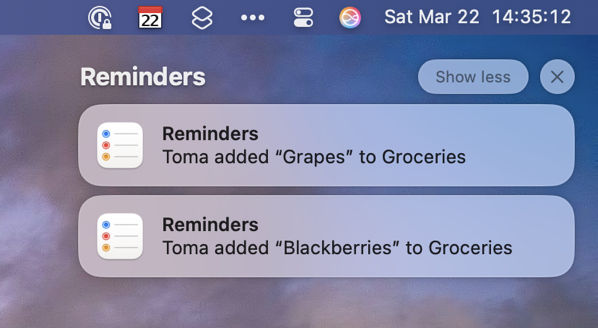
The problem pokes its head up after those Reminders are completed.  Those notifications don’t disappear the way non-shared Reminders do. They hang around. Seemingly forever. At least in my case, sometimes for hours.

The two Reminders in the image above are from my iMac. My wife added them after I had already headed to the store on a day of errands. They were still there hours after I had checked them off in the Shared Reminders list on my iPhone. The notifications still remained on my iPhone as well.

You have to manually get rid of these Shared Reminder notifications, which seems like a silly bug to me. It’s been around since Shared Reminders was introduced in iOS 13. It’s a shame it’s been around so long because Apple has done a good job over the years evolving the Reminders app into something that’s really useful.

Perhaps Apple Intelligence will figure out a way to fix this somewhere down the line. I won’t set a shared Reminder to check on that though.

You can find more of my writings on a variety of topics on Medium at this link, including in the publications Ellemeno and Rome. I can also be found on social media under my name as above. 

Lord, What Fools These Mortals Be

US Government Idiot Watch

Make no mistake, the folks Donald Trump has chosen for his cabinet are mortal. They are also fools.

According to Jeffery Goldberg, Editor-in-Chief of The Atlantic, they were communicating via the messaging app Signal, about recent military plans to strike Houthi rebels in Yemen. Bad enough in and of itself, but they also included journalist Goldberg in on the plans. 

According to Goldberg:

The world found out shortly before 2 p.m. eastern time on March 15 that the United States was bombing Houthi targets across Yemen.

I, however, knew two hours before the first bombs exploded that the attack might be coming. The reason I knew this is that Pete Hegseth, the secretary of defense, had texted me the war plan at 11:44 a.m. The plan included precise information about weapons packages, targets, and timing.

This is going to require some explaining. […]

And explain he does in this article which includes images from some of the messages between Defense Secretary Pete Hegseth, Vice President J.D. Vance, Stephen Miller, Secretary of State Marco Rubio and more. Don’t worry. Goldberg does a better job of protecting sensitive data than the culprits do.

Obviously everyone but those in the cult of knee-benders and compliant media knows already that these guys are incompetent fools. Perhaps now the media will start calling this ship of fools out for what it actually is. 

I don’t wonder at their incompetence or reckless behavior. I just wonder why they aren’t using government secure channels to do their dirty work. Has Elon Musk locked them out of that too?

You can find more of my writings on a variety of topics on Medium at this link, including in the publications Ellemeno and Rome. I can also be found on social media under my name as above. 

Adolescence: A Review

A tough watch. A must see.

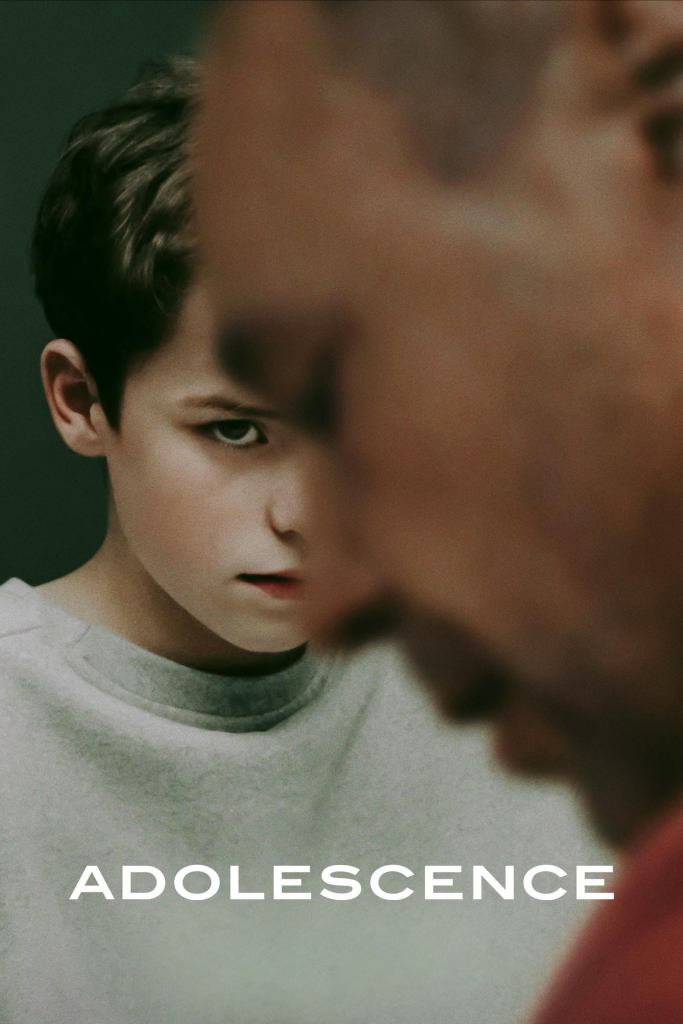
Adolescence. See it. 

 I’d like that to be all that I write about this sensational limited streaming series on Netflix, but there’s more I want to say.

You’ve probably heard of Adolescence. It’s become a well deserved hot topic of conversation because it’s an excellently done piece of storytelling that cuts through what seems like an impenetrable zeitgeist like a hot knife through melted butter. I’m glad to see that the hype tour surrounding its recent release ramp up after the series took off because something this good needs to be ballyhooed, bravoed, and brandished with flying banners.

For me, the bottom line, beyond just saying “see it” is that the producers and artists involved captured something we all know in our gut and make us face it. Captured it in a challenging way that they didn’t need to, but by accepting that challenge opened up those gut instincts with a rawness that touches nerves we may have all let somehow deaden. The painful intimacy of one family’s story opens up a chasm full of realizations that speak far beyond the specific issues so well portrayed. 

In brief, a young boy is accused of stabbing a young girl and through the investigation we delve into a world of young boys and men influenced by Incel culture and bullying. A world not understood in this instance by the young boy’s family, or any one of the parents’ generation that we meet in the story. Watching the investigating detective’s son educate his father is a remarkable scene.

We follow the story through the boy’s arrest, booking and indictment, examination with a therapist, and the devastating conclusion as the family deals with the aftermath. Every moment is powerful. His arrest in the first episode is only the beginning of story that digs into every emotion there is when confronted with horrible moments that one would hope no family would ever have to endure. I can’t imagine any parent of young children, especially boys, watching this without wanting to take the doors off of their child’s bedroom doors and disconnect them from the Internet. It is tough to watch and it’s impossible to look away. 

Toxic masculinity, patriarchy, bullying, isolation, fear, self-loathing, and the perils of social media become bigger monsters by the moment than any knife wielding attacker. 

Director Philip Barantini, known for filming his stories in one take, uses that device to exquisite effect. He didn’t need to, but he and his team did and the payoff is exquisite. Each episode unfolds like a one-act play, filmed in one amazing traveling take. In later interviews it’s been revealed that they only did two full takes after a weekend’s rehearsal for each of the four episodes. The one take keeps you riveted as it ratchets up the tension, never letting you catch a visual breather from the story. How they filmed the second episode which takes place in and around a school is almost beyond imagining. 

The cast is superb, especially 13-year old Owen Cooper as the young boy. In his acting debut he delivers a performance that is so outstanding that it takes your breath away. He’s not only a natural, his performance borders on the supernatural. Stephen Graham, who also co-authored the story with Jack Thorne, plays the boy’s father and strikes true in every millisecond he is on the screen. Well known for playing in-your-face tough guys, Graham’s journey through this story is like watching a rock face that has been the feature of a cliff, let go and crash into a million pieces. The rest of the cast is equally up to the task of matching these amazing performances.

The back story is that Graham, hearing about crimes featuring young boys stabbing young girls, felt that questions needed to be asked, the obvious one being “why is this happening?’ As is the case with all good drama and story telling Adolescence raises as many questions as it answers others. Certainly I imagine parents who see this, and they all should, will be asking the same questions the mother and father in the series do themselves. 

On a larger scale, as we daily face an adult and supposedly mature world that seems stuck in adolescent, if not prepubescent misbehavior, celebrating toxic masculinity, bullying, and the perils of social media, this amazingly told story might at least give us a glimpse into how we looked away too often, when we knew we shouldn’t, ignoring so much at the cost of even more.

You can’t look away from this. 

You can find more of my writings on a variety of topics on Medium at this link, including in the publications Ellemeno and Rome. I can also be found on social media under my name as above. 

Sunday Morning Reading

We’re all circling. We’re not listening. We should be reading.

Everything changes. Everything remains the same. Damnit. With that said, here is this week’s Sunday Morning Reading with links to articles worth sharing and perhaps pondering over. There’s a bit of satire, a golden toilet heist, and the evolving nature of a piece from draft to final polish. And, yes, there is politics. Everything changes. Everything remains the same. Damnit.

Let’s kick off with Tina He and The Last Human Choice. That link is to the final version of the story. I also strongly encourage you to check out the draft version she shared here.

Alex Reisner takes on The Unbelievable Scale of AI’s Pirated-Books Problem. The technical scale may indeed boggle, the human greed behind it is a story told too often.

The Apple Intelligence/Siri sucks discussion continues and will certainly do so for quite awhile. Andrew Williams in Wired says To Truly Fix Siri, Apple May Have To Backtrack on One Key Thing–Privacy. I hate to say it, but I think he’s right and wish he weren’t.

Good satire can often be hard to distinguish from the real thing. Eli Grober walks that line well in Sergey Brin: We Need You Working 60 Hours A Week So We Can Replace You As Soon As Possible.

John Passantino takes a look at the unraveling of Threads in Hanging by a Thread.

Clearing the throat and clogging up the arteries with a bit of political writing here’s James Thorton Harris with Imagine Deportation: When Nixon Tried To Pull A Trump On John Lennon. Everything changes, everything remains the same. Damnit.

In the category of “be careful what you wish for,” Phoebe Petrovic in ProPublica gives us How A Push To Amend The Constitution Could Help Trump Expand Presidential Power. We’ve already let quite a few demons out of Pandora’s Box, I’m not so sure we want to crack it open any wider.

Speaking of demons, Elizabeth Lopatto tells us How Trump And Musk Built Their Own Reality. Excellent piece.

John Pavlovitz says we all make mistakes in America Chose The Monster.

Mark Jacob always has a great look at the media, especially in this moment, In this one he examines When The Media Take MAGA Liars At Their Word. I mentioned to Mark that what infuriates me is not just the media taking him at his word–ignorance and stupidity know no bounds–but that they know better and report it out as if they don’t.

And to flush away politics Clodagh Stenson, Jonathan Eden and William McLennan tell the tale of The Inside Story of Blenheim’s Gold Toilet Heist.

Bringing my words at the top full circle, NatashaMH once again delves deep into the personal past through a contemporary moment (her reaction to the streaming hit Adolescence) in A Requiem For My Dreams. I’ll close with a quote from her piece about the series that applies to everything, everywhere all at once:

People say the series is about a new world that’s happening. Fuck that, ignoramuses. It’s about a world that has always been out there behind closed doors when ears weren’t listening

(Image from Ashni on Unsplash)

If you’re interested in just what the heck Sunday Morning Reading is all about you can read more about the origins of Sunday Morning Reading here.  You can also find more of my writings on Medium at this link, including in the publications Ellemeno and Rome.

Scorched Apple Trust

Hey Siri, how do you rebuild trust?

Trust is not an easy thing to earn. It’s far easier to burn. When it catches fire, it quickly consumes whatever is in its path. Such a conflagration is made worse when it singes those who have long cozied up, supported, and promulgated that trust as their own. Apple and those who make a living covering the company are both fighting a fire neither can put out without the other, regardless of what caused Apple’s rush to market whatever Apple Intelligence and the new personalized Siri was supposed to be.

New Screenshot.

The money quote of this episode and this moment is from John Gruber at Daring Fireball in Something Is Rotten in the State of Cupertino.

The fiasco is that Apple pitched a story that wasn’t true, one that some people within the company surely understood wasn’t true, and they set a course based on that.

You could say it starts and stops there. You wouldn’t be wrong.

Here’s a quote for Lance Ulanoff on TechRadar:

WWDC 2024 changed all that and gave me hope that Apple was in the AI race, but there were worrisome signs even back then that because, well, it was Apple, I chose to ignore or forgive.

Om Malk says:

It’s clear Apple must radically rethink its reason for being.

The heat on Apple has been smoldering for some time now with smoke in the air, wafting on a number of fronts. While I’m not pointing fingers and criticizing Apple pundits directly, (they were misled in my view), they’ve carried a lot of water for Apple, keeping these other recent flare-ups from burning too hot.

I’ve written about this Apple Intelligence episode previously, but to recap the particulars: Apple announced its flavor of Artificial Intelligence at last year’s World Wide Developers Conference (WWDC), carving out a fire line to slow down the burning narrative that it was behind and possibly missing the moment with AI. Boldly branding it as Apple Intelligence, the key reveal was unveiling a more personalized Siri, that unlike all of the other AI efforts on the market, would give users “AI For The Rest Of Us,” that would retain the firewall of Apple’s marketing mantra of being more secure and private.

Turns out it was a reveal that wasn’t really a reveal, but has now proven all too revealing.

As has been typical with new operating system features the last few years, Apple was clear at WWDC that some of this newness would roll out over the course of the year, so there was no surprise there. Also typical since COVID is that Apple’s announcement was a canned commercial.

Atypical, however,  none of the flashier features were ever shown to pundits and journalists, even under cover of an NDA. As Gruber and others are now saying, that smoky smell reeks of vaporware.

Each year Apple faces some degree of heat as it heads into WWDC. I think things will be hotter than most this year with a higher degree of skepticism. What we’re witnessing is a landscape built by years of trust, earning the benefit of doubt, turned to ashes. They say that hell has no fury like a woman scorned, but I’m here to tell you that might take second place when it comes to torching the trust relationship between a company’s PR reps and those who cover them.

Let’s talk about that trust.

Back in my gadget blogging days for GottaBeMobile.com the first rule of thumb was always be skeptical of PR. I’ve been on both sides of that fence, pushing out PR for my own projects and covering it for others. A PR pro tells you the story they want you to cover. Covering that story, you look for the holes in addition to covering it. By and large most of the well know Apple pundits have done a reasonably good job of revealing those holes in my opinion.

Apple was different in that for the most part if they made a claim it usually held up. I remember distinctly when the first iPad was released with a claimed battery life of 10 hours. Those of us at GBM were surprised when those claims proved accurate once we had the devices in our hands. Promise made. Promise fulfilled. Trust earned.

No company is perfect, certainly not Apple. But Apple has been reasonably consistent for most of the time I’ve been covering or using their hardware and software. There have been lapses — Siri being a prime example — but nothing that wasn’t overcome and perhaps, now in retrospect, wrongly overlooked because of the trust Apple built with the media and enthusiasts who covered the company. As most now realize, the smoke and mirror show of last year’s WWDC Apple Intelligence announcement was a red flag warning that needed more scrutiny than relying on trust banked through good will and follow through.

It’s currently being endlessly debated whether or not this failure was caused by a rush to satisfy Wall Street deep in its AI bubble, poor leadership, or just trying to climb too high a mountain too fast in an attempt to create a technical solution that, as announced, would one up those already on the market. In the end I don’t think it matters much what exactly sparked this blaze. I do think it matters how Apple chooses to put out the fire. Those who cover Apple, and more importantly users, feel scorched. I’m guessing there are some in Cupertino feeling that as well.

Burn scars don’t heal well or quickly.

You can find more of my writings on a variety of topics on Medium at this link, including in the publications Ellemeno and Rome. I can also be found on social media under my name as above.