Review: A House of Dynamite

Shear terror in the face of madness

When you live in Chicago, a city under siege by ICE, I’m not sure, but I guess it a strong bent of masochism to watch a movie where your city gets nuked by an unknown enemy. That’s sorta how I felt when my wife and I cued up the excellent Kathryn Bigelow film, A House of Dynamite over the weekend. We debated back and forth, and decided to give it a go. I’m glad we did.

CHANG   THE HOUSE OF DYNAMITE   UBO_20240926_29648_R3.

It’s certainly not an easy movie to watch, regardless of where you live. Yes, a city gets nuked. But that’s not the strength or the point of this movie. Nor should it be a spoiler at this point. The strength lies in watching otherwise steely individuals wither when their shields of confidence dissolve into vulnerable realizations as a horrible what-if scenario becomes all too real to contemplate, yet alone live through, even though they’ve contemplated them over and over again in training.

We don’t get the disaster movie special effects explosions and carnage. They aren’t necessary for this film to work. What we do get is far more terrifying. We get holes ripped through the souls of the characters we’re allowed to meet as they do their jobs. We get belief in systems and protocols developed by smart people shattered, leaving us all wondering if any of it was worth it in the end. It’s a parable of the moment.

It’s certainly not a Halloween movie, but I can’t think of a scarier film to watch as it strips away every possible security blanket and myth we might have become just too comfortable imagining, and realize just how much we’re in the hands of human beings just like us when horrible things unfold.

That’s more than frighteningly true with an utterly incompetent administration running the U.S at the moment. Noah Oppenheim’s script subtly, deceptively, and brilliantly lays that out as it carries us deeper into unfolding and inevitable danger that may be too horrible to watch, but is certainly more terrifying not to.

Bigelow and Oppenheim’s characters all seem more than capable of the sensitive jobs they hold. The filmmakers dispense with the tropes typical of these kind of disaster flicks that feature the usual array of martinets, incompetent and insufferable fools, and even heroes, sung or unsung. Sure, we see some of the personal traumas and trivia some may be dealing with as they come to work on the morning in question. But we initially watch each of these men and women of strong character knuckle down to perform when the unthinkable moment presents itself.

We then watch as they ultimately come face to face with that horrible moment of realization that there is nothing they can do to stop the inevitable. We watch as the enormous personal toll alters their breathing as they have no choice but to carry on with psychic wounds bigger than any smoldering crater before the missile even hits. Bigelow’s camera work and the cast’s strong acting gives us searing glimpses into those moments of horror and devastation as she catches her characters when each crushing realization occurs.

In three parts and an epilogue, the movie repeats the same horrible 18 minutes or so from missile detection to impact, presenting the scenarios in different government locales and viewpoints. We see a missile interception station in Alaska communicating with the White House Situation Room, the STRATCOM headquarters in Nebraska, FEMA headquarters as they have to pull out the plans for the inevitable, and the president who is attending a basketball camp event and then whisked away, while his aides work to inform him from the White House.

Those parts overlap using much of the same dialogue presented from these different points of view via video or audio conferences as the government tries to formulate its response. The repetition of dialogue serves as a better tension builder and reminder of the time before impact than any of the countdown clocks we might see on the screen. As does the sudden departures of those who need to be taken to secure locations as events unfold.

Bigelow’s cast includes some big name actors in a cast headed by Idris Elba and Rebecca Ferguson, that also includes Anthony Ramos, Gabriel Basso, Jared Harris, Jason Clarke, Greta Lee, and Tracy Letts among a host of others. Some of that host provides some of the most telling reactions on the periphery of the action as they watch their bosses try to handle the situation.

To my mind, nothing procedural happens that we haven’t seen or read about in countless Cold War thrillers of the past. With one exception. I was left with the same sort of existential dread after viewing A House of Dynamite as I was when I first read Tom Clancy’s Sum of All Fears and realized the weapon was going to explode. The only difference is that there was a hero in the Clancy novel to pick up the pieces and help us move beyond the horror.

In A House of Dynamite there are no heroes. Only humans. Trying to do their best. Not failing. But having to face the reality that sometimes your best is simply not enough in the face of madness.

You can also find more of my writings on a variety of topics on Medium at this link, including in the publications Ellemeno and Rome. I can also be found on social media under my name as above.

Sunday Morning Reading

Reading for the morning after the No Kings rallies and beyond.

Good Sunday morning. This edition will be slightly different than most. Yes, there will be a collection of links I find worth sharing (and hope you’ll read). That said, most of the links in this week’s Sunday Morning Reading come from an excellent series in The Atlantic’s November 2025 issue from a collection of authors called The Unfinished Revolution.

Yes, that’s behind a paywall. Sorry, not sorry. But this is the Internet and if you’re not already paying for excellent content like The Atlantic, there are a million ways to skirt that restriction. The issue is one worth paying for, if for no other reason to keep it as an archive for future generations. That may prove important one day. I plan on picking up a hard copy soon enough.

The issue is also timely as this country approaches it’s 250th anniversary, and finds itself being torn apart by forces that, suffice it to say, don’t represent what many believe this country stands for, or at least the promise of what it should stand for, even with it’s historical problems and faults.

It’s also timely because we’ve just seen the second and larger No Kings rallies across the country. Given that the founding of this country was indeed the original No Kings protest that kicked off a revolution against rule by a monarch, the timing also feels apropos.

I won’t highlight all of the articles in the series, you should go and check them out yourself. The ones I do link to are ones I found particularly interesting. And yes, there will be other links in today’s Sunday Morning Reading as well.

Before I get to The Atlantic’s links, this article by Garrett Graff,  Three Reasons I Still Have Hope For America, is more than worth your time. I agree that there is strength in numbers, but I don’t think the inevitable passing of a leader this time around will have the affect the world has seen historically.

The title of Anne Applebaum’s Atlantic piece, The Beacon of Democracy Goes Dark, certainly tells you where the piece is going. Even so, it is more than worth reading and contemplating. One way or the other we are living through and participating in moments that will change the world. We just don’t know how.

We’re dealing with our own Mad King wannabe, so Rick Atkinson’s The Myth of Mad King George draws some interesting parallels beyond their affinity for makeup that I suggest could be similarly drawn behind most of the troubled men who’ve plagued the world throughout its history.

Political and social schisms divide not only countries, but often families as well. Stacy Schiff asks Why Did Benjamin Franklin’s Son Remain Loyal To The British?

Jeffrey Rosen says that insurrection has marred the American constitutional order since its founding. He’s correct. Check out The Insurrection Problem. If you’re not an American history buff, I bet you’ll be surprised.

George Packer thinks we do need patriotism in his piece I Don’t Want To Stop Believing In America’s Decency. I concur with his sympathies, but when the meaning of words like patriotism and decency can get so easily mangled it becomes trying to cling to those beliefs.

Fintan O’Toole asks What The Founders Would Say Now. We’ve imagined, conjured, twisted, and appropriated who and what they and their words are so often, that in my view I think they’d tell us all to either grow up or go to hell.

As most of this week’s Sunday Morning Reading and my own thinking has focused on the issues facing America as a whole, I found former NY Times drama critic Frank Rich’s piece on Zohran Mamdani and the New York mayor’s race fascinating. Not just for his at times surprising commentary on that race. But for those paying attention, Why Powerbrokers Got Everything Wrong About Zohran Mamdani incisively dissects the deeper fissures subsuming the bigger political picture as well.

And to close out this week, here’s a piece from 404 Media about the amphibian symbol that has become associated with our current protests against the administration, Matthew Gault’s The Surreal Practicality Of Protesting As An Inflatable Frog.

If you’re interested in just what the heck Sunday Morning Reading is all about you can read more about the origins of Sunday Morning Reading here. If you’d like more click on the Sunday Morning Reading link in the category column to check out what’s been shared on Sunday’s past. You can also find more of my writings on Medium at this link, including in the publications Ellemeno and Rome.

Sunday Morning Reading

Everything you can imagine is different, yet it’s the same.

It’s a Sunday. It’s a Sunday in Chicago. The Cubs lost. (Not surprising.) The Trump regime continues its horrendous snatch and grab policies all over the city (Increasingly not surprising but still terrifying.) Leaves are falling, but somehow they feel dirtier and without the bursts of color we’re used to seeing beforehand. And the world marches on. Time for a little Sunday Morning Reading. 

Neil Steinberg wrote a terrific piece about Chicago amidst all that’s going on called What A Lovely Day in Chicago. It’s a love letter. It’s an homage. It’s a snapshot. As he puts it “We need to remember that this is oppression for oppression’s sake, a practice built on lies. The city is fine.” That’s the odd thing. The city is fine. It’s the oppression that’s not.

Timothy Burke’s The News: Reign of Error expands on a piece by Henry Farrell that says that institutions and communities need to coordinate their resistance to Trump. As Burke puts it one of the obstacles is that “the closer that institutions get to one another in character and mission, and the less necessary it is to be competitive, the more that they are overwhelmed by the narcissism of small differences.” It’s an excellent dissection that reveals why some in higher places of different sectors might be holding their tongues while their mouths are agape at what’s going on around us.

Empywheel thinks The Nativists Are Getting Restless: How The Comey Prosecution May Backfire. I’m not sure it matters in the end if the point is do damage as loudly as possible.

David Todd McCarty asks the question Is Your Imagination Robbing You of Real Experiences? Cogito, ergo sum?

I wrote a play years ago about John Brown and Harpers Ferry, one of those moments in American history that we seem to want to forget, yet never goes away. Robert S. Levine tells us Why Donald Trump Wants To Erase John Brown’s Fiery Abolitionist Legacy (and Why He Will Fail.)

There was so much craziness about the Nobel Peace Prize this year given, well you know why. So much so that many of the other awards were overlooked. The Nobel Prize for Literature went to Hungarian author Lázló Krasznahorkai. I have several acquaintances who adore his work and were tremendously excited. I did some reading on Krasznahorkai and stumbled up on this 2011 piece by James Wood called Madness and Civilization about the author. Worth your while.

On the Artificial Intelligence beat, Sora is the latest thing everyone has an immediate love/hate relationship with. But this isn’t about that. Sarah Perez says It’s Not Too Late For Apple To Get AI Right. Frankly, I think it’s too late for any of these companies to get it right, unless “right” is about winning the con game.

Resting my case on that last statement, Alexandra Jones looks into the connections folks can’t make in real life and are turning to AI for in ‘I Realized I’d Been ChatGPT-ed Into Bed’: How ‘Chatfishing Made Finding Love On Dating Apps Even Weirder.”

And as Autumn continues its march, New Englanders Are Fed Up With Leaf-Peeping Tourists Ruining Their Fall, so says Jared Mitovitch.

(Image is a photo I took last Fall)

If you’re interested in just what the heck Sunday Morning Reading is all about you can read more about the origins of Sunday Morning Reading here. If you’d like more click on the Sunday Morning Reading link in the category column to check out what’s been shared on Sunday’s past. You can also find more of my writings on Medium at this link, including in the publications Ellemeno and Rome.

Apple’s Freezing Out Another ICE Related App: DeICER

Apple continues working for ICE

I’ve linked to coverage about Apple purging apps that are designed to help those looking to protect themselves from the Trump regime’s ICE actions including ICEBlock and Eyes Up. Add another one to the list, this time the app is called DeICER.

According to Pablo Manríquez of Migrant Insider, DeICER is a “civic-reporting app used to log immigration enforcement activity.”

Manríquez goes on to suggest that Apple effectively is treating federal immigration agents as a protected class of individuals. HIs article also includes an account of an interview with the app’s developer Rafel Concepcion over Apple pulling the app and the app’s intended purpose. It is worth a read.

In Chicago, these are dangerous and confusing times, even more so depending on who you are, what you look like and where you live. With a largely unhelpful media, it is challenging for anyone concerned to find accurate info or, as in the case of Eyes Up, preserve what they may have seen or recorded. Do note that recording info with smartphones is one of the methods of resistance Illinois and Chicago officials are encouraging citizens to perform in the face of these actions.

Even so, there are areas of Chicago wherein you would never know this kind of thing is happening. Local independent media is stepping up its game, but unfortunately doesn’t have the reach that large outlets do.

Apple isn’t alone in their cowardly actions. Google is also pulling apps of similar ilk. Both companies are referring to their respective App Store guidelines in their defense of their actions with Apple telling Concepcion,

Information provided to Apple by law enforcement shows that your app violates Guideline 1.1.1 … because its purpose is to provide location information about law enforcement officers that can be used to harm such officers individually or as a group.

These ICE enforcement actions want to project toughness in their aim to intimidate and harass, but by and large each of these maneuvers to hide what they are doing only serves to show how afraid those responsible for these actions actually are of the chaos, fear, and harm they are causing, regardless of the chest-thumping content they are creating on their raids.

The only ones who appear more afraid are Apple and the other big tech and media companies that keep going along to get along.

You can also find more of my writings on a variety of topics on Medium at this link, including in the publications Ellemeno and Rome. I can also be found on social media under my name as above.

Apple Bans “Eyes Up” A Video Archival App For Perserving Video of ICE Actions

Stephen Miller wishes he had Apple’s plenary powers

Apple is at it again as it works hard to keep in the evil regime’s favor, banning yet another app. The latest target, Eyes Up is “dedicated to preserving video evidence of ICE abuses until it can be used in court.”

250919 broadview ICE ew 245 a441d7.

According to the report from 404 Media, the developers of Eyes Up state that unlock ICEBlock, an app Apple banned last week that allows uses to track ICE actions, Eyes Up does not do real-time tracking of ICE Actions.

The Eyes Up website is still up and can be used for the same video archiving purposes with content uploaded from TikTok, Instagram or X and include “a mix of professional media reports and user-generated clips of ICE arrests.”

Apple’s cowardly capitulations and its own plenary actions here are bad enough. As wrong as they are, they seem beyond odd, given that ICE itself has camera crews filming their actions and creating content about their actions to broadcast as it seems fit in its own promotional videos. Talk about a disconnect.

You can also find more of my writings on a variety of topics on Medium at this link, including in the publications Ellemeno and Rome. I can also be found on social media under my name as above.

Sunday Morning Reading

Winter is coming. Or is it here?

It’s a Sunday and that means it’s time for Sunday Morning Reading. Fall is beginning its march towards Winter, but the chill in the unusually warm Chicago temperatures this weekend aren’t weather related. Some of that is reflected in today’s selections as well as other topics, some that feed the soul, while others fuel the fires.

Shutterstock 632908457.

It’s tough to watch what’s going on in the streets of some of our cities and towns, and there’s no denying what Ian F. Blair points out That The United Police State of America Has Arrived.

Another Ian, this time Ian Dunt, discusses The Politics of Drawing a Moral Line, sketching a parallel between events in Britain and the Ezra Klein interview with Ta-Nehisi Coates. By the way, I encourage you to listen to that interview. It’s not easy, but nothing is these days.

Chicago’s Neil Steinberg comments that Next, Dyeing the River Green Will Be Cast As A Terrorist Act. I don’t think he’s far off.

On the Artificial Intelligence front, what was bound to happen happened when OpenAI released Sora, its tool for creating short movies, or better yet (worse yet?) putting yourself into one. That followed quickly on the heels of the uproar over the creation of Tilly Norwood, an AI actress created out of bits and bytes, and her creator seeking talent agent representation. Hollywood producers and bean counters are thirsting over better bottom lines ahead. Maureen Dowd has an interesting look at When A.I. Came For Hollywood.

Meanwhile one of the tech overlords, Peter Thiel, is obsessed with the antichrist and thinks tech is the only way to keep whatever that is from destroying us all. Laura Bullard takes a look at what’s behind Thiel’s obsession. Don’t be surprised at where Thiel drew some of his inspiration in The Real States, and Real Story, of Peter Thiel’s Antichrist Obsession. 

Continuing on the Artificial Intelligence beat, Bullsh*t Warning from John Warner, examines how to think about writing in the age of AI.

Mathew Ingram asks So What’s So Great About Reading Books? 

And to wrap things up this week, take a look at Christopher Michael Hefner’s On Letting Go Of The Idea Of The Tortured Artist. 

I included the image above from Fotgraf Petrova Olga on Shutterstock of an empty playground because I noticed this week that Chicago’s parks and playgrounds are empty of the laughter and life we usually experience due to ICE activity throughout the city before Winter begins to set in. There’s a different chill in the air this Fall.

If you’re interested in just what the heck Sunday Morning Reading is all about you can read more about the origins of Sunday Morning Reading here. If you’d like more click on the Sunday Morning Reading link in the category column to check out what’s been shared on Sunday’s past. You can also find more of my writings on Medium at this link, including in the publications Ellemeno and Rome.

Empty Parks In Chicago Thanks to ICE

Dark times on bright days

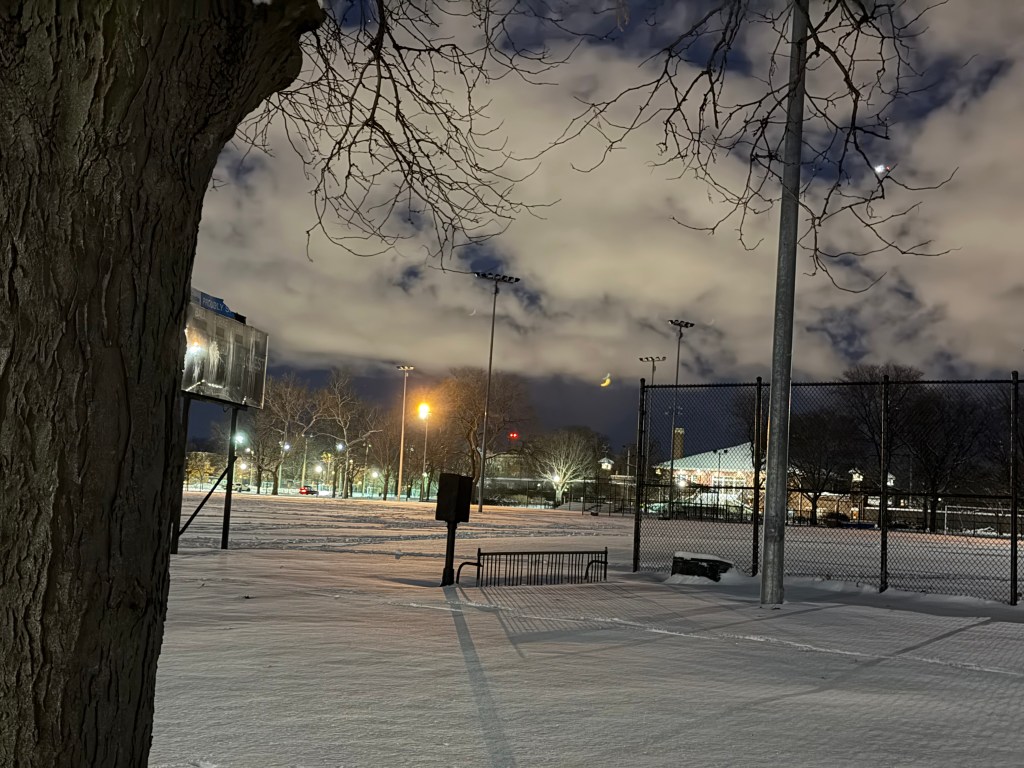
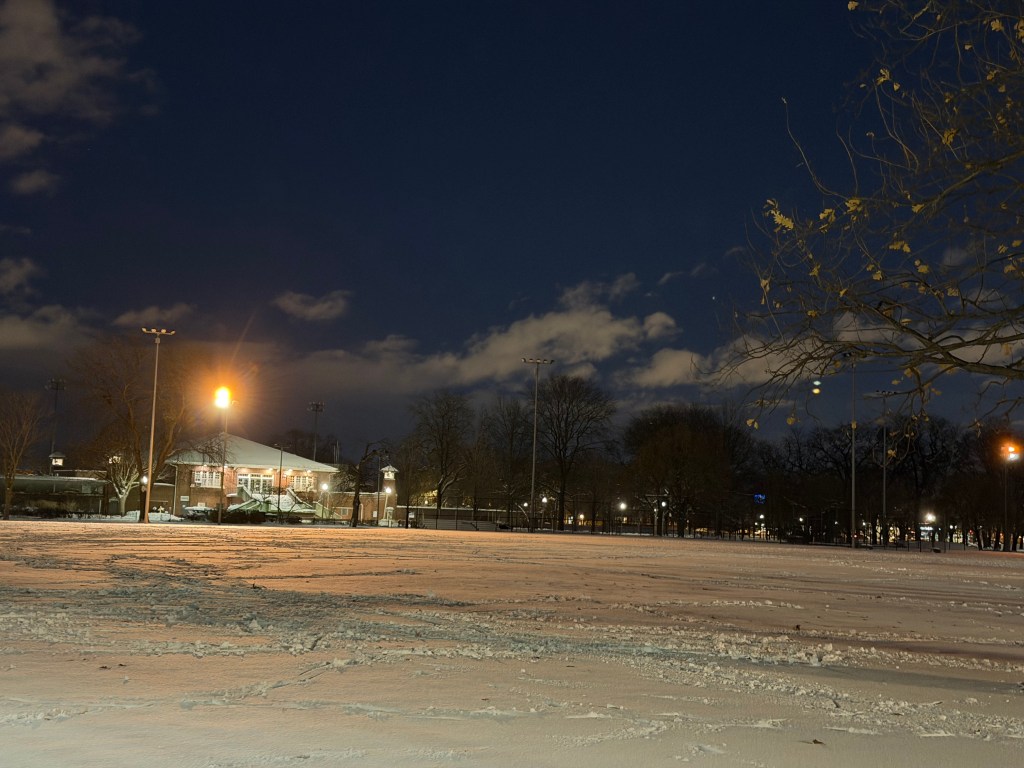
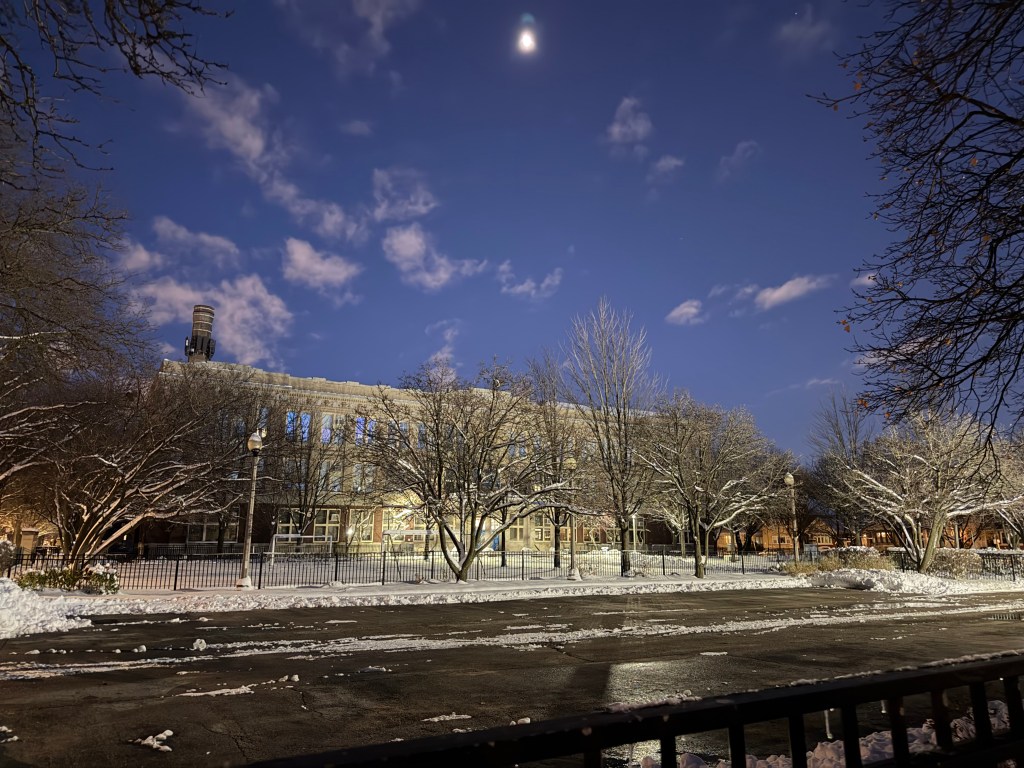
One of the effects of the ICE occupation in Chicago is seeing empty parks. Parks that used to be filled on beautiful weekend mornings with soccer games, flag football games, families with kids in strollers, folks on bikes, and folks just out for a walk or a beautiful day in the park,.


That’s not the case this Fall in my neighborhood. Which isn’t surprising given what we’re hearing from other neighborhoods.

You can also find more of my writings on a variety of topics on Medium at this link, including in the publications Ellemeno and Rome. I can also be found on social media under my name as above.

Nothing Lasts Forever

Another chapter of Chicago theatre history comes to a close

You know how you know that nothing lasts forever? When you go online to search for images of a place you worked, shed more than a few beads of sweat, blood, and tears in, and you can’t find images of it.

That’s the case here. I’m referring to Theatre Building, at 1225 W Belmont, Chicago. Yes, there is no “the” in front of it. Like Apple insists that there is no “the” before iPhone. In the case of the performance space that was intentional. Pretentious maybe, but purposeful nonetheless.

Theatre Building was founded as such in 1977 by three theatre companies: Travel Light Theatre, Pary Productions and the Dinglefest Theatre Company. The latter of those became Performance Community, and then the New Tuners Theatre, and after Travel Light and Pary Productions hit their respective closings, ended up managing the three theatre complex.

At one point or another just about every Chicago theatre company, and some from outside the city, rented performance space there. It was one of the centers of gravity in the Chicago theatre landscape. I can’t tell you the number of amazing performances by Chicago actors that I’ve seen on those stages. Shows hit. Shows flopped. Shows happened. And that was the point and purpose of Theatre Building.

Theatre Building was sold to Stage 773 in 2010 and still continued providing a home for Chicago theatres, until it changed it’s focus and became WHIM, which was supposed to be a sort of interactive attraction before it folded.

Here we are in 2025 and The Chicago City Council has granted approval for the property to be converted to a five-story apartment complex. As I said. nothing lasts forever.

My theatre company, The Absolute Theatre Company rented space there for a number of years, and I later served on the staff of New Tuners Theatre and helped manage the facility. I helped renovate the three theatre spaces in the late 90’s. So there are quite a few personal memories attached to those stages. They seems like another lifetime ago.

Change happens. The sad thing about this one is that there are three less performance spaces in Chicago, but that’s been the case since Stage 773 ran into financial difficulties and had to shut down after becoming WHIM.

I may not have been able to find a picture this morning of Theatre Building, but I do have this brick from the building that was given to me after my last show, before I headed out to Virginia for that part of my theatre career.

Guess I’ll hang on to that piece of Chicago theatre history.

You can also find more of my writings on a variety of topics on Medium at this link, including in the publications Ellemeno and Rome. I can also be found on social media under my name as above.