Just before this year’s World Wide Developer Conference debuts Apple has released a new ad for the iPad Pro. It’s probably the one it should have released in the first place, instead of the now infamous Crushed ad. It’s better than the previous ad in a lot of respects. Certainly it better shows off the iPad Pro’s capabilities, but I’m not sure it’ll ever erase the crushing response from that first ad.
You’ll remember that furor visited on Apple after releasing Crushed featuring all sorts of musical instruments and other creative tools being crushed by a hydraulic press into an iPad Pro. I for one wasn’t that upset about the ad, but quite a few folks thought Apple misread all sorts of rooms and moments. Given how the creative classes are a bit squeamish about AI possibly replacing artists and crushing the human element out of the act of creation it lit a spark that eventually led to a rare Apple apology.
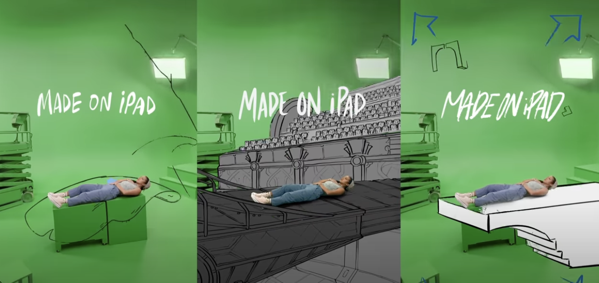
This new ad shows off what the new iPad Pro’s can do featuring three different artists creating three different backgrounds while actress Sofia Wylie dances around in front of a green screen. Even the Apple Pencil gets some screen time.
Here’s the new ad called Worlds Made on iPad. Better to make than crush.
You can find more of my writings on a variety of topics on Medium at this link, including in the publications Ellemeno and Rome.
Sunday Morning Reading is back while we continue to unpack. The environs are different, but everything remains the same.
Everything changes and everything remains the same. We’ve completed the Big Move and are now in our new abode. Heads sleep on the same pillows, coffee is sipped from the same mugs, but we’re still living out of boxes and unpack others. That’ll be the state of things for a bit still. That’s life on the home front as everything has changed but remains the same. That seems to be the case in the world in this week’s Sunday Morning Reading.
Kicking things off is an excellent series of articles from The New Republic. What American Fascism Would Look LIke is a collection of essays by a collection of writers, each one worth your time. Start with Ruth Ben-Ghiat’s The Permanent Counterrevolution, but check them each out.
There was lots of big news on the Artificial Intelliegence front. There was also not much new in much of that news. LLMs still bung things up. Microsoft, Google, and OpenAI pushed their newest in a race that feels very much like the runners keep tripping over themselves. Nico Grant in the New York Times points to the ongoing snafu in Google’s A.I. Search Errors Cause a Furor Online. At some point this is all going to end up like the streaming entertainment wars. Once all the players are on the field there will be consolidation. There will still be problems. Those new subscription prices will rise. And everyone will complain.
NatashaMH pens a nifty piece about how the act of writing gives a teacher a window into the mind of her student in Writing The Unpretentious Prose.
And while we were busy moving, Apple released new iPads. Not surprisingly everything changed and everything remained the same. The new software that may or may not yield potential changes is due to roll out in a few weeks, but until it does, those iPads remain behind the software curve while setting the hardware pace. Or at least that’s the accepted line in Apple circles. Federico Viticci penned an excellent summary of what he feels iPads are still missing in Not an iPad Review: Why iPadOS Still Doesn’t Get the Basics Right and Steve Troughton-Smith also put out The iPad Pro Manifesto (2024 Edition).
Closing things out this weekend as I try to get these old bones moving again to unpack some more boxes, check out Margaret Dean’s A Mutiny of Bones about recalcitrant bones and aging and how it’s not just the joints that stop bending. The one constant as everything changes around and within you, some things just don’t work the same as they once did.
If you’re interested in just what the heck Sunday Morning Reading is all about you can read more about the origins of Sunday Morning Reading here. You can also find more of my writings on Medium at this link, including in the publications Ellemeno and Rome.
Let iPads be iPads. Trying to be all things to all people doesn’t work in life, and I don’t think it works in tech.
Years ago when I was a Microsoft MVP for Tablet PCs I attended an MVP Summit in Redmond. It was an exciting and stresssful moment for Tablet PC advocates, of which I was one. The winds of change were kicking up and hinting that Microsoft would favor Touch over pen based Tablet PCs in the future. For broader context, the PC Pundit industry had already declared the Tablet PC a largely failed niche device.
Then Microsoft CEO Steve Ballmer was to give the keynote and take questions from the audience. As I lined up to ask a question I noticed that he was taking notes on a piece of legal paper. I never got a chance to ask my question which is probably a good thing because I changed what I had prepared to ask. Had I gotten the chance I was going to ask why he wasn’t using a Tablet PC to take notes. It certainly would have made a big statement if he had done so. It certainly did make one that he didn’t.
Preparing to watch Apple’s recent Let Loose announcement about new iPads I was reminded of that moment in watching the usual, now almost cliché, iPad criticism flow through my social media timelines. There are two routinely rhetorical responses about the iPad:
The iPad lineup is confusing.
The iPad Pro needs to be more Mac like and/or run macOS.
Each of the above is true. Clichés are rooted in variants of truth. Yes, there is confusion, but on the first point I think Apple largely let loose the air out of a that balloon.
There’s now an easy roadmap to follow if you’re interested in a full-sized iPad. $349 will get you an iPad without many of the bells and whistles, perfect for a child or a mother-in-law. You can spend upwards of $3000 for the fully kitted out iPad Pro. Or you can settle in the middle for a $700 starting point for the iPad Air that now includes most of the technology previously only seen in the iPad Pro lineup. That all makes good sense to me. Oh, and the iPad mini is still around and I’m guessing we’ll see an update of that later this fall.
Apple is largely to blame for the second confusion point, due to a rare misfire in its marketing years ago. Before we had Apple Silicon in MacBooks things weren’t looking great for the MacBook. There was lots of talk about the iPad being the future and what it would take to make it so. Apple even launched a What’s a Computer? campaign in 2017 promoting iPads that helped confused the issue.
Tech pundits took their cue. They pushed the envelope on their devices and pushed Apple to keep on keeping on and the iPad Pro (introduced in 2015) kept getting more powerful and more capable right along side the “The iPad is the only computer I need but it needs more” stories. But hardware is only part of the story.
Things continued to get confusing when Apple split the iOS operating system into two and birthed iPadOS in 2019. Certainly that hinted at more to come from the software. Even so, the software narrative continued to feel incomplete while the parallel story of the immediate success of Apple Silicon Macs intensified the dissatisfaction.
Now, let me be clear. I’m not one of those who feels the iPad needs to be more Mac like or run macOS. Could there be advancements to iOS? Yes. I’d love the File system to work more intuitively. Quite frankly, I’m fine with how iPads sort of multi-task now, Stage Manager being the exception.
I use an iPad Pro with a keyboard at times, but I mostly use it as a tablet in landscape mode for work with an Apple Pencil. I’m a use the right tool for the job kind of guy when it comes to tech. Since both Microsoft and I abandoned Tablet PCS, an iPad has always been the right tool for most of my work in the theatre, alongside a Mac for portions of that and other work. I don’t see that changing, given that I’ve tried most of the other tablet options out there. Let iPads be iPads and Macs be Macs. Trying to be all things to all people doesn’t work in life, and I don’t think it works in tech.
In my view, the “iPadOS isn’t complete until it can be a Mac software” story has created a myth like reverse branding similar to the negative one of Microsoft’s Tablet PC. So much so at this point, I don’t think Apple will ever be able to counteract it, even if it did create an iPadOS that runs macOS or some version of it. And that’s a damn shame.
I made this comment prior to the Let Loose event, yesterday.
I could very easily be wrong, but I don’t think we’ll ever see that mythical iPad that some wish for. Personally I don’t think it’s necessary and I’d be more than happy if we just let iPads be iPads and Macs be Macs. We’ll see how and if the story changes at WWDC in a few weeks. I’m guessing it won’t and I’m just fine with that.
You can find more of my writings on a variety of topics on Medium at this link, including in the publications Ellemeno and Rome.
Artificial Intelligence is still the dominate tech craze of the moment. Big announcements are expected within the next several weeks from Apple, Google and just about anyone else who can prompt an AI generated press release into being. I’m sure AI will continue to be on the tips of most digital tongues.
Or will it all just be summarized?
One of the trends I’m seeing predicted is how users will take advantage of Artificial Intelligence to summarize web pages. That sounds like a useful, perhaps noble idea but it raises questions. The web relies so much on advertising to generate revenue. AI is supposed to help ad creators and marketers do better and more efficient designing and targeting. What happens when users stop visiting web pages and just rely on summaries? That’s a genuine question I have and would love to read some possible answers.
It’s not that I’m a big fan of ads, but I remember back in the heyday of RSS that there was all sorts of tension regarding losing ad impressions between web publishers and web users that relied on RSS readers. Then RSS feeds of web articles got truncated into teasers to send users clicking. Then ads got inserted into RSS. Will the same thing happen with ads being inserted into AI summaries? How would that work with something like an AI Pin or the Rabbit R1? (Although I doubt those devices will be around for us to find out.)
Given that one of the other predicted AI trends is being able to verbally converse with whatever AI machine you choose, how would that work with advertising? Will a user need to listen to ads before getting a response to their prompt? There’s already a lag in compute capacity resulting in delays delivering responses to queries with most current AI engines. I don’t imagine waiting for an ad insertion will help improve on that.
Again, these are sincere questions that I’d love to hear some thoughts on. Just don’t summarize them.
You can find more of my writings on a variety of topics on Medium at this link, including in the publications Ellemeno and Rome.
Some serious stuff in our world this week, but we must dance on. Here’s some Sunday Morning Reading to share.
The world is a very serious and uncomfortable place based on what I’ve been reading this past week, so the topics for this edition of Sunday Morning Reading will lean that way. Good writing all around that meets the seriousness we’re all dancing around.
The United States Supreme Court is about to alter the world we’ve all thought we’ve lived in. Rick Wilson of Everything Trump Touches Diesfame writes:
“The Supreme Court will delay Trump’s case and then make the most cataclysmic legal mistake in American history.
We’re not talking Dred Scott bad, Plessy bad, and Korematsu bad.
We’re talking about previously unimagined levels of bad.”
Wars, protests and political shenanigans about those wars abound. Mo Husseni has laid out his thoughts about what’s happening in the Middle East and our reactions to it on Threads and published them as an essay on Medium. Well worth your time to read his piece titled Hmmm… do I need a title?
A few topics on the tech front, the mechanism that one way or the other bring us all this news and writing about that news, Edward Zitron tells us about The Man Who Killed Google Search.
I don’t agree with everything Allison Johnson says in The Walls of Apple’s Garden Are Tumbling Down, but she makes good points and provides a piece of the necessary frame around this unfolding story.
Changing the subject, it is tough to laugh given all that is swirling around us. But laugher is crucial. Always. As unprovoked a release of emotion it is, laughter does take on different forms and come from different places. Christie Nicholson takes on The Humor Gap between men and women. Hat tip to David Todd McCarty for this excellent piece.
A Summer Place by Natasha MH reminds us that whatever we’re mired in, we should always dance on and quoting Neil Gaiman we should
Face Your life
It’s pain,
It’s pleasure,
Leave no path untaken.
If you’re interested in just what the heck Sunday Morning Reading is all about you can read more about the origins of Sunday Morning Reading here. You can also find more of my writings on Medium at this link, including in the publications Ellemeno and Rome.
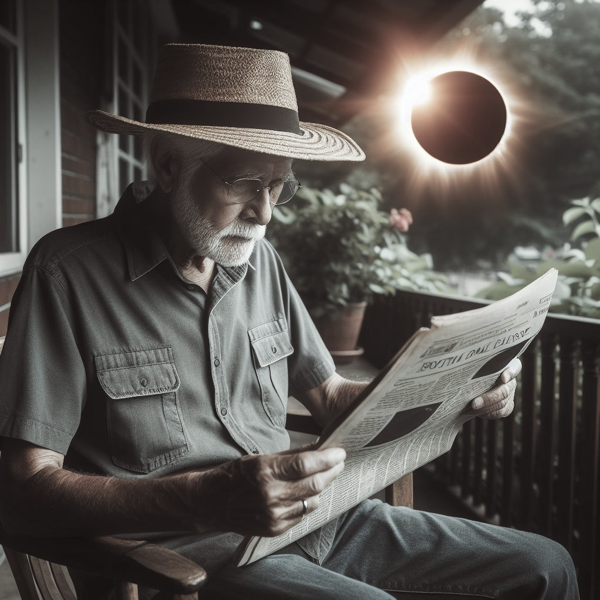
The world seems a bit crazier each week when the calendar flips to Sunday. In the lead up to a ‘sun eating’ total solar eclipse perhaps a bit more so. Don’t gamble on things settling down after it passes. Regardless, here’s some Sunday Morning Reading to share.
According to Bertrand Russell “fear is the main source of superstition.” That may well be true. David Todd McCarty takes a look at The Disparity Between Fear and Progress.
Getting back to creativity in the real world, textile artist Minga Opazo explores being confident, finding solutions, and balancing research with your artistic practice in Engaging With The World In Your Work. Hat tip to Stan Stewart.
One thing about the political beat is that most of what we see and read is re-packaging things most of us already know. Details do matter, but not after the orange bull has wrecked the China shop. Lachlan Cartwright tells us What I Saw At The National Enquirer During Trump’s Rise. A too late, but good read.
Our Entire Society Is Becoming Addicted to Sports Gambling says Alex Shephard. I’m sure everyone saw this coming once the Supreme Court gave gambling the go ahead. Don’t forget, someone paid off Justice Kavanaugh’s gambling debts as he was being groomed for the bench.
If you’re interested in just what the heck Sunday Morning Reading is all about you can read more about the origins of Sunday Morning Reading here. You can also find more of my writings on Medium at this link, including in the publications Ellemeno and Rome.
Click bait headline writing has become so ever present, overused, and tired that it has certainly lost all meaning to anyone except the chronically bored or the algorithmically programmed.
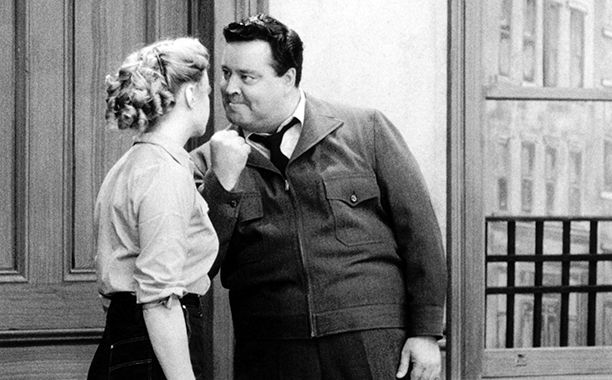
Whether it was “Pow!” or “Bam! Zoom!” it was usually the preface to “Right in the Kisser!” That’s what Jackie Gleason’s Ralph Cramden would exclaim to his wife Alice in The Honeymooners when she got under his skin. For some reason SEO experts think we’re attracted to this kind of cartoonish, wrestlemania-type of violence and have slobbishly skewed that assumption into the seemingly never ending stream of headlines saying “So and So Slams So and So” or “So and So Destroys So and So.” Internet publications and ad mills have followed the gravy train right along. “Rips,” “blasts,” and “bashes” also seem popular.
This type of click bait headline writing has become so ever present, overused, and tired that it has certainly lost all meaning to anyone except the chronically bored or the algorithmically programmed. As lazy as it is, I guess it works. Which is not only a sad commentary on humanity but a sadder one on algorithms and the SEO industry.
I mean where’s the creativity? Why not use “lambasts,” “harangues,” “admonishes,” “berates,” “objurgates?” Or for those with syllabaphobia how about “dress down,” “haul over the coals,” “lays into,” “lace into, or “slag off?”
And just imagine how many of those boringly inept and inutile headlines are being fed into AI training engines.
You can find more of my writings on a variety of topics on Medium at this link, including in the publications Ellemeno and Rome.
The price of chocolate is through the roof and even ideas seem to be melting away in some fashion or the other in this Easter edition of Sunday Morning Reading.
The price of chocolate is through the roof and even ideas seem to be melting away in some fashion or the other in this Easter edition of Sunday Morning Reading.
If you’re interested in just what the heck Sunday Morning Reading is all about you can read more about the origins of Sunday Morning Reading here. You can also find more of my writings on Medium at this link, including in the publications Ellemeno and Rome.
The line between Winter and Spring can be as confusing as it is normal. That fine line between confusing/normal runs through most this week’s Sunday Morning Reading. Enjoy!
It’s a Spring Sunday morning in Chicago. Nippy temps frustrate the daffodils that keep brushing off the snowflakes. As confusing as the weather may be, it’s also quite normal. That fine line between confusing/normal runs through a lot of this week’s Sunday Morning Reading. Mostly tech, some music, some marketing, some fear, and a troll or two, Enjoy!
The big tech news this week was the U.S. going after Apple as a monopoly. It’s brought out the the explainers and turned legions of Apple fan boys into anti-trust lawyers. Even the lawyers are going to need lawyers to figure this one out in my view. One of the best early inning reactions to this was from Jason Snell at Six Colors in U.S. versus Apple: A First Reaction.
When Marketing is everything, everything eventually gets reductive. Doc Searls of The Cluetrain Manifesto fame tackles this in Getting Us Wrong, a piece from December that recently resurfaced in my feeds and is always a timely read. So too is The Cluetrain Manifesto.
Social Media always seems to be at war with itself over most things, misinformation being one in a long list. I’m not sure Social Media presents more or less of that than other means of socialization, but Scott Duke Kominers and Jesse Shapiro think It’s Time To Give Up On Ending Social Media’s Misinformation Problem.
Musician and composer Stan Stewart thinks it’s dangerous to explain something before he does it, but he does so anyway in I’ve Got Some Explaining To Do. With all that’s going on in the world there’s something cooking up inside of Stan and I’m looking forward to the music that comes from this.
Christopher Mims spent a couple of weeks using AI tools to do his work and comes out convinced we’re on the cusp of a ‘Cognitive Revolution.’ As he puts it: “Here’s my verdict: The last time I had an experience this eye-opening and transformative was after I bought my first smartphone.” Check out his thoughts in Want To Know If AI Will Take Your Job? I Tried Using It To Replace Myself.
If you’re interested in just what the heck Sunday Morning Reading is all about you can read more about the origins of Sunday Morning Reading here. You can also find more of my writings on Medium at this link, including in the publications Ellemeno and Rome.
You can do anything you want in the land of the free and the home of the brave. As long as you don’t get caught. Or as long as you have enough cash in the bank to hire the right legal beagles. That’s the American way. Always has been. The bigger you are the more you can toss around your weight. That works more times than it doesn’t. In the case of the United States vs. Apple, Inc, not so much. Thus far.
The Department of Justice swooped in on Apple charging that the iPhone is the crown jewel of an illegal monopoly. You can read the lawsuit here. I’m not going to get in to all of the legal issues. Not really my game. As to that lawsuit I’ll take the liberty of saying the following:
I don’t understand the equation that led to the monopoly designation. It seems odd given similar such cases in history. The fact that different percentages for different types of valuations is being tossed around in all of the first reactions I think bears that out.
I’m in deep in the Apple ecosystem. I use the hardware and software. I enjoy the tech (when it is working as designed), and I hope they’ll continue to make the high quality products and software they do. Having used hardware and software from other makers, I find Apple’s superior and better for my needs. When and if that changes so will I.
For the most part I buy Apple’s pitch about security and privacy. There are times I think the marketing around security and privacy leans too much towards myth-making, but in my experience the myth seems to have some foundation.
I’ve listened to the complaints from developers and other users through the years and find most of those I understand justified. Apple may have indeed created problems by creating and running the App Store the way it has. I personally don’t feel victimized by that, but I understand the issues presented by those that see it differently.
Bigger picture I will say the following. Apple, like some other familiar tech giants of note (Microsoft, Google, and Amazon), largely brought this on itself with a too big for its bank account britches attitude.
Arrogance and swagger isn’t just a feature of big tech companies. It’s a bug that infects any company or anyone who gets too greedy for their own good. I’ve seen it happen too many times.
History is full of these stories and many American myths are built on that foundation. You work hard, you make your pile, and you do it your way. The world beats a path to your door and you think you own the path and the world. You made your own rules along the way and bent some existing ones to your will. Perhaps broke a few.
That mythical song of good old American capitalism has been sung so often everyone knows the tune and the lyrics. When it comes to Apple’s stanza, you add in a chorus about Apple’s rise from an almost near-death experience and it becomes a siren song with a powerful resonance.
In my view, limited as it may be, Apple could have easily made some adjustments along the way and possibly avoided this current mess. But the powers that be obviously thought different. They also thought they could swagger their way through and beyond this. That may well prove out in the years to come. And it will take years.
Meanwhile, here’s some good early inning commentary on this story so far. I’m sure there will be much more ahead.






 Life on the Wicked Stage: Act 3