The series is complete. As a nation the question remains open.
We completed watching Ken Burn’s excellent The American Revolution this week. Thank goodness for streaming, allowing us to view it on our schedule. Two spoiler alerts. First, we won the war. Second, we’re still struggling with many of the differences that made the formation (and perhaps the continuation) of what would become the Untied States such a close thing.
The series is excellent and I highly recommend it. Burns and his team do their expected thorough job of researching and producing the documentary. We’re lucky there were so many letters written by those beneath the status of the cast of characters most of us could identify at a glance, because that material provides much of the content and texture inside the frame.
The production does it’s job so well that my hunch is some will come away learning things they never knew about a period of our history we’ve wrapped in so many myths it would keep troops at Valley Forge warm. I would also guess that in today’s political and social climate there will be far too many who tune out or don’t tune in because they prefer the comfort of the mythology.
Which is a damned shame. As I said in an earlier post about the series:
I’m not hearing things differently, but I’m hearing how folks can take their own meaning out of many of the things written and said during that period that led to this country’s founding. History may indeed rhyme, but it also echoes. Often in strange ways.
If you have followed any of Burns’ work you know his approach to American history is to tell the parts of stories we leave out of the picture. I grew up in a part of the country where you could turn your head left or right, spit, and hit the history of the American Revolution or the Civil War. I count myself lucky that my 10th grade history teacher kept reminding us that there was so much more to discover about our past than he had the time to teach us, planting a seed of curiosity that continues to grow inside of me to this day decades later.
Ken Burns and his team continue to keep that curiosity growing. We should all be grateful and unafraid that they do so.
You can also find more of my writings on a variety of topics on Medium at this link, including in the publications Ellemeno and Rome.I can also be found on social media under my name as above.
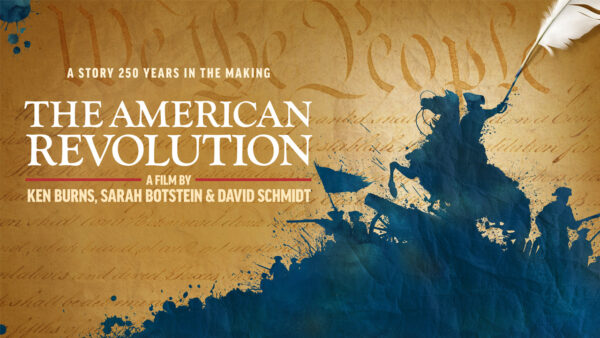
Started watching Ken Burns’ The American Revolution last night. It sounds almost trite, but it’s typical Ken Burns (and his collaborators) historical documentary excellence.
What struck me is how I’m hearing things I’ve read and heard over and over again about the period leading up to the American Revolution. So far, (only two episodes in) the history is as I studied it. And by studying it, I mean well below the surface of the myths folks of my generation were taught in school.
I’m not hearing things differently, but I’m hearing how folks can take their own meaning out of many of the things written and said during that period that led to this country’s founding. History may indeed rhyme, but it also echoes. Often in strange ways.
That’s certainly true if all you hang your tri-cornered hat on are the myths.
You can also find more of my writings on a variety of topics on Medium at this link, including in the publications Ellemeno and Rome.I can also be found on social media under my name as above.
Times have changed how money changes hands. Back in the day purchasing a subscription meant you got a deal. It also created a relationship between the customer and the service, that often, but not always, protected subscribers from price increases. At least for a time. That really no longer exists. Sure there are deals and free trials to seduce new customers, but typically those deals are for a period of time and then the price goes up. It’s changed the definition of what we used to call “the dummy price.”
“The dummy price” was for those who didn’t subscribe, thus paying full price. We used to joke in the theatre biz that “the dummy price” was for the guy who’s wife told him she wanted to see a show, and then he’d have his secretary use his credit card to buy the tickets when he got to the office.
When we had to raise prices we’d do so on single tickets and reward our subscribers by telling them we’d keep their current prices intact, thus increasing their savings and further building trust in relationship. That made it a bit easier sell when we inevitably had to raise subscription prices.
It was similar to buying the newspaper each day, instead of subscribing. A subscription was always cheaper than the newsstand price.
The only thing I think I subscribe to these days that actually offers any type of real savings is an E-ZPass, which in my state cuts the cost you pay at the toll booth by 50%.
Of course those are different markets than streaming entertainment, which didn’t exist when I was setting “dummy prices.” Subscriptions for streaming entertainment only gets you access. Certainly a lot of content is available for the price you pay, but realistically it’s more than anyone could ever consume. But the promise is access. The quantity makes much of the content as disposable as it is available, even if it is cheaper than back in the day when you had to purchase physical or digital media in order to view it at home.
The only thing you’re really buying is the inevitable price increase and a bit more frustration in balancing out your entertainment budget.
The new definition of “the dummy price” is hoping there are enough customers who don’t pay attention and miss the price increase.
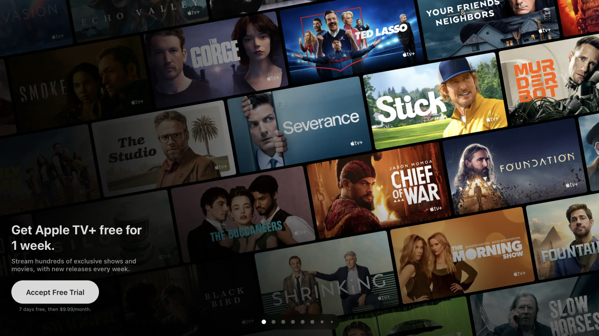
Apple announced today it’s increasing its monthly subscription price for its streaming entertainment service, Apple TV+ from $9.99 to $12.99 a month. Other streaming services do the same thing, more frequently than Apple. But every player in the market affects the perception of all the rest.
It’s led to a sort of comedic game for consumers who want to stream from different services. They cancel a service for a period of time, often waiting for new content to become abundantly available or a particularly desired title, and then they’ll resubscribe after canceling another service. Or they’ll just keep creating new email accounts, resubscribing under a new name.
Currently the streaming companies seem to be comfortable enough with this type of customer churn, but it builds more attraction to titles than it does to a service’s brand, which in turn drives up the marketing costs for each new title. I imagine at some point streaming companies will find a way to clamp down and try to minimize that churn, the same way they have done with password sharing.
But the subscription game is not just an entertainment industry business practice. There are quite a few services that want your monthly tithe and offer the same kind of price inducements. But it’s certainly easier to cancel Netflix for a period of time than it is some of these other types of services once the inevitable price increase comes along. It will be interesting to see how the AI market shakes out once the first big company needs to break the $20 a month barrier for general consumers.
Bottom line it’s a shell game for both customers and companies. Death and taxes used to be the only constants in that old axiom about the only things certain in life. That needs to be amended to include price increases for subscription services.
You can also find more of my writings on a variety of topics on Medium at this link, including in the publications Ellemeno and Rome.I can also be found on social media under my name as above.
Got a chance to watch Marc Maron’s latest on HBO or whatever it calls itself this week. Called Marc Maron Panicked, it’s genuine good stuff if you’re a fan of Maron’s comedy and satire, or even if you’re not.
Playing off of the panic most of us feel about most things these days, Maron’s pointed observations not only hit his targets, they knock a few of them down, delivering more than a few belly laughs.
If you think he’s panicked and anxious about the criminals running the country these days, you’re right. But as usual Maron takes sharp aim at liberal failings that helped usher them into office. It’s not all politics. Evacuating during the LA fires, end of life issues, avoiding Nazis and other calamities fuel his panic and his comedy.
Highly recommended, even if you’re not a Marc Maron fan.
You can also find more of my writings on a variety of topics on Medium at this link, including in the publications Ellemeno and Rome.I can also be found on social media under my name as above.
The ever expanding universe of the Star Wars franchise is one that often leaves me colder than I imagine I’d feel if I were floating alone in space. That’s the same with most of these run the IP into the ground franchises. When something comes out of those factories that’s actually decent, it’s a surprise. One of the surprising beacons of warmth has been the Andor series, which is currently streaming in its second season. I’m also a fan of the movie Rogue One for which Andor is a prequel.
Yes, the story is about the rebel rebellion against the Empire, but there’s something different about Andor. Recently I read a piece from Derek Pharr on Nerdist, Hope Without The Force: How Andor Rewrites Rebellion. It helped me put my finger on why the show feels different and surprisingly current beyond the scope of small screen entertainment.
Here’s a quote:
Andor makes the quiet argument that the Jedi weren’t just irrelevant to the uprising against the Empire. They were liabilities and detached from everyday suffering. The Jedi were fixated with balance and prophecy, and wildly ineffective at stopping fascism when it counted. The Jedi Order had their shot. They blew it. Meanwhile, on Ferrix and Narkina 5, regular people are building the rebellion through sweat, sacrifice, and solidarity. Not the Force.
Whether you are a fan of the series or not, I encourage you to read the entire piece. Pharr’s thesis is indeed a good one about the series. But for me it spins off into many of the challenging moments we face today in the wake of our own evolving evil empire. One that’s certainly not intelligently designed, much less preordained.
Bottom line, it’s going to come down to those of us on the ground.
I think we need to eternalize and begin acting on that instead of waiting around and looking for heroes among congress critters, political parties, media mouthpieces, TV lawyers and those at the bar, or even judges to come to the rescue. We know what’s ahead is going to continue to get uglier. We’re probably going to have to meet ugly with a little ugly ourselves. Cue Tina Turner’s We Don’t Need Another Hero.
As Pharr puts it,
The Jedi were legends. The rebellion was real.
No elegant solutions from a more civilized age. Just people. Flawed, desperate, courageous people, who decide enough is enough.
He also argues that noble as they were, the Jedi were spectacularly bad at saving things in their attempts to reclaim balance. I don’t know about you, but that sounds frighteningly familiar.
Read Pharr’s piece if and when you watch Andor. If you don’t watch the show, read the piece anyway.
Pie in the sky? Perhaps. But I’ll take a serving and ask for seconds.
You can find more of my writings on a variety of topics on Medium at this link, including in the publications Ellemeno and Rome.I can also be found on social media under my name as above.
Apple Store takes center stage in this hostage drama.
I’m guessing iHostage is a flick you’ll never see on Apple TV+ even though it features the Amsterdam Apple Store as a prominent character in the story. iHostage, directed by Bobby Boerman is currently streaming on Netflix and is based on an actual hostage situation that took place at the Apple Store in Leidseplein in 2022.
As far as hostage films go it isn’t bad nor is it great. These things typically only end one way, and of course if you have any familiarity (I did not) with the actual events you already know how things turn out in this case. But as to the entertainment value there’s good fun to be had as the director and his cameras look for every conceivable angle to shoot within and without the Apple Store. AirPods play an important role early on. Also interesting is watching some of the hostages use an Apple Watch to check whether or not another was having a heart attack. (For the record, an Apple Watch can’t detect underlying causes of a heart attack, but it can detect irregular rhythms.)
The acting, visuals, and direction are generally good, keeping the tension going as we cut back and forth between the hostage taker and his primary hostage, and those on the police side trying to bring about an end to the event. But again, these stories have a formula about them that to some extent just requires a plug-and-play approach with all the necessary elements of filmmaking. I’d say everyone pulls their job off well with the sort of cleanliness you’d expect in an Apple Store. In the end it’s all a bit too clean.
You can read about the true story behind the movie here and watch the trailer below. I’d say it’s a fun watch if this kind of story is your kind of thing, or you just want to tour an Apple Store in Amsterdam.
You can find more of my writings on a variety of topics on Medium at this link, including in the publications Ellemeno and Rome.I can also be found on social media under my name as above.
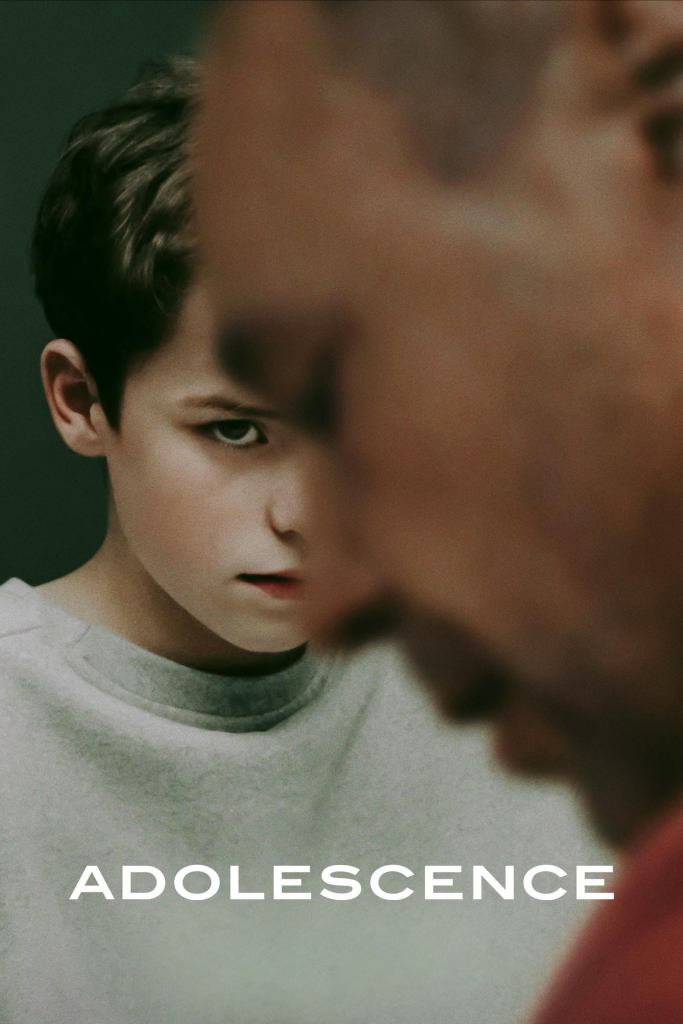
I’d like that to be all that I write about this sensational limited streaming series on Netflix, but there’s more I want to say.
You’ve probably heard of Adolescence. It’s become a well deserved hot topic of conversation because it’s an excellently done piece of storytelling that cuts through what seems like an impenetrable zeitgeist like a hot knife through melted butter. I’m glad to see that the hype tour surrounding its recent release ramp up after the series took off because something this good needs to be ballyhooed, bravoed, and brandished with flying banners.
For me, the bottom line, beyond just saying “see it” is that the producers and artists involved captured something we all know in our gut and make us face it. Captured it in a challenging way that they didn’t need to, but by accepting that challenge opened up those gut instincts with a rawness that touches nerves we may have all let somehow deaden. The painful intimacy of one family’s story opens up a chasm full of realizations that speak far beyond the specific issues so well portrayed.
In brief, a young boy is accused of stabbing a young girl and through the investigation we delve into a world of young boys and men influenced by Incel culture and bullying. A world not understood in this instance by the young boy’s family, or any one of the parents’ generation that we meet in the story. Watching the investigating detective’s son educate his father is a remarkable scene.
We follow the story through the boy’s arrest, booking and indictment, examination with a therapist, and the devastating conclusion as the family deals with the aftermath. Every moment is powerful. His arrest in the first episode is only the beginning of story that digs into every emotion there is when confronted with horrible moments that one would hope no family would ever have to endure. I can’t imagine any parent of young children, especially boys, watching this without wanting to take the doors off of their child’s bedroom doors and disconnect them from the Internet. It is tough to watch and it’s impossible to look away.
Toxic masculinity, patriarchy, bullying, isolation, fear, self-loathing, and the perils of social media become bigger monsters by the moment than any knife wielding attacker.
Director Philip Barantini, known for filming his stories in one take, uses that device to exquisite effect. He didn’t need to, but he and his team did and the payoff is exquisite. Each episode unfolds like a one-act play, filmed in one amazing traveling take. In later interviews it’s been revealed that they only did two full takes after a weekend’s rehearsal for each of the four episodes. The one take keeps you riveted as it ratchets up the tension, never letting you catch a visual breather from the story. How they filmed the second episode which takes place in and around a school is almost beyond imagining.
The cast is superb, especially 13-year old Owen Cooper as the young boy. In his acting debut he delivers a performance that is so outstanding that it takes your breath away. He’s not only a natural, his performance borders on the supernatural. Stephen Graham, who also co-authored the story with Jack Thorne, plays the boy’s father and strikes true in every millisecond he is on the screen. Well known for playing in-your-face tough guys, Graham’s journey through this story is like watching a rock face that has been the feature of a cliff, let go and crash into a million pieces. The rest of the cast is equally up to the task of matching these amazing performances.
The back story is that Graham, hearing about crimes featuring young boys stabbing young girls, felt that questions needed to be asked, the obvious one being “why is this happening?’ As is the case with all good drama and story telling Adolescence raises as many questions as it answers others. Certainly I imagine parents who see this, and they all should, will be asking the same questions the mother and father in the series do themselves.
On a larger scale, as we daily face an adult and supposedly mature world that seems stuck in adolescent, if not prepubescent misbehavior, celebrating toxic masculinity, bullying, and the perils of social media, this amazingly told story might at least give us a glimpse into how we looked away too often, when we knew we shouldn’t, ignoring so much at the cost of even more.
You can’t look away from this.
You can find more of my writings on a variety of topics on Medium at this link, including in the publications Ellemeno and Rome.I can also be found on social media under my name as above.
Good laughs to be had in this screwball black comedy.
Where’s Wanda on Apple TV+ is certainly worth a watch but it also begs the question my wife asked after we concluded viewing the first season, “where was the advertising and marketing for this show?”
Perhaps we missed whatever short marketing window Apple opened for the series, but it escaped our radar, and we only recently stumbled on it at the tail end of our queue by accident. Regardless, as I said, it’s worth a watch, especially if you’re in the mood for some good laughter.
Where’s Wanda? is a German language streaming series written by British writer Oliver Lansley, and directed by German director Zoltan Spirandelli. It was and is marketed as a black comedy, but I think black screwball comedy is more appropriate. Yes, there are subtitles. They also have some fun with that throughout.
The Wanda of the title is a young teenage girl gone missing and the plot ends up involving not only her family but their entire small town in searching for her. While the family drives the story, they guide us through enough of the town to be charmed and amused by the folks we meet with both recognition and surprise, as the plot evolves and involves more and more of the town in its mysteries.
The cast is uniformly excellent and I especially thought Heike Makatsch as the mother was superb. The moments between the younger cast members were some of the most engaging, hilarious, and touching scenes about the awkward moments in young people’s lives I’ve seen in a while. Where’s Wanda?gets silly, it gets serious, and it gets under your skin because of excellent work all around by the team that put it together.
You can find more of my writings on a variety of topics on Medium at this link, including in the publications Ellemeno and Rome.I can also be found on social media under my name as above.
Complex pieces, whether successful or not, dominate my end of year list for 2024
2024 was a complex year on many fronts in my life. We moved. Politics and culture seemed to daily turn the world upside down and inside out. And for some reason the movies, TV, and books I enjoyed the most were, while not necessarily the top of class, very complex.
I certainly didn’t see or consume everything during the year. Heading into the holiday movie release schedule I found myself thinking it had been a better year for streaming TV than it had for movies. I think that still holds. Some titles may have been released prior to 2024, but they didn’t cross my radar until this year soon to pass, so they get included.
For the record I don’t believe in “Best of.” As I continue to say, there’s too much good being created by too many good (and some not so good) folks out there, that I pick what attracts and holds my attention.
This year that leaned towards complex pieces that may or may not have been utterly successful. There’s also just some well done entertainment. There is still lots of mediocrity out there, but here’s the complex cream that rose to the top of my list. If I wrote something about the titles, there will be a link.
I’m not sure where to put YouTube videos on this list, but this presentation of Ubu and The Truth Commission by the Handspring Puppet Company was high on my list of favorite viewing this year.
Books
James by Percival Everett
The Mighty Red by Louise Erdrich
Tyranny by Timothy Snyder
On Freedom by Timothy Snyder
The Freaks Came Out To Write by Tricia Romano
Infinite Detail by by Tim Maughan
Apps
Either I’m slowing down or software App development is. There’s only one new App that landed on my devices that I would recommend:
Croissant. A social media cross-posting app by Ben McCarthy and Aaron Veigh. It’s still got some quirks, but it is handy enough that I use it frequently hoping they’ll work the kinks out.
Have a Happy New Year!
You can find more of my writings on a variety of topics on Medium at this link, including in the publications Ellemeno and Rome.I can also be found on social media under my name as above.
Red One won’t save Christmas, but it is quite jolly.
Red One, now streaming on Amazon Prime isn’t a classic, nor is it a loser. It’s fun in all the right places, and bad in all the right places. In the end, it’s worth streaming if you’re looking for some good brainless streaming fun over the holiday.
Overflowing with familiar names in the cast including The Rock, Chris Evans, Lucy Liu, and J.K. Simmons, among others, it’s a romp that tosses a bunch of Christmas themed traditions into the mixer, shakes them up, and sprinkles enough one liners and almost too many special effects on top to keep it entertaining.
I’m not sure it’s quite family fare if you have wee young ones, but for an older mix of generations it’s might be worth the sleigh ride. Explaining Santa Claus might never been the same again.
The different world creation is a well done enough that the movie creates its own Christmas world view allowing a pretty insane mix of mythic magic and technology to propel the story as the characters try to save Christmas.
If you’re like my families, silly and goofy Christmas movies are a part of the holiday tradition. This one probably makes the cut going forward.
You can find more of my writings on a variety of topics on Medium at this link, including in the publications Ellemeno and Rome.I can also be found on social media under my name as above.