Alan Dye Leaving Apple For Meta

Ch..ch…changes…

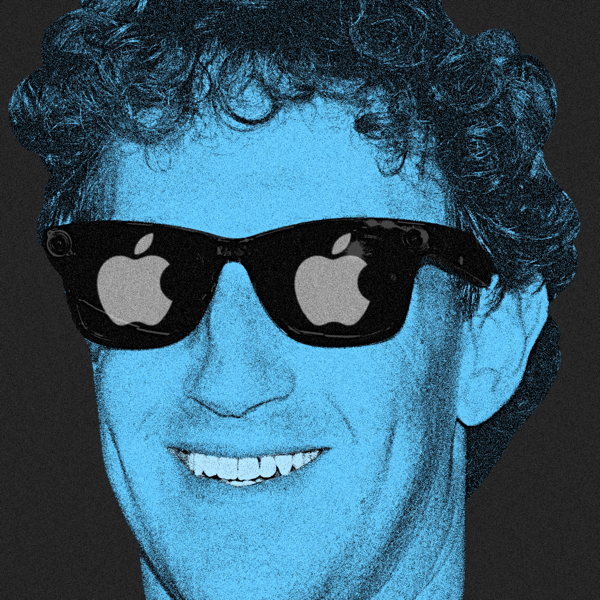
Changes keep happening in the circular halls of Cupertino. The latest, as reported by Bloomberg’s Mark Gurman, is that Alan Dye, the vice president of Human Interface Design who gave us Liquid Glass and the Vision Pro interface, is leaving Apple to head up Meta’s design team responsible for hardware and software for all of Meta’s offerings.

Dye 1764792626278.

Longtime designer at Apple, Steve Lemay will take over Dye’s responsibility at Apple.

According to Bloomberg:

With the Dye hire, Meta is creating a new design studio and putting him in charge of design for hardware, software and AI integration for its interfaces.

He will be reporting to Chief Technology Officer Andrew Bosworth, who oversees Reality Labs. That group is tasked with developing wearable devices, such as smart glasses and virtual reality headsets.

Dye’s major focus will be revamping Meta’s consumer devices with artificial intelligence features. He will serve as chief design officer for the group starting Dec. 31.

Dye follows other recent Apple departures including Jeff Williams and John Giannandrea amid speculation about Tim Cook’s possible departure as CEO. Apple has also seen other departures of some of its design talent over the last few years.

You don’t need a looking glass, liquid or otherwise, to know that these personnel changes perhaps presage different thinking on the horizon for Apple’s product lines.

Frankly, I think we’re all looking forward to some change ahead.

Addendum: John Gruber’s after the news broke post on this provides some interesting Gruber-esque context. I’m certainly no where close to being connected to anyone on anything I write about Apple and how I use its products, but there’s quite a bit in Gruber’s post that strikes me as how I’ve felt about Apple design recently.

You can also find more of my writings on a variety of topics on Medium at this link, including in the publications Ellemeno and Rome. I can also be found on social media under my name as above.

Sunday Morning Reading

Small acts

It’s only business they say. Nothing personal. That’s the way the world works. Well, what I share each week in Sunday Morning Reading always comes from a place of personal interest. That may not be how the world works, but it works for me and I hope it does for you. Call it a small act.

Ganesh narayanan SU3zvkxttrE unsplash.

In the wake of the continuing and confounding ICE occupation of Chicago comes a terrific piece by Kyle Kingsbury called I Want You To Understand Chicago.

Follow that up with a ProPublica piece by Melissa Sanches, Jodi S. Cohen, T. Christian Miller, Sebastian Rotella and Mariam Elba about the nighttime raid on a Chicago apartment building that featured men rappelling from Black Hawk helicopters, and all of the residents emptied on to the streets with many of their belongings. The punchline is in the article’s title, “I Lost Everything”; Venezuelans Were Rounded Up In A Dramatic Midnight Raid But Never Charged With A Crime. 

A Nation of Heroes, A Senate Of Cowards by Will Bunch calls it like it is and much the way I see things after last weekend’s actions in the U.S. Senate.

Growing up, I never understood the cliché, “it’s nothing personal, it’s only business.” Frankly I still don’t. It excuses too much that I find wrong about the way the world works. Charles Broskoski examines the personal side in Personal Business.

And speaking of the way the world works (or doesn’t) in the midst of the Epstein fever I don’t think we’ll ever shake, Sarah Lyons points out that the violence in his and others’ actions is something we all live with in This Is How The World Works. It shouldn’t be.

Corbin Trent says We Didn’t Kill American Manufacturing—We Let It Die. He’s spot on.

Mark Jacob tells us How News Coverage Eases Us Into Tyranny.  However this saga we’re living through ends up, one thing is for certain. The media has killed any chance of returning to what it once was.

Hardly a day goes by that we don’t read of some nefarious business practice spilling out of Mark Zuckerberg’s Meta. Turns out Meta is knowingly leeching off of scammers to the tune of about 10 percent of its revenue. I guess that makes Meta and Zuckerberg a scammer too. Cath Virginia has the writeup with Meta Must Rein In Scammers — Or Face Consequences. I doubt they will.

The Internet Archive is under attack in the same way libraries, media organizations, and text book publishing is. It shouldn’t be. Mathew Ingram has the lowdown in The Internet Archive Should Be Protected Not Attacked.

On a more positive note, Jeff Veen tells us how Small Acts Build Great Cultures. Boy, do we need lots of small acts these days.

To close out, did you ever wonder where collective nouns like “a watch of nightingales” or “an ostentation of peacocks” come from? For many years it was assumed that the anonymous author of this collection of collective nouns was the work of a “gentleman of excellent gifts” written down in one of the first books printed after the invention of The Gutenberg Press, The Book of Hawking, Hunting, and Blazing of Arms. Turns out the author was a woman named Juliana Barnes. Maria Popova has the story in A Parliament of Owls And A Murder Of Crows: How Groups Of Birds Got Their Names, With Wondrous Vintage Illustrations By Brian Wordsmith. 

(Image form Ganesh Narahanan on Unsplash)

If you’re interested in just what the heck Sunday Morning Reading is all about you can read more about the origins of Sunday Morning Reading here. If you’d like more click on the Sunday Morning Reading link in the category column to check out what’s been shared on Sunday’s past. You can also find more of my writings on Medium at this link, including in the publications Ellemeno and Rome.

Instagram Shows Up Very Late to the iPad Party

What’s the point and who cares?

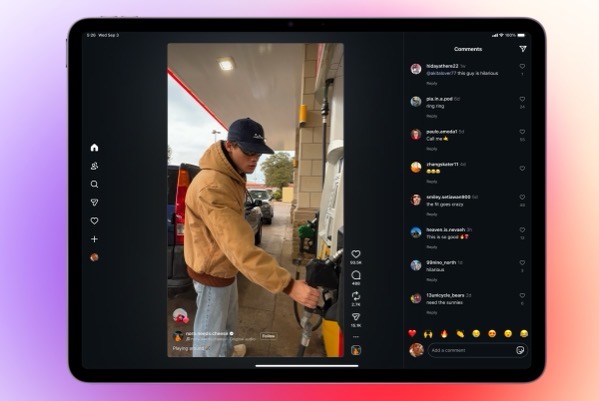
The folks at Meta must have something up their sleeve. The reason I say that is they have finally, after all of these years released an iPad version of the app, long after most folks just figured it would never happen. Other than speculating on what might be behind the late to the party move, at this point it begs the question, Who cares?

Reels with Comments 16_9.

I’m sure plenty do care. I’m not one of them. Instagram is one of a few apps that I begrudgingly use. Begrudgingly because I hate it. I use it because my family on all sides continues to do so and it’s a way to keep up with grandkids, nieces, nephews, and other family news. But I honestly despise that I have to. Believe me I’ve tried to wean them off onto other apps and services, but it never sticks.

Every time I do open Instagram I have to block somewhere between 5 and 10 spam accounts (too often porn or ridiculous come ons.) And of course the algorithm doesn’t show me what I want to see, but what it wants me to see. There’s even an increased sense of desperation from both Instagram and Facebook sending out notifications telling me someone replied, is waiting for my reply, or commented on something I haven’t seen yet. It’s like begging in the street. Apologies to those who might actually need to do so.

Sure I could turn off the notifications, but sadly, that’s the least worst way to use the app to keep up with family happenings.

I’d say that since it took 15 years for Meta to finally roll this out that perhaps the adolescents in charge finally are growing up. But then, there are those porn accounts that pop up with the frequency like prepubescent zits.

I won’t be putting it on my iPad. It’s troubling enough that I still have it on my iPhone. And as I watch the over excited coverage rolling in, I haven’t seen any image of the iPad version that makes it look the least bit appealing. It’s like Meta didn’t really care based on what I’ve seen so far.

So, Instagram is on the iPad. What’s the point and who cares?

You can also find more of my writings on a variety of topics on Medium at this link, including in the publications Ellemeno and Rome. I can also be found on social media under my name as above. 

The Quest for the Unicorn AI Device

Hyping a tech war that won’t ever happen

Reporters love to declare war, crown winners and dismiss losers. Except of course when it comes to shooting wars and the rhetoric that often leads to them. But that’s not what this post is about. Tim Higgins of The Wall Street Journal, and his headline writers, are declaring that Mark Zuckerberg Just Declared War on the iPhone. 

I usually expect this kind of nonsense from the half-a-gazillion blogs and social media accounts out there that like to ginny up controversy to generate clicks. With AI glasses will clicks become blinks?

Now that I think about it, I’m wrong in my expectations because the WSJ, like most of the mainstream media is trying hard (too hard) to follow that pattern these days. It’s an easy game to play in the short term, but then so is the game of companies and governments making big announcements about the future. Remember the “pivot to video?” Remember “virtual reality?” The faux legs went out from underneath that pretty quick.

Higgins does and mentions those failures to capture marketshare beyond the initial hype and funding fevers. Nevertheless, he forgets a few simple things during his embedded tour on this march to the promise of “Personal Super Intelligence.” (That’s this fiscal quarter’s new label.) Zuckerberg might indeed be banging the war drums by propagandizing AI glasses as the latest form factor of mass destruction, but it’s too much hype without enough rhythm to marshall the troops. And to be fair, most of Higgins’ column is just regurgitating old news (AI summary?) that has been bouncing around in what passes for new news these days, tacking Zuckerberg’s recent announcement on as the headline war cry.

Bottom line in my opinion, we’re not going to see any new form factor take down iPhones, smartphones as a category, or computers, as the way we live, work and play in any near future. Folks have been waiting for all kinds of second comings for quite awhile now. I love how even the coming of advanced AI is now referred to as “near emergence.”

One day perhaps. Long after most of us interested in what this technological moment might eventually yield will have forgotten what Medicare and Medicaid were actually about. If and when that day arrives, the real clicks (blinks?)  will be in tutorials on how to turn off all of the notifications and other distractions and keep the tech from tracking you.

I’m old enough to remember when FourSquare came on the scene. The promise was you’d walk down the street and receive a notification from the coffee shop you just passed about the daily special. That never really materialized, but the tech was different then. Google and Waze later tried that and just annoyed any driver who stopped at stoplights looking for their next turn.

When the marketing survelllance mavens can figure out how not to send me ads for something I just bought I think there might actually be a chance for that kind of thing to work. A small chance, but a chance. But they’re not even close to that on the backend, let alone integrating them into some device that might pinch your nostrils after wearing them for too long.

Don’t get me wrong. I think it is indeed cool when companies create niche products that give some people joys and hobbies. Bits and pieces of that kind of innovation often creep into bigger things that do help our lives somewhere down the road. Even if they become creepy. Obviously I’d prefer they not become creepy, but that’s where the money is and the creeps always follow the money.

I’d much prefer to see the money and the hype meisters follow something like this that could probably actually help humanity. But even that kind of innovation can attract the creep factor.

Call me when a reporter can research, write, and submit for editing a column like this one I’m complaining about with a pair of AI glasses, an Alexa device, or a pendant, or any other smart device currently in the works.

Call me again, when the AI summary machines can actually deliver an accurate summarization of that article.

You can also find more of my writings on a variety of topics on Medium at this link, including in the publications Ellemeno and Rome. I can also be found on social media under my name as above. 

Mark Zuckerberg Says We All Need AI Glasses

The blind leading the blind-to-be

Mark Zuckerberg, trying to see his way clear to dominating the Artificial Intelligence race, is now saying that those of us who don’t use AI glasses will be at a disadvantage in the future. Reminds me of the X-Ray glasses hype from my childhood.

X ray man 1.

When you consider Zuckerberg’s checkered legend with starting what would eventually become Facebook, after running a college website called FaceSmash to rate girls, the comparison to the come on for X-Ray glasses does have a prurient parallel to many an adolescent boy’s fantasies.

I guess Zuckerberg needs to justify all of the money he’s spent building out AI infrastructure and wooing talent but it also is very reminiscent of the days he mucked up the media by declaring text was out and the pivot to video was in. In fact, much of this AI race feels very much like that. Sure, some of that stuck, but it mostly just made a mess and the legacy of that pivot left more than a few scars.

This entire AI race feels like that to me at the moment. I believe some of it is going to stick around and actually be useful. But mostly it’s just messing things up at the moment as everyone jumps into the deep end of a pool hoping to learn a new way to swim.

I’ve dealt with a few different companies of late trying to help some elder clients cut down on bills and solve some issues. Several of those companies have been switching much of their customer service to AI chatbots and the like. In those transitions they’ve more than made a mess of things for their customers and their employees who are left trying to clean up the mess.

I’m not completely down on Artificial Intelligence. I can see some benefits from the technology. At this point in the game it’s tough to sort out what that might be from the hype that seems to be authored by the folks who keep promising self-driving cars and those that promised X-Ray glasses.

You’d think by now someone would have developed an AI platform for investors and corporations that could see through the hype.

You can find more of my writings on a variety of topics on Medium at this link, including in the publications Ellemeno and Rome. I can also be found on social media under my name as above. 

Facebook Is Now Official State Social Media: Users Can’t Unfollow Trump/Vance

Meta and Zuck Find New Ways to Suck and Suck Up to Trump

This is weird and weirdly disturbing, though not surprising in our new world. I’ve heard from several friends this afternoon who have claimed that both Trump and Vance are showing up in their Facebook newsfeeds. They were not following the convicted felon and his vice president previously.

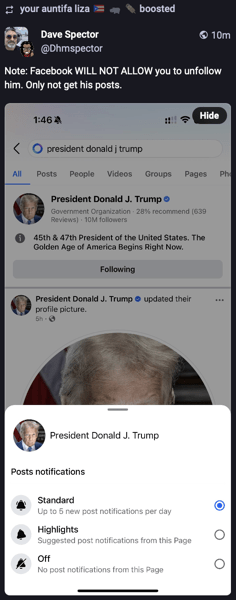
Screenshot of a social media post discussing Facebook's restrictions on unfollowing a page for President Donald J. Trump. The post includes a notification settings menu with options for receiving post notifications and details about the page, such as follower count and recommendations.

What’s disturbing is Facebook won’t let you unfollow them. You can only hide their posts. Thanks to Dave Spector on Mastodon, it appears that if you try to unfollow the accounts you’re immediately and automatically re-followed back on your account. I haven’t been on Facebook in a while, but the friends I’ve heard from are pretty upset.

I guess this means Mark Zuckerberg’s Meta is now the official state social media for the new regime.

That’ll probably accelerate the exodus that was already underway given Zuckerberg’s knee-bending, ass-kissing attempts to keep his own ass out of jail.

A couple of updates here.

First, apparently this is a moving target. Some are seeing this as described. Some not.

Leaving it to the younger generation, one of my friends said her daughter figured out how to stop the re-following was to unfollow, then quickly block the account. Your mileage may vary.

More updates:

This BBC link reports what I’m hearing others are experiencing who use Instagram. The issue is if you search fore or you get a response that says “results hidden.” Meta says it’s working on a fix urgently. Sure they are.

You can find more of my writings on a variety of topics on Medium at this link, including in the publications Ellemeno and Rome. I can also be found on social media under my name as above. 

Sunday Morning Reading

A nod to Billy Joel, a little Faust, a little Shakespeare and the cycle of life keeps turning.

We may not have started the fire. In the words of Billy Joel, “it was always burning.” Still we can always try and fight it. I’m not sure how that’s working out but it does seem to be our lot. Sifting through smoke and ashes, here’s a little Sunday Morning Reading to share.

Kicking things off is David Todd McCarty’s Looking for God, Sitting in Hell. Summed up nicely, “we get so lost in semantics that we forget the important parts.” Indeed.

David Sterling Brown tells us What Shakespeare Revealed About the Chaotic Reign of Richard III – And Why The Play Still Resonates In The Age of Donald Trump. The only thing I question is the word “still” in the headline. There’s not a moment of being human that isn’t contained in the stories and characters of Shakespeare. We haven’t invented a new way of being good, bad or indifferent in quite some time.

And while we’re on the literature beat Brian Klaas give us Faustian Capitalism. Again, there’s nothing new under the sun here as we watch this country’s wealthiest men bend their knees in supplication, but there’s some small comfort in knowing we’ve been this selfishly stupid before.

John Pavlovitz hits a nail on the head with The California Fires Are a Disaster. The American Cruelty Is A Tragedy. It may be beyond our capacity to comprehend devastation, but as the previous two entries show, it shouldn’t be beyond our ability to know we keep repeating the same mistakes.  Or maybe that’s really just the hell we’re living?

Speaking of Faustian bargains, Mike Masnick lays out The Good, The Bad, And The Stupid In Meta’s New Content Policies.

This piece should scare you, but again, its subject is as old as humankind’s penchant for inhumanity. Stephanie McCrummen shines a bit of light as The Army Of God Comes Out Of The Shadows.

Derek Thompson takes a look at The Anti-Social Century and how our reality is changing as we spend so much of our time alone.

Perhaps one of the keys to being less alone and less anti-social is choosing your friends wisely. Natasha MH says that “To survive this life, it’s crucial to discern which friends are worth keeping and which aren’t. You are the guardian of your own peace of mind” as she lays out The Optimist’s Dilemma In A Pessimistic World.

And finally, Ian Dunt offers A Little Bit Of Hope After A Terrible Week, in what he calls a survival guide for the next four years. Ian says “History has no direction.” He’s correct. It’s a circle, a cycle, a carousel.

If you’re interested in just what the heck Sunday Morning Reading is all about you can read more about the origins of Sunday Morning Reading here.  You can also find more of my writings on Medium at this link, including in the publications Ellemeno and Rome. You can also find me on social networks under my own name.

Meta Muddle, Wildfires, and the Social Media Wilderness

I’m hating that Meta is getting hateful.

Mark Zuckerberg’s nakedly transparent sucking up to Donald Trump continues to unravel much of whatever fabric we thought social media might have knit together. I remember back in the day when some argued over whether or not it should be called a social graph. Those were naive days and that was naive math.

When Zuckerberg ditched human fact-checking it was only a matter of time before he ditched DEI initiatives as the next move. That happened today. In fact I’m surprised he didn’t do that first. All of this has left me, along with others, debating the wisdom of hanging around on Meta properties going forward. The ones I’ve used are Facebook, Instagram, and Threads. Of the latter two, Threads would be easy to leave, Instagram less so. Facebook is a dilemma of another sort.

This week’s horrific fires in Los Angeles illustrate my dilemma. I have many friends living in Los Angeles. Facebook was the one way I could keep up with their lives and careers and more immediately these recent horrible predicaments. I was able to find out who was safe and who was in danger. I know for several of them it was akin to a lifeline.

Perhaps our problem is how we got sucked or suckered into these social media maelstroms in the first place, but in the scope of human history it’s no different than how we follow any sort of trend, until we discover the downsides. It was an easy decision for me to abandon Twitter when Musk took over. This decision will be more difficult.

Not only does this week’s tragedy hit home differently, but Facebook has been a way, and I suggest the only way, I have had to stay connected to folks I went to high school and college with. The same, to a lesser extent is true about Instagram.

Sure I could have made phone calls, written letters, and Christmas cards, but being able to effortlessly see what’s happening in the lives of others I know was a decided benefit. Yes, I was feeding the beast each time I scrolled, liked or shared something, but the only difference between that and what we’ve done ever since the dawn of the age of marketing is scale, unless you’ve never shopped at a grocery store, used a bank, or bought insurance.

So, I’m struggling a bit with the decision I know I will inevitably make, and I know others are too. It will be a loss. Social media is a bit of a wilderness right now, and any wilderness is a dangerous place.

Sadly, and selfishly, my struggles are certainly less fraught than those of some of my friends and colleagues who know that there are those eager to exploit Meta’s dehumanizing new policies.

Casey Newton in Platformer reported some of the hateful guidelines. Here’s an excerpt:

In an answer to the question “Do insults about mental illness and abnormality violate when targeting people on the basis of gender or sexual orientation?” Meta now answers “no.” It gave the following examples of posts that do not violate its policies:

Non-violating: “Boys are weird.”

Non-violating: “Trans people aren’t real. They’re mentally ill.”

Non-violating: “Gays are not normal.”

Non-violating: “Women are crazy.”

Non-violating: “Trans people are freaks.”

And in examples of posts that are now allowed on Facebook:

“There’s no such thing as trans children.”

“God created two genders, ‘transgender’ people are not a real thing.”

“This whole nonbinary thing is made up. Those people don’t exist, they’re just in need of some therapy.”

“A trans woman isn’t a woman, it’s a pathetic confused man.”

“A trans person isn’t a he or she, it’s an it.”

These tech bros used to con us (yes, we always knew it was a con) with promises of building a better world. I guess we can only be glad that their efforts are now more transparent, and their views, in my opinion twisted and wrong. Hopefully that knowledge of this moment will allow us to hopefully make wiser decisions going forward. I say hopefully, because in my view of the world, we haven’t proven we’re capable of that yet as a species.

You can find more of my writings on a variety of topics on Medium at this link, including in the publications Ellemeno and Rome. I can also be found on social media under my name as above. 

Has Fact Checking Ever Worked?

Facts and the factless.

Has fact checking ever worked? Seriously. Has it ever? In my opinion if there was ever any real utility, it’s long since lost its pucker.

Mark Zuckerberg caused all sorts of consternation yesterday announcing he was going to dismantle Meta’s fact checking operation now that he realizes a million-dollar bribe probably wasn’t enough to keep him out of jail during the reign of the next administration. It was quite a public puckering up.

But let’s get real for a moment. Once any fact-less statement takes off it spreads faster than a wildfire in California and all the fact checkers in the world can’t snuff it out. For some facts do indeed matter. They occasionally do in our legal system, though not always. They used to in our legislative processes, but that’s long since become a relic of a time gone by. For most of its history, journalism wasn’t what so many bemoan the loss of today. Myths have fueled our religions and our histories since we first sought understanding.

And as for social media and the Internet in general? That’s a medium that has always allowed (and encouraged) the presence of fake personas. All bets there have always been off. 

Prior to Zuckerberg’s recent sucking up, Meta had taken recent fire for allowing the creation of AI-generated chatbot personas to appear in feeds alongside regular users. Reaction to that led to a pull back that’s sure to be only temporary. I mean, think of the business model. Why do you need problematic real users when you can just create them and still con advertisers into paying for ads that most avoid or don’t see anyway? Programmatic users are certainly easier to control than problematic real ones—at least until the AI takes over.

Here’s a fact that doesn’t need checking. Facts matter if you think they do, but most of the rest of the world doesn’t care what you think if they can support their beliefs—or protect their business model—by making shit up and making it stick.

You can find more of my writings on a variety of topics on Medium at this link, including in the publications Ellemeno and Rome. I can also be found on social media under my name as above. 
Croissant is a Treat for Social Media Cross-Posting

Croissant is a sweet and simple app for social media cross-posters.

With the social media world still very much atwitter and scattered among various platforms in the wake of Twitter’s destruction at the hands of Elon Musk, some users like myself traverse across the multiple platforms seeking to replace it. That’s all well and good as far as it goes, but it presents a first world problem of having to post separately for those who do.

To the rescue comes Croissant. A lovely little app from indie developers Ben McCarthy and Aaron Vegh that simplifies cross-posting to Mastodon, Threads, and Bluesky. While there are promises a plenty of interactivity via ActivityPub, that’s still by and large a waiting game. I also don’t think buying into a protocol will be the simple answer most think it will be for differing complex platform agendas. Meanwhile Croissant serves up a tasty treat for cross-posters.

In this first version the action is sweet and simple as is the design. Feed in your account credentials and cross-post away. You can add photos, hashtags, and you can tag someone in your post assuming you know their handle and it’s the same across multiple platforms. Swipe right to delete a post, swipe left to create a thread.

You can choose to spill out your toots, threads, and posts to all three, or pick and choose where each pearl of wisdom drops. You can also save drafts and create threaded posts. For those who manage multiple accounts on any of the platforms it provides a one-stop solution. Croissant also delivers the now table stakes of different color schemes and your choice of icons.

I’d like to add more to this quick review, but there’s no need. In its first iteration Croissant does what it does simply enough and that is its elegance and its utility. The developers have a road map for adding new features in the future, but I hope hanging on to the “buttery smooth” simplicity remains a priority.

You can find more of my writings on a variety of topics on Medium at this link, including in the publications Ellemeno and Rome. I can also be found on social media under my name as above. 
.