Scene Painting a History of Hamlets at The National Theatre

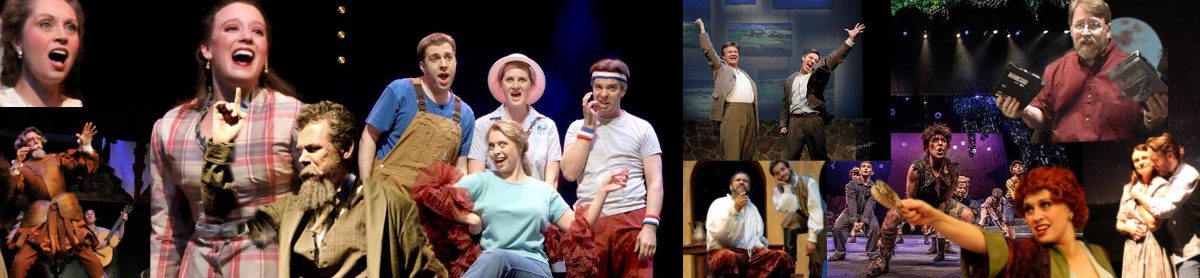
Hamlets watching Hamlet

I’ve done some scene painting in my day, but nothing like this. Actually nothing even approaching anything like this. 

Hamlet 2.jpg.

In Robert Hatcher’s production of Shakespeare’s Hamlet at Britain’s National Theatre Ben Stones’ scenery features a gigantic mural that surrounds the set that includes the faces of actors who have played Hamlet through the ages. The picture above doesn’t do that description or the concept justice. 

The faces woven into the Danish artwork are the ultimate theatrical Easter egg. While Stones keeps the full cast list close to his chest, he confirms that they are all there – a complete history of the role.

“They’re all hidden in there. Everybody who’s been in it… even Tinuke Craig’s schools Hamlets, the three boys who played on that tour. We were very clear that if we include, we are including everyone who’s ever spoken those words in any version of this kind of play.”

As a statement on the play and its theatricality that’s cool in and of itself. The ghost visages of previous Hamlets watching what can be described as a ghost story has a meta appeal.

What also attracted my attention to this article — and why I’m sharing it — is that it puts the spotlight on scenic painting, somewhat of a lost art in this day of projected backgrounds and digital printing. This theatrical work of art required 920 hours to complete. 

There’s a terrific little video that gives you an idea of the scale and scope of the painting requirement. Unfortunately it’s filmed in vertical mode so you don’t get the grand finale the same way on a computer webpage that you might on a smartphone. Even on smaller screens it has an impact.

 It made me recall my days directing theatre in Omsk, Russia when the scene painting loft was at the top of the building. There, drops would be stretched on a frame that would rise and descend through an opening in the floor allowing the scenic artists to stand on the floor as they painted. There were some amazing scenic painters in that loft. 

The article also gives credit to the scenic artists who did the work for Hamlet at the National. Well deserved.

You can also find more of my writings on a variety of topics on Medium at this link, including in the publications Ellemeno and Rome. I can also be found on social media under my name as above.
Find Beauty When and Where You Can

Stop and smell the roses

A Mastodon user sent me a direct message the other day asking why I felt so comfortable doing what I do every morning, which is posting a “Good Morning” toot featuring photos I’ve taken of flowers, tree leaves changing color, other shots of nature, holiday ornaments, etc….

CleanShot 2025-11-17 at 12.25.20@2x.

The context of the query was criticizing how I could continue to do that every morning given all of the terrible things going on in the United States, things I also rightfully describe on social media as horrors.

I get it. Believe me I get it. I’m overwhelmed at times as well. But my response was and is simple.

Stop and smell the roses.

While there are indeed horrors happening in the world there is always beauty. If we don’t take a moment to see and acknowledge the beauty around us and the spontaneity of discovering it, whether it be in nature, in very human moments, in a museum, a gallery, a stage, a movie theater, a concert hall, a photograph, a child’s laugh, or in a story, then what the hell are we fighting for?

I’m convinced those we are fighting against don’t see or even care to see the beauty around and within us, unless it involves increasing their bank account balances.

Sometimes you need to stop and smell the roses. I prefer doing so in the mornings, before I put on my armor to meet the challenges of the day.

You can also find more of my writings on a variety of topics on Medium at this link, including in the publications Ellemeno and Rome. I can also be found on social media under my name as above.

Watching Ken Burns’ The American Revolution

Context is everything

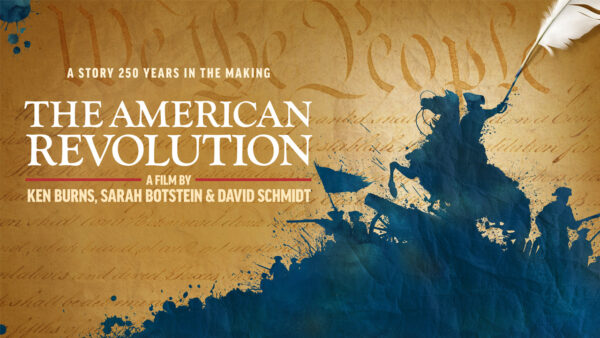
Started watching Ken Burns’ The American Revolution last night. It sounds almost trite, but it’s typical Ken Burns (and his collaborators) historical documentary excellence.

The american revolution film by ken burns 1280x720 1 600x338.

What struck me is how I’m hearing things I’ve read and heard over and over again about the period leading up to the American Revolution. So far, (only two episodes in) the history is as I studied it. And by studying it, I mean well below the surface of the myths folks of my generation were taught in school.

I’m not hearing things differently, but I’m hearing how folks can take their own meaning out of many of the things written and said during that period that led to this country’s founding. History may indeed rhyme, but it also echoes. Often in strange ways.

That’s certainly true if all you hang your tri-cornered hat on are the myths.

You can also find more of my writings on a variety of topics on Medium at this link, including in the publications Ellemeno and Rome. I can also be found on social media under my name as above.
Sunday Morning Reading

Small acts

It’s only business they say. Nothing personal. That’s the way the world works. Well, what I share each week in Sunday Morning Reading always comes from a place of personal interest. That may not be how the world works, but it works for me and I hope it does for you. Call it a small act.

Ganesh narayanan SU3zvkxttrE unsplash.

In the wake of the continuing and confounding ICE occupation of Chicago comes a terrific piece by Kyle Kingsbury called I Want You To Understand Chicago.

Follow that up with a ProPublica piece by Melissa Sanches, Jodi S. Cohen, T. Christian Miller, Sebastian Rotella and Mariam Elba about the nighttime raid on a Chicago apartment building that featured men rappelling from Black Hawk helicopters, and all of the residents emptied on to the streets with many of their belongings. The punchline is in the article’s title, “I Lost Everything”; Venezuelans Were Rounded Up In A Dramatic Midnight Raid But Never Charged With A Crime. 

A Nation of Heroes, A Senate Of Cowards by Will Bunch calls it like it is and much the way I see things after last weekend’s actions in the U.S. Senate.

Growing up, I never understood the cliché, “it’s nothing personal, it’s only business.” Frankly I still don’t. It excuses too much that I find wrong about the way the world works. Charles Broskoski examines the personal side in Personal Business.

And speaking of the way the world works (or doesn’t) in the midst of the Epstein fever I don’t think we’ll ever shake, Sarah Lyons points out that the violence in his and others’ actions is something we all live with in This Is How The World Works. It shouldn’t be.

Corbin Trent says We Didn’t Kill American Manufacturing—We Let It Die. He’s spot on.

Mark Jacob tells us How News Coverage Eases Us Into Tyranny.  However this saga we’re living through ends up, one thing is for certain. The media has killed any chance of returning to what it once was.

Hardly a day goes by that we don’t read of some nefarious business practice spilling out of Mark Zuckerberg’s Meta. Turns out Meta is knowingly leeching off of scammers to the tune of about 10 percent of its revenue. I guess that makes Meta and Zuckerberg a scammer too. Cath Virginia has the writeup with Meta Must Rein In Scammers — Or Face Consequences. I doubt they will.

The Internet Archive is under attack in the same way libraries, media organizations, and text book publishing is. It shouldn’t be. Mathew Ingram has the lowdown in The Internet Archive Should Be Protected Not Attacked.

On a more positive note, Jeff Veen tells us how Small Acts Build Great Cultures. Boy, do we need lots of small acts these days.

To close out, did you ever wonder where collective nouns like “a watch of nightingales” or “an ostentation of peacocks” come from? For many years it was assumed that the anonymous author of this collection of collective nouns was the work of a “gentleman of excellent gifts” written down in one of the first books printed after the invention of The Gutenberg Press, The Book of Hawking, Hunting, and Blazing of Arms. Turns out the author was a woman named Juliana Barnes. Maria Popova has the story in A Parliament of Owls And A Murder Of Crows: How Groups Of Birds Got Their Names, With Wondrous Vintage Illustrations By Brian Wordsmith. 

(Image form Ganesh Narahanan on Unsplash)

If you’re interested in just what the heck Sunday Morning Reading is all about you can read more about the origins of Sunday Morning Reading here. If you’d like more click on the Sunday Morning Reading link in the category column to check out what’s been shared on Sunday’s past. You can also find more of my writings on Medium at this link, including in the publications Ellemeno and Rome.

Sunday Morning Reading

Politics, the arts, a little snow, and the end of an era

It’s a Sunday and Fall is homing in on Winter as the first snow of the season hits Chicago this morning. Perfect time for a little Sunday Morning Reading featuring some interesting stories about the arts, AI, and home.

As the first flakes of this winter of discontent fall, two interesting reads highlight some of the chaos the art-less U.S administration is inflicting on the American arts scene, specifically The Kennedy Center. Shawn McCreesh takes a look at the damage being done in The Kennedy Center Crackup.

Meanwhile, Charlotte Higgins reports that the Washington National Opera May Move Out Of The Kennedy Center Due to Trump ‘Takeover.’ I’m here to tell you that while what’s happening on the banks of the Potomac may feel very inside the beltway, the repercussions are being felt in the boardrooms of arts organizations across the country.

The above, like most of our news of late, is certainly not something to laugh at. That doesn’t mean we shouldn’t find ways to laugh at the incompetent, ignorant and dangerous players wreaking havoc in their wake. Laughter gets under their all too thin skins, no matter how made up or stretched too tight by surgery. Mike Monteiro offers up How To Point At Fascists And Laugh.

NatashaMH, far too young to worry about being old, takes a look at creating art as she nears the mid-century mark in I Don’t Paint For Your Sofa. Youngsters these days.

Art and politics might be an unholy mix in dangerous times like these, but there’s another foul concoction brewing. Adam Willems points to An ex-Intel CEO’s Mission To Build A Christian AI: ‘Hasten The Coming of Christ’s Return.’ If you ask me these folks wishing for these kind of end times have really missed the points. All of them.

Continuing on the AI front there seems to be a bit of weakening in the walls of what most concede is an economic bubble. The cliché is that bubbles pop. Those that don’t, just disappear as they float away. Ben Thompson takes a look at what happens in either case in The Benefits of Bubbles. 

Home is where hearts are and often places you can’t return back to. I’ve lived both. Chris Andrei is Searching For The Elusive Feeling Of Home.

With the weather changing and snowflakes falling out my window, there’s a passage of time marker about to be set. The Farmers’ Almanac is about to shut down. Growing up in rural America there were only two publications that everyone I knew received in the mail. It was always a big deal in our house when my dad, who was the postmaster, brought those home. The Sears Catalog and The Farmer’s Almanac. The Sears Catalog is long gone. The 2026 edition of the latter will be its last. Grace Snelling takes a look back and ahead in After More Than 200 Years, The Farmers’ Almanac Is Shutting Down For Good. 

Returning to where this week’s column began, the arts, Jack Rodolico’s The Blue Book Burglar examines how New York’s once vaunted Social Register, was not only a destination that social climbers desired to be included in, but was also a hit list for the country’s hardest working art thief. I just don’t understand how the current thieves doing today’s pillaging have it so damn easy.

If you’re interested in just what the heck Sunday Morning Reading is all about you can read more about the origins of Sunday Morning Reading here. If you’d like more click on the Sunday Morning Reading link in the category column to check out what’s been shared on Sunday’s past. You can also find more of my writings on Medium at this link, including in the publications Ellemeno and Rome.

The Little Prince Meets Artificial Intelligence

A melange of technology and fantasy

Every year, sometimes twice a year,  I return to one of my favorite theatre gigs, directing a staged reading for The International Voices Project. IVP is a Chicago company that produces staged readings of plays translated from other countries and cultures. Throughout the years the plays I’ve directed have taken me on journeys with writers from Syria, Lebanon, Ireland, Germany, Norway, Ukraine, El Salvador, and now Romania.

The reason I return each year is one of the reasons I have pursued and enjoyed my life making theatre. I get to touch and explore worlds, cultures, and ideas I would never have had the chance to experience otherwise. It’s always an adventure into something new.

My most recent gig with IVP certainly scratched all of those itches. The play is called Veronica’s Little Prince by Romanian playwright Dr. Catalina Florina Florescu. Yes, Antonie de Saint-Exupéry’s character of The Little Prince plays an important role.

The piece centers on Veronica, a former principal ballerina who has literally had her legs taken out from under her in a mysterious accident, leaving her in an institution, unable to move without the aid of a wheelchair and unable to speak. Unhappy with her fate Veronica is suspected of wanting to kill herself. Even before the mysterious accident she’s lived a life of self-destructive behavior.

The Little Prince arrives to help her examine and uncover the truth within her actions.

There’s another twist. I mentioned that Veronica can’t speak. In a technological twist she communicates via an AI robot by typing on her body. Via an implant those signals transmit to the robot who speaks her words and thoughts.

The play weaves in and out of Veronica’s mind and thoughts, her past and present, reality and fantasy, technology and humanity in very theatrical ways.

Creating an even more mysterious melange of tech and fantasy, the most frightening line to me is when Veronica’s Little Prince answers Veronica’s question about who told her to come by saying:

You see, they have programmed me to pop up whenever I hear certain words.

That may delight AI enthusiasts and those who keep suggesting we’re living in some sort of simulation, but given the rush to push us all deeper into a world run by Artificial Intelligence, it more than tweaks a nerve for those, like me, who may see benefits to AI in some forms, but think the pitfalls are more dangerous. Frankly, I prefer the characters in fantasy to spring from the minds of humans, not lines of code.

Given the sound and visual representations that give the script its many layers it was quite a challenge to present in a staged reading format without the benefit of theatre technology. But we managed to pull it off, letting the words weave their magic.

My thanks and kudos to the cast for doing such great work and especially to young Olive Popio who played our Little Prince.

(Photo by Scott Dray for The International Voices Project)

You can also find more of my writings on a variety of topics on Medium at this link, including in the publications Ellemeno and Rome. I can also be found on social media under my name as above.
Shocked, Shocked To See A Gambling Scandal Involving Professional Sports

Big names, big money, big busts. No big surprise.

This week’s easily awarded Claude Rains Award goes to the federal government for busting up sports gambling in the NBA that’s intertwined with the Mafia.

In case you’re not up to snuff, Claude Rains played the character in the movie Casablanca who was “shocked” to discover gambling going on at that movie’s famous nightclub. If you’re not up on that film, then I guess you’d might be shocked that there is illegal gambling in sports involving players.

Several NBA big names are involved. According to news reports so far current Miami Heat player Terry Rozier apparently was involved in a what amounts to a points shaving scheme letting sources know that he would take himself out of a game early so bettors could bet the under on the points he would score. Portland Trail Blazers coach Chauncey Billups is accused of being involved in rigged poker games, serving as a “celebrity” piece of bait to lure others to the underground games. Some of those games used some impressive technology, including an X-Ray table to cheat the suckers.

I’ve survived several vices in my life. Gambling was one I never got hooked on. Not because I’ve always known that illegal gambling was synonymous with most sports, but because I was never good at it. If I’m surprised by any of this it’s that there is actually a bust of such a wide ranging gambling operation in this current environment. Folks in the know, know. And they’ve known long before legalized sports gambling became as ubiquitous as hot dog and beer vendors at baseball games in stadiums that now house sports books on site.

As an example of that, take a look at Mike Florio’s book Big Shield, about sports gambling, mostly in the NFL, but also touching on the NBA. (FYI I don’t do affiliate links.) Parts of what we know about this current bust sounds like they are lifted right from the plot of the book.

It will be interesting to see how the NBA handles this because I’m betting the two names unveiled this morning aren’t the only athletes involved. It will also be interesting to see how the other pro and college leagues responds. There’s big money to be made on sports gambling, especially if you’re inside the scam.

You can also find more of my writings on a variety of topics on Medium at this link, including in the publications Ellemeno and Rome. I can also be found on social media under my name as above.
What’s Next After No Kings Day? How About Blackout Black Friday

Blackout Black Friday

By most accounts No Kings Day 2 was a success in gathering large crowds. Around 7 million seems to be the accepted estimate. Did it have an impact? Sure. What kind of impact? Who the hell really knows.

If you’ve followed the thoughts I’ve been jotting down here you’ll know that I strongly believe that until we extend the energy from events like No Kings Day out of a weekend and into a work week, or have a general strike, we’re not going to see the level of impact that might actually change things. I stress the word “might.”

In the aftermath of No Kings Day 2 I was searching within the recesses of my brain for something, anything that could possibly move the needle. I came up with the idea of a Blackout on Black Friday. Don’t shop. Skip Prime Day and all of its variants. Don’t watch the sports. Don’t go to the movies. Stay off the Internet. Even a 10% drop in shopping and viewing metrics would have an impact. Even the threat of such an action would probably have an impact. 

Then this morning on Mastodon I see this post from SharonPersists. 

CleanShot 2025-10-21 at 09.23.08@2x.

I’m glad my brain isn’t the only one where these kind of thoughts are rattling around.

I’m sure there would be all sorts of friction given that this would be over a holiday weekend geared towards family and giving thanks. But I can’t think of a better time to turn it all off, spend time with family and friends, and possibly build on the momentum of other protests.

One way or the other this situation is going to require sacrifice before it comes to whatever end it will eventually come to. The only real choice we have is to make that sacrifice willingly, or have it continue to be thrust upon us.

I think of all of the Thanksgiving Day holidays in which I was producing and directing Charles Dickens’ A Christmas Carol. After each performance I watched families leave filled with the Christmas Spirit, only to have that merely be a passing moment in time when the message didn’t stick. We need to find some way that sticks.

I’ll be emailing organizers about this idea. I hope you might do the same.

You can also find more of my writings on a variety of topics on Medium at this link, including in the publications Ellemeno and Rome. I can also be found on social media under my name as above.
Sunday Morning Reading

Reading for the morning after the No Kings rallies and beyond.

Good Sunday morning. This edition will be slightly different than most. Yes, there will be a collection of links I find worth sharing (and hope you’ll read). That said, most of the links in this week’s Sunday Morning Reading come from an excellent series in The Atlantic’s November 2025 issue from a collection of authors called The Unfinished Revolution.

Yes, that’s behind a paywall. Sorry, not sorry. But this is the Internet and if you’re not already paying for excellent content like The Atlantic, there are a million ways to skirt that restriction. The issue is one worth paying for, if for no other reason to keep it as an archive for future generations. That may prove important one day. I plan on picking up a hard copy soon enough.

The issue is also timely as this country approaches it’s 250th anniversary, and finds itself being torn apart by forces that, suffice it to say, don’t represent what many believe this country stands for, or at least the promise of what it should stand for, even with it’s historical problems and faults.

It’s also timely because we’ve just seen the second and larger No Kings rallies across the country. Given that the founding of this country was indeed the original No Kings protest that kicked off a revolution against rule by a monarch, the timing also feels apropos.

I won’t highlight all of the articles in the series, you should go and check them out yourself. The ones I do link to are ones I found particularly interesting. And yes, there will be other links in today’s Sunday Morning Reading as well.

Before I get to The Atlantic’s links, this article by Garrett Graff,  Three Reasons I Still Have Hope For America, is more than worth your time. I agree that there is strength in numbers, but I don’t think the inevitable passing of a leader this time around will have the affect the world has seen historically.

The title of Anne Applebaum’s Atlantic piece, The Beacon of Democracy Goes Dark, certainly tells you where the piece is going. Even so, it is more than worth reading and contemplating. One way or the other we are living through and participating in moments that will change the world. We just don’t know how.

We’re dealing with our own Mad King wannabe, so Rick Atkinson’s The Myth of Mad King George draws some interesting parallels beyond their affinity for makeup that I suggest could be similarly drawn behind most of the troubled men who’ve plagued the world throughout its history.

Political and social schisms divide not only countries, but often families as well. Stacy Schiff asks Why Did Benjamin Franklin’s Son Remain Loyal To The British?

Jeffrey Rosen says that insurrection has marred the American constitutional order since its founding. He’s correct. Check out The Insurrection Problem. If you’re not an American history buff, I bet you’ll be surprised.

George Packer thinks we do need patriotism in his piece I Don’t Want To Stop Believing In America’s Decency. I concur with his sympathies, but when the meaning of words like patriotism and decency can get so easily mangled it becomes trying to cling to those beliefs.

Fintan O’Toole asks What The Founders Would Say Now. We’ve imagined, conjured, twisted, and appropriated who and what they and their words are so often, that in my view I think they’d tell us all to either grow up or go to hell.

As most of this week’s Sunday Morning Reading and my own thinking has focused on the issues facing America as a whole, I found former NY Times drama critic Frank Rich’s piece on Zohran Mamdani and the New York mayor’s race fascinating. Not just for his at times surprising commentary on that race. But for those paying attention, Why Powerbrokers Got Everything Wrong About Zohran Mamdani incisively dissects the deeper fissures subsuming the bigger political picture as well.

And to close out this week, here’s a piece from 404 Media about the amphibian symbol that has become associated with our current protests against the administration, Matthew Gault’s The Surreal Practicality Of Protesting As An Inflatable Frog.

If you’re interested in just what the heck Sunday Morning Reading is all about you can read more about the origins of Sunday Morning Reading here. If you’d like more click on the Sunday Morning Reading link in the category column to check out what’s been shared on Sunday’s past. You can also find more of my writings on Medium at this link, including in the publications Ellemeno and Rome.

Artists Unite for Fall Of Freedom Campaign

Art matters. Artists are a threat to American fascism.

Much of the current focus building out of the simmering outrage at the actions of the Trump regime is centered on the October 18 NoKings rallies being planned across the country. From the sound of it the crowds will be large and widespread across the country. That’s all a good thing. 

 That said, I still wish and hope for and believe that more sustained efforts are going to be required before enough pressure might actually lead to progress. 

One effort that might help, if given proper support and media coverage, is an national call to action by artists called Fall Of Freedom. You should certainly check out the website and how to get involved. Here’s an excerpt from the website:

Fall of Freedom is an urgent call to the arts community to unite in defiance of authoritarian forces sweeping the nation. Our Democracy is under attack. Threats to free expression are rising. Dissent is being criminalized. Institutions and media have been recast as mouthpieces of propaganda.

This Fall, we are activating a nationwide wave of creative resistance. Beginning November 21–22, 2025, galleries, museums, libraries, comedy clubs, theaters, and concert halls across the country will host exhibitions, performances, and public events that channel the urgency of this moment. Fall of Freedom is an open invitation to artists, creators, and communities to take part—and to celebrate the experiences, cultures, and identities that shape the fabric of our nation.

Art matters. Artists are a threat to American fascism.

I do happen to believe in that last statement. Art does matter, and artists are a threat to American fascism, or fascism wherever it raises its ugly head.

From an article in American Theatre magazine, here are some of the theatre artists and organizations already involved:

Playwrights David Henry Hwang, Dominique Morisseau, and Sarah Ruhl; director/organizer Annie Dorsen; and Julia Jordan of the Lillys. Theatre organizations involved include the August Wilson Center, National Black Theatre, the Public Theater, Broadway Advocacy Coalition, Woolly Mammoth, New York Theatre Workshop, Ensemble Studio Theatre, En Garde Arts, Crossroads Theater Company, IndieSpace, and more.

There’s a longer and growing list at this link.

I urge you to check out the website that includes ways to get involved and a toolkit for this national call to action.