Sunday Morning Reading

Roads traveled too well

Some things defy understanding. Others appear less murky. Occasionally some hit the target. That’s why I read. That’s why I share. I’m still traveling and on the road for a bit, but there’s plenty to share in this week’s Sunday Morning Reading. Tomatoes and potatoes may be involved.

Shutterstock 1781559542.

Phillip Bump recently accepted a buyout from The Washington Post and hasn’t announced new plans yet. But he’s still writing. Glad he is. He has always been one of my favorite writers and chroniclers. Check out his latest piece Humans Didn’t Evolve To Understand Our World.

When you reach a certain age (certain is alwasy self-defined) you start looking back to the beginning and wonder what will mark the ending. Cris Andrei calls them Bookends. This piece hit the target given that I’m visiting some old haunts on this trip. Oh, and approaching a certain age (self-defined.)

Tuning out news, noise and distractions is never easy. NatashMH takes a look through the marking of Ozzy Osbourne’s passing and other recent cultural touchpoints in Fractals of Modern Life. If you don’t look too hard, all the news, noise and distractions don’t really touch or point towards much in the grand scheme of things. But are we entertained or just dulled into carrying on?

Sometimes writers write just for the fun of it. David Todd McCarty says that’s where this piece, Killing Time Waiting for Friend, came from. I need to find more of the fun of it. Anyway his piece, gave me a chuckle. I did not read it at Denny’s, although I visited one of my favorite locations of the past during my travels.

I’ve linked to and written about Cory Doctorow’s theory of enshittification quite a bit. I’m doing so again with this piece You Can’t Fight Enshittification. I don’t think it’s a question of not fighting, I think it’s a question of not knowing there was a fight to begin with.

Staying in the tech vein, I’ve been linking to Mathew Ingram and others who are talking about the demise of Google Search. Take a look at Pete Pachal’s piece, What Content Strategy Looks Like In The Age of AI. Look beyond the headline on this one.

Speaking of Mathew Ingram, you should read Social Media Didn’t Start The Fire, It Just Fanned The Flames. I agree. That said, if you drink acclerants through a firehose you’re bound to bust.

On the political beat, Jon Pavlovitz offers up Everyone Believes They’re Esssentially A Good Human Being.  Actors who play villains will always say that they look for what’s good in their evil character. It’s a form of coping. I happen to think this bunch of performance artists trying to burn down the country never bothered looking beyond the glee they take from their villainy. Apologies to real performance artists.

And to close things out on a competely different note, check out Will Dunham’s piece on the Evolutionary Origins of the Potato Revealed — and a Tomato Was Involved. Some things do defy understanding.

(Image from Mr. Abstract on Shutterstock.)

If you’re interested in just what the heck Sunday Morning Reading is all about you can read more about the origins of Sunday Morning Reading here. If you’d like more click on the Sunday Morning Reading link in the category column to check out what’s been shared on Sunday’s past. You can also find more of my writings on Medium at this link, including in the publications Ellemeno and Rome.

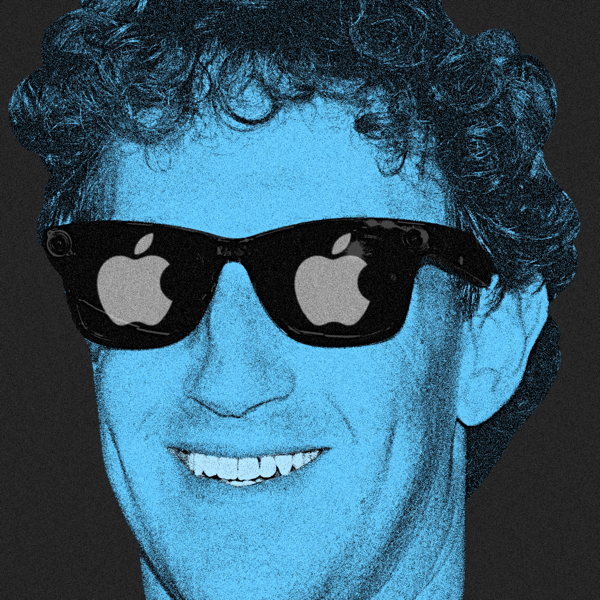
Mark Zuckerberg Says We All Need AI Glasses

The blind leading the blind-to-be

Mark Zuckerberg, trying to see his way clear to dominating the Artificial Intelligence race, is now saying that those of us who don’t use AI glasses will be at a disadvantage in the future. Reminds me of the X-Ray glasses hype from my childhood.

X ray man 1.

When you consider Zuckerberg’s checkered legend with starting what would eventually become Facebook, after running a college website called FaceSmash to rate girls, the comparison to the come on for X-Ray glasses does have a prurient parallel to many an adolescent boy’s fantasies.

I guess Zuckerberg needs to justify all of the money he’s spent building out AI infrastructure and wooing talent but it also is very reminiscent of the days he mucked up the media by declaring text was out and the pivot to video was in. In fact, much of this AI race feels very much like that. Sure, some of that stuck, but it mostly just made a mess and the legacy of that pivot left more than a few scars.

This entire AI race feels like that to me at the moment. I believe some of it is going to stick around and actually be useful. But mostly it’s just messing things up at the moment as everyone jumps into the deep end of a pool hoping to learn a new way to swim.

I’ve dealt with a few different companies of late trying to help some elder clients cut down on bills and solve some issues. Several of those companies have been switching much of their customer service to AI chatbots and the like. In those transitions they’ve more than made a mess of things for their customers and their employees who are left trying to clean up the mess.

I’m not completely down on Artificial Intelligence. I can see some benefits from the technology. At this point in the game it’s tough to sort out what that might be from the hype that seems to be authored by the folks who keep promising self-driving cars and those that promised X-Ray glasses.

You’d think by now someone would have developed an AI platform for investors and corporations that could see through the hype.

You can find more of my writings on a variety of topics on Medium at this link, including in the publications Ellemeno and Rome. I can also be found on social media under my name as above. 

Sunday Morning Reading

A bit of this, a bit of that. All good bits.

It’s the Dog Days of Summer and it’s been a hot one so far. We’re traveling again, but there’s still some interesting Sunday Morning Reading to share. Some of it hopeful, some elegiac. Some just geeky and fun. Enjoy.

Milen kolev zs9jdUCaP_4 unsplash.

Kicking things off is a piece in The Atlantic from Anna Deavere Smith called When You Don’t Look Like Anything. She’s a singular artist always worth paying attention to. Her story of her 50-year search for the American character is certainly more than worth your time. Damn good stuff.

A.R. Moxon popped up on my radar this week with a piece called Total Eclipses. It’s part 2 of a series, the first being Be Bolder, Not a Boulder. If you’re like me and looking for any light at the end of any tunnel these days, do give both pieces a read.

NatashaMH offers up An Ode To The Poetic Detours. It’s about writing and where she finds inspiration, but more broadly, it’s about observing, noticing, listening, seeing, and feeling between the lines we sometimes get trapped within.

Will Dunn asks Are Emoji’s Killing Language? I’ve been saying they are for quite some time. For the life of me I don’t understand why we seem intent on regressing back to an age of hieroglyphics instead using the complex beauty of words and language.

Mathew Ingram says The Google Link Economy Is Dying and It’s Not Coming Back. He’s not wrong. Actually, he’s very right.

Health is a big deal in tech these days, especially when it comes to adding features to improve monitoring what’s going on in our bodies. Frankly, as someone who uses medical devices for monitoring my diabetes, the promises to add that kind of monitoring to smart devices, along with blood pressure and other conditions, sound hollow, seeming as realistic to me as self-driving cars. We may get there one day, but for now it’s mostly a clever way to market something new to increase the bottom line. Victoria Song takes a look at Samsung’s recent effort to check out our level of antioxidants with their smartwatch in I ‘Fooled’ Samsung’s New Antioxidant Feature With a Cheez-It. 

Much has been made of Paramount’s caving to Donald Trump, leading to the firing of late not comedian Stephen Colbert. That was quickly followed up by the Trey Parker and Matt Stone’s skewering new season opener of South Park. Paramount paid up, got its merger, and in an Aristotelian, if not Mel Brooksian sense there’s some grand comedy in the entire thing. I’m a fan of Alexandra Petri’s piece examining the moment pre-South Park titled Are You Laughing Yet?

Sometimes we just need to laugh at what feels like no laughing matter.

(Image from Milen Kolev on Unsplash)

If you’re interested in just what the heck Sunday Morning Reading is all about you can read more about the origins of Sunday Morning Reading here. If you’d like more click on the Sunday Morning Reading link in the category column to check out what’s been shared on Sunday’s past. You can also find more of my writings on Medium at this link, including in the publications Ellemeno and Rome.

Through A Glass Darkly: Apple’s Liquid Glass Future Isn’t Clear

Continuing to watch Apple’s Betas from the sidelines.

Apple’s adventures with its new Liquid Glass design language reminds me of the title of a terrific, yet gloomy, Ingmar Bergman film, Through a Glass Darkly. Keep in mind that I’m not running the beta and living vicariously through the reactions of those whose opinions I trust. That said, based on some of those opinions of the recently released 4th developer beta, the future of Apple’s new design approach appears less than clear. 

Image from @davemark on Mastodon

From most accounts it’s a battle between legibility and the “coolness” of the design’s featured transparency that overlays content with the intent for the content below to bleed through. The challenge seems to be finding the right amount of bleed through that also allows users to easily read a notification or a control. 

In my view, the challenge with that challenge seems to be one of fighting things you can’t control. Holding liquid in your bare hands without spilling a drop might be easier. Every website and app designer has their own preference and approach. Even Apple apparently has difficulty as some of their own apps with background bleed through obscuring text. 

Image from @viticci on Mastodon

Since Apple announced Liquid Glass there have been three iterations of the approach. In a sort of Goldilocks and the Three Bears adventure with Apple dialing transparency features back and forth. Now in the 4th version of the developer beta reengaging more transparency. Searching for a “just right” solution doesn’t yet seem to be yielding any clear direction. But then, Apple’s ambitions, perhaps by design, have created a lose-lose short term future. The eventual product will never please everyone with this design change. But to be fair, that’s always the case with design changes and the folks at Apple knew that going in.

There are other usability issues as well, including things like making it easy to tell which tab or control is in focus, and having to tap multiple times to perform a function that used to be one tap to name a couple I see repeatedly mentioned.

But the clear focus of complaints (and some praise) is Liquid Glass. I would venture that for users it’s still too early to judge, but supposedly the Public Beta is due soon and the consensus is that what we see there will be pretty close to what we see in the Fall. Developers on the other hand are increasingly worried about Apple’s search for a “just right” solution while they try to find a path forward to have their own apps ready for the big release alongside or close to the release of this new wave of operating systems. 

CleanShot 2025-07-24 at 08.38.27@2x.

The problem becomes magnified when designing for the lowest common denominator with so many users. From my perspective of supporting clients and family members, most folks just want to pick up their devices and do what they want or need to do. They don’t want a new learning curve getting in the way. They certainly don’t want legibility issues to get in the way. There’s a real tension between what Apple needs to do to keep the cash registers ringing and the familiarity users want that I don’t think the folks in Cupertino understand given the annual pace they seem locked into. 

Image from @jsnell on Mastodon

The Bigger Picture

From where I sit on the sidelines, I think Apple has also created some real and perhaps less transparent problems beyond how Liquid Glass eventually rolls out.

Coming on the heels, and at least somewhat intended as a distraction from last year’s Apple Intelligence and Siri woes, Apple needs to create a clear narrative surrounding Liquid Glass in order to sell this year’s new crop of iPhones. (I imagine the commercials have already been scripted if not filmed.)

That already seemed like quite a challenge given that the only big hardware news this year is the rumored introduction of a smaller, lighter, apparently with less features iPhone Air. I don’t imagine that Apple’s traditional iPhone lineup is going to have new features to tout that makes those familiar device form factors must haves or must upgrades. 

If you’re counting on a flashy UI design change as the distraction that gets criticized as much as the issue you’re trying to distract from you’re magnifying your problems. Unless of course, you bank on criticism of the distraction further distracting from bigger issues.

Adding to that, the larger narrative has somewhat already passed by this year’s iPhones to what comes next year, with just about everyone assuming Apple’s version of folding iPhones will be the new focus. 

Sum all of that up and this is starting to feel potentially like a lost year for Apple. Sure, Apple will sell lots of iPhones, but if it can’t capture the imagination the way Apple usually does, much of the narrative will be wait ’til next year. Apple historically takes a long view. Time will tell if they have lost control of the visible horizon.

iPadOS 26

That said, somewhat under the radar, iPad beta users continue to trumpet the success of changes made in iPadOS 26. I’m looking forward to seeing that myself. That said, as much as those potential changes will be welcome, I can’t imagine that’s the tentpole Apple wants to rely on to create excitement this year.

CleanShot 2025-07-23 at 07.19.00@2x.

I mentioned the film Through A Glass Darkly in the opening of this post. The story of that classic film is about a family that gathers to try and heal after a member diagnosed with schizophrenia is released from an asylum. If you ask me, the challenges we’re seeing at Apple with design changes, Apple Intelligence and Siri among other things demonstrate that there are multiple personalities exhibiting control at various times within Apple, at a time when some turnover at the top is already underway, with quite a few calling for more.

As always, I recommend Michael Tsai’s Blog as a good source to keep track of how all of this continues to develop.

And with that, I’ll leave this update from the sidelines with this. 

CleanShot 2025-07-24 at 08.29.28@2x.

Update: The public betas for all of Apple’s new operating systems were released shortly after this post was originally published.

You can find more of my writings on a variety of topics on Medium at this link, including in the publications Ellemeno and Rome. I can also be found on social media under my name as above. 

Sunday Morning Reading

With aging comes awareness. Or at least it should.

We’re on Lake Time this weekend, but there’s still time to share some Sunday Morning Reading. 

PXL 20250706 141021103.

Two weeks ago I shared a piece from youngster David Todd McCarty titled When I Was Old. I’m resharing it this week since I celebrated a birthday on Friday, getting one year closer to marking seven decades on this rock. Also sharing another great piece from David, called I Was Told There’d Be More.

“Scented memories.” I like those two words put together by NatashaMH in her piece, The Fragile Geometry of Becoming. 

I’ve been an Elmore Leonard fan for as long as I can remember. Anthony Lane’s Elmore Leonard’s Perfect Pitch may not be perfect, but it is damned close enough.

David Struett delivers a terrific ode to Chicago bike messengers, their culture and their jobs in Meet Chicago’s Last Bike Messengers. Here’s How They Survive.

You might notice a touch of sentimentality and reminiscing in the pieces above. Comes with the thoughts during a birthday weekend. Fair warning though that most of the links shared below are a bit darker, and yes, more political than those above. With aging comes awareness. Or at least it should.

Mathew Ingram wonders What Do We Do When The Facts Don’t Matter? I think we’re not liking what we’re finding out.

Mike Masnick’s piece Facism for First Time Founders offers the next generation a clue or two, assuming the current generation doesn’t crash it all before they get a chance to discover them.

I’ve written about the concept of enshittification in tech quite a bit. Mostly as regards the Internet. Henry Farrell and Abraham L. Newman take a look at The Enshittifcation of American Power. 

Another big contributor to enshittification is the media who increasingly seem more and more clueless and devoid of any self awareness. Charlotte Kim takes a look Inside The Media’s Traffic Apocalypse.

Speaking of things toxic and shitty, Adam Aleksic explores How Incel Language Infected The Mainstream Internet — and Brought It’s Toxicity With It. I’ve spent almost 70 years on this planet. I have no idea why guys turned into such misanthropic, self-loathing idiots.

In a world seemingly more and more intent on criminality, there are very few surprises, but there are legacies. Jessica Winter’s What I Inherited From My Criminal Great-Grandparents. Great story.

To conclude this week I’m sharing a film review by Sonny Bunch. This one of the new film Eddington. I haven’t seen the film. I plan to. Rarely does a review encourage or discourage me from seeing a film. If it’s anything like Bunch describes one way or the other I’m sure it will be worth it as it sounds like a fun, yet conflicted, summary of lots of things we’ve all been living through since 2020, and continue to do so. I’ll leave it with this quote:

The feed never stops, the algorithm never tires. There’s always more. It never ends. Just a few more videos. You can sleep later. You can never sleep, if that’s what you’d prefer. Who knows what you’ll miss when you’re asleep?

And we wonder why everyone has gone a little nuts.

If you’re interested in just what the heck Sunday Morning Reading is all about you can read more about the origins of Sunday Morning Reading here. If you’d like more click on the Sunday Morning Reading link in the category column to check out what’s been shared on Sunday’s past. You can also find more of my writings on Medium at this link, including in the publications Ellemeno and Rome.

Scott Hanselman’s TEDx Talk On The Promises of Technology

Worth your time to give this a watch

Scott Hanselman is a someone I’ve followed for quite some time. I’ve always found his insights on technology and the intersection technology has with humanity to be valuable and that they make me think. Strange that I think of it has an intersection, given that technology wouldn’t exist without humans.

 I recently saw he that his TEDx talk titled Tech Promised Everything. Did It Deliver?

Scott breaks down the three promises of technology into Connection, Convenience, and Creativity. I won’t hint at where the talk goes, you should watch it for yourself.

As an intriguing side note given the subject matter I found in remarkably inconvenient that WordPress decided to do some sort of work on their backend as I went to publish this post. Technology is great when it delivers, right?

Regardless, what Scott has to share is excellent stuff and highly recommended. 

You can find more of my writings on a variety of topics on Medium at this link, including in the publications Ellemeno and Rome. I can also be found on social media under my name as above. 

Commodore 64 Nostalgia Nerds

Count me as a Commodore 64 nerd back in the day.

The older you get, nostalgic moments can be fun, even if fleeting. If nothing else they jog a few memories to the front of your brain for a bit. When they involve bits and bytes they also help you remember just how much things have changed. One of those fun memories for me is of my first computer, The Commodore 64.

CleanShot 2025-07-16 at 08.03.38@2x.

Recently, news hit that Christian ‘Peri Fractic’ Simpson, who has been trying to revive the Commodore 64 for some time now, has finally put enough of whatever he needs to start taking pre-orders for a “new” Commodore 64.

The announcement stirred a wave of nostalgia from those, like myself, who owned one of these early personal computers. And like many, those waves felt quite pleasant to surf in for a while. It also has churned up some of the rough waves from back in the day when “what computer is best” was a big part of the discussion.

I owned the Commodore 64, later moved to the Commodore 128 and then an Amiga, before eventually surrendering to the IBM PC/Windows world and later Apple. But I do indeed have fond memories of sprites dancing around on the small TV monitor I had connected to the 64, all of the peripherals I accumulated along the way, and some of the games. Archon and Lode Runner were two of my favorites, and the text adventure version of The Hitchhiker’s Guide to the Galaxy was my first exposure to Douglas Adams. I was also a fan of the GEOS operating system. And yes, I typed in many a computer program from computer magazines of the day, as well as quite a few words into PaperClip.

Drew Sauer has penned a nice  piece on this called The Commodore 64 Made A Difference, continuing the trip down memory lane and also surfacing some of those “what computer is best” feelings, apparently not too deeply buried in some memory banks. Apple bloggers John Gruber and Jason Snell have taken issue with some of Sauer’s comments and recollections.

Frankly, it’s all in good fun, (I hope), I don’t think it matters much for those who hope Simpson can deliver on his promises, and if he does, plop down their money to relive some of those memories. Nostalgia itself also comes in waves.

I’m also sure that memories can falter, become fuzzy, and take on a life of their own. Which is something the Commodore 64 could never do, unlike what so many want their computers to do today.

You can find more of my writings on a variety of topics on Medium at this link, including in the publications Ellemeno and Rome. I can also be found on social media under my name as above. 

Sunday Morning Reading

Notice the good things amidst the bad.

It’s been a week. But I repeat myself. These days it seems like that’s always the case. Superman’s back. (Again.) So too are this season’s butterflies. Everything circles back. Today’s Sunday Morning Reading is a potpourri of topics of interest that stroke a number of chords, some familiar, some not so, some good, some not so. Either way, enjoy.

Photo 1693722379283 fd3627e18cea.

In That Was Good, Merlin Mann says that smart people always find the best reasons for being very sad. I can relate. He suggests the cure for that might be noticing some good things. Even the small ones. Check it out. It’s a good thing.

This week featured the news revisiting the subject matter of several plays I’ve written or directed in the past. One of those, Inherit the Wind, the play by Jerome Lawrence and Robert Edwin Lee, is a semi-fictional retelling of the Scopes Monkey Trial in Dayton, Tennessee. This year marks the 100th year anniversary of that trial. Neil Steinberg has a terrific piece, both commemorating and commiserating. Given how short a distance we’ve traveled in this circle we keep walking in. Check out 100 Years Ago, The Scopes Trial Gripped The Nation, And Here We Go Again.

Twice a week on social media I post “This is your now weekly, and continuing reminder that we’re still fighting the Civil War.” Frankly, I don’t see it any other way for reasons I shouldn’t have to explain. I don’t often post interviews in this column, but I’m making an exception this week to post Amita Sharma’s interview with political scientist Barbara Walter who has helped forecast civil wars in other countries. Take a look at San Diego Political Expert Details Steps That Could Lead To US Civil War.

I blow hot and cold on Tom Nichols’ political commentary. I very much like his piece Damn You All To Hell! Find out his thoughts on how Hollywood taught a generation to fear nuclear catastrophe. It might have worked with that horror. Funny, yet sad, how it hasn’t worked with all of the goings on currently.

History is indeed always an incomplete picture that’s always evolving and struggling to take hold. In Texas Man’s Fight To Move A Lynching Marker Sparks New Battle For Truth, Christina Carrega pinpoints one of those moments of evolution.

Mathew Ingram says We Shouldn’t Blame AI For The Stupid Things That People Do. I agree. AI is the prime example.

Chris Castle takes on a piece of the Section 230 argument, thinking that a new theory of liability is emerging, grounded not in speech, but in conduct. Give a look at The Duty Comes From The Data: Rethinking Platform Liability In The Age of Algorithmic Harm. 

And to round out the circle this week, take a look at David SparksA Remarkable, Unremarkable Thing. Don’t let the small things go unnoticed.

(Image from Anya Chernik on Unsplash)

If you’re interested in just what the heck Sunday Morning Reading is all about you can read more about the origins of Sunday Morning Reading here. You can also find more of my writings on Medium at this link, including in the publications Ellemeno and Rome.

Sunday Morning Reading

Mixed feelings and mixed emotions on a Summer Sunday by the lake.

The 4th of July weekend is wrapping up in the U.S. and many are having mixed feelings this year. Today’s edition of Sunday Morning Reading will feature some excellent writing on some of those mixed feelings in addition to some interesting reads on familiar topics from familiar writers, and some not so familiar. Enjoy.

Giuseppe argenziano J04GmVkKSLQ unsplash.

First up, let’s take a look at Elizabeth Lopatto’s view on the state of things in the states in her post The American System of Democracy Has Crashed. Excellent. Should be required reading.

Neil Steinberg also has thoughts well worth your time in He’s baaaaaaack.

Jack Hopkins gives us The 4th of July: What We Were Meant to Celebrate — and How We’re Failing It. Again, worth a read as we close out the long holiday weekend and this section of today’s Sunday Morning Reading.

Now for some catching up on some links I’ve delayed too long in sharing.

First up is The Chosen Few and the Cost of Global Silence from NatashaMH. History repeats. All the damn time. As she also demonstrates in this piece The Cruelty of Indifference.

Relative youngster, David Todd McCarty writes about aging in When I Am Old.

Writers are having trouble finding the right fit when it comes to how to make a living. Matthew Ingram tells us Why Substack Shouldn’t Be The Future of Online Publishing. We

Chuck Wendig argues about and bemoans the loss of downtime in his writing process given all that’s happening around us in A Small But Vital Thing, Taken.

While writers search for new ways and new homes, Joshua Rothman wonders What’s Happening To Reading?

Never Forgive Them is a piece from Edward Zitron from December 2024 that seems relevant again in more ways than it was intended then.

Composer and poet Stan Stewart recently had his computer die on him. He writes about what he lost and found in Of Dead Computers and Really Living.

Matteo Wong says The Entire Internet Is Reverting to Beta. Sure everything is a janky work in progress, certainly in the janky days of AI. But I think that’s how those who think they run the joint like running the joint.

And to close out this week, take a good look at this wonderful long read from Eric Konigsberg from all the way back in 2001, entitled My Uncle The Hit Man.

Image from Giuseppe Argenziano on Unsplash.

If you’re interested in just what the heck Sunday Morning Reading is all about you can read more about the origins of Sunday Morning Reading here. You can also find more of my writings on Medium at this link, including in the publications Ellemeno and Rome.

We Just Keep Watching As We Roll Faster Into Disaster

If an AI commits a murder can it argue self-defense?

It’s all feels like a bad movie. One that is both made poorly and has a “you can see it a mile off” bad ending. It doesn’t matter if it’s politics, social decay, or the seemingly inevitable march of Artificial Intelligence, we all know how badly most of these things are going to play out, yet we sit spellbound watching the story unfold.

Axios has been on an anti-AI roll lately (a good thing) and they published this piece titled Top AI Models Will Lie, Cheat and Steal To Reach Goals, Anthropic Finds. For some reason Axios decided not to include “take deliberate actions that lead to death” in the headline.

Given our seeming acquiesce to lying, cheating, and stealing in most realms of life these days, I guess that’s one way of toning down the bad news. Go read the article. Or should I say, the summary.

You can find more of my writings on a variety of topics on Medium at this link, including in the publications Ellemeno and Rome. I can also be found on social media under my name as above.