Tough reads for tough times with a nod to the Commodore 64.
The rapid decay of all things continues. I’m not even sure if “decay” is the right word. “Collapse” might be a better choice. Regardless, there’s no “decay” or “collapse” in my sharing articles and writing every week in Sunday Morning Reading. Enjoy.
Marc Elias says We Can’t Give In To Fear. He’s right. But with those we mistakenly counted on having already done so, it makes it tougher for the rest of us.
Brian Barrett of Wired (which continues to do excellent reporting) gives us a rundown on The United States of Elon Musk. Good piece with good context. I don’t disagree with his premise that it’s unsustainable. The larger concern is what’s left in its wake.
NatashaMH opens up a personal tale of exploring justice, relationships, and personal power in The Price of Guns And Butter.
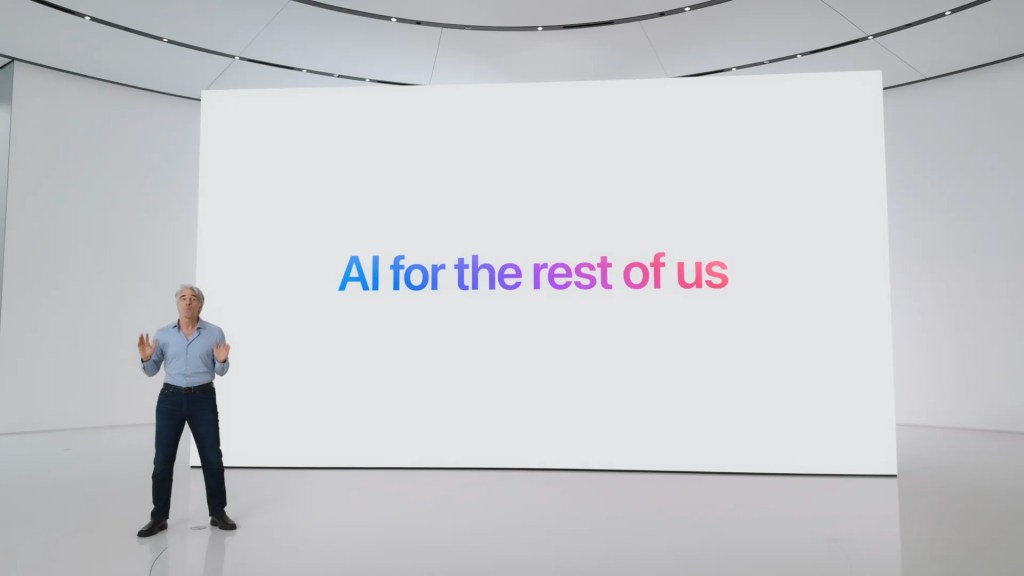
Things aren’t just decaying on political and social fronts, technology is marching right alongside, if not leading the charge. John Gruber lays out a mea culpa of sorts in discussing Apple’s less than intelligent move into Artificial Intelligence in Something Is Rotten In The State of Cupertino.Om Malik also weighs in with Apple Intelligence, Fud, Dud or Both. I’ll have more to say on this later this week. I wrote a bit about it last week also.
In times of uncertain futures it’s always somewhat uncomfortably comforting to reminisce about simpler times. When it comes to technology there was perhaps no simpler or more innocent time than during the age of the Commodore 64, which was my first home computer. We’ve come a long way. Gareth Edwards takes a look at Jack Tramiel’s success in How Commodore Invented The Mass Market Computer.
If you’re interested in just what the heck Sunday Morning Reading is all about you can read more about the origins of Sunday Morning Reading here. You can also find more of my writings on Medium at this link, including in the publications Ellemeno and Rome.
My favorite version of Arthur Hamilton’s song, Cry Me A River, was covered by Joe Cocker. I especially like the live version. While others pump up the bagpipes or crank out The Pogues to celebrate St. Patrick’s Day, I cue up Cocker’s version today.
One of the things you can still count on in Chicago beyond crazy politics and potholes is that every St. Patrick’s Day they still dye the river green. For some reason the first time I heard about that tradition Hamilton’s song title morphed in my brain to Dye Me A River.
Well, it’s St. Patrick’s Day again, and yes both traditions will continue. They’ll dye the river green and I’ll play the song. I’ll also down a pint and have some corned beef and cabbage, a family tradition, though none of us are Irish.
But I’ll be staying away from any of the large number of parades honoring the day. It’s one thing when the river runs green, but I prefer my beer downed once, and not tossed back up into the streets.
You can find more of my writings on a variety of topics on Medium at this link, including in the publications Ellemeno and Rome.I can also be found on social media under my name as above.
Blue is in the eye of the beholder. Or maybe in the lens of the camera.
I took a trip to the Apple Store today to pick up a new iPad for my mother-in-law. Her older iPad 8 had run out of storage space and would no longer update. Picked it up. Set it up. No hassle. She’s off and running.
While there I thought I’d take a look at the new M4 MacBook Air and other new hardware that might be on display. In looking at the MacBook Air I thought for sure I was looking at the silver colored version for a while. (Pictured below next to the Starlight version.)
When a rep popped by I asked him if they had any of the SkyBlue models on display, he said the one I was looking at was the Sky Blue version.
Surprised, I asked if he had a silver version on display and he pointed me to the other end of the table. Walking back and forth, my eyes could not distinguish any real difference between the two colors. But as the photos below show, the camera picked up the slight difference better than my naked eyes could. (Sky Blue is on the right.)
I asked the rep if other folks who may have better eyesight than I were equally confused and his reply was, “Apple doesn’t know what blue is, so why should we expect customers to figure it out.” I asked him further why they were positioned so far apart on the table and he said they were given specific orders to put as much distance between the Sky Blue and Silver variants as possible.
Well, ok then.
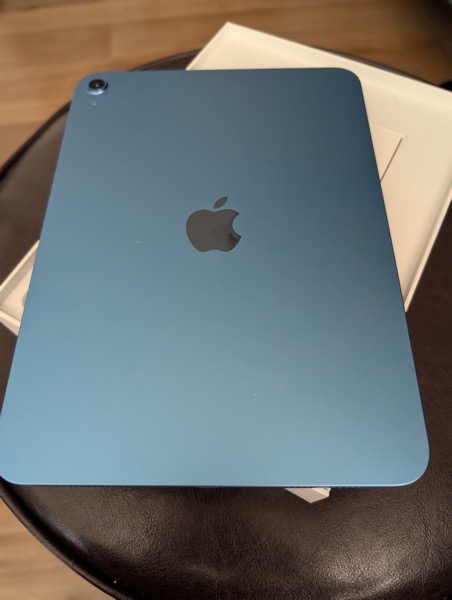
By the way, my mother-in-law’s iPad is closer to what I’d call Sky Blue, and yet the cameras tend to make it appear less saturated than it is in person.
Colors can be weird.
You can find more of my writings on a variety of topics on Medium at this link, including in the publications Ellemeno and Rome.I can also be found on social media under my name as above.
Asked whether she woke up because Oreo jumped on the bed or because her companion was shot, the woman told Fox 13: “The gunshot. Yeah, a combination of the two.”
I also like the The Guardian caption for the photo above says:
The pit bull in the Tennessee incident was not the only US canine to discharge a firearm in recent years.
I’m told the NRA, though insistent that the 2nd amendment to the U.S. Constitution also applies to dogs bearing arms, it does see a potential conflict with our God given right to sleep with our guns.
It may be a dog eat dog world or a dog’s life, but I’m guessing we’re going to see calls for hardening the bedroom with bullet proof sheets sooner rather than later. Apparently there’s a market there.
You can find more of my writings on a variety of topics on Medium at this link, including in the publications Ellemeno and Rome.I can also be found on social media under my name as above.
It has been inevitable for some time that Apple was going to delay launching whatever the new personalized Siri with Apple Intelligence was supposed to be. To expect otherwise was as foolish as hoping the new American government wasn’t going to wreak havoc on its own citizenry and the rest of the world after the most recent election.
Now Apple has owned up to the inevitable. In a statement to Daring Fireball’s John Gruber announced the delay and a new set of expectations:
“Siri helps our users find what they need and get things done quickly, and in just the past six months, we’ve made Siri more conversational, introduced new features like type to Siri and product knowledge, and added an integration with ChatGPT. We’ve also been working on a more personalized Siri, giving it more awareness of your personal context, as well as the ability to take action for you within and across your apps. It’s going to take us longer than we thought to deliver on these features and we anticipate rolling them out in the coming year.”
Note that last sentence includes “we anticipate.” I anticipate dying at some point. I also anticipate warmer days this summer, rain occasionally, and eating pizza on some day in the future. So, the message is stay tuned.
I have several thoughts on this and I’ll lay them out below, along with links to some interesting hot takes following the announcement, some of which have already cooled off a bit.
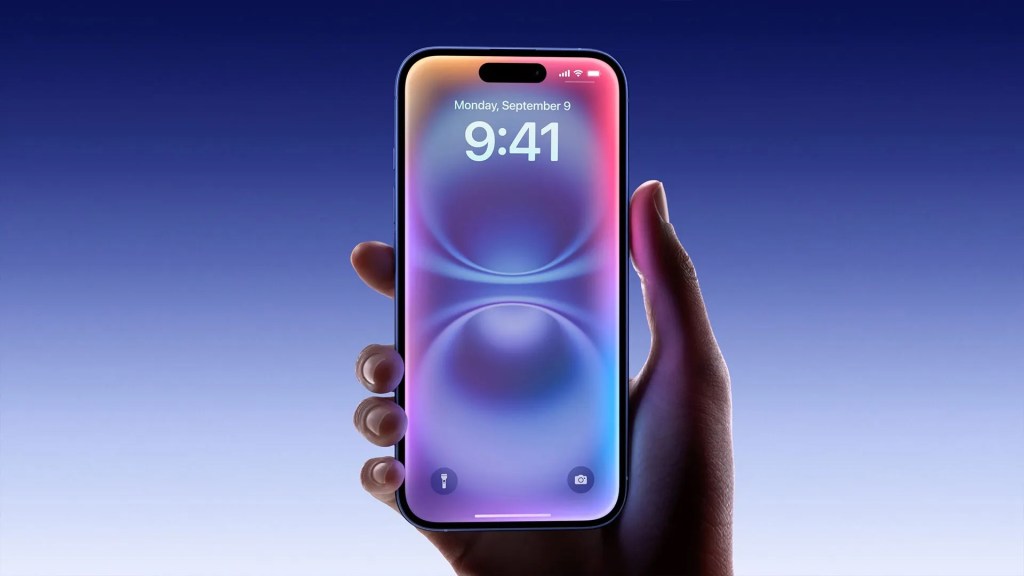
First, I think Apple was smart to make this announcement even if everyone paying attention already knew this was going to be the case. This delay wasn’t and isn’t news. That said, the announcement comes after Apple, generally perceived as rushing to catch up in the push for Artificial Intelligence, has made what can only be called a poor first impression. Sure, you can call Apple Intelligence a beta if you want. Apple does. But advertising a flawed beta as the tent pole to push new iPhones can’t be called anything but a marketing misfire, if not malpractice.
First impressions of shipping products matter more than clever shiny announcements of things yet to come.
Apple should know this because they are no strangers to bad first impressions. MobileMe left a bad stain that iCloud still has difficulty erasing. The VisionPro continues struggling with poor perception and reception. Yes, Apple also does have a history of turning some poorly received rollouts around. The best examples of that are Apple Maps and the Apple Watch. Even so, once a product launched becomes a product laughed at, it’s difficult to erase the echos of that laughter.
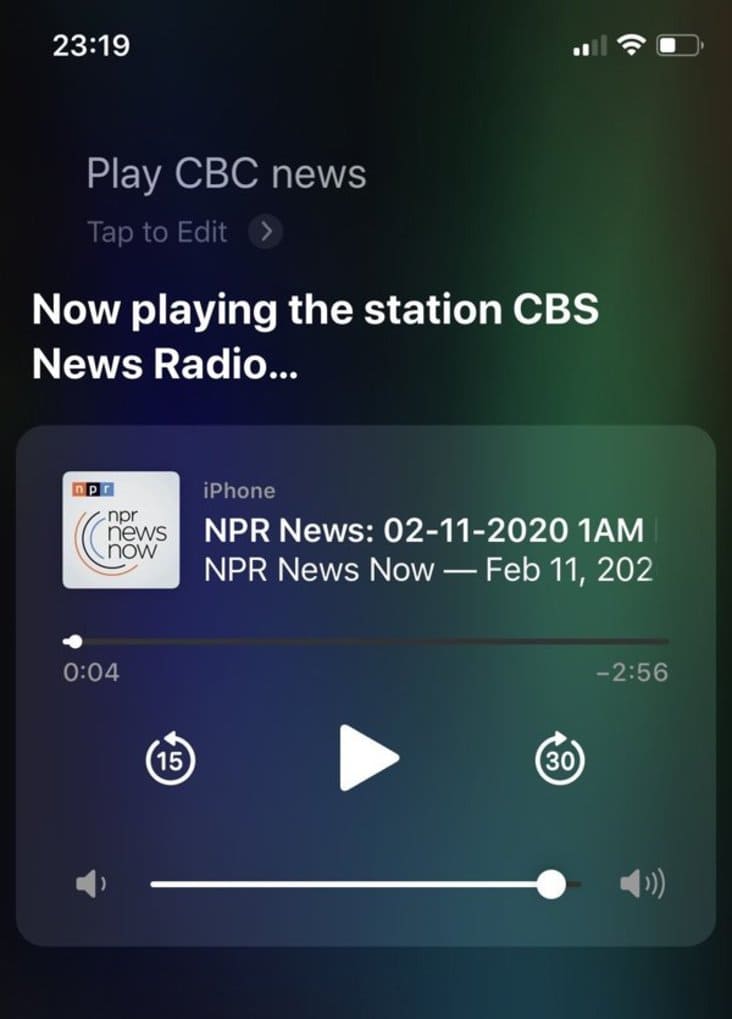
But perhaps the product ridiculed crucially here is the one that Apple married to this all out AI effort: Siri. Purchased, proudly launched, and then allowed to wallow — like too many other of Apple’s efforts (*cough* iPadOS *cough*), Siri has become not just a joke, but one that keeps on giving. Some say it has improved. I’ll agree with that to a point but that depends on the day.
Siri has never fulfilled Apple’s bold promises with any consistent value beyond setting a timer or adding a reminder. Even that fails enough of the time to earn users’ distrust and provide late night comedians with jokes so easy to make that the shrewder jokesters have moved on.
The debate following this recent Apple announcement in pundit circles seems to be on whether or not Apple should jettison Siri and start from scratch. I’m sure that debate has gone round and round in the circular halls of the Apple campus. I doubt that happens, given that the marketing mavens in Cupertino seem to be erratically driving the bus these days. There’s been a huge investment in Siri branding, problematic as it has always been. Unfortunately salvaging a brand is also expensive.
Apple’s Long Game Mindset Might Just Be Short Sighted
The success of the iPhone has given Apple the benefit of playing a long game, plotting product and growth strategy with a large enough cushion to weather the occasional storm. It’s certainly easier to sail through rough seas in a large ship, but the bigger the boat, the more maintenance is required to keep the hull from rusting and the engines running smoothly. The nuts and bolts matter.
Artificial Intelligence, regardless of what company is pushing it, is nuts and bolts, bits and bytes, ones and zeros. Everyone scanning the horizon thinks this is the future we’re sailing towards, full steam ahead. But nothing that’s been released or demonstrated yet has really proven that anyone can chart a correct course. The current moment resembles that scene in Jaws when all the ships set out in an armada to chase a bounty, not knowing really what they’re up against.
Don’t get me wrong. I think Artificial Intelligence may indeed prove useful. Someday. On an enterprise level. I’m just not so sure if it will ever be as big a deal on the consumer front as the marketers want us to believe it is or will be.
I also doubt Apple Intelligence will end up being another Butterfly Keyboard, MobileMe, or Siri, but at the moment there’s as good a shot of it joining the ranks of those jokes in Apple lore as there is for it becoming a success, much less useful.
Ian Betteridge in this piece, lays out what I think the AI true believer vision is in this excerpt:
But AI presents a fundamentally different challenge. This isn’t merely a new product category to be perfected – it’s a paradigm shift in how humans interact with technology. Unlike hardware innovations where Apple could polish existing concepts, AI is redefining the entire computing experience, from point-click or touch-tap to conversations. The interface layer between humans and devices is transforming in ways that might render Apple’s traditional advantages increasingly irrelevant.
He also captures the key context that reveals the tension between the long and short game as Apple has historically played it in this excerpt from earlier in that post:
Apple has long been characterised as a “fast follower” rather than a pioneering innovator. It wasn’t the first to make an MP3 player, smartphone, or even a personal computer. This strategy served Apple brilliantly in the past – observing others’ mistakes, then delivering exquisitely refined products with unmatched attention to design, usability, and integration. The first iPhone wasn’t novel in concept, but revolutionary in execution because it had a unique interface: multitouch. In fact, I would argue this was the last time Apple’s user interfaces went in a bold direction.
What is obvious in this frenzied sea of Artificial Intelligence is that Apple did a quick course correction and tried to “fast follow” before the mistakes of others could be identified well enough to refine and/or correct the way Apple has historically been successful in the past. In the case of Siri, the fact that Apple has let it languish for so long more than hints that it just doesn’t see enough value in the voice assistant proposition.
Were those bad moves? Who can really say at present. It is true that Apple had to react. OpenAI’s release of ChatGPT upset a lot of apple carts and not just those in Cupertino. But Apple’s quick course correction, coupled with a less than enthusiastic response in the same year of its other attempt at a computer interaction paradigm shift–spatial computing with the Vision Pro–has cut down the chances for any short term smooth sailing.
Some are positioning this moment Apple has created for itself as a necessary gamble Apple had to make. Here’s an excerpt from Jason Snell at Six Colors:
And if you asked those same Apple executives if they were aware that the cost of underdelivering those features in the spring of 2025 would be getting beaten up in the press a little bit for delaying features, perhaps even back to iOS 19? I’m pretty sure they’d say that a little bit of negative press today, when the world isn’t really paying that close attention to Apple and AI, would totally be worth it.
That may indeed be true in and of itself. I have no way of knowing. What I do know is that this gamble might have had better odds if Siri, prior to all of this, hadn’t been such a historical and neglected mess for far too long.
Security and Privacy
This delay announcement has also opened wider the door for criticism that might shatter another of Apple’s tent pole marketing strengths: security and privacy. Here’s a post from Simon Willison, who has a hunch that the delay might be related to those issues. It’s also worth taking a look at Willison’s earlier post on prompt injection. John Gruber of Daring Fireball takes Willison’s point further in this post. Here’s the key excerpt:
Prompt injection seems to be a problem that LLM providers can mitigate, but cannot completely solve. They can tighten the lid, but they can’t completely seal it. But with your private information, the lid needs to be provably sealed — an airtight seal, not a “well, don’t turn it upside down or shake it” seal. So a pessimistic way to look at this personalized Siri imbroglio is that Apple cannot afford to get this wrong, but the nature of LLMs’ susceptibility to prompt injection might mean it’s impossible to ever get right. And if it is possible, it will require groundbreaking achievements. It’s not enough for Apple to “catch up”. They have to solve a vexing problem — as yet unsolved by OpenAI, Google, or any other leading AI lab — to deliver what they’ve already promised.
‘Ay there’s the rub,” as Hamlet would say. No one has those solutions, yet it’s full speed ahead as the selling and hype continues. There may be a dream in there somewhere, but as for now, whether sleeping, sleepwalking, or blindly chasing bounties, all the consumer is left with at the moment is “stay tuned.”
For better or worse, we are not going to return to our regularly scheduled programming.
(I note that I was putting the final touches on this piece Bloomberg is reporting that Apple plans the biggest user interface design overhaul in quite some time with this year’s new operating system releases that will be unveiled at WWDC. Apple is under pressure from not only this Apple Intelligence, but other issues that concern developers as well. Shiny distractions generally win when it comes to taking the heat off of failures and problems.)
You can find more of my writings on a variety of topics on Medium at this link, including in the publications Ellemeno and Rome.I can also be found on social media under my name as above.
Time keeps on ticking and we need to keep on reading.
Losing an hour only to gain it back in a few months feels like a capricious two-step, forward and back, never gaining ground. Something we’re all experiencing at the moment and not just because of Daylight Saving Time, but on many levels. Time marches on regardless, even as it retreats for brief periods. Regardless of what time it is, here’s some Sunday Morning Reading to share.
To kick things off this week while you’re enjoying your coffee take a look at NatashaMH’sA Sip of Revolution.
If you’re interested in just what the heck Sunday Morning Reading is all about you can read more about the origins of Sunday Morning Reading here. You can also find more of my writings on Medium at this link, including in the publications Ellemeno and Rome.
Stupid. That would be one way to describe it. Impotent would be another way. Either way, it shows just how scared the racist white boys running the Pentagon are of catching hell from the orange makeup wearing racist in the White House.
The Pentagon, under the cover of building back a warrior ethos, is taking the president’s edict to purge anything that smacks of DEI and is now removing thousands of images and social media posts that reflect any suspected moment in American military history that might offend the delicate sensibilities of these cowardly racists. Looks like they can’t handle the truth.
Yes, it’s just another in a long list of horrible things happening. Yes, it’s just another attempt in the history of humans to erase their own history. Yes, it’s bullshit.
It’s intriguing that this latest move didn’t really catch the news until it was discovered that one of the photos to be deleted was of the “Enola Gay,” the plane that dropped the first atomic bomb. Because you know, it has the word “gay” in the title. I’m guessing whatever AI is being used flagged that one. But remember this is the gang that wanted to remove training videos of the Tuskegee Airmen and Women’s Air Force, before they lost whatever they think their courage was.
Perhaps you remember that this is the same crowd who says you can’t rename forts named after traitors or remove Confederate monuments because that erases history. If duplicitous irony was a rake they’d hit themselves in the face with the business end not the handle.
You can delete photos. You can remove social media posts. You can’t erase history. Sadly, you also can’t erase or remove ignorance, stupidity, and cruelty.
You can find more of my writings on a variety of topics on Medium at this link, including in the publications Ellemeno and Rome.I can also be found on social media under my name as above.
Lots to think about in this helter-skelter moment we’re living through.
Back at it after a couple of weeks of traveling and dealing with a case of pneumonia. (All is well.) Certainly there’s a lot going on and most of it is happening in a such a rush that I’m not sure anyone has enough space to accurately write or think about all that’s happening. But there is some good stuff to recommend.
Leading off this week are some articles from folks who are concerned, distressed, pissed off, and searching for tech solutions that don’t rely on America’s big tech oligarchies.
If you’re one of those searching for different tech solutions, remember no matter how long a service may have been around or how big the company behind it is, it’s all impermanent. As an example, Om Malik takes a look at Microsoft ending the run of Skype this week in Skype Is Dead. What Happened? It might take awhile, but everything eventually dies.
There’s lots of rethinking of lots of things these days. David Todd McCarty is Rethinking Pride.
Adam Serwer asks the question most are asking when it comes to the words behind the ugly acronym, MAGA: Just when was America great, exactly, and for whom? Check out The Great Resegregation.
And to close things out, NatashaMH takes a look at simple acts of kindness in Of Munchkins and Manners. Do be kind.
If you’re interested in just what the heck Sunday Morning Reading is all about you can read more about the origins of Sunday Morning Reading here. You can also find more of my writings on Medium at this link, including in the publications Ellemeno and Rome.
In most meetings when big decisions are going to be made or deals are poised for closing all of the hashing out of details is done ahead of time, before the principals show up to make a show of it. But when one side doesn’t want the deal to close or has nefarious designs on tricking the other there’s an age old tactic used to help derail things. It’s called “The Stranger in the Room.”
The “Stranger in Room” during the Zelenskyy visit to the White House was J.D. Vance.
Here’s how the game is played.
“The Stranger” is present in the meeting, often as a second, third, or even lower functionary. Often as innocuous decoration. But “The Stranger” is brought in with the purpose of blowing things up, so that the principal doesn’t have to get his/her hands dirty.
Often it’s with an innocuous comment. Sometimes it’s with a serious question. Occasionally, though rarely, it’s with a completely defiant statement. I’m sure you’re familiar with the variant of having an assistant call someone out of a meeting for an important call at just the right time.
Vance’s role was to derail the meeting once things looked like they weren’t going The White House’s way, perhaps even scotch things from the beginning. He succeeded, but the masquerade was shorn of its cover when his principal, Trump, decided to open his mouth, and escalate things further, letting his ego take over revealing not only the game, but how ineffectual Vance was at playing his role.
It’s now quite obvious that Trump and his cadre of criminals thought they could snooker Zelenskyy. But they snookered themselves, endangering the future of Ukraine, Europe, and the world order in the process. Zelenskyy was right that they aren’t playing cards. Which is a good things, because the idiots he’s dealing with can’t even cut a deck, much less deal it.
Look, I know these are evil assholes intent on horrible things. It’s just a damn shame we don’t even have competent evil assholes. But then again, when damage is done it doesn’t matter if it was brought about by ignorance or malice.
(apologies for the weird formatting. WordPress is doing odd things today.)
You can find more of my writings on a variety of topics on Medium at this link, including in the publications Ellemeno and Rome.I can also be found on social media under my name as above.
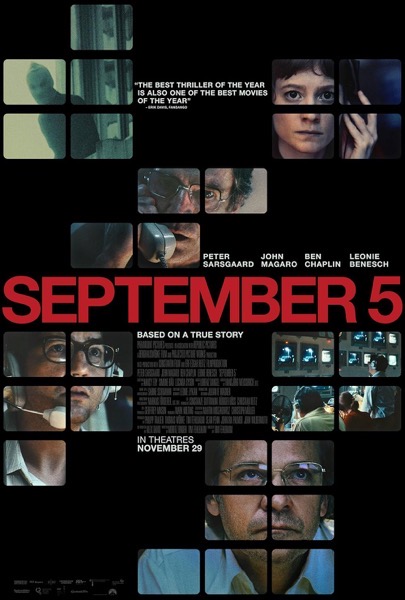
The events of the 1972 Munich Olympics hostage crisis changed the world in so many ways, ushering in the age of terrorism foremost among them. But behind the scenes of the terror and the politics were the sports television broadcasters who found themselves in the middle of an unexpected crisis and they were totally unprepared for. The movie September 5 tells that side of the story and tells it well.
Two things stand out beyond the excellent acting and well crafted script that make the film worth a watch. Director Tim Fehlbaum does a great job of capturing the chaos and the tension in the ABC control room and its environs as his cast hustles and bustles from moment to moment and emotion to emotion. Fehlbaum also skillfully weaves historical ABC footage of the coverage into the action he’s filming in his current day mise-en-scene. That choice alone was an excellent one and sets the filmmaking apart.
The film is also a terrific nostalgic view on what seems like the now ancient technology that television broadcasts used in that era. Watching how logos and titles are created to superimpose over images is quite a treat.
Certainly audiences of my generation will be familiar with how big a moment this was, but I’m sure there are younger generations experiencing the story for the first time. They couldn’t have a better primer than this film.
The end of the tragedy is well known, but the telling of it in this newsroom procedural gives it an entirely new life as we see producers and directors making choices in the moment, realizing how their actions are breaking new ground, potentially fraught with peril, and how their audiences will witness the event they are covering and what it means going forward.
September 5 is currently streaming on Paramount+ and available via video on demand from most services.
You can watch the trailer below.
You can find more of my writings on a variety of topics on Medium at this link, including in the publications Ellemeno and Rome.I can also be found on social media under my name as above.


 When a rep popped by I asked him if they had any of the SkyBlue models on display, he said the one I was looking at was the Sky Blue version.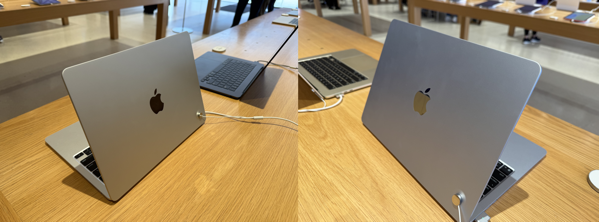





 Life on the Wicked Stage: Act 3