Apple Store takes center stage in this hostage drama.
I’m guessing iHostage is a flick you’ll never see on Apple TV+ even though it features the Amsterdam Apple Store as a prominent character in the story. iHostage, directed by Bobby Boerman is currently streaming on Netflix and is based on an actual hostage situation that took place at the Apple Store in Leidseplein in 2022.
As far as hostage films go it isn’t bad nor is it great. These things typically only end one way, and of course if you have any familiarity (I did not) with the actual events you already know how things turn out in this case. But as to the entertainment value there’s good fun to be had as the director and his cameras look for every conceivable angle to shoot within and without the Apple Store. AirPods play an important role early on. Also interesting is watching some of the hostages use an Apple Watch to check whether or not another was having a heart attack. (For the record, an Apple Watch can’t detect underlying causes of a heart attack, but it can detect irregular rhythms.)
The acting, visuals, and direction are generally good, keeping the tension going as we cut back and forth between the hostage taker and his primary hostage, and those on the police side trying to bring about an end to the event. But again, these stories have a formula about them that to some extent just requires a plug-and-play approach with all the necessary elements of filmmaking. I’d say everyone pulls their job off well with the sort of cleanliness you’d expect in an Apple Store. In the end it’s all a bit too clean.
You can read about the true story behind the movie here and watch the trailer below. I’d say it’s a fun watch if this kind of story is your kind of thing, or you just want to tour an Apple Store in Amsterdam.
You can find more of my writings on a variety of topics on Medium at this link, including in the publications Ellemeno and Rome.I can also be found on social media under my name as above.
You can fool some of the people all of the time…or maybe not.
It might be easier to resurrect the dead than it is to restore trust. One way or the other, we move on from death, but moving on from any relationship once trust is busted is a tough slog for those still among the living. I’m not just talking about politics. I’m referring to the relationships we have in most of the spheres of life we interact with each and every day.
Certainly that’s true in politics and governing. Those currently in charge of sinking the ship of state want you to think the water inching over your shoe tops isn’t a problem. And if we go under, well that’s the last guy’s fault. So is the fact that we don’t have enough lifeboats. Sorry. Hope you can swim.
The same is true in technology, entertainment, business, religion, and the list goes on and on. Superhero comic book creators would call this world of competing realities a multi-verse, but even that concept doesn’t really hold enough water to drink, fantasy that it may be.
If you feel like you’re wading through swamps of bullshit trying to find morsels of truth it is because you are. The powers that be have realized (again) they can get away with calling day night if they say it often and loud enough with enough assists from a cowering media that loves its microphones more than its freedom to exist. And when some bit of truth pokes its head above the surface it’s quickly washed over and submerged by another pounding wave of new stories or new product updates. Think waterboarding with quicksand.
This distortion swamp is full of mirages reflected back into our eyeballs like a thousand suns reflecting off an endless body of water. There’s nothing to anchor to.
Set the politics aside and focus for the moment on the ongoing saga about Apple’s delaying of Apple Intelligence features it unveiled almost a year ago at WWDC. A recent NY Times column by Tripp Mickle dropped two new grains of salt into the still open wounds of that debate. First up, Mickle seems to want to lay the blame on former Apple CFO Luca Maestri for changing up a plan to increase Apple’s budget for purchasing the chips apparently needed to ramp up for the Apple Intelligence push.
Here’s the quote:
Mr. Cook approved a plan to double the team’s chip budget, but Apple’s finance chief, Luca Maestri, reduced the increase to less than half that, the people said. Mr. Maestri encouraged the team to make the chips they had more efficient.
The lack of GPUs meant the team developing A.I. systems had to negotiate for data center computing power from its providers like Google and Amazon, two of the people said. The leading chips made by Nvidia were in such demand that Apple used alternative chips made by Google for some of its A.I. development.
The next grain of sand has launched a thousand blog posts (including this one) by saying that the previously delayed Apple Intelligence features will now launch this fall. Mickel says that’s according to three sources. Regardless of the quantity of sources, that report has generated more use of the words “may” and “possibly” in following headlines than I’ve seen in some time.
The tech press has either caught on and is choosing to not grant Apple the usual slack after feeling more than a bit betrayed. Or it’s pretending to hide beyond an endless streak of optimism. Either way Apple is currently mired in a trust swamp of its own making. Tangentially, and for what’s it’s worth, the same could be said of The NY Times.
My point here, isn’t to debate the sourcing, the reporting, or even the timing of when Apple may or may not launch new features. The long preamble to get to this Apple “news” should have been your first clue to that. My point is that once any authority fractures trust whether it be a company, a government, an official, a teacher, a parent, or a news organization, all sides lose. You can work to regain trust over time, but the stain will always remain and there’s very little anyone can do to remove it. You can learn to live with it, but you can’t erase it.
Or as Lady Gaga says, “Trust is like a mirror, you can fix it if it’s broken, but you can still see the crack in that mother fucker’s reflection.”
There’s an entire industry full of PR professionals and crisis managers lurking, just waiting to make bank on these kind of mistakes, anxious to be called in to try and resurrect a brand or a reputation. But they are really just good makeup artists capable of masking scars. If the art of “spin” was ever a currency, it is has more than lost any value it may have once had.
In an attempt to steer this full circle, if there’s a silver lining in all of this, the raging egos we’ve put in charge of things bigger than consumer electronics can’t keep their mouths shut to their own detriment and perhaps the benefit of those of us on the ground. Their continual yapping and yipping is exposing not just their own ineptitude in governing, but the entire rigged game that everyone in these industries of make believe rely on, whether it be politics, iPhones or punditry.
I’m beginning to hope the immediate damage from these flapping maws will have more impact than any tariff upheaval, leading us all to a healthier and more skeptical view of the world we live in. The world they are tearing to shreds is beginning to feel like one that might not deserve to be saved any longer.
You can find more of my writings on a variety of topics on Medium at this link, including in the publications Ellemeno and Rome.I can also be found on social media under my name as above.
A bit of politics, a bit of tech, and a bit of hope and coping. All tariff free.
This week’s Sunday Morning Reading is tariff free. As usual, even in unusual times there’s some politics, some tech, and things pulled from the cultural file. Enjoy.
For some good context that gets lost in all of what’s washing over us, Jill Lapore takes a look at The Failed Ideas That Drive Elon Musk. Everything old is new again is the saying, even bad things.
Trying to pin down any real coherent details or point of view about what’s happening in the economy is a fool’s game played by the foolish at this point. But context does help. Hamilton Nolan thinks the recent foolish moves will eventually make the rich poorer. I agree. Take a look at what he calls “a deep, dark ocean of harm” in Divergence From The Interests of Capital.
Like the political world, the tech world is seeing its myths and myth makers exposed for the frauds they often are with new layers of the onion peeled back daily. Joanna Stern in the Wall Street Journal takes a look the erosion of trust in her piece, Apple and Amazon Promised Us Revolutionary AI. We’re Still Waiting. It’s a soft headline. Here closing line hits harder, “Where’s the trust?”
Lest we forget that our culture and society is one weird, yet overly predictable wrestling match over how to, or not to control our animal impulses, comes word that Hooters is filing for bankruptcy. Annie Joy Williams takes a look at The End of Hooters.
We’re all staring at everything we’re facing hoping, perhaps against hope, that none of it will lead to any permanent damage, yet teetering on the verge of grief because we recognize our personal impermanence means it might be permanent enough in our short respective lifetimes. That strikes home when someone brave talks about a moment of personal grief. Check out Death Comes Gently Into The Night by NatashaMH.
If you’re interested in just what the heck Sunday Morning Reading is all about you can read more about the origins of Sunday Morning Reading here. You can also find more of my writings on Medium at this link, including in the publications Ellemeno and Rome.
Severance is quite a streaming hit for Apple TV+ and Apple is going all in on hyping the show and it’s Mac computers on the Apple Store.
To push a behind the scenes look at the editing of Severance on Mac computers Apple added a pro version of the Lumon computer used in the show to the Apple Store website. Of course, they added the Pro version. You can visit the page while it’s still around by going to the Apple website and selecting Mac, then selecting The Lumon Terminal Pro at the top of the page. The video link is included on that webpage.
By the way, the behind the scenes video of the editing process using Macs and Apple software is quite good and worth a watch.
You can find more of my writings on a variety of topics on Medium at this link, including in the publications Ellemeno and Rome.I can also be found on social media under my name as above.
Maybe one day Apple will find time to fix this bug with shared Reminders. Maybe not, given all that it keeps piling on its seemingly overflowing plate these days.
It works as advertised when it comes to actually sharing a Reminder. My wife and I use it for grocery and other shopping lists. If she’s doing an inventory through the cabinets prior to a grocery run, I’ll get notifications of the Reminders she adds to the list.
The problem pokes its head up after those Reminders are completed. Those notifications don’t disappear the way non-shared Reminders do. They hang around. Seemingly forever. At least in my case, sometimes for hours.
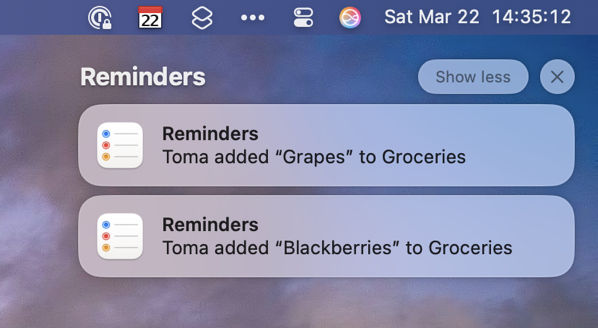
The two Reminders in the image above are from my iMac. My wife added them after I had already headed to the store on a day of errands. They were still there hours after I had checked them off in the Shared Reminders list on my iPhone. The notifications still remained on my iPhone as well.
You have to manually get rid of these Shared Reminder notifications, which seems like a silly bug to me. It’s been around since Shared Reminders was introduced in iOS 13. It’s a shame it’s been around so long because Apple has done a good job over the years evolving the Reminders app into something that’s really useful.
Perhaps Apple Intelligence will figure out a way to fix this somewhere down the line. I won’t set a shared Reminder to check on that though.
You can find more of my writings on a variety of topics on Medium at this link, including in the publications Ellemeno and Rome.I can also be found on social media under my name as above.
We’re all circling. We’re not listening. We should be reading.
Everything changes. Everything remains the same. Damnit. With that said, here is this week’s Sunday Morning Reading with links to articles worth sharing and perhaps pondering over. There’s a bit of satire, a golden toilet heist, and the evolving nature of a piece from draft to final polish. And, yes, there is politics. Everything changes. Everything remains the same. Damnit.
Let’s kick off with Tina He and The Last Human Choice. That link is to the final version of the story. I also strongly encourage you to check out the draft version she shared here.
Mark Jacob always has a great look at the media, especially in this moment, In this one he examines When The Media Take MAGA Liars At Their Word. I mentioned to Mark that what infuriates me is not just the media taking him at his word–ignorance and stupidity know no bounds–but that they know better and report it out as if they don’t.
Bringing my words at the topfull circle, NatashaMH once again delves deep into the personal past through a contemporary moment (her reaction to the streaming hit Adolescence) in A Requiem For My Dreams. I’ll close with a quote from her piece about the series that applies to everything, everywhere all at once:
People say the series is about a new world that’s happening. Fuck that, ignoramuses. It’s about a world that has always been out there behind closed doors when ears weren’t listening
If you’re interested in just what the heck Sunday Morning Reading is all about you can read more about the origins of Sunday Morning Reading here. You can also find more of my writings on Medium at this link, including in the publications Ellemeno and Rome.
Trust is not an easy thing to earn. It’s far easier to burn. When it catches fire, it quickly consumes whatever is in its path. Such a conflagration is made worse when it singes those who have long cozied up, supported, and promulgated that trust as their own. Apple and those who make a living covering the company are both fighting a fire neither can put out without the other, regardless of what caused Apple’s rush to market whatever Apple Intelligence and the new personalized Siri was supposed to be.
The fiasco is that Apple pitched a story that wasn’t true, one that some people within the company surely understood wasn’t true, and they set a course based on that.
You could say it starts and stops there. You wouldn’t be wrong.
WWDC 2024 changed all that and gave me hope that Apple was in the AI race, but there were worrisome signs even back then that because, well, it was Apple, I chose to ignore or forgive.
It’s clear Apple must radically rethink its reason for being.
The heat on Apple has been smoldering for some time now with smoke in the air, wafting on a number of fronts. While I’m not pointing fingers and criticizing Apple pundits directly, (they were misled in my view), they’ve carried a lot of water for Apple, keeping these other recent flare-ups from burning too hot.
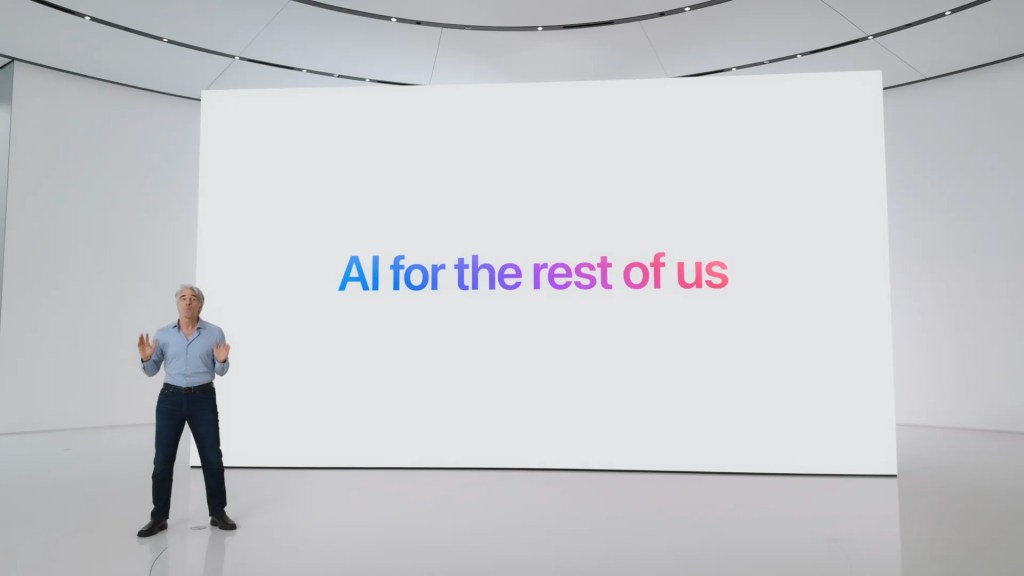
I’ve written about this Apple Intelligence episode previously, but to recap the particulars: Apple announced its flavor of Artificial Intelligence at last year’s World Wide Developers Conference (WWDC), carving out a fire line to slow down the burning narrative that it was behind and possibly missing the moment with AI. Boldly branding it as Apple Intelligence, the key reveal was unveiling a more personalized Siri, that unlike all of the other AI efforts on the market, would give users “AI For The Rest Of Us,” that would retain the firewall of Apple’s marketing mantra of being more secure and private.
Turns out it was a reveal that wasn’t really a reveal, but has now proven all too revealing.
As has been typical with new operating system features the last few years, Apple was clear at WWDC that some of this newness would roll out over the course of the year, so there was no surprise there. Also typical since COVID is that Apple’s announcement was a canned commercial.
Atypical, however, none of the flashier features were ever shown to pundits and journalists, even under cover of an NDA. As Gruber and others are now saying, that smoky smell reeks of vaporware.
Each year Apple faces some degree of heat as it heads into WWDC. I think things will be hotter than most this year with a higher degree of skepticism. What we’re witnessing is a landscape built by years of trust, earning the benefit of doubt, turned to ashes. They say that hell has no fury like a woman scorned, but I’m here to tell you that might take second place when it comes to torching the trust relationship between a company’s PR reps and those who cover them.
Let’s talk about that trust.
Back in my gadget blogging days for GottaBeMobile.com the first rule of thumb was always be skeptical of PR. I’ve been on both sides of that fence, pushing out PR for my own projects and covering it for others. A PR pro tells you the story they want you to cover. Covering that story, you look for the holes in addition to covering it. By and large most of the well know Apple pundits have done a reasonably good job of revealing those holes in my opinion.
Apple was different in that for the most part if they made a claim it usually held up. I remember distinctly when the first iPad was released with a claimed battery life of 10 hours. Those of us at GBM were surprised when those claims proved accurate once we had the devices in our hands. Promise made. Promise fulfilled. Trust earned.
No company is perfect, certainly not Apple. But Apple has been reasonably consistent for most of the time I’ve been covering or using their hardware and software. There have been lapses — Siri being a prime example — but nothing that wasn’t overcome and perhaps, now in retrospect, wrongly overlooked because of the trust Apple built with the media and enthusiasts who covered the company. As most now realize, the smoke and mirror show of last year’s WWDC Apple Intelligence announcement was a red flag warning that needed more scrutiny than relying on trust banked through good will and follow through.
It’s currently being endlessly debated whether or not this failure was caused by a rush to satisfy Wall Street deep in its AI bubble, poor leadership, or just trying to climb too high a mountain too fast in an attempt to create a technical solution that, as announced, would one up those already on the market. In the end I don’t think it matters much what exactly sparked this blaze. I do think it matters how Apple chooses to put out the fire. Those who cover Apple, and more importantly users, feel scorched. I’m guessing there are some in Cupertino feeling that as well.
Burn scars don’t heal well or quickly.
You can find more of my writings on a variety of topics on Medium at this link, including in the publications Ellemeno and Rome.I can also be found on social media under my name as above.
Tough reads for tough times with a nod to the Commodore 64.
The rapid decay of all things continues. I’m not even sure if “decay” is the right word. “Collapse” might be a better choice. Regardless, there’s no “decay” or “collapse” in my sharing articles and writing every week in Sunday Morning Reading. Enjoy.
Marc Elias says We Can’t Give In To Fear. He’s right. But with those we mistakenly counted on having already done so, it makes it tougher for the rest of us.
Brian Barrett of Wired (which continues to do excellent reporting) gives us a rundown on The United States of Elon Musk. Good piece with good context. I don’t disagree with his premise that it’s unsustainable. The larger concern is what’s left in its wake.
NatashaMH opens up a personal tale of exploring justice, relationships, and personal power in The Price of Guns And Butter.
Things aren’t just decaying on political and social fronts, technology is marching right alongside, if not leading the charge. John Gruber lays out a mea culpa of sorts in discussing Apple’s less than intelligent move into Artificial Intelligence in Something Is Rotten In The State of Cupertino.Om Malik also weighs in with Apple Intelligence, Fud, Dud or Both. I’ll have more to say on this later this week. I wrote a bit about it last week also.
In times of uncertain futures it’s always somewhat uncomfortably comforting to reminisce about simpler times. When it comes to technology there was perhaps no simpler or more innocent time than during the age of the Commodore 64, which was my first home computer. We’ve come a long way. Gareth Edwards takes a look at Jack Tramiel’s success in How Commodore Invented The Mass Market Computer.
If you’re interested in just what the heck Sunday Morning Reading is all about you can read more about the origins of Sunday Morning Reading here. You can also find more of my writings on Medium at this link, including in the publications Ellemeno and Rome.
Blue is in the eye of the beholder. Or maybe in the lens of the camera.
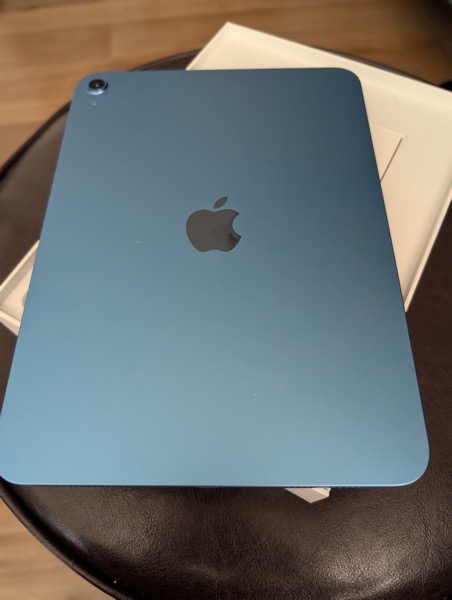
I took a trip to the Apple Store today to pick up a new iPad for my mother-in-law. Her older iPad 8 had run out of storage space and would no longer update. Picked it up. Set it up. No hassle. She’s off and running.
While there I thought I’d take a look at the new M4 MacBook Air and other new hardware that might be on display. In looking at the MacBook Air I thought for sure I was looking at the silver colored version for a while. (Pictured below next to the Starlight version.)
When a rep popped by I asked him if they had any of the SkyBlue models on display, he said the one I was looking at was the Sky Blue version.
Surprised, I asked if he had a silver version on display and he pointed me to the other end of the table. Walking back and forth, my eyes could not distinguish any real difference between the two colors. But as the photos below show, the camera picked up the slight difference better than my naked eyes could. (Sky Blue is on the right.)
I asked the rep if other folks who may have better eyesight than I were equally confused and his reply was, “Apple doesn’t know what blue is, so why should we expect customers to figure it out.” I asked him further why they were positioned so far apart on the table and he said they were given specific orders to put as much distance between the Sky Blue and Silver variants as possible.
Well, ok then.
By the way, my mother-in-law’s iPad is closer to what I’d call Sky Blue, and yet the cameras tend to make it appear less saturated than it is in person.
Colors can be weird.
You can find more of my writings on a variety of topics on Medium at this link, including in the publications Ellemeno and Rome.I can also be found on social media under my name as above.
It has been inevitable for some time that Apple was going to delay launching whatever the new personalized Siri with Apple Intelligence was supposed to be. To expect otherwise was as foolish as hoping the new American government wasn’t going to wreak havoc on its own citizenry and the rest of the world after the most recent election.
Now Apple has owned up to the inevitable. In a statement to Daring Fireball’s John Gruber announced the delay and a new set of expectations:
“Siri helps our users find what they need and get things done quickly, and in just the past six months, we’ve made Siri more conversational, introduced new features like type to Siri and product knowledge, and added an integration with ChatGPT. We’ve also been working on a more personalized Siri, giving it more awareness of your personal context, as well as the ability to take action for you within and across your apps. It’s going to take us longer than we thought to deliver on these features and we anticipate rolling them out in the coming year.”
Note that last sentence includes “we anticipate.” I anticipate dying at some point. I also anticipate warmer days this summer, rain occasionally, and eating pizza on some day in the future. So, the message is stay tuned.
I have several thoughts on this and I’ll lay them out below, along with links to some interesting hot takes following the announcement, some of which have already cooled off a bit.
First, I think Apple was smart to make this announcement even if everyone paying attention already knew this was going to be the case. This delay wasn’t and isn’t news. That said, the announcement comes after Apple, generally perceived as rushing to catch up in the push for Artificial Intelligence, has made what can only be called a poor first impression. Sure, you can call Apple Intelligence a beta if you want. Apple does. But advertising a flawed beta as the tent pole to push new iPhones can’t be called anything but a marketing misfire, if not malpractice.
First impressions of shipping products matter more than clever shiny announcements of things yet to come.
Apple should know this because they are no strangers to bad first impressions. MobileMe left a bad stain that iCloud still has difficulty erasing. The VisionPro continues struggling with poor perception and reception. Yes, Apple also does have a history of turning some poorly received rollouts around. The best examples of that are Apple Maps and the Apple Watch. Even so, once a product launched becomes a product laughed at, it’s difficult to erase the echos of that laughter.
But perhaps the product ridiculed crucially here is the one that Apple married to this all out AI effort: Siri. Purchased, proudly launched, and then allowed to wallow — like too many other of Apple’s efforts (*cough* iPadOS *cough*), Siri has become not just a joke, but one that keeps on giving. Some say it has improved. I’ll agree with that to a point but that depends on the day.
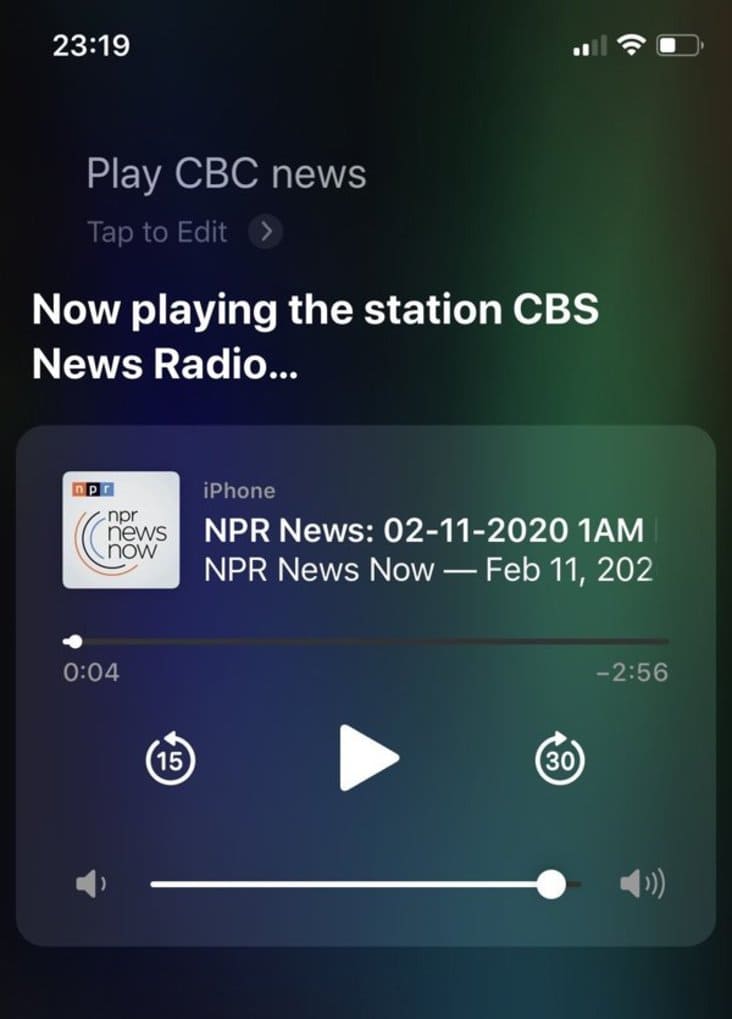
Siri has never fulfilled Apple’s bold promises with any consistent value beyond setting a timer or adding a reminder. Even that fails enough of the time to earn users’ distrust and provide late night comedians with jokes so easy to make that the shrewder jokesters have moved on.
The debate following this recent Apple announcement in pundit circles seems to be on whether or not Apple should jettison Siri and start from scratch. I’m sure that debate has gone round and round in the circular halls of the Apple campus. I doubt that happens, given that the marketing mavens in Cupertino seem to be erratically driving the bus these days. There’s been a huge investment in Siri branding, problematic as it has always been. Unfortunately salvaging a brand is also expensive.
Apple’s Long Game Mindset Might Just Be Short Sighted
The success of the iPhone has given Apple the benefit of playing a long game, plotting product and growth strategy with a large enough cushion to weather the occasional storm. It’s certainly easier to sail through rough seas in a large ship, but the bigger the boat, the more maintenance is required to keep the hull from rusting and the engines running smoothly. The nuts and bolts matter.
Artificial Intelligence, regardless of what company is pushing it, is nuts and bolts, bits and bytes, ones and zeros. Everyone scanning the horizon thinks this is the future we’re sailing towards, full steam ahead. But nothing that’s been released or demonstrated yet has really proven that anyone can chart a correct course. The current moment resembles that scene in Jaws when all the ships set out in an armada to chase a bounty, not knowing really what they’re up against.
Don’t get me wrong. I think Artificial Intelligence may indeed prove useful. Someday. On an enterprise level. I’m just not so sure if it will ever be as big a deal on the consumer front as the marketers want us to believe it is or will be.
I also doubt Apple Intelligence will end up being another Butterfly Keyboard, MobileMe, or Siri, but at the moment there’s as good a shot of it joining the ranks of those jokes in Apple lore as there is for it becoming a success, much less useful.
Ian Betteridge in this piece, lays out what I think the AI true believer vision is in this excerpt:
But AI presents a fundamentally different challenge. This isn’t merely a new product category to be perfected – it’s a paradigm shift in how humans interact with technology. Unlike hardware innovations where Apple could polish existing concepts, AI is redefining the entire computing experience, from point-click or touch-tap to conversations. The interface layer between humans and devices is transforming in ways that might render Apple’s traditional advantages increasingly irrelevant.
He also captures the key context that reveals the tension between the long and short game as Apple has historically played it in this excerpt from earlier in that post:
Apple has long been characterised as a “fast follower” rather than a pioneering innovator. It wasn’t the first to make an MP3 player, smartphone, or even a personal computer. This strategy served Apple brilliantly in the past – observing others’ mistakes, then delivering exquisitely refined products with unmatched attention to design, usability, and integration. The first iPhone wasn’t novel in concept, but revolutionary in execution because it had a unique interface: multitouch. In fact, I would argue this was the last time Apple’s user interfaces went in a bold direction.
What is obvious in this frenzied sea of Artificial Intelligence is that Apple did a quick course correction and tried to “fast follow” before the mistakes of others could be identified well enough to refine and/or correct the way Apple has historically been successful in the past. In the case of Siri, the fact that Apple has let it languish for so long more than hints that it just doesn’t see enough value in the voice assistant proposition.
Were those bad moves? Who can really say at present. It is true that Apple had to react. OpenAI’s release of ChatGPT upset a lot of apple carts and not just those in Cupertino. But Apple’s quick course correction, coupled with a less than enthusiastic response in the same year of its other attempt at a computer interaction paradigm shift–spatial computing with the Vision Pro–has cut down the chances for any short term smooth sailing.
Some are positioning this moment Apple has created for itself as a necessary gamble Apple had to make. Here’s an excerpt from Jason Snell at Six Colors:
And if you asked those same Apple executives if they were aware that the cost of underdelivering those features in the spring of 2025 would be getting beaten up in the press a little bit for delaying features, perhaps even back to iOS 19? I’m pretty sure they’d say that a little bit of negative press today, when the world isn’t really paying that close attention to Apple and AI, would totally be worth it.
That may indeed be true in and of itself. I have no way of knowing. What I do know is that this gamble might have had better odds if Siri, prior to all of this, hadn’t been such a historical and neglected mess for far too long.
Security and Privacy
This delay announcement has also opened wider the door for criticism that might shatter another of Apple’s tent pole marketing strengths: security and privacy. Here’s a post from Simon Willison, who has a hunch that the delay might be related to those issues. It’s also worth taking a look at Willison’s earlier post on prompt injection. John Gruber of Daring Fireball takes Willison’s point further in this post. Here’s the key excerpt:
Prompt injection seems to be a problem that LLM providers can mitigate, but cannot completely solve. They can tighten the lid, but they can’t completely seal it. But with your private information, the lid needs to be provably sealed — an airtight seal, not a “well, don’t turn it upside down or shake it” seal. So a pessimistic way to look at this personalized Siri imbroglio is that Apple cannot afford to get this wrong, but the nature of LLMs’ susceptibility to prompt injection might mean it’s impossible to ever get right. And if it is possible, it will require groundbreaking achievements. It’s not enough for Apple to “catch up”. They have to solve a vexing problem — as yet unsolved by OpenAI, Google, or any other leading AI lab — to deliver what they’ve already promised.
‘Ay there’s the rub,” as Hamlet would say. No one has those solutions, yet it’s full speed ahead as the selling and hype continues. There may be a dream in there somewhere, but as for now, whether sleeping, sleepwalking, or blindly chasing bounties, all the consumer is left with at the moment is “stay tuned.”
For better or worse, we are not going to return to our regularly scheduled programming.
(I note that I was putting the final touches on this piece Bloomberg is reporting that Apple plans the biggest user interface design overhaul in quite some time with this year’s new operating system releases that will be unveiled at WWDC. Apple is under pressure from not only this Apple Intelligence, but other issues that concern developers as well. Shiny distractions generally win when it comes to taking the heat off of failures and problems.)
You can find more of my writings on a variety of topics on Medium at this link, including in the publications Ellemeno and Rome.I can also be found on social media under my name as above.






 When a rep popped by I asked him if they had any of the SkyBlue models on display, he said the one I was looking at was the Sky Blue version.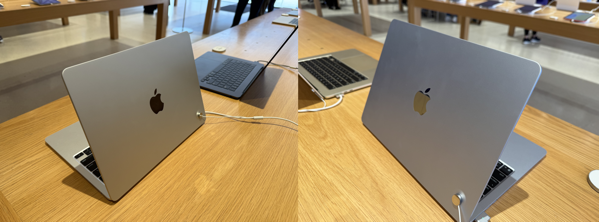

 Life on the Wicked Stage: Act 3