Looking Forward To Seeing David Byrne’s ‘Theater of The Mind’

Gonna take the trip

The previous immersive theatre experiences I’ve participated in have each been very much worth the trip. I’m very much looking forward to this one. Mike Davis of WBEZChicago got a pre-debut tour of David Byrne’s upcoming Theatre of The Mind and wrote about it. 

2526_TOTM_Hero 1500x1000 2.In addition to being ever curious about immersive theatre experiences I’m a long time David Byrne fan, so this will be an exciting double dip.

I won’t begin to try and explain immersive theatre as a concept here, except to say it’s always a journey. Sometimes extremely satisfying, sometimes not so much. But then so is life.

I thoroughly enjoyed and was quite moved by the Albany Park Theater Project’s Port of Entry that Davis mentions in the piece. As an old theatre veteran, whenever the form lifts me out of my viewing habits I’m always intrigued.

You can also find more of my writings on a variety of topics on Medium at this link, including in the publications Ellemeno and Rome. I can also be found on social media under my name as above.
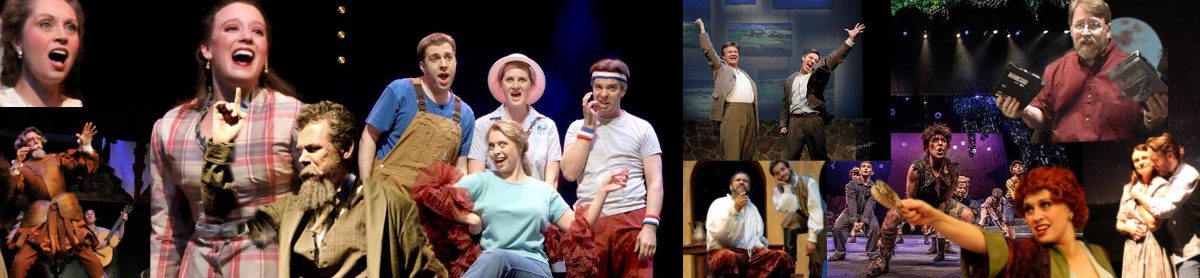
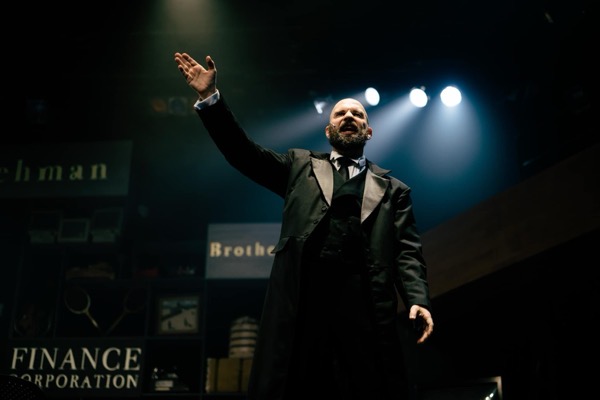
 

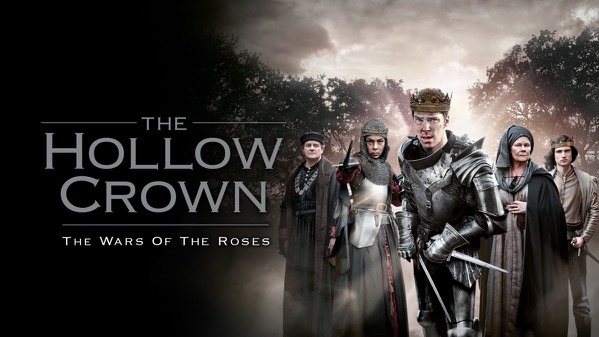
Ian McKellen, Thomas More, Shakespeare, and The Strangers’ Case

Watch this

There really is nothing new under the sun. Man’s “mountainous inhumanity” is something that’s always been with us. We constantly need to remind ourselves of that when it comes to our current moment, especially as relates to our current ICE capades.

Ian McKellen appeared recently on The Late Night With Stephen Colbert for an extended interview in which he recited a 400-year-old monologue from the play Sir Thomas Moore, that speaks to directly to the plight of immigrants. 

You can watch the clip below. It should be cued to the monologue. In case it’s not, the monologue begins at roughly 22:16 in the 26 minutes interview. Naturally I’d recommend watching the entire thing.

For an intriguing bit of context, the play largely thought to have been originally written by Anthony Munday and Henry Chettle, but contains pages attributed to Shakespeare and others in what was largely a collaborative effort over time as it passed from troupe to troupe. Which is when Shakespeare would have entered the picture. Of course, Shakespeare’s authorship has been debated as it always is. If interested, you can check out a Wikipedia entry on the play and its history that will give you some idea.

McKellen stepped into the play for the first time in 1964 after the original actor left the production due to artistic differences. 

Setting aside authorship debates, the 400-year-old speech certainly speaks to our current moment as it has through generations, even if the play has been rarely performed live in its 400-year-old history.

You can also find more of my writings on a variety of topics on Medium at this link, including in the publications Ellemeno and Rome. I can also be found on social media under my name as above.
 

Promises, Promises

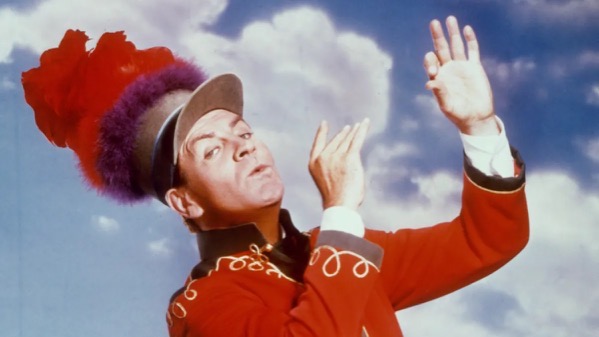
Harold Hill never had such easy marks

Years ago when I ran professional theatres my principal responsibility was picking a season of plays and/or musicals, then pulling things together to actually produce that season. Planning was based on quite a few variables and data, but you never knew how things were actually going to play out in the end. Show business can be cruel.

The Music ManThere were always surprises. Some good and some bad. Some shows would become surprise runaway hits, others that seemed like sure things would flop. Lose a weekend due to a snowstorm and the bottom line got hit hard.

Of course the choice of plays was always the key variable. I remember sitting in a particularly contentious board of directors meeting as we were nearing a season announcement and a board member was pushing back hard on our revenue and expense projections for what we had planned. He pounded the table and asked, “How can you know what will sell tickets a year from now?” I told him I could project, but I couldn’t know and that I always went into each season saying that if we succeeded as much as .300 hitters in baseball we’d be superstars.

Well, we weren’t baseball players, but we still usually came out ahead of the game with more hits some seasons than others. We held our own. The not-for-profit theatre version of the game I was playing relied on picking and announcing a season a year or so in advance. You’d promote and sell that season to subscribers to accumulate cash and support up front, and then once you were in the season proper you’d push hard for single ticket sales and then after they got a taste, try to convert them into subscribers, then donors.

It was always risky, just like many business propositions. I remember asking that same board member if his business would be comfortable announcing his plans and projecting sales a year in advance knowing all of the risks. It was a rhetorical question on my part because I knew his business couldn’t operate that way. Most can’t.

The entire thing was based initially on a promise, and each new season announcement was a new promise. Each time you delivered a promised season the theatre built or kept trust with that subscriber base. That loyal base would resubscribe based on that trust. Those customers knew there may be a play or two in the season they didn’t care for, but they came back season after season based on the quality of what we offered, and also that we delivered on what we initially sold and promoted.

As an artistic director (CEO) I was the one who was responsible for that trust and never took that responsibility lightly. Yes, there were times we had to change our plans, but the trust engendered along the way helped weather those moments as long as we were honest with our customers and donors.

The above is a long wind up to something I’ve been thinking about lately and spurred by an article I saw on Elon Musk’s latest promises about delivering robots “next year.”

No one thinks that’s real. For the life of me, I doubt he does. Given how many “promises” this guy has made and broken I don’t understand how reasonably intelligent (I assume they are reasonably intelligent) reporters and investors don’t just burst out laughing when the next one self-drives out of the empty garage that is his mouth. But then again, everyone is in on the con.

Musk isn’t alone these days when it comes to talking out of more orifices than human anatomy provides. Our politicians do it. Relentlessly. As do Tech and other corporate CEOs. The politicians you can almost understand because they are allowed to say whatever the hell they want under the Speech and Debate clause of the Constitution, granting them immunity for anything they say while doing their legislative duties. Unfortunately that seems to have spread a bit outside of the original boundaries through various court rulings and a willingness to boldly and brazenly lie at the drop of a hat.

But CEOs are supposed to be under more scrutiny. From their shareholders. From various regulatory agencies. And yet, those like Musk and many of the Artificial Intelligence promoters seem to be able to promise the Moon (or Mars) without ever delivering.

As I said earlier, at some point you’d think intelligent folks would catch on and actually run these Harold Hills out of town, instead of allowing them to continue courting the librarians they want to take jobs away from. If the regulators aren’t regulating and the shareholders keep writing checks I guess those of us watching shouldn’t care if they all end up playing air trombones. (Bonus points for those who get The Music Man references.)

There’s a truism in my business that nobody ever starts out to do a bad show. Yet, some shows flop. I used to believe that no one ever started a business to be a bust. But the flimflammery we’re seeing these days makes me wonder. As long as you can continue to fleece the flock along the way, does it really matter if you ultimately succeed in producing what you promised as long as you score along the way?

Set aside for the moment that anything, well intentioned or not, can fail. But after delivering a string of broken promises you’d think there’d be enough erosion of trust that only fools would continue to pony up their money. Perhaps I’ve just underestimated the number of fools.

My business was disposable. Technology isn’t. Essential as the arts are to our collective humanity, the arts are always the first to feel financial hits in tough times, and generally the last to recover. Technology keeps playing an increasing role in all of our lives and is becoming dangerously essential. Lord help us if an EMP ever goes off.  Watching this new rush into the a world of Artificial Intelligence it’s frightening to contemplate even a small portion of what the promises offer, even as some have already collapsed under their own weight. It’s even more challenging to contemplate what the remaining ones might actually turn into.

It’s one thing to run a smartphone on a beta OS. It’s another when it runs your life for you.

Frankly, I don’t buy all of the promises. The ones that I think offer possible benefits I’m skeptical about. And that’s because I don’t trust the folks offering the promises, the folks funding them, or those rushing to implement them. They’ve all had their chance to earn my trust. There are very few remaining that haven’t squandered it.

You can also find more of my writings on a variety of topics on Medium at this link, including in the publications Ellemeno and Rome. I can also be found on social media under my name as above.
 

Sunday Morning Reading

Winter is coming. Or is it already here?

It’s a snowy Sunday after the Thanksgiving holiday here in Chicago. The Chicago Bears have already played this week’s game, beating the Philadelphia Eagles on Friday, sending the town into a tizzy before it got covered in a Saturday snowfall. So it feels like the perfect day to settle in and do a little Sunday Morning Reading after the shoveling and snow blowing move stuff around. Bitch of it is, the stuff still has to melt. Let’s take a look.

PXL 20250320 115712285.

Humorist Emily Bressler has a frighteningly funny piece of satire that I think sums up the chilling undercurrents in so much of what we’re living through at the moment in I Work For An Evil Company, But Outside Work, I’m Actually A Really Good Person.

Winter may be a few weeks away officially, but in Chicago, it feels like it’s here already this weekend. Actually the metaphor feels like it’s been too close for comfort for quite some time. The U.S. might be sinking ships in warmer waters threatening an invasion of Venezuela, but the Danes haven’t forgotten threats in colder climes and have been preparing. Miranda Bryant spells it out in Denmark Sets Up ‘Night Watch’ To Monitor Trump After Greenland Row. 

Theaters and other arts organizations are feeling quite a chill in this inhospitable political climate these days. Adam Harrington is Taking The Temperature Of Theater In Chicago: Distress As Venues Fall, But Optimism Driving By A Vibrant Community. 

Speaking of theater, Mathew Ingram takes a look at the ritualized charades that happen after a tech company gets called on the carpet for being evil in What Did Mark Zuckerberg Know And When Did He Know It? These performance art pieces happen all too frequently, regardless of venue. The audience never buys it. So why do these unfunny farces continue?

If we survive the Artificial Intelligence tsunami the next big thing that’s been the next big thing for quite some time will be when quantum computing actually turns into something. I imagine it’ll all be lumped in together as all of these waves crash ashore with the same promises. The Swinburne University of Technology asks the question If Quantum Computing Is Solving ‘Impossible’ Questions, How Do We Know They’re Right?

Josh Marshall takes a look at The Surreal Madness Of The AI Boom. I’m not sure I’d call it surreal, but it’s certainly something other than real. Otherwise, why would folks like Laura J. Nelson be chronicling how Tech Titans Amass Multimillion-Dollar War Chests To Fight AI Regulation. (Hint, when you have to play that kind of expensive defensive game, you’re trying to hide the ball, not advance it.)

NatashaMH provides a quilted farewell in a touching remembrance of a friend who passed too soon. Her closing line of My Best Friend Wrapped In Peace, “be safe in winter till summer arrives again,” chills and thaws in the same breath.

To close out this snowy holiday weekend, Neil Steinburg gives us a short piece titled simply, Home. Read it. Whether you’re home, on your way there, or returning to it.

If you’re interested in just what the heck Sunday Morning Reading is all about you can read more about the origins of Sunday Morning Reading here. If you’d like more click on the Sunday Morning Reading link in the category column to check out what’s been shared on Sunday’s past. You can also find more of my writings on Medium at this link, including in the publications Ellemeno and Rome.

Scene Painting a History of Hamlets at The National Theatre

Hamlets watching Hamlet

I’ve done some scene painting in my day, but nothing like this. Actually nothing even approaching anything like this. 

Hamlet 2.jpg.

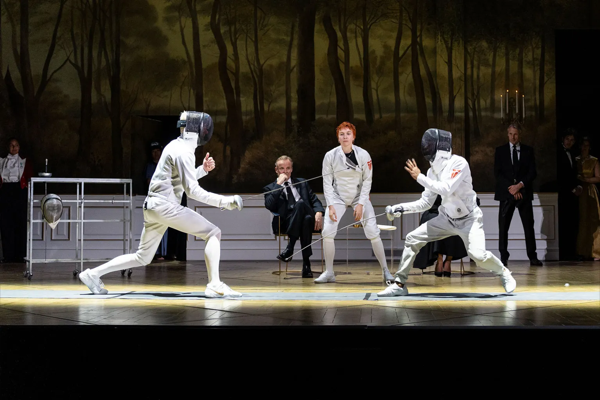
In Robert Hatcher’s production of Shakespeare’s Hamlet at Britain’s National Theatre Ben Stones’ scenery features a gigantic mural that surrounds the set that includes the faces of actors who have played Hamlet through the ages. The picture above doesn’t do that description or the concept justice. 

The faces woven into the Danish artwork are the ultimate theatrical Easter egg. While Stones keeps the full cast list close to his chest, he confirms that they are all there – a complete history of the role.

“They’re all hidden in there. Everybody who’s been in it… even Tinuke Craig’s schools Hamlets, the three boys who played on that tour. We were very clear that if we include, we are including everyone who’s ever spoken those words in any version of this kind of play.”

As a statement on the play and its theatricality that’s cool in and of itself. The ghost visages of previous Hamlets watching what can be described as a ghost story has a meta appeal.

What also attracted my attention to this article — and why I’m sharing it — is that it puts the spotlight on scenic painting, somewhat of a lost art in this day of projected backgrounds and digital printing. This theatrical work of art required 920 hours to complete. 

There’s a terrific little video that gives you an idea of the scale and scope of the painting requirement. Unfortunately it’s filmed in vertical mode so you don’t get the grand finale the same way on a computer webpage that you might on a smartphone. Even on smaller screens it has an impact.

 It made me recall my days directing theatre in Omsk, Russia when the scene painting loft was at the top of the building. There, drops would be stretched on a frame that would rise and descend through an opening in the floor allowing the scenic artists to stand on the floor as they painted. There were some amazing scenic painters in that loft. 

The article also gives credit to the scenic artists who did the work for Hamlet at the National. Well deserved.

You can also find more of my writings on a variety of topics on Medium at this link, including in the publications Ellemeno and Rome. I can also be found on social media under my name as above.

Find Beauty When and Where You Can

Stop and smell the roses

A Mastodon user sent me a direct message the other day asking why I felt so comfortable doing what I do every morning, which is posting a “Good Morning” toot featuring photos I’ve taken of flowers, tree leaves changing color, other shots of nature, holiday ornaments, etc….

CleanShot 2025-11-17 at 12.25.20@2x.

The context of the query was criticizing how I could continue to do that every morning given all of the terrible things going on in the United States, things I also rightfully describe on social media as horrors.

I get it. Believe me I get it. I’m overwhelmed at times as well. But my response was and is simple.

Stop and smell the roses.

While there are indeed horrors happening in the world there is always beauty. If we don’t take a moment to see and acknowledge the beauty around us and the spontaneity of discovering it, whether it be in nature, in very human moments, in a museum, a gallery, a stage, a movie theater, a concert hall, a photograph, a child’s laugh, or in a story, then what the hell are we fighting for?

I’m convinced those we are fighting against don’t see or even care to see the beauty around and within us, unless it involves increasing their bank account balances.

Sometimes you need to stop and smell the roses. I prefer doing so in the mornings, before I put on my armor to meet the challenges of the day.

You can also find more of my writings on a variety of topics on Medium at this link, including in the publications Ellemeno and Rome. I can also be found on social media under my name as above.

The Little Prince Meets Artificial Intelligence

A melange of technology and fantasy

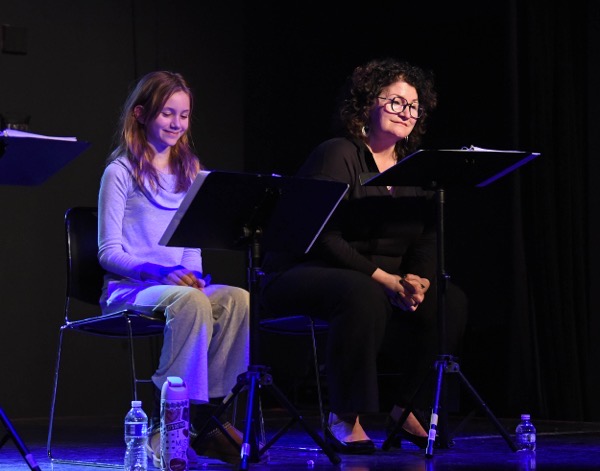
Every year, sometimes twice a year,  I return to one of my favorite theatre gigs, directing a staged reading for The International Voices Project. IVP is a Chicago company that produces staged readings of plays translated from other countries and cultures. Throughout the years the plays I’ve directed have taken me on journeys with writers from Syria, Lebanon, Ireland, Germany, Norway, Ukraine, El Salvador, and now Romania.

The reason I return each year is one of the reasons I have pursued and enjoyed my life making theatre. I get to touch and explore worlds, cultures, and ideas I would never have had the chance to experience otherwise. It’s always an adventure into something new.

My most recent gig with IVP certainly scratched all of those itches. The play is called Veronica’s Little Prince by Romanian playwright Dr. Catalina Florina Florescu. Yes, Antonie de Saint-Exupéry’s character of The Little Prince plays an important role.

The piece centers on Veronica, a former principal ballerina who has literally had her legs taken out from under her in a mysterious accident, leaving her in an institution, unable to move without the aid of a wheelchair and unable to speak. Unhappy with her fate Veronica is suspected of wanting to kill herself. Even before the mysterious accident she’s lived a life of self-destructive behavior.

The Little Prince arrives to help her examine and uncover the truth within her actions.

There’s another twist. I mentioned that Veronica can’t speak. In a technological twist she communicates via an AI robot by typing on her body. Via an implant those signals transmit to the robot who speaks her words and thoughts.

The play weaves in and out of Veronica’s mind and thoughts, her past and present, reality and fantasy, technology and humanity in very theatrical ways.

Creating an even more mysterious melange of tech and fantasy, the most frightening line to me is when Veronica’s Little Prince answers Veronica’s question about who told her to come by saying:

You see, they have programmed me to pop up whenever I hear certain words.

That may delight AI enthusiasts and those who keep suggesting we’re living in some sort of simulation, but given the rush to push us all deeper into a world run by Artificial Intelligence, it more than tweaks a nerve for those, like me, who may see benefits to AI in some forms, but think the pitfalls are more dangerous. Frankly, I prefer the characters in fantasy to spring from the minds of humans, not lines of code.

Given the sound and visual representations that give the script its many layers it was quite a challenge to present in a staged reading format without the benefit of theatre technology. But we managed to pull it off, letting the words weave their magic.

My thanks and kudos to the cast for doing such great work and especially to young Olive Popio who played our Little Prince.

(Photo by Scott Dray for The International Voices Project)

You can also find more of my writings on a variety of topics on Medium at this link, including in the publications Ellemeno and Rome. I can also be found on social media under my name as above.

Slide Over In iPadOS 26.1 Returns Just In Time

Glad to have this multi-tasking tool back.

Since I don’t run betas on any of my devices, I’ve been somewhat anxiously waiting for the release of iPadOS 26.1 which returns the Slide Over multi-tasking feature to the iPad. It got here just in the nick of time.

iPad OS 26.1 arrived yesterday afternoon, about 2 hours before rehearsal began and I quickly set things up for the evening’s rehearsal, using Notes in Slide Over to quickly jot down notes as rehearsal went along.

I use an 11 inch iPad Pro in my theatre work as my primary device. It contains the script I’m working on and ever since Slide Over was available I would use that multi-tasking feature to keep one or more apps tucked away for quick access conducting rehearsals.

New Shareshot.

I do question why Apple only allows one app in this returning version as opposed to multiple apps as it did before. It was always handy to keep multiple apps available throughout rehearsal, given that I prefer to have my script open full screen on the 11 inch iPad Pro.

As a side note, I’m not a fan of the Liquid Glass border around the window in Slide Over. It waists screen real estate, almost begging you to look at the feature. Even switching Liquid Glass to the new Tinted version, now also available in iOS 26, doesn’t erase or lessen that border or its distracting impact.

CleanShot 2025-11-04 at 11.37.09 2@2x.

In fact, setting the border aside, switching back and forth I don’t really see any significant difference in the apps I’m currently using between the Clear and Tinted versions of Liquid Glass. I won’t call that a complaint, but I will say it might all be much ado about nothing. At least on the iPad.

You can also find more of my writings on a variety of topics on Medium at this link, including in the publications Ellemeno and Rome. I can also be found on social media under my name as above.

Artists Unite for Fall Of Freedom Campaign

Art matters. Artists are a threat to American fascism.

Much of the current focus building out of the simmering outrage at the actions of the Trump regime is centered on the October 18 NoKings rallies being planned across the country. From the sound of it the crowds will be large and widespread across the country. That’s all a good thing. 

 That said, I still wish and hope for and believe that more sustained efforts are going to be required before enough pressure might actually lead to progress. 

One effort that might help, if given proper support and media coverage, is an national call to action by artists called Fall Of Freedom. You should certainly check out the website and how to get involved. Here’s an excerpt from the website:

Fall of Freedom is an urgent call to the arts community to unite in defiance of authoritarian forces sweeping the nation. Our Democracy is under attack. Threats to free expression are rising. Dissent is being criminalized. Institutions and media have been recast as mouthpieces of propaganda.

This Fall, we are activating a nationwide wave of creative resistance. Beginning November 21–22, 2025, galleries, museums, libraries, comedy clubs, theaters, and concert halls across the country will host exhibitions, performances, and public events that channel the urgency of this moment. Fall of Freedom is an open invitation to artists, creators, and communities to take part—and to celebrate the experiences, cultures, and identities that shape the fabric of our nation.

Art matters. Artists are a threat to American fascism.

I do happen to believe in that last statement. Art does matter, and artists are a threat to American fascism, or fascism wherever it raises its ugly head.

From an article in American Theatre magazine, here are some of the theatre artists and organizations already involved:

Playwrights David Henry Hwang, Dominique Morisseau, and Sarah Ruhl; director/organizer Annie Dorsen; and Julia Jordan of the Lillys. Theatre organizations involved include the August Wilson Center, National Black Theatre, the Public Theater, Broadway Advocacy Coalition, Woolly Mammoth, New York Theatre Workshop, Ensemble Studio Theatre, En Garde Arts, Crossroads Theater Company, IndieSpace, and more.

There’s a longer and growing list at this link.

I urge you to check out the website that includes ways to get involved and a toolkit for this national call to action.


Sunday Morning Reading

Traveling through the crazy paying attention along the way

It’s been a fortnight since I’ve published one of these columns due to travel. So much has happened. The travel adventures to London and Memphis were great. The way the world continues to pull itself apart continues to not be, as witnessed by protests and a madman’s threats of troops in the streets followed me from Chicago to London to Memphis. You can shut off and shut down to enjoy new places and visit dear friends, but the insanity keeps getting more insane. So, Sunday Morning Reading is back at it this week, with a mix of politics, culture and a bit of tech. (Oh, yeah, Apple released new iPhones during all of that.) If you can’t feel the currents flowing together, you’re not paying attention.

On my travels my wife and I caught some theatre. Two plays by Shakespeare and the contemporary play Stereophonic. The two Shakespeares were one of his worst, Merry Wives of Windsor, and one of the best, Hamlet. We’re theatre rats and know the importance of the medium and certainly recognize the role writers in all mediums play in our lives, history, and culture. So too does a favorite writer of mine, David Todd McCarty. Check out his important piece The Reason You Need To Be Making Art Right Now. And if I may be so bold, the other Sunday Morning Reading links below demonstrate that to a tee.

NatashaMH reflects on free speech, punk rebellion and British satire in When Satire Was Safe. Great piece. I dare say, satire has never been safe even when tolerated. Plenty of fools can attest to that. Ask Yorick.

I mentioned there’d be politics and here’s a few links to some excellent context on just how damn familiar all of what we’re living through is. For those who bother to pay attention. First up is Mark Hertling’s Beware Today’s ‘Fire-Eaters’. If you don’t know that term, read the piece. You’ll recognize today’s fire-eaters in a second.

On a broader scale, take a look at Nikki McCann Ramirez’s interview with Mike Duncan in Are We Witnessing The Fall Of The American Empire? My short answer is yes. Here’s the money quote that should terrify us all:

So if we go this route, we’re going to have congresses, we’re going to have Supreme Courts, we’re going to have a President of the United States, there will be governors, there will be elections, it’s just what’s happening underneath that facade. The facade is never going to go away, it’s how tissue-thin the facade is.

Follow that up with George Packer’s America’s Zombie Democracy.

For a bit of recent history and context, check out The Story of DOGE, As Told By Federal Workers from a team of Wired writers led by Zoe Schiffer.

As I mentioned Apple released new iPhones last week. Om Malik seems quite taken with the new iPhone Air, although he has some concerns in Go Out & Get Some Air.

In this column and other posts I’ve been following Denny Henke’s journey to de-Apple himself in his tech life with a keen interest. I greatly admire his drive and his sharing of his efforts. Check out My Ongoing Effort To de-Apple the iPad.

And to bring this all back around, take a look at Neely’s Tucker’s sharing of a guest post by Patrick Hastings,  Nobody Would Edit Shakespeare, Right? Right? They have and they do. David Garrick wasn’t the first or the last. Throughout history we always look for the ways to make it easier to swallow tragic moments and unhappy endings. In the theatre and on the stages of our lives.

(The image above is of David Garrick’s monument in Westminster Abbey, taken by me on my recent travels.

If you’re interested in just what the heck Sunday Morning Reading is all about you can read more about the origins of Sunday Morning Reading here. If you’d like more click on the Sunday Morning Reading link in the category column to check out what’s been shared on Sunday’s past. You can also find more of my writings on Medium at this link, including in the publications Ellemeno and Rome.