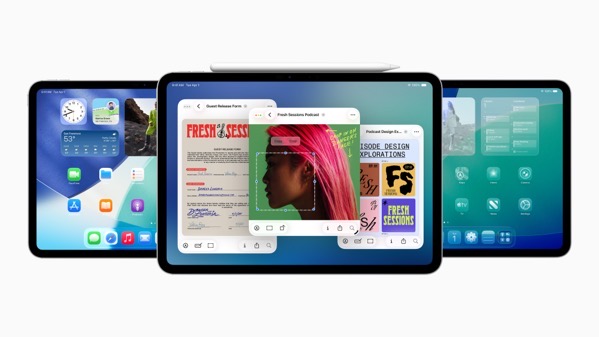
Mark Gurman offers up a relatively thorough summary of the number of challenges Apple is facing going forward in his weekly Power On column. Things always go forward. The question is always how.
Gurman calls this point in Apple’s history a “critical juncture.” I would agree. The many moving parts, both surrounding Apple, and of its own making, have put Cook and company squarely in that critical juncture. This comes as Apple and those that make their living talking about Apple are gearing up for this year’s World Wide Developer’s Conference (WWDC) next month.
Gurman delivers the punchline well below the headline that neatly summarizes why WWDC is not going to be able to address all of these challenges, but also why the turmoil is going to continue.
Speaking specifically about Apple’s race to catch up in the AI realm he says:
it’s going to be a while before we can tell if Apple is heading in the right direction
Perhaps that should have been the lede. He could have easily said the same about each of these challenges he enumerates.
But there’s also a larger, more encompassing challenge that makes surmounting each even more difficult. The tech world is moving at a pace that Apple is unaccustomed to. Apple’s historic long view has served it well over the years, but the window on that long view is increasingly narrowing its aperture.
Apple may spend its June introducing and setting the table for what’s coming later this year, but already most of the smart players who follow and promote Apple are shifting their focus to the bigger, and more critical, table stakes coming long after this year’s summer and fall hype cycles end. The now familiar “coming later this year” now means much less when the real issues may only begin to be addressed further down the road.
Waiting “a while” is not an easy sell. Especially these days.
You can find more of my writings on a variety of topics on Medium at this link, including in the publications Ellemeno and Rome.I can also be found on social media under my name as above.
Moren has been writing for MacWorld and been a sensible voice inside the Apple community for close to 20 years. He’s signing off his regular column gig for MacWorld, but he’ll still be around on the likes of Six Colors, podcasts, and I’m sure other places. Which is good, because his voice is an important and reliable one.
In his farewell, he raises the question many are asking of themselves, and the questions many are asking of Apple in its current state and our own state of affairs. As he puts it in a nutshell of a statement:
As Apple started becoming more and more successful, I’ve become increasingly skeptical that one should ever really consider oneself a “fan”of a company.
It’s a well thought out and well reasoned post and one that I think should be read by anyone considering themselves a fan, or a no longer fan, or even someone who just doesn’t care for Apple or its products.
A big part of the self-examination I know quite a few folks are going through in assessing their current relationship with Apple deals with issues bigger than just the products. For lack of a better description call them corporate issues. Even using that label — corporate — feels dirty to type in ways that seem damning in more dangerous ways these days. But that’s a fungible feeling and thinking that’s becoming increasingly tangible.
Here’s the thing. Technology advances. Humans advance. Nothing that feels foundational or allegiance adhering, or even worth being infatuated about is going to ever stay the same. Nor are our feelings about what we first might have fallen in love with, regardless of how the object of that affection itself grows and changes. Change is constant.
Microsoft had my allegiance back in the Tablet PC days because they won it when those much maligned devices provided a better, more productive way to do my work. Microsoft changed. I did too. iPads replaced what Tablet PCs were for me in my work and my play, and those are the tools I still use today. Do I think that will be forever? Not a chance. I mourned the loss of Tablet PCs. I’m sure if Apple stopped making iPads, I’d go through a similar grieving process. But again, that’s change. That’s life.
That’s also growth. But growth on the human side of the ledger rarely equals growth on the corporate side. In my brief time on this planet the two have never added up to successful equation that yields anything other than diverging results. That’s one thing I don’t ever expect to change.
You can find more of my writings on a variety of topics on Medium at this link, including in the publications Ellemeno and Rome.I can also be found on social media under my name as above.
Back from a brief hiatus, there’s plenty to read and share. It feels like it’s becoming increasingly important, and perhaps more urgent to do both. I promise there’s some happiness amidst all of the Strum and Drang down the page.
First up, Canadian Stephen Marche is singing the Red, White and Blues. It’s easy to look from the outside in, or even from within and be dismayed at what’s going on in this country. Because it’s so damn easy to see. Unless of course you’re still in shock, or choosing to ignore it. Marche’s tune doesn’t hit a false note as he says America was a “country of bubbles.”
David Todd McCarty is back Poking The Bear. It’s good seeing him write about politics again.
Drik de Klein of History of Sorts wrote Evil, I Think, Is The Absence of Empathy back in 2019, using Captain G.M. Gilbert’s quote from the Nuremberg trials as the headline. I remember reading it a while ago and it resurfaced this week, proving, as always, just how short our attention spans are. Or perhaps our comprehension and retention capabilities.
NatashaMH says, “I can’t stand people being ignorant bastards” in her excellent piece Our Modern Discontents. Again, a viewpoint from outside the red, white, and blue bubble that feels like it’s ready to pop.
Speaking of bubbles, big tech is in hot water of its own boiling these days. Google is facing anti-trust charges and a possible breakup that probably won’t happen. Wendy Grossman takes a look at Three Times A Monopolist.
This past week we celebrated William Shakespeare’s birthday. As usual lots of words were written about the writer who used them better than anyone else to describe the human condition. One of the accepted parts of the Bard’s legacy is that he was an absent husband that left his family behind to pursue his calling. But a discovery of a letter might just change that. Check out what Ephrat Livini has to say about the possibility in an Overlooked Letter Rewrites History of Shakespeare’s Bad Marriage.
If you’re interested in just what the heck Sunday Morning Reading is all about you can read more about the origins of Sunday Morning Reading here. You can also find more of my writings on Medium at this link, including in the publications Ellemeno and Rome.
This post is linking to her farewell column in The Observer, the Sunday sister paper to The Guardian and The Guardian Weekly papers in Britain. Like all media outlets it’s been through some things in recent years. The Observer was purchased late in 2024 and like all such transactions that prompted staff layoffs and terminations, including Carole Cadwalladr and a number of her colleagues. You can read all about that on in her post Fuckty bye in How To Survive The Broligarchy. I suggest you do that as well as read her final Observer column It’s Not Too Late To Stop Trump and The Tech Broligarchy From Controlling Our Lives, But We Must Act Now.
I happen to believe she’s fighting the good fight. That last column provides some excellent behind the scenes during her preparation and anxiety leading up to that recent TED speech, as well as some reactions she received while at the conference, including an interchange between her and OpenAI’s Sam Altman, in addition to making the important case she continues to make.
She’s paying attention and raising alarm bells. We should too. She’s standing in the way. We should too.
You can find more of my writings on a variety of topics on Medium at this link, including in the publications Ellemeno and Rome.I can also be found on social media under my name as above.
In a typically thorough article on Ars Technica about Microsoft preparing to reintroduce the Recall feature to Windows 11, Andrew Cunningham sums up his, and I think many of our, queasy feelings about these kind of feature and marketing failures we’ve recently seen from the likes of Microsoft, Apple and others, using the phrase distrust-by-default.
Here’s the quote in context:
This was a problem that Microsoft made exponentially worse by screwing up the Recall rollout so badly in the first place. Recall made the kind of ugly first impression that it’s hard to dig out from under, no matter how thoroughly you fix the underlying problems. It’s Windows Vista. It’s Apple Maps. It’s the Android tablet.
And in doing that kind of damage to Recall (and possibly also to the broader Copilot+ branding project), Microsoft has practically guaranteed that many users will refuse to turn it on or uninstall it entirely, no matter how it actually works or how well the initial problems have been addressed.
Unfortunately, those people probably have it right. I can see no signs that Recall data is as easily accessed or compromised as before or that Microsoft is sending any Recall data from my PC to anywhere else. But today’s Microsoft has earned itself distrust-by-default from many users, thanks not just to the sloppy Recall rollout but also to the endless ads and aggressive cross-promotion of its own products that dominate modern Windows versions. That’s the kind of problem you can’t patch your way out of.
Briefly, Recall is the Windows 11 feature that was built to capture and recall almost all of what you do on your PC via snapshots, making it available for recall later. After substantial promotion, Microsoft pulled and delayed the rollout last year after security concerns were raised. Skepticism was high even before the security issues were raised that caused the delay. Cunningham’s article provides an excellent rundown on that and I encourage you to read the full thing.
I think Andrew is spot on calling the uneasy feeling many of us have distrust-by-default. Certainly when it comes to this specific Microsoft moment and other tech companies. Zooming out, I think it also describes well the armor we’re all adopting on any number of issues in these moments of mistrust we seem to be facing on so many fronts in our lives.
You can find more of my writings on a variety of topics on Medium at this link, including in the publications Ellemeno and Rome.I can also be found on social media under my name as above.
You can fool some of the people all of the time…or maybe not.
It might be easier to resurrect the dead than it is to restore trust. One way or the other, we move on from death, but moving on from any relationship once trust is busted is a tough slog for those still among the living. I’m not just talking about politics. I’m referring to the relationships we have in most of the spheres of life we interact with each and every day.
Certainly that’s true in politics and governing. Those currently in charge of sinking the ship of state want you to think the water inching over your shoe tops isn’t a problem. And if we go under, well that’s the last guy’s fault. So is the fact that we don’t have enough lifeboats. Sorry. Hope you can swim.
The same is true in technology, entertainment, business, religion, and the list goes on and on. Superhero comic book creators would call this world of competing realities a multi-verse, but even that concept doesn’t really hold enough water to drink, fantasy that it may be.
If you feel like you’re wading through swamps of bullshit trying to find morsels of truth it is because you are. The powers that be have realized (again) they can get away with calling day night if they say it often and loud enough with enough assists from a cowering media that loves its microphones more than its freedom to exist. And when some bit of truth pokes its head above the surface it’s quickly washed over and submerged by another pounding wave of new stories or new product updates. Think waterboarding with quicksand.
This distortion swamp is full of mirages reflected back into our eyeballs like a thousand suns reflecting off an endless body of water. There’s nothing to anchor to.
Set the politics aside and focus for the moment on the ongoing saga about Apple’s delaying of Apple Intelligence features it unveiled almost a year ago at WWDC. A recent NY Times column by Tripp Mickle dropped two new grains of salt into the still open wounds of that debate. First up, Mickle seems to want to lay the blame on former Apple CFO Luca Maestri for changing up a plan to increase Apple’s budget for purchasing the chips apparently needed to ramp up for the Apple Intelligence push.
Here’s the quote:
Mr. Cook approved a plan to double the team’s chip budget, but Apple’s finance chief, Luca Maestri, reduced the increase to less than half that, the people said. Mr. Maestri encouraged the team to make the chips they had more efficient.
The lack of GPUs meant the team developing A.I. systems had to negotiate for data center computing power from its providers like Google and Amazon, two of the people said. The leading chips made by Nvidia were in such demand that Apple used alternative chips made by Google for some of its A.I. development.
The next grain of sand has launched a thousand blog posts (including this one) by saying that the previously delayed Apple Intelligence features will now launch this fall. Mickel says that’s according to three sources. Regardless of the quantity of sources, that report has generated more use of the words “may” and “possibly” in following headlines than I’ve seen in some time.
The tech press has either caught on and is choosing to not grant Apple the usual slack after feeling more than a bit betrayed. Or it’s pretending to hide beyond an endless streak of optimism. Either way Apple is currently mired in a trust swamp of its own making. Tangentially, and for what’s it’s worth, the same could be said of The NY Times.
My point here, isn’t to debate the sourcing, the reporting, or even the timing of when Apple may or may not launch new features. The long preamble to get to this Apple “news” should have been your first clue to that. My point is that once any authority fractures trust whether it be a company, a government, an official, a teacher, a parent, or a news organization, all sides lose. You can work to regain trust over time, but the stain will always remain and there’s very little anyone can do to remove it. You can learn to live with it, but you can’t erase it.
Or as Lady Gaga says, “Trust is like a mirror, you can fix it if it’s broken, but you can still see the crack in that mother fucker’s reflection.”
There’s an entire industry full of PR professionals and crisis managers lurking, just waiting to make bank on these kind of mistakes, anxious to be called in to try and resurrect a brand or a reputation. But they are really just good makeup artists capable of masking scars. If the art of “spin” was ever a currency, it is has more than lost any value it may have once had.
In an attempt to steer this full circle, if there’s a silver lining in all of this, the raging egos we’ve put in charge of things bigger than consumer electronics can’t keep their mouths shut to their own detriment and perhaps the benefit of those of us on the ground. Their continual yapping and yipping is exposing not just their own ineptitude in governing, but the entire rigged game that everyone in these industries of make believe rely on, whether it be politics, iPhones or punditry.
I’m beginning to hope the immediate damage from these flapping maws will have more impact than any tariff upheaval, leading us all to a healthier and more skeptical view of the world we live in. The world they are tearing to shreds is beginning to feel like one that might not deserve to be saved any longer.
You can find more of my writings on a variety of topics on Medium at this link, including in the publications Ellemeno and Rome.I can also be found on social media under my name as above.
It’s another Sunday. At a bare minimum it’s time for a little Sunday Morning Reading. There’s more politics than I’d like to shake any sticks at dominating my reading these days, so apologies if that turns you off. I just don’t think we can turn off or tune out to what’s happening. Like it or not (I don’t) we’re living through an epochal moment in world history demonstrating how little we regard human history. I emphasize “living through” because while we’re bearing witness, it is happening to us and whatever it evolves or devolves into will affect all who come after.
I happen to be one who believes that Trump is the ugly face of the chaos descending around us, propped up by bigger, deeper and darker forces using him as the fool too many fools easily fall for. Jonathan Mahler has an excellent piece that delves a bit into this called How The G.O.P. Fell In Love With Putin’s Russia. Excellent context that should not be ignored.
Speaking of formalist delusions, who knew some tech bros could declare you dead and wipe you off the books, or at least the books that matter when it comes to navigating life in today’s world. Hannah Natanson, Lisa Rein, and Meryl Kornfield take a look at how the Trump Administration Overrode Social Security Staff To List Immigrants As Dead.
Joan Westenberg calls us America, The Isolated. I can’t argue with her points. Though I will refer you back to Jonathan Mahler’s piece above for wider aperture. The deeper context is that the lens we’ve viewed the world, contained and restrained by borders, has never been the view for the forces now moving so rapidly.
Mathew Ingram has penned two terrific posts that address what will certainly become a part of our digital lives as we move forward. Be Careful What You Post On Social Media. They Are Listening is the first post. He’s expanded that with Part 2 as the pace of social media monitoring is sure to be picking up.
Perhaps all of this feels too big or too overwhelming to contemplate in the helter-skelter of our daily lives. But it is beginning to have impacts, big and small. Take a look at Scott McNulty’s very funny run-in with a construction worker at his CVS. While CVS – Construction Versus Scott is about his adventures at his local pharmacy under renovation, there’s a comedy nugget in there that demonstrates how those paying attention are actually paying attention.
My initial reaction to any illness in our children is immediate quarantine and a call to the WHO (I deleted the CDC’s number from my address book because suddenly they just kept telling me to get more vitamin A).
To close out this week, take a look at My Open Letter to Gen Z from NatashaMH. At “a bare minimum,” it’s worth a read to remind us that what we remember and hang on to from “back in the day” is now in a daily collision with what comes tomorrow. Easier to avoid the damage from those collisions perhaps if you acknowledge the maps are constantly changing.
If you’re interested in just what the heck Sunday Morning Reading is all about you can read more about the origins of Sunday Morning Reading here. You can also find more of my writings on Medium at this link, including in the publications Ellemeno and Rome.
The subhead above says you need to watch this. I’m repeating that here. You do.
Carole Cadwalladr tells it like she sees it. More importantly how many of us see it. But she is brave enough to speak it.
In her post announcing the release of this video of her TED Talk this year, she recounts how she knocked the Silicon Valley World off its axis with her 2019 TED Talk implicating Facebook, and Silicon Valley as a whole, for their role in Brexit. She’s back and talking about the ever increasing dangerous threats we’re facing today given how much we’ve already surrendered and those in control of our digital lives have capitulated to those in control of our politics. Or is it the other way around? As she puts it “a digital coup.”
Of course, I think she’s spot on.
I could go on and on, with words describing her thoughts, but your time would be better spent watching and listening.
A big hat tip to Ian Robinson for sharing these links on Mastodon.
You can find more of my writings on a variety of topics on Medium at this link, including in the publications Ellemeno and Rome.I can also be found on social media under my name as above.
A bit of politics, a bit of tech, and a bit of hope and coping. All tariff free.
This week’s Sunday Morning Reading is tariff free. As usual, even in unusual times there’s some politics, some tech, and things pulled from the cultural file. Enjoy.
For some good context that gets lost in all of what’s washing over us, Jill Lapore takes a look at The Failed Ideas That Drive Elon Musk. Everything old is new again is the saying, even bad things.
Trying to pin down any real coherent details or point of view about what’s happening in the economy is a fool’s game played by the foolish at this point. But context does help. Hamilton Nolan thinks the recent foolish moves will eventually make the rich poorer. I agree. Take a look at what he calls “a deep, dark ocean of harm” in Divergence From The Interests of Capital.
Like the political world, the tech world is seeing its myths and myth makers exposed for the frauds they often are with new layers of the onion peeled back daily. Joanna Stern in the Wall Street Journal takes a look the erosion of trust in her piece, Apple and Amazon Promised Us Revolutionary AI. We’re Still Waiting. It’s a soft headline. Here closing line hits harder, “Where’s the trust?”
Lest we forget that our culture and society is one weird, yet overly predictable wrestling match over how to, or not to control our animal impulses, comes word that Hooters is filing for bankruptcy. Annie Joy Williams takes a look at The End of Hooters.
We’re all staring at everything we’re facing hoping, perhaps against hope, that none of it will lead to any permanent damage, yet teetering on the verge of grief because we recognize our personal impermanence means it might be permanent enough in our short respective lifetimes. That strikes home when someone brave talks about a moment of personal grief. Check out Death Comes Gently Into The Night by NatashaMH.
If you’re interested in just what the heck Sunday Morning Reading is all about you can read more about the origins of Sunday Morning Reading here. You can also find more of my writings on Medium at this link, including in the publications Ellemeno and Rome.
Maybe one day Apple will find time to fix this bug with shared Reminders. Maybe not, given all that it keeps piling on its seemingly overflowing plate these days.
It works as advertised when it comes to actually sharing a Reminder. My wife and I use it for grocery and other shopping lists. If she’s doing an inventory through the cabinets prior to a grocery run, I’ll get notifications of the Reminders she adds to the list.
The problem pokes its head up after those Reminders are completed. Those notifications don’t disappear the way non-shared Reminders do. They hang around. Seemingly forever. At least in my case, sometimes for hours.
The two Reminders in the image above are from my iMac. My wife added them after I had already headed to the store on a day of errands. They were still there hours after I had checked them off in the Shared Reminders list on my iPhone. The notifications still remained on my iPhone as well.
You have to manually get rid of these Shared Reminder notifications, which seems like a silly bug to me. It’s been around since Shared Reminders was introduced in iOS 13. It’s a shame it’s been around so long because Apple has done a good job over the years evolving the Reminders app into something that’s really useful.
Perhaps Apple Intelligence will figure out a way to fix this somewhere down the line. I won’t set a shared Reminder to check on that though.
You can find more of my writings on a variety of topics on Medium at this link, including in the publications Ellemeno and Rome.I can also be found on social media under my name as above.