Sunday Morning Reading

History has its layers and facts might be damned, but that’s what myths are made of.

Tick. Tock. Or is that TikTok? Regardless, it’s the last Sunday Morning Reading column before things take a drastic turn here in the United States. Plenty to be concerned about, but Sunday Morning Reading will sill keep chugging along until they turn out the lights. That said, quite a bit of today’s chugging focuses on that messy intersection of tech and politics, because, well, you know, that muddled mess of things is what attracts my attention. They are no small things.

Speaking of small things, David Todd McCarty suggests that when we get too overwhelmed perhaps it’s time to get small. Check out Let’s Get Small.

There’s A Reason Why It Feels Like The Internet Has Gone Bad is actually a short interview with Cory Doctorow by Allison Morrow about a term Doctorow coined that I think fits much (and not just on the Internet) of what we’re already living through and what we’re in for: enshittification.

George Dillard wonders why modern business tycoons are like their forbears in Nerds, Curdled.

Jared Yates Sexton has some thoughts on dealing with what’s coming in Back Into The Breach: Thoughts On The Second Trump Presidency. Good read.

The toadstools salivating to use government to dismantle government no longer grow in shadowy, dank places. Joan Westenberg takes on Silicon Valleys’s Secret Love Affair With The State.

John Gruber highlights and expands on an article by Kyle Wiggins at TechCrunch that hit amidst the growing chaos this week when Google announced that’s its ever declining search product would now require JavaScript in order to use Google Search. Check out Google Search, More Machine Now Than Man, Begins Requiring JavaScript.

Joseph Finder takes a look at The Russian Roots Of American Crime Fiction—And The O.G. It’s not that the characters created by Dostoevsky and Gogol were Russian. They were merely human.

We love stories, but we love our myths more. Neil Steinberg takes on The Myths of Telephone History. The lies we agree upon might just be the most pungent of them all.

To close things out, NatashaMH reminds us in Chestnut Roasting On An Open Fire that some say that “the strength of a superhero is determined by the strength of his villain—the greater the adversary, the mightier the hero.”  We’re about to find out if that’s true or not.

If you’re interested in just what the heck Sunday Morning Reading is all about you can read more about the origins of Sunday Morning Reading here.  You can also find more of my writings on Medium at this link, including in the publications Ellemeno and Rome. You can also find me on social networks under my own name.

Has Fact Checking Ever Worked?

Facts and the factless.

Has fact checking ever worked? Seriously. Has it ever? In my opinion if there was ever any real utility, it’s long since lost its pucker.

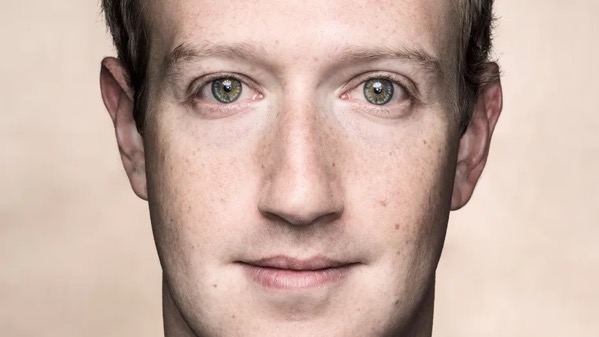
Mark Zuckerberg caused all sorts of consternation yesterday announcing he was going to dismantle Meta’s fact checking operation now that he realizes a million-dollar bribe probably wasn’t enough to keep him out of jail during the reign of the next administration. It was quite a public puckering up.

But let’s get real for a moment. Once any fact-less statement takes off it spreads faster than a wildfire in California and all the fact checkers in the world can’t snuff it out. For some facts do indeed matter. They occasionally do in our legal system, though not always. They used to in our legislative processes, but that’s long since become a relic of a time gone by. For most of its history, journalism wasn’t what so many bemoan the loss of today. Myths have fueled our religions and our histories since we first sought understanding.

And as for social media and the Internet in general? That’s a medium that has always allowed (and encouraged) the presence of fake personas. All bets there have always been off. 

Prior to Zuckerberg’s recent sucking up, Meta had taken recent fire for allowing the creation of AI-generated chatbot personas to appear in feeds alongside regular users. Reaction to that led to a pull back that’s sure to be only temporary. I mean, think of the business model. Why do you need problematic real users when you can just create them and still con advertisers into paying for ads that most avoid or don’t see anyway? Programmatic users are certainly easier to control than problematic real ones—at least until the AI takes over.

Here’s a fact that doesn’t need checking. Facts matter if you think they do, but most of the rest of the world doesn’t care what you think if they can support their beliefs—or protect their business model—by making shit up and making it stick.

You can find more of my writings on a variety of topics on Medium at this link, including in the publications Ellemeno and Rome. I can also be found on social media under my name as above. 

January 6th. Never Forget. Remember While You Can.

We’re living in a moment like no other.

Never Forget. Never Fucking Forget.

2021-01-07T015053Z_1749739195_RC2M2L9MWY3E_RTRMADP_3_USA-ELECTION-TRUMP.jpg

Crime has a new and devalued meaning in this new world, but the criminal who started this will be in charge soon. Never forget that he and his worshippers did what they did to this country on January 6th. To make a buck. They may legally be let off the hook, itself another crime that mocks our legal system into irrelevance. They most certainly will try and erase history and this story. We have a history of that sort of whitewashing in this country. It’s something we do all too well.

Bad things are going to happen to this country and its people beginning in a few weeks. This most recent spark may have been lit on an escalator in 2015, but it burst into all-consuming flames on January 6th, 2021, after smoldering with occasional flare-ups since the American Civil War, itself an conflagration smoldering since this country’s founding.

I recommend reading this article in The Atlantic from Jacob Glick, “ What I Saw on the January 6th Committee.” It has an interesting and worthy perspective on the surrounding investigations. But let’s set investigations aside. They mean little these days when they can be both derailed or manufactured from whole cloth.

The Big Lie won. The Big Liar won. Those who worship at his feet, along with those of us who see what is actually happening and about to happen, lost. There’s this sense of trying to find a sense of normalcy, a sense of balance to manage the treacherous path ahead. There will be none. We’re off-axis, and gravity is behaving in mysterious ways.

We are living in a moment when the history of this world will change. Not under our feet, but in front of our faces. There’s no rug to be pulled out from under us, only a mirror we avoid like a vampire.

We really don’t know how or what those changes will bring. The times they are a-changing, but it’s not the same song. We are breathing rare air right now, and in our lungs, it feels mysterious and wrong. January 6th will be the moment remembered. Never forget it.

Never forget it in the ways we have forgotten the other moments that allowed it to take place.

You can find more of my writings on a variety of topics on Medium at this link, including in the publications Ellemeno and Rome. I can also be found on social media under my name as above. 

Sunday Morning Reading

Looking back, while heading forward, with a nod to Beckett wandering through a lot of good questions.

This is the first edition of Sunday Morning Reading in the New Year, 2025. A new year certainly has meaning astronomically. From a human perspective it is a way of looking back in remembrance, even as we continue to evolve and move forward. Often these days, the evolving part seems more and more in question, even as humans make strides and advances in their various fields of endeavors. Some improve our lives, even as it appears so many of us remain stuck in the habits of the past and feel good about celebrating that choice to turn the clock back.

This week’s edition, in a way, marks that always thin dividing line between one year and the next, when what was old carries over into the new.

Natasha MH kicks things off with a lovely remembrance of her grandfather, It Begins With A Grain Of Salt. There’s a lovely quote:

Human intuition is not always reliable. Our perceptions can be distorted by biases and the limitations of our senses, which capture only a small fraction of the world’s phenomena.”

Christopher Luu offers a terrific look at one who made choices in ‘She Believed You Have To Take Sides’: How Audrey Hepburn Became A Secret Spy During World War Two.

Om Malik has a lovely piece about his “re-birthday” after surviving a heart attack in The Story of The Stent.

James Thomson, the developer of PCalc and other Apple software, looks back on the last 25 years in I Live My Life A Quarter Century At A Time.

The Next Big Idea Club shares some insights from Greg Epstein’s new book Tech Agnostic: How Technology Became the World’s Most Powerful Religion, and Why It Desperately Needs a Reformation, in The Weird Worship of Tech That Demands Serious Questioning. Epstein is the Humanist Chaplin at Harvard and at MIT, where he advises students, faculty and staff on ethical and existential concerns from a humanist perspective.

One thing is certain as we head into the new year, Artificial Intelligence will continue to dominate discourse. Jennifer Ouellette examines what happened at the Journal of Human Evolution when all but one member of the editorial board resigned. Some of the issues predate the current AI moment, but that seems to have been a breaking point as she explains in Evolution Journal Editors Resign En Masse.

Simon Willison takes a look at Things We Learned About LLMs in 2024. It’s an excellent look back and worth hanging onto as we plunge ahead, willingly or no.

Edward Zitron believes that generative AI has no killer apps, nor can it justify its valuations. Here’s him quoting himself from March 2024:

What if what we’re seeing today isn’t a glimpse of the future, but the new terms of the present? What if artificial intelligence isn’t actually capable of doing much more than what we’re seeing today, and what if there’s no clear timeline when it’ll be able to do more? What if this entire hype cycle has been built, goosed by a compliant media ready and willing to take career-embellishers at their word?

Strip out the reference to AI and apply it anywhere along the timeline of human evolution and innovation and the questions resonant in a very Beckett-like way. Check out his piece Godot Isn’t Making It. 

Judges in the U.S. Sixth Circuit drove a stake through the heart of Net Neutrality as the new year dawned. Brian Barrett says it’s crushing blow not just for how we live our lives on the Internet but consumer protections in general in The Death Of Net Neutrality Is A Bad Omen. He’s correct.

And finally this week, an incredible piece of reporting from Joshua Kaplan at ProPublica. The Militia And The Mole is at once terrifying and also confirming when it comes to the fears those paying attention harbor heading into whatever this next year is going to bring.

If you’re interested in just what the heck Sunday Morning Reading is all about you can read more about the origins of Sunday Morning Reading here.  You can also find more of my writings on Medium at this link, including in the publications Ellemeno and Rome. You can also find me on social networks under my own name.

Crashing and Burning

Time to get on with the inevitable.

Let me state clearly here at the beginning of this post, I do not want to see anyone in any capacity hurt by the looming government shutdown. Repeating, I do not want to see anyone in any capacity hurt by the looming government shutdown. 

Shutterstock 2419946409.

That stated and repeated, let me offer the following. Regardless of any action taken on a government shutdown people are going to get hurt.

Assume this circus/charade/shit show over a government shutdown wasn’t occurring. That responsible adults (assuming a lot I know) would be working to transition our government from one administration to another in an orderly fashion. We know, based on campaign promises and post-victory statements that large numbers of people are going to be harmed and hurt once the new administration is sworn in come January 20th. You can’t repeat often enough that cruelty is the point. There is going to be pain. Let those so desperate to cause it, feel some of it themselves.

So, with that as a given, and with the continued interference from Elon Musk, an unelected drugged up man child of an oligarch who has desires on running not just the US, but the world, I say let these damn Republican sniveling cowards shut down the country. Take Musk’s urging and keep it shut until January 20th and possibly beyond. Should make for a swell inauguration party.

At some point no matter how smoothly any transition may or may not go, the system is going to crash and there’s going to be damage none of us can calculate. Why not get on with it?

Sure you can play the game of which administration’s watch it might happen on, but give me a break. There’s no effective action coming from the outgoing administration or Congress to correct the actions of what feels like a transition already out of control and almost completed. Sure, Biden, at the moment still wearing the crown bestowed on him by the Supreme Court, could declare a state of emergency and make some bold moves. But we all know that’s not going to happen.

Call the bluffs. Blow out the bluster. Bust it all. Then let’s see what happens when the pieces need to get picked up come January.

One way or the other sacrifices are going to need to be made. Lame social media calls for resistance and not surrendering in advance are going to feel more like nursery rhymes than rallying cries. What we had is gone. It’s not coming back. You kid yourself if you think otherwise. Democrats stepping in to save some semblance of what was are only going to weaken any position they currently don’t really have at the moment. At least not until they come up with their own madman oligarch.

When an arsonist has to put out the fire he started to try and save himself, things look a lot differently.

You can find more of my writings on a variety of topics on Medium at this link, including in the publications Ellemeno and Rome. I can also be found on social media under my name as above. 

Sunday Morning Reading

Drones may be circling and society may be circling the drain, but there’s always time for Sunday Morning Reading.

Drones may (or may not) be circling the skies overhead, but that doesn’t mean we shouldn’t keep our eyes peeled for some good writing and good reading. This week’s Sunday Morning Reading features a usual mix of writing on tech, Artificial Intelligence, politics, and culture. Buckle up and enjoy.

A man reading a newspaper on a porch with a sky full of drones and a cityscape background. AI generated

Speaking of Artificial Intelligence, Arvino Narayanan and Sayash Kapoor tell us that Human Misuse Will Make Artificial Intelligence More Dangerous. I’ve been saying that for a while and so have any number of science fiction writers. Still, this short piece is worth a read.

Matthew Ingram asks and answers the question Are AI Chatbots Good or Bad For Mental Health? Yes. Good read.

Reed Albergotti chronicles an interview with Google’s Sundar Pichai on Google going all in on AI and the next move,  Agentic AI. Check out Why Sundar Pichai Never Panicked.

Rounding out this group of links on AI, take a look at this intelligent and very human piece from NatashaMH. In No Society Left Behind she posits that AI will still leave us with uneven playing fields across the different strata of society.

John Gruber has an interesting piece On The Accountability of Unnamed Public Relations Spokespeople. It’s politics specific but it also speaks more broadly about the, in my opinion, decline of PR as an effective tool.

We still haven’t come to grips with the shooting of the United Health Care executive and the reaction to it. Adrienne LaFrance takes that as a cue for Decivilization May Already Be Under Way. I would argue it’s been under way for quite some time now. Itt’s just accelerating.

David Todd McCarty says We’re All Going to Need To Hunker Down For A Long-Ass Storm. I concur, although I fear it’s going to be looked back on as a major climate shift.

Dave Troy in the Washington Spectator gives us The Wide Angle: “Project Russia,” Unknown In The West, Reveals Putin’s Playbook. It will never ceae to amaze me how we let this one slip by us.

Looking back a bit in history take a look at this piece from the Atlantic’s 1940 issue called The Passive Barbarian by Lewis Mumford. With the exception of a few references in the article and the publication date, I bet you would think it had been written in this current moment.

And finally, with the holiday drone buzzing around us David Todd McCarty offers up Struggling To Find Peace In The Midst of Exuberant Joy.

If you’re interested in just what the heck Sunday Morning Reading is all about you can read more about the origins of Sunday Morning Reading here.  You can also find more of my writings on Medium at this link, including in the publications Ellemeno and Rome. You can also find me on social networks under my own name.

Sunday Morning Reading

Sunday Morning Reading is on the road but there’s still plenty to share.

We’re on the road this weekend to get the Christmas holidays started with the grandkids, but there’s still time to share a little Sunday Morning Reading. Enjoy.

First up is a piece by Margaret Dean called An Afternoon In My Strawberry Fields. You’ll enjoy wandering there.

I don’t think the sun sets anywhere on the planet that there isn’t a current political crisis. Artists and storytellers keep doing their thing regardless. This story from Tom Phillips and Etienne Cóte-Paluck tells of a Haitian theatre troupe still carrying on in the face of that island’s chaos. Check out ‘An Act of Rebellion: Haitian Theatre Persists Amid Political Crisis and Violence.

No crime story has quite captured public attention and exposed how insufficient American media is at reporting out what’s behind the headlines as the murder of United HealthCare’s CEO Brian Thompson. The act is shocking, the reaction to it is shocking as well, yet not surprising. Some of the best reporting I’ve seen so far comes from the BBC from Mike Wendling and Madeline Halpert in Killing of Insurance CEO Reveals Simmering Anger At US Health System.

If you’re wondering about that “simmering” and why I don’t think we should be surprised by what this event reveals, check out this guest essay in the New York Times from Dr. Helen Ouyang entitled What Doctors Like Myself Know About Americans’ Health Care Anger.

Casey Newton delivers one of the best pieces I’ve seen on Artificial Intelligence with The Phony Comfrots of AI Skepticism. You might want to hang on to this one for future reference.

Mark Jacob wonders Can Journalism Survive Billionaires? My short answer is not with this current crop.

If you think repealing women’s right to vote in America isn’t on the agenda of some in the world of MAGA misogyny check out Emma Cieslik’s piece Christian Nationalism’s First Item On The Agenda: Repeal The Women’s Right To Vote. 

Brian Krebs is a name most on the Internet have run across as a top-notch security researcher and reporter. Robert McMillian and Vipal Monga have gone behind the curtain to reveal some of the lengths Krebs has to go through to keep himself secure. And not just on the Internet. Check out He Investigates The Internet’s Most Vicious Hackers-From A Secret Location.

If you’re interested in just what the heck Sunday Morning Reading is all about you can read more about the origins of Sunday Morning Reading here.  You can also find more of my writings on Medium at this link, including in the publications Ellemeno and Rome. You can also find me on social networks under my own name.

We Might Want To Become Familiar with The Vacancies Act

We might want to pay attention to the numbers 210 and 300.

The numbers 210 and 300 might come into play over the next couple of months. Why? Those are the time limitations that acting appointments made by a President of the U.S. can serve in an “acting” capacity, depending on the circumstances of the appointment.

VacancyResource 2048x1152 1.

Of course, given the desire for damage promised by the decaying orange president-elect you could also say all bets are off as regards to following any rules, laws, or traditions. No one really knows just what might happen come January 20 and after. Just look at South Korea.

Remember, Trump made a number of “acting” appointments to his cabinet the last time around, primarily to avoid Senate confirmation. Given his rogue gallery of nominations so far, and his already announced penchant for recess appointments, I’m sure he’d like to take whatever shortcuts he can.

Still, a lot of bad things can happen in the span of 210 or 300 days.

As a reference, here’s a Government Accounting Office FAQ on the Vacancies Act that you might want to keep handy.

You can find more of my writings on a variety of topics on Medium at this link, including in the publications Ellemeno and Rome. I can also be found on social media under my name as above. 

A Gentleman in Moscow is a Romantic Adventure With a Warning

An entertaining adventure in avoiding the tyranny of big men with small minds.

We’re in the process of another Thanksgiving/Black Friday ritual in our house. Saving some money by canceling entertainment streaming services and resubscribing via Black Friday deals. It’s a good time to save a few bucks going forward into the new year and to take inventory on what’s worth continuing or needs discarding.

A Gentleman in Moscow 2048x1152.

One of the things we do as a part of this tradition is make sure we catch up on things we’ve delayed watching on the services we won’t renew, so this week we’ve finally tuned in to A Gentleman In Moscow on Paramount/Showtime. The show is quite a delight, as was the original book by Amor Towles. As I am enjoying viewing, I can’t help but notice many moments that should serve as a warning for us here in America for what’s most likely to come in our near future.

Before the warning, first a quick summary of the show.

A Russian aristocrat, Count Alexander Ilyich Rostov, sent away from his home country after wounding another in a duel, returns home to a chaotic Moscow after the Bolshevik Revolution. He takes up residence at the grand Hotel Metropol and is seized, like so many of the aristocratic class, by forces now in control. Some government officials believe a revolutionary poem attributed to him, mark him as a hero of the revolution and spare his life, but sentence him to house arrest in the Hotel Metropol. If he walks out of the hotel, he is to be arrested and shot.

Throughout the remainder of his life and internment, he meets and befriends residents and staff of the hotel and begins a surprising alliance with the Russian agent assigned to his case, while constantly being dogged by the spies placed in the hotel to watch him and other residents, including a smarmy government collaborator who uses his new found power to rise to the position of manager of the hotel.

The story is told very romantically, with wistful nods to traditions lost and crushing change constantly in conflict. He finds himself at the center of adventures and intrigue throughout. In and of itself it is excellent viewing. Watching the characters learn to navigate the whipsaw changes Russia was undergoing, trying to survive while maintaining some sense of dignity and purpose, is the signature joy of both the book and the series.

That also leads to the warning I mentioned earlier that feels perhaps a bit too contemporary.

When you boil it all down all revolutions are essentially the same, regardless of the big ideas that motivate the change. In the case of Russia in 1917, it was the Bolshevik/Communist revolution. In this country it was the fight for American Independence from Britain. France, Russia again in the 20th century, the list goes on. As it appears at the moment, it is certainly possible years from now that we might look back on the events of 2024 as another such revolution if those on the winning side of the election fulfill promises made during the campaign. Very few such revolutions are bloodless. All are messy. Prices are paid.

What will happen, regardless, is that small men with small minds following big men with equally small minds, engorged with some self-serving sense of righteousness, will exact a toll on too many once in power. The Elon Musks, Tom Homans, Stephen Millers of the incoming administration are quite gleeful about causing pain with their plans for devastation. If you haven’t been paying attention to that, shame on you.

History and literature tell us this is feature of all revolutions. Once the worm turns, some of those who helped turn it can’t wait for their turn at the wheel. Once power is achieved, those who want to succeed, or in some cases, merely survive, will do anything to keep themselves on course, and in some cases prosper. And then there are others who merely surrender their principles or morality in order to go along. All become prey to those who crawl into the light to seek their moment in the sun.

When watching A Gentleman In Moscow, there are numerous examples of this, most tellingly the waiter who rises to hotel manager by reporting all he sees to the government security forces. Loyalty and betrayal are two sides of the same coin, too easily spent by those with small minds and big dreams. While big ideas always crush some going forward, big ideas don’t work without these small men doing the work. Note how ironically the MAGA dream of draining the swamp is filling up every available piece of dry land with swamp creatures of their own. Revolutions always target the bureaucracy and the bureaucrats on their way to becoming the same. Without them, the new system can’t bring down the old.

In an essay entitled MAGA’s Downward More Spiral, Damon Linker says: “Trumpism is seeking to advance a revolutionary transvaluation of values by inverting the morality that undergirds both traditional conservatism and liberal institutionalism. In this inversion, norms and rules that counsel and enforce propriety, restraint and deference to institutional authority become vices, while flouting them become virtues.”

And then the circle begins again because the wheel always turns.

Certainly the big ideas between the Russian revolution of 1917 and what’s just happened in the United States are different, but only through ideology, if that. In Russia those at the top were on the way out in favor of “the people.” In our America, we’re just replacing one group of penthouse dwellers for another, with both sides being propped up by “the people.” For some twisted reason, “the people” who propelled Trump to victory haven’t yet grasped the roles they’ve been assigned and probably never will. Those at the top throughout history have always known “the people” are always ripe for the picking.

This has strayed far from just a recommendation for A Gentleman in Moscow, but contemporaneous events kept making small moments throughout the excellent series strike me with both sadness and trepidation as it presages what’s to come while feeling wistful for what we’re about to lose. The wheel does always turn and for a time the good guys can come out on top. But there are always those crushed as it churns ever onward. I highly recommend the series (and the book) as entertainments themselves, but also for what they presage.

You can find more of my writings on a variety of topics on Medium at this link, including in the publications Ellemeno and Rome. I can also be found on social media under my name as above. 

Sunday Morning Reading

Delusions abound in this week’s Sunday Morning Reading.

If it’s Sunday, it is time for Sunday Morning Reading with interesting writing on a variety of topics, that without intending to all seem to involve delusions in one way or another. There’s also a little Procol Harum on the side. Enjoy reading, while you skip the light fandango.

Speaking of delusions, check out a piece by Michael Connors and Peter Halligan exploring What Delusions Can Tell Us About the Cognitive Nature of Belief. 

It’s no delusion that Artificial Intelligence remains in the news (before it eventually subsumes the news). Harry McCracken takes us a bit into the deep mind behind Google’s DeepMind in The Future According to Google DeepMind CEO Demis Hassabis. That first link takes you to the web version, this one takes you to the Apple News version of the article since the piece is a premium article for Fast Company readers.

Joan Westenberg has caught my eye of late (if you follow Sunday Morning Reading you should know that) and here are a couple of recently published dynamic pieces: Don’t Confuse Volume with Truth and Rebel Optimism: How We Thrive in a Broken World. Both worth your time.

We’re all complaining about a lot of things, the continued enshittification of the Internet being a familiar and well deserved  target. (It’s interesting that I use that term enshittification so frequently and yet spell check or any other type of check hasn’t picked it up yet.) Dave Winer is fighting the good fight on a lot of fronts and he looks at a new kind of enshittification in Billionaire-proof?

David Todd McCarty takes on the platitude “the meek shall inherit the earth” in The Children of Pacifists.

Ronan Farrow takes a look at The Technology The Trump Administration Could Use To Hack Your Phone. You know it’s going to happen. You know it most likely already has.

And to round things out this week, Ulf Wolf spools out an essay on the mostly forgotten Keith Reid of Procol Harum in The Shadow Member of Procol Harum. Not going to lie, I did spin up a copy of Whiter Shade of Pale while writing this week’s column. The Salty Dog album is cued up next.

If you’re interested in just what the heck Sunday Morning Reading is all about you can read more about the origins of Sunday Morning Reading here.  You can also find more of my writings on Medium at this link, including in the publications Ellemeno and Rome. You can also find me on social networks, including Bluesky, under my own name.