Hinge Moment?

It’s going to be a weekend.

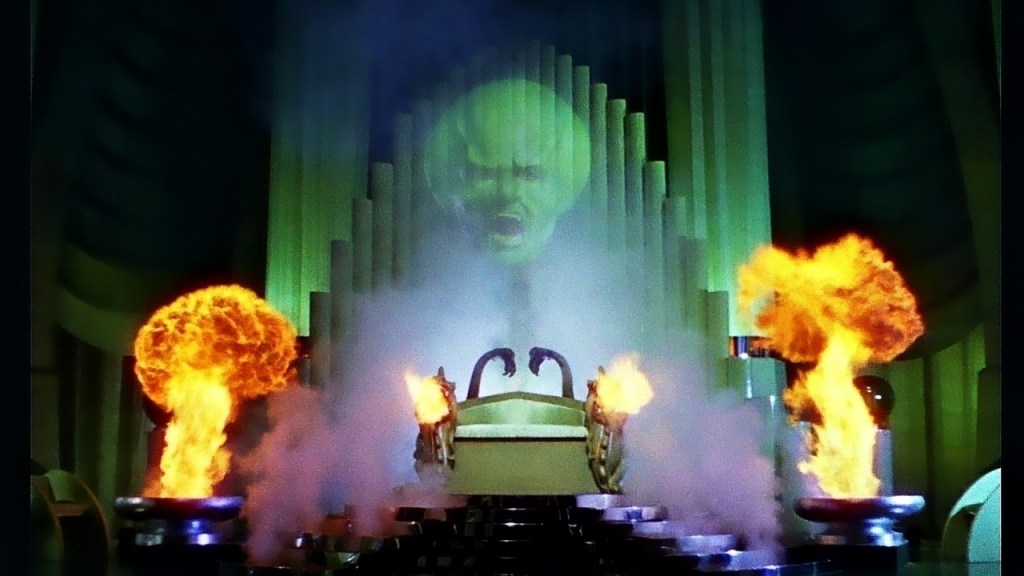
There’s really no way to know if you’re living through a hinge moment of history or not. But these next few days certainly have the makings of one.

Shutterstock 2433622859.

Between the events in Los Angeles, (including what happened to Senator Padilla,) already planned but now growing No Kings protests, Trump’s ego-fluffing birthday parade, and events in the Middle East, the atmosphere is charged. I don’t know anyone who doesn’t feel a sense of foreboding.

There’s no way to know what is going to happen and yet we all know we have to live through whatever comes. It’s almost like preparing for surgery knowing you have a negative reaction to anesthesia.

To be perfectly honest, I think my biggest fear is that we have such fools and imbeciles in charge. There may be plans, there may be desired outcomes. There may be plans to disrupt either. The events I cited above, while all potentially fraught with the potential for danger, all depend on those imbeciles and whatever decisions they are going to make, and the reactions to them.

Sadly, we don’t have to look hard to find them or see their imbecilic behavior.  Apparently, according to the Secretary of Army, there is an American soldier on the moon. The Pentagon is a mess. And the White House, well.. let’s just say I think the faithful is starting to lose a bit of faith in what comes out of there anymore.

Speaking of faith, I don’t have much of it in those elected to be leading voices in opposition.

If so much didn’t hang in the balance, all of this would be laughable. But so much does indeed hang in the balance. Beyond my fears of the imbeciles is how much they relish being cruel. They’ve baked cruelty into the cake they want to stuff down our throats to a point that just being cruel for the sake of it seems to be the entire point, not just a means to an end.

To be honest, while it feels like things are stacked against those, like me, who stand against this imbecilic sadistic regime, I sense that there are still possibilities to erode the ground underneath their plans. I may not be encouraged by the s0-called leaders of the opposition, but I am heartened by what seems to be a growing groundswell of anger among those they think they’re leading.

Things might need to get uglier first, sadly. The saga of human history bears that out. Perhaps these next few days will tell us which way the hinge of history is going to swing. Perhaps not.

See you on the other side.

Photo by Vasylchenko on Shutterstock.

You can find more of my writings on a variety of topics on Medium at this link, including in the publications Ellemeno and Rome. I can also be found on social media under my name as above. 
Sunday Morning Reading

There’s a creeping inevitability to much of what’s happening around us.

Some Sunday’s when I sit down to collect what I find interesting enough to share it seems like things around us are just bad. Or going from bad to worse. It feels inevitable. This is one of those Sundays. Nevertheless, there’s some good writing and good thinking in the articles linked below that I believe are worthy of your attention. But paying attention is not one of our strong suits. Cue up a little Crosby, Stills, Nash and Young, pay attention, and read away.

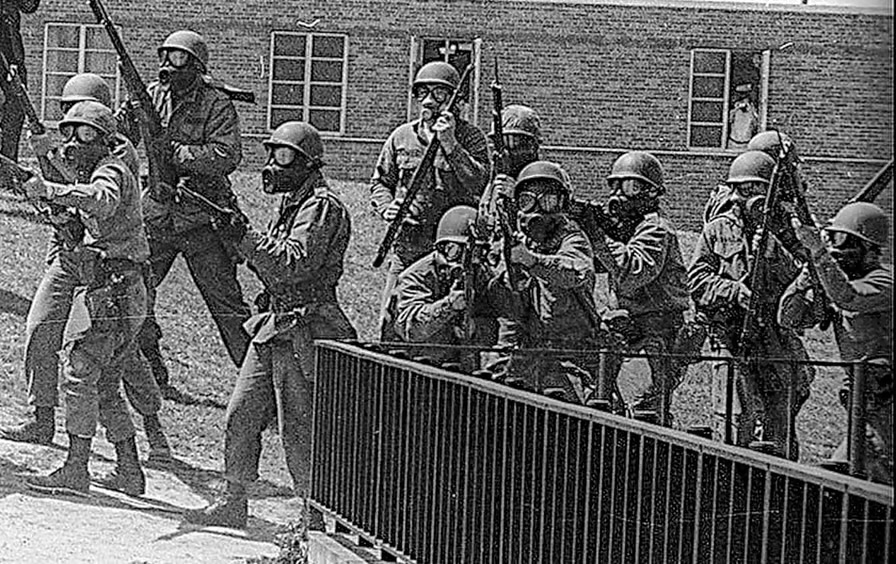
‘Tin Soldiers and Nixon’s Coming’ is an excellent look back as we stare at this moment we’re in from Robert Cohen and Michael Konciewicz on the 2020 50th anniversary of Kent State and Jackson State.

You’re Not Ready, is an excellent, yet somewhat frightening compilation of articles by various authors at Wired, comprising info on AI hacker attacks, grid attacks, or a GPS blackout. I say “somewhat” simply because many of us have had inklings about this. Or at least those who pay attention.

Josh Marshal of Talking Points Memo has an excellent piece on Artificial Intelligence and The Posture of Skepticism.

Mathew Ingram’s fascinating piece, How Marc Andreessen and I (and you) Created The Web is informative and entertaining history and context that’s worth your time about the time we’re in.

Paul M. Sutter tells us that A New Theory Says Time Has Three Dimensions. It ‘Really Messes Up’ What We Know About the Cosmos, Scientists Say. We seem to be doing a good job of that at the moment given our current understanding of time, so why not go ahead and mess things up.

Timothy Snyder wonders what happens with The Next Terrorist Attack. It’s far deeper than the headline suggests.

Michael Podhorzer writes about something I’ve been thinking and saying for a while: The Courts Will Not Save Us. It’s a long read but more than worth your time. Read this instead of watching TV lawyers.

Most of the articles I’ve already linked to this Sunday morning in one way or another deal with trust. That trust gap is widening these days. It doesn’t help when we do find out things that break trust, but the finding out at least helps us understand the gap better. Take a look at Aruna Viswanatha’s piece The Pentagon Disinformation That Fueled America’s UFO Mythology.

Tomorrow, June 9th, Apple kicks off its annual World Wide Developer Conference. There are trust issues there as well. These next few links contain some interesting thoughts heading into WWDC, beginning with Sebastiann De With’s Physicality: the new age of UI, which anticipates the coming design changes rumored for all of Apple’s operating systems. A fresh coat of paint may not hurt. I’m not sure it’ll help.

As I said, Apple faces a number of problems, some legal and regulatory. Jérôme Marin explains how A Simple Comma is going to cost Apple Billions in Europe. Commas can indeed cause all sorts of chaos. Just ask US constitutional scholars about a comma and the 2nd Amendment.

And to close things out, one of my favorite developers _DavidSmith talks about his optimism heading into WWDC in Let’s Get Started. I admire the optimism and the reality check approach _DavidSmith brings to this.

If you’re interested in just what the heck Sunday Morning Reading is all about you can read more about the origins of Sunday Morning Reading here. You can also find more of my writings on Medium at this link, including in the publications Ellemeno and Rome.

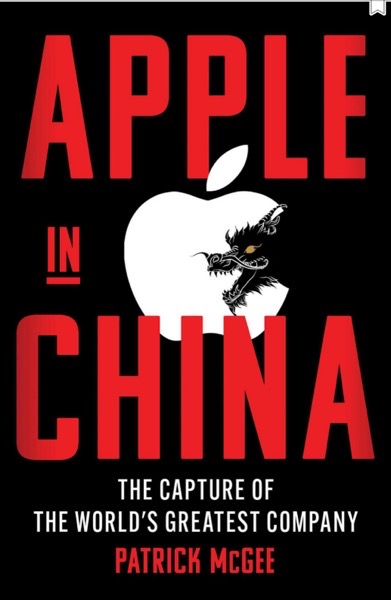
Review: Apple In China by Patrick McGee

An excellent read about Apple and America’s acquiescence to China.

Timing is everything. As I began to write this short review of Patrick McGee’s new book Apple in China, this article, Auto Shangai 2025 Wasn’t Just a Car Show. It Was a Warning to the West, popped up on my radar. Let’s just say, they are nice companion pieces, given what I think the real message of McGee’s book is all about.

Cover page for Patrick McGee's Apple in China

I highly recommend McGee’s Apple in China. It not only provides some rich history and context to much of the hurly burly news we follow about Apple and its relationship with China, but beneath that surface it provides a deeper warning about the failures of capitalism — Apple and American style — in general.

Not only does it hit that crucially important overlay of the story, it provides some fascinating, and at times frightening detail in many of the design, engineering, corporate, and political maneuverings far beneath the surface of all the machinations we read about on our iPhones.

In my opinion, that’s where the real magic is in the story. Given the amount of detail, McGee had access to some excellent sources. He’s an excellent writer. Portions of the story read with the pace, suspense, and scope of an adventure novel.

The focus of the book — and any of the praise and criticism of it — is obviously Apple. The gist is that Apple essentially trained up China to such a point, that with the pull of a plug, China can cut it off, and take what it has learned to dominate the world’s manufacturing sectors. His arguments are persuasive, and since Apple is — and has been — such a crucial focus since the dawn of the iPhone age, that focus makes sense. But lurking beneath those headlines, are other American companies, occasionally mentioned, who might not have gained the same notoriety, but essentially followed the same path. Check out the article I linked to earlier about the Shanghai Auto Show.

If there’s a villain in the story, it’s China. If there’s a useful idiot, it’s Apple, along with other shareholder valuing and profit loving American companies. Think of the parable of The Scorpion and the Frog.

Certainly Tim Cook plays a central role in all of this, but I have to say outside of some of the details, his obsequious compromises and acquiescence throughout comes as no more of surprise revelation as does his knee-bending to the Trump regime’s recent bullying. That’s all been on transparent display for anyone who has paid the slightest bit of attention, which makes any and all of it seem nothing short of a foolish farce, albeit a lucrative one.

In fact, I think you learn more about Foxconn’s Terry Gou than you do about Tim Cook.

If there is one big surprise that I think pierces the Apple aura, it’s just how little central control and understanding of what was happening on the ground in China in the helter-skelter days of early iPhone growth. What on the surface may have seemed like, and been adopted almost as mantra-like by the tech press, a giant corporation with a vision pushing buttons in Monday morning executive meetings, often feels like a company reacting to forces beyond its control that it brought into the tent.

The fact that Apple was as completely overwhelmed by early iPhone sales volume in China is quite frankly astounding, given what most have believed was a generally good central command of inventory control and marketing predictions. Certainly no one can predict everything, but it seems Apple wasn’t even close to understanding, much less predicting, what might happen in that market. Even as it was unfolding.

Obviously Apple won most of those skirmishes and battles. The question the book raises is will Apple have what it takes to win the larger war that it helped set the battlefield for.

(I don’t do affiliate links to products mentioned in any article.)

You can find more of my writings on a variety of topics on Medium at this link, including in the publications Ellemeno and Rome. I can also be found on social media under my name as above. 
Sunday Morning Reading

So what is this future we’re heading into anyway?

If you’re observing Memorial Day weekend in the U.S. I hope you have had a pleasant one. Even if the weather isn’t cooperating, seemingly echoing the threats of seeing that tradition, like so many others, diminished. We’re on the road again for a dear friend’s memorial service, but there’s still time for a little Sunday Morning Reading. Mostly tech related this week, some politics, and of course some cultural happenings. If you’re paying attention, it’s all intertwining. Listening to a lot of Bruce Springsteen. Enjoy.

Adding to what’s becoming a recurring theme in this column, Ian Dunt is looking for ways to get the most out of our digital lives while taking back a bit of control from the tech god wanna-be’s. Check out Taking Back Control of Our Digital Life.

Matthew Ingram wonders If AI Helps To Kill The Open Web What Will Replace It? Excellent piece and excellent topic, because like it or not, it’s the current and next movement we on the ground are going to have to contend with. Pay attention.

Neil Steinberg, one of my favorite of a dying breed of Chicago journalists, gives his take on the recent Chicago Sun-Times AI flap in The AI Genie Is Out of The Bottle, and the Granted Wish Often Brings Trouble.

Lucy Bannerman takes on the AI’s abuse of copyright and artists rights in Nick Clegg: Artists’ Demand Over Copyright Are Unworkable. They aren’t. Those demands just cost more than folks counting the beans want to pay.

Lynette Bye’s Misaligned AI Is No Longer Just Theory raises up that specter that haunts this entire episode of our life across all spectrums that seems easy to fall prey to or dismiss, depending on which side of the coin you’re on. Frankly, if you don’t think the future of this can be manipulated, you’re not paying attention.

Jason Snell’s take on the recent announcement that OpenAI has bought Jony Ive’s company to produce new hardware for AI I think is the correct one. Check out Sam and Jony and Skepticism.

Chloe Rabinowitz fills us in on the outgoing president of the Kennedy Center’s response to the bullshit coming out of the White House. in Deborah Rutter Releases Statement In Response to Trump Kennedy Center Allegations.

The real boss, Bruce Springsteen, continues to piss off the orange buffoon in the White House and I’m glad to see it. So is Eric Alterman in a guest essay in The New York Times proclaiming Bruce Springsteen Will Never Surrender to Donald Trump. We need more of this.

And to wrap up this week, here’s NatashaMH wondering Do We Really Need To Have This Discussion? No hints. No clues. Just good stuff for you to read.

If you’re interested in just what the heck Sunday Morning Reading is all about you can read more about the origins of Sunday Morning Reading here. You can also find more of my writings on Medium at this link, including in the publications Ellemeno and Rome.

John Siracusa on Changes Needed at Apple

The time is ripe.

Apple is taking it on the chin lately. Deservedly so. Although some of the pounding is from external sources (Tump’s not happy with Tim Cook apparently,) most of the blows are entirely self-inflicted. Among those critics is noted Apple pundit and podcaster, John Siracusa, who delivered a piece on how he sees Apple’s current predicament. His post, Apple Turnover, essentially says it’s time for a leadership change in the C-Suite. I think he’s correct and his post is worth a read. 

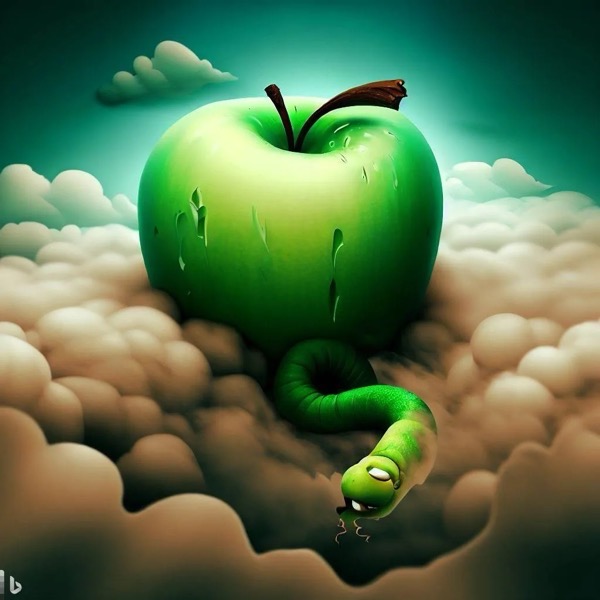
AppleWorm copy.

Nothing lasts forever, as Siracusa nicely sums it up. Change happens. Life goes on whether that change is planned, forced, or fumbled into; a sort of a reverse echo of Shakespeare’s funniest villain Malvolio telling us that “some are born great, some achieve greatness, and some have greatness thrust upon them.” His display of hubris comes before his comic comeuppance. Apple’s won’t yield as much comedy. 

Quoting from his piece: 

…the only truly mortal sin for Apple’s leadership is losing sight of the proper relationship between product virtue and financial success—and not just momentarily, but constitutionally, intransigently, for years. Sadly, I believe this has happened.

The preponderance of the evidence is undeniable. Too many times, in too many ways, over too many years, Apple has made decisions that do not make its products better, all in service of control, leverage, protection, profits—all in service of money.

You can certainly argue that Apple achieved greatness and now appears like it’s reached a critical juncture on many fronts, including falling behind in Artificial Intelligence and trying to ring every ounce of worth it can from every penny its users might be willing to pay for its goods and services. I won’t go into any detail on any of that here because whether it’s AI, App Store business practices, or developer relationships, it’s all been chronicled well enough for most of those paying attention to recite like a catechism. The question is, are the high priests in the C-Suite paying attention?

A few years ago I wrote a piece about how I thought Apple had built itself into a design trap. Here’s a quote from that piece: 

The larger and more precarious point with this tangent is that Apple’s rich design expectations, as powerful as they are, are also Apple’s Achilles heel. Great artists aren’t afraid to fail. Great product makers who use great art as a selling point need to tread more carefully to avoid the level of disappointment that can turn a legacy into a burden.

I think they’ve built themselves a similar sort of trap in their business model(s) that comes from the same sort of reliance on their legacy of success and the hubris that’s engendered. You can easily argue that Apple’s business prowess, akin to its design prowess have both yielded unparalleled results feeding each other and fueling the company’s growth. 

Joan Westenberg has an excellent piece called Apple’s Diet of Worms that touches on this. But to a certain extent it goes well beyond that. Apple is well known to take a long view, and by and large that’s paid off. They’ve been able to afford that long view historically, even though there have been grumblings along the way. However, I don’t believe Apple is dictating the terms or the timeline any longer. 

In the case of Artificial Intelligence, as an example, who knows how that is going to play out for any of the players currently on the field or yet to come. But you can’t deny how OpenAI has changed the pace of things or how Google, and everyone else, is trying to play catch up. The recent announcement that OpenAI was purchasing Jony Ive’s design company to collaborate on what looks like new hardware, coming chock-a-block on top of Google’s mostly AI IO conference announcements, certainly changed the conversation. But then again it might be all smoke and mirrors, no matter how anxious everyone seems to be for some kind of new gadget of the future. Personally, I still think much on this AI front is a race without a finishing line or even a destination beyond collecting data for dollars.

That said, Apple is in it, perhaps thrust into the fray or perhaps fumbling along. Regardless, in my opinion any future achievements are going to require leadership change at the top. 

You can find more of my writings on a variety of topics on Medium at this link, including in the publications Ellemeno and Rome. I can also be found on social media under my name as above. 


O Canada

A farce only continues until one of the characters says “stop.”

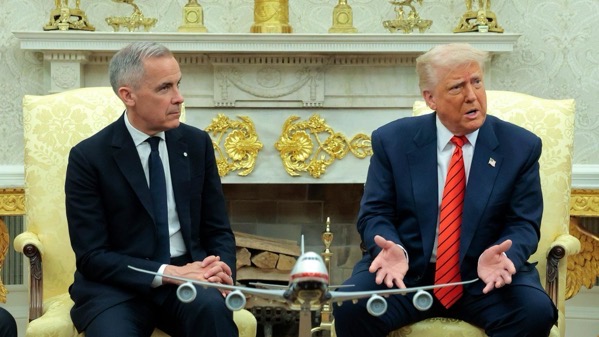
I applaud Canada’s newly elected Prime Minister Mark Carney standing firm and saying straight up that Canada’s not for sale during his talks with what somehow continues to pass as America’s seat of government. Good on him. Glad he did.  But he didn’t have much of a choice in this non-real reality TV series that needs to be canceled.

C gettyimages 2213750236.

There’s a trouble-making part of me that would have loved to have heard him say to the decaying orange turd sitting next to him something like, “I’ll tell you what, Mr. President. You agree to step down from your office and our government will give any proposal consideration. Other than that, no thank you.” I mean if we’re going to waste our time on nonsensical fantasies, let’s have some fun. Otherwise this farce is running out of steam while the players play a game that the audience is already exhausted with.

Of course that would ever happen and I’m not criticizing Carney, He laid down the appropriate marker while standing up to the bully-in-chief. But at some point, from some quarter, I’d like to see someone land a harder punch in the nose or a kick in the groin. Even if they were only rhetorical.

Elbows up!

You can find more of my writings on a variety of topics on Medium at this link, including in the publications Ellemeno and Rome. I can also be found on social media under my name as above. 
Andor, Or We Are The Heroes We Need

Echoing Tina Turner

The ever expanding universe of the Star Wars franchise is one that often leaves me colder than I imagine I’d feel if I were floating alone in space. That’s the same with most of these run the IP into the ground franchises. When something comes out of those factories that’s actually decent, it’s a surprise. One of the surprising beacons of warmth has been the Andor series, which is currently streaming in its second season. I’m also a fan of the movie Rogue One for which Andor is a prequel.

P22265604 b h8 aa-e1673489907972-900x561.

Yes, the story is about the rebel rebellion against the Empire, but there’s something different about Andor. Recently I read a piece from Derek Pharr on Nerdist, Hope Without The Force: How Andor Rewrites Rebellion. It helped me put my finger on why the show feels different and surprisingly current beyond the scope of small screen entertainment.

Here’s a quote:

Andor makes the quiet argument that the Jedi weren’t just irrelevant to the uprising against the Empire. They were liabilities and detached from everyday suffering. The Jedi were fixated with balance and prophecy, and wildly ineffective at stopping fascism when it counted. The Jedi Order had their shot. They blew it. Meanwhile, on Ferrix and Narkina 5, regular people are building the rebellion through sweat, sacrifice, and solidarity. Not the Force.

Whether you are a fan of the series or not, I encourage you to read the entire piece. Pharr’s thesis is indeed a good one about the series. But for me it spins off into many of the challenging moments we face today in the wake of our own evolving evil empire. One that’s certainly not intelligently designed, much less preordained.

Bottom line, it’s going to come down to those of us on the ground.

I think we need to eternalize and begin acting on that instead of waiting around and looking for heroes among congress critters, political parties, media mouthpieces, TV lawyers and those at the bar, or even judges to come to the rescue. We know what’s ahead is going to continue to get uglier. We’re probably going to have to meet ugly with a little ugly ourselves. Cue Tina Turner’s We Don’t Need Another Hero.

As Pharr puts it,

The Jedi were legends. The rebellion was real.

No elegant solutions from a more civilized age. Just people. Flawed, desperate, courageous people, who decide enough is enough.

He also argues that noble as they were, the Jedi were spectacularly bad at saving things in their attempts to reclaim balance. I don’t know about you, but that sounds frighteningly familiar.

Read Pharr’s piece if and when you watch Andor. If you don’t watch the show, read the piece anyway.

Pie in the sky? Perhaps. But I’ll take a serving and ask for seconds.

You can find more of my writings on a variety of topics on Medium at this link, including in the publications Ellemeno and Rome. I can also be found on social media under my name as above. 
Hostile and Political Amazon

The dangerous farce continues (and sometimes it’s quite funny.)

I guess someone at Amazon read my post from a few weeks ago about how it is possible to bring a bully to heal. I doubt it. But it is fun to watch Jeff Bezos make the Trump administration sweat a bit under similar circumstances. At least for the moment. 

In response to the Trump tariffs, which are already driving up prices and driving down consumer confidence, Amazon has announced that they will be displaying the amount of price increases that are due to tariffs on its product pages.

Of course this generated an immediate response from the White House with the press secretary, standing at the podium beside the Treasury secretary, labeling Amazon’s move as a “hostile and political act.” 

Oh my. 

Three things to quickly comment on:

First, when you need to trot out Treasury Secretary Bessent to try and clam waters you’re losing. As I’ve said before, he reminds me of the LaLa guy. Remember him?

Whatever Bessent says seems to make as much sense.

Second, we just reached the 100 day mark of this dangerous farce of an administration and the meaningless polls are telling us folks are unhappy. You don’t need polls to know that, see that, or feel that. The unease in the air is thicker than this Spring’s pollen count.

You can only create a fake reality in the movies. And even then, those fake realities fall apart in the end. 

Third, most early bets are Bezos will fold and pull back on this. But one can only bend a knee so far before it breaks. Or they don’t let you launch any new satellites.

And the bending begins.

You can find more of my writings on a variety of topics on Medium at this link, including in the publications Ellemeno and Rome. I can also be found on social media under my name as above. 

Sunday Morning Reading

We’re always chasing bubbles.

Back from a brief hiatus, there’s plenty to read and share. It feels like it’s becoming increasingly important, and perhaps more urgent to do both. I promise there’s some happiness amidst all of the Strum and Drang down the page.

First up, Canadian Stephen Marche is singing the Red, White and Blues. It’s easy to look from the outside in, or even from within and be dismayed at what’s going on in this country. Because it’s so damn easy to see. Unless of course you’re still in shock, or choosing to ignore it. Marche’s tune doesn’t hit a false note as he says America was a “country of bubbles.”

David Todd McCarty is back Poking The Bear. It’s good seeing him write about politics again.

Drik de Klein of History of Sorts wrote Evil, I Think, Is The Absence of Empathy back in 2019, using Captain G.M. Gilbert’s quote from the Nuremberg trials as the headline. I remember reading it a while ago and it resurfaced this week, proving, as always, just how short our attention spans are. Or perhaps our comprehension and retention capabilities.

NatashaMH says, “I can’t stand people being ignorant bastards” in her excellent piece Our Modern Discontents. Again, a viewpoint from outside the red, white, and blue bubble that feels like it’s ready to pop.

Jacob Silverman’s Welcome To The Slop World: How The Hostile Internet Is Driving Us Crazy is an invitation to a party that turned into something nobody was expecting.

Speaking of bubbles, big tech is in hot water of its own boiling these days. Google is facing anti-trust charges and a possible breakup that probably won’t happen. Wendy Grossman takes a look at Three Times A Monopolist.

Who’d a thunk it? Bot Farms Invade Social Media To Hijack Popular Sentiment. Eric Schwartzman does some digging in those all too fertile fields.

This past week we celebrated William Shakespeare’s birthday. As usual lots of words were written about the writer who used them better than anyone else to describe the human condition. One of the accepted parts of the Bard’s legacy is that he was an absent husband that left his family behind to pursue his calling. But a discovery of a letter might just change that. Check out what Ephrat Livini has to say about the possibility in an Overlooked Letter Rewrites History of Shakespeare’s Bad Marriage.

And for that happiness I promised, I’ll stick with Shakespeare and Cora Fox with ‘I Were Happy But Little Happy, If I Could Say How Much’; Shakespeare’s Insights On Happiness Have Held Up For More Than 400 Years. We often focus on his tragedies, but he reveled in the joys of life as well. Keep those happy bubbles afloat as long as you can. Pop the bad ones.

(Image from Rey Seven on Unsplash)

If you’re interested in just what the heck Sunday Morning Reading is all about you can read more about the origins of Sunday Morning Reading here.  You can also find more of my writings on Medium at this link, including in the publications Ellemeno and Rome.

Distrust-By-Default

Donning a new armor for protection

In a typically thorough article on Ars Technica about Microsoft preparing to reintroduce the Recall feature to Windows 11, Andrew Cunningham sums up his, and I think many of our, queasy feelings about these kind of feature and marketing failures we’ve recently seen from the likes of Microsoft, Apple and others, using the phrase distrust-by-default.

 Here’s the quote in context:

This was a problem that Microsoft made exponentially worse by screwing up the Recall rollout so badly in the first place. Recall made the kind of ugly first impression that it’s hard to dig out from under, no matter how thoroughly you fix the underlying problems. It’s Windows Vista. It’s Apple Maps. It’s the Android tablet.

And in doing that kind of damage to Recall (and possibly also to the broader Copilot+ branding project), Microsoft has practically guaranteed that many users will refuse to turn it on or uninstall it entirely, no matter how it actually works or how well the initial problems have been addressed.

Unfortunately, those people probably have it right. I can see no signs that Recall data is as easily accessed or compromised as before or that Microsoft is sending any Recall data from my PC to anywhere else. But today’s Microsoft has earned itself distrust-by-default from many users, thanks not just to the sloppy Recall rollout but also to the endless ads and aggressive cross-promotion of its own products that dominate modern Windows versions. That’s the kind of problem you can’t patch your way out of.

Briefly, Recall is the Windows 11 feature that was built to capture and recall almost all of what you do on your PC via snapshots, making it available for recall later. After substantial promotion, Microsoft pulled and delayed the rollout last year after security concerns were raised. Skepticism was high even before the security issues were raised that caused the delay. Cunningham’s article provides an excellent rundown on that and I encourage you to read the full thing.

I think Andrew is spot on calling the uneasy feeling many of us have distrust-by-default. Certainly when it comes to this specific Microsoft moment and other tech companies. Zooming out, I think it also describes well the armor we’re all adopting on any number of issues in these moments of mistrust we seem to be facing on so many fronts in our lives.

(Image from Atmospher1 on Shutterstock)

You can find more of my writings on a variety of topics on Medium at this link, including in the publications Ellemeno and Rome. I can also be found on social media under my name as above.