Artificial Intelligence is taking its beatings as it weaves its way into just about anything we think might give us a leg up. Recent misfires from Google and Microsoft after big announcements shed light on just how, to this point, reliably unreliable your AI of choice can be. On one hand it’s entertaining. On the other it’s concerning. If there was a third hand I think it would shake towards irony.
MSNBC ran a recent report highlighting inaccuracy scores when AI chatbots were asked political questions and came up with an average of 27% incorrect responses.
It seems to me that a 27% inaccuracy rate is probably within the ballpark of what we hear on any normal day from traditional news sources, social media, and folks sitting at the counter at the local diner. While there are certainly problems, it feels much like AI is doing what it’s designed to do: spit back the nonsense we feed it and it feeds on.
Frankly, I don’t think humans can design any piece of software that will outstrip our human capacity for ignorance that gobbles up the increasingly large amounts of garbage already available. As long as folks can make money from feeding us the fake alongside the real the churn will continue.
Addendum: After posting this I noticed this article in my feeds:
You can find more of my writings on a variety of topics on Medium at this link, including in the publications Ellemeno and Rome. You can also find me on most social media using my name.
Here it comes. Apple is heading into its annual World Wide Developer’s Conference (WWDC) with announcements of its next big things beginning June 10th. By all accounts, this year those next big things will center on AI which is short for Artificial Intelligence. There won’t be any shortage of AI in a tech world that has grown both AI crazy and AI fearful, putting Apple is in the unusual position of playing follow the leader in more obvious ways than in the past.
There will be other new features announced for iPhones, Macs, Apple Watches, perhaps even the Vision Pro, but as always the focus will be on what’s new. Even though a goodly portion of what’s new and exciting each year often ends up being a bit “meh” in the end. Either “meh” or rolled out and forgotten as Apple shifts its attention to what next year’s next big things will be. That seems to be what’s happening this year as Apple has turned most of its focus to AI.
Apple is also unfortunately positioned to have to work harder in making its splashy announcements splashy and dodging seemingly already diminished expectations on a number of fronts. Most anticipate Apple’s AI announcements to be less than sexy and the iPad faithful/hopeful seemed to be poised to continue piling on the criticism (some necessary, some not) that greeted newer iPads less than a month ago.
So, on two big fronts, AI and iPadOS, Apple has some tougher challenges ahead than it usually does this time of year. And bad timing is at the root of both.
The iPad Issue Is Touchy
On the iPad front, for whatever reason Apple went more than a year before releasing new iPads. When they did debut them last month they surprised everyone by including new M4 chips in the new Pro lineup, upsetting every pundit’s attempts at trying to assign a predictable timetable to the continued Apple Silicon evolution. Coming just weeks ahead of WWDC, and without any new operating system software to accompany it, Apple opened up a slew of doors for the salivating pundit class to rush through, cranking up the complaints about iPadOS not taking advantage of very powerful and much loved hardware. And, as always, the married at the hip debates about being able to run macOS on an iPad or adding a touch screen to the Mac tagged along as noisy bridesmaids.
It’s a bit frustrating for a regular and religious iPad user. While the issues are genuine, they negatively dominate the conversation given that they come from the influential voices that helped turn the iPad into a success in the first place. I know the issues are long simmering, well intentioned, and come from the heart of those who love the device, but the recent sudden crescendo was deafening enough to fire up a Loud Environment warning on an Apple Watch. With WWDC just around the corner everyone knew the new devices alone were not going to offer anything remotely close to a new and different iPad experience. It just seemed premature to me. If they were meant as a warning to Apple, then I would call it not only premature, but a misfire given the timing.
Those debates and complaints probably aren’t going to end in the foreseeable future as entertaining and exhausting as they can be. Between manifestos, and well thought through lists of what some desire on iPads, there was some general vitriolic piling on. It heralds a tough year ahead for Apple and its iPad lineup.
My prediction is that no one is going to be remotely satisfied with this year’s iPadOS release. Most rumors say not much of consequence will be announced. It’s certainly going to be interesting to follow the commentariat class as they wrestle with how many different ways they can say the iPads are great devices but Apple keeps holding them back for another year.
Perhaps this year changes things, but typically big OS changes come to the iPhone first with iPads and Macs bringing up the rear in the year or years that follow. Given Apple’s push into AI as this year’s big iPhone tent pole, if the iPad doesn’t get included it will add even more to those complaints and increase the volume.
Secret octopi, culture wars, convictions, and reading between the letters. In this week’s Sunday Morning Reading.
Life is beginning to settle in after the big move, although there’s parts of it we still can’t figure out which box we packed some of it in. Perhaps we need some sort of A.I. bot to help us figure that out. But we’ll get there. In the meantime here’s some Sunday Morning Reading to share.
Speaking of AI, WTF is AI? That’s the question posed with some attempted answers by Devin Coldeway. It’s a decent primer on the topic. Watch out for secret ocotopi.
A couple of pieces on AI from Nico Grant at the NY Times shows just how unknown and perhaps reliably unreliable this fast evolving tech territory is. First up is Google’s A.I. Search Leaves Publishers Scrambling. Follow that up with Google Rolls Back A.I. Search Feature After Flubs and Flaws. I wonder how AI will spit all of this back at us once articles like these are trained in. I also wonder when publishers will start to standardize whether or not we’ll write it as AI or A.I.
Even in the midst of moving it’s been tough to ignore the political comings, goings and convictions in the news. Check out David Todd MCCarty on Bedtime for Bonzo, Or Nothing To See Here. Even after 34 convictions for the orange dude, this piece holds up.
This piece from July of 2021 by John Pavlovitz resurfaced in my feeds in the last week. The Sadness of Sharing A Country With Trump Supporters is worth a re-read in the wake of this week’s news. Somehow I think it will remain relevant for quite some time.
With all that is going on in the political world, it’s a good idea to always remember there is so much more going on behind the scenes than we ever want to realize. Check out Ken Silverstein’s look behind the curtain in Off Leash: Inside The Secret, Global, Far-Right Group Chat. You might be sorry you did.
I hope The Wonkette is writing you visit often. There’s an excellent serial novel there called The Split by Ellis Weiner and Steve Radlauer. It’s up to Chapter 30. It’s terrific and worth your time.
There’s a new book worth highlighting and highlighted by Laura Colliins-Hughes in the NY Times. James Shapiro’s The Playbook chronicles the history of The Federal Theatre Project. The subtitle teases well: A Story of Theatre, Democracy and The Making Of A Culture War. A great story from back in the day when live theatre was actually something folks believed was dangerous enough that it could change minds.
And to close out this week’s edition check out Natasha MH’s Writing The Unpretentious Prose. Don’t just read the words. Look between the letters.
If you’re interested in just what the heck Sunday Morning Reading is all about you can read more about the origins of Sunday Morning Reading here. You can also find more of my writings on Medium at this link, including in the publications Ellemeno and Rome.
Steven Levy has seen enough AI demos to think we should believe the hype. I’m still in wait and see mode.
Call me curious. Call me skeptical. Two sides of the same coin. The tech industry is dancing on the edge of a coin called Artificial Intelligence waiting to see which side lands face up. As they dance, we also dance, because the promise/hope/hype/hyperbole is that the technology will make lives better, fill lots of coffers, and set us all free (except for that sure to increase every year subscription price) to enjoy more of life.
Steven Levy has apparently seen enough demos that he has penned a piece telling us that It’s Time to Believe the AI Hype. It’s a well reasoned piece, as usual from Levy, and worth a read if you’re trying to follow what all of this means. But the moment that caught me was this quote:
Skeptics might try to claim that this is an industry-wide delusion, fueled by the prospect of massive profits. But the demos aren’t lying.
“But the demos aren’t lying.” They may not be. It all might come true. Or some of it. Or enough of it to matter. Even so, I’ve been around enough blocks too many times to stake anything on any demo for any product. Some do pan out. Too many do not. Given the pace of things in tech these days, I’m guessing that once the inevitable explosion yields to the equally inevitable contraction, there’s a better than average chance that we’ll be eyeing some other piece of universe altering tech within a year or two.
The reality is what’s coming in AI is coming. We’ll all get a taste. The proof wil be in how we digest whatever tech related nutrional value it offers.
You can find more of my writings on a variety of topics on Medium at this link, including in the publications Ellemeno and Rome.
Artificial Intelligence is still the dominate tech craze of the moment. Big announcements are expected within the next several weeks from Apple, Google and just about anyone else who can prompt an AI generated press release into being. I’m sure AI will continue to be on the tips of most digital tongues.
Or will it all just be summarized?
One of the trends I’m seeing predicted is how users will take advantage of Artificial Intelligence to summarize web pages. That sounds like a useful, perhaps noble idea but it raises questions. The web relies so much on advertising to generate revenue. AI is supposed to help ad creators and marketers do better and more efficient designing and targeting. What happens when users stop visiting web pages and just rely on summaries? That’s a genuine question I have and would love to read some possible answers.
It’s not that I’m a big fan of ads, but I remember back in the heyday of RSS that there was all sorts of tension regarding losing ad impressions between web publishers and web users that relied on RSS readers. Then RSS feeds of web articles got truncated into teasers to send users clicking. Then ads got inserted into RSS. Will the same thing happen with ads being inserted into AI summaries? How would that work with something like an AI Pin or the Rabbit R1? (Although I doubt those devices will be around for us to find out.)
Given that one of the other predicted AI trends is being able to verbally converse with whatever AI machine you choose, how would that work with advertising? Will a user need to listen to ads before getting a response to their prompt? There’s already a lag in compute capacity resulting in delays delivering responses to queries with most current AI engines. I don’t imagine waiting for an ad insertion will help improve on that.
Again, these are sincere questions that I’d love to hear some thoughts on. Just don’t summarize them.
You can find more of my writings on a variety of topics on Medium at this link, including in the publications Ellemeno and Rome.
Some serious stuff in our world this week, but we must dance on. Here’s some Sunday Morning Reading to share.
The world is a very serious and uncomfortable place based on what I’ve been reading this past week, so the topics for this edition of Sunday Morning Reading will lean that way. Good writing all around that meets the seriousness we’re all dancing around.
The United States Supreme Court is about to alter the world we’ve all thought we’ve lived in. Rick Wilson of Everything Trump Touches Diesfame writes:
“The Supreme Court will delay Trump’s case and then make the most cataclysmic legal mistake in American history.
We’re not talking Dred Scott bad, Plessy bad, and Korematsu bad.
We’re talking about previously unimagined levels of bad.”
Wars, protests and political shenanigans about those wars abound. Mo Husseni has laid out his thoughts about what’s happening in the Middle East and our reactions to it on Threads and published them as an essay on Medium. Well worth your time to read his piece titled Hmmm… do I need a title?
A few topics on the tech front, the mechanism that one way or the other bring us all this news and writing about that news, Edward Zitron tells us about The Man Who Killed Google Search.
I don’t agree with everything Allison Johnson says in The Walls of Apple’s Garden Are Tumbling Down, but she makes good points and provides a piece of the necessary frame around this unfolding story.
Changing the subject, it is tough to laugh given all that is swirling around us. But laugher is crucial. Always. As unprovoked a release of emotion it is, laughter does take on different forms and come from different places. Christie Nicholson takes on The Humor Gap between men and women. Hat tip to David Todd McCarty for this excellent piece.
A Summer Place by Natasha MH reminds us that whatever we’re mired in, we should always dance on and quoting Neil Gaiman we should
Face Your life
It’s pain,
It’s pleasure,
Leave no path untaken.
If you’re interested in just what the heck Sunday Morning Reading is all about you can read more about the origins of Sunday Morning Reading here. You can also find more of my writings on Medium at this link, including in the publications Ellemeno and Rome.
Silver linings, taking stock, a revival of the Avant-Garde, and the future of chocolate all in this week’s Sunday Morning Reading to Share
Weekends used to be for taking a breath. That seems so long ago it’s tough to measure it conventionally as it somehow sadly just slipped away. Even so, there’s still time to share some Sunday Morning Reading.
Artificial Intelligence remains on the tip of all the digital tongues these days, though it’s yet to show any real promise that I’ve seen. Except for those who got in early on the cash grab. Steven Levy has an interesting piece, Tech Leaders Once Cried For AI Regulation. Now the Message is ‘Slow Down.’ Sounds like the cash isn’t as easy to grab as much as it used to be.
Speaking of AI, Chris Castle has an interesting piece on Music Technology Policy called Has The Ship Sailed On The Myth of “Responsible AI”? I’m not even sure it ever qualified for myth status, but whatever it is, that ship is out of the harbor. Hat Tip to Stan Stewart.
Kyle Chayka thinks The Dumbphone Is Real. This comes as so many blame smartphones for the decline of civilization among other smaller sins. Call me when every company in the world no longer begs you to pay your bills online, you can reach your doctor’s office via a phone, or tech companies (including those that make dumb phones don’t put you through hell trying to get techncial support from a person. I’ll take that call on my smartphone.
Most things get recycled. Including art movements. Helen Shaw takes a look at one such revival/remount in The Avant-Garfde Is Back On The Launchpad about the Wooster Group’s remounting of Richard Foreman’s Symphony of Rats.
Jamelle Bouie’s When Politicians Invoke the Founding Fathers, Remember This is interesting. First, because the title changed from when it first appeared in The New York Times. Originally it was The Founding Fathers Don’t Have the Answers To Every Question. I wrote about that here. My points remain, so does Bouie’s (which are excellent). The headline writing still suffers.
Richard Stengel suggests that 2024 election coverage should be free and out from behind paywalls. He makes a good argument in Democracy Dies Behind Paywalls.
One of my favorite writers, NatashaMH gets quite poignant and, protestations aside, quite brave in doing so, in The Distance Between a Breath And Sadness. I think we should all learn how to better measure that distance.
And to close things out on a bitter sweet note, Isable Fattal takes a look at The Future of Chocolate. It’s a summary for articles about the future of chocolate as she tells us to savor our favorites whlle we can. Apparently, yet another in a long line of sweet life things where we need to measure the difference between a breath and sadness because there may not be a silver lining.
If you’re interested in just what the heck Sunday Morning Reading is all about you can read more about the origins of Sunday Morning Reading here. You can also find more of my writings on Medium at this link, including in the publications Ellemeno and Rome.
The folks at Axios raised a few eyebrows this week with a report, follwed up with a behind the scenes look at the report, essentially telling us to calm down about what’s happening in U.S. politics. Those of us alarmed are living in a reality distortion bubble according to Axios. The country isn’t as divided as we’ve been decieved into thinking it is.
If you ask me the only bubble is the one in the Axios editorial suite.
Look, I get it. Yes, there are millions of Americans too busy to be anywhere close to up to speed on what’s going on in this country politically, legally, and socially. But that misses the point and also gives lie to what passes for current day media’s business model. Also the historical one. If it bleeds it has always led and the country could use a tourniquet about now. Missing that story misses all points entirely.
There are millions who are paying attention, landing on either side of whatever passes for fences these days. If there weren’t, the media bubble (of which Axios is a part of) wouldn’t have much of an audience, or at least wouldn’t have enough worth advertisting on.
Those pushing to turn the clock back and those pushing to keep it moving forward both count on those millions too busy with the everyday to pay attention everyday. Assigning those paying attention to “a fringe view,” side swipes at what’s been happening and what’s going to happen in the next seven months and beyond. It’s also at odds with broad concepts like political science, history, and just plain old math.
I’m not disagreeing with some of the facts and data laid out in these articles. I’m disagreeing with the head in the sand conclusions.
You can find more of my writings on a variety of topics on Medium at this link, including in the publications Ellemeno and Rome.
The world seems a bit crazier each week when the calendar flips to Sunday. In the lead up to a ‘sun eating’ total solar eclipse perhaps a bit more so. Don’t gamble on things settling down after it passes. Regardless, here’s some Sunday Morning Reading to share.
According to Bertrand Russell “fear is the main source of superstition.” That may well be true. David Todd McCarty takes a look at The Disparity Between Fear and Progress.
Getting back to creativity in the real world, textile artist Minga Opazo explores being confident, finding solutions, and balancing research with your artistic practice in Engaging With The World In Your Work. Hat tip to Stan Stewart.
One thing about the political beat is that most of what we see and read is re-packaging things most of us already know. Details do matter, but not after the orange bull has wrecked the China shop. Lachlan Cartwright tells us What I Saw At The National Enquirer During Trump’s Rise. A too late, but good read.
Our Entire Society Is Becoming Addicted to Sports Gambling says Alex Shephard. I’m sure everyone saw this coming once the Supreme Court gave gambling the go ahead. Don’t forget, someone paid off Justice Kavanaugh’s gambling debts as he was being groomed for the bench.
If you’re interested in just what the heck Sunday Morning Reading is all about you can read more about the origins of Sunday Morning Reading here. You can also find more of my writings on Medium at this link, including in the publications Ellemeno and Rome.
Click bait headline writing has become so ever present, overused, and tired that it has certainly lost all meaning to anyone except the chronically bored or the algorithmically programmed.
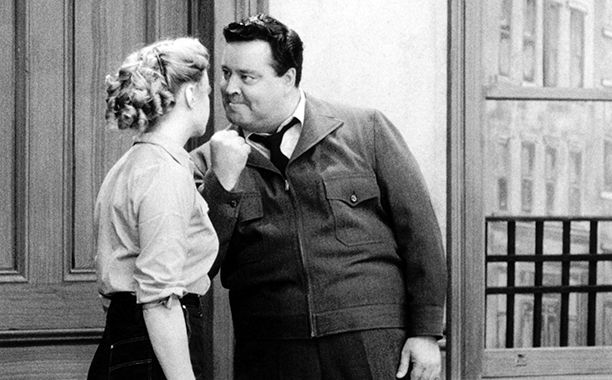
Whether it was “Pow!” or “Bam! Zoom!” it was usually the preface to “Right in the Kisser!” That’s what Jackie Gleason’s Ralph Cramden would exclaim to his wife Alice in The Honeymooners when she got under his skin. For some reason SEO experts think we’re attracted to this kind of cartoonish, wrestlemania-type of violence and have slobbishly skewed that assumption into the seemingly never ending stream of headlines saying “So and So Slams So and So” or “So and So Destroys So and So.” Internet publications and ad mills have followed the gravy train right along. “Rips,” “blasts,” and “bashes” also seem popular.
This type of click bait headline writing has become so ever present, overused, and tired that it has certainly lost all meaning to anyone except the chronically bored or the algorithmically programmed. As lazy as it is, I guess it works. Which is not only a sad commentary on humanity but a sadder one on algorithms and the SEO industry.
I mean where’s the creativity? Why not use “lambasts,” “harangues,” “admonishes,” “berates,” “objurgates?” Or for those with syllabaphobia how about “dress down,” “haul over the coals,” “lays into,” “lace into, or “slag off?”
And just imagine how many of those boringly inept and inutile headlines are being fed into AI training engines.
You can find more of my writings on a variety of topics on Medium at this link, including in the publications Ellemeno and Rome.





 Life on the Wicked Stage: Act 3