The Siri AI Demo Apple Should Have Done

One day perhaps we’ll move beyond AI cliché demos.

My nephew occasionally takes a look at this blog and gives me feedback on what I think and write. Actually, he mostly gives me shit. He certainly does when I write about Artificial Intelligence. He often asks why I’m so “down” on AI. At least we agree on politics. 

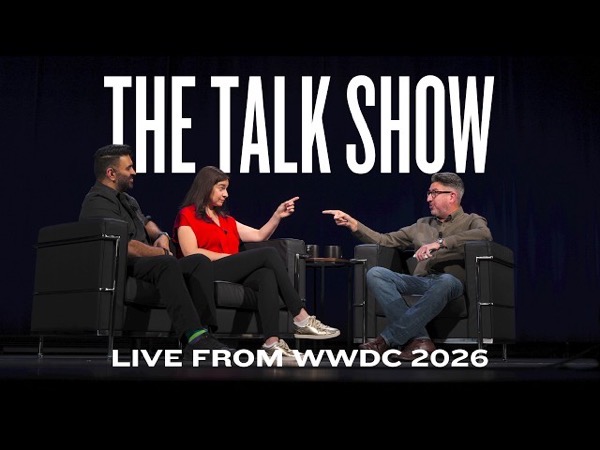
Apple Executive Mike Rockwell demos Siri AI at WWDC 2026

I keep reminding him that I’m not “down” on the technology per se. I’d love to see the press release announcing AI led to a a cure for cancer. Who wouldn’t? I’m down on the way it continues to be sold to us and the ramifications that brings on so many levels, while still feeling like it’s not what the sellers keep promising. (I also remind him to read what I write more carefully, but he’s probably using some AI to summarize what I write.) 

In truth, that’s the essence of my skeptical reaction to what we know as AI at the moment. There’s a lot going on, but how it’s being sold to most consumers still feels like it will ultimately be no more, no less than just another tool we use on a computer, after exacting high costs to do so, and dumbing down the general learning curve in the bargain.

Take for example the demos we constantly see about what AI can do when each company rolls out its latest version. As demos they all look slick as far as party and trip planning go.

(Coding is another case entirely. I’m not talking about that here, simply because I don’t have the expertise to do so. I’m strictly speaking of the sell to consumers.)

Even Apple fell back on these examples that have become clichés in this year’s WWDC 2026 announcement. Those clichés define the market companies think are ripe for the come on and then the plucking. I’m guessing they also define the current limitations of the technology. Or at least the limitations companies don’t want to risk pushing beyond in a live demo. 

Here’s the AI Siri demo I wish Apple had shown us yesterday. 

If you watched Apple’s keynote presentation you might remember this slide. 

Maybe not. It flew by pretty quickly. It’s a word cloud of all of the other non Siri AI improvements Apple is bringing to its various operating systems this year.

Yes, the print is that tiny and crammed together. To call it unreadable is accurate. For those who didn’t watch the demo, the length of time it was on our screens was equally tiny, certainly compared to all the travel time each presenter took to walk on and hit their mark prior to speaking. To be honest, the slide’s quick and unreadable inclusion felt insulting given the long list of improvements it’s touting. 

(To my knowledge no such list appears yet in Apple’s Newsroom or on its website heralding the other announcements. If I’m wrong, point me to it and I’ll link to it here. I’m sure it won’t be long before one of the sites that covers Apple distills it down and publishes it. Probably using AI.)

(UPDATE: Right after hitting publish, I noticed that John Gruber linked to this post on the Oneberri Blog listing all of those improvements.)

What if Mike Rockwell, the Apple Executive who did the Siri AI demos, had asked Siri AI to take that slide, and present the info into a bulleted list in Apple Notes, and then prepare a PDF for distribution? In the post keynote tech talk he and other Apple execs participated in, he could have followed that up by asking Siri AI to distribute the PDF to the other Apple execs on stage. Essentially it would have demonstrated the same Siri AI capability to gather info across native Apple apps, using context, in the same way the clichéd party planning demos do.

It certainly would have been more impressive than the usual clichés.

Perhaps AI Siri and the apps needed to do that work aren’t ready for such a challenge just yet. Things are still in beta after all. Perhaps it’s just too risky to stray outside of what’s made these kinds of demos a laughable cliché. Perhaps we’ll get there someday. Who knows? 

Meanwhile I’ll remain “down” on AI the way my nephew likes to give me shit about my AI skepticism. I hope one day this technology might indeed lead to a cure for cancer. I also hope my nephew keeps reading this blog. It might help him learn to think for himself more often. 😉

Thanks for reading. You can subscribe to this blog if you care to. You can also find more of my writings on a variety of topics on Medium at this link, including in the publications Ellemeno and Rome. I can also be found on social media under my name as above. This site does not use affilate links.


Apple Announces New OS’s. I’m Still In Wait And See Mode

Apple works to make good on Apple Intelligence with Siri AI

At WWDC 26 Apple today announced new operating systems all ending in OS27. (The numbering thing drives me nuts.) The entire keynote felt different to me from recent years. I’m not talking about the presentation organization that strayed from the usual by device format. Rather it felt like Apple felt a bit humbled. Almost as if Apple is in a we’re in a thinking different mode these days. I may be reading more into that than is real, but I’m usually pretty good at sniffing these things out. 

Apple announces Siri AI and its next generation of Apple Intelligence.jpg.

Apple chose the name Golden Gate for its macOS 27 version this year, and it looks like the folks in Cupertino heard the criticisms about Liquid Glass and have taken some steps to correct what I and many other consider design flaws. I’ve seen as many negative as positive reactions to the design changes, so we’ll see how that goes throughout the summer. 

There was also quite a bit of time devoted to Parental Controls. Given the political heat big tech in general is taking politically here in the US and elsewhere that’s probably a smart move. The announcement stirred up a bit of controversy from folks not in favor of efforts like age verification. The devil will be in the details. 

The big push though is all about Apple Intelligence and the New Siri, now called Siri AI. Trying to play catch up and recover from the mistakes of two years ago, Apple showed off some live demos in a separate meeting from the keynote. You can read about that on The Verge. So you have to consider showing live demos a plus over two years ago, although it was still in a protected environment. I’ll be looking for users to do the same as the betas roll out, even if it appears that there’s a waiting list for the New Siri. So, we’ll see how that goes.

Note that Siri AI, announced to roll out this fall, will be delayed in the European Union and China.

The announcements were solid. They appeared to address past problems of Apple’s own making, user complaints about recent design changes, and the promise of under the hood bug busting. Announcing speed increases across the platforms is promising. But we’ve been here before. Every keynote from every company makes promises. The devil is always in the details, and when life is a beta, you never know what’s final and when. Especially when you’re in a mode of trying to rebuild trust.

You can check out the entire keynote reduced to 26 minutes, also from The Verge here. And Jonny Evans has a nice collection of the headline announcements from the keynote here.

And this Mastodon post from Dwight Silverman sums up my some of my early thoughts as well.

To further sum it up my early thoughts, I’ll just say this. It’s going to be an interesting summer watching folks hammer on the betas, the first of what was released to developers today. The public betas will roll out in July. But we’ll have some early indications later in the week as developers begin working with the betas.

So, I’m still in wait and see mode. As should most of us be.

Thanks for reading. You can subscribe to this blog if you care to. You can also find more of my writings on a variety of topics on Medium at this link, including in the publications Ellemeno and Rome. I can also be found on social media under my name as above. This site does not use affilate links.
What Does A “Siri That Works” Mean?

“An acre of performance is worth a whole land of promise.”

You know what a litany is. It’s a series of prayers with predictable responses, learned, ingrained, and repeated without much thought. Call it “call and response.” As we finally arrive at the beginning of Apple’s WWDC 2026 today, the call has been summarized down to Apple needs a Siri that works.

But how the hell do you respond to that?

An official "Everything Everywhere All at Once" Pet Rock, featuring a smooth, dark grey oval stone with two plastic googly eyes attached to the front. The rock sits nestled inside a bed of shredded brown kraft paper. Behind it is its custom light-blue cardboard carrier box designed like a pet crate, complete with a carrying handle and circular air holes. The box has white text that reads "Oh good. You're here too." on top, with "PET ROCK" in a bold, stylized white font on the front.Siri was once a surprising computer gimmick, before Apple got its hand on it in 2010. Siri has been surprisingly bad at most things ever since. Sure you can set a timer, or a reminder, occasionally play the right play list and a few other things. If that were the extent of the promise the jokes wouldn’t be funny. But the promises were always more. They never lived up to the personal assistant aspirations. It’s still largely a gimmick. One too easily made fun of. 

Amazon’s Alexa and Google’s Assistant, (now Gemini) have taken bigger steps forward than Siri, but also continue to fall down and scrape their knees. Chatbots have come along and for some have replaced the need for someone to talk to. But each of those efforts still yield mistakes and failures. You know the way, humans do.

So do pleas for a “Siri that works” mean something that will always work? I doubt it. I think the expectation is that these chatbot like companions will continue to fail. Again, the way humans do. But you can’t sell that.

Does it mean a “Siri that works” does something new? I doubt that also. The entire promise of computer assistants, chatbots and artificial intelligence is to do things we already do more efficiently. In fact, that’s the history of computing. When spreadsheets replaced pencils, green eyeshades, and then calculators we were on to something.

We haven’t yet figured out a way to help us communicate better in person, much less in front of a screen or into a microphone. A “working Siri” (or any other chatbot) isn’t going to help us with that. They may teach us a new way to communicate to set that reminder, but the respondents failure makes us all feel like we’re wrong. Until we just stop talking.

I’m not sure how you reconcile doing things more efficiently with the failure rate. One that seems all but guaranteed by the “mistakes will happen” caveats that prove lawyers always earn their keep. Frankly, I don’t ever see a “fire and forget it” guarantee in what remains of my lifetime. Maybe someday.

Word is that whatever Apple rolls out as “a working Siri” will roll out with a beta label attached to it. That’s a good preemptive legal response, but a sad commentary on the state of things. We expect things to go wrong in betas. Talk about setting a low bar. Even a necessary one. 

Speaking of the history of computing, when it comes to mobile computing we’ve gone through at least one cycle where the focus shifted away from keeping us addicted to our phones, to an entire wave of ways to help us escape the tyranny of the small screens, put them down and enjoy more of life without them. Call me crazy, but the rush to chatting away to smartphones, AirPods, pendants, pucks, cars, etc… seems contradictory to solving our tech addictions. Out with the old trend, in with the rerun.

Gimmicks work. They help sell devices and feed trends. Think pet rocks. We’re already seeing talk of children’s toys with AI voice assistants and reactions against them. At least this time around the reactions are coming more quickly.

I’m guessing it’s not long before we see a pet rock product that contains an AI powered voice assistant. We can always use another paperweight.

Thanks for reading. You can subscribe to this blog if you care to. You can also find more of my writings on a variety of topics on Medium at this link, including in the publications Ellemeno and Rome. I can also be found on social media under my name as above. This site does not use affilate links.

Sunday Morning Reading

The art of dancing on the line that separates and defines humanity

It was a good week for reading good writing. It’s a better week for sharing what popped up. A variety of topics, spanning art and the making and selling of it, technology — which these days is more about the selling than the tech — the humanity, or lack thereof, behind it all, and…well to continue a list would sell it all short. Here’s hoping you enjoy the links shared in today’s Sunday Morning Reading as much as I enjoy sharing them. Yia Mas! 

An overhead, first-person perspective shows a person lying on their back on a teal couch, holding open a large book to read. The person's head is closest to the foreground, with long, blonde-streaked hair spilling downward. They are wearing a deep maroon, long-sleeved sweater and light grey sweatpants. Image from Matias north v8DSLoY80Xk unsplash.

Om Malik wrote one of the best things I’ve read in quite some time. We Are Living In Pinocchio’s World is about lying. It’s about AI. It’s about a pen. But it’s about so much more. 

Cory Doctorow’s Refining Humanity takes on our propensity for explanation, personhood for machines, and that line we seem to want to dance with defining just what makes us human in the midst of it all. 

Meanwhile Martyn Berlin of Martyn’s Random Musings finds himself an outcast in To Have A Moral Stance On AI Is To Be An Outcast, And It Sucks.

At what cost art? Natasha MH wonders and writes about it in Sold At A Premium. At what cost, anything?

Mike Masnick thinks it’s not about whether technology is inherently good or bad, liberating or oppressive. You could argue the same could be said about most aspects of human endeavor. But then that’s the point. Tech is just another in a long line. Check out Enshittification, Despotification, And The Open Internet. 

“The only conviction worth having is the kind you could lose tomorrow and survive it.” JA Westenberg warns us not to take a pill, regardless of color in Be Thou Not Pilled. 

Mathew Ingram wonders Have Investors In AI Companies Lost Their Minds? I’m not sure we can call them investors any more. As to their minds? No comment.

Two interesting takes on what’s going on the business of making movies in Hollywood that occasionally and almost accidentally is about making art. M.G. Siegler talks about how YouTube Beats AI To Disrupting Hollywood. Meanwhile Sonny Bunch takes a look at The Thoughtlessness of AI Filmmaking. 

Word came down this week that a restaurant was finally going to fill one of the retail spaces in the Trump Tower in Chicago, after they had all sat empty for seventeen years. Neil Steinberg asks Will Chicago Happily Eat Dolmades And Drink Roditis In Trump Tower?

To close, click through the popover on John Gruber’s post This Is A Dickover, and give the post a read. You know what a Dickover is. Now you have a name for it.

(Image from Matias North on Unsplash)

Thanks for reading. Feel free to subscribe if you want. It’s free. If you’re interested in just what the heck Sunday Morning Reading is all about you can read more about the origins of Sunday Morning Reading here. If you’d like more click on the Sunday Morning Reading link in the category column to check out what’s been shared on Sunday’s past. You can also find more of my writings on Medium at this link, including in the publications Ellemeno and Rome. This site does not use affilate links. 

The Old Man

Life cycles we pretend we can conquer

The title of this post does not refer to the title of a streaming TV series that is one of the best examples out there of a show having a winning first season and then completely deteriorating in its second. But perhaps that show’s failure the second time around could be a metaphor. 

an elderly person wearing a dark jacket and a light-colored baseball cap sits alone on a long wooden park bench with metal support brackets. The bench faces a vast, calm body of water under a hazy, overcast sky. In the far distance, a large cargo ship is faintly visible on the horizon. Low green grass lines the foreground.

The title actually refers to what is happening before our eyes with Donald Trump. He’s physically breaking down fast in this, his second term. I don’t need to know his medical condition to see it. Neither do most. He and his enablers he’s assembled around him are lying to us and themselves about whatever is ailing him. For some reason they think they can pull that off. They can’t. 

Here’s why.

Too many people in their lives have been faced with an aging or sick relative and had to watch the deterioration first hand. It’s a saga of life that everyone but only the very young knows. In these cases, the parent eventually becomes the child again, to be cared for by the child they raised. 

Difficult moments present themselves all along the journey. Drivers license and car keys are taken away. Financial and medical decisions are assigned to others. Houses get rearranged. Sadly at some point for some they get moved into some form of long term care, which is nothing more than a way station warehouse before the end eventually arrives. 

And those are the lucky ones who have family willing to do the work and bear the burden. 

I’ve lived through these situations more times than I would have liked. It’s challenging and changes everything for everyone it touches. 

There are always moments of denial and deflection before rationality sets in and necessary steps are taken. That pushback comes from those suffering and those supporting them. The conversations and confrontations are never easy. Someone once told me that you don’t really grow up until you face these challenges with an elderly loved one. I think they might be right. 

It’s so familiar that it’s one of those oft repeated situations in life that when the loved one and/or their families finally admit what they’re dealing with to everyone around them, everyone around them breathes a sigh of relief and delivers those painful looks that say they’ve known all along. 

In and of itself, those moments are a part of life’s cycles we can’t seem to break.

That so many have experienced something similar in their families shows just how irrational and afraid those enabling Trump must be to pretend that what most can see with their own eyes isn’t real. Being politically astute and thinking you’re smart enough to survive are two completely different skill sets.

Perhaps if their pardons were already signed things might be different. 

Set aside just how awful this old man has been for the world. I don’t mean to extend any pity or sympathy towards him by saying that. He deserves none. But as we watch him continue to whither away, dragging the country approaching it’s 250th anniversary down with him, it’s a damn shame no one had the courage to tell the old man his time was up, instead of letting him, and us, linger in a farce of fog. 

Putting this on a political stage, we’ve seen ailing and dying leaders propped up before. So, that’s nothing new. I would just offer that the propping up is more about those doing the propping than the old man they keep lying to protect. 

(Image from Apostolos Vamvouras on Unsplash)

Thanks for reading. You can subscribe to this blog if you care to. You can also find more of my writings on a variety of topics on Medium at this link, including in the publications Ellemeno and Rome. I can also be found on social media under my name as above. This site does not use affilate links. 
The Kennedy Center Saga Continues

A glimpse of hope for the future

With so many things fundamentally broken during this second Trump administration there’s a momentary sigh of relief when it appears that something, anything might be put back together again. 


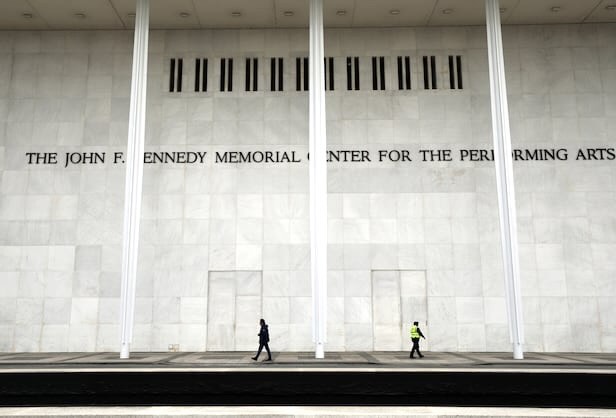
This week U.S.District Judge Christopher Cooper ruled that Trump’s appointed Kennedy Center board exceeded its authority when they decided to slap Trump’s name on the building and remake the building in his imagined image. Taking a look at any photo of the remade Oval Office and the plans for his ballroom, his gigantic arch, and the wrestling ring he’s built for his birthday beat down, which he somehow likens to the Eiffel Tower, is enough to make anyone with any semblance of taste in their mouth spit in disgust.

The ruling essentially says stop and take the offensive name off of the building. The Kennedy Center administration has already ordered employees to remove the sign and also strip all references from other signage, brochures, the website and to remove email signatures and letterhead by June 12th. The move is being hailed as a victory.

Cathartic and symbolic as removing the name may be, it can’t possibly make up for the damage done to the revered national center for the arts. It’s a start, and it certainly kindles hopes and dreams of doing the same to much of the defacing and defecating this one man wrecking crew has visited on Washington DC and the rest of the country. 

Take for example the story of the National Symphony Orchestra. After many acts and organizations cut ties with the Kennedy Center rather than being associated with the madness, Trump closed the Kennedy Center for a two-year period of renovations, leaving the NSO without a home. Ben Folds, previous artistic advisor, (previous only because he stepped down when Trump took over), has released a letter calling for an “outpouring of public support.” Saying without such a push the NSO may not survive. You can read the full letter at this Instagram link. That will be a hard task and I wish them success. 

I’ve said ever since Donald Trump came on the political scene that given the grifter and sexual predator’s previous life as a real estate developer we needed to understand that in order to construct something new a developer in his/her heart needed to also love demolishing something first. He’s certainly more than demonstrated a penchant for demolition and desecrating.

Here’s hoping one day we all get a chance to enjoying demolishing the things he’s touched in this horrible age. 

You can also find more of my writings on a variety of topics on Medium at this link, including in the publications Ellemeno and Rome. I can also be found on social media under my name as above. This site does not use affilate links. 
 

Scott Pelley Fired. Time To Move On

Good night, and good luck.

Scott Pelley was fired by CBS. By most accounts, except those from CBS management, he was fired for daring to speak the truth about what is happening under their new ownership that’s far too fond of kissing the ass of the president. 

A picture of fired CBS 60 Minutes Correspondent Scott Pelley

I have a couple of thoughts.

First, Pelley shouldn’t have been fired I don’t care how belligerent he may have gotten with his bosses. The world needs a little more righteous belligerence instead of the babble we get for show.

Second, the current management of CBS are idiots, which is easily proven by how ineptly they handled this entire episode. There’s not enough eggs to cover the faces of the feckless.

Third, while it’s right to be momentarily outraged at the numbskulls from CBS and those who play them like puppets, it’s time to move on.

For Pelley.

For most of us.

I’m not pointing specific fingers at Pelley when I say this, but he was part of a media establishment that largely has failed us since before the dawn of the Trump era and continues to do so daily. The 1st amendment put the press on a cherished and protected pedestal. The cringing cowardice and capitulation of those atop that pedestal these days has aided the current regime in knocking itself off it. The Fourth Estate is essentially a cliché that lost its meaning.

New horizons await. Hopefully with new voices and new approaches headed towards them. Time to open the floodgates and let the waters wash away a multitude of sins that helped bring us this ultimate sinner without par.

All around us venues like podcasts, YouTube, and TikTok are where many are getting their news and their entertainment. Given that there’s been so little courage and competence in the establishment media for so long, it’s no wonder kids on TikTok get higher ratings for reviewing school lunches in the cafeteria. Hell, YouTube is kicking the media’s butt from Hollywood to New York in ways that it’s almost hard to fathom, but increasingly easy to acknowledge. For anyone but the media.

Would I like to see some of the big names who’ve gotten the axe in this regime’s purges get second chances on different platforms? Sure. But only if they seek out these new approaches and find a little courage. Those new approaches might still come under fire from the cowardly bullies that cower and lash out at any criticism. But at least they won’t come under fire from capitulating corporate chieftains who bow and scrape to the bloviating bullshit artists, hoping they can survive until the chaos we’re surrounded by ends someday. 

Like it or not, traditional media as an institution, revered as it is, and as holy as its acolytes hold themselves, shares a big part of the blame and is no different than anything else that’s been touched, tainted, and torched in this tumultuous decade plus. It took a while for what passes as journalism to dig its way out of the robber baron era of previous generations. You can argue that CBS was in the forefront of the leaders that helped wash off the tinge of yellow journalism. Those days are over.

What was is gone.  Self-immolation. There’s no use pretending it can be rebuilt from any of the remaining ashes. 

Kudos to Scott Pelley for standing up for what’s right. We need more like him. We’ve needed more like him for too long. I’m sorry what happened to him and so many others in the media, throughout government, and in other fields of endeavor. No one deserved what’s happening. But I have to ask each of them, what took you so long? Even the visually impaired among us clearly saw most of this coming. Certainly this second time around.

Mourn the losses.

Curse the bad guys.

Then move on and build something in the future that might have a hope of preventing these cascading catastrophes from happening to anyone else in the future.

Good night, and good luck.

You can also find more of my writings on a variety of topics on Medium at this link, including in the publications Ellemeno and Rome. I can also be found on social media under my name as above. This site does not use affilate links. 
Segmenting The Future Of Computing

The days when the costs of technology decreasing over time have passed.

I’ve been writing a small bit about the segmentation I see coming in how we currently think of computing. Yes, it’s about Artificial Intelligence, and yes, it’s about money. There’s no question that we’re already seeing price increases due to chip shortages, but I’m thinking that’s just the beginning of what will make Apple’s reputation of shipping too expensive computers, prior to the MacBook Neo, seem like a memory.

A close-up photograph of overlapping neon signs illuminating a dark background. In the foreground, a prominent bright green neon sign is shaped like a dollar symbol ($\$$) by Aedrian salazar Wy7Gy8ZcW1M unsplash.

There’s no question that the cost associated with Artificial Intelligence is driving this and will continue to do so. The question is how much? Note that in the latest announcements from Google, Microsoft, and Nvidia heralding what’s coming that price tags weren’t revealed. Quite frankly from the way I’m reading the tea leaves scattered among the press releases, most of these companies are skittish because they don’t even know how high the cost curve is going to bend. Or they’re afraid of the sticker shock once they do find the courage to announce them.

The way I see it, the next period of time is going to be one where if you can afford the steeper prices of hardware and AI services, you’ll be able to play on that level. Those that can’t, and may not even need to, will be gradually left behind. Although for many that won’t prove to be that much of a problem given their needs. Initially.

Tell me honestly, what has any AI company promised, prior to this coming age of agents, that most computers can’t already do? Heck, even some of the promises agents can supposedly deliver don’t seem to offer that much more, unless you’re a software developer or in math sciences.

That said, operating systems and software are all being geared up along with consumer hardware to make the expensive side of the equation be the standard. 

Already we’re seeing moves away from AI robots doing their work in the various clouds. Companies are prepping local AI models to be installed on devices. Those local models are going to require memory and processing power that’s going to further drive up the hardware costs while possibly reducing the token tax. Gaming hardware is about to become really expensive. Back in the cloud, eventually we’re all going to be paying for search. Probably sooner, rather than later, if you want decent results. 

Speaking of taxes. Governments are starting to sniff around with their divining rods, sensing new money reservoirs to be tapped, while watching water resources stretched thin. There’s obviously a thirst. If, when, and where that happens will just add costs to be passed down the line. 

Take a look at this quote from Microsoft’s Satya Nadella:

“There are really two stories people can tell about this moment. One is that technology concentrates power, reduces human agency, and leaves to society to absorb the consequences. The other is that we use this next wave to unlock opportunity for developers, scientists, enterprises, and every community. And our job is to make the second story true.”

On the surface it sounds like there’s opportunity for what’s coming to be all inclusive. Clever. Beneath that surface I think Nadella is hinting that unless your computing needs are in fields of endeavor that will require AI to be competitive, you’re at the tail end of that second story and will probably be on the outside looking in while absorbing the consequences. There’s really only one story.

As I mentioned earlier, there are plenty of users who don’t need the latest and greatest hardware and will probably be just fine without. For a time. Unless the big players create operating systems and hardware that segment out some of what will only become compute heavy advances, consumers will eventually find today’s tasks more challenging and less secure as existing hardware slows down and future security updates are released on slower schedules. 

Of course that also leaves an opening. 

Perhaps companies that offer hardware and services that don’t push whatever current AI envelope is being pushed, might find a willing market. You could argue that Apple’s MacBook Neo, and Dell and others’ recent announcements to counter that somewhat surprising move, might presage this. Without lower entry price points, who knows, a lot of users might just return back to the days of envelopes and snail mail.

That’s probably too extreme a reaction, but we’ve seen similar reactions to technology in the past, some quite recent, once the gee whiz factor has worn off like the letters on cheap keyboards on even expensive computers. Think touch screen displays instead of buttons and dials in cars. Think home automation. Think the Metaverse. Think talking appliances. Think cars and machinery that require maintenance contracts. Think 3D TVs.

Those that love to dabble and explore frontiers and have the money to do so will always seek the next adventure. Go for it. Those who just want to send a birthday greeting, create a holiday card, share a calendar, proofread a document, or search for a local merchant don’t want a hustle or a hassle, or the increased expense that’s obviously coming.

For the moment, the days when the costs of technology decreasing over time have passed.

(Image from Aedrian Salazar on Unsplash)

You can also find more of my writings on a variety of topics on Medium at this link, including in the publications Ellemeno and Rome. I can also be found on social media under my name as above. This site does not use affilate links. 
Yikes! Chicago Bears Caleb Williams Will Be On The Cover of Madden NFL 27

Cursed or not?

Chicago Bears football fans are gasping with excitement and stocking up on antacid today after it was announced that the team’s quarterback, Caleb Williams, has been picked to grace the 2027 cover of the popular game Madden NFL.

Promotional cover art for the video game "Madden 27" features an action shot of Chicago Bears Quarterback Caleb Williams mid-air preparing to toss a pass against a deep blue sky.

It’s certainly great recognition for the quarterback who had some amazing moments on the field last year in a surprising Bears season. He’s an exciting, if sometimes erratic player who managed to pull out last minute victories with some spectacular plays more times than not. Of course the other side of that coin is that more consistent play by the quarterback and the team should theoretically lead to less of those hair raising/pulling moments. But a win is a win.

However, the cover recognition is also believed by quite a few to be a curse for the player chosen, presaging down seasons or possible injury. According to CBS Sports 14 or the 24 players chosen between 2001 and 2024 had less than spectacular seasons after being so anointed.

Whether or not it’s a curse, who knows. But it does just add another level of anxiety for Bears fans already on edge heading into a season where we should find out what this team is made of after a season that surprised most. With the upcoming season schedule rated as the toughest in the NFL and a number of players who led the way last year lost to free agency or retirement, it was already shaping up to be nerve wracking. 

It’s not easy being a Chicago sports fan.

You can also find more of my writings on a variety of topics on Medium at this link, including in the publications Ellemeno and Rome. I can also be found on social media under my name as above. This site does not use affilate links. 

The Smartest Thing I’ve Read In A Long Time

We Are Living In Pinocchio’s World

I read a lot. It’s so ingrained in me it’s become part of my DNA. Good writers and writing are like magnets. I’m drawn to it. I live to read something that strikes me upside the head, or cuts deep in the heart. Om Malik’s piece, We Are Living In Pinocchio’s World, struck hard and cut deep. Go read it. 

Jametlene reskp Q79XFGuTFfM unsplash.Om is a writer I’ve paid attention to for quite a while. What he thinks and writes is alway informative. Typically his topics are tech related. But in this piece he’s done what I often attempt to do, (not nearly as well as he), weaving together the common threads about tech and politics, or more importantly the people behind them both, that bind one to another into a whole with the precision of a finely tuned instrument. In this case, a pen. You have to read it. 

Here’s an excerpt:

Most people remember Pinocchio as a story about lying. The nose grows. You get caught. Lesson learned. But that reading misses almost everything Collodi was actually doing. The book is a close study of a society where deception has gone ambient, woven into every institution, every transaction. Courts punish victims. Authority figures perform competence without exercising it. Experts are decorative. Society holds together through spectacle and habit rather than accountability. Into this environment, a naive creature is released, constitutionally unable to resist a good story about easy reward.

The nose is the least interesting lie in the book. The interesting lies are the ones that work.

You need to read Om’s piece to discover which are the lies that work. If you’re a fan of the story you can probably guess or recollect, but the writing here takes you there in wonderful ways. Either way, you’ll come away thinking that they are as plainly visible as the nose on your face. Yet somehow our gaze always seems focused to look past that.

Pinocchio is a favorite story of mine. I’ve directed a play version in the past. Perhaps Malik’s piece hit me so squarely because I spent time with the book during my preparation for that gig. It was a production for young audiences. The kids always loved it. Their parents or accompanying adults always seemed a little agitated after the performances. Thought of as the children’s story it was originally written as, it contains truth we adults conveniently forget or choose to ignore. Even in the much reduced stage version for young audiences the theme reveals its mark as squarely as it hits it.

As Malik puts it “Pinocchio is a story about a society organized around deception.”

He’s dissected the story, originally published in serial form, and reassembled and animated the core of its humanity in ways that not only meet our moment, but distill the chaos into a sublime simplicity. Much the way any skilled wood carver and maker of puppets would be envious of. 

I won’t say any more. I’ll just say again, go read it. 

You can also find more of my writings on a variety of topics on Medium at this link, including in the publications Ellemeno and Rome. I can also be found on social media under my name as above. This site does not use affilate links. 

(image from Jametlene Reskp on Unsplash)