-
Cracks In The ICE Are Showing: Keep The Pressure Up
Here’s an update to this post from earlier today. It’s being reported that Greg Bovino has been relieved of duty and sent home. He has also reportedly lost access to his social media accounts. Let’s hope the reports are accurate, and even if not they add to the pressure. Pressure works. Keep it up.
After another weekend filled with horrendous news as most of the country weathered a massive winter storm that left snow and ice everywhere, it appears that are a few cracks starting to show in the ICE. To be honest, I’m actually surprised.

Word is that the latest murder in Minneapolis is giving quite a few so-called Republicans cold feet in Washington DC and elsewhere. The apparent leading candidate for the GOP nomination for governor of Minnesota has withdrawn his candidacy in the wake of what’s happening.
Apparently the White House is also putting on heavy socks and trying to tiptoe out from under the fallout. Or so the reporting says. The guy who passes for a president is sending in Tom Homan to try and clean up the mess, which I’m sure he’ll attempt to do for the right amount of cash in a Cava bag.
Heck, even a few GOP congressional critters are making noise. But I’m sure that will soften as the week goes on. I mean there’s a government they need to pretend to run.
And there’s the rub. The government is facing another potential partial shutdown at the end of the week. The House passed that legislation on to the Senate, with the help of seven Democrats voting for it, without whom the bill would have failed. Senators are hinting they’ll hold the line after this latest murder, but I wouldn’t count on it in the end.
I’m hoping the Senators and all of those who were out and about in horrendous weather protesting this weekend keep the pressure up to widen those cracks in the ICE were hearing before this cold snap ends and things begin melting. It would be both a positive for us all and also be quite ironic.
Will it stop things? I doubt it. There will probably be a doubling down. But in my opinion either way the heat needs to ratchet up and keep the pressure building.
I also encourage you to read this piece by Popehat called We Should Talk About The Morality of Political Violence.
I earnestly hope things pull back from the dangerous way they seem to be heading. I also earnestly hope those who can keep the pressure up will continue, so that the lives lost in Minnesota and elsewhere (there have been others less publicized) won’t have been lost in vain.
(Image from Emily Lauren on Unsplash.
You can also find more of my writings on a variety of topics on Medium at this link, including in the publications Ellemeno and Rome. I can also be found on social media under my name as above.
-
Sunday Morning Reading
I’m going to avoid the horrific news that continues out of Minneapolis (and the rest of the U.S.) for this week’s Sunday Morning Reading. But, then I guess I didn’t avoid it by saying that. Think of it as a wound too sore to touch rather than avoiding. Anyway, onto this week’s sharing.

I’m going to kick this off with a blog post from Mathew Ingram called Why Blogging Is Better Than Social Media. Title says a lot of what I believe. I wish more believed it also.
I love watching those younger than I live the same lives, fears, and joys I did. Nothing ever changes. But it’s always entertaining and worth reflection. Check out Alex Baia’s I Thought I Would Have Accomplished A Lot More Today And Also By The Time I was Thirty-Five.
Gray Miller suggests You Should Put A Codex In Your Pocket Instead Of Your Phone. If you don’t know what a Codex is, read the piece.
Cory Doctorow in The Guardian says AI Companies Will Fail. We Can Salvage Something From the Wreckage. Salvaging things from wreckage is what we do. Avoid wrecking things not so much.
Speaking of wreckage, AI-Powered Disinformation Swarms Are Coming For Democracy says David Gilbert.
Follow that up with Brynn Tannehill’s piece ‘Trump Has Already Rigged The 2028 Presidential Election’: Us Defense Insider. You didn’t need AI to tell you that. Or insiders. All you had to do was pay attention.
We do seem to like and be drawn to adversity like so many moths. Funny how we know what happens to moths that fly too close, yet can’t predict own fate when we do the same. But if we break that cycle, there wouldn’t be anything to salvage. David Toddy McCarty says We Like It Hard.
Aaron Vegh blogs A Canadian’s Call To Arms, Being Totally Pissed Off At The State Of Computing In The 21st Century. I don’t think the Canadians are alone in their feelings. I know a number of Americans are as well.
I said I would stay away from this weekend’s events. I lied. Sota. Kinda. I admire those like Dan Sinker who are finding ways to do what they feel can in the face of this adversity. Check out his piece We Are All We Have.
(Image from Aga Putra on Unsplash
If you’re interested in just what the heck Sunday Morning Reading is all about you can read more about the origins of Sunday Morning Reading here. If you’d like more click on the Sunday Morning Reading link in the category column to check out what’s been shared on Sunday’s past. You can also find more of my writings on Medium at this link, including in the publications Ellemeno and Rome.
-
Try
Following the general strikes in Minnesota yesterday and in the wake of yet another horrific shooting in Minneapolis this morning, this brilliant YouTube from Ana Marie Cox filtered through my feeds. Using Nemick’s speech from Andor as a eulogy for Renee Nicole Good, it’s powerful stuff.
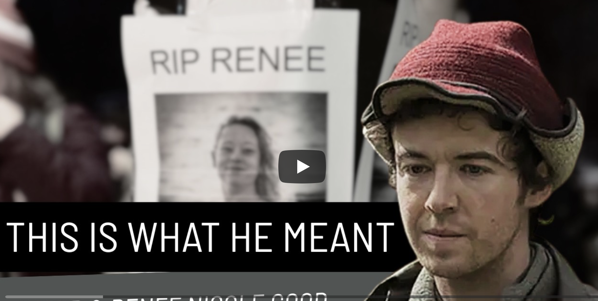
Watch it the video below. Share it. Do so often. Because I think we’re going to be faced with more of this in the future.
You can also find more of my writings on a variety of topics on Medium at this link, including in the publications Ellemeno and Rome. I can also be found on social media under my name as above.
-
A Disturbing Piece Of The AI Future We’re All Headed Into
It’s difficult enough to trust anything you read, see, or hear these days. Trust used to be the coin of the realm, but those days seem to have gone the way of the dodo. It’s bad enough that what used to pass for journalism has devolved into stenography, cheerleading, and blatant lying damaging enough to cost Fox News millions. Yet all of that continues. But we haven’t seen anything yet.

The Verge is out with a report that says Google Won’t Stop Replacing Our News Headlines With Terrible AI. Sean Hollister lays out the case well, and he’s right, this shouldn’t happen. But it does and it’s only going to get worse, because… well AI is the name of the game that everyone who controls any sort of publishing and most search engines are playing.
Here’s the rub. Content used to be king. Or so the theory went. That king fed his court by selling advertising. But that king got toppled by online advertising usurpers. Yes, there’s still content, but it doesn’t matter what the content is, and long as it can be advertised against. We’re already seeing such an overwhelming avalanche of AI generated content all over the Internet that merely dismissing it as AI Slop diminishes the definition of slop.
As an example, Meta’s on a quest to just create users out of nowhere to feed content to your feeds to make sure the advertising turnstiles always spin whether you’re doomscrolling or not.
Content, much less headlines, really doesn’t matter to those who control the channels. In fact, I’m guessing we’re not far off from seeing the same piece of content (whether AI generated or by humans) recycled with different AI generated headlines. I’m guessing It consumes less compute cycles to gin up a new headline than it does to create a full article.
I remember the days when human editors wrote headlines that often confused readers and pissed off reporters when they slanted or misrepresented the nature of a story’s content. Some of that still happens. But that will pale in comparison to the future we’re just beginning to live in.
(Image from Google, PC Mag, The Verge)
You can also find more of my writings on a variety of topics on Medium at this link, including in the publications Ellemeno and Rome. I can also be found on social media under my name as above.
-
History Is Often Unkind To Comparisons
History is often unkind to comparisons. That’s nobody’s fault. No one can grasp the fullness of history well enough to appreciate and/or distinguish all of the references we use to shortcut how we view and label the mistakes we seem hell bent on repeating as we promise to never forget. It’s tougher still when we see children being kidnapped or chemical irritants sprayed at point blank range into someone’s eyes by government employees.

As an example, we conveniently shortcut our descriptions of the current administration’s abhorrent behavior masquerading as immigration enforcement. We call them Nazis. We liken their tactics to the Gestapo. In the face of the murders, kidnapping of children, brutalizing protestors, and lord knows what we don’t know about, I happen to agree with the comparison. It’s not just apt. It’s spot on.
But it’s incomplete.
Those comparisons actually cover up AND reveal a deeper history of sins that is not only particularly American, it’s what Hitler and his murderous henchmen adopted from us.
White Americans, in Hitler’s words, “gunned down the millions of Redskins to a few hundred thousand, and now kept the modest remnant under observation in a cage”
Hitler admired America’s appetite for America’s Manifest Destiny and how it justified the slaughter and displacement of Native Americans. His lawyers studied not only our laws regarding Native Americans, but also our Jim Crow laws, using them as references to draft the Nuremberg Laws that stripped Jews of Citizenship and prohibited interracial marriage.
The forces I think are evil want to erase much of American history, but even the forces that keep trying to array against them don’t recognize the Nazi labeling lineage as history we own a piece of.
The simple point I’m making is this: As we’re coming to grips with so much in these trying days let’s not look beyond ourselves and our own history to try and turn the monsters among us, who have always been among us, into something that removes our ownership of that history. In some ways, that’s the larger fight. We’re not fighting foes adopting some foreign tactics or playbook, we’re fighting our own peculiar history that we have never wanted to come to grips with. We’ve let it fester. Fought a war amongst ourselves over it and pretended we could turn the page, only to allow it to fester again and rise back up to haunt and hurt us all. Again.
You can also find more of my writings on a variety of topics on Medium at this link, including in the publications Ellemeno and Rome. I can also be found on social media under my name as above.
-
Chatbots, Pins, and Other Talking Distractions
In the end everything boils down to a question of taste or a matter of preference. In the beginning everything bubbles up in a hot tub with the jets on high. That’s kind of how I’m viewing all the bubbling around chatbots, AI Pins , possible AI earbuds, AI glasses, and any other kind of method or gadget folks are devising to talk to computers — those with screens, and those without.

Apple rumors popping like champagne corks are going to turn up the heat on discussions about chatbots, especially since Apple had been previously saying they weren’t interested in creating a chatbot for its Apple Intelligence portfolio. Fortunately most of those discussion will be between humans.
Mark Gurman reports that we’ll see changes to what we currently think of as Siri this spring, but stay tuned for a revamped version that offers the back and forth conversational approach that existing chatbots offer, codenamed Campos, later this year.
Almost simultaneously, MacWorld reports that Apple employees are being encouraged to use a chatbot called Enchanté in their work. So, it sounds like Apple is seeding the ground for what’s to come.
For the record, I’m not big on voice computing. Yes, I use my Apple Watch to ask Siri to set a reminder or send a text message, but that’s about the extent of what my experimenting with voice computing has boiled down to.
I’ve tried some of the existing chatbots on smartphones and on computers, and I’ve been in the company of others who enjoy using voice as their primary method of interacting with smartphones. I don’t begrudge anybody using voice as their input method if that’s their preference, and I certainly don’t if it makes computing accessible to those who can’t type. But it’s just not for me.
Part of it is I find myself being more accurate when I can type, and part of it is the social aspect. While microphone technology continues to improve to allow better pickup in noisy environments I find it awkward when someone pulls out their smartphone and starts talking to it with others around. I feel compelled to silence myself while they are doing so. I couldn’t imagine using it in my theatre work, compared to using an iPad with pen to take notes, because my talking would be distracting to everyone else in the rehearsal hall. Goodness knows being in a room with small children laughing/crying/talking at the top of their lungs doesn’t strike me as a suitable environment.
I spent a good portion of this fall watching the Chicago Bears on their improbable run, while texting back and forth on several chains with my nephews and others. I can’t imagine doing that in my local sports pub trying to do so via voice input.
I won’t get into a conversation about how some are using existing chatbots for social interactions like therapy and companionship except to say that I’m guessing if those trends continue as voice input as chatbots proliferate, we’ll eventually see similar reactions to curtail that type of usage similar to what we saw back in the day about decreasing smartphone and screen time usage.
There are some interesting questions out there though. OpenAI has already announced its inevitable move into advertising for ChatGPT. I’m sure the others aren’t far behind. I’m not sure how viable advertising really is in a voice chat environment, whether it’s a smartphone, pin, or set of headphones. I certainly wouldn’t want a “conversation” interrupted with an ad. Amazon certainly doesn’t seem to have come close with its Alexa products. To my way of thinking, ads in chatbot conversations will give new meaning to the clichés about intrusive advertising.
I’m also of the opinion that while the non-smartphone AI devices might be clever gadget accessories, I don’t see them ever replacing smartphones or significantly denting that market. Too much of everyday life has become so inextricably linked to smartphone usage that requires a screen that I just don’t see voice chatbots replacing it. Someday your voice may be your password, but I think we’re a long ways off from that for interacting with the businesses and other institutions we deal with daily.
But who knows where this is all headed. Quite frankly, I don’t think anybody does. Including the chatbots.
You can also find more of my writings on a variety of topics on Medium at this link, including in the publications Ellemeno and Rome. I can also be found on social media under my name as above.
-
The Roses: A Mini-Review
I often don’t find remakes of films to be worthwhile. That’s not the case with Jay Roach’s reimagining of the 1989 film The War of The Roses, based on Warren Adler’s book of the same name. Titled simply and tellingly, The Roses, this remake worked for me.
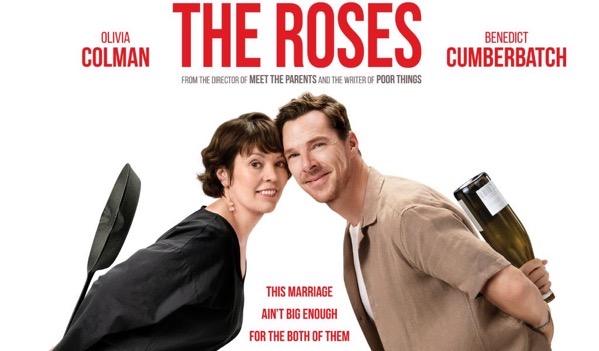 I enjoyed this version better than the much beloved original. Perhaps it’s the time or the timing, but the fact that the remake focuses more on the comedy and less on the black comedy is what won me over. Don’t get me wrong. I love black comedy and this film is still in that genre, but the brightness of the comedy is what makes it work.
The star pairing of Benedict Cumberbatch and Olivia Colman is sublime. As a couple who seem to have it all before they start tearing everything to shreds, Cumberbatch and Colman deliver as delicious a repartee as the dishes Colman’s character whips up with her cooking. Roach plants the moments for the payoffs perfectly, and even pays homage to the original with a few clever winks. Everything makes sense in the story’s update to our current era including a delightful spin on the perils of having a new home designed from the ground up with smart technology.
Fans of the original know where the story is going, but this time around I found myself almost rooting for a different ending, just to keep the banter going. Scathing wit hasn’t been this much fun since Hepburn and Tracy.
The supporting cast that includes among others Andy Samberg, Allison Janney, and Kate McKinnon is superb though a bit underutilized. Even so, they do deliver a delightful ensemble turn as Americans enjoying and being seduced by their own growing, yet completely naive awareness of the lead couple’s Britishness.
The Roses was released late in the summer of 2025 and I just caught up with it on streaming (Disney+) and I’m glad I did. Whether you’re a fan of the original or not, this remake is a good and funny diversion amidst all of the bad times we’re living through. To top it off, Colman and Cumberbatch deliver a master class in comedy.
You can also find more of my writings on a variety of topics on Medium at this link, including in the publications Ellemeno and Rome. I can also be found on social media under my name as above.
-
Light In The Dark
The unceasing tumult of insane happenings continue rolling in, like a relentless pounding of waves threatening to drown us all. It’s enough to make you look for even the slightest glimmer of light in the darkness.

I’m not sure such a glimmer exists. To my way of thinking what’s happening can only continue to get worse until something, anything breaks in a way that no one is going to be able to control. It’s wretched enough that I find myself hoping that happens each morning.
The history of humankind proves that however this reaches a conclusion, that climax and its denouement will make its crescendo seem almost palpably tame by comparison. And, as we’ve proven and continue to prove, we’re certainly no smarter and no better than those who’ve screwed things up in the past.
Sorry for the bleakness. But it’s how I’m feeling things in the middle of this cold, darkening winter. These days remind me of the first stanza of Christina Rossetti’s poem, originally published in 1872 under the title A Christmas Carol.
In the bleak midwinter
frosty wind made moan,
earth stood hard as iron,
water like a stone:
snow had fallen,
snow on snow, snow on snow,
in the bleak midwinter,
long ago.Although today does not feel so long ago.
You can also find more of my writings on a variety of topics on Medium at this link, including in the publications Ellemeno and Rome. I can also be found on social media under my name as above.
(image taken by the author)
-
Sunday Morning Reading
Whew. Regular readers here will know that since the middle of December we’ve been spending time helping my daughter and her family move into a new house, with an interim stop to an Airbnb over the holidays until the new place was ready. It’s been as chaotic as any move could be, multiplied by the antics of our two grandchildren who had their small worlds turned upside down. The chaos didn’t allow for much Sunday Morning Reading, but here we are again, playing a little catch up as well as looking ahead. As much as anybody can look ahead these days.
What Just Happened? That title for Andrea Pitzer’s piece sort of explains the look I see on most people’s faces during the events of this January. If it seems like too much to think about. That’s because it is. Think on it.
Brian Merchant’s Abolish The Senses plays on the same themes and the dismay we’re all feeling.
“Do math. Check your facts.” That’s the message from Neil Steinberg in Wrapping Our Heads Around A Trillion, Now That The Alphabet is Worth $4,000,000,000,000. Don’t let others think for you.
Dealing with much smaller numbers, NatashaMH’s Five Dollars For Catastrophe explains how a $5 book about genocide can offer much more value, should you actually inquire and think for yourself. Words have meaning folks.
And while I’m linking to posts on the numbers, let’s talk gambling. Apparently it’s reaching epidemic proportions and you can bet on when the USA is going to invade other countries, among other catastrophic outcomes these days. Especially if you’re in the know. Saahil Desai says America Is Slow-Walking Into A Polymarket Disaster. I’m not so sure about the slow-walking part.
If gambling is betting on predictions, Artificial Intelligence, with its ability to predict the next word ought to be able to figure out most outcomes ahead of time. It’s all math, right? Remember that earlier admonition to think for yourself? While doing so, check out Steven Adler’s AI Isn’t “Just Predicting The Next Word” Anymore.
Are Tech Companies Allies Or A Threat To Press Freedom? I’m not spoiling Emily Bell’s conclusions with the obvious answer, because the piece is about more than that.
Jill Lepore explores How Originalism Killed The Constitution. It’s an earlier piece that contains context that most have no idea about. I’d suggest finding out.
Speaking of killing things, Russel Berman and Elaine Godfrey ask the simple question, Does Congress Even Exist Anymore? Applying the Ian Betteridge law of headlines, that any headline that ends in a question mark can be answered by the word no, you don’t have to guess at my answer. Berman and Godrey call it a fast fade. I call it a slow self-suicide.
Closing out this week, I’m pointing to a venture from a raconteur I feature here often, David Todd McCarty. He’s gathering up his words and images from over the years on a new website. David is quite a storyteller. If you think for yourself, I suggest you pay attention. For a taste check out David Dreams Of Everything.
Go Bears!
(Image from Rey Seven on Unsplash)
If you’re interested in just what the heck Sunday Morning Reading is all about you can read more about the origins of Sunday Morning Reading here. If you’d like more click on the Sunday Morning Reading link in the category column to check out what’s been shared on Sunday’s past. You can also find more of my writings on Medium at this link, including in the publications Ellemeno and Rome.
-
When Irony Turns Historic Symbols On Their Head
Symbols, logos, insignias always have meaning. Certainly they do for their creators. For others they hold and take on meaning over time. Those that endure rarely take on a new and different significance. Often they just blend into the background unless they represent something that becomes contentious. We’ve all seen that happen in our lifetimes. But on occasion the fickle finger of irony points in a new direction.
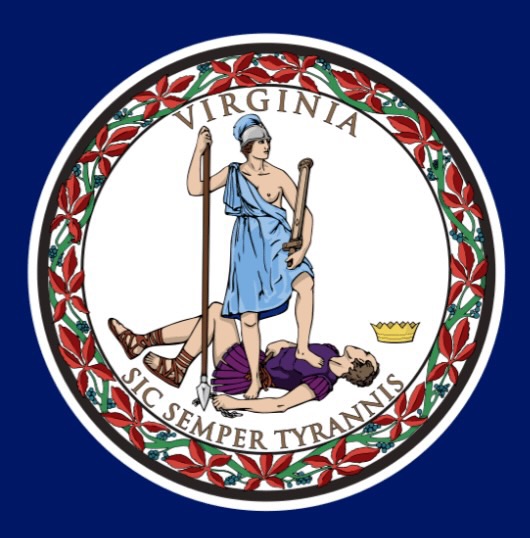
I was born in Virginia, though I don’t live there now. The Commonwealth of Virginia’s symbol and motto Sic Semper Tyrannis (thus always to tyrants) took on a historically ironic meaning today with the swearing in of the Commonwealth’s first female governor, Abigail Spanberger. She’s taking office in what can only be called tempestuous times brought on us all by a tyrant. And it sounds like she’s up for the fight.
The seal and motto were first adopted in 1861 at the start of the American Civil War as Virginia seceded from the Union. For those, like myself, who think we’re currently living through the long delayed continuation of that conflict that’s been simmering since the fighting concluded, the twists and turns of history featuring the same female figure of virtue standing astride a fallen king symbolizing the defeat of tyranny for a state now led by a female governor is irony just too delicious to ignore.
I note that one of Governor Spanberger’s first acts was to veto the Executive Order that enabled Virginia’s participation in the program that allowed local law enforcement to act as ICE agents.
Here’s hoping there’s more of that to come from the new governor.
You can also find more of my writings on a variety of topics on Medium at this link, including in the publications Ellemeno and Rome. I can also be found on social media under my name as above.
Skip to content

Life on the Wicked Stage: Act 3
Musings on life, the theatre, technology, culture and the occasional emu sighting
 Life on the Wicked Stage: Act 3