-
A Question for Senate Democrats: Which Side Are You On?
Each time I try to lower my blood pressure a bit and calm down about the abhorrent political situation we’re living through in this country, something else pops and causes it to spike again. This time it’s the Democrats in the Senate.
It’s bad enough that we have to deal with the shit that’s continually dumped on us from the Trump regime, but when the Democrats have a chance to at least show up and threaten a fight they seem to forget that showing up is more than half the battle.
Both branches of Congress decided to split out DHS funding from the recently passed appropriations bills, leading to what most presume is a ridiculous two week timeline to debate changes for that appropriation. Call me skeptical, but I see that as another Lucy and the football moment just waiting to play out.
But it gets worse. The Democrats, according to this report from Politico, decided to strip from their demands a requirement banning ICE agents from polling sites.
If it seems feckless, that’s because it is.
At the very least include the requirement as a demand and make the GOP work to negotiate it away. Given words coming out of the White House about nationalizing voting and the pot stirring of its allies, you’d think they’d at least pay lip service to the threat. From a pure political standpoint I don’t understand the rationalization for this move given what we’ve seen with our own eyes and the words we’re hearing.
If Pete Seeger was alive today I’m sure he’d still be singing.
You can also find more of my writings on a variety of topics on Medium at this link, including in the publications Ellemeno and Rome. I can also be found on social media under my name as above.
-
The Power Users Have With Subscriptions
I was not a fan of app subscriptions initially. I long ago rethought my position. I continue to think it’s the best option for users. That belief is becoming more entrenched now that we’re entering into whatever the future will be with Artificial Intelligence and it takes constant cash to continue to burn the planet.

Whether it’s this week’s flavor of AI chatbots, Apple’s new Creator Studio, or any other new app or service, most now require a subscription to take advantage of new features as they roll out. In most cases the offer is pay $XX a month or $XX a year, with the yearly price being discounted by the cost of a month or more. Even so, we’re already seeing premium subscriptions that add on costs for more features and I think that trend will only accelerate. Welcome to the land of upsell.
Although much less than I used to, I will subscribe to a new app or service that attracts my interest for a month to check it out. I’ll set a reminder a few days before the end of the month and then take a little inventory to see if it’s worth continuing. If not, I’ll unsubscribe.
If the app or service is truly worth my while I may subscribe for the yearly price after determining it’s something I value, but that’s becoming rarer. Frankly, there just aren’t many new apps and services that seem worth even a monthly try out these days, much less paying for a yearly subscription. There have been a few apps that, although they didn’t really fit my needs, I have paid for a yearly subscription to support the developer. But that’s even rarer.
In those cases with apps, newsletters and other services, I think of those more as tips or a donation than I do entering into an ongoing relationship. I’ve even subscribed on occasion and immediately canceled with just that thought in mind. I’m all for supporting good work by good people. I admit it’s a bit unfair to a good app that doesn’t fit my needs, but it’s still a signal that I think is worth sending.
Here’s the key. Large companies (Apple, Microsoft, Google, etc…) and independent developers, writers, etc, notice when the turnstile rotates in reverse because someone unsubscribes. It’s a metric they pay attention to. They count on inertia and waning attention spans. You might think they don’t notice, but they do. As a user I look at unsubscribing as my vote up or down. Again, maybe unfair, but as I said, it’s a signal worth sending.
With the recent release of Apple’s Creator Studio suite of apps I found it remarkable that much of the commentary included mentions that users could try things out and turn off the subscription payments if they didn’t find things suitable for their purposes. Or, if they needed one of the apps for a short project that they could check in and out of the bundle for the duration of the project. I highly recommend that kind of thinking.
For what it’s worth I chose not to subscribe and try out the new Creator Studio. I thought about it, but have long since discovered other tools that fit what I might need from those apps.
In this hyper political age, we talk a lot about voting. That’s always a choice. Using the choice to subscribe and unsubscribe from apps and services can be one as well.
You can also find more of my writings on a variety of topics on Medium at this link, including in the publications Ellemeno and Rome. I can also be found on social media under my name as above.
-
Matt Gemmell on “The Fallen Apple”
Matt Gemmell begins with an understatement. “It’s a troubling time to be a long-term Apple customer.” It doesn’t get any easier to read after that. Nor should it.

Like many Apple users these days, including myself, Matt is expressing his dissatisfaction with Tim Cook’s Apple. Misery loves company. So does commiseration. The Fallen Apple is a powerful read, and I suggest you do so.
Yes, he points to Cook’s knee-bending and kowtowing that betrays much of the carefully cultivated culture Apple spent untold sums creating over the years, now tossed aside like a decaying FineWoven iPhone case. Perhaps with a sparing nod to rationality Gemmell calls it an act of “corporate sacrifice.”
But this paragraph is particularly damning:
I sometimes think about the full-page, black-background Steve Jobs memorial on the Apple site, with the list of tributes you could send submissions for. Then I try to imagine the same thing for Cook, and I find that it only cheapens the original. The Tim Cook of the Trump era is the erasure of a man who previously could do little wrong, but I think that ultimately it has also laid bare a person whose goals and even motives are as far from Apple’s erstwhile values as it’s possible to be. While Jobs gets to be remembered with artful aphorisms and elaborate hagiographies, surely Cook’s epitaph must be something along the lines of “another record quarter”.
Corporate rationality, like it or leave it, is often as distasteful as it is easy to comprehend. But in my view it requires the wrong kind of different thinking when you’ve built a company on creating an emotional connection with your users.
One thing leads to another. Gemmell points not just to the cultural upheaval and downward spiral, but also to a future that appears uncertain. As he puts it, “More perniciously, Apple is also hemorrhaging people and knowledge.” It makes one wonder if Apple University is still in existence. If so, what exactly are they teaching these days?
But, and to the larger point, he correctly states Apple isn’t hemorrhaging profit.
I hope very much to be wrong, but I fear that Apple’s skyrocketing revenue masks a steep institutional decline that is already well underway, propelled by the fact that success itself, improperly managed, is a poison.
It must be something for folks like Cook, Trump, Musk, etc… to sit atop such vast piles of money, knowing how much dislike and distaste they engender and how it undermines the thrones they cling to. Apples ripen and fall. Unless they are harvested. Either way, there’s an end.
Read the rest here.
(image from Johann Lensless on Shutterstock
You can also find more of my writings on a variety of topics on Medium at this link, including in the publications Ellemeno and Rome. I can also be found on social media under my name as above.
-
Sunday Morning Reading
Connecting the dots can be one helluva hard game when you have so many dots. The volume of dots and the plots might seem overwhelming, but, if you care to look, it’s easy to find the connective threads, thin though they may be. String them together and the picture becomes clearer. Take a look at the links shared in this Sunday Morning Reading column. If you can’t find the connections, I suggest you’re not even trying to look.

Dave Winer writes of Small Pieces Loosely Joined, what he considers the best description of the web. It fits for the web. It fits for most things.
JA Westenberg discusses Why Intelligence Is A Terrible Proxy For Wisdom. Smart.
Backseat Software. That’s how Mike Swanson sees the state of things with software that is constantly interrupting us. As he puts it, “the slow shift from software you operate as a tool to software as a channel that operates you.” Excellent read.
John Gruber thinks we should shift from calling the bad guys Nazis and facists, instead use The Names They Call Themselves. Come to think of it, not sure why it’s so hard to do so given the dictates of the brander-in-chief.
Good dots among the bad are easy to spot. Ava Berger tells the story of how A Red Hat, Inspired By A Symbol Of Resistance To Nazi Occupation, Gains Traction In Minnesota.
In the boiling battle that is Canada and the U.S., Cory Doctorow is elbows up with another of his speeches on enshittifcation. (I’m glad he publishes these.) Check out Disenshittification Nation.
If you’re looking for an antidote to all that’s flying around and at us, it’s tough. Gal Beckham says we can connect those dots through what we’re seeing in Minneapolis. She finds the right word to describe the activism, protests, political opposition, neighborism, and resistance. I won’t spoil it, but she threads them all together in There Is A Word For What Is Happening In Minneapolis.
David Todd McCarty suggests America is a dual state in Then They Came For Me.
Steven Levy says After Minneapolis, Tech CEOs Are Struggling To Stay Silent. Silence speaks volumes. So do actions. So too do “tepid free-floating empathy” memos that mean nothing. Nothing will come of nothing. Speak again.
Joshua Panduro Preston tells the story of John Carter Of Minnesota: The “Convict Poet” Who Won His Freedom.
Pro football fans, especially those in Chicago know Charles ‘Peanut’ Tillman and the “peanut punch” well. Most don’t know that after his gridiron career he became a FBI agent. Even more don’t know that he walked away from that second career after the immigration raids started. Dan Pompeo connects the dots in After Charles Tillman Transformed Football, He Joined The FBI. Then The Immigration Raids Started.
(image from RA2016 on Shutterstock)
If you’re interested in just what the heck Sunday Morning Reading is all about you can read more about the origins of Sunday Morning Reading here. If you’d like more click on the Sunday Morning Reading link in the category column to check out what’s been shared on Sunday’s past. You can also find more of my writings on Medium at this link, including in the publications Ellemeno and Rome.
-
Minnesota by The Marsh Family
As one who has been saying for quite some time that we need more of our musicians to stand up and sing about the moments we’re all living through, I’m glad to see that happening as other musicians are singing about the occupation and murders in Minneapolis.
I linked to Bruce Springsteen’s Streets of Minneapolis earlier this week and today I’m linking to the Marsh Family’s new effort, Minnesota. It’s an adaptation of San Francisco (Be Sure To Wear Some Flowers In Your Hair,) that kinda became the counterculture anthem of an earlier moment in American history. This new adaptation is just as simple, straightforward, and haunting. It’s also just as defining.
Share it.
You can also find more of my writings on a variety of topics on Medium at this link, including in the publications Ellemeno and Rome. I can also be found on social media under my name as above.
-
A Dark Place
I’m in a dark place. We are in a dark place. Living with our eyes wide open in a darkness. No light needed to know what we plainly see. ICE thugs. Minneapolis. Journalists arrested. Public corruption. Wars. Corporate capitulation to evil. And “The Epstein Files.”
 I have not written much about that entire depraved episode. I will today.
In what seems like a backhanded, boomeranging, and backfiring way to distract from all of the other despicable things this administration has been doing to distract us from the Epstein files, the Justice Department released about three million of those files today. Apparently there are millions more. But in some ways we’ve probably seen enough.
Or at least to my mind we probably have. At least enough to pass judgment. Some of the files, either mistakenly or on purpose, were leaked. They include descriptions of what horrible men did to young girls. I won’t post or describe the specifics, beyond saying how utterly depraved they are.
They’d get an XXX rating if those acts were included in a movie. If you want specifics you won’t find them in the government release of the files because the DOJ actually deleted the links to some of the worst, which do indeed finger the president of the United States as a participant. But I’m sure you can find them all over the Internet.
Let me say this. The fact that there are going to be people trying to brush past and brush over what we’ve long suspected but now seen makes those horrible acts of perversion almost pale in comparison. You have to be some sort of sick to try and rationalize it as anything other than evil. But I’m sure there will be too many willing to throw their souls under the bus they continue to ride on.
When and where I grew up, it was a small rural community, populated with many who had some of the same political and social leanings of those we call MAGA today. I don’t care how much of an exalted office anyone held, how much money they made, or what pulpit they preached from. If they were accused of the things mentioned in those files they would have been quietly disappeared from the earth, never to be heard from, and mostly not spoken of again.
If this crowd of criminals and pedophiles and their supporters keep talking about Making America Great Again, I assume they are referring to that period of time when I was growing up. There’s a large part of me that thinks in despicable cases like these that perhaps we should. If only to mete out punishment the way it was done then.
You can also find more of my writings on a variety of topics on Medium at this link, including in the publications Ellemeno and Rome. I can also be found on social media under my name as above.
-
Promises, Promises
Years ago when I ran professional theatres my principal responsibility was picking a season of plays and/or musicals, then pulling things together to actually produce that season. Planning was based on quite a few variables and data, but you never knew how things were actually going to play out in the end. Show business can be cruel.
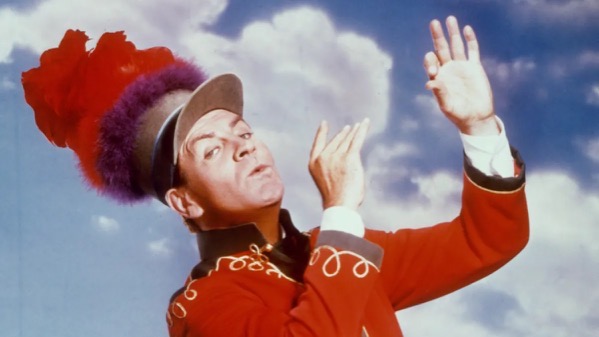 There were always surprises. Some good and some bad. Some shows would become surprise runaway hits, others that seemed like sure things would flop. Lose a weekend due to a snowstorm and the bottom line got hit hard.
Of course the choice of plays was always the key variable. I remember sitting in a particularly contentious board of directors meeting as we were nearing a season announcement and a board member was pushing back hard on our revenue and expense projections for what we had planned. He pounded the table and asked, “How can you know what will sell tickets a year from now?” I told him I could project, but I couldn’t know and that I always went into each season saying that if we succeeded as much as .300 hitters in baseball we’d be superstars.
Well, we weren’t baseball players, but we still usually came out ahead of the game with more hits some seasons than others. We held our own. The not-for-profit theatre version of the game I was playing relied on picking and announcing a season a year or so in advance. You’d promote and sell that season to subscribers to accumulate cash and support up front, and then once you were in the season proper you’d push hard for single ticket sales and then after they got a taste, try to convert them into subscribers, then donors.
It was always risky, just like many business propositions. I remember asking that same board member if his business would be comfortable announcing his plans and projecting sales a year in advance knowing all of the risks. It was a rhetorical question on my part because I knew his business couldn’t operate that way. Most can’t.
The entire thing was based initially on a promise, and each new season announcement was a new promise. Each time you delivered a promised season the theatre built or kept trust with that subscriber base. That loyal base would resubscribe based on that trust. Those customers knew there may be a play or two in the season they didn’t care for, but they came back season after season based on the quality of what we offered, and also that we delivered on what we initially sold and promoted.
As an artistic director (CEO) I was the one who was responsible for that trust and never took that responsibility lightly. Yes, there were times we had to change our plans, but the trust engendered along the way helped weather those moments as long as we were honest with our customers and donors.
The above is a long wind up to something I’ve been thinking about lately and spurred by an article I saw on Elon Musk’s latest promises about delivering robots “next year.”
No one thinks that’s real. For the life of me, I doubt he does. Given how many “promises” this guy has made and broken I don’t understand how reasonably intelligent (I assume they are reasonably intelligent) reporters and investors don’t just burst out laughing when the next one self-drives out of the empty garage that is his mouth. But then again, everyone is in on the con.
Musk isn’t alone these days when it comes to talking out of more orifices than human anatomy provides. Our politicians do it. Relentlessly. As do Tech and other corporate CEOs. The politicians you can almost understand because they are allowed to say whatever the hell they want under the Speech and Debate clause of the Constitution, granting them immunity for anything they say while doing their legislative duties. Unfortunately that seems to have spread a bit outside of the original boundaries through various court rulings and a willingness to boldly and brazenly lie at the drop of a hat.
But CEOs are supposed to be under more scrutiny. From their shareholders. From various regulatory agencies. And yet, those like Musk and many of the Artificial Intelligence promoters seem to be able to promise the Moon (or Mars) without ever delivering.
As I said earlier, at some point you’d think intelligent folks would catch on and actually run these Harold Hills out of town, instead of allowing them to continue courting the librarians they want to take jobs away from. If the regulators aren’t regulating and the shareholders keep writing checks I guess those of us watching shouldn’t care if they all end up playing air trombones. (Bonus points for those who get The Music Man references.)
There’s a truism in my business that nobody ever starts out to do a bad show. Yet, some shows flop. I used to believe that no one ever started a business to be a bust. But the flimflammery we’re seeing these days makes me wonder. As long as you can continue to fleece the flock along the way, does it really matter if you ultimately succeed in producing what you promised as long as you score along the way?
Set aside for the moment that anything, well intentioned or not, can fail. But after delivering a string of broken promises you’d think there’d be enough erosion of trust that only fools would continue to pony up their money. Perhaps I’ve just underestimated the number of fools.
My business was disposable. Technology isn’t. Essential as the arts are to our collective humanity, the arts are always the first to feel financial hits in tough times, and generally the last to recover. Technology keeps playing an increasing role in all of our lives and is becoming dangerously essential. Lord help us if an EMP ever goes off. Watching this new rush into the a world of Artificial Intelligence it’s frightening to contemplate even a small portion of what the promises offer, even as some have already collapsed under their own weight. It’s even more challenging to contemplate what the remaining ones might actually turn into.
It’s one thing to run a smartphone on a beta OS. It’s another when it runs your life for you.
Frankly, I don’t buy all of the promises. The ones that I think offer possible benefits I’m skeptical about. And that’s because I don’t trust the folks offering the promises, the folks funding them, or those rushing to implement them. They’ve all had their chance to earn my trust. There are very few remaining that haven’t squandered it.
You can also find more of my writings on a variety of topics on Medium at this link, including in the publications Ellemeno and Rome. I can also be found on social media under my name as above.
-
Bruce Springsteen Meets The Moment With New Song: Streets Of Minneapolis
Meeting the moment in music is what it’s all about. Or should be. Bruce Springsteen has done so with a new song, Streets of Minneapolis.

There’s no metaphors. There’s no guessing. He cuts right to the point and the heart. The way musicians always do when they have a mind to. We need more of this and I’d love to hear this song live at the upcoming Grammy Awards.
Give it a listen and spread it around.
You can also find more of my writings on a variety of topics on Medium at this link, including in the publications Ellemeno and Rome. I can also be found on social media under my name as above.
-
Tim Cook Captured, Trapped, and Caged
Om Malik has a great piece about Tim Cook and Apple’s current fail mode when it comes to dealing with the Trump administration called A CEO, Captured. M.G. Siegler sees Cook as trapped in his post Aside From That Mr. Cook, What Did You Think of the Movie?
If you haven’t been paying attention, Cook has indeed seemingly been captured by his efforts to hang onto Apple’s success in the face of the Trump administration’s intent to drag everyone into his ever increasing cesspool view of the world. Attending the premiere of the Amazon produced film Melania on the night that Alex Pretti was murdered in Minneapolis is just the latest in a series of what can politely be called missteps by Cook, but in my view more appropriately called sucking up out of naked and unabashed fear.
Cook, hearing the large number of complaints about his latest knee bending issued a memo to Apple employees expressing his heartbreak over the events in Minneapolis and notes that he had a good conversation with the president about trying to deescalate the situation. From the reactions I’ve seen nobody is buying it. Issuing memos designed to be leaked is another cowardly PR move, certainly from a company once admired for its supposed civic conscience.
Sure, corporations are corporations and do what they need to do to protect their market share and shareholders. You can make that argument with assurance until the MBAs are all penned up in the same pasture. But when you’ve built much of your success by heavily marketing civic engagement, and I dare say a civic conscience, it becomes not just a dent in that hard earned reputation, but a tougher row to hoe going forward. But we are living in the age of melting myths and laughing at legends.
Malik posits:
When your company is worth more than most nations, you cannot afford principles that inconvenience presidents. The moral equation changes. What once seemed unthinkable becomes necessary. Cook learned this the hard way after he skipped a presidential photo op and was thrown back under the tariff bus. So now he shows up. He sits in the front row. He claps when expected. This is what happens when valuation becomes destiny.
Siegler says Cook should have pulled out of the event and “has lost his way,” and probably should wait out Trump or the GOPs defeats before passing on his dimmed torch.
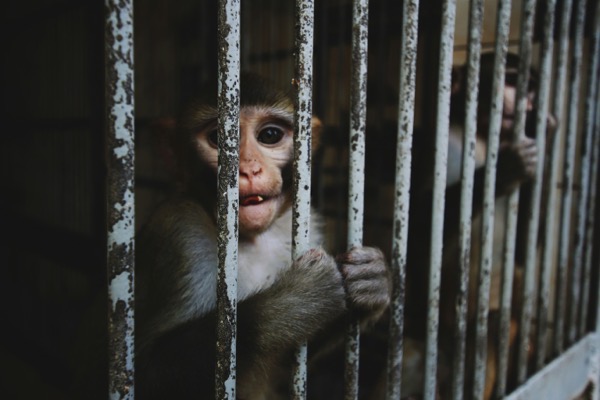
I don’t disagree with Malik or Siegler. But if you carry the captured analogy further it makes one wonder if reaching the top doesn’t just turn you into just another zoo animal behind bars.
I wonder if they teach that in business school.Photo by Artem Bryzgalov on Unsplash
You can also find more of my writings on a variety of topics on Medium at this link, including in the publications Ellemeno and Rome. I can also be found on social media under my name as above.
-
Treading Through the Storms
Those blobs on weather radar maps that blanketed vast amounts of the U.S this past weekend felt not just predictive, but also somewhat defining. The traditional red and blue color schemes signaling rough weather almost hinted at our political and social divisions, reminding those that pay attention that Mother Nature doesn’t pick sides when she chooses to show her wrath.

And she’s tossing a torrent in this, our winter of discontent. Weather, politics, culture and technology all seem to be conspiring to obscure our view in a swirling tempest that chills to the bone, while boiling the blood.
We’ve all seen movies where folks get lost in winter terrain during a storm and can’t find their bearings. It feels like we’re all in that movie, or maybe it’s a stultified streaming series, given how it just keeps stringing us along and clogging up the queue, long after we’ve figured out the formula.
But this is a tortuous tempest. Minneapolis murders. Booting Bovino (or not?) Now US owned TikTok being more ruthless censoring than the Chinese. The gun nuts prematurely treading all over their cherished 2nd amendment, only to retreat after the muzzle blew up in their faces with the shots they just fired. Tim Cook continuing to debase himself and Apple by attending the Melania premiere at the White House. ICE here, there, and everywhere including the Winter Olympics. Consumer confidence hitting a 12-year low. The Doomsday Clock moving closer to midnight. Greenland. Venezuela. Canada. Europe. Iran.
Billy Joel in his heyday would have a rough time chronicling all that’s currently swirling in this winter’s winds for a new version of We Didn’t Start the Fire.
I’m not sure if we’ve reached a tipping point, but it feels like we’re closer to it than we have been since these idiots started shredding all of the life preservers and poking holes in the rowboats on their version of the Titanic. (Thanks for that reference J.D. Vance.)
They wanted to flood the zone with shit so that we couldn’t keep up. By and large they’ve succeeded to this point, but you can sense that the smell may be shifting. There’s chaos all over, but there’s just as much chaos in their inner sanctums as they try to trim sails to survive the storms they’ve created. Small victories add up. Take the wins when they happen and build on that.
It’s up to us to keep the pressure on, because if you’re relying on any of those lifeboats or life preservers (Congress, media, the business community) we’re all going to freeze before we go under with them.
It’s not going to happen overnight. There will be setbacks. It’s One Battle After Another. (Talk about a prescient film release.)
No one knows how this is going to end. No one knows when it’s going to end. No one knows what will be once it does end. But certainly it will end.
Rough weather still ahead. Uncharted waters in a storm. No horizon in sight.
Bundle up. Buckle up. Trust your own compass. Follow the lead of the good folks from Minneapolis causing good trouble. As my friend, David Todd McCarty says, Stand Your Ground.
(Photo by Viktor Mogilat on Unsplash)
You can also find more of my writings on a variety of topics on Medium at this link, including in the publications Ellemeno and Rome. I can also be found on social media under my name as above.
Skip to content

Life on the Wicked Stage: Act 3
Musings on life, the theatre, technology, culture and the occasional emu sighting
 Life on the Wicked Stage: Act 3