Sunday Morning Reading

Traveling through the crazy paying attention along the way

It’s been a fortnight since I’ve published one of these columns due to travel. So much has happened. The travel adventures to London and Memphis were great. The way the world continues to pull itself apart continues to not be, as witnessed by protests and a madman’s threats of troops in the streets followed me from Chicago to London to Memphis. You can shut off and shut down to enjoy new places and visit dear friends, but the insanity keeps getting more insane. So, Sunday Morning Reading is back at it this week, with a mix of politics, culture and a bit of tech. (Oh, yeah, Apple released new iPhones during all of that.) If you can’t feel the currents flowing together, you’re not paying attention.

On my travels my wife and I caught some theatre. Two plays by Shakespeare and the contemporary play Stereophonic. The two Shakespeares were one of his worst, Merry Wives of Windsor, and one of the best, Hamlet. We’re theatre rats and know the importance of the medium and certainly recognize the role writers in all mediums play in our lives, history, and culture. So too does a favorite writer of mine, David Todd McCarty. Check out his important piece The Reason You Need To Be Making Art Right Now. And if I may be so bold, the other Sunday Morning Reading links below demonstrate that to a tee.

NatashaMH reflects on free speech, punk rebellion and British satire in When Satire Was Safe. Great piece. I dare say, satire has never been safe even when tolerated. Plenty of fools can attest to that. Ask Yorick.

I mentioned there’d be politics and here’s a few links to some excellent context on just how damn familiar all of what we’re living through is. For those who bother to pay attention. First up is Mark Hertling’s Beware Today’s ‘Fire-Eaters’. If you don’t know that term, read the piece. You’ll recognize today’s fire-eaters in a second.

On a broader scale, take a look at Nikki McCann Ramirez’s interview with Mike Duncan in Are We Witnessing The Fall Of The American Empire? My short answer is yes. Here’s the money quote that should terrify us all:

So if we go this route, we’re going to have congresses, we’re going to have Supreme Courts, we’re going to have a President of the United States, there will be governors, there will be elections, it’s just what’s happening underneath that facade. The facade is never going to go away, it’s how tissue-thin the facade is.

Follow that up with George Packer’s America’s Zombie Democracy.

For a bit of recent history and context, check out The Story of DOGE, As Told By Federal Workers from a team of Wired writers led by Zoe Schiffer.

As I mentioned Apple released new iPhones last week. Om Malik seems quite taken with the new iPhone Air, although he has some concerns in Go Out & Get Some Air.

In this column and other posts I’ve been following Denny Henke’s journey to de-Apple himself in his tech life with a keen interest. I greatly admire his drive and his sharing of his efforts. Check out My Ongoing Effort To de-Apple the iPad.

And to bring this all back around, take a look at Neely’s Tucker’s sharing of a guest post by Patrick Hastings,  Nobody Would Edit Shakespeare, Right? Right? They have and they do. David Garrick wasn’t the first or the last. Throughout history we always look for the ways to make it easier to swallow tragic moments and unhappy endings. In the theatre and on the stages of our lives.

(The image above is of David Garrick’s monument in Westminster Abbey, taken by me on my recent travels.

If you’re interested in just what the heck Sunday Morning Reading is all about you can read more about the origins of Sunday Morning Reading here. If you’d like more click on the Sunday Morning Reading link in the category column to check out what’s been shared on Sunday’s past. You can also find more of my writings on Medium at this link, including in the publications Ellemeno and Rome.

iPhone and OS 26 Reviews Off The Beaten Track

Looking for some new voices.

New iPhones have been released, are being delivered, and I assume being used. Some of the usual sources have already reviewed the devices and the new operating systems and I’m guessing you’ve seen many of those.

Insider explains who the iPhone 17 Air is for.

I’m enjoying reading reviews that are sort of off of the beaten track, assuming the Internet has one of those, and thought I’d link to a few of them.

First up Jason McFadden of Jason Journals talks about his experiences and impressions after installing OS 26 on several older devices. Good read.

Next up is Sebastian de With’s look at the iPhone 17 Pro cameras. Sebastian is one of the developers of the team Lux that developed the Halide camera app for the iPhone.

Olivia Lipski writing for Good HouseKeeping says I’m a Tech Reporter and a Mom. Here’s My Honest Review of the iPhone Air.

And finally Rakhim Davlekali has written a review of macOS in reverse starting with the now current Tahoe and going backwards through time. Benjamin Button Reviews macOS is worth a read for a few laughs.

I still think it’s early for any real judgements to be made about the new devices and new operating systems. But the links above are worth a look.

You can also find more of my writings on a variety of topics on Medium at this link, including in the publications Ellemeno and Rome. I can also be found on social media under my name as above.

OS 26 First Impressions

Early thoughts on OS 26 versions

Bubbles. My grandkids love bubbles. It’s a kid’s delight. Apparently bubbles also delight some Apple designers. My first impression of the look of iOS 26 on the iPhone was bubbles.

PXL 20250916 124836790.

I watched the OS 26 round of operating system betas over the summer as things evolved and have now installed the first release on all my devices. I’ve seen and heard the reactions so I was reasonably prepared for what would happen once the updates occurred. These are some first impressions after taking a look.

Liquid Glass

I’m not putting down bubbles. Bubbles are fun, whimsical, and joyful. But my overwhelming impression on the iPhone 16 Pro with iOS 26 installed was that the Liquid Glass design language, (that supposedly isn’t a design language,) felt very bubbly and child-like. To my eye I associate it more with bubbles than I do glass, liquid or not.

I also thinks Liquid Glass looks and feels better on the iPad Pro than it does on the iPhone. There’s more space for the chunkier, bubblier UI elements to float around. By and large things look cleaner on the iPad.

On the Mac, Apple didn’t go quite as far with Liquid Glass as they did with the iPhone and iPad regarding transparency and bubbly things, but there is still a more cartoonish feel to macOS 26 than the previous version. I think most of that is due to the rounded corners, rounded buttons and tab bars. I will say in this early going, I miss what I felt was a cleaner design in Sequoia on the Mac than what I see in this early going with Tahoe.

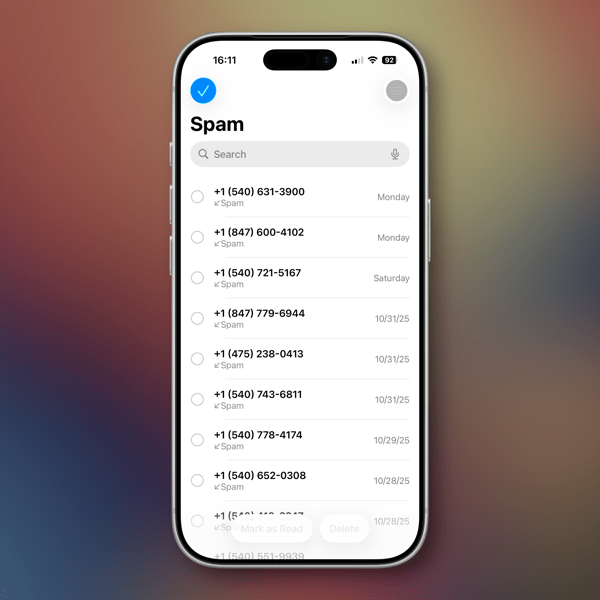
Bubbles are also messy things. Messier than glass in solid form certainly. Perhaps applying liquid properties to this glass like interface provides a license to keep things messier. That’s certainly true in some cases on the iPhone. For example, in the Phone app the reflective (or is it refractive) qualities around the buttons make it feel like light is leaking through a misapplied sticker than I think was the intent.

New Shareshot.

On both the iPad and the iPhone you’ll have to be careful what you choose for a wallpaper, because that same light leaking through means photos that have many colors or light contrasts within them appear more distracting than pleasing. (I like to use my own photography for wallpapers).

New Shareshot.

The issues of legibility have been discussed quite a bit over the summer, and I don’t think Apple has a complete solution for that yet when it comes to complex backgrounds, other than seemingly to force users to make simpler choices with wallpaper backgrounds. In early use, I think what we see on iPhone and iPad completely renders useless the statement of letting your content shine through. It might bleed through, but if it shines it does so in a distracting manner.

Here’s an example of one of my Home Screens that I think makes things look more bubbly than Liquid Glassy, especially in the upper two rows of folder icons.

New Shareshot.

Alan Dye, the VP of Human Interface Design, the Apple guy who spearheaded this UI change, is quoted as saying that Liquid Glass is “the foundation for new experiences in the future.” All well and good when you have a fuller view of the future as one assumes he would. But for those looking at their devices today, that means as much or as little as any tech promise or vision that have been dropped on us these last few years.

Liquid Design, in my very early looks is not to my taste. It may be to yours. the good news is that everything still appears to be functional. But to me, it’s a child-like appliqué on sophisticated devices that seem to beg for something more mature. I’m sure Liquid Glass will evolve, but until it does, I don’t think these bubbles will be popping soon.

Other Changes

I haven’t explored many of the new features of any of these new operating systems, only attempting to get things up and running. Most things appear to be running well.

A few changes I like include:

I prefer this iteration of the Photos app in iOS

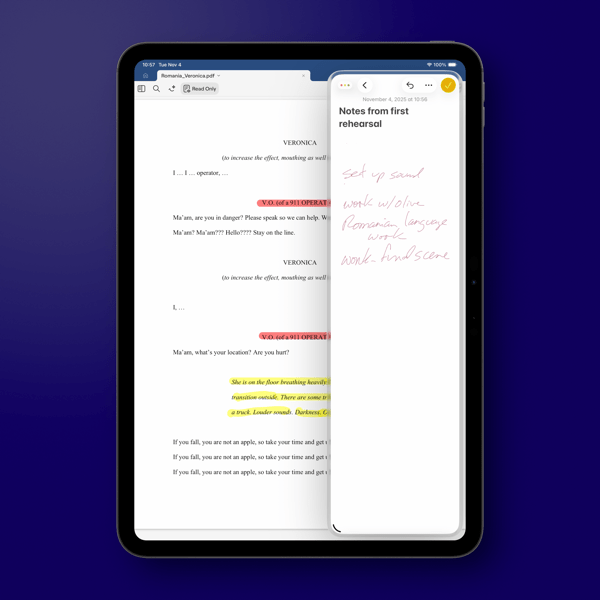
I like the big multi-tasking changes for iPad and look forward to working with them more, although count me as one who will miss Slide Over. It was handy in my work in rehearsals.

I like the new Trash Can icon on the Mac. That’s the kind of whimsy I can support.

CleanShot 2025-09-16 at 07.18.24@2x.

I love the wrist flick gesture on the Apple Watch.

Things I’m not a fan of:

On the Mac I miss the Shortcuts item in the menu bar. Yes, you can add one, but instead of getting a straight drop down of clickable Shortcuts, it now opens a new window that requires not only the selection of the Shortcut you want to execute, but another separate action to run the Shortcut. Adding clicks isn’t much of a shortcut to me.  I see where Apple is going with this, trying to move things out of the Menu Bar into the Control Center. That’s going to require developers to make that move successful.

CleanShot 2025-09-16 at 10.04.19@2x.

I’m not a fan of some of Apple’s redesigned icons.

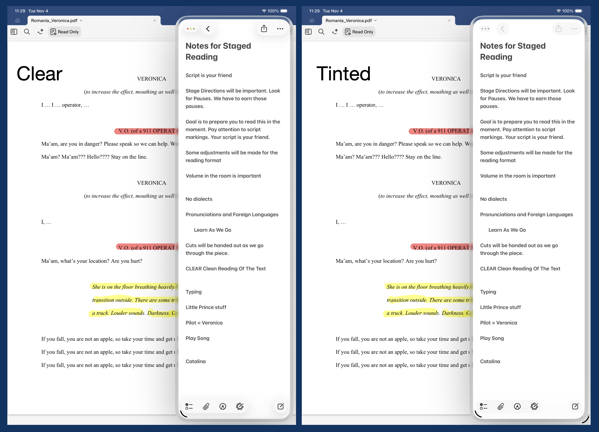
I tried out the Tinting feature for icons. I could see myself using this, if the feature didn’t tint widgets. What’s the point of a tinted Photos widget?

New Shareshot.

Some things I’m on the fence about:

I’ve previously used independent apps Bartender and Ice to control the large number of Menu Bar icons I like to have available. Both are currently in beta so I’m testing out Apple’s  feature to hide the Menu Bar until things change on those fronts. Simply put, that means the Menu Bar disappears until I hover over or click on it, revealing the icons. In using this feature when windows are at the top of the screen, Menu Commands sometimes disappear requiring some window rearrangement. This doesn’t happen consistently, so I’m guessing it’s a bug. I’m not sold on this in the early going but I’m giving it a try.

I’ve been using Raycast as an application and Shortcut launcher, along with some of its other features. I’m giving Apple’s new Spotlight features a try including the long overdue Clipboard Manager. This will require some muscle memory retraining, and it might mean leaving Raycast behind. It would be easier to do so if that Clipboard Manager copied across devices.

It’s early going. For me, as well as these new operating systems. I’ll discover more as I go along. I’m hoping the evolutionary pace for this software from Apple and most certainly developers will come close to matching mine in the days to come. I’m guessing it’s going to be sometime in 2026 before we can really evaluate what’s what in these OS 25 releases.

You can also find more of my writings on a variety of topics on Medium at this link, including in the publications Ellemeno and Rome. I can also be found on social media under my name as above.
EmptyWheel on Artificial Intelligence

Worth your time

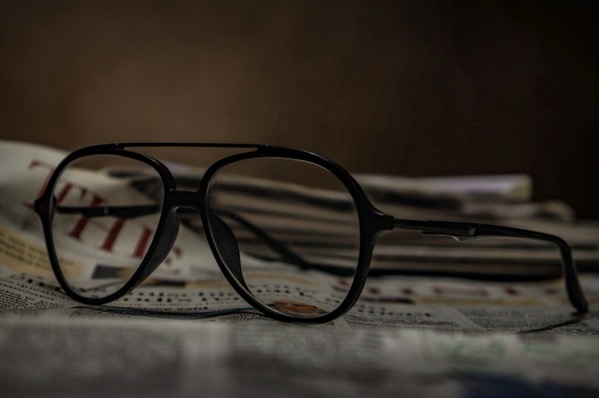
I highlighted the excellent 4-part series What We Talk About When We Talk About AI by EmptyWheel in the most recent Sunday Morning Reading column. I’m linking to it again, because it is not only excellent in scope and content, but also depth and context that will be worth referring to as we continue to plunge, or be plunged, into a world increasingly confounded and defined by AI.

Peter herrmann 9_fk2tp kla unsplash.

As I said, it’s a four part series. Here are links to each piece:

A NORMAL PERSON’S EXPLAINER ON WHAT GENERATIVE AI IS AND DOES

THE OTHER HALF OF THE AI RELATIONSHIP

PROTEINS, FACTORIES, AND WICKED SOLUTIONS

LLMS ARE LEAD

Repeating for my own emphasis something I’m saying lately, the pendulum of opinion about AI is swinging widely of late. The more ubiquitous it becomes the more we seeing opinions shift. Sometimes away from using it, but also seeing some who have been negative about using AI, reevaluating it as well.

That all seems natural to me given where we are with this new technology. Essentially in its infancy. A well funded infancy perhaps, but still teething, and shitting the bed on occasion.

Bookmark this series or save it where you will. I have a feeling it will be essential context in the short and long terms of this era we’re in.

(Image from Peter Herrman on Unsplash.)

You can also find more of my writings on a variety of topics on Medium at this link, including in the publications Ellemeno and Rome. I can also be found on social media under my name as above. 

Things Apple Won’t Fix In The Next Round of OS 26 Updates

I’d bet money these issues persist after new OS releases

Apple is announcing new iPhones, Apple Watches and possibly other things today. They’ll also announce the release date for the operating systems for all of those new devices and previous generations already in use. All of the focus is going to be on everything new, improved, changed and Liquid Glassed.

55b31eb4ba867b00263c62f538280311 XL.

I’m sure I’ll write about some of that down the road. For today I’m writing about the things I’m thinking Apple won’t address in any of the new operating systems. These are lingering issues that in some cases have not been corrected over the life of multiple operating systems. As much as I get excited about a new software release I remain frustrated year after year when Apple steps forward while dragging its feet on correcting existing problems.

Believe me, I get that Apple has created such a large ecosystem that it is impossible to pay attention to every detail and correct every mistake. I get it, but I don’t sympathize with it. Introducing new operating systems pumped out on what seems like an impossible to meet annual cycle creates other issues that need to be addressed and it is apparently too easy to just let the older ones go unattended. And from what I’ve seen from developers I follow, there are going to be a host of new issues that are going to need to be resolved over the next year. Or longer. The longer you let an existing issue hang around without attention, the more the “control the whole widget” promises seem not quite in control.

Certainly it’s a question of priorities. How the priorities are set makes me question the priorities of those that set them.

Some of these issues I’ve highlighted before, others I have not. Here are a few that continue my questioning of Apple’s priorities. I’m sure there are some that others experience that fall into the same category of hoping Apple pays attention to them someday.

Syncing

I’ve seen a decrease in syncing issues with iCloud in general. That’s a good thing. But Apple still insists on syncing Photos on its own schedule. Whether it’s battery life optimization or system optimization the delay is never optimized for the user experience.

Shared Reminder Notifications

I’ve written about this before. The fact that this one hasn’t been corrected since Shared Reminders became a thing undercuts all of the very good work Apple has done with the Reminders app in general.

Bluetooth Weirdness

I don’t know how else to describe this other than it’s just weird. There are times when Bluetooth connectivity works as designed with my AirPods and other peripherals. There are times when things just go bonkers especially with AirPods. Things will work as designed for days on end, then they won’t. AirPods switch between devices as designed, but then stop doing so. Adaptive Listening will work well sometimes and sometimes not. Connectivity with my car works well and then it doesn’t. My car isn’t smart by any stretch of the imagination and gets no software updates so it makes sense to me that it’s a Bluetooth issue on the iPhone. Note that it happens at random times unrelated to iOS updates or those mysterious AirPod firmware updates. The Magic Trackpad works 98% of the time. Then not. It’s weird.

Shortcuts

It’s become either a legend or a joke that every time Apple releases a new update (full release or point release) something goes wrong with Shortcuts. Either way it’s a problem for “the future of automation.” I particularly love it when a Shortcut just hangs with no indication that there’s a problem after working well for days on end. This inconsistent problem is consistent.

The App Store

Apple’s biggest retail outlet is the slowest loading and buggiest piece of software it has ever designed. It’s also designed abysmally.

Focus Modes

I use very few Focus Modes. I do not share them between devices. Sometimes they work. Sometimes they don’t. I’ve never set a Sleep Focus on my iMac. Yet one mysteriously appears at random during the day about twice a month. The Focus I’ve set for listening to Podcasts inconsistently fails to kick in.

Mail Rules

I think Apple has just given up on Mail Rules because the ones I’ve built just don’t work anymore.

Apple News

I enjoy that on my Mac I can choose to open an article in Safari or that I can open a webpage in Apple News. I don’t understand why that can’t happen on the iPhone.

Notification Summaries

I long ago turned Notification Summaries off because they were just confusing and caused more work than just dealing with the Notification. I recently turned them back on to check and see if there had been any improvement. There has not.

As I said, I don’t anticipate Apple fixing any of the above with all of the new ’26 releases. I’ve learned to work around them the same way I work around the passenger side backdoor on my car won’t open from the inside and I have to open it from the outside whenever I’ve got a back seat passenger. It’s a walk around workaround. It’s not ideal. And each time I have to do it I’m reminded just how imperfect things are and can be. I’m sure it will diminish the value of the car when I do decide to trade it in, but it’s already reduced the value of it in my mind.

I feel the same way when Apple doesn’t address longstanding issues that I and others have brought to their attention. Here’s hoping Apple addresses some of these issues. Here’s hunching they won’t.

You can also find more of my writings on a variety of topics on Medium at this link, including in the publications Ellemeno and Rome. I can also be found on social media under my name as above. 
Instagram Shows Up Very Late to the iPad Party

What’s the point and who cares?

The folks at Meta must have something up their sleeve. The reason I say that is they have finally, after all of these years released an iPad version of the app, long after most folks just figured it would never happen. Other than speculating on what might be behind the late to the party move, at this point it begs the question, Who cares?

Reels with Comments 16_9.

I’m sure plenty do care. I’m not one of them. Instagram is one of a few apps that I begrudgingly use. Begrudgingly because I hate it. I use it because my family on all sides continues to do so and it’s a way to keep up with grandkids, nieces, nephews, and other family news. But I honestly despise that I have to. Believe me I’ve tried to wean them off onto other apps and services, but it never sticks.

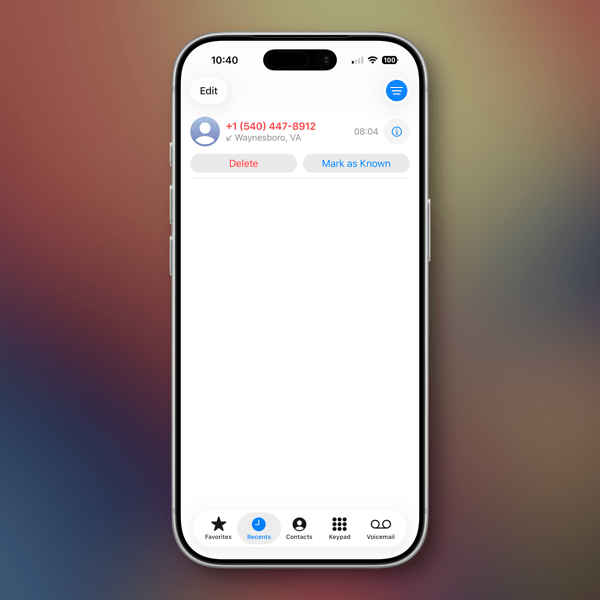
Every time I do open Instagram I have to block somewhere between 5 and 10 spam accounts (too often porn or ridiculous come ons.) And of course the algorithm doesn’t show me what I want to see, but what it wants me to see. There’s even an increased sense of desperation from both Instagram and Facebook sending out notifications telling me someone replied, is waiting for my reply, or commented on something I haven’t seen yet. It’s like begging in the street. Apologies to those who might actually need to do so.

Sure I could turn off the notifications, but sadly, that’s the least worst way to use the app to keep up with family happenings.

I’d say that since it took 15 years for Meta to finally roll this out that perhaps the adolescents in charge finally are growing up. But then, there are those porn accounts that pop up with the frequency like prepubescent zits.

I won’t be putting it on my iPad. It’s troubling enough that I still have it on my iPhone. And as I watch the over excited coverage rolling in, I haven’t seen any image of the iPad version that makes it look the least bit appealing. It’s like Meta didn’t really care based on what I’ve seen so far.

So, Instagram is on the iPad. What’s the point and who cares?

You can also find more of my writings on a variety of topics on Medium at this link, including in the publications Ellemeno and Rome. I can also be found on social media under my name as above. 
Blood Glucose Monitoring on the Apple Watch Is Probably A Long Way Off

The annual hope and hype cycle

Every year as we near Apple’s iPhone and Apple Watch announcements rumors circulate and recirculate about Apple including a blood glucose monitor for the Apple Watch. It would be great if that happens someday. In my view it’s probably a lot further off than most of those hoping it happens want it to be. Here’s why I think that.

I’m a Type 2 diabetic. Checking my blood sugars has been a part of my life for 14 years or so. I’m painfully familiar with the prick your finger method and relied on it until a new endocrinologist prescribed a Dexcom G6 sensor. I’m now using a Dexcom G7 sensor. I don’t use an automatic insulin pump, just the sensors for monitoring via my iPhone and Apple Watch. I treat my condition with injected medication, both insulin and GLP-1.

The Dexcom sensors (both generations) were indeed a plus in my life as they provided a better way of monitoring, allowing me to better gauge diet and exercise, which will always be the biggest part of any diabetic’s regime.

But neither Dexcom model was a fire and forget it solution. There are times when I have to check my blood sugar with a finger prick because there are so many variables that can affect your glucose levels. The Dexcom system does provide a method to calibrate and recalibrate based on actual readings from a finger prick. I experience periods when I don’t need to recalibrate often and periods when I do.

If I’m traveling for a more than a day or so I have to pack my kit for finger pricks, because travel can be one of those variables. An inadvertent bump of the sensor on my arm can throw readings off for the remaining life of that sensor. (You have to change to a new sensor every 10 days.) AND to be frank, the tech is still far from perfect. Sensors fail occasionally and, as is the case with all tech that fails, it happens at the most inappropriate time.

Dexcom’s sensors are classified as a minimally invasive medical device. The device inserts a small filament under the skin, and yes it feels like a small needle insertion. That filament takes its reading from the interstitial fluid between cells. It does not read directly from the bloodstream. The device is held on by an adhesive patch.

When Dexcom introduced its Apple Watch app it was a decided monitoring improvement over the iPhone App which I viewed via a widget on my iPhone Home Screen. The iPhone widget far too frequently needed a touch of the screen which opened the app to update the reading.

The Apple Watch app offers a complication that displays data more consistently, needing less frequent touches to refresh the readings. (The complication is visible in the photo above showing a reading of 157.) That said, the Apple Watch tends to disconnect too easily from the sensor, defaulting back to displaying readings from the iPhone when that occurs.

I also find that the Apple Watch app reading is more current than what the iPhone is showing, but you do still need the iPhone app to communicate readings with your endocrinologist.

In some instances I’ll need to reboot both devices to reconnect things up on both my iPhone and Apple Watch. Dexcom technicians have told me these disconnections have to do with Bluetooth connection issues and are subject to the same vagaries and variables that exist with many other Bluetooth connections. I also need to be aware of which arm I have the sensor attached. I wear my Apple Watch on my left arm and if the sensor is on my right arm there will be more frequent disconnections. I don’t sleep with my Apple Watch on, so waking in the morning requires a waiting period for the watch app to reconnect.

The goal behind the push to include blood glucose monitoring on an Apple Watch (or any other smart device) is obviously to cut down on the need for finger pricks and possibly the use of minimal invasive medical devices. But also, in theory an on device sensor communicating directly with watchOS should show readings more consistently and be much less subject to the vagaries of Bluetooth connectivity.

I certainly can’t prejudge any new system or technology that hasn’t surfaced yet. Certainly I’m one who hopes Apple or some other company can eventually tackle this issue and provide a workable solution. That said, convenient as this annual rumor always seems to be, I believe blood glucose monitoring on the Apple Watch is a lot further off than most hope or think it might be. I’m also reasonably sure that finger pricks will still be needed if for no other reason than to calibrate sensor readings with actual blood glucose levels.

You can also find more of my writings on a variety of topics on Medium at this link, including in the publications Ellemeno and Rome. I can also be found on social media under my name as above. 

AI Smoothing The Rise of Fascism

The proliferation of greater fools

This a quick link to a great piece by David Todd McCarty called The AI Ponzi Scheme And The Greater Fool. Go read it.

Annie spratt JcIPxdGuE_Y unsplash.

Although the piece is richer and deeper than the point I’m singling out, McCarty ties the proliferation of Artificial Intelligence to rise of fascism, neatly summed up by this quote from the piece:

“Once we get to a point where nothing is trustworthy, an authoritarian regime is free to lie with impunity.”

I concur.

I will also go a bit further and say we’ve already reached that point. It’s how we handle it now that we’re here that matters.

Again, go read the piece.

Image from Annie Spratt on Unsplash.

Sunday Morning Reading

The ant hill of humanity

Crazy travel rhythms this summer. Spending time at the lake this weekend. The good thing about lake time is there’s time to do some reading. Here’s some good stuff I stumbled onto, worth sharing for this week’s edition of Sunday Morning Reading.  Quite a bit revolving around Artificial Intelligence and other mind games. There’s also ants.

For some inexplicable reason defining what it means to be an American has actually become a chore these days. It shouldn’t be. Kieran Healy has written a piece simply titled American that recounts his thoughts and feelings on becoming an American citizen. Well worth your time, espeically in these crazy times.

“Memory isn’t linear; it’s relational.” That’s the thought NatashaMH leaves us with in her piece The Mind’s Mischief. The mind is indeed a curious thing.

Matteo Wong says the AI Doomers Are Getting Doomier. I don’t know about you, but if we’re all doomed at the hands of AI (does AI have hands?) human intelligence never really advanced as far as I thought it did. Or maybe we just hit the ceiling.

Speaking of AI doom, Charlie Warzel wonders why one of the impacts of AI it to make us feel like we’re losing it in  AI Is A Mass-Delusion Event. I get the points and they’re well made. Referring back to my comment from the previous entry, if we’re such easy marks for this kind of delusion… well…we are such easy marks.

David Todd McCarty argues why we should resist AI with ecclesiastical fervor, especially those who create for a living. Check out The Moral Failure Of Using AI In Your Art.

Reece Rogers is marking yet another change brought about by AI. Take a look at The AI-Powered PDF Marks The End of An Era.

Barry Betchesky tells us that It Took Many Years And Billions of Dollars, But Microsoft Finally Invented A Calculator That Is Wrong Sometimes. You read that right. The money quote is:

“But now we have Microsoft apparently determining that ‘unpredictability’ was something that some number of its customers wanted in their calculators.”

Rounding out this collection of links on AI, is another article by NatashaMH where she says instead of Fearing the Machinery, Interrogate The Mindset. Excellent piece. The underlying current is something I’ve been thinking about a lot. We’re creating these machines in our own images. Or at least the images we imagine of ourselves. Humans are far too human, even when we look past or try to accelerate beyond our humanity.

One of the joys of spending time in the great outdoors is that it reminds you we’re not the only intelligent species on the planet. Although as the theme of this week’s reading has emerged, we might want to reevaluate that, just not with Microsoft’s math tools. On another front, in politics it’s certainly easy to argue for a reevaluation. Kate Knibbs takes a swipe at it in a look at how Government Staff Cuts Have Fueled An Ant-Smuggling Boom.

I told you there’d be ants.

If you’re interested in just what the heck Sunday Morning Reading is all about you can read more about the origins of Sunday Morning Reading here. If you’d like more click on the Sunday Morning Reading link in the category column to check out what’s been shared on Sunday’s past. You can also find more of my writings on Medium at this link, including in the publications Ellemeno and Rome.

Who Controls History If AI Is In The Mix

Time in a bottle of bits

One of the scariest things about this insane period we’re living through is the attempt by those in power to rewrite, alter, or just get rid of history they don’t like. Whether it’s banning books, changing curriculums, forcing the closures of libraries, or what museums can display, I find it a cowardly, yet effective way to hide heads in the sand, bury the sins of the past, and admit we’re actually ashamed of ourselves.

Peter herrmann 9_FK2Tp kLA unsplash.

I know this because I have lived this. My early education certainly tilted the American narrative towards the mythology of the Old South. It wasn’t until I left home, and got involved in the theatre that I discovered just how much I hadn’t learned, how much more I needed to, and how the future depends on the past, no matter how complicated it was.

Fortunately the information was there. It was up to me to do the work.

What happens when it’s not there? Or it’s wrong?

I find It hard to imagine that large chunks of the world’s history can be erased, growing up in an era when my access to it seemed to expand exponentially. But it’s been tried before. It’s succeeded with entire generations of populations. Now we’re facing the very real possibility of it happening again in this digital age with the aid of Artifical Intelligence.

There’s an interesting piece by Benji Edwards in Ars Technica about a college student who trained a small AI model that he called TimeCapsuleLLM on Victorian texts. During his experiments his time capsule spit out some actual history he didn’t know about real protests during the era. He checked into the info and the LLM was indeed accurate.

At first glance, that feels like a very positive AI story. Discovering lost history is a good thing. However, with the way I understand AI training it all depends on what data it’s trained on. That leaves things up to who controls the training data. Leave out, change or bias the historical record and…

Well, you can see the problem.

Elon Musk has already hinted at this kind of manipulation. I’m sure there are others thinking the same. They say history repeats itself. Actually history doesn’t. Humans do. History is just the record of the repetition. Humans just use newer and different tools to mold the past into something more comfortable. I may be mistaken, but I think history, in the long run, also proves that never really works out.

Correcting and rewriting history is not for the faint of heart. But when there is no heart, there’s a problem.

Time machines and time travel have always been fraught with danger in the history of science fiction. So has Artificial Intelligence. I’m reasonably sure we’re not smart enough to walk whatever fine lines might exist in a future when the past can be more easily manipulated. We haven’t been in the past when the erasing was harder. But I am dead certain we’re going to be facing this unreal reality.

Again.

Just with newer methods.

Without anything resembling Artficial Intelligence, we’ve managed to forget, alter, or set aside many of the horrible lessons of human history. Why should any new tool we create be any different? I’m sure these AI geeks think they can strip ego and emotion out of these robots they are building.

I doubt they will ever remove hubris.

(Image from Peter Herrman on Unsplash.)

You can also find more of my writings on a variety of topics on Medium at this link, including in the publications Ellemeno and Rome. I can also be found on social media under my name as above.