Collective Action Is Needed On A Larger Scale
There is a reasonably well organized effort for
a large economic boycott on February 28. The idea is not to buy anything on that day and hopefully make enough noise to create an impact.

I doubt it will have much effect.
We have to face facts.
There are far too many folks who are currently far too delighted with how things are going or far too delusional enough to think a day long protest will create enough impact to do anything but create noise. Noise is good. Signal is better.
To be clear, I’m not against protests. In fact I think there should be more of them. Pushback does help. Collective action helps more. In fact, I’d love to see a broad country wide general strike. Folks are angry, and in my humble opinion that anger unfortunately needs to heat up and boil over before anything has any prospect of prompting change. I don’t like to say that. I don’t like to think it. But it’s no longer a choice between the high road or low road. We’ve all been dragged into the gutter and like it or not we need to start fighting to get out of this stink.
So keep up the protests. I’m glad to see that there are more planned for other dates.

Keep organizing and showing up for in person protests. Especially at the district offices of cowardly congress critters who are taking orders from the top to stop doing town halls. But keep the pressure on
both the MAGAts
and the Dems. The former for their abject surrender and sucking up, the latter for pretending the old ways might still work. Joke’s on them all because they seem to be the only ones, besides the media, that think Congress actually matters any more than the Duma matters in Russia.
Think Bigger
I like to believe there are ways of thinking and acting bigger. This all might be pie-in-the-sky thinking, but it’s my brain and I like pie. So here are some thoughts.
Hit harder at companies like Amazon, Meta, Apple, Walmart, Target, newspapers, media, etc…
One way to do that is to
organize a day when everyone cancels their subscriptions, memberships, monthly plans, etc… But don’t plan to do it just for a day. Cancel them all on one day and plan to leave them canceled for a full month or longer.
Angry about the changes at NBC and MSNBC? Cancel your cable or streaming service. If you haven’t already, cancel your subscriptions to The Washington Post, The New York Times, The Los Angeles Times, or whatever state media publication that’s certainly not going to be giving you real news in the future.
Given the choice don’t cancel online. Take the time to make a phone call and do the deed. All of those calls are recorded. State your unhappiness clearly and why you’re canceling. Whatever AI service that summarizes those calls is sure to pick up on the negativity.
Cancel your home Internet. Use your phone. AT&T, Verizon, and T-Mobile can’t be any deeper in the pockets of the government than they have been for quite some time over a number of administrations, so there’s not much room for coercion or surrender left there.
Cancel your streaming services. Log off and don’t participate in corporate social media.
Again, all on the same day of action. Think you’ll be bored? Spend a month reading books. If you still have one, dust off that old Blu-Ray or DVD player and cue up any discs you have remaining. If you don’t have the discs check some out from the local library.
Pissed off at Google, Apple, Microsoft and other big tech companies? Take a trip to your local Best Buy or other gadget store and buy a relatively inexpensive external drive. Download all of what you have stored in the cloud and cancel your monthly cloud storage plans.
All on the same day.
There are more alternatives for your computing needs than those offered by the popular makers. I won’t go into that here as there are plenty of resources online to find them. Here’s
a link to one. Also, you want these companies to think there’s a reasonable chance for you to return someday. That’s the threat.
Why a month?
Some of these companies that have bent the knee to the Trump administration rely on something called MAU, or monthly active users. The metric tracks the number of unique users who engage with an app or service within a 30-day window. If enough folks dropped out or off for a month, it might move the noise needle closer to signal.
Often an action in and of itself is enough to make an impact. More often than not, it is the threat of that action happening again that matters more and motivates change.
Some other thoughts:
Put off big ticket purchases for a month. Buy only what is essential.
Write letters or postcards instead of texting and emailing.
Don’t file your taxes online. Send them the old fashioned way via the mail. Wait until the last day to file. The bump in postage will be a boon to the postal service. Yes, your return will come later. That would probably be unfair to the folks still remaining at the IRS, but turning noise into signal is what counts.
Surviving a Month
Plan ahead of time with friends and family and schedule visits to local restaurants, museums, libraries, theatres, art galleries, and shopping. It shouldn’t be that hard to fill up a month with activities that could help with withdrawal pains. It would certainly be a boon to local economies and probably be more than healthy for those who do so. Spring is coming, head outdoors when it warms up.
Purchase as many groceries and medications as you can in advance (those COVID scrounging muscles shouldn’t take much to reactivate.)
Yes, some of this would be harsh and actually be hard on some people. I get that. We sadly have become too conveniently connected in too many areas of our lives. There are folks who need a digital connection for medical services as an example.
The reality is that the dangerous fools running things at the moment assume we are so wed to our current connected lifestyles that we would never willingly divorce ourselves from that convenience. Challenge and push back on that assumption and it may create enough signal to have some effect.
Currently we’re allowing the bad guys to be on the offensive and change the rules to their liking. My thinking it’s time to show up and demonstrate that there’s a capability to at least make enough noise for longer than just a day here or there.
The CEOs that are capitulating in ways most find distasteful and disgraceful are scared shitless. Who knew such untold wealth would breed such cowardice. They are afraid of pressure from the top. They need to feel pressure from the bottom on their bottom line as well.
These are only the beginnings of harsher and harder times to come and those who can make important sacrifices should do so before they are forced upon us. Preferably in some sort of collective action.
Maybe the time to allow enough planning for this to be effective is whenever Jeff Bezos and Amazon plan their summer Prime Day special event. Typically that’s in July. I would imagine that if enough Prime customers canceled at some point prior to that event it would have some impact. Especially if there were planned in person protests in the streets at the same time.
As I said, this is all probably just some pie-in-the-sky thinking on my part. Even so, with a little planning we could certainly survive for a month or so. The bad guys are thinking big. We need to think bigger.
Besides, regardless of the impact, companies you disconnect from will come begging for you to return. If and when you do, they’ll welcome you with open arms. In some cases you might actually get a deal.
You can find more of my writings on a variety of topics on Medium at this link, including in the publications Ellemeno and Rome. I can also be found on social media under my name as above.





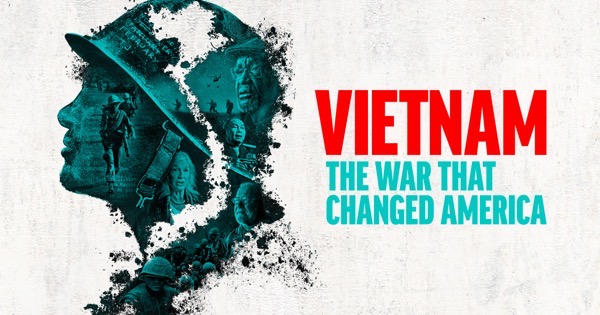 The documentary itself is excellent work. The six episodes splice together historical footage-some already famous, some new-with interviews from those who were actually there, on all sides of the conflict. We’ve seen similar story telling techniques in other historical documentaries. This time around we get to hear not just from Americans, but also from North Vietnamese and Viet Cong voices. These moments are certainly compelling, as are some of the stories of the journalists and other non-combatants involved.
Add to that what I’ll call the reunion factor. Each episode features a couple of individuals who served together to tell their stories, often with completely different views on the war and its aims. In the episode’s conclusion they are then reunited. It’s effective and at times emotional and effectively reveals the folly and tragedy of division.
As good as the series is at chronicling an inflection point in American and world history, what got me thinking was again witnessing scenes of anti-war protests. While I’ve seen many such scenes before, watching them through the prism of this contemporary moment of peril we’re trying to find our way through in the U.S left me curious and unsettled.
There’s no doubt that those anti-war protests had an impact on America culturally and politically. That tumultuous era created new alliances and divisions over root causes that we are still fighting over today. But as I watch those surging crowds of protesters, knowing how history often repeats and/or rhymes, I remind myself that was a different age. One without the organizing tools like social media and mobile communications that we have at our disposal now.
As I and many others anguish over the lack of leadership defying what is happening currently in Washington DC, I’m left wondering, given the tools we have at our disposal today, what it will take to effectively take advantage of those tools and galvanize, as was done then, to meet the challenges of today. Certainly the forces we’re now in contest with have bought and pillaged some of those services and learned how to use them more effectively than those in the reluctant opposition.
Perhaps we lost this round when most of us left Twitter to avoid the cesspool of Elon Musk’s making, instead of sticking around and forcing them to toss us off.
It took time in that era for anti-government pressure to come together and coalesce with enough momentum to bring change. And yes, it also took events like the murders of student protestors at Kent State, Martin Luther King, and Bobby Kennedy, not to mention the too many casualties of war.
Let’s hope we don’t need the time, or that type of violence, for leaders to emerge and spark enough outrage to bring a stop to the evil we now face. I’m not talking about leaders emerging from conventional political party structures. I’m talking about from the ground up. The tools are there. It should be easier to organize and get the word out with less effort than it was during the age of the War in Vietnam.
Here’s also hoping we have the courage, conviction, and most importantly the desire to do what is necessary when the time comes.
Because it’s coming.
You can find more of my writings on a variety of topics on Medium at
The documentary itself is excellent work. The six episodes splice together historical footage-some already famous, some new-with interviews from those who were actually there, on all sides of the conflict. We’ve seen similar story telling techniques in other historical documentaries. This time around we get to hear not just from Americans, but also from North Vietnamese and Viet Cong voices. These moments are certainly compelling, as are some of the stories of the journalists and other non-combatants involved.
Add to that what I’ll call the reunion factor. Each episode features a couple of individuals who served together to tell their stories, often with completely different views on the war and its aims. In the episode’s conclusion they are then reunited. It’s effective and at times emotional and effectively reveals the folly and tragedy of division.
As good as the series is at chronicling an inflection point in American and world history, what got me thinking was again witnessing scenes of anti-war protests. While I’ve seen many such scenes before, watching them through the prism of this contemporary moment of peril we’re trying to find our way through in the U.S left me curious and unsettled.
There’s no doubt that those anti-war protests had an impact on America culturally and politically. That tumultuous era created new alliances and divisions over root causes that we are still fighting over today. But as I watch those surging crowds of protesters, knowing how history often repeats and/or rhymes, I remind myself that was a different age. One without the organizing tools like social media and mobile communications that we have at our disposal now.
As I and many others anguish over the lack of leadership defying what is happening currently in Washington DC, I’m left wondering, given the tools we have at our disposal today, what it will take to effectively take advantage of those tools and galvanize, as was done then, to meet the challenges of today. Certainly the forces we’re now in contest with have bought and pillaged some of those services and learned how to use them more effectively than those in the reluctant opposition.
Perhaps we lost this round when most of us left Twitter to avoid the cesspool of Elon Musk’s making, instead of sticking around and forcing them to toss us off.
It took time in that era for anti-government pressure to come together and coalesce with enough momentum to bring change. And yes, it also took events like the murders of student protestors at Kent State, Martin Luther King, and Bobby Kennedy, not to mention the too many casualties of war.
Let’s hope we don’t need the time, or that type of violence, for leaders to emerge and spark enough outrage to bring a stop to the evil we now face. I’m not talking about leaders emerging from conventional political party structures. I’m talking about from the ground up. The tools are there. It should be easier to organize and get the word out with less effort than it was during the age of the War in Vietnam.
Here’s also hoping we have the courage, conviction, and most importantly the desire to do what is necessary when the time comes.
Because it’s coming.
You can find more of my writings on a variety of topics on Medium at