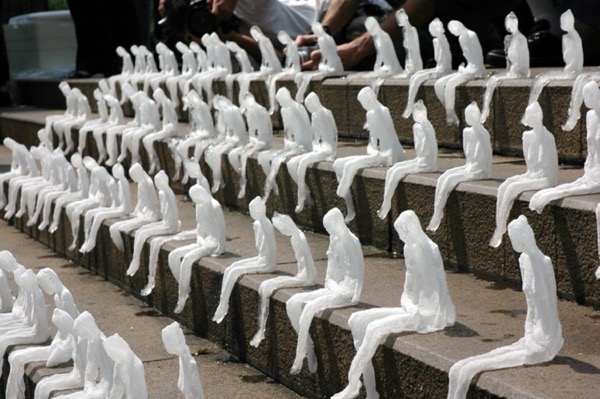
Life is indeed short and it makes sense to pay attention when things that remind us of that come back into focus when someone new discovers them. Néle Azevedo’s famous ice sculptures, known as “Minimum Moment”, seem to be making the rounds again recently and I thought I’d highlight them here. I’ve never seen them in person yet I’ve always been taken by every photograph I’ve seen of them.
The installation features small ice figures sitting on public steps around parts of the world begin melting almost as soon as they are set in place, reminding us our our short time here on this planet and the ephemeral nature of our place.
The photo above is from the 2005 installation “Minimum Moment” in São Paulo and photographed by Marcos Gorgatti. You can read more about it here.
You can find more of my writings on a variety of topics on Medium at this link, including in the publications Ellemeno and Rome.I can also be found on social media under my name as above.
This post is linking to her farewell column in The Observer, the Sunday sister paper to The Guardian and The Guardian Weekly papers in Britain. Like all media outlets it’s been through some things in recent years. The Observer was purchased late in 2024 and like all such transactions that prompted staff layoffs and terminations, including Carole Cadwalladr and a number of her colleagues. You can read all about that on in her post Fuckty bye in How To Survive The Broligarchy. I suggest you do that as well as read her final Observer column It’s Not Too Late To Stop Trump and The Tech Broligarchy From Controlling Our Lives, But We Must Act Now.
I happen to believe she’s fighting the good fight. That last column provides some excellent behind the scenes during her preparation and anxiety leading up to that recent TED speech, as well as some reactions she received while at the conference, including an interchange between her and OpenAI’s Sam Altman, in addition to making the important case she continues to make.
She’s paying attention and raising alarm bells. We should too. She’s standing in the way. We should too.
You can find more of my writings on a variety of topics on Medium at this link, including in the publications Ellemeno and Rome.I can also be found on social media under my name as above.
Apple Store takes center stage in this hostage drama.
I’m guessing iHostage is a flick you’ll never see on Apple TV+ even though it features the Amsterdam Apple Store as a prominent character in the story. iHostage, directed by Bobby Boerman is currently streaming on Netflix and is based on an actual hostage situation that took place at the Apple Store in Leidseplein in 2022.
As far as hostage films go it isn’t bad nor is it great. These things typically only end one way, and of course if you have any familiarity (I did not) with the actual events you already know how things turn out in this case. But as to the entertainment value there’s good fun to be had as the director and his cameras look for every conceivable angle to shoot within and without the Apple Store. AirPods play an important role early on. Also interesting is watching some of the hostages use an Apple Watch to check whether or not another was having a heart attack. (For the record, an Apple Watch can’t detect underlying causes of a heart attack, but it can detect irregular rhythms.)
The acting, visuals, and direction are generally good, keeping the tension going as we cut back and forth between the hostage taker and his primary hostage, and those on the police side trying to bring about an end to the event. But again, these stories have a formula about them that to some extent just requires a plug-and-play approach with all the necessary elements of filmmaking. I’d say everyone pulls their job off well with the sort of cleanliness you’d expect in an Apple Store. In the end it’s all a bit too clean.
You can read about the true story behind the movie here and watch the trailer below. I’d say it’s a fun watch if this kind of story is your kind of thing, or you just want to tour an Apple Store in Amsterdam.
You can find more of my writings on a variety of topics on Medium at this link, including in the publications Ellemeno and Rome.I can also be found on social media under my name as above.
It’s another Sunday. At a bare minimum it’s time for a little Sunday Morning Reading. There’s more politics than I’d like to shake any sticks at dominating my reading these days, so apologies if that turns you off. I just don’t think we can turn off or tune out to what’s happening. Like it or not (I don’t) we’re living through an epochal moment in world history demonstrating how little we regard human history. I emphasize “living through” because while we’re bearing witness, it is happening to us and whatever it evolves or devolves into will affect all who come after.
I happen to be one who believes that Trump is the ugly face of the chaos descending around us, propped up by bigger, deeper and darker forces using him as the fool too many fools easily fall for. Jonathan Mahler has an excellent piece that delves a bit into this called How The G.O.P. Fell In Love With Putin’s Russia. Excellent context that should not be ignored.
Speaking of formalist delusions, who knew some tech bros could declare you dead and wipe you off the books, or at least the books that matter when it comes to navigating life in today’s world. Hannah Natanson, Lisa Rein, and Meryl Kornfield take a look at how the Trump Administration Overrode Social Security Staff To List Immigrants As Dead.
Joan Westenberg calls us America, The Isolated. I can’t argue with her points. Though I will refer you back to Jonathan Mahler’s piece above for wider aperture. The deeper context is that the lens we’ve viewed the world, contained and restrained by borders, has never been the view for the forces now moving so rapidly.
Mathew Ingram has penned two terrific posts that address what will certainly become a part of our digital lives as we move forward. Be Careful What You Post On Social Media. They Are Listening is the first post. He’s expanded that with Part 2 as the pace of social media monitoring is sure to be picking up.
Perhaps all of this feels too big or too overwhelming to contemplate in the helter-skelter of our daily lives. But it is beginning to have impacts, big and small. Take a look at Scott McNulty’s very funny run-in with a construction worker at his CVS. While CVS – Construction Versus Scott is about his adventures at his local pharmacy under renovation, there’s a comedy nugget in there that demonstrates how those paying attention are actually paying attention.
My initial reaction to any illness in our children is immediate quarantine and a call to the WHO (I deleted the CDC’s number from my address book because suddenly they just kept telling me to get more vitamin A).
To close out this week, take a look at My Open Letter to Gen Z from NatashaMH. At “a bare minimum,” it’s worth a read to remind us that what we remember and hang on to from “back in the day” is now in a daily collision with what comes tomorrow. Easier to avoid the damage from those collisions perhaps if you acknowledge the maps are constantly changing.
If you’re interested in just what the heck Sunday Morning Reading is all about you can read more about the origins of Sunday Morning Reading here. You can also find more of my writings on Medium at this link, including in the publications Ellemeno and Rome.
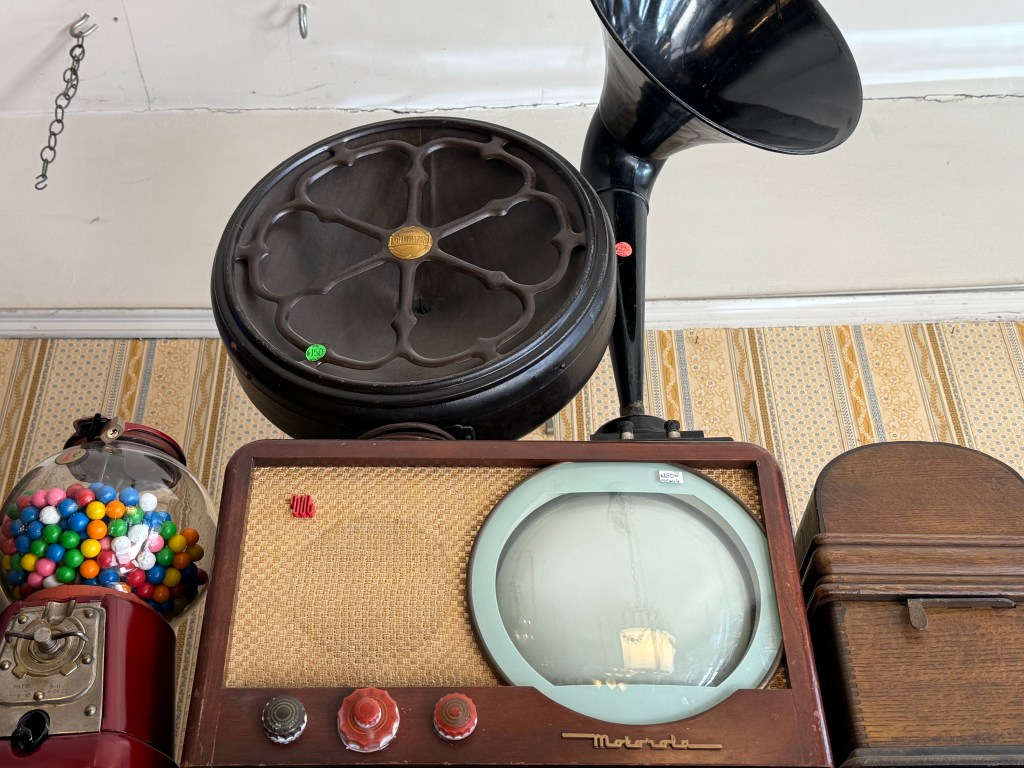
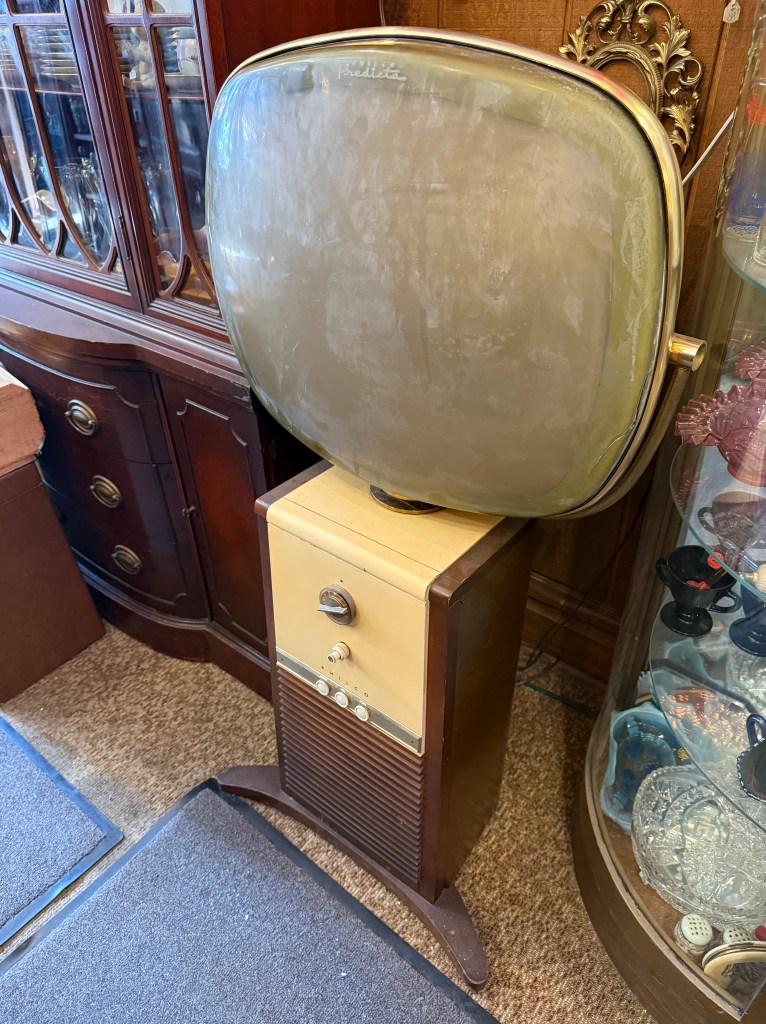
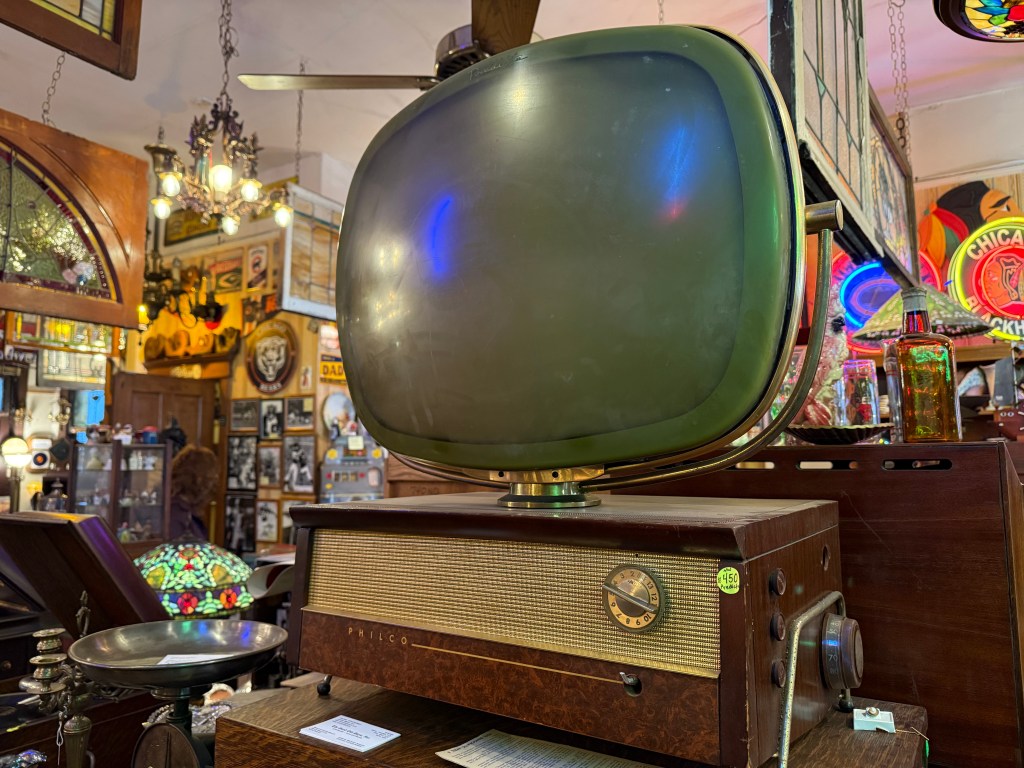
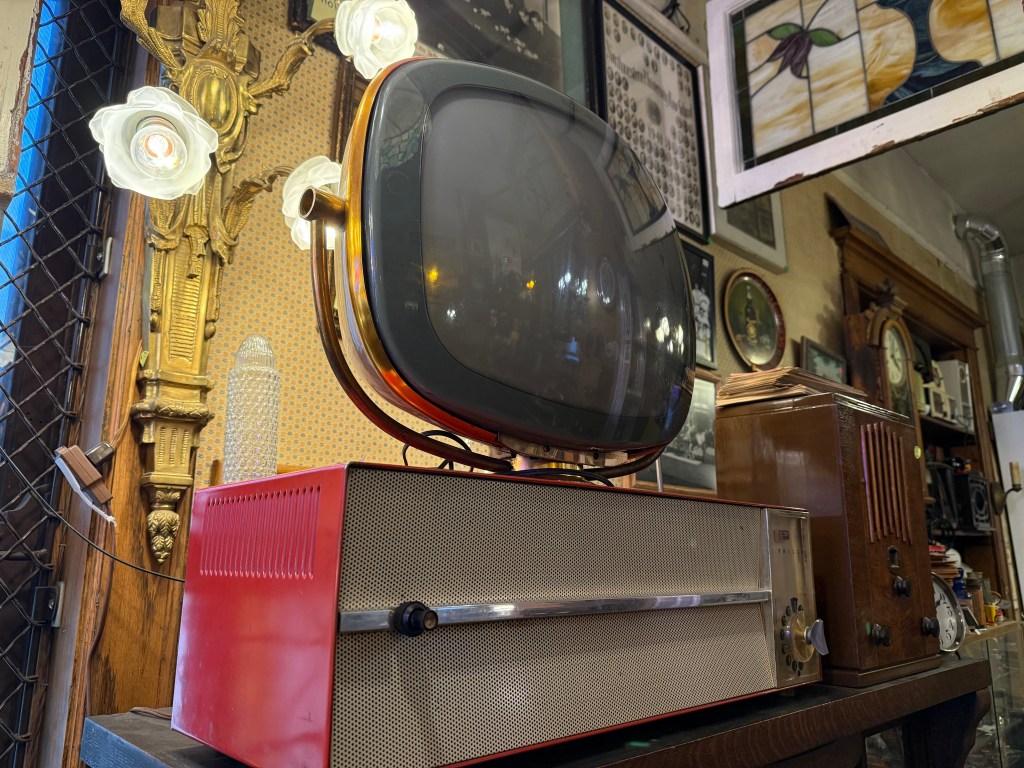
We separated ourselves from our screens this past weekend and did a little antique shop browsing. The thing is we stumbled into a number of vintage screens that would qualify as sci-fi nostalgia these days.
These early televisions are from the companies including Motorola, Admiral, and Philco.
Fun times.
You can find more of my writings on a variety of topics on Medium at this link, including in the publications Ellemeno and Rome.I can also be found on social media under my name as above.
A bit of politics, a bit of tech, and a bit of hope and coping. All tariff free.
This week’s Sunday Morning Reading is tariff free. As usual, even in unusual times there’s some politics, some tech, and things pulled from the cultural file. Enjoy.
For some good context that gets lost in all of what’s washing over us, Jill Lapore takes a look at The Failed Ideas That Drive Elon Musk. Everything old is new again is the saying, even bad things.
Trying to pin down any real coherent details or point of view about what’s happening in the economy is a fool’s game played by the foolish at this point. But context does help. Hamilton Nolan thinks the recent foolish moves will eventually make the rich poorer. I agree. Take a look at what he calls “a deep, dark ocean of harm” in Divergence From The Interests of Capital.
Like the political world, the tech world is seeing its myths and myth makers exposed for the frauds they often are with new layers of the onion peeled back daily. Joanna Stern in the Wall Street Journal takes a look the erosion of trust in her piece, Apple and Amazon Promised Us Revolutionary AI. We’re Still Waiting. It’s a soft headline. Here closing line hits harder, “Where’s the trust?”
Lest we forget that our culture and society is one weird, yet overly predictable wrestling match over how to, or not to control our animal impulses, comes word that Hooters is filing for bankruptcy. Annie Joy Williams takes a look at The End of Hooters.
We’re all staring at everything we’re facing hoping, perhaps against hope, that none of it will lead to any permanent damage, yet teetering on the verge of grief because we recognize our personal impermanence means it might be permanent enough in our short respective lifetimes. That strikes home when someone brave talks about a moment of personal grief. Check out Death Comes Gently Into The Night by NatashaMH.
If you’re interested in just what the heck Sunday Morning Reading is all about you can read more about the origins of Sunday Morning Reading here. You can also find more of my writings on Medium at this link, including in the publications Ellemeno and Rome.
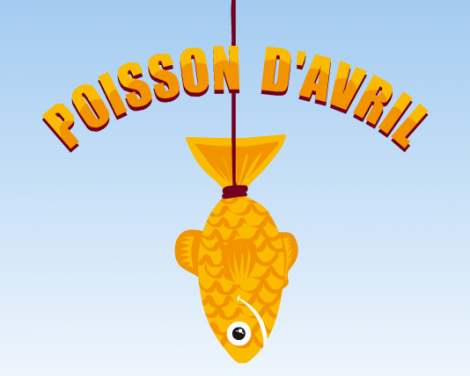
Damnit. I miss the fun of April Fools’ Day. Those days are apparently gone forever and I miss them.
It certainly seems like it was a more innocent time, because while some would get offended, they were usually in the minority. Certianly compared to those who got a good joke and recognized a good leg pull for what it was and not some violation of personal space.
I recall being fooled and doing some fooling of my own. I recall entire websites publishing April Fools’ Day issues. (I worked for one that did.) And I recall the warnings to not take things too seriously. But these days the fun has been stripped from that way of thinking. That kind of fun left the room long before the painful moments we face very day, many of which seem like a joke because they seem so unreal. Yet, real they are.
I guess the negative reactions started to take over when the Internet, home of more copycats than original copy, made the proliferation of pranks available to all including those who would do so for malicious reasons. Call it Internet gluttony. That joke is always on us, because while humans do enjoy a good laugh, we also seem to enjoy overdoing just about anything to the point of pointlessness.
Some say you lose your taste for the kind of hijinx April Fools’ Day would bring as you get older. I’ve certainly gotten older, my tastes in most things have certainly matured. But damnit, I haven’t lost that longing for a good prank.
And that’s no joke.
You can find more of my writings on a variety of topics on Medium at this link, including in the publications Ellemeno and Rome.I can also be found on social media under my name as above.
It’s only a matter of time before the Nazis currently running America into the ground recycle Degenerative Art as a naming convention. At this point I’m not sure what’s holding them back giving their predilection for attacking anything other than the privileged white bread culture they seem to love. Although I doubt many of them actually eat white bread.
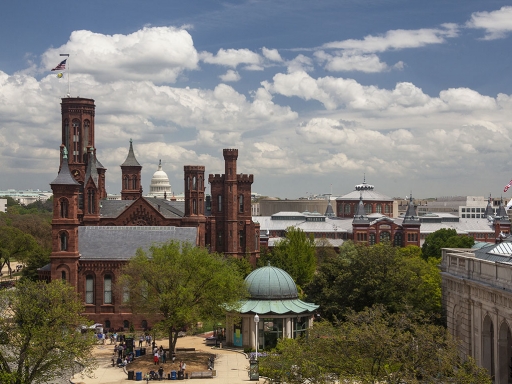
Doing his worst to try and remake culture and history into something most of the world has left behind, Trump yesterday issued another of his plans. This time it’s directed at the Smithsonian Institution proclaiming that there has been a concerted and widespread effort to replace the “objective facts” of American History with a “distorted narrative.” Oh, yeah, it’s now called “improper ideology.”
The Nazis played a similar game with history and culture, labeling some of the art they didn’t like, or that didn’t support the world they wanted to create, as “degenerate art.” Funny though that those same goons sent troops all over Europe to snatch and grab quite a bit of that artwork for their own personal use. Go ahead, tell me who were the real degenerates.
As I said, I’m not sure why the cowards in this administration haven’t stolen the “degenerate art” label for themselves, while they are stealing everything else. I’m sure there’s a Signal thread running around discussing it somewhere.
I don’t need to lay out why this is bad and yes, stupid. The Smithsonian isn’t the only target and other cultural institutions are on the list, of course the most prominent prior to this being The John F. Kennedy Center for the Performing Arts. There have been and will continue to be many more sad and horrific days with horrific and misguided attempts at forcing blinders over muzzles.
At some point those you try to muzzle bite back.
You can find more of my writings on a variety of topics on Medium at this link, including in the publications Ellemeno and Rome.I can also be found on social media under my name as above.
Severance is quite a streaming hit for Apple TV+ and Apple is going all in on hyping the show and it’s Mac computers on the Apple Store.
To push a behind the scenes look at the editing of Severance on Mac computers Apple added a pro version of the Lumon computer used in the show to the Apple Store website. Of course, they added the Pro version. You can visit the page while it’s still around by going to the Apple website and selecting Mac, then selecting The Lumon Terminal Pro at the top of the page. The video link is included on that webpage.
By the way, the behind the scenes video of the editing process using Macs and Apple software is quite good and worth a watch.
You can find more of my writings on a variety of topics on Medium at this link, including in the publications Ellemeno and Rome.I can also be found on social media under my name as above.
I’d like that to be all that I write about this sensational limited streaming series on Netflix, but there’s more I want to say.
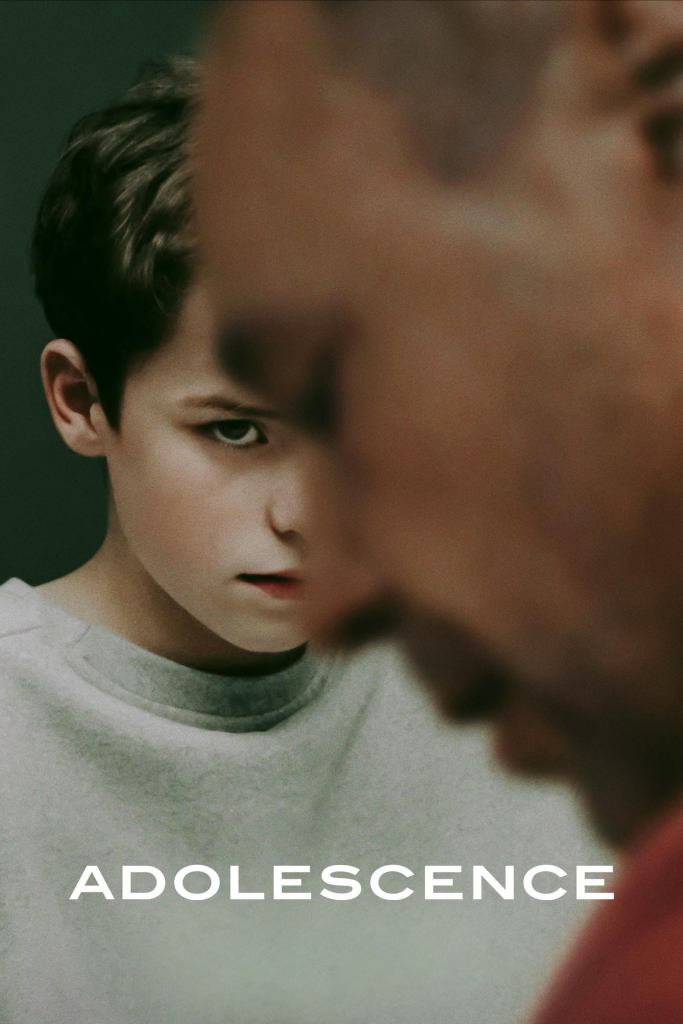
You’ve probably heard of Adolescence. It’s become a well deserved hot topic of conversation because it’s an excellently done piece of storytelling that cuts through what seems like an impenetrable zeitgeist like a hot knife through melted butter. I’m glad to see that the hype tour surrounding its recent release ramp up after the series took off because something this good needs to be ballyhooed, bravoed, and brandished with flying banners.
For me, the bottom line, beyond just saying “see it” is that the producers and artists involved captured something we all know in our gut and make us face it. Captured it in a challenging way that they didn’t need to, but by accepting that challenge opened up those gut instincts with a rawness that touches nerves we may have all let somehow deaden. The painful intimacy of one family’s story opens up a chasm full of realizations that speak far beyond the specific issues so well portrayed.
In brief, a young boy is accused of stabbing a young girl and through the investigation we delve into a world of young boys and men influenced by Incel culture and bullying. A world not understood in this instance by the young boy’s family, or any one of the parents’ generation that we meet in the story. Watching the investigating detective’s son educate his father is a remarkable scene.
We follow the story through the boy’s arrest, booking and indictment, examination with a therapist, and the devastating conclusion as the family deals with the aftermath. Every moment is powerful. His arrest in the first episode is only the beginning of story that digs into every emotion there is when confronted with horrible moments that one would hope no family would ever have to endure. I can’t imagine any parent of young children, especially boys, watching this without wanting to take the doors off of their child’s bedroom doors and disconnect them from the Internet. It is tough to watch and it’s impossible to look away.
Toxic masculinity, patriarchy, bullying, isolation, fear, self-loathing, and the perils of social media become bigger monsters by the moment than any knife wielding attacker.
Director Philip Barantini, known for filming his stories in one take, uses that device to exquisite effect. He didn’t need to, but he and his team did and the payoff is exquisite. Each episode unfolds like a one-act play, filmed in one amazing traveling take. In later interviews it’s been revealed that they only did two full takes after a weekend’s rehearsal for each of the four episodes. The one take keeps you riveted as it ratchets up the tension, never letting you catch a visual breather from the story. How they filmed the second episode which takes place in and around a school is almost beyond imagining.
The cast is superb, especially 13-year old Owen Cooper as the young boy. In his acting debut he delivers a performance that is so outstanding that it takes your breath away. He’s not only a natural, his performance borders on the supernatural. Stephen Graham, who also co-authored the story with Jack Thorne, plays the boy’s father and strikes true in every millisecond he is on the screen. Well known for playing in-your-face tough guys, Graham’s journey through this story is like watching a rock face that has been the feature of a cliff, let go and crash into a million pieces. The rest of the cast is equally up to the task of matching these amazing performances.
The back story is that Graham, hearing about crimes featuring young boys stabbing young girls, felt that questions needed to be asked, the obvious one being “why is this happening?’ As is the case with all good drama and story telling Adolescence raises as many questions as it answers others. Certainly I imagine parents who see this, and they all should, will be asking the same questions the mother and father in the series do themselves.
On a larger scale, as we daily face an adult and supposedly mature world that seems stuck in adolescent, if not prepubescent misbehavior, celebrating toxic masculinity, bullying, and the perils of social media, this amazingly told story might at least give us a glimpse into how we looked away too often, when we knew we shouldn’t, ignoring so much at the cost of even more.
You can’t look away from this.
You can find more of my writings on a variety of topics on Medium at this link, including in the publications Ellemeno and Rome.I can also be found on social media under my name as above.