Promises, Promises

Harold Hill never had such easy marks

Years ago when I ran professional theatres my principal responsibility was picking a season of plays and/or musicals, then pulling things together to actually produce that season. Planning was based on quite a few variables and data, but you never knew how things were actually going to play out in the end. Show business can be cruel.

The Music ManThere were always surprises. Some good and some bad. Some shows would become surprise runaway hits, others that seemed like sure things would flop. Lose a weekend due to a snowstorm and the bottom line got hit hard.

Of course the choice of plays was always the key variable. I remember sitting in a particularly contentious board of directors meeting as we were nearing a season announcement and a board member was pushing back hard on our revenue and expense projections for what we had planned. He pounded the table and asked, “How can you know what will sell tickets a year from now?” I told him I could project, but I couldn’t know and that I always went into each season saying that if we succeeded as much as .300 hitters in baseball we’d be superstars.

Well, we weren’t baseball players, but we still usually came out ahead of the game with more hits some seasons than others. We held our own. The not-for-profit theatre version of the game I was playing relied on picking and announcing a season a year or so in advance. You’d promote and sell that season to subscribers to accumulate cash and support up front, and then once you were in the season proper you’d push hard for single ticket sales and then after they got a taste, try to convert them into subscribers, then donors.

It was always risky, just like many business propositions. I remember asking that same board member if his business would be comfortable announcing his plans and projecting sales a year in advance knowing all of the risks. It was a rhetorical question on my part because I knew his business couldn’t operate that way. Most can’t.

The entire thing was based initially on a promise, and each new season announcement was a new promise. Each time you delivered a promised season the theatre built or kept trust with that subscriber base. That loyal base would resubscribe based on that trust. Those customers knew there may be a play or two in the season they didn’t care for, but they came back season after season based on the quality of what we offered, and also that we delivered on what we initially sold and promoted.

As an artistic director (CEO) I was the one who was responsible for that trust and never took that responsibility lightly. Yes, there were times we had to change our plans, but the trust engendered along the way helped weather those moments as long as we were honest with our customers and donors.

The above is a long wind up to something I’ve been thinking about lately and spurred by an article I saw on Elon Musk’s latest promises about delivering robots “next year.”

No one thinks that’s real. For the life of me, I doubt he does. Given how many “promises” this guy has made and broken I don’t understand how reasonably intelligent (I assume they are reasonably intelligent) reporters and investors don’t just burst out laughing when the next one self-drives out of the empty garage that is his mouth. But then again, everyone is in on the con.

Musk isn’t alone these days when it comes to talking out of more orifices than human anatomy provides. Our politicians do it. Relentlessly. As do Tech and other corporate CEOs. The politicians you can almost understand because they are allowed to say whatever the hell they want under the Speech and Debate clause of the Constitution, granting them immunity for anything they say while doing their legislative duties. Unfortunately that seems to have spread a bit outside of the original boundaries through various court rulings and a willingness to boldly and brazenly lie at the drop of a hat.

But CEOs are supposed to be under more scrutiny. From their shareholders. From various regulatory agencies. And yet, those like Musk and many of the Artificial Intelligence promoters seem to be able to promise the Moon (or Mars) without ever delivering.

As I said earlier, at some point you’d think intelligent folks would catch on and actually run these Harold Hills out of town, instead of allowing them to continue courting the librarians they want to take jobs away from. If the regulators aren’t regulating and the shareholders keep writing checks I guess those of us watching shouldn’t care if they all end up playing air trombones. (Bonus points for those who get The Music Man references.)

There’s a truism in my business that nobody ever starts out to do a bad show. Yet, some shows flop. I used to believe that no one ever started a business to be a bust. But the flimflammery we’re seeing these days makes me wonder. As long as you can continue to fleece the flock along the way, does it really matter if you ultimately succeed in producing what you promised as long as you score along the way?

Set aside for the moment that anything, well intentioned or not, can fail. But after delivering a string of broken promises you’d think there’d be enough erosion of trust that only fools would continue to pony up their money. Perhaps I’ve just underestimated the number of fools.

My business was disposable. Technology isn’t. Essential as the arts are to our collective humanity, the arts are always the first to feel financial hits in tough times, and generally the last to recover. Technology keeps playing an increasing role in all of our lives and is becoming dangerously essential. Lord help us if an EMP ever goes off.  Watching this new rush into the a world of Artificial Intelligence it’s frightening to contemplate even a small portion of what the promises offer, even as some have already collapsed under their own weight. It’s even more challenging to contemplate what the remaining ones might actually turn into.

It’s one thing to run a smartphone on a beta OS. It’s another when it runs your life for you.

Frankly, I don’t buy all of the promises. The ones that I think offer possible benefits I’m skeptical about. And that’s because I don’t trust the folks offering the promises, the folks funding them, or those rushing to implement them. They’ve all had their chance to earn my trust. There are very few remaining that haven’t squandered it.

You can also find more of my writings on a variety of topics on Medium at this link, including in the publications Ellemeno and Rome. I can also be found on social media under my name as above.


Sunday Morning Reading

Thoughts tumble down on a chilling weekend

I’m going to avoid the horrific news that continues out of Minneapolis (and the rest of the U.S.) for this week’s Sunday Morning Reading. But, then I guess I didn’t avoid it by saying that. Think of it as a wound too sore to touch rather than avoiding. Anyway, onto this week’s sharing.

Aga putra P_p4NGz5Cb4 unsplash 1.

I’m going to kick this off with a blog post from Mathew Ingram called Why Blogging Is Better Than Social Media. Title says a lot of what I believe. I wish more believed it also.

I love watching those younger than I live the same lives, fears, and joys I did. Nothing ever changes. But it’s always entertaining and worth reflection. Check out Alex Baia’s I Thought I Would Have Accomplished A Lot More Today And Also By The Time I was Thirty-Five. 

Gray Miller suggests You Should Put A Codex In Your Pocket Instead Of Your Phone. If you don’t know what a Codex is, read the piece.

Cory Doctorow in The Guardian says AI Companies Will Fail. We Can Salvage Something From the Wreckage. Salvaging things from wreckage is what we do. Avoid wrecking things not so much.

Speaking of wreckage, AI-Powered Disinformation Swarms Are Coming For Democracy says David Gilbert. 

Follow that up with Brynn Tannehill’s piece ‘Trump Has Already Rigged The 2028 Presidential Election’: Us Defense Insider. You didn’t need AI to tell you that. Or insiders. All you had to do was pay attention.

We do seem to like and be drawn to adversity like so many moths. Funny how we know what happens to moths that fly too close, yet can’t predict own fate when we do the same. But if we break that cycle, there wouldn’t be anything to salvage. David Toddy McCarty says We Like It Hard.

Aaron Vegh blogs A Canadian’s Call To Arms, Being Totally Pissed Off At The State Of Computing In The 21st Century. I don’t think the Canadians are alone in their feelings. I know a number of Americans are as well.

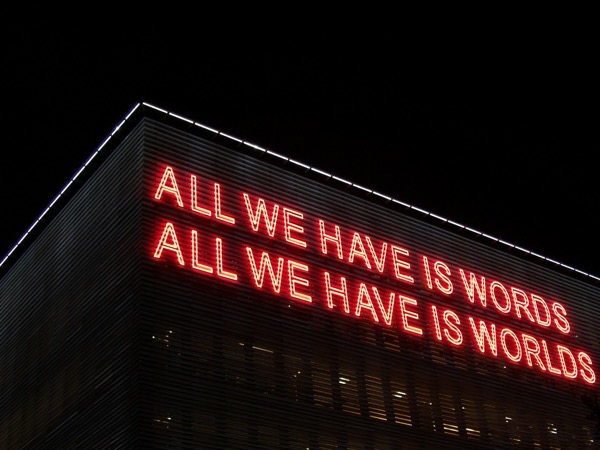
I said I would stay away from this weekend’s events. I lied. Sota. Kinda. I admire those like Dan Sinker who are finding ways to do what they feel can in the face of this adversity. Check out his piece We Are All We Have.

(Image from Aga Putra on Unsplash

If you’re interested in just what the heck Sunday Morning Reading is all about you can read more about the origins of Sunday Morning Reading here. If you’d like more click on the Sunday Morning Reading link in the category column to check out what’s been shared on Sunday’s past. You can also find more of my writings on Medium at this link, including in the publications Ellemeno and Rome.


A Disturbing Piece Of The AI Future We’re All Headed Into

AI generated headlines are just the tip of the iceberg we’re sailing into

It’s difficult enough to trust anything you read, see, or hear these days. Trust used to be the coin of the realm, but those days seem to have gone the way of the dodo. It’s bad enough that what used to pass for journalism has devolved into stenography, cheerleading, and blatant lying damaging enough to cost Fox News millions. Yet all of that continues. But we haven’t seen anything yet.

Google discover drone ban false.

The Verge is out with a report that says Google Won’t Stop Replacing Our News Headlines With Terrible AI. Sean Hollister lays out the case well, and he’s right, this shouldn’t happen. But it does and it’s only going to get worse, because… well AI is the name of the game that everyone who controls any sort of publishing and most search engines are playing.

Here’s the rub. Content used to be king. Or so the theory went. That king fed his court by selling advertising. But that king got toppled by online advertising usurpers. Yes, there’s still content, but it doesn’t matter what the content is, and long as it can be advertised against. We’re already seeing such an overwhelming avalanche of AI generated content all over the Internet that merely dismissing it as AI Slop diminishes the definition of slop.

As an example, Meta’s on a quest to just create users out of nowhere to feed content to your feeds to make sure the advertising turnstiles always spin whether you’re doomscrolling or not.

Content, much less headlines, really doesn’t matter to those who control the channels. In fact, I’m guessing we’re not far off from seeing the same piece of content (whether AI generated or by humans) recycled with different AI generated headlines. I’m guessing It consumes less compute cycles to gin up a new headline than it does to create a full article.

I remember the days when human editors wrote headlines that often confused readers and pissed off reporters when they slanted or misrepresented the nature of a story’s content. Some of that still happens. But that will pale in comparison to the future we’re just beginning to live in.

(Image from Google, PC Mag, The Verge)

You can also find more of my writings on a variety of topics on Medium at this link, including in the publications Ellemeno and Rome. I can also be found on social media under my name as above.

Chatbots, Pins, and Other Talking Distractions

The world of talking to chatbots just isn’t for me

In the end everything boils down to a question of taste or a matter of preference. In the beginning everything bubbles up in a hot tub with the jets on high. That’s kind of how I’m viewing all the bubbling around chatbots, AI Pins , possible AI earbuds, AI glasses, and any other kind of method or gadget folks are devising to talk to computers — those with screens, and those without.

Conversational AI Chatbots.webp.

Apple rumors popping like champagne corks are going to turn up the heat on discussions about chatbots, especially since Apple had been previously saying they weren’t interested in creating a chatbot for its Apple Intelligence portfolio. Fortunately most of those discussion will be between humans.

Mark Gurman reports that we’ll see changes to what we currently think of as Siri this spring, but stay tuned for a revamped version that offers the back and forth conversational approach that existing chatbots offer, codenamed Campos,  later this year.

Almost simultaneously, MacWorld reports that Apple employees are being encouraged to use a chatbot called Enchanté in their work. So, it sounds like Apple is seeding the ground for what’s to come.

For the record, I’m not big on voice computing. Yes, I use my Apple Watch to ask Siri to set a reminder or send a text message, but that’s about the extent of what my experimenting with voice computing has boiled down to.

I’ve tried some of the existing chatbots on smartphones and on computers, and I’ve been in the company of others who enjoy using voice as their primary method of interacting with smartphones. I don’t begrudge anybody using voice as their input method if that’s their preference, and I certainly don’t if it makes computing accessible to those who can’t type. But it’s just not for me.

Part of it is I find myself being more accurate when I can type, and part of it is the social aspect. While microphone technology continues to improve to allow better pickup in noisy environments I find it awkward when someone pulls out their smartphone and starts talking to it with others around. I feel compelled to silence myself while they are doing so. I couldn’t imagine using it in my theatre work, compared to using an iPad with pen to take notes, because my talking would be distracting to everyone else in the rehearsal hall. Goodness knows being in a room with small children laughing/crying/talking at the top of their lungs doesn’t strike me as a suitable environment.

I spent a good portion of this fall watching the Chicago Bears on their improbable run, while texting back and forth on several chains with my nephews and others. I can’t imagine doing that in my local sports pub trying to do so via voice input.

I won’t get into a conversation about how some are using existing chatbots for social interactions like therapy and companionship except to say that I’m guessing if those trends continue as voice input as chatbots proliferate, we’ll eventually see similar reactions to curtail that type of usage similar to what we saw back in the day about decreasing smartphone and screen time usage.

There are some interesting questions out there though. OpenAI has already announced its inevitable move into advertising for ChatGPT. I’m sure the others aren’t far behind. I’m not sure how viable advertising really is in a voice chat environment, whether it’s a smartphone, pin, or set of headphones. I certainly wouldn’t want a “conversation” interrupted with an ad. Amazon certainly doesn’t seem to have come close with its Alexa products.  To my way of thinking, ads in chatbot conversations will give new meaning to the clichés about intrusive advertising.

I’m also of the opinion that while the non-smartphone AI devices might be clever gadget accessories, I don’t see them ever replacing smartphones or significantly denting that market. Too much of everyday life has become so inextricably linked to smartphone usage that requires a screen that I just don’t see voice chatbots replacing it. Someday your voice may be your password, but I think we’re a long ways off from that for interacting with the businesses and other institutions we deal with daily.

But who knows where this is all headed. Quite frankly, I don’t think anybody does. Including the chatbots.

You can also find more of my writings on a variety of topics on Medium at this link, including in the publications Ellemeno and Rome. I can also be found on social media under my name as above.

Sunday Morning Reading

Inquire and think for yourself

Whew. Regular readers here will know that since the middle of December we’ve been spending time helping my daughter and her family move into a new house, with an interim stop to an Airbnb over the holidays until the new place was ready.  It’s been as chaotic as any move could be, multiplied by the antics of our two grandchildren who had their small worlds turned upside down. The chaos didn’t allow for much Sunday Morning Reading, but here we are again, playing a little catch up as well as looking ahead. As much as anybody can look ahead these days.

Rey seven _nm_mZ4Cs2I unsplash.

What Just Happened? That title for Andrea Pitzer’s piece sort of explains the look I see on most people’s faces during the events of this January. If it seems like too much to think about. That’s because it is. Think on it.

Brian Merchant’s Abolish The Senses plays on the same themes and the dismay we’re all feeling.

“Do math. Check your facts.” That’s the message from Neil Steinberg in Wrapping Our Heads Around A Trillion, Now That The Alphabet is Worth $4,000,000,000,000. Don’t let others think for you.

Dealing with much smaller numbers, NatashaMH’s Five Dollars For Catastrophe explains how a $5 book about genocide can offer much more value, should you actually inquire and think for yourself. Words have meaning folks.

And while I’m linking to posts on the numbers, let’s talk gambling. Apparently it’s reaching epidemic proportions and you can bet on when the USA is going to invade other countries, among other catastrophic outcomes these days. Especially if you’re in the know. Saahil Desai says America Is Slow-Walking Into A Polymarket Disaster. I’m not so sure about the slow-walking part.

If gambling is betting on predictions, Artificial Intelligence, with its ability to predict the next word ought to be able to figure out most outcomes ahead of time. It’s all math, right? Remember that earlier admonition to think for yourself? While doing so, check out Steven Adler’s AI Isn’t “Just Predicting The Next Word” Anymore. 

Are Tech Companies Allies Or A Threat To Press Freedom?  I’m not spoiling Emily Bell’s conclusions with the obvious answer, because the piece is about more than that.

Jill Lepore explores How Originalism Killed The Constitution. It’s an earlier piece that contains context that most have no idea about. I’d suggest finding out.

Speaking of killing things, Russel Berman and Elaine Godfrey ask the simple question, Does Congress Even Exist Anymore? Applying the Ian Betteridge law of headlines, that any headline that ends in a question mark can be answered by the word no, you don’t have to guess at my answer. Berman and Godrey call it a fast fade. I call it a slow self-suicide.

Closing out this week, I’m pointing to a venture from a raconteur I feature here often, David Todd McCarty. He’s gathering up his words and images from over the years on a new website. David is quite a storyteller. If you think for yourself, I suggest you pay attention. For a taste check out David Dreams Of Everything. 

Go Bears!

(Image from Rey Seven on Unsplash)

If you’re interested in just what the heck Sunday Morning Reading is all about you can read more about the origins of Sunday Morning Reading here. If you’d like more click on the Sunday Morning Reading link in the category column to check out what’s been shared on Sunday’s past. You can also find more of my writings on Medium at this link, including in the publications Ellemeno and Rome.

Sunday Morning Reading

Boulder bustling

The world prepares to begin a new year and wakes up to an entirely new world. Or does it?

You go to bed on a Friday night with the holiday season inching to a close and wake up on Saturday morning and your country is running Venezuela after invading it and kidnapping its president and his wife. Or so the narrative on Sunday morning goes. I’m sure it will change by the time we get to midweek. Yeah, it was that kind of weekend and that will be reflected in this week’s Sunday Morning Reading along with a host of other topics.

Main-9 24-Nov-2.

I’ll lead off with a few in the moment takes on what happened in Venezuela yesterday. Note that in the moment takes often fade once the moment has its moment.

First up, David Frum says that Trump’s Critics Are Falling Into An Obvious Trap. Frankly, whether you’re a critic or a MAGA hat wearing supporter we’ve all fallen for so many obvious traps, what’s one more?

Thinking bigger picture, Tom Nichols thinks Maybe Russia and China Should Sit This One Out. They need to stop laughing first.

In the wake of the news, Carole Cadwalladr sees “a mass propaganda event” about to engulf the US in her piece, The Threat From America. She’s correct.

Written before the events of this weekend, Mathew Walther’s The Strange Death of Make America Great Again may seem out of place and time as it focuses on the MAGA culture wars within itself. I would venture that it is not, so stay tuned.

Turning to more local concerns that resonate alongside the global news, the folks at Block Club Chicago including Francia Garcia Hernádez and Madison Savedra have an excellent look at How Operation Midway Blitz Changed Our City in Chicago Under Siege.

As if not to be left out of the making bad news moment, Elon Musk’s back in the swing of things with his AI tool Grok allowing users to essentially turn X into a porn machine using photos of real folks to wreak havoc. Just note that X is still the social media platform of choice for far too many. Matteo Wong has the story in Elon Musk’s Pornography Machine.

Cory Doctorow published the text of a recent speech called A Post-American, Enshittification-Resistant Internet. He continues fighting the good fight like Sisyphus with that boulder.

JA Westenberg makes The Case For Blogging In The Ruins.

And to close out the week when holiday close out sales come to an end, Jake Lundberg takes a look at The Cult of Costco. Great piece whether you shop there or not.

If you’re interested in just what the heck Sunday Morning Reading is all about you can read more about the origins of Sunday Morning Reading here. If you’d like more click on the Sunday Morning Reading link in the category column to check out what’s been shared on Sunday’s past. You can also find more of my writings on Medium at this link, including in the publications Ellemeno and Rome.

Souring On Artificial Intelligence

The new butt of family holiday jokes

There’s an interesting article in the New York Times called Why Do Americans Hate A.I.? The article goes through the litany of some of the bugaboos just about anyone can recite from memory these days: jobs, trust, and agency. As fast as Artificial Intelligence has dominated the conversation, warnings about the pitfalls have run side by side in what I think resembles a barefooted three-legged sack race over broken glass.

Andrea de santis zwd435 ewb4 unsplash.

Over the holidays at what seemed like an infinite number of family gatherings I picked up on some interesting themes that I mentioned in my end of year post about all things Apple that I think is worth calling out here again. Everyday Janes and Joes are souring on artificial intelligence, not for any of the now almost clichéd anti-AI reasons, but after everyday unsatisfactory encounters with their doctors, banks, and any number of the other institutions and business that they deal with.

As I said in that post about Apple, 

I also think Apple and the other tech companies need to pay attention to the warning signs that are starting to bubble up about Artificial Intelligence. I think most of the growing distaste of AI comes not from what these tech companies are offering on computing platforms, but from the day to day encounters people are experiencing in their daily lives as more and more non-tech companies roll out versions of AI support. The way I’m hearing and feeling it, jokes and complaints about AI at holiday gatherings this year are starting to compete in numbers with ones about government and politics.

Because money rules the roost, most of the conversations we hear about Artificial Intelligence center on how much money is being spent propping up and expanding the bubble that is keeping a sagging economy afloat like a hot balloon on a cloudy day. There’s only so much liquefied propane in any tank once things lift off.

Here’s the thing about holiday family gatherings. I can’t remember one when conversations didn’t at some point offer up a “you’ve got to try this” recommendation or some sort of eye-grabbing new thing  or trend that captured attention along with the usual complaints and grievances. But AI-negative conversations seemed to take precedence on the grievance side of the ledger this year.

Everyday folks don’t care about who wins the AI technology race or who has the best on device AI or how many tokens a system offers. They care about getting results in less time and more so, getting it done with a human they can talk to, not a robot in a chat window. So far based on the jokes, swearing and condescending attitudes I’m hearing (anecdotally, I admit) everyday folks aren’t buying the pitch, but they’re getting closer to picking up the tar.

We can talk about data centers, job efficiencies and job losses, chatbots, AI slop, and scientific advancements all day long, but when everyday folks on the ground develop a distaste for what you’re selling and turn your efforts into the butt of a joke, eventually you need to discount or clear out the inventory no matter how many data center servers you pop up.

Even so, perhaps that’s the aim of the A.I. purveyors. If they salt the fields with enough of their product to the point that everyone condescendingly abides it the way they do government, it may not matter if it doesn’t offer any harvest that yields nutrition, just that it yields a ubiquitous tolerance.

(Image from Andres De Santis on Unsplash)

You can also find more of my writings on a variety of topics on Medium at this link, including in the publications Ellemeno and Rome. I can also be found on social media under my name as above.

Time Names Architects of AI As 2025 Person of the Year

Hype masters of the Year

There was a time when I used to buy Time Magazine’s rationale for naming someone Person of the Year. The rationale always was the person or persons chosen had the most impact during the year, whether for good or ill. I’ve changed my perspective on that, long before this year’s choice.

ArchitectsCover web 01.

This year Time Magazine named The Architects of AI as the 2025 Person of the Year.

As Time puts it:

This is the story of how AI changed our world in 2025, in new and exciting and sometimes frightening ways. It is the story of how Huang and other tech titans grabbed the wheel of history, developing technology and making decisions that are reshaping the information landscape, the climate, and our livelihoods. Racing both beside and against each other, they placed multibillion-dollar bets on one of the biggest physical infrastructure projects of all time. They reoriented government policy, altered geopolitical rivalries, and brought robots into homes. AI emerged as arguably the most consequential tool in great-power competition since the advent of nuclear weapons.

There’s no denying the individuals Time lists have had an impact. In my opinion, the list leans decidedly into the “for ill” column. You can’t argue that these folk have certainly created a new economy with all of the yet to be fulfilled promises. But, at some point there needs to be something real underneath the hype. For better or worse, and however these promises may or may not be fulfilled, I’d love to be around a few decades from now to see how the ledger balance that describes what good may have come from AI versus what bad things it left in its wake totals up.

But if any or all of the promises come true, I doubt the AI accountants will ever show us that math.

Perhaps it’s the advent of the holiday season. Perhaps it’s that I’m just not that keen on Artificial Intelligence. But I’d rather see a focus on folks who have actually done tangible good for the world rather than folks who, to this point, have only made bundles of money promising a future that may in the end turn out to be what I suspect will be just another unfulfilled promise.

While I get the intention, I also find it darkly portentous that Time includes a “Ask me anything” chatbot that follows you along the webpage as you scroll through to read the article.

CleanShot 2025-12-11 at 08.46.57@2x.

To be fair, Time does point out some of the bad things already associated with Artificial Intelligence in the article. There are a growing number of those these days, but eventually eyeballs will pass them by in the same way folks eventually look past the ever present news of gun violence. Those sitting on that girder in the photograph are counting on that.

I’m guessing future Person of the Year selections will most likely be chosen by AI, and will whitewash most of that out of the accompanying articles.

You can also find more of my writings on a variety of topics on Medium at this link, including in the publications Ellemeno and Rome. I can also be found on social media under my name as above.

Who Knows What To Believe?

Believe it or not

Who knows what to believe these days. Pick a topic. Politics. Tech. AI. Sports. Culture. Doesn’t matter. There’s enough different opinions that want to be facts that you can pick any position on any topic and find others who will believe as you do. When you can manufacture enough belief in anything, is anything worth believing?

Shutterstock 2592766917.

The sad news is we’ve reached a point where facts don’t matter. What matters is how well whatever passes for facts can be sold. Attract enough buyers or investors and you’ve created a wave. Or perhaps a bubble.

The reason for this post is some interesting back and forth I had with former colleagues who’ve jumped all in on the AI bandwagon with what I’ve characterized as blind enthusiasm.

Of course they aren’t the only ones. Thus the bubble.

I’ve pointed them to some reading that I doubt they’ll read. And I’m going to point to one of those pieces here.

Cory Doctorow is working on his next book and has posted a preview of thinking that he delivered in a recent speech. HIs next book is called The Reverse Centaur’s Guide To Life After AI. I think you’ll find reading the text of his speech informative. I hope my colleagues do. I hope a lot of folks do.

(Image from MediaMag on Shutterstock)

You can also find more of my writings on a variety of topics on Medium at this link, including in the publications Ellemeno and Rome. I can also be found on social media under my name as above.

Sunday Morning Reading

Winter is coming. Or is it already here?

It’s a snowy Sunday after the Thanksgiving holiday here in Chicago. The Chicago Bears have already played this week’s game, beating the Philadelphia Eagles on Friday, sending the town into a tizzy before it got covered in a Saturday snowfall. So it feels like the perfect day to settle in and do a little Sunday Morning Reading after the shoveling and snow blowing move stuff around. Bitch of it is, the stuff still has to melt. Let’s take a look.

PXL 20250320 115712285.

Humorist Emily Bressler has a frighteningly funny piece of satire that I think sums up the chilling undercurrents in so much of what we’re living through at the moment in I Work For An Evil Company, But Outside Work, I’m Actually A Really Good Person.

Winter may be a few weeks away officially, but in Chicago, it feels like it’s here already this weekend. Actually the metaphor feels like it’s been too close for comfort for quite some time. The U.S. might be sinking ships in warmer waters threatening an invasion of Venezuela, but the Danes haven’t forgotten threats in colder climes and have been preparing. Miranda Bryant spells it out in Denmark Sets Up ‘Night Watch’ To Monitor Trump After Greenland Row. 

Theaters and other arts organizations are feeling quite a chill in this inhospitable political climate these days. Adam Harrington is Taking The Temperature Of Theater In Chicago: Distress As Venues Fall, But Optimism Driving By A Vibrant Community. 

Speaking of theater, Mathew Ingram takes a look at the ritualized charades that happen after a tech company gets called on the carpet for being evil in What Did Mark Zuckerberg Know And When Did He Know It? These performance art pieces happen all too frequently, regardless of venue. The audience never buys it. So why do these unfunny farces continue?

If we survive the Artificial Intelligence tsunami the next big thing that’s been the next big thing for quite some time will be when quantum computing actually turns into something. I imagine it’ll all be lumped in together as all of these waves crash ashore with the same promises. The Swinburne University of Technology asks the question If Quantum Computing Is Solving ‘Impossible’ Questions, How Do We Know They’re Right?

Josh Marshall takes a look at The Surreal Madness Of The AI Boom. I’m not sure I’d call it surreal, but it’s certainly something other than real. Otherwise, why would folks like Laura J. Nelson be chronicling how Tech Titans Amass Multimillion-Dollar War Chests To Fight AI Regulation. (Hint, when you have to play that kind of expensive defensive game, you’re trying to hide the ball, not advance it.)

NatashaMH provides a quilted farewell in a touching remembrance of a friend who passed too soon. Her closing line of My Best Friend Wrapped In Peace, “be safe in winter till summer arrives again,” chills and thaws in the same breath.

To close out this snowy holiday weekend, Neil Steinburg gives us a short piece titled simply, Home. Read it. Whether you’re home, on your way there, or returning to it.

If you’re interested in just what the heck Sunday Morning Reading is all about you can read more about the origins of Sunday Morning Reading here. If you’d like more click on the Sunday Morning Reading link in the category column to check out what’s been shared on Sunday’s past. You can also find more of my writings on Medium at this link, including in the publications Ellemeno and Rome.