Perhaps Tim Cook’s Severance Trailer Explains More Than Anyone Wants To Believe

You Can’t Sever This Away

A few months ago the Severance trailer featuring Tim Cook might have been received as an average, yet cute, piece of fluff marketing. Today it feels almost like a possible explanation for how some things have changed. 

 The entire premise behind Severance, being able to separate your work life from your real life, is indeed a fun bit of sci-fi story telling that I increasingly imagine the storytellers are going to have a hard time wrapping up into a successful conclusion.

Tim Cook’s recent decision to donate to the Trump inauguration certainly feels like he’s severed a part of himself from the carefully crafted persona he’s built for himself, and the reputation he built for Apple. Even, unlike some of his other tech company CEO compatriots, he made the donation out of his personal account, the understandable transactional decision has bruised Apple more than I think we might realize in this chaotic moment.

I say “understandable” because we’re in that world now. These transactional business/government relationships are no different than paying protection money to the guy who runs the neighborhood in order to keep the fruit stand open. It’s tough to bend the knee if both are broken.

Perhaps severing one’s self might make real life decisions with real life consequences easier to swallow or hide from. Or make work life more palatable. But that’s where the science fiction part of the story trails off. This is real life, and these are real people making these choices in the bright light of day. I’d say the markets will eventually give us a hint of an answer, but that’s not real life anymore either.

Time will tell how much of a blight Tim Cook infected Apple’s carefully cultivated orchard with. While many are disappointed and upset and rail about it online and in podcasts, the real question, and perhaps the cover Cook calculated upon, is that with every other tech CEO bending the knee, where else do Apple customers have to turn? And don’t say Linux. It still needs chips and hardware to run the software on. 

You can find more of my writings on a variety of topics on Medium at this link, including in the publications Ellemeno and Rome. I can also be found on social media under my name as above. 

Apple’s Latest Miscues Risk Damaging AI In The Same Way It Tarnished iCloud

Apple Intelligence Summaries Again Draw Fire

How many folks do you know who don’t trust iCloud? Or “The Cloud” in general? Quite a few, I would bet. When Apple rolled out iCloud in 2011, it offered, as all things do, a promise. Trying to move on from the problems associated with its previous troubled cloud service, MobileMe, it was a rebrand, a re-architecting, and a repeat of prior problems that missed the target and generated enough criticism to turn iCloud into a punch line for all jokes about “The Cloud.”

Shutterstock 598778588.

Apple has steadily improved iCloud (it still has issues), but not enough to remove that tarnish. The recent flap over summaries generated by Apple Intelligence threatens to do the same to that new brand, and quite frankly to the concept of Artificial Intelligence in general. Some might see that as a good thing, but that’s another issue for another day.

The issues with Apple Intelligence are compounding, largely due to mistakes of Apple’s own making in its rush to correct its way-too-late entry into a game it is losing. Overhyping the beta release as if it were a finished product certainly didn’t help. That investment in dollars essentially removed the excuse that mistakes can happen in betas. The “New Siri” remains delayed. And, like every AI release I’ve seen from other makers, once the initial shine wears off, the rough edges begin to show and cracks are revealed. I can’t count the number of users who claimed they’ve turned off most of Apple Intelligence features.

This latest flap deals with Apple Intelligence summaries. There have been legions of screenshots posted of humorous and not-so-humorous, inaccurate, confusing, and downright misleading summaries. The BBC has now twice called out Apple for misleading and inaccurate summaries. The most recent one named a darts player the winner of a competition before the match had even been played.

88895d30 c9d7 11ef 94cb 5f844ceb9e30.

Apple has now responded, reminding everyone about the beta status and that a future update will further clarify when the text being displayed is summarized by Apple Intelligence. In essence, a warning label.

Quite a few big dogs in the Apple influencer game have already barked, weighing in with possible suggestions and warnings. (See these links from John Gruber and Jason Snell.) There’s somewhat of a debate as to who should have ultimate control over whether or not users see summaries. Should developers be able to opt out of having notifications summarized from their apps, or should users have control by opting out of the feature? Either way, in my opinion, it points to essentially a defeat and also a larger problem.

First impressions matter. Screwing the pooch in a first impression typically leaves a mark.

Given what we already knew about AI hallucinations, mistakes, and problems before Apple belatedly and hurriedly entered the game, I don’t think anyone thought Apple would have solved that problem. Thus, the shield of announcing it as a beta. But the dollars spent on promoting it certainly didn’t offer enough prominent caveats to cut through the glitzy messaging. Apple Intelligence, beta or not, was the tentpole marketing feature. Heck, Apple’s announcements moved markets as if gold had been discovered.

Summaries are just one of many features that AI offers, Apple’s version and others. Arguments can be made that summaries are a good thing in a busy world, and also that they are completely unnecessary given that there is a level of mistrust that already existed pre-Apple Intelligence, that requires, almost demands, users to check the work generated by the AI before relying on it.

However Apple chooses to work its way out of this latest problem of its own making, its misplaced marketing miscues have called enough attention to Artificial Intelligence to make it a problem for that entire segment of the tech industry. What was a key selling feature is quickly becoming the butt of another joke.

If this was a game of darts, Apple’s shot would have not only missed the target but also missed the board.

You can find more of my writings on a variety of topics on Medium at this link, including in the publications Ellemeno and Rome. I can also be found on social media under my name as above. 

My Year With Apple: A Mixed Fruit Basket

It’s been quite a year toiling in Apple’s orchard.

For those who know me, they are familiar with my use of Apple products. Typically when I pick up a new piece of Apple gear I’ll write a review after using it for a few weeks. I didn’t do that this year. Part of the reason for that is Apple’s possibly panicky piecemeal rollout of iOS and macOS, which in many ways also changes the game for some of the new hardware releases. So to lay out my thinking I’ll post my thoughts here on the new Apple hardware I picked up along the way this year, as well as the still unfinished operating system releases.

PXL 20241230 172543463.

The Hardware

I’ll tackle the hardware first as that’s the least complicated. This year I acquired an 11 inch iPad Pro M4, and iPad mini, and iPhone 16 Pro and an Apple Watch series 10. Unlike many in the tech and gadget geek community I’m personally in a place where the lack of significant form factor changes to each new hardware version isn’t a detriment, it’s a bonus.

Essentially, each of those devices I acquired required no new learning curve. Set them up out of the box and I was back and operating the way I was before trading in the previous versions.

Yes, each is snappier, but that’s always expected. The iPads sport newer M-series chips, but with an exception or two they are essentially the same as the previous models. Some find that boring. I do not. Quite honestly, I actually prefer it this way. I “upgrade” my hardware when there is a new release and I move on. In the case of the two iPads that cycle isn’t an annual one, so it works for me and my budget.

Here’s a rundown on what is actually new that I do and don’t appreciate. (Notice I’m leaving the iPhone 16 Pro until the end.)

iPad Pro M4 (11 inch)

PXL 20241230 172903105.

 The upgrade to the display to what Apple calls Ultra Retina XDR is a clear improvement that I notice daily and very much appreciate. Beyond that marketing moniker, Apple says the “groundbreaking tandem OLED technology” is, well, groundbreaking. In my use, I will say it’s simply gorgeous to look at.

The other big change is the iPad Pro is thinner. It’s noticeable, but when I’m using the device for work it’s in a case for protection so the benefit there is often negligible for me. I do notice it when I use it with the Magic Keyboard and lift it off of that accessory to read or watch while relaxing on the sofa or in bed.

Speaking of the Magic Keyboard, I will say the newer version feels like a more significant upgrade physically than does the iPad Pro it is meant as an accessory for. It is sleeker and lighter, and I much prefer the stability of the aluminum construction to the previous model.

iPad mini

PXL 20241230 173113624.

The iPad mini is my travel device on short trips and reading device at home. While I occasionally alternate it with the iPad Pro there is no discernible difference in how I use either device, other than viewing entertainment on the iPad Pro’s screen.

The newer version brings the M-series to the iPad mini for the first time with the A17 Pro chip, and the difference in performance is notable but not overwhelmingly so. Beyond that, there’s not much else new in the hardware to speak of. Apple updates the iPad mini lineup less frequently than its other iPads, so I’m sure this one will more than suffice until the next update a few years down the road.

Apple Watch Series 10

PXL 20241230 173306742.

The most significant upgrade to the Apple Watch hardware here is a slight increase in the size of the device that allows for an even slightly larger display, alongside of a size reduction in the depth of the body of the watch itself. Both are notable, but not really significant in how the series 10 feels on my wrist as compared to the Series 9.

I’m veering into software a bit here to say that upon release, the Series 10 had much less battery life than the Series 9. We’re now currently on watchOS 11.2 and the battery life seems to have improved, getting closer to expectations. But there are still mornings when I’m puzzled as battery life will drop significantly in the first few hours after I wake up.

I’m puzzled because when I’d see the battery life drop quickly in the morning, I’ll slap the Apple Watch on its charger for a bit and then I will see expected battery life throughout the day.

I don’t take advantage of the overnight sleep and health tracking features and my watch normally sits on a charger overnight, so I don’t know what effect that might or might not have. I do run a couple of third party apps that track medical data during daylight hours and that may be a part of the battery life discrepancies and my comparison to the previous version.

iPhone 16 Pro

PXL 20241230 173421049.

Apple’s cash cow, the iPhone, is also the prime example of the paradox Apple finds itself in. You can argue, and I have, that we reached peak smartphone design a while ago. That’s evident not only with Apple but also with other companies continuing to search for something, anything to make their smartphones appear new and fresh, in parallel with the search for the next big thing that might eventually replace the smartphone. Searches that have so far been fruitless.

With the exception of the annual chip evolution and newer camera technology nothing much of substance has changed in smartphone hardware recently. Yes, there have been attempts with folding smartphones and new buttons but the core value of the hardware remains the same.

I get it. Apple has to serve multiple masters: customers, the easily distracted tech press, shareholders and the markets. Sales numbers always go up when there is a major hardware change. The siren song for something new in hardware is real, loud, and I think ultimately somewhat defeating.

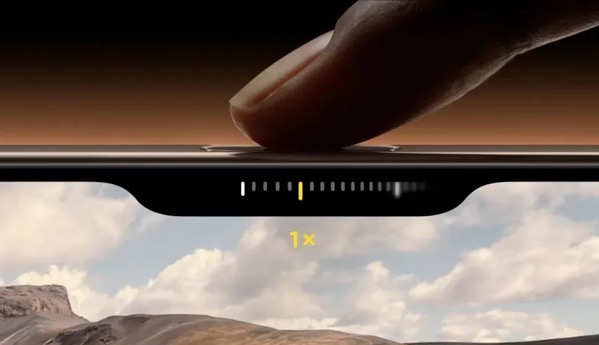
The perfect example is the big new thing on the iPhone 16 Pro: the Camera Control button.

IPhone 16 Camera Control Button 1000x576.

This looked enticing (shiny new things always do), but I just don’t find it useful. It’s too finicky and fiddly to be of use. I’ve worked hard to use it, but I find it distracting when the act of taking a photo should be instinctive. Beyond that fiiddliness, anything the functions of the camera control button offer I can do later with software and not miss the shot I’m trying to take.

Perhaps there are features to come for the Camera Control function. Apple actually added one with iOS 18.2, allowing users to press and hold on an object and then search for info on what the camera captures. But again, we’ve been able to do this through other software for some time now.

AirPods Pro 2

I didn’t purchase new AirPods this year, but the new Head Gestures feature of nodding or shaking your head to dismiss or respond to a notification is a winner. The rolling, gurgling, burbling sounds are a bit much at times, but I find I really like this feature.

Software

As I was writing most of the above about hardware I noticed myself veering into talking about software changes that impact the hardware. The obvious reason for that is that Apple makes the entire widget and functionally it’s becoming harder and harder to distinguish where success reigns and failure begins.

This year’s software releases of iOS and macOS do contain new features, but the big tent pole is Apple Intelligence. That’s a tent that is far from being fully erected and, in my opinion, not ready for the paying public.

Apple Intelligence

97686290 157a 4cf4 a2d1 e7c87303c1bc_1920x1080.In my use, Apple Intelligence so far is nothing more than a curiosity. On the one hand, advertised as the next big thing, on the other still labeled a beta. Yes, it’s well known Apple is playing catch up, but given how fast anything in the AI market evolves (or doesn’t), I’m not sure there will ever be a race with a destination, much less a finish line. That’s not just true for Apple, but for all the players in this game.

If I had to rate Apple Intelligence at this point I’d say it’s not worth all of the mis-placed marketing dollars Apple is spending. In fact, it is precariously close to feeling like a shell game. I’ve tried all of the currently offered features and don’t really see any at the moment that will be of continued use for me going forward.

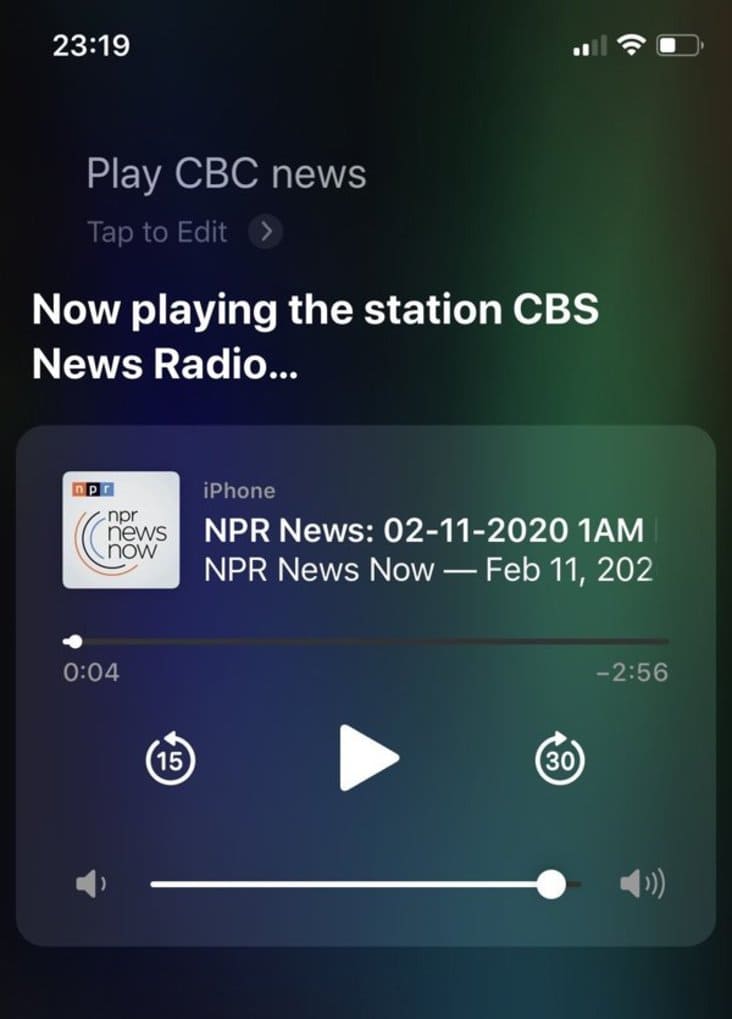
Notification Summaries are sometimes worth a laugh, but currently not worth the candle when I try to decipher the mixed messages. I’ve stopped taking screenshots of them, because they are too numerous to collect. If I have to click a second time for understanding, what’s the point?

Summaries of web pages at the moment seems to be a feature not well implemented. I rarely see anything beyond the title when I do look.

Genmoji and Image Playground have no value to me whatsoever. (I’ve never been that big on the whole Emoji thing as I prefer language to hieroglyphics. That used to be a distinction demonstrating society was advancing.) If I want some generative AI to create an image there are much better tools around. Apple’s Writing Tools don’t have any real value for me either.

As for the changes with Siri, there’s no way to judge currently, because what’s there is not what I think we might see someday either in a galaxy far, far away or in a Kubrick film of the last century.

If the point of the Apple Intelligence rollout was to please the markets and shareholders, their “meh” reactions after this piecemeal rollout demonstrate they are even dumber than I thought, or care less than Apple thought they would. Apple seems to have successfully silenced the “Can Apple do AI?” doubters with its smoke and mirror show, but smoke eventually fades and just stinks up your clothes.

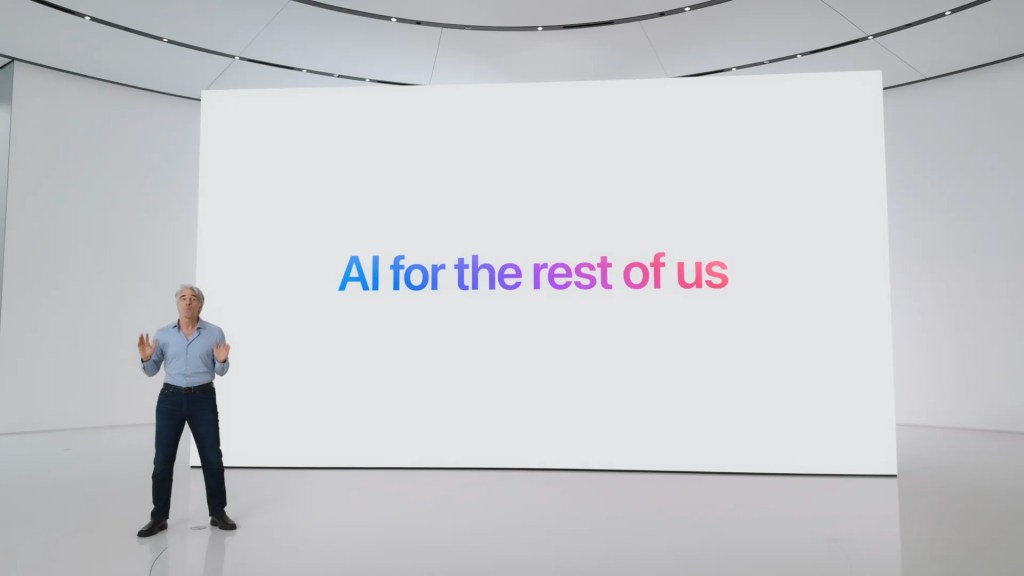
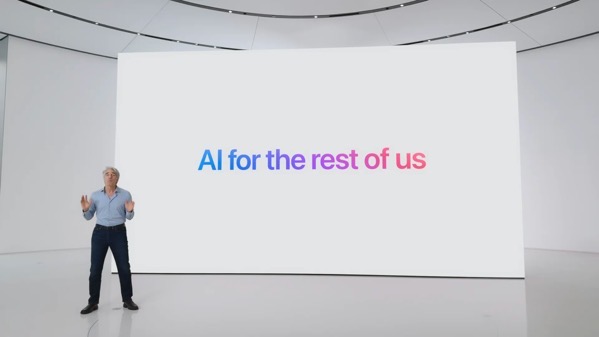
I can only base my thoughts on its usefulness on my own experiences, but I’d rate Apple Intelligence as less than “meh.”. If this is “AI For The Rest of Us,” it doesn’t feel much like Apple understands us or AI.

I guess the question becomes if we’re always on the cusp of something new and promising, then why not slow things down and focus on getting it accomplished instead of being slave to an annual release cycle? Certainly it seems that it is proving more and more burdensome. Rumors that iOS 19 might have problems meeting deadlines while Apple continues hammering on Apple Intelligence features for iOS 18 might just be rumors, but I would bet there are more than a few sparks smoldering under that smoke.

iOS 18 and macOS Sequoia Other Features

That said there are some other improvements in iOS 18 and macOS Sequoia worth mentioning. I’m going to talk about those in combination, because new features increasingly blend across device platforms via Continuity. Speaking of, I’m glad I finally got my Continuity headaches solved in 2024. Though it took an intervention from Craig Federighi.

iPhone Mirroring

The new iOS and macOS feature I remain most pleased with is iPhone Mirroring. This looked cool when it was revealed. It has proven both cool and more useful than I ever thought it would be. It’s great not to always have to pick up my iPhone when I’m heads down working but need to check a notification.

macOS Notifications

In my column of new features I like and  tied with iPhone Mirroring is the ability to see iPhone notifications on a Mac. Again, this is more useful than I thought it would be, even though I think Apple still has work to do with this on a consistency level, I rate this a winner.

That rating is also bolstered because along with it finally comes the ability to dismiss all notifications on a Mac. This has been too long in coming, so I’m glad it’s here.

I am puzzled why it is a two step process though.

When you view notifications you have three options at the bottom of the list, one being an X. Clicking on that X reveals only a single option to Clear All Notifications. That seems like an unnecessary step to me, unless there’s something else planned for the X in the future.

Photos

Lots of noise was made about the changes in Photos, but frankly I don’t think it was a big deal. I base that on my own usage and from the bevy of family and friends who I support, none of who complained.

What would be a big deal is if Apple would allow users more control to reliably sync photos. Apple actually made things a bit worse with iOS 18 by further hiding where you can see if photos are syncing behind your avatar instead of at the bottom of your Photo library.

Searching for photos is also much better in both iOS and macOS Sequoia. If that’s an Apple Intelligence feature, then it’s one of the few pluses. It isn’t perfect, but it is much better. I do wish I could delete a photo when I’m viewing search results. Currently I can only remove it from the album it creates with those results, even though I’m not saving the search as an album. This would be a great way to help delete duplicates and declutter.

Control Center

The changes here almost feel like a bad April Fools prank in that you can make changes, but playing the game to move icons around on a screen or between the new screens is nigh on near impossible and ultimately user unfriendly for a theoretically user friendly UI experience. If you think chasing Apps around a screen is fun, this will cure you of that.

Math Notes

More useful on an iPad than I find it on an iPhone or Mac, Math Notes is a significant new feature, especially when used with the Apple Pencil. Speaking of the Apple Pencil, I’m glad that both the new iPad Pro and iPad mini can use the same Apple Pencil interchangeably.

Handwriting Smoothing

This might work for some, but it is a marginal and almost negligible benefit to me as my handwriting is so awful. That said, searching notes that include my handwriting has yielded surprisingly good results even with my lousy handwriting.
Bluetooth

There seems to be something good under the hood added with Bluetooth. I base this on connectivity with my car. My car isn’t equipped with CarPlay but I do connect my iPhone via Bluetooth. Previous issues I had with connectivity seem to have vanished with iOS 18. I have to give credit to Apple, because nothing in my car has changed.

There was some early jankiness using Bluetooth on my Mac with peripherals, but that seems to have disappeared in later point releases of macOS Sequoia.

Safari and Distraction Control

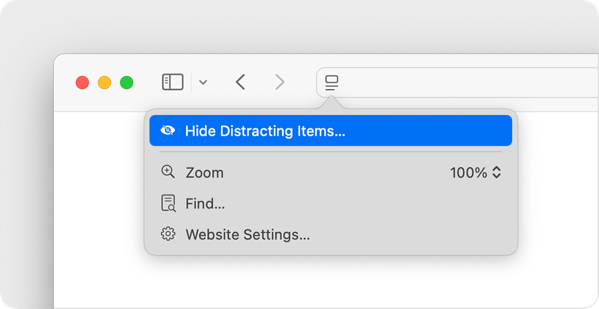
Macos sequoia safari page menu distraction control hide distracting items.

I like the new Distraction Control feature in Safari and hope Apple continues improving it. It’s a bit clunky to use at times, but it does help quite a bit with the continued enshittifcation of the web.

RCS Messaging

This is a notable improvement in my case, because it does improve messaging back and forth with some family, friend, and work threads when images are shared.

Smart Stack on Apple Watch

I find myself blowing hot and cold on the Smart Stack feature. At times it does approach the magic it promises. At other times it’s just an annoyance. I’ve tied turning it off and that can solve the annoyance factor, but I find myself wanting this to work and be smarter.

There are plenty of other new features across Apple’s platforms, but these are the ones that I find myself using the most, outside of Apple Intelligence.

Summing Up

To sum all of this up, without using any Artificial Intelligence, Apple or otherwise, I’d say this year’s hardware and software releases from Apple are one of those years we’ll look back on as a transitional one. Note that the only M4 series device I acquired this year was an iPad Pro, so I can’t speak beyond that on that new M-series evolution. Given how I use my iPad Pro, I’d say it was a winner, but not a life-changing one.

And quite frankly, AI marketing and money grubbing pitches aside, I am extremely comfortable upgrading my hardware as new generations of mobile devices roll out, and equally comfortable sitting on my computer purchases for as long as they hold out.

I am becoming increasingly uncomfortable though with the pace of operating system releases that seem to keep us all in a perpetual beta state whether or not we opt-in to the actual betas themselves. I don’t have a problem with Apple rolling out features over a period of time. I’d rather they do that than release something unfinished and full of bugs. But, I do have a problem with the heavy marketing push that trumpets what’s to come, long before the music is even ready to be played.

I’m able to keep up with what’s real and what’s not or not yet in the hype cycle, but the family and friends I support feel confused, and then become uninterested. If the goal is for folks to actually want to buy new hardware and to use new features, that’s ultimately a self-defeating strategy.

The Vision

Further summing things up, I think Apple’s release of the Vision Pro encapsulates the challenges within Apple’s vision. No, I didn’t buy one of those devices, but I did do the demo several times. I do buy the long term vision behind Spatial Computing, but I think Apple overreached with its hardware and design ambitions. Apple was able to recover from a similar overreach with the original Apple Watch, but the ante wasn’t so high for the consumer. The Vision Pro comes with a steep price to get in on the ground floor, and as of this writing it feels like it was so steep that it will actually change the floor itself.

I think a similar thing is going to take place with Artificial Intelligence, Apple’s version, and that of others. So many have ambitiously bet so much on that being the next big driver in tech, but I’m guessing in the long run it’s going to just be another passenger, perhaps in a side-car, along for the ride in an increasingly slower pace in the smartphone and mobile device race.

I feel almost Luddite-like saying this, but I wish Apple and others would focus on making what we have better than trying to make it new.

You can find more of my writings on a variety of topics on Medium at this link, including in the publications Ellemeno and Rome. I can also be found on social media under my name as above. 


Croissant is a Treat for Social Media Cross-Posting

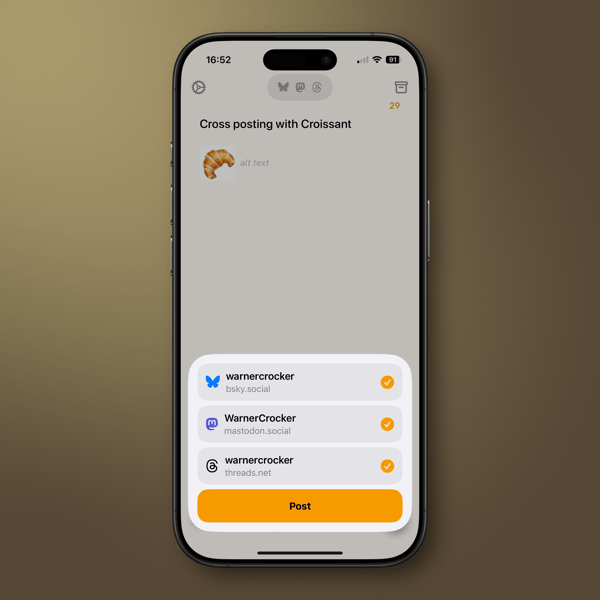
Croissant is a sweet and simple app for social media cross-posters.

With the social media world still very much atwitter and scattered among various platforms in the wake of Twitter’s destruction at the hands of Elon Musk, some users like myself traverse across the multiple platforms seeking to replace it. That’s all well and good as far as it goes, but it presents a first world problem of having to post separately for those who do.

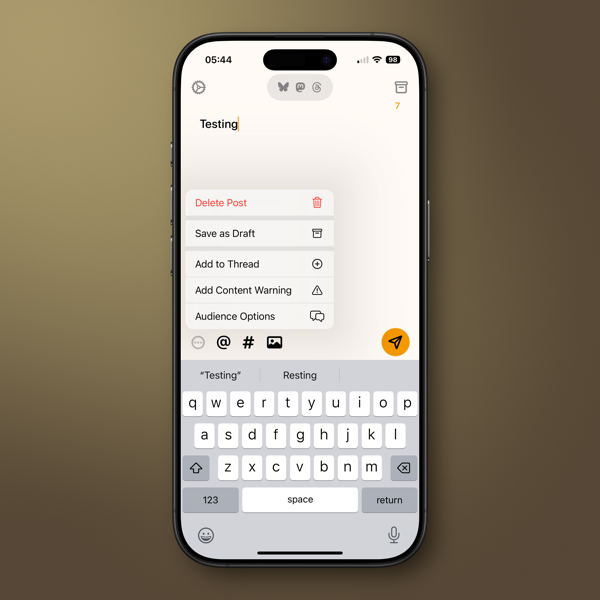
To the rescue comes Croissant. A lovely little app from indie developers Ben McCarthy and Aaron Vegh that simplifies cross-posting to Mastodon, Threads, and Bluesky. While there are promises a plenty of interactivity via ActivityPub, that’s still by and large a waiting game. I also don’t think buying into a protocol will be the simple answer most think it will be for differing complex platform agendas. Meanwhile Croissant serves up a tasty treat for cross-posters.

In this first version the action is sweet and simple as is the design. Feed in your account credentials and cross-post away. You can add photos, hashtags, and you can tag someone in your post assuming you know their handle and it’s the same across multiple platforms. Swipe right to delete a post, swipe left to create a thread.

You can choose to spill out your toots, threads, and posts to all three, or pick and choose where each pearl of wisdom drops. You can also save drafts and create threaded posts. For those who manage multiple accounts on any of the platforms it provides a one-stop solution. Croissant also delivers the now table stakes of different color schemes and your choice of icons.

I’d like to add more to this quick review, but there’s no need. In its first iteration Croissant does what it does simply enough and that is its elegance and its utility. The developers have a road map for adding new features in the future, but I hope hanging on to the “buttery smooth” simplicity remains a priority.

You can find more of my writings on a variety of topics on Medium at this link, including in the publications Ellemeno and Rome. I can also be found on social media under my name as above. 

.

More Adventures with iPhone 16 Pro Photography (and Hairy Balls)

Aliens Haven’t Landed, but these “Hairy Balls” Sure Look Out of This World.

Stumbled across these alien looking pods this weekend on a walk around the neighborhood. They are called Balloon or Puffball Milkweed, and also according to the neighbor who tends the corner garden “Hairy Balls.”

A close-up of a green, spiky seed pod hanging from a plant, surrounded by leaves and other vegetation. Some blurred background elements include a road and parked cars. Called Balloon or Puffball Milkweed and nicknamed Hairy Balls.

She had an open pod and showed what the seeds inside look like.

There’s a gallery of more shots after the Read More link below.

Read more: More Adventures with iPhone 16 Pro Photography (and Hairy Balls)

There’s more iPhone 16 Pro Photography and quite a few pumpkins in this post also.

You can find more of my writings on a variety of topics on Medium at this link, including in the publications Ellemeno and Rome. I can also be found on social media under my name as above. 

iPhone 16 Pro Photography and Pumpkins

iPhone 16 Pro Photography and Photographic Styles demo.

I’m always grateful that Apple releases new iPhones in September. It comes during the period when supermarkets are stocking up on pumpkins, gourds and other Cucurbits. Obviously one of the first things you check out on a new iPhone is whatever changes and improvements Apple makes to the cameras, and these colorful counters are a great location to do so.

Here’s a few shots taken during a supermarket tour playing around with different camera settings and what Apple now calls Photographic Styles. First up is just a series of photos in a gallery all using the Standard setting. 

 Following the Continue Reading break below are two videos showing off the differences in Photographic Styles Apple offers and more photos.

Continue reading “iPhone 16 Pro Photography and Pumpkins”

At Last: A Cure for Apple iCloud Migraines Thanks to Craig Federighi

Finally, a solution to those Apple iCloud Migraines thanks to Craig Federighi

Relief. At last. All it took was the right doctor.

We’ve all been there with health situations. You lay out your symptoms and whatever checklist your medical professional follows leads to a course of treatment that might or might not work. Perhaps after repeated tests and possible cures you might finally get the attention of someone who actually listens, goes beyond the symptom check list, and you get treatment that works to solve your problem.

If your situation and symptoms don’t fit those of the majority of patients it can be an exhausting, frustrating, and dehumanizing experience.

The same is sadly true with technical support. You have a problem. You call or chat (hopefully with a human). Lay out your symptoms and you get served up solutions from a playbook that don’t solve your problem. Striking out on your own you search the Internet for solutions, (increasingly a frustrating and useless experience), only to discover others facing the same issues.

At least you find comfort in knowing you’re not alone. Even so, there’s not enough strength in numbers if you and your compatriots fall into that ever popular yet corporately dismissed category of a “small minority of users.”

Like with your medical condition, if your technical issue falls outside of the range that most experience, then you better hope that you are talking to someone who actually listens and isn’t just a part of a solution mill that rewards quick dispensing of the call the way restaurants hope for quick table turnovers.


The Diagnosis

Perhaps you’ve read my previous chronicles discussing the Apple iCloud Migraines. I’ve been suffering with these headaches for a number of years and through a tourist guide map of California named macOS operating systems. I won’t go into detail, but you can find links to them here, here, here, here, and here. I will offer a brief summary (non AI generated) of the problem :

At each point that Apple released an operating system update, whether beta or final release, my Macs would mysteriously lose all Continuity based or related features. Continuity is the system Apple uses to connect its devices allowing users to copy and paste between them, sign in to Macs with an Apple Watch, display iPhone widgets on a Mac Screen, and connect Macs and iPads together via Universal Control. Your iCloud account is a key to Continuity.

Note that I haven’t been on a beta since owning any of my current devices. So, in theory, none of these beta updates should have affected me. However, I might as well have been downloading betas like a beta junkie, given the return of these migraines with each beta release and subsequent full releases.

Communications over the years with Apple Support yielded nothing that would help until Dan Moren of Six Colors posted about a similar issue he was facing and the responses he got from Apple Support.

That second agent proved quite capable, not only agreeing that the situation was strange, but also looking into issues on Apple’s side. Which led to the somewhat bizarre conclusion of this story: after perhaps 20 minutes on the phone, he seemed to hit on something. I heard him laugh and say something along the lines of “that explains it” and then, with my consent, put me on hold. When he came back, he said—and I’m not exactly quoting, but close enough: “I’m sorry, I can’t tell you any more than this, but all your services should be back up pretty much exactly 12 hours after they went down.”

Now, in my initial forays on social media, I had gotten a reply from someone on Mastodon mentioning that Apple’s iCloud servers were sometimes put in maintenance mode for 12 hours—but upon going back and looking for that specific reply, it was nowhere to be found.

It did, however, support the theory that something had gone wrong with the particular iCloud server on which my account was located.

There was, according to this support agent, nothing to do but sit back and wait, then call back if service hadn’t returned by the 12-hour mark and reference my case number. He was again apologetic for not being able to give me any more information, but reiterated his confidence that everything would be resolved.

After Dan’s post turned the heat up a bit on the issue my calls with Apple Support changed in tone and substance. I got moved a couple of rungs up the ladder to an advanced support level. (Draw your own conclusions). Initially that seemed promising. I also got the “just wait it out” response as Dan.

Suffice it to say that eventually yielded no real solution and there were two periods of time when things just seemed to stall. The first being prior to the Apple Vision Pro release and the second in the run-up to WWDC 2024. I chalked those up to resource allocations.


Reaching the Right Doctor

Following WWDC I decided on one frustrating evening to drop an email to Craig Federighi, Apple’s honcho on all things software. I didn’t expect any response. My previous emails to Tim Cook were met with a brush off.

In the context of my email I appealed to Craig quite explicitly that I was very interested in the new iPhone Mirroring feature coming in Sequoia that relied on Continuity and how he had discussed Continuity during the WWDC presentation. I also expressed that I imagined this feature would be at best a hit and miss for me given the ongoing migraines.

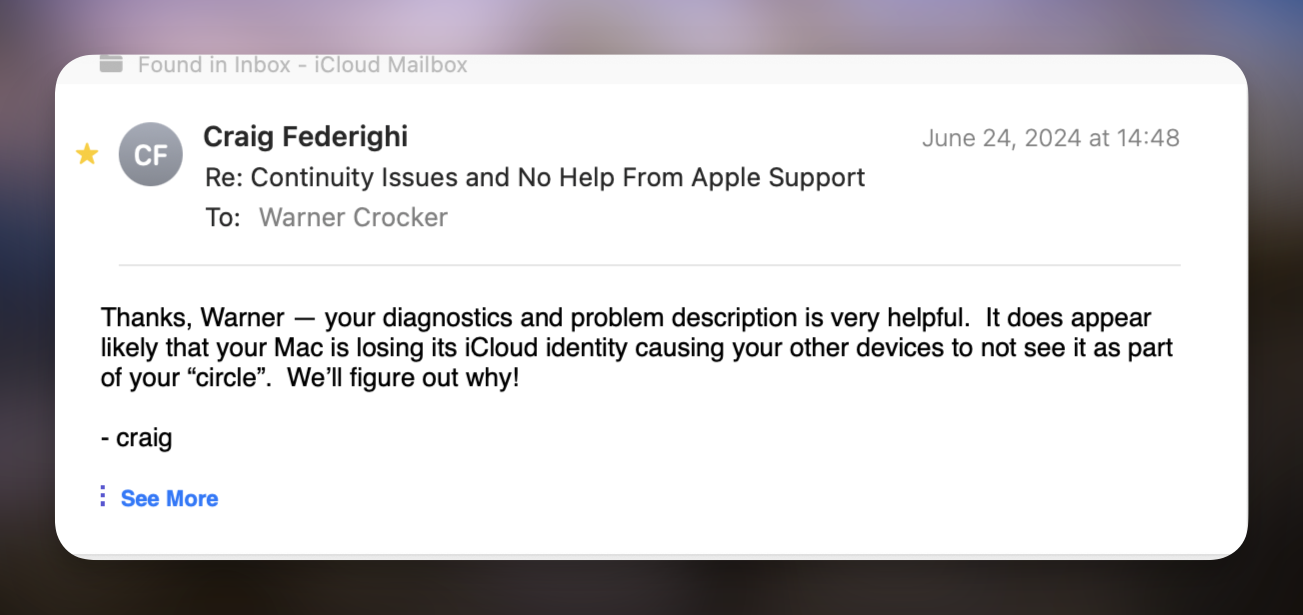
Lo and behold, I got a response from Federighi requesting I share diagnostic files with him. Note I don’t know if I was actually communicating with him directly or one of his staff, but after submitting another round of diagnostic files I received the emails below:

And then I received the following:

Once macOS Sonoma 14.6 and iOS 17.6 were released the problem did indeed appear to be solved, but I knew I would have to wait through the next few beta releases and also the release of Sequoia to determine if the fix would indeed hold.

The good news is that I can report the fix did indeed hold through the remainder of the beta cycle and also through the final releases of macOS Sequoia 15 and iOS 18. As of today it has held through developer betas and also public release of the betas for 15.1 and 18.1 since installing the final versions of macOS 15 and iOS 18 the day of their release. It has also held through upgrading my iPhone and Apple Watch.

I’m glad this seems to be resolved but I’m going to remain skeptical until we see the .ox and .x releases of Sequoia and iOS 18 roll out. To be honest, it feels like I’m waiting for any sign of a possible reoccurrence of a medical symptom.


Wrapping Up

I’ve always tied my migraines to problems somehow related to my iCloud account and it appears those suspicions were by and large correct. I don’t have a definitive answer but given that only a “small percentage of users” experienced this issue combined with comments from support personnel and a few clues from Dan Moren’s post, that is what logically makes the most sense to me and a few others I’ve consulted, social network buddy Dwight Silverman among them. By the way Dwight led me to a workaround involving signing out and back in to Messages in iCloud.

I’m certainly appreciative of Craig Federighi or his office pushing this forward to a resolution. I’m reasonably convinced it helped that iPhone Mirroring, which relies on Continuity, is one of the sexy tent pole features of this year’s new releases finally probably brought quicker attention to the issue. That and a stroke of good luck with my timing.

Unfortunately, for whatever reason, users in situations that don’t have a large podcast or online audience and can’t stir up a major hullabaloo in the tech press are left to piece these clues together. Unless on a rare occasion they catch the attention of a higher up at Apple to find a resolution. That shouldn’t be the case.

Certainly the bigger a company becomes it’s easier for all sorts of issues for a “small minority of users” to fall through the cracks and for priorities to shift. That’s just a reality. And it shouldn’t take the luck of good timing in sending an email to a top executive, certainly busy with many other tasks, to suss out an issue.

As I’ve said all along, Apple needs to find a way to come clean with both users and its front line support personnel when these issue present themselves. Listening should be the key because sometimes the patient/user has all the clues you need to help them.

You can find more of my writings on a variety of topics on Medium at this link, including in the publications Ellemeno and Rome. I can also be found on social media under my name as above. 

EU Charges Apple with Violating DMA Rules

The EU charges Apple with violations of the DMA

The friction between Apple and the European Union just took another turn. The EU has charged Apple with DMA rules violations dropping the dubious distinction on Apple of being the first “gatekeeper” company to be so charged. It’s a preliminary ruling and Apple has until March 2025 to respond to this preliminary ruling.

If the charges stick, the potential remedy is for Apple to be fined up to 10 percent of its annual global revenue. quite a bite of the Apple.

This comes on the heels of last week’s pot-stirring announcement that Apple’s new, but yet unreleased and untested, Apple Intelligence features won’t be rolling out in the EU (and other markets) until next year. As I said then, this is all going to be one big negotiation with legal and political shots fired by both sides.

At the root of the charges is “steering,” which the EU sees as key to a competitive market. Bottom line, the EU wants gatekeeper companies to allow software developers to be able to “steer” potential customers to their products free from closed App Store and other gatekeeper restrictions. Apple joins Alphabet, Amazon, ByteDance, Meta and Microsoft in the EU”s list of gatekeepers.

The EU is also challenging Apple’s moves to come into compliance by charging a Core Technology Fee that most complain violates the intention to allow side loading of apps.

This will bounce back and forth over the next nine months and will probably become even more contentious given quotes like this from Thierry Breton, the EU internal market commissioner: “Apple’s new slogan should be ‘act different.

Apple has released the following statement:

“Throughout the past several months, Apple has made a number of changes to comply with the DMA in response to feedback from developers and the European Commission. We are confident our plan complies with the law, and estimate more than 99% of developers would pay the same or less in fees to Apple under the new business terms we created. All developers doing business in the EU on the App Store have the opportunity to utilize the capabilities that we have introduced, including the ability to direct app users to the web to complete purchases at a very competitive rate. As we have done routinely, we will continue to listen and engage with the European Commission.”

The Financial Times seems to be the front lines where both the EU and Apple are waging this battle. The Verge also has a writeup on the news. I’m sure there will be more. Intelligent or not.

You can find more of my writings on a variety of topics on Medium at this link, including in the publications Ellemeno and Rome. I can also be found on social media under my name as above. 

Apple and the EU Squabble Over Inclusion of Apple Intelligence and Other New Features

Apple and the EU squabbles continue now over new features.

It’s a Friday free-for-all between Apple and the European Union. Miffed at, or stymied by, the EU’s DMA regulations, Apple announced in the Financial Times that all of the ballyhooed (but still not seen in the real world) Apple Intelligence features along with a few others might not be coming to the EU when they launch in the U.S this fall or even this year.

Screenshot%202024 06 10%20at%2011.36.33%E2%80%AFAM.

John Gruber of Daring Fireball has the full statement from Apple as reproduced here:

Two weeks ago, Apple unveiled hundreds of new features that we are excited to bring to our users around the world. We are highly motivated to make these technologies accessible to all users. However, due to the regulatory uncertainties brought about by the Digital Markets Act (DMA), we do not believe that we will be able to roll out three of these features — iPhone Mirroring, SharePlay Screen Sharing enhancements, and Apple Intelligence — to our EU users this year.

Specifically, we are concerned that the interoperability requirements of the DMA could force us to compromise the integrity of our products in ways that risk user privacy and data security. We are committed to collaborating with the European Commission in an attempt to find a solution that would enable us to deliver these features to our EU customers without compromising their safety.

Apple PR is obviously hard at work here and I’m sure the EU’s PR operations will be following suit shortly. I’m particularly entertained by the phrase “we do not believe.” It’s also fascinating to watch the sideshow of reactions that might turn into something more: how Apple users on their respective sides of the pond are responding to this. Generally speaking from the early reactions I’ve seen the majority of American sympathies tend to lean towards Apple, while it’s just the opposite in Europe. But it’s early and it’s a Friday.

The timing of this suggests an opening salvo in further negotiations given that none of the features in question have been rolled out yet. However, according to Gruber a few of the non Apple Intelligence features (iPhone Mirroring and SharePlay Screen Sharing) are scheduled to roll out in the next betas to be released. iPhone Mirroring is one of the sexier features announced, so it will be interesting to see how that is handled with the next round of betas.

It is obvious that at some point down the road there will be some sort of compromise. Apple doesn’t want to lose the EU market no matter what those who suggest Apple should just pull out of the EU markets might say.  And somehow I doubt EU Apple users will exert enough pressure to change any strong position the EU might cling to.

In the meantime the sideshow commentary in addition to the news will make for an interesting Summer beta season.

You can find more of my writings on a variety of topics on Medium at this link, including in the publications Ellemeno and Rome. I can also be found on social media under my name as above. 

Terrific MKBHD Interview with TIm Cook

A relaxed Tim Cook talks Apple Intelligence with MKBHD

There are several Tim Cook interviews bouncing around the Internet while Apple’s WWDC is ongoing this week. They focus on all of what Apple has publicly announced, and it doesn’t take artificial intelligence to know a big part of the discussion is Apple Intelligence. 

 Prolific YouTuber Marques Brownlee (MKBHD) sat down with Tim Cook in one of the most relaxed interviews I’ve ever seen Apple’s CEO give. Given the promotional nature and pace during WWDC week, I think that’s a bit of a rarity. So credit to MKBHD.

Yes, the interview covers Apple Intelligence, but it’s fun to watch MKBHD challenge Cook to a blind ranking of Apple products. Cook doesn’t take the bait of picking favorites, but does talk about the five products MKBHD brings up and it is especially fun to watch Cook’s reaction as he spins a bit about the Magic Mouse. 

All in all it’s well worth watching and Cook’s answers to MKBHD’s questions do shed a bit more light on what Apple is thinking about Apple Intelligence and where that might take technology.

You can find more of my writings on a variety of topics on Medium at this link, including in the publications Ellemeno and Rome. I can also be found on social media under my name as above.