Vietnam: The War That Changed America. A Review of Then and Now

Looking back to look forward.

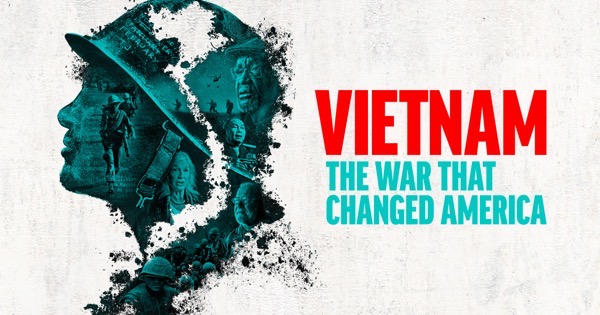
The recently released Apple TV+ documentary Vietnam: The War That Changed America left me with a lot of mixed emotions. Not about the documentary itself. It’s well done and deserves attention. Both as a reflection of our past history and also how it projects forward into our present moment. Apple TV Vietnam The War That Changed America key art graphic header 4 1 show home.jpg.og. The documentary itself is excellent work. The six episodes splice together historical footage-some already famous, some new-with interviews from those who were actually there, on all sides of the conflict. We’ve seen similar story telling techniques in other historical documentaries. This time around we get to hear not just from Americans, but also from North Vietnamese and Viet Cong voices. These moments are certainly compelling, as are some of the stories of the journalists and other non-combatants involved. Add to that what I’ll call the reunion factor. Each episode features a couple of individuals who served together to tell their stories, often with completely different views on the war and its aims. In the episode’s conclusion they are then reunited. It’s effective and at times emotional and effectively reveals the folly and tragedy of division. As good as the series is at chronicling an inflection point in American and world history, what got me thinking was again witnessing scenes of anti-war protests. While I’ve seen many such scenes before, watching them through the prism of this contemporary moment of peril we’re trying to find our way through in the U.S left me curious and unsettled. There’s no doubt that those anti-war protests had an impact on America culturally and politically. That tumultuous era created new alliances and divisions over root causes that we are still fighting over today. But as I watch those surging crowds of protesters, knowing how history often repeats and/or rhymes, I remind myself that was a different age. One without the organizing tools like social media and mobile communications that we have at our disposal now. As I and many others anguish over the lack of leadership defying what is happening currently in Washington DC, I’m left wondering, given the tools we have at our disposal today, what it will take to effectively take advantage of those tools and galvanize, as was done then, to meet the challenges of today. Certainly the forces we’re now in contest with have bought and pillaged some of those services and learned how to use them more effectively than those in the reluctant opposition. Perhaps we lost this round when most of us left Twitter to avoid the cesspool of Elon Musk’s making, instead of sticking around and forcing them to toss us off. It took time in that era for anti-government pressure to come together and coalesce with enough momentum to bring change. And yes, it also took events like the murders of student protestors at Kent State, Martin Luther King, and Bobby Kennedy, not to mention the too many casualties of war. Let’s hope we don’t need the time, or that type of violence, for leaders to emerge and spark enough outrage to bring a stop to the evil we now face. I’m not talking about leaders emerging from conventional political party structures. I’m talking about from the ground up. The tools are there. It should be easier to organize and get the word out with less effort than it was during the age of the War in Vietnam. Here’s also hoping we have the courage, conviction, and most importantly the desire to do what is necessary when the time comes. Because it’s coming. You can find more of my writings on a variety of topics on Medium at this link, including in the publications Ellemeno and Rome. I can also be found on social media under my name as above. 
Sunday Morning Reading

Bogus science, finance, politics, and tech dominate this Groundhog Day edition of Sunday Morning Reading.

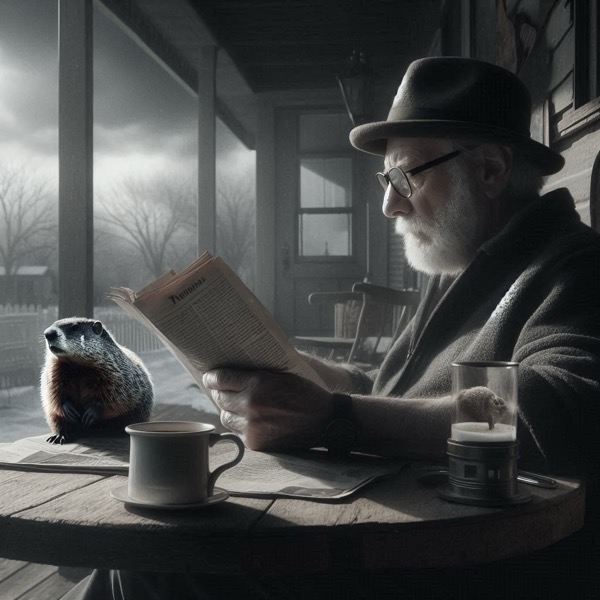
Here we go again. If it feels like Groundhog Day that’s because it is. Happens every year, but the things going on in this country feel very similar to, yet even more dangerous, than they did eight years ago. It’s a movie we don’t want to revisit, but are living through. Live through it we must. Enjoy today’s Sunday Morning Reading while we try to avoid repeating the same mistakes, or at least dodging them. With trade wars now needlessly underway most of the big news ahead this week will be in the financial markets. John Lanchester has an excellent piece with excellent context about finance and what he calls “its grotesquely outsize role in the way we live now” in For Every Winner A Loser. Meanwhile as the world focuses on trade wars, Elon Musk and who knows who else is rampaging through the federal government in ways that sound more than illegal. Josh Marshall asks Who Can Stop Elon’s ‘Team’ Wilding Its Way Through The Federal Government? I don’t often link to Wall Street Journal pieces in this column unless they are about tech related topics. This one by The Editorial Board is worth a read and definitely worth the headline: The Dumbest Trade War In History. Seems like Murdoch and his scribes got what they wished for. Again. On the tech front, running parallel to our political misfortunes is a river of thought on Artificial Intelligence, most of it negative these days, but also thoughtful. Alex Kirshner interviews Ed Zitron and came away with One Of Big Tech’s Angriest Critics Explains The Problem.  Audrey Watters tackles the issue and says “In this AI future, there is no accountability. There is no privacy. There is no public education. There is no democracy. AI is the antithesis of all of this.” I fear she’s correct. Check out AI Foreclosure for her piece, but also the excellent collection of links on the subject she provides. Whether it’s the science of tech or the science of finance, there’s science. We ignore it at our peril. But what happens if some of the science is bogus? Frederick Joelving, Cyril Labbé, and Guillaume Cabanac tell us that Bogus Research Is Undermining Good Science, Slowing Lifesaving Research. In this day and age going viral is the equivalent of getting that infamous 15 minutes of fame. Both are fleeting. Joan Westenberg says Trust Me. You Don’t Want To Go Viral. NatashaMH writes about a woman finding meaning in memoirs in Drowning In Sobriety. And, as we enter Black History Month in the U.S., check out Deborah W. Parker’s piece on Belle da Costa Greene in The Black Librarian Who Rewrote The Rules Of Power, Gender and Passing As White. If you’re interested in just what the heck Sunday Morning Reading is all about you can read more about the origins of Sunday Morning Reading here.  You can also find more of my writings on Medium at this link, including in the publications Ellemeno and Rome. You can also find me on social networks under my own name.

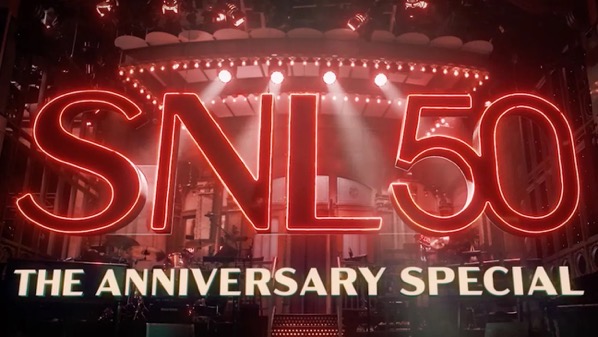
This Is A Must See: QuestLove’s Video Tease of 50 Years of SNL Music

One helluva a teaser for the retrospective of 50 years of SNL music.

Hands down. Stand up. Let your head spin. This Questlove video mix of 50 Years of SNL Music is a must watch for fans, non-fans, or anyone who has a heartbeat. 

 The clip above teases the upcoming Ladies & Gentlemen…50 Years of S.N.L Music airing on January 27th. If you’re not teased I don’t know what else could do that for you. As if the memories of the performances in this tease aren’t enough, the editing is something to be in awe of.

Just sit back. Watch it. I’ve archived it everywhere I could. You should too. I’m looking forward to the full show. How could you not be?

Then New York Times has a write up on the piece and interview with Ahmir Light (Questlove) by Alan Light you might also want to check out. 

FYI: You may have to find the video on YouTube. The Watch on YouTube link above appears to work sometimes and others note.

You can find more of my writings on a variety of topics on Medium at this link, including in the publications Ellemeno and Rome. I can also be found on social media under my name as above. 
One Year Ago After Hell Froze Over We Opened The Lehman Trilogy

Shows come and go. Some create bonds that transcend the impermanence.

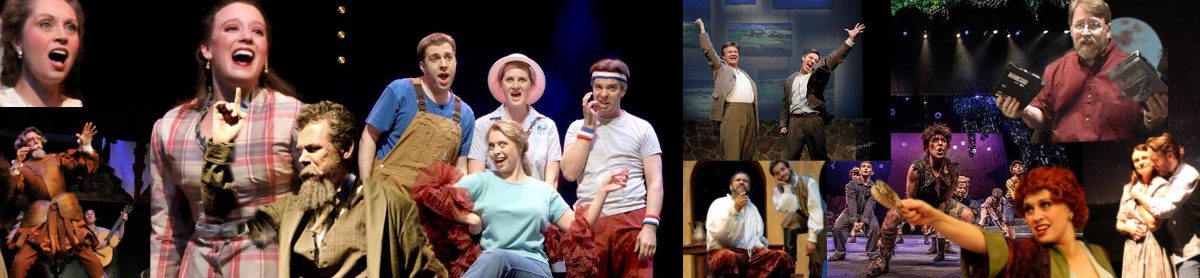
One year ago tonight we opened The Lehman Trilogy at Playhouse on the Square in Memphis. Openings come. Openings, and shows, go. This one has stuck with those of us who lived, worked, sweat, froze, caught COVID, and finally got the show in front of an audience.  You can watch the trailer below.

My undying love and gratitude to the three gentlemen who played the Lehman brothers (and everyone else) in the show, Michael Gravois, Kevar Maffitt, and John Maness (pictured left to right below.)

Along the way they became my brothers as well. It was one of those shows that creates a bond that will never break, regardless of the adventures we each and all pursue in the future. Those are the rare shows. They are the rare talents I got to work and play with and always cherish.

Onwards.

You can find more of my writings on a variety of topics on Medium at this link, including in the publications Ellemeno and Rome. I can also be found on social media under my name as above. 

Sunday Morning Reading

Good reading and good writing is just a heartbeat away in this week’s Sunday Morning Reading

What do Aristotle, Katherine Hepburn, Garth Hudson, beautiful minds, and ugly hearts have in common? They all make an appearance in this week’s Sunday Morning Reading. Or at least writers doing their thing and writing about them do. Hearts can be ugly things, yet they draw our poets, songwriters, and story tellers like moths to a flame. NatashaMH flutters around the heat in The Beautiful Mind Of An Ugly Heart. Speaking of ugly hearts, quite a few of them are on appearing on shirt sleeves alongside all the chest thumping and Nazi salutes going on here in the U.S (and elsewhere). We’re only a week into the victory laps and lapses of humility, yet already writers are wearing out keyboards with words of resistance. Ian Dunt has penned How To Resist The Tech Overlords. In this new and hot category of writing, let’s hope none of this seems like fiction down the road. Another way to resist the tech overlords is to just say no when they overreach. Microsoft overstepped by raising everyone’s Office 365 subscription prices on the inclusion, wanted or not, of its Microsoft 366 Copilot AI features. There’s a way to avoid the price hike written up by Mark Hachman on PC World. You might want to check that out. For a good read on the entire Microsoft situation, Ed Bott chronicles the story of Microsoft’s latest AI unintelligent move in The Microsoft 365 Copilot Launch Was A Total Disaster. Meanwhile the Chinese might have found a way to fight the AI money grab and spend long before we reach the cash out stage. Zeyi Yang lays it out in How Chinese AI Startup DeepSeek Made A Model That Rivals OpenAI. The sexy stories about TikTok might be taking a back seat to this one. Alex Himelfarb tells us The Politics of “Common Sense” Is Making Us Meaner. He’s right. Joan Westenberg takes it all on in Clash: Power, Greed, And The Fight For a Fair Future. If you’re concerned about what the tech side of all of these moments of madness we’re living through might mean, remember it’s not the tech and it is. Check out Nina Metz’s review of the Katherine Hepburn and Spencer Tracy flick Desk Set. As Ms. Metz puts it, This Movie With Katherine Hepburn And Spencer Tracy Anticipated Anxieties About The Internet And AI. Oh, also check out the flick. You won’t be sorry. There really is nothing new under the sun, including cribbing and cropping from the work of others. Massimo Pugliucci takes a look at Ayn Rand’s Objectivist theories and her claims to be influenced by Aristotle. As he puts it well, “one can hardly imagine what possible points of contact the two might have.” Take a look at On Ayn Rand and Aristotle. These are indeed challenging times and often they feel quite dark. Alexander Verbeek gives us the always needed reminder that When Darkness Returns, Art Exists. And on that note, and since we lost one of the greatest musical artists of my generation, Garth Hudson, this week, Check out Amanda Petrusich’s Remembering Garth Hudson, The Man Who Transformed The Band. Remember many of Hudson’s and The Band’s creations came in another turbulent era in our history. A beautiful musician and beautiful mind. If you’re interested in just what the heck Sunday Morning Reading is all about you can read more about the origins of Sunday Morning Reading here.  You can also find more of my writings on Medium at this link, including in the publications Ellemeno and Rome. You can also find me on social networks under my own name.

Where’s Wanda? Is Worth A Watch

Good laughs to be had in this screwball black comedy.

Where’s Wanda on Apple TV+ is certainly worth a watch but it also begs the question my wife asked after we concluded viewing the first season, “where was the advertising and marketing for this show?”

Perhaps we missed whatever short marketing window Apple opened for the series, but it escaped our radar, and we only recently stumbled on it at the tail end of our queue by accident. Regardless, as I said, it’s worth a watch, especially if you’re in the mood for some good laughter.

Where’s Wanda? is a German language streaming series written by British writer Oliver Lansley, and directed by German director Zoltan Spirandelli. It was and is marketed as a black comedy, but I think black screwball comedy is more appropriate. Yes, there are subtitles. They also have some fun with that throughout.

The Wanda of the title is a young teenage girl gone missing and the plot ends up involving not only her family but their entire small town in searching for her. While the family drives the story, they guide us through enough of the town to be charmed and amused by the folks we meet with both recognition and surprise, as the plot evolves and involves more and more of the town in its mysteries.

The cast is uniformly excellent and I especially thought Heike Makatsch as the mother was superb. The moments between the younger cast members were some of the most engaging, hilarious, and touching scenes about the awkward moments in young people’s lives I’ve seen in a while. Where’s Wanda? gets silly, it gets serious, and it gets under your skin because of excellent work all around by the team that put it together.

You can find more of my writings on a variety of topics on Medium at this link, including in the publications Ellemeno and Rome. I can also be found on social media under my name as above. 

Add ‘Good Night and Good Luck’ To Your Streaming Cue

Worth a watch or a re-watch.

Last night after a rough, though totally not surprising day, I posted the following on social media:

Certainly it was how I felt and was indeed an homage to Mr. Murrow and what he stood for. I didn’t go immediately to bed after posting that “good night” message. Instead I re-watched the excellent film containing Murrow’s famous sign-off, “Good Night and Good Luck.”

As we all go through what we’re going to continue to go through (and who really knows what that is), I’d recommend watching or re-watching the film again. It’s on most streaming services so it’s easy to find.

MV5BODBkZGQ2OGEtNjU0MC00YjdlLWFmZGEtNTZjZTRiZjhlNGRmXkEyXkFqcGc@. V1 FMjpg UX1000 .

There are and will be pressures all the way around and certainly a dramatization of any kind compresses events to create that drama. Given that we may never hear about any of the recent conflicts that I can only hope happened inside corporate media headquarters before they folded up their tents to march willingly in step with the new administration, the story of taking on McCarthy, while also relevant to our current moment, is really just the stage for the one behind the scenes that impacts what we see or don’t see on our screens of so many sizes.

This isn’t some moment of nostalgia for a time gone by. It is a recognition that where we are now is a place we’ve been before. This time around those that control the media and messaging have, for the moment, much more control than they did in Murrow’s day. Make no mistake, they had some control then, but now it’s more pervasive and the Murrow’s, Friendly’s and Paley’s are fewer in number.

You can find more of my writings on a variety of topics on Medium at this link, including in the publications Ellemeno and Rome. I can also be found on social media under my name as above. 

Sunday Morning Reading

History has its layers and facts might be damned, but that’s what myths are made of.

Tick. Tock. Or is that TikTok? Regardless, it’s the last Sunday Morning Reading column before things take a drastic turn here in the United States. Plenty to be concerned about, but Sunday Morning Reading will sill keep chugging along until they turn out the lights. That said, quite a bit of today’s chugging focuses on that messy intersection of tech and politics, because, well, you know, that muddled mess of things is what attracts my attention. They are no small things.

Speaking of small things, David Todd McCarty suggests that when we get too overwhelmed perhaps it’s time to get small. Check out Let’s Get Small.

There’s A Reason Why It Feels Like The Internet Has Gone Bad is actually a short interview with Cory Doctorow by Allison Morrow about a term Doctorow coined that I think fits much (and not just on the Internet) of what we’re already living through and what we’re in for: enshittification.

George Dillard wonders why modern business tycoons are like their forbears in Nerds, Curdled.

Jared Yates Sexton has some thoughts on dealing with what’s coming in Back Into The Breach: Thoughts On The Second Trump Presidency. Good read.

The toadstools salivating to use government to dismantle government no longer grow in shadowy, dank places. Joan Westenberg takes on Silicon Valleys’s Secret Love Affair With The State.

John Gruber highlights and expands on an article by Kyle Wiggins at TechCrunch that hit amidst the growing chaos this week when Google announced that’s its ever declining search product would now require JavaScript in order to use Google Search. Check out Google Search, More Machine Now Than Man, Begins Requiring JavaScript.

Joseph Finder takes a look at The Russian Roots Of American Crime Fiction—And The O.G. It’s not that the characters created by Dostoevsky and Gogol were Russian. They were merely human.

We love stories, but we love our myths more. Neil Steinberg takes on The Myths of Telephone History. The lies we agree upon might just be the most pungent of them all.

To close things out, NatashaMH reminds us in Chestnut Roasting On An Open Fire that some say that “the strength of a superhero is determined by the strength of his villain—the greater the adversary, the mightier the hero.”  We’re about to find out if that’s true or not.

If you’re interested in just what the heck Sunday Morning Reading is all about you can read more about the origins of Sunday Morning Reading here.  You can also find more of my writings on Medium at this link, including in the publications Ellemeno and Rome. You can also find me on social networks under my own name.

The Farce of Ritual

The ritual games cowards play.

We’re a bunch of cowards. Mostly. And we take cover behind rituals, ceremonies, and traditions. 

Megan and Tom Ceremony-135-1024x683.

I’m sure at some point in your life you’ve attended or participated in a wedding which you knew was doomed. Yet, when the officiant asked if you were willing to support this union you went along and agreed. I’m guessing you never spoke up when given the opportunity to do so either. You later danced with the bride or the groom, wished them well, went back to your beverage and whispered into the ear of your plus one that there was no way the marriage would last. 

Their choice. Their life. Their bad. 

Perhaps at some point you’ve participated in a meeting of the PTA, or some other local body, or a social organization with an elected structure. Or perhaps you’ve been both lucky or unlucky enough to perform public service in a government organization of some sort. 

Regardless of the situation, the mission, or the efforts of those involved, if you’ve done any of the above or similar, you know just how much of a farce the rituals we hide behind in these circumstances don’t really offer much cover, because if those you’re working with don’t see through the thin veneer of the farce and the roles they play, eventually someone watching catches on. 

Yet we perpetuate them. We don’t rock the boat out of some misguided quest for comity, community, or conviviality.

We’re doing that on a national and global scale these days as the U.S prepares to descend into a maelstrom that everyone sees coming, and like that moment in a wedding ceremony when the rolling waves make us a bit queasy, there’s no stomach for stopping the proceedings. 

Certainly there are folks sounding the alarms about what’s to come politically, socially, and economically in the coming days. Those voices unfortunately are drowned out by a chorus of congratulations, traditions, and a fear of sticking necks out.  

When a marriage ends in the failure you knew would happen and did nothing to try and stop it’s easy to take comfort in the knowledge you were right all along. Smug self-righteousness and reliance on traditions isn’t going to be worth much when this shotgun wedding comes to an end. 

Watching the ritual confirmation hearings that accompany the change of administrations confirm my view that we prefer farce even when it presages a tragedy we can all see coming. Better to just surf along with the current and not make waves large enough to capsize the ship of state. Eventually those waves crash home and nature’s rituals wash away those we’ve built. 

For the record, nobody ever says bad things in public about the deceased at a funeral either. 

You can find more of my writings on a variety of topics on Medium at this link, including in the publications Ellemeno and Rome. I can also be found on social media under my name as above. 
Sunday Morning Reading

A nod to Billy Joel, a little Faust, a little Shakespeare and the cycle of life keeps turning.

We may not have started the fire. In the words of Billy Joel, “it was always burning.” Still we can always try and fight it. I’m not sure how that’s working out but it does seem to be our lot. Sifting through smoke and ashes, here’s a little Sunday Morning Reading to share.

Kicking things off is David Todd McCarty’s Looking for God, Sitting in Hell. Summed up nicely, “we get so lost in semantics that we forget the important parts.” Indeed.

David Sterling Brown tells us What Shakespeare Revealed About the Chaotic Reign of Richard III – And Why The Play Still Resonates In The Age of Donald Trump. The only thing I question is the word “still” in the headline. There’s not a moment of being human that isn’t contained in the stories and characters of Shakespeare. We haven’t invented a new way of being good, bad or indifferent in quite some time.

And while we’re on the literature beat Brian Klaas give us Faustian Capitalism. Again, there’s nothing new under the sun here as we watch this country’s wealthiest men bend their knees in supplication, but there’s some small comfort in knowing we’ve been this selfishly stupid before.

John Pavlovitz hits a nail on the head with The California Fires Are a Disaster. The American Cruelty Is A Tragedy. It may be beyond our capacity to comprehend devastation, but as the previous two entries show, it shouldn’t be beyond our ability to know we keep repeating the same mistakes.  Or maybe that’s really just the hell we’re living?

Speaking of Faustian bargains, Mike Masnick lays out The Good, The Bad, And The Stupid In Meta’s New Content Policies.

This piece should scare you, but again, its subject is as old as humankind’s penchant for inhumanity. Stephanie McCrummen shines a bit of light as The Army Of God Comes Out Of The Shadows.

Derek Thompson takes a look at The Anti-Social Century and how our reality is changing as we spend so much of our time alone.

Perhaps one of the keys to being less alone and less anti-social is choosing your friends wisely. Natasha MH says that “To survive this life, it’s crucial to discern which friends are worth keeping and which aren’t. You are the guardian of your own peace of mind” as she lays out The Optimist’s Dilemma In A Pessimistic World.

And finally, Ian Dunt offers A Little Bit Of Hope After A Terrible Week, in what he calls a survival guide for the next four years. Ian says “History has no direction.” He’s correct. It’s a circle, a cycle, a carousel.

If you’re interested in just what the heck Sunday Morning Reading is all about you can read more about the origins of Sunday Morning Reading here.  You can also find more of my writings on Medium at this link, including in the publications Ellemeno and Rome. You can also find me on social networks under my own name.