Today

Life on the Wicked Stage: Act 3
Musings on life, the theatre, technology, culture and the occasional emu sighting
Today

Politics, the arts, a little snow, and the end of an era
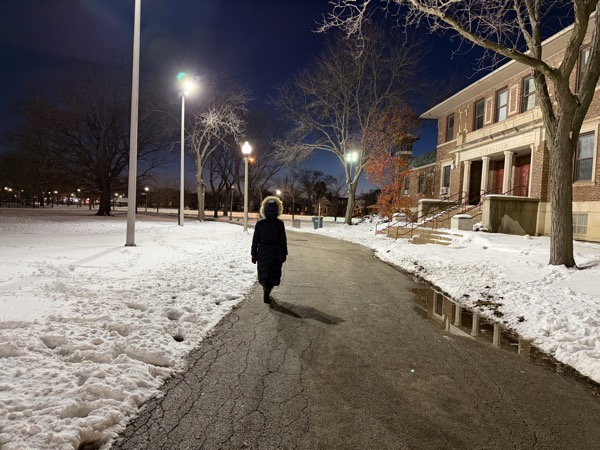
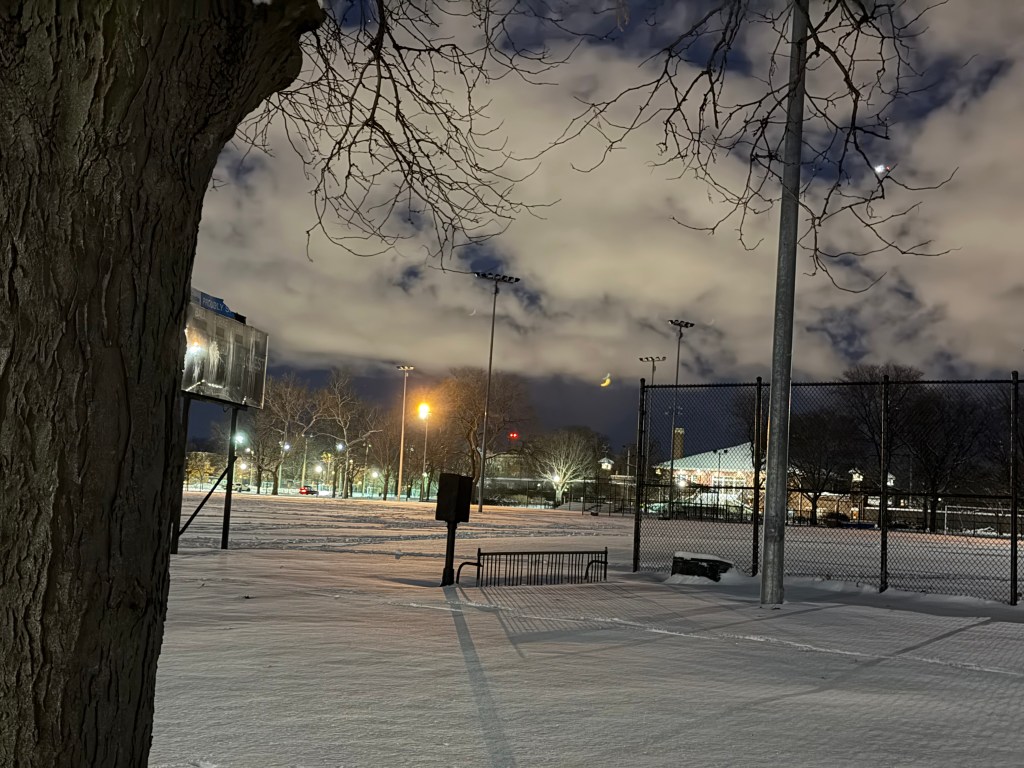
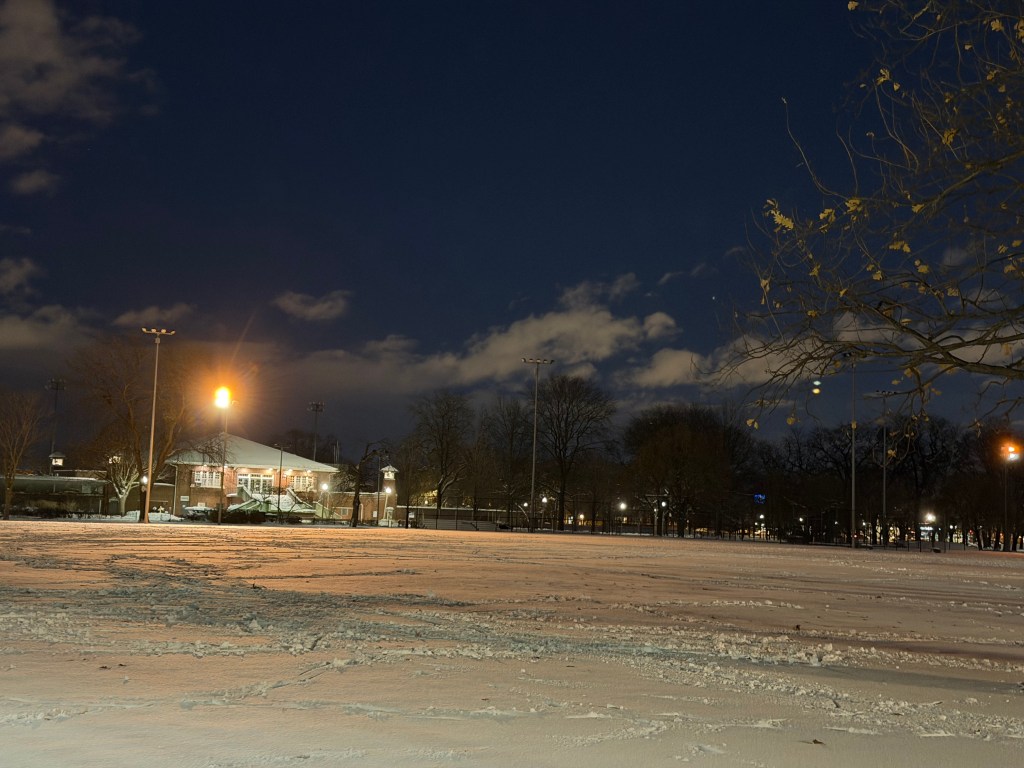
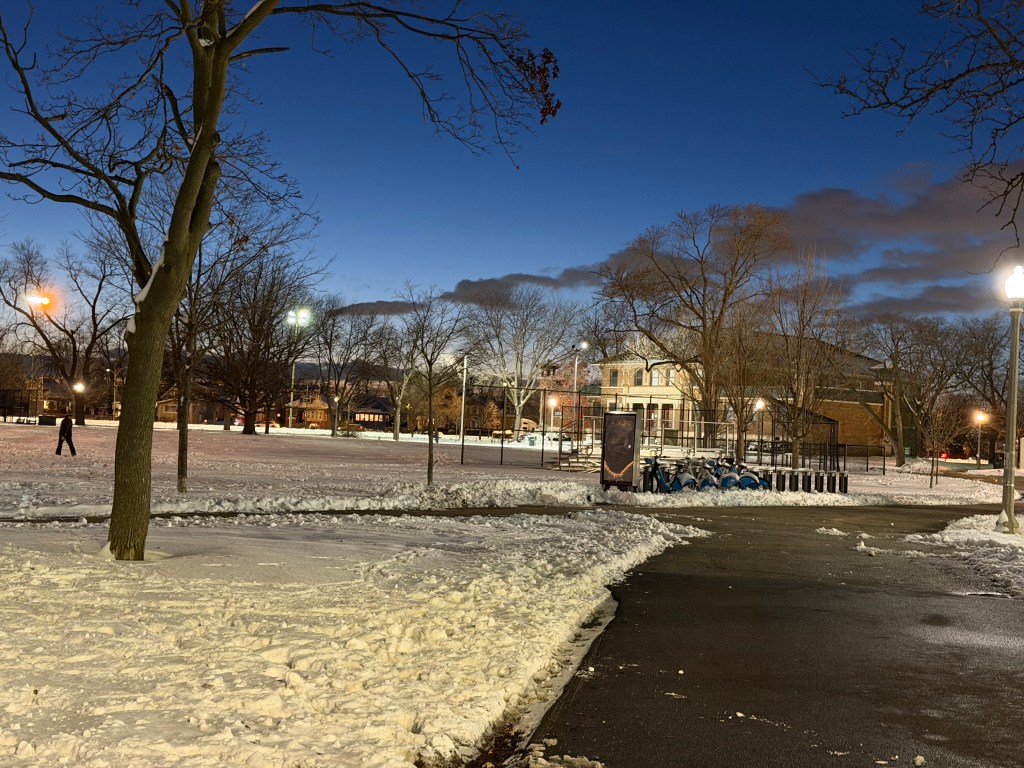
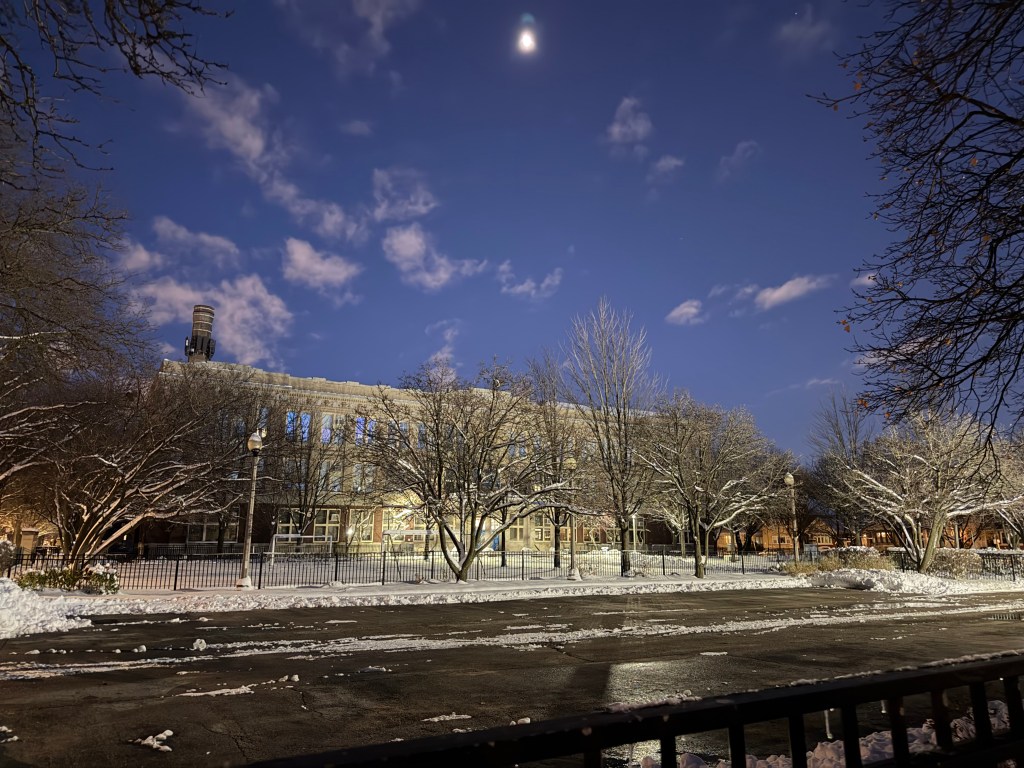
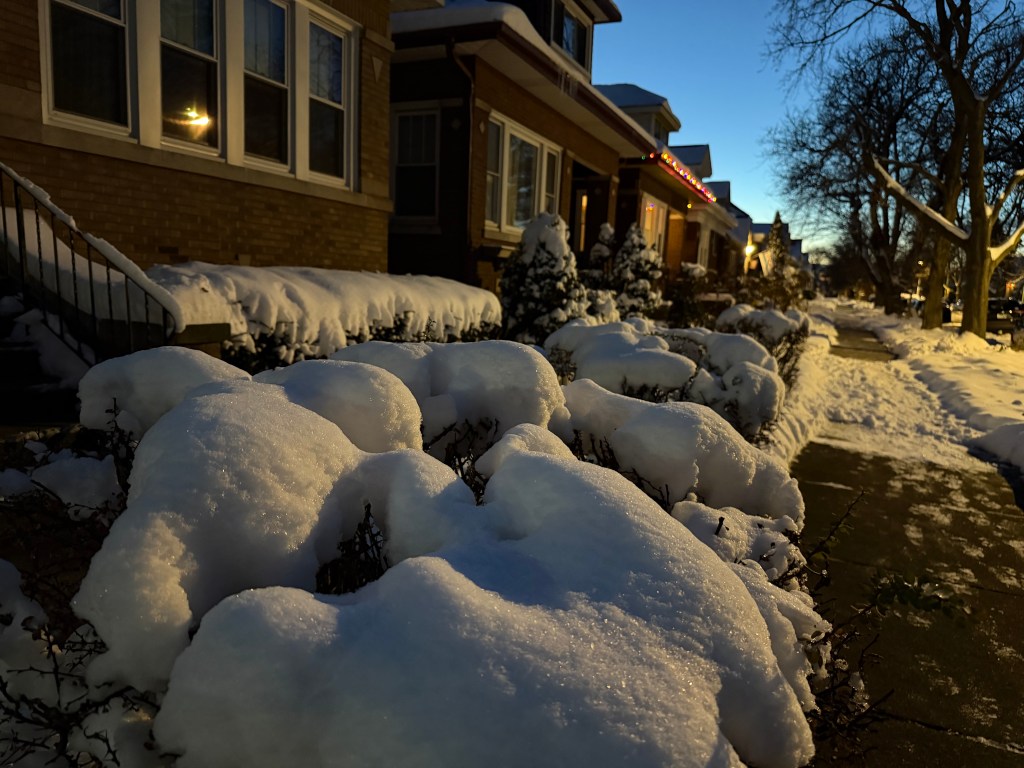
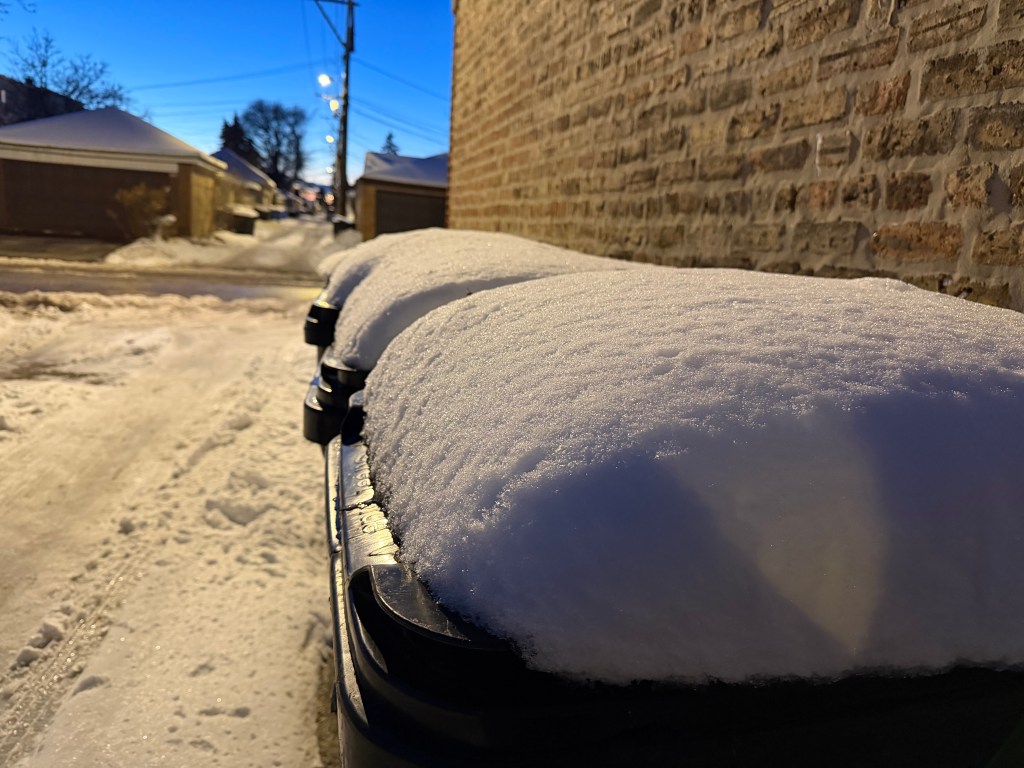
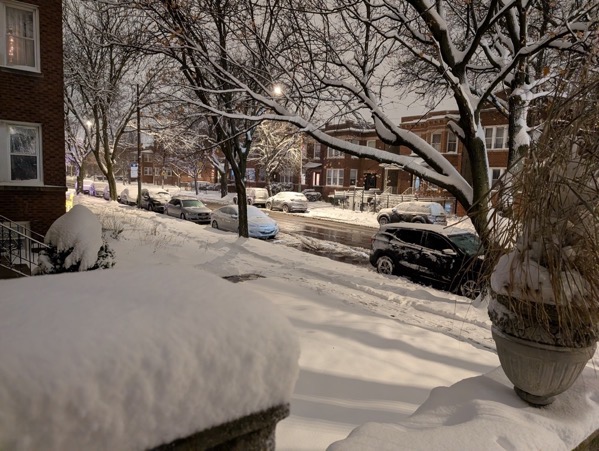
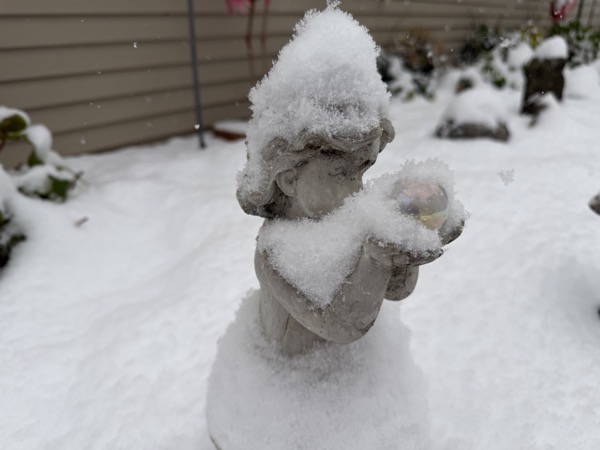
It’s a Sunday and Fall is homing in on Winter as the first snow of the season hits Chicago this morning. Perfect time for a little Sunday Morning Reading featuring some interesting stories about the arts, AI, and home.

As the first flakes of this winter of discontent fall, two interesting reads highlight some of the chaos the art-less U.S administration is inflicting on the American arts scene, specifically The Kennedy Center. Shawn McCreesh takes a look at the damage being done in The Kennedy Center Crackup.
Meanwhile, Charlotte Higgins reports that the Washington National Opera May Move Out Of The Kennedy Center Due to Trump ‘Takeover.’ I’m here to tell you that while what’s happening on the banks of the Potomac may feel very inside the beltway, the repercussions are being felt in the boardrooms of arts organizations across the country.
The above, like most of our news of late, is certainly not something to laugh at. That doesn’t mean we shouldn’t find ways to laugh at the incompetent, ignorant and dangerous players wreaking havoc in their wake. Laughter gets under their all too thin skins, no matter how made up or stretched too tight by surgery. Mike Monteiro offers up How To Point At Fascists And Laugh.
NatashaMH, far too young to worry about being old, takes a look at creating art as she nears the mid-century mark in I Don’t Paint For Your Sofa. Youngsters these days.
Art and politics might be an unholy mix in dangerous times like these, but there’s another foul concoction brewing. Adam Willems points to An ex-Intel CEO’s Mission To Build A Christian AI: ‘Hasten The Coming of Christ’s Return.’ If you ask me these folks wishing for these kind of end times have really missed the points. All of them.
Continuing on the AI front there seems to be a bit of weakening in the walls of what most concede is an economic bubble. The cliché is that bubbles pop. Those that don’t, just disappear as they float away. Ben Thompson takes a look at what happens in either case in The Benefits of Bubbles.
Home is where hearts are and often places you can’t return back to. I’ve lived both. Chris Andrei is Searching For The Elusive Feeling Of Home.
With the weather changing and snowflakes falling out my window, there’s a passage of time marker about to be set. The Farmers’ Almanac is about to shut down. Growing up in rural America there were only two publications that everyone I knew received in the mail. It was always a big deal in our house when my dad, who was the postmaster, brought those home. The Sears Catalog and The Farmer’s Almanac. The Sears Catalog is long gone. The 2026 edition of the latter will be its last. Grace Snelling takes a look back and ahead in After More Than 200 Years, The Farmers’ Almanac Is Shutting Down For Good.
Returning to where this week’s column began, the arts, Jack Rodolico’s The Blue Book Burglar examines how New York’s once vaunted Social Register, was not only a destination that social climbers desired to be included in, but was also a hit list for the country’s hardest working art thief. I just don’t understand how the current thieves doing today’s pillaging have it so damn easy.
If you’re interested in just what the heck Sunday Morning Reading is all about you can read more about the origins of Sunday Morning Reading here. If you’d like more click on the Sunday Morning Reading link in the category column to check out what’s been shared on Sunday’s past. You can also find more of my writings on Medium at this link, including in the publications Ellemeno and Rome.
I love the change of seasons. I especially love the change of seasons where I grew up in Virginia and also where I’ve lived for most of my professional live in Chicago. The simple reason is I’m always impressed with Mother Nature’s show when the leaves return in the Spring and when they change color in the Fall.
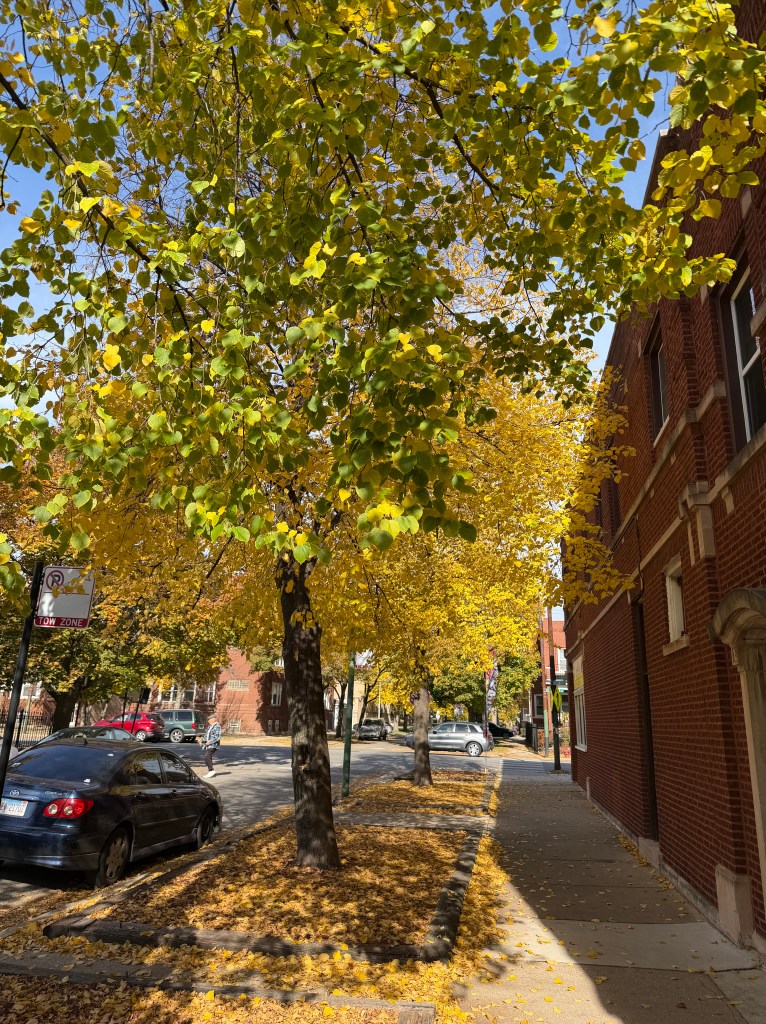
We’re at the peak Fall color season here in Chicago and driving through many of the streets in my neighborhood you do so under canopies of color.
Here are a few shots I’ve captured recently.


Color me curious
Two things everyone in our circles are talking about. ICE raids and a late arriving Fall. As far as the usual colors we get every Fall, this year most of our leaves haven’t turned yet. We’re about to turn the calendar from October to November and most of the foliage is still quite green.

Many of the early turning golden leaves are gone and filling the gutters, and there’s the occasional burst of red among the green. But all feels late. It will be interesting to see how this season progresses.

Shear terror in the face of madness
When you live in Chicago, a city under siege by ICE, I’m not sure, but I guess it a strong bent of masochism to watch a movie where your city gets nuked by an unknown enemy. That’s sorta how I felt when my wife and I cued up the excellent Kathryn Bigelow film, A House of Dynamite over the weekend. We debated back and forth, and decided to give it a go. I’m glad we did.

It’s certainly not an easy movie to watch, regardless of where you live. Yes, a city gets nuked. But that’s not the strength or the point of this movie. Nor should it be a spoiler at this point. The strength lies in watching otherwise steely individuals wither when their shields of confidence dissolve into vulnerable realizations as a horrible what-if scenario becomes all too real to contemplate, yet alone live through, even though they’ve contemplated them over and over again in training.
We don’t get the disaster movie special effects explosions and carnage. They aren’t necessary for this film to work. What we do get is far more terrifying. We get holes ripped through the souls of the characters we’re allowed to meet as they do their jobs. We get belief in systems and protocols developed by smart people shattered, leaving us all wondering if any of it was worth it in the end. It’s a parable of the moment.
It’s certainly not a Halloween movie, but I can’t think of a scarier film to watch as it strips away every possible security blanket and myth we might have become just too comfortable imagining, and realize just how much we’re in the hands of human beings just like us when horrible things unfold.
That’s more than frighteningly true with an utterly incompetent administration running the U.S at the moment. Noah Oppenheim’s script subtly, deceptively, and brilliantly lays that out as it carries us deeper into unfolding and inevitable danger that may be too horrible to watch, but is certainly more terrifying not to.
Bigelow and Oppenheim’s characters all seem more than capable of the sensitive jobs they hold. The filmmakers dispense with the tropes typical of these kind of disaster flicks that feature the usual array of martinets, incompetent and insufferable fools, and even heroes, sung or unsung. Sure, we see some of the personal traumas and trivia some may be dealing with as they come to work on the morning in question. But we initially watch each of these men and women of strong character knuckle down to perform when the unthinkable moment presents itself.
We then watch as they ultimately come face to face with that horrible moment of realization that there is nothing they can do to stop the inevitable. We watch as the enormous personal toll alters their breathing as they have no choice but to carry on with psychic wounds bigger than any smoldering crater before the missile even hits. Bigelow’s camera work and the cast’s strong acting gives us searing glimpses into those moments of horror and devastation as she catches her characters when each crushing realization occurs.
In three parts and an epilogue, the movie repeats the same horrible 18 minutes or so from missile detection to impact, presenting the scenarios in different government locales and viewpoints. We see a missile interception station in Alaska communicating with the White House Situation Room, the STRATCOM headquarters in Nebraska, FEMA headquarters as they have to pull out the plans for the inevitable, and the president who is attending a basketball camp event and then whisked away, while his aides work to inform him from the White House.
Those parts overlap using much of the same dialogue presented from these different points of view via video or audio conferences as the government tries to formulate its response. The repetition of dialogue serves as a better tension builder and reminder of the time before impact than any of the countdown clocks we might see on the screen. As does the sudden departures of those who need to be taken to secure locations as events unfold.
Bigelow’s cast includes some big name actors in a cast headed by Idris Elba and Rebecca Ferguson, that also includes Anthony Ramos, Gabriel Basso, Jared Harris, Jason Clarke, Greta Lee, and Tracy Letts among a host of others. Some of that host provides some of the most telling reactions on the periphery of the action as they watch their bosses try to handle the situation.
To my mind, nothing procedural happens that we haven’t seen or read about in countless Cold War thrillers of the past. With one exception. I was left with the same sort of existential dread after viewing A House of Dynamite as I was when I first read Tom Clancy’s Sum of All Fears and realized the weapon was going to explode. The only difference is that there was a hero in the Clancy novel to pick up the pieces and help us move beyond the horror.
In A House of Dynamite there are no heroes. Only humans. Trying to do their best. Not failing. But having to face the reality that sometimes your best is simply not enough in the face of madness.
You can also find more of my writings on a variety of topics on Medium at this link, including in the publications Ellemeno and Rome. I can also be found on social media under my name as above.
Balancing on the edge of a coin
Regardless of the many problems with the Internet, there’s no denying its benefits. One of those is the pleasure of reading stuff I probably would never be aware of without it. In many ways that’s what this Sunday Morning Reading column is about (as well as my life in general on the Internet.) When you read and live life enough, you discover that the trick is always balancing on the edge of the coin that separates the two sides.
There’s comfort perhaps landing on one side or the other, but life is actually in the fragile middle of the muddle somewhere, even if it’s a fine, and increasingly thinner line, often hard to discern.

First up this Sunday is a piece by Josh Marshall of Talking Points Memo called Fear, Greed, Civic Virtue and the Fall of the Elites. Pay attention to that word “virtue.” As Marshall points out it originally meant “manliness.” The word’s evolution is as tricky as the concept itself.
Follow that up with Ian Betteridge’s The Politics of the Missing Middle.
Ian Betteridge’s law of headlines that says any headline that ends in a question mark can be answered with the word “no.” Steven Levy falls into Betteridge’s trap in his piece, Can AI Avoid The Enshittification Trap? Cory Doctorow’s theory of Enshittification has been a popular topic in this column and Betteridge’s law certainly applies here. For those looking for a primer on enshittification Greg Rosalsky has a a quick primer on the topic in A Theory Why The Internet Is Going Down The Toilet.
While technically not falling under the umbrella of enshittification, some of the ways folks are using AI sure sound shitty. Check out Alexandra Jones’s I Realized I’d Been ChatGPT-ed Into Bed: ‘Chatfishing’ Made Finding Love On Dating Apps Even Weirder.
Things are getting weird indeed. Adi Robertson tells us that The Next Legal Frontier Is Your Face and AI.
Several pieces on the arts and creativity stood out to me this week. David Sparks’ The Inherent Value Of The Creative Act reflects on his creative life and his resistance to using AI for the work of creating, but it helps with his administrative tasks. There’s that edge of the coin again.
Authoritarians always target art and artists first. You don’t need an Internet to discover that history, or perhaps we might if the current forces in charge have their way. Andrew Weinstein discusses Trump’s Campaign To Defund The Arts—and Rewrite History.
Speaking of creativity or rather the other side of that coin, Joe Rosenthal takes on Creative Neglect: What About The Apps In Apple? I mentioned some of this in a piece I wrote this past week.
Speaking of that edge and to close out this week, here’s an image of a Mastodon post by friend David Todd McCarty from this morning.

(Coin Image above from ABARONS on Shutterstock)
If you’re interested in just what the heck Sunday Morning Reading is all about you can read more about the origins of Sunday Morning Reading here. If you’d like more click on the Sunday Morning Reading link in the category column to check out what’s been shared on Sunday’s past. You can also find more of my writings on Medium at this link, including in the publications Ellemeno and Rome.
Sharing some photos of interesting moments I’ve seen this Fall.


The neighborhoods around us might be taking precautions due to ICE activity, yet many areas are still pulling out all the stops for Halloween. It’s a paradox as folks try to retain some sense of normality amidst real horrors happening around the city.

Everything you can imagine is different, yet it’s the same.
It’s a Sunday. It’s a Sunday in Chicago. The Cubs lost. (Not surprising.) The Trump regime continues its horrendous snatch and grab policies all over the city (Increasingly not surprising but still terrifying.) Leaves are falling, but somehow they feel dirtier and without the bursts of color we’re used to seeing beforehand. And the world marches on. Time for a little Sunday Morning Reading.

Neil Steinberg wrote a terrific piece about Chicago amidst all that’s going on called What A Lovely Day in Chicago. It’s a love letter. It’s an homage. It’s a snapshot. As he puts it “We need to remember that this is oppression for oppression’s sake, a practice built on lies. The city is fine.” That’s the odd thing. The city is fine. It’s the oppression that’s not.
Timothy Burke’s The News: Reign of Error expands on a piece by Henry Farrell that says that institutions and communities need to coordinate their resistance to Trump. As Burke puts it one of the obstacles is that “the closer that institutions get to one another in character and mission, and the less necessary it is to be competitive, the more that they are overwhelmed by the narcissism of small differences.” It’s an excellent dissection that reveals why some in higher places of different sectors might be holding their tongues while their mouths are agape at what’s going on around us.
Empywheel thinks The Nativists Are Getting Restless: How The Comey Prosecution May Backfire. I’m not sure it matters in the end if the point is do damage as loudly as possible.
David Todd McCarty asks the question Is Your Imagination Robbing You of Real Experiences? Cogito, ergo sum?
I wrote a play years ago about John Brown and Harpers Ferry, one of those moments in American history that we seem to want to forget, yet never goes away. Robert S. Levine tells us Why Donald Trump Wants To Erase John Brown’s Fiery Abolitionist Legacy (and Why He Will Fail.)
There was so much craziness about the Nobel Peace Prize this year given, well you know why. So much so that many of the other awards were overlooked. The Nobel Prize for Literature went to Hungarian author Lázló Krasznahorkai. I have several acquaintances who adore his work and were tremendously excited. I did some reading on Krasznahorkai and stumbled up on this 2011 piece by James Wood called Madness and Civilization about the author. Worth your while.
On the Artificial Intelligence beat, Sora is the latest thing everyone has an immediate love/hate relationship with. But this isn’t about that. Sarah Perez says It’s Not Too Late For Apple To Get AI Right. Frankly, I think it’s too late for any of these companies to get it right, unless “right” is about winning the con game.
Resting my case on that last statement, Alexandra Jones looks into the connections folks can’t make in real life and are turning to AI for in ‘I Realized I’d Been ChatGPT-ed Into Bed’: How ‘Chatfishing Made Finding Love On Dating Apps Even Weirder.”
And as Autumn continues its march, New Englanders Are Fed Up With Leaf-Peeping Tourists Ruining Their Fall, so says Jared Mitovitch.
(Image is a photo I took last Fall)
If you’re interested in just what the heck Sunday Morning Reading is all about you can read more about the origins of Sunday Morning Reading here. If you’d like more click on the Sunday Morning Reading link in the category column to check out what’s been shared on Sunday’s past. You can also find more of my writings on Medium at this link, including in the publications Ellemeno and Rome.

Apple continues working for ICE
I’ve linked to coverage about Apple purging apps that are designed to help those looking to protect themselves from the Trump regime’s ICE actions including ICEBlock and Eyes Up. Add another one to the list, this time the app is called DeICER.

According to Pablo Manríquez of Migrant Insider, DeICER is a “civic-reporting app used to log immigration enforcement activity.”
Manríquez goes on to suggest that Apple effectively is treating federal immigration agents as a protected class of individuals. HIs article also includes an account of an interview with the app’s developer Rafel Concepcion over Apple pulling the app and the app’s intended purpose. It is worth a read.
In Chicago, these are dangerous and confusing times, even more so depending on who you are, what you look like and where you live. With a largely unhelpful media, it is challenging for anyone concerned to find accurate info or, as in the case of Eyes Up, preserve what they may have seen or recorded. Do note that recording info with smartphones is one of the methods of resistance Illinois and Chicago officials are encouraging citizens to perform in the face of these actions.
Even so, there are areas of Chicago wherein you would never know this kind of thing is happening. Local independent media is stepping up its game, but unfortunately doesn’t have the reach that large outlets do.
Apple isn’t alone in their cowardly actions. Google is also pulling apps of similar ilk. Both companies are referring to their respective App Store guidelines in their defense of their actions with Apple telling Concepcion,
Information provided to Apple by law enforcement shows that your app violates Guideline 1.1.1 … because its purpose is to provide location information about law enforcement officers that can be used to harm such officers individually or as a group.
These ICE enforcement actions want to project toughness in their aim to intimidate and harass, but by and large each of these maneuvers to hide what they are doing only serves to show how afraid those responsible for these actions actually are of the chaos, fear, and harm they are causing, regardless of the chest-thumping content they are creating on their raids.
The only ones who appear more afraid are Apple and the other big tech and media companies that keep going along to get along.
You can also find more of my writings on a variety of topics on Medium at this link, including in the publications Ellemeno and Rome. I can also be found on social media under my name as above.