Sunday Morning Reading

When caring becomes a commodity, should we care more or less?

Lots to care about. On all the usual fronts. But in the grand scope of the universe does much of it really matter? Some interesting links to share in this week’s Sunday Morning Reading.

Dan Sinker, taking a look at The Chicago Sun-Times AI flaps calls it The Who Cares Era. His theory is that along the way, nobody cared. I’d venture they cared about the wrong things.

Apple’s annual developer conference WWWDC is a week away and given the many issues the company is confronting lots of folks care and are curious about how Apple begins to address them. Some don’t see Apple changing how it deals with developers, like Aaron Vegh in his post, They’re Not Going to Change.

Some, like John Siracusa, are rooting for Apple and even offering advice. Siracusa’s piece Apple Turnaround is a companion to his recent previous post Apple Turnover. All worth a read, regardless of how you feel about the predicaments Apple finds itself in.

The tech bros who seem to be in the pole position running to rule the world may be making bank, but they’re not winning any friends in the process. They most likely don’t care given that they think they’re on their way to conquering the universe. John Kaag is offering up A Reality Check For Tech Oligarchs. Frankly, I don’t think they live in anything close to reality.

Meanwhile, down here on planet reality, some are looking for ways to survive and perhaps beat the odds seemingly stacked against us. A.M. Hickman lays out a vision for How To Live on $432 a Month In America.

Much of what’s going on around us might seem profane and vulgar, leading to quite a few expletives coming out of our mouths as we cope. David Todd McCarty takes us on an exploration of his love of four-letter words in Frequently Profane But Never Vulgar. For what it’s worth, all words have value in my opinion. Hiding from them is fucking stupid.

Natasha MH is Reclaiming the Joy of Struggle in an AI-Driven World. Better grab that joy while we can, because that struggle is only going to become more intense.

Just when you thought we might have begun to figure out the new landscape of insanity we’re currently struggling through, comes along Ross Anderson who informs us about The Nobel Prize Winner Who Thinks We Have The Universe All Wrong. It may someday stop expanding the way we thought and might just remain stagnant for longer than originally theorized, allowing intelligent life to continue longer than we thought. One may ask, should we care?

(Photo from Vincent Nicolas on UnSplash.)

If you’re interested in just what the heck Sunday Morning Reading is all about you can read more about the origins of Sunday Morning Reading here. You can also find more of my writings on Medium at this link, including in the publications Ellemeno and Rome.

Yes, There’s More on The Chicago Sun-Times AI Flap

Content is no longer king. Revenue generation is the boss.

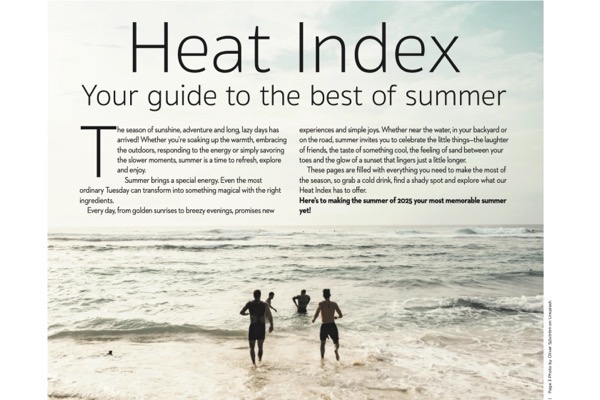
You probably remember last week’s adventure in AI and The Chicago Sun-Times. A special section featuring summer activities called The Heat Index included a traditional list of fifteen books for summer reading. Ten of the books didn’t exist, even though they are listed as being written by actual authors. Yes, AI was the culprit. But so too were the humans.

Well, it turns out there’s more to the story. Other parts of The Heat Index also included things like quotes from folks who claim they never made them and in the case of one chef was never solicited for an interview. The Sun-Times began checking the Heat Index and discovered 10 stories they checked all had similar erroneous sources, some phony, and multiple errors and information that couldn’t be verified.

The digging also unveiled that similar errors existed in past special supplements put together by King Features, a division of Hearts Corp, the newspaper published. The Sun-Times typically does about 10 such special supplements a year.

Here are some examples from the latest article describing the scenario:

One of the first stories in the summer section, touted as “a look at the hammock boom,” quoted several people who may not exist, or at least are not who Buscaglia said they were.

For example, a Ryan Leidecker was described as a product line manager at Eagles Nest Outfitters. The company said Leidecker is not an employee nor ever has been.

Buscaglia also cited a Dr. Jennifer Campos as professor of leisure studies at the University of Colorado. The university says it has no record of an employee named Jennifer Campos.

The story quoted Campos as saying a “hammock has become this generation’s equivalent of the Frisbee on the quad,” from her “2023 research paper published in the Journal of Contemporary Ethnography.” A search of her name in the journal yielded nothing.

In the same story, Mark Ellison is identified as an employee at Great Smoky Mountains National Park and warns about the damage that “improper hammock hanging techniques” can do to trees, with Buscaglia noting the information appeared on the park’s website.

Ellison posted on Facebook that he was not an employee of the park and said no such thing. The national park confirmed to the Sun-Times that Ellison does not work there and that there is no such information about hammocks on its website.

Also cited in the DIY article was a 2024 Wired magazine story by a tech writer named Brian Kahn, about setting up an outdoor movie area in your backyard. Wired told the Sun-Times that Kahn has not written for the publication and the quote was inaccurate.

The author of the content, Mark Buscaglia, did come clean about using AI and his failure to fact check. The Sun-Times has also come clean and said that no Sun-Times employees proofed the content before publishing it under its own banner.

What’s interesting, though not surprising, is The Sun-Times reasoning for how it got into this mess. Using King Features and not Sun-Times staff to prepare the supplements was, as you would expect, a cost-saving move according to Chicago Public Media’s CEO Melissa Bell, who also called the episode a series of “human mistakes.

Here’s another quote:

Bell said the decision to buy special sections from King Features — which predated her arrival at CPM last year — was a “creative solution to keep hitting revenue goals while we transition from print to digital revenue.” She said she had no objection: “I didn’t deeply investigate the editions, and quickly approved the team to continue the practice in place. My reasoning: let’s not sacrifice any revenue.”

As a side note to this story, and pointing to the bigger picture human mistakes I think all of these AI companies have made, it seems to me that a lot of these kind of error prone mistakes or hallucinations — too easily overlooked by most humans — could easily be rectified if the AI output included some sort of watermark or other identifier to say that it was generated by machines. That technology certainly should be easy to implement. At least given the promises of what AI is supposed to offer. But then that lets the air out of the balloon.

When it comes to scraping nickels off the pavement or bigger bucks from investors, and appearing that you’re something you’re not, we humans are far too accomplished at those skills. It’s no wonder Artificial Intelligence spits it back in our faces from time to time.

You can find more of my writings on a variety of topics on Medium at this link, including in the publications Ellemeno and Rome. I can also be found on social media under my name as above. 

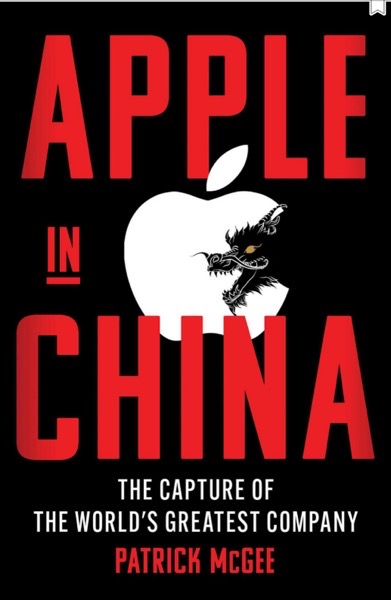
Review: Apple In China by Patrick McGee

An excellent read about Apple and America’s acquiescence to China.

Timing is everything. As I began to write this short review of Patrick McGee’s new book Apple in China, this article, Auto Shangai 2025 Wasn’t Just a Car Show. It Was a Warning to the West, popped up on my radar. Let’s just say, they are nice companion pieces, given what I think the real message of McGee’s book is all about.

Cover page for Patrick McGee's Apple in China

I highly recommend McGee’s Apple in China. It not only provides some rich history and context to much of the hurly burly news we follow about Apple and its relationship with China, but beneath that surface it provides a deeper warning about the failures of capitalism — Apple and American style — in general.

Not only does it hit that crucially important overlay of the story, it provides some fascinating, and at times frightening detail in many of the design, engineering, corporate, and political maneuverings far beneath the surface of all the machinations we read about on our iPhones.

In my opinion, that’s where the real magic is in the story. Given the amount of detail, McGee had access to some excellent sources. He’s an excellent writer. Portions of the story read with the pace, suspense, and scope of an adventure novel.

The focus of the book — and any of the praise and criticism of it — is obviously Apple. The gist is that Apple essentially trained up China to such a point, that with the pull of a plug, China can cut it off, and take what it has learned to dominate the world’s manufacturing sectors. His arguments are persuasive, and since Apple is — and has been — such a crucial focus since the dawn of the iPhone age, that focus makes sense. But lurking beneath those headlines, are other American companies, occasionally mentioned, who might not have gained the same notoriety, but essentially followed the same path. Check out the article I linked to earlier about the Shanghai Auto Show.

If there’s a villain in the story, it’s China. If there’s a useful idiot, it’s Apple, along with other shareholder valuing and profit loving American companies. Think of the parable of The Scorpion and the Frog.

Certainly Tim Cook plays a central role in all of this, but I have to say outside of some of the details, his obsequious compromises and acquiescence throughout comes as no more of surprise revelation as does his knee-bending to the Trump regime’s recent bullying. That’s all been on transparent display for anyone who has paid the slightest bit of attention, which makes any and all of it seem nothing short of a foolish farce, albeit a lucrative one.

In fact, I think you learn more about Foxconn’s Terry Gou than you do about Tim Cook.

If there is one big surprise that I think pierces the Apple aura, it’s just how little central control and understanding of what was happening on the ground in China in the helter-skelter days of early iPhone growth. What on the surface may have seemed like, and been adopted almost as mantra-like by the tech press, a giant corporation with a vision pushing buttons in Monday morning executive meetings, often feels like a company reacting to forces beyond its control that it brought into the tent.

The fact that Apple was as completely overwhelmed by early iPhone sales volume in China is quite frankly astounding, given what most have believed was a generally good central command of inventory control and marketing predictions. Certainly no one can predict everything, but it seems Apple wasn’t even close to understanding, much less predicting, what might happen in that market. Even as it was unfolding.

Obviously Apple won most of those skirmishes and battles. The question the book raises is will Apple have what it takes to win the larger war that it helped set the battlefield for.

(I don’t do affiliate links to products mentioned in any article.)

You can find more of my writings on a variety of topics on Medium at this link, including in the publications Ellemeno and Rome. I can also be found on social media under my name as above. 

Sunday Morning Reading

Happy Mother’s Day reading.

Time for some Sunday Morning Reading on this Mother’s Day, with a short stack of culture, some tech, some politics, and the Ziegfeld Follies tossed in for good measure.

First up is a good long read from Spencer Kornhaber wondering if we’ve entered a cultural dark age. Provocative in parts, predictable in others, it’s worth your time for the journey it takes. Check out Is This The Worst-Ever Era of American Pop Culture?

Kaitlyn Tiffany says We’re Back to the Actually Internet. It’s about fact checking, the need for fact checking, and actually about how fact checking doesn’t really matter.

We may have beat the term fascism to death long before the real beating actually begins, and it’s the Bible thumpers who seem far too eager for the end times with their wishes for some sort of Armageddon beat down. Naomi Klein and Astra Taylor take a look at The Rise of End Times Fascism.

The Apple enthusiast world is still going through some things and will continue to for the foreseeable future. Denny Henke at Beardy Guy Musings is chronicling his thoughts about his move away from using Apple products. His latest, Are Apple Enthusiasts Miserable? takes a look at some of the angst and tensions he sees.

Indie app Developer Thomas Ricourad, the developer of the app Ice Cubes for Mastodon, among other apps, is searching. He’s not alone. Check out Having A Clear Vision In A Blurred World.

Matthew Gurewitsch takes a quick look The Story of a Rose, an upcoming look at an almost forgotten era in A Ziegfeld Girl Recalls The Forgotten War.

Happy Mother’s Day to all.

(image from Aga Putra on Unsplash)

If you’re interested in just what the heck Sunday Morning Reading is all about you can read more about the origins of Sunday Morning Reading here.  You can also find more of my writings on Medium at this link, including in the publications Ellemeno and Rome.

Sunday Morning Reading

Choose to pay attention before you don’t have a choice.

So much is broken these days as we watch more things break. Of course the choice is to watch or not. I prefer watching. I prefer paying attention. That’s why I share these links in Sunday Morning Reading and throughout the week.

Kicking off this week is an excellent essay from Jia Tolentino called My Brain Finally Broke. It’s one of the more powerful pieces I have read on all that’s breaking. The above is the original link. This one is to the web archive of the piece. Obviously I encourage you to read all I like to in Sunday Morning Reading, but this is one you shouldn’t miss.

NatashaMH takes on The Paradox of Choice. If you ask me, we too often enjoy choosing the paradox.

Joan Westenberg takes a look at what happens when one chooses conventional wisdom and the systems and ways things have always worked. Until those ways become a weakness and a downfall in The Cannae Problem. We’re watching this happen in real time folks.

This past week Amazon’s ass-kissing founder Jeff Bezos looked like he might have tired of the stink. In the wake of Trump’s tariffs word got out that Amazon would show customers the amount of a price increase that was due to the Trump tax. That quickly changed. Some say with a phone call from the bumbling boss. Harry McCracken suggests, (I did too), that merchants should let us know who’s screwing who in this broken mess. Check out Of Course We Deserve To Know The True Costs of Tariffs.

What Should We Do If An AI Becomes Conscious? I’m not sure. But then again, look what we as conscious beings are already doing. Mathew Ingram takes a look.

Yanis Varoufakis takes a look at Trump And The Trump Of The Technolords. It’s not a pretty look at the reasoning behind what seems to be happening without reason.

There’s not much new news in Matthew Cunningham-Cook’s piece titled Elon Musk And His DOGE Bro Have Cashed In On American’s Retirement Savings, but it’s a good summary of what has happened for those who choose to pay attention. A better one for those who choose otherwise.

To end this week with an article about hope, take a look at Lessons From A Physician About Hope by Leif Hass. Yes, hope is important. Here’s hoping you always choose wisely.

(Image from Roman Kraft on Unsplash.)

If you’re interested in just what the heck Sunday Morning Reading is all about you can read more about the origins of Sunday Morning Reading here.  You can also find more of my writings on Medium at this link, including in the publications Ellemeno and Rome.

Sunday Morning Reading

We’re always chasing bubbles.

Back from a brief hiatus, there’s plenty to read and share. It feels like it’s becoming increasingly important, and perhaps more urgent to do both. I promise there’s some happiness amidst all of the Strum and Drang down the page.

First up, Canadian Stephen Marche is singing the Red, White and Blues. It’s easy to look from the outside in, or even from within and be dismayed at what’s going on in this country. Because it’s so damn easy to see. Unless of course you’re still in shock, or choosing to ignore it. Marche’s tune doesn’t hit a false note as he says America was a “country of bubbles.”

David Todd McCarty is back Poking The Bear. It’s good seeing him write about politics again.

Drik de Klein of History of Sorts wrote Evil, I Think, Is The Absence of Empathy back in 2019, using Captain G.M. Gilbert’s quote from the Nuremberg trials as the headline. I remember reading it a while ago and it resurfaced this week, proving, as always, just how short our attention spans are. Or perhaps our comprehension and retention capabilities.

NatashaMH says, “I can’t stand people being ignorant bastards” in her excellent piece Our Modern Discontents. Again, a viewpoint from outside the red, white, and blue bubble that feels like it’s ready to pop.

Jacob Silverman’s Welcome To The Slop World: How The Hostile Internet Is Driving Us Crazy is an invitation to a party that turned into something nobody was expecting.

Speaking of bubbles, big tech is in hot water of its own boiling these days. Google is facing anti-trust charges and a possible breakup that probably won’t happen. Wendy Grossman takes a look at Three Times A Monopolist.

Who’d a thunk it? Bot Farms Invade Social Media To Hijack Popular Sentiment. Eric Schwartzman does some digging in those all too fertile fields.

This past week we celebrated William Shakespeare’s birthday. As usual lots of words were written about the writer who used them better than anyone else to describe the human condition. One of the accepted parts of the Bard’s legacy is that he was an absent husband that left his family behind to pursue his calling. But a discovery of a letter might just change that. Check out what Ephrat Livini has to say about the possibility in an Overlooked Letter Rewrites History of Shakespeare’s Bad Marriage.

And for that happiness I promised, I’ll stick with Shakespeare and Cora Fox with ‘I Were Happy But Little Happy, If I Could Say How Much’; Shakespeare’s Insights On Happiness Have Held Up For More Than 400 Years. We often focus on his tragedies, but he reveled in the joys of life as well. Keep those happy bubbles afloat as long as you can. Pop the bad ones.

(Image from Rey Seven on Unsplash)

If you’re interested in just what the heck Sunday Morning Reading is all about you can read more about the origins of Sunday Morning Reading here.  You can also find more of my writings on Medium at this link, including in the publications Ellemeno and Rome.

All The World’s His Stage. Happy Birthday (We Think) to William Shakespeare

We’re merely players.

William Shakespeare is the playwright and poet that described us all. He did so with intelligence and wit. Today, April 23, is the day most mark as his birthday. The record of his baptism is April 26th, so it’s a decent bet the date is close enough.

Shakespeare William _ banner.

There really is nothing new in human behavior under the sun. In his plays and poems I don’t think he missed much in describing every thing good, bad, noble, and foolish about how we operate with each other and within the world. In my view, it’s a shame more of us don’t pay enough attention to his cataloging of humanity. But then he predicted that as well.

Here’s an intriguing side note on this very intelligent man’s celebrated birth date. I asked several AI engines on what day was he born. Gemini, ChatGPT, Perplexity, and DeepSeek returned April 23rd as the likely date with the typical (and mostly accepted) disclaimers that we celebrate that day, but there’s no definitive proof it was the actual date. I asked Siri and Alexa, both returned April 23 as the definitive date. Intriguing that Siri didn’t try to pass that off to ChatGPT. I’m sure Amazon will now offer me all kind of suggestions to purchase anything Shakespeare.

So, I’ll amend slightly my statement about the Bard describing us all and there being nothing new under the sun. He’s correct in that we’re both smart and too often not smart enough to understand what we do and do not know, but he might have missed the mark when it comes to artificial intelligence. Or did he did he?

I’m reasonably certain his works have been fed into AI engines and Chatbot training given that they are long in the public domain. I’m also reasonably certain they ignore his nothing new under the sun descriptions of human interactions in the same way those of us still walking around do.

“Lord, what fools we mortals be!”

You can find more of my writings on a variety of topics on Medium at this link, including in the publications Ellemeno and Rome. I can also be found on social media under my name as above. 

Sunday Morning Reading

More than the bare minimum

It’s another Sunday. At a bare minimum it’s time for a little Sunday Morning Reading. There’s more politics than I’d like to shake any sticks at dominating my reading these days, so apologies if that turns you off. I just don’t think we can turn off or tune out to what’s happening. Like it or not (I don’t) we’re living through an epochal moment in world history demonstrating how little we regard human history. I emphasize “living through” because while we’re bearing witness, it is happening to us and whatever it evolves or devolves into will affect all who come after.

I happen to be one who believes that Trump is the ugly face of the chaos descending around us, propped up by bigger, deeper and darker forces using him as the fool too many fools easily fall for. Jonathan Mahler has an excellent piece that delves a bit into this called How The G.O.P. Fell In Love With Putin’s Russia. Excellent context that should not be ignored.

We’re living in a world daily facing formalist delusions. Benjamin Wittes uses the Abrego Garcia case as one example of that in The Situation: Formalist Delusions Confront Lawless Realities.

Speaking of formalist delusions, who knew some tech bros could declare you dead and wipe you off the books, or at least the books that matter when it comes to navigating life in today’s world. Hannah Natanson, Lisa Rein, and Meryl Kornfield take a look at how the Trump Administration Overrode Social Security Staff To List Immigrants As Dead.

Joan Westenberg calls us America, The Isolated. I can’t argue with her points. Though I will refer you back to Jonathan Mahler’s piece above for wider aperture. The deeper context is that the lens we’ve viewed the world, contained and restrained by borders, has never been the view for the forces now moving so rapidly.

In the growing category of erasing history, John Ismay takes a look at Who’s In and Who’s Out At The Naval Academy’s Library?

Mathew Ingram has penned two terrific posts that address what will certainly become a part of our digital lives as we move forward. Be Careful What You Post On Social Media. They Are Listening is the first post. He’s expanded that with Part 2 as the pace of social media monitoring is sure to be picking up.

Perhaps all of this feels too big or too overwhelming to contemplate in the helter-skelter of our daily lives. But it is beginning to have impacts, big and small. Take a look at Scott McNulty’s very funny run-in with a construction worker at his CVS. While CVS – Construction Versus Scott is about his adventures at his local pharmacy under renovation, there’s a comedy nugget in there that demonstrates how those paying attention are actually paying attention.

My initial reaction to any illness in our children is immediate quarantine and a call to the WHO (I deleted the CDC’s number from my address book because suddenly they just kept telling me to get more vitamin A).

To close out this week, take a look at My Open Letter to Gen Z from NatashaMH. At “a bare minimum,” it’s worth a read to remind us that what we remember and hang on to from “back in the day” is now in a daily collision with what comes tomorrow. Easier to avoid the damage from those collisions perhaps if you acknowledge the maps are constantly changing.

Image from Mega Stolberg on Unsplash.

If you’re interested in just what the heck Sunday Morning Reading is all about you can read more about the origins of Sunday Morning Reading here.  You can also find more of my writings on Medium at this link, including in the publications Ellemeno and Rome.
Sunday Morning Reading

We’re all circling. We’re not listening. We should be reading.

Everything changes. Everything remains the same. Damnit. With that said, here is this week’s Sunday Morning Reading with links to articles worth sharing and perhaps pondering over. There’s a bit of satire, a golden toilet heist, and the evolving nature of a piece from draft to final polish. And, yes, there is politics. Everything changes. Everything remains the same. Damnit.

Let’s kick off with Tina He and The Last Human Choice. That link is to the final version of the story. I also strongly encourage you to check out the draft version she shared here.

Alex Reisner takes on The Unbelievable Scale of AI’s Pirated-Books Problem. The technical scale may indeed boggle, the human greed behind it is a story told too often.

The Apple Intelligence/Siri sucks discussion continues and will certainly do so for quite awhile. Andrew Williams in Wired says To Truly Fix Siri, Apple May Have To Backtrack on One Key Thing–Privacy. I hate to say it, but I think he’s right and wish he weren’t.

Good satire can often be hard to distinguish from the real thing. Eli Grober walks that line well in Sergey Brin: We Need You Working 60 Hours A Week So We Can Replace You As Soon As Possible.

John Passantino takes a look at the unraveling of Threads in Hanging by a Thread.

Clearing the throat and clogging up the arteries with a bit of political writing here’s James Thorton Harris with Imagine Deportation: When Nixon Tried To Pull A Trump On John Lennon. Everything changes, everything remains the same. Damnit.

In the category of “be careful what you wish for,” Phoebe Petrovic in ProPublica gives us How A Push To Amend The Constitution Could Help Trump Expand Presidential Power. We’ve already let quite a few demons out of Pandora’s Box, I’m not so sure we want to crack it open any wider.

Speaking of demons, Elizabeth Lopatto tells us How Trump And Musk Built Their Own Reality. Excellent piece.

John Pavlovitz says we all make mistakes in America Chose The Monster.

Mark Jacob always has a great look at the media, especially in this moment, In this one he examines When The Media Take MAGA Liars At Their Word. I mentioned to Mark that what infuriates me is not just the media taking him at his word–ignorance and stupidity know no bounds–but that they know better and report it out as if they don’t.

And to flush away politics Clodagh Stenson, Jonathan Eden and William McLennan tell the tale of The Inside Story of Blenheim’s Gold Toilet Heist.

Bringing my words at the top full circle, NatashaMH once again delves deep into the personal past through a contemporary moment (her reaction to the streaming hit Adolescence) in A Requiem For My Dreams. I’ll close with a quote from her piece about the series that applies to everything, everywhere all at once:

People say the series is about a new world that’s happening. Fuck that, ignoramuses. It’s about a world that has always been out there behind closed doors when ears weren’t listening

(Image from Ashni on Unsplash)

If you’re interested in just what the heck Sunday Morning Reading is all about you can read more about the origins of Sunday Morning Reading here.  You can also find more of my writings on Medium at this link, including in the publications Ellemeno and Rome.
Name Games On The Internet And In Life

Real names matter. Why is that so unreal?

I wrote a little something for the publication Ellemeno on Medium about names and anonymity on the Internet. Take a look at What’s In a Name?

Shutterstock_1260563305 copy.Prompted by a new display name policy adopted by the publication, this is something I’ve been thinking about for quite some time. I always publish my writing and anything I do on social media under my real name. It’s the same way I conduct my professional life as a theatre director, always using the moniker I was given.

Certainly there are reasons folks adopt other names, handles, and nom-de-plumes and I don’t judge anyone negatively for doing that in an increasingly dangerous world. That said, I’ve always believed the world would be a better place if we all had the courage to conduct ourselves under our real names. But that’s perhaps naive.

Obviously there’s a lot more to say in the piece. I hope you take a few moments and read it.

You can find more of my writings on a variety of topics on Medium at this link, including in the publications Ellemeno and Rome. I can also be found on social media under my name as above.