Major League Baseball kicks off today. Remember every team wins 60 games. Every team loses 60. It’s happens in the remaining 42 that count. #baseball
The 2024 Major League Baseball season starts today. Well, sorta, kinda. The Dodgers and the Padres played a couple of games last week in Korea that are considered regular season games. Except where a few scheduled games already rained out, the rest of the MLB season kicks off today.
Here’s hoping for good games throughout the 162 regular season. But remember, every team wins 60, every team loses 60. It’s what happens with the remaining 42 that matter.
A fool and his money are soon parted the saying goes. That’s obviously an understatement that didn’t come close to anticipating the gullibility of large swathes of the American public. There are obviously flocks of fools out there begging to be fleeced by the conman-in-chief Donald Trump.
A fool and his money are soon parted the saying goes. That’s obviously an understatement that didn’t come close to anticipating the gullibility of large swathes of the American public. There are obviously flocks of fools out there begging to be fleeced by this conman-in-chief Donald Trump. In the last few weeks, supposedly facing financial peril due to the increasingly large legal fees and judgments against him, he’s managed to roll out sales pitches for trashy shoes, launch an IPO for his solipsistic social media network, and now bibles. I just don’t get the fascination with throwing good money after such bad bunkum.
It makes you wonder if all of these folks somehow drank Trump branded water or ate Trump steaks at some point in their lives that contained some sort of additive that bound them to him in some weird way. That makes it sound like bad fiction, but I just find it hard to believe that there are enough minutes in any given day for this many suckers to be born.
Sure, some folks are going to make some money from the Truth Social stock deal. Many more will lose their shirts. I imagine those Trump bibles will one day get passed down through a few familes here and there. Everyone needs a door stop or two. I can’t comment on the shoes, because there’s no rational excuse for anyone who thinks that’s a remotely attractive way to spend money or adorn their feet. But the conman who owns the courts, bilks his creditors, and gives lie to the concept of shame, just keeps on conning and his flock keeps lining up to be sheered.
If we saw any or all of this in a movie or TV show most would change the channel. But then Reality TV is how this whole thing kicked off in the first place.
We are not serious people. But this guy is a serious serial shyster.
You can find more of my writings on a variety of topics on Medium at this link, including in the publications Ellemeno and Rome.
Yowsa did the howls go up! Trump’s bond in the civil fraud case got reduced on appeal from $454 million to $175 million and he got a ten-day stay before he has to cough up the dough. If the intital judgment had been for $175 million instead of $454 million I’d bet we see this differently today if that amount had been upheld. But that’s fiction. In a werid Sartre-esque reality show of our own making. And it shouldn’t be surprising.
That’s how screwed up we’ve allowed this sad excuse of a man to warp most of the world around us. On every conceivable level. We can continue to pretend the institutions we’ve relied on will offer some protections from the likes of this decaying orange turd and someday after he’s gone the world returns to a better place. But he’s crushed any hopes of that. At least for a few generations. Besides it’s a fiction he’s exposed, not one he’s created. Most fairy tales don’t end with happily ever after.
Yes, this vedict is a lifeline. Yes, it seems like he’s getting a break. And you know what? He is. And he will continue to get them. He might one day be held accountable for all of this, but I’m betting not whle he’s still breathing. Life ain’t fair damnit, especially when you’re trying to play by the rules and the other side doesn’t give fuck all about rules.
One of these days we’ll learn that. It will be messy. But at least it’ll be more honest.
Meanwhile: The judge in the porn star hush money case that trial will begin jury selection on April 15th. And so it goes.
You can find more of my writings on a variety of topics on Medium at this link, including in the publications Ellemeno and Rome.
The line between Winter and Spring can be as confusing as it is normal. That fine line between confusing/normal runs through most this week’s Sunday Morning Reading. Enjoy!
It’s a Spring Sunday morning in Chicago. Nippy temps frustrate the daffodils that keep brushing off the snowflakes. As confusing as the weather may be, it’s also quite normal. That fine line between confusing/normal runs through a lot of this week’s Sunday Morning Reading. Mostly tech, some music, some marketing, some fear, and a troll or two, Enjoy!
The big tech news this week was the U.S. going after Apple as a monopoly. It’s brought out the the explainers and turned legions of Apple fan boys into anti-trust lawyers. Even the lawyers are going to need lawyers to figure this one out in my view. One of the best early inning reactions to this was from Jason Snell at Six Colors in U.S. versus Apple: A First Reaction.
When Marketing is everything, everything eventually gets reductive. Doc Searls of The Cluetrain Manifesto fame tackles this in Getting Us Wrong, a piece from December that recently resurfaced in my feeds and is always a timely read. So too is The Cluetrain Manifesto.
Social Media always seems to be at war with itself over most things, misinformation being one in a long list. I’m not sure Social Media presents more or less of that than other means of socialization, but Scott Duke Kominers and Jesse Shapiro think It’s Time To Give Up On Ending Social Media’s Misinformation Problem.
Musician and composer Stan Stewart thinks it’s dangerous to explain something before he does it, but he does so anyway in I’ve Got Some Explaining To Do. With all that’s going on in the world there’s something cooking up inside of Stan and I’m looking forward to the music that comes from this.
Christopher Mims spent a couple of weeks using AI tools to do his work and comes out convinced we’re on the cusp of a ‘Cognitive Revolution.’ As he puts it: “Here’s my verdict: The last time I had an experience this eye-opening and transformative was after I bought my first smartphone.” Check out his thoughts in Want To Know If AI Will Take Your Job? I Tried Using It To Replace Myself.
If you’re interested in just what the heck Sunday Morning Reading is all about you can read more about the origins of Sunday Morning Reading here. You can also find more of my writings on Medium at this link, including in the publications Ellemeno and Rome.
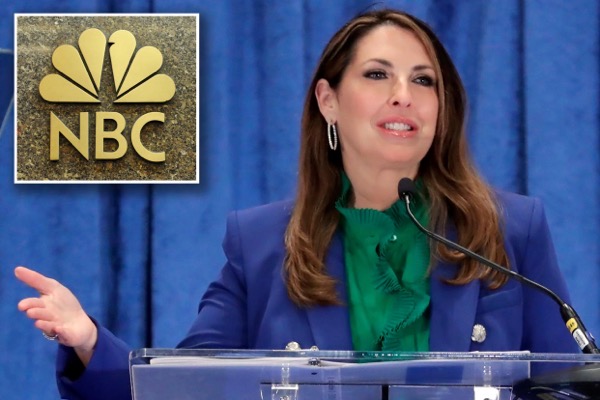
NBC brought out the groaners, the howlers, and the passersby by announcing the hiring of former RNC Chairperson Ronna McDaniel (nee Romney) as a political commentator. Judging by the volume I’d say that got just what they bargained for: more attention.
I can’t say I’m really surprised. NBC has populated it’s talent pool with a number of former GOP stars from the past, including at least one other former RNC Chairperson, Michael Steele, who hosts his own show on weekends. Given that most of those folks have established reasonably anti-Trump street cred, it will be more than interesting to see how this plays out. My suspcision is we’re not looking at yet another Come-to-Jesus conversion. I expect NBC wants to turn more segments into a Crossfire-like spitting match. But even that seems too simple, so who knows.
If NBC had any balls and integrity as a news organization it could have created a different story with this hiring. Maybe even practice some journalism instead of entertainment. Knowing full well the shit storm it would kick up, they could have announced it and then produced a segment with Ronna and one of their more respected show hosts, wherein Ronna is questioned hard about her past activities and statements covering for the forces that want to upend elections and the constitution. It’s all well chronicled and on tape in the NBC vaults. Set her up with a 2 or 3 block segment with Nicolle Wallace and let it play out.
But, as I said, that would take some balls. The decision to roll the announcement of Ronna’s hiring out the way it did speaks louder than the actual hiring itself.
You can find more of my writings on a variety of topics on Medium at this link, including in the publications Ellemeno and Rome.
You can do anything you want in the land of the free and the home of the brave. As long as you don’t get caught. Or as long as you have enough cash in the bank to hire the right legal beagles. That’s the American way. Always has been. The bigger you are the more you can toss around your weight. That works more times than it doesn’t. In the case of the United States vs. Apple, Inc, not so much. Thus far.
The Department of Justice swooped in on Apple charging that the iPhone is the crown jewel of an illegal monopoly. You can read the lawsuit here. I’m not going to get in to all of the legal issues. Not really my game. As to that lawsuit I’ll take the liberty of saying the following:
I don’t understand the equation that led to the monopoly designation. It seems odd given similar such cases in history. The fact that different percentages for different types of valuations is being tossed around in all of the first reactions I think bears that out.
I’m in deep in the Apple ecosystem. I use the hardware and software. I enjoy the tech (when it is working as designed), and I hope they’ll continue to make the high quality products and software they do. Having used hardware and software from other makers, I find Apple’s superior and better for my needs. When and if that changes so will I.
For the most part I buy Apple’s pitch about security and privacy. There are times I think the marketing around security and privacy leans too much towards myth-making, but in my experience the myth seems to have some foundation.
I’ve listened to the complaints from developers and other users through the years and find most of those I understand justified. Apple may have indeed created problems by creating and running the App Store the way it has. I personally don’t feel victimized by that, but I understand the issues presented by those that see it differently.
Bigger picture I will say the following. Apple, like some other familiar tech giants of note (Microsoft, Google, and Amazon), largely brought this on itself with a too big for its bank account britches attitude.
Arrogance and swagger isn’t just a feature of big tech companies. It’s a bug that infects any company or anyone who gets too greedy for their own good. I’ve seen it happen too many times.
History is full of these stories and many American myths are built on that foundation. You work hard, you make your pile, and you do it your way. The world beats a path to your door and you think you own the path and the world. You made your own rules along the way and bent some existing ones to your will. Perhaps broke a few.
That mythical song of good old American capitalism has been sung so often everyone knows the tune and the lyrics. When it comes to Apple’s stanza, you add in a chorus about Apple’s rise from an almost near-death experience and it becomes a siren song with a powerful resonance.
In my view, limited as it may be, Apple could have easily made some adjustments along the way and possibly avoided this current mess. But the powers that be obviously thought different. They also thought they could swagger their way through and beyond this. That may well prove out in the years to come. And it will take years.
Meanwhile, here’s some good early inning commentary on this story so far. I’m sure there will be much more ahead.
Powerful bonds and fast friendships get formed all the time when you’re working in the theatre. There’s an intimacy in the work that sometimes transcends and envelops the work that needs to be experienced to really understand. It doesn’t happen all the time or on every show. Sometimes it’s just a job. But when it does you treasure it, because you know it’s rare.
Our recent production of The Lehman Trilogy was one on the rare ones. And so was the bond that formed.
This past weekend, the three marvelous actors, Michael Gravois, Kevar Maffitt and John Maness, along with his wife Ashley, journeyed north from Memphis to visit me in Chicago. It was a complete and total surprise, aided in no small part by my lovely wife, Thomasin. I mean they got me. Surprise successful. Emotional in every sense of the word. But then, they’ve been surprising me ever since rehearsals began. It was a magical weekend reunion of a magical moment in all of our lives.
Of the many weekend highlights was Michael bestowing a beautiful gift to each of us. Michael is not just an incredibily talented actor, but also a gifted mosaic artist. I’m still finding it difficult to put into words the my experience during this show, so I’m going to excerpt and quote from Michael for the rest of this story:
They may stand independently, but they belong together.
…the week after the Lehman Trilogy closed, I was feeling very melancholy. I began the process as ONE person. One singular person. But over the course of our rehearsals, especially during the week of the snowstorm, a time when the city shut down, four singular individuals decided to brave the elements in order to tame this beast of a show, and I no longer felt like one singular person. I felt like ONE in the plural sense. It was as if we were meant to be together. During the run of the show I felt like a cog in the machine and like the machine itself, both at the same time. We breathed together. We moved together. We thought together. And make no mistake, there WERE FOUR people on that stage. At no time was Warner not with us, even though he was miles away, even though the audience couldn’t see him. For the rest of our lives, no matter where we are on this planet, we may exist as four singular individuals, but at one time we were meant to be together. So I was thinking about this concept of singular and plural oneness, when I remembered this mosaic that I made over twenty years ago. It’s been sitting in my garage all these years, waiting to be framed. I made it with the intention of selling it as ONE mosaic. It was four mosaics, but it was meant to be together.
…we’ll know that at one time, it was intended to be part of ONE group. And this will always be true. As long as these mosaics exist, even after we die, people will look at them as singular mosaics. But somewhere on this planet, three other mosaics will be out there, forever connected to it.
It’s a beautiful gift, a beautiful memory, and a beautiful bond.
You can find more of my writings on a variety of topics on Medium at this link, including in the publications Ellemeno and Rome.
It’s a Sunday morning of a somewhat lost, yet restorative weekend. Simultaneous with spring daffodils starting to bloom, the cast from my recent gig, The Lehman Trilogy, made a suprise trip from Memphis to Chicago to visit for the weekend. Made we think and feel deeply. Made me laugh. It was glorious. Bonds don’t get any deeper. I needed that. That said, and still recovering, here’s some Sunday Morning Reading to share.
First up David Todd McCarty is searching for the answers on why we do the things we do in Frittering Away What’s Left of Eternity. Terrific piece with no frittering. Resonated with me when it was published earlier this week. After this weekend it resonates with stronger vibrations.
Jim Sciutto sees current global tensions as a 1939 Moment in his new book The Return of The Great Powers. Russia, China and the Next World War. I’m looking forward to reading it. You should too. In the meantime, David Smith talks about Sciutto’s book in ‘A 1939 Moment’: Jim Sciutto On Russia, China and the Threat of War.
Once a teacher always a teacher. I grew up in a family of teachers. NatahsMH in The Blind Leading the Blind recounts her experiences of teaching young ones what it’s like to experience being disabled for only an hour. I’m not talking comedy, but here’s the punch line: “And you experienced being disabled for one hour. Imagine a lifetime. Now go design the world a better, smarter place.”
It’s been 10 years? On the anniversary David Pierce wonders Who Killed Google Reader? I remember that death. The internet remains, but there’s a hole left by it.
If you’re interested in just what the heck Sunday Morning Reading is all about you can read more about the origins of Sunday Morning Reading here. You can also find more of my writings on Medium at this link, including in the publications Ellemeno and Rome.
At times it feels like we’re uncontrollably tumbling downhill in our attempts to stave off the end of our American Experiment. At every pause in the tumble or reach for an anchor to stop our descent, it seems like more and more ground gives way threatening to bury us all if we ever reach a bottom.
If we somehow survive what’s ahead of us and historians are able to do what historians have historically done, this article, Supreme Betrayal, by J. Michael Lutting and Laurence Tribe, will be an excellent chronicle of what just happened when the Supreme Court of the United States helped the often shaky, but always resilent foundation of our democracy slip its moorings like many of the other fabled institutions we used to rely on.
I strongly encourage you read the entire piece but this excerpt is both damning and telling:
What ought to have been, as a matter of the Constitution’s design and purpose, the climax of the struggle for the survival of America’s democracy and the rule of law instead turned out to be its nadir, delivered by a Court unwilling to perform its duty to interpret the Constitution as written.
It’s much too late in the game for this to have any impact in the current election. That decision has been rendered. Let’s hope it’s not to late for the historians who will need to understand what this moment means long after most of us are gone to consider this in their chronicles. If they’re allowed to.
You can find more of my writings on a variety of topics on Medium at this link, including in the publications Ellemeno and Rome.
This cracks me up. The NFL is investigating whether or not there was tampering between its teams and potential free agents. Of course this tampering comes outside of the officially condoned “Legal Tampering Window” the NFL allows prior to free agents being able to sign with other teams.
The Oxford dictionary defines “tampering” this way:
1. Interfere with (something) in order to cause damage or make unauthorized alterations.
2. Exert a secret or corrupt influence upon (someone).
Sounds bad. I’m not sure prefacing it with the word “legal” softens it as much as some lawyers thought it would.
My reaction isn’t about the monkeyshines that happens when players and teams are trying to one up each other. That would be akin to being shocked if there was gambling going on in a casino or in NFL locker rooms. All’s fair in love and war and apparently in billion dollar businesses that can tamper with language in ways that only a lawyer can love.
Just who do they think they’re fooling?
You can find more of my writings on a variety of topics on Medium at this link, including in the publications Ellemeno and Rome.

 In the last few weeks, supposedly facing financial peril due to the increasingly large legal fees and judgments against him, he’s managed to roll out sales pitches for trashy shoes, launch an IPO for his solipsistic social media network, and now bibles. I just don’t get the fascination with throwing good money after such bad bunkum.




 If we somehow survive what’s ahead of us and historians are able to do what historians have historically done, this article,
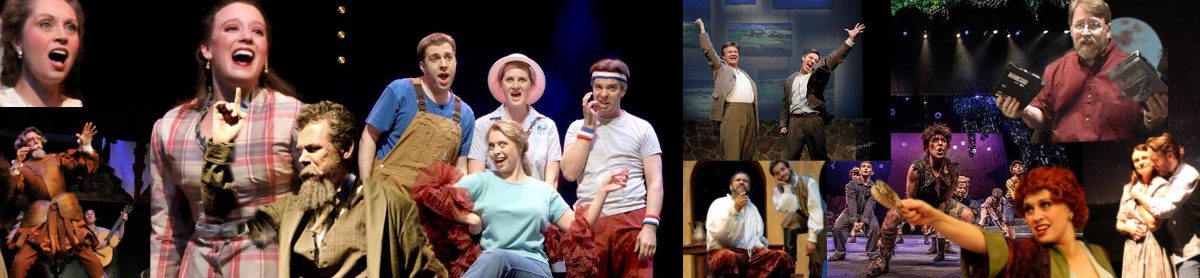
 Life on the Wicked Stage: Act 3