-
This Is A Bummer. Open Source Dropbox Client Maestral Will Shut Down
I would say Monday always seems to bring bad news, but bad news seems to show up on any day that ends in “y” lately. But this is a Monday and this is bad news.

Maestral, an open source client for Dropbox has ceased to be maintained as of the end of June 2026 according to the develper on the app’s website. Hat tip to John Gruber who posted the news this morning, and for posting this quote from the developer.
As of 2026-07-28, this project is archived. It’s been a fun challenge to develop a syncing client, but unfortunately, I find too little time to invest in Maestral these days. I’ve also moved away from using Dropbox myself.
Maestral will still remain usable in the medium term, but will no longer be actively maintained or receive updates.
I’ve been using Maestral for quite some time to manage file syncing on Dropbox, primarily because I despise Dropbox’s own apps. Maestral is a far cleaner and less resource intensive experience, and has more than served my needs syncing files back and forth. So, I’ll either have to bite the bullet and swallow some pretty foul tasting software again, or find a different solution.
The different solution will be a difficult one as I work with a variety of theaters and clients, all of which using different file syncing and sharing solutions, (Google’s solution being the runner up to Dropbox) so I have to keep up with most of the file syncing services out there.
All shows must close at some point, but it’s a shame to see this one posted it’s closing notice. I wouldn’t count on any new ones appearing on the horizon.
Thanks for reading. You can subscribe to this blog if you care to. You can also find more of my writings on a variety of topics on Medium at this link, including in the publications Ellemeno and Rome. I can also be found on social media under my name as above. This site does not use affilate links.
-
Sunday Morning Reading
Meaning. It means so much. So do the words that deliver it to us. But remember, there was meaning before we constructed words into language. This week’s Sunday Morning Reading comes on the final day of a weird and wacky 4th of July weekend in the U.S when an often mean Mother Nature reminded us who is really in control no matter which words we choose or manipulate to pretend we are. It was kinda fun to watch. There’s also a few interesting pieces about America’s founding, and the myths and the meaning behind it all.
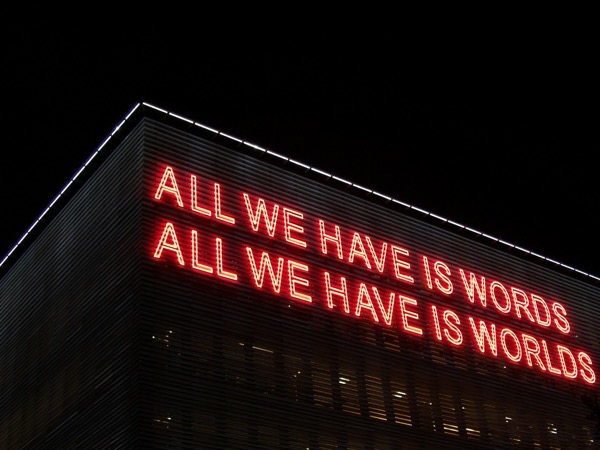
Kicking it off is a short piece from JA Westenberg asking Remember When Words Had Meaning? What comes first the distortion of language or the devaluing of the culture that employs them?
Speaking of meaning, Jack Loftus gives us The U.S. Constitution Is For Simple Folk Still Burdened By The Belief That Words Have Meaning. You can argue it was always thus, but we sure do spend an awful amount of time, energy and money arguing the opposite.
In this age of WTF, it has become an accelerating trend to see pieces disemboweling many of the myths we assign to the founding of America around the 4th of July. We used to share common myths more than we did a common history, but now even the myths get mangled. So it’s no surprise when the powers that currently be toil to rewrite both. Noah Berlatsky‘s The Constitution Sucks is a good example of how we can forever flip the coin looking for the right result, ignoring the edge.
T.H. Breen takes a look at some of the too often un-heralded folks and local movements during America’s revolutionary war period in It Wasn’t Just The Founders.
John Warner offers up For The Fourth, 9 Books For Your Sense Of Patriotism, saying “I’ve come to (personally) understand patriotism as a not a fan-like allegiance to a team, but a responsibility to understand the country’s history, warts and all as we pursue the illusive promise of life, liberty and happiness for all from the Declaration.” The key is knowing we all “come” to understanding.
Will Frivolous Charges Be Brought Against Future Ex-POTUSes? That’s Okay Too by Josh Marshall offers up an excellent piece on how we can twist and morph words in a legal context that shift the ground under most mythical mountains like “no man is above the law. “
Speaking of words and meaning, the bad guys seeking to survive a legal onslaught ahead of what they fear is a political tsunami coming for them are trying to rekindle old fears about communism and socialism as their latest talking points. Not sure those old saws will cut the same way they used to, but it demonstrates just how limited the dictionary is. David Todd McCarty takes a look behind the hooting and hollering in Democratic Socialism: Keeping The Great American Experiment Alive.
And in a quasi-hysterical look at shifting meanings and changing words, Rogé Karma is wondering Why Everyone Is Suddenly Talking About ‘Universal Basic Capital’. The quasi-hysterical part is that it’s coming from the AI market masters and a few politicians substituting the word “capital” for “income” following the words “universal basic.” Language is hard. When you can say anything to get what you want.
And in another word substitution, Doc Searls suggests we shift from an “attention economy” to an “intention economy.” Check out The First Source Of Personal Intent. I’m not sure the meaning changes with the substitution.
(Image from Alexandra on Unsplash)
Thanks for reading. Feel free to subscribe if you want. It’s free. If you’re interested in just what the heck Sunday Morning Reading is all about you can read more about the origins of Sunday Morning Reading here. If you’d like more click on the Sunday Morning Reading link in the category column to check out what’s been shared on Sunday’s past. You can also find more of my writings on Medium at this link, including in the publications Ellemeno and Rome. This site does not use affiliate links.
-
There Are Days and There Are Days
Some days are insanely hectic, bordering on maddening. Some bring something resembling a calmer pace. Some days you just need to park the car, have a sit, and check out the scenery.

Thanks for reading. You can subscribe to this blog if you care to. You can also find more of my writings on a variety of topics on Medium at this link, including in the publications Ellemeno and Rome. I can also be found on social media under my name as above. This site does not use affilate links.
-
Thoughts Swirling On This 4th of July
The 4th of July hasn’t felt the same to me in quite some time. The country I was born in doesn’t feel the same as it once did. Yet it does. In ways I wish I could ignore. Those are obvious observations many share, I’m sure. To me they are painful ones. Very painful.
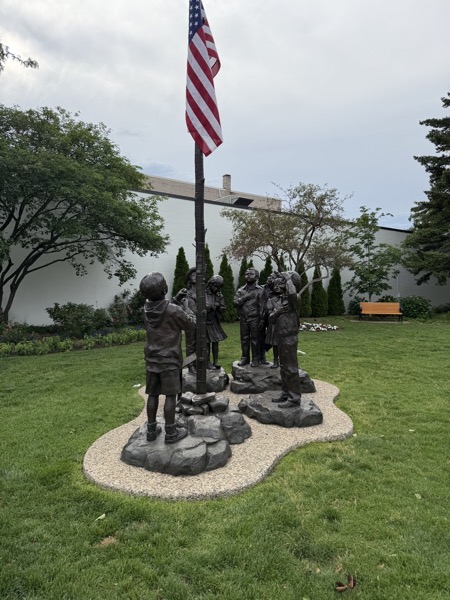
I’m not one who ever believed that this country (or any country), given the way governments and people work, was divinely founded or inspired to do what is right. Humankind is too arrogant, too selfish, and too human to think that doesn’t spill over into governing and social intercourse any more or less so than it does into any other field of endeavor. The American musicalized version of our founding is indeed powerful and seductive, but it mostly hides the sour notes, even if at times it reveals truths it often obscures.
In this last decade plus it’s become excruciating to watch centuries-old hatreds arise from wounds once thought closed and healed, unleashed by a madman able to turn others just as mad. Insidious infections have popped through the surface and festered anew, revealing that far too many have no understanding of or desire to understand the bonds we share as humans on a rock orbiting a star, divided by arbitrary borders and divisions, assuming we can somehow control the chaos we continue to create.
Yes, the Declaration of Independence broke new ground in humankind’s advance, but in our current moment, it’s challenging, bordering on disingenuous, to say it altered the course of its continuing evolution.
For those who say that this 4th of July is for celebrating our 250th anniversary as a country, I’d offer this. Kinda yes, mostly no.
The years before and immediately following the Declaration proved just how close we came to not seeing those grievances become more than bold and dangerous statements on a piece of parchment. Yes, we won the American Revolution that sprung from the Declaration. But there were as many on this continent who were quite content to remain under the rule of a king, as those who revolted against it.
The men who wrote and signed that document were willing to hang for their actions. I don’t see too many (or enough) willing to do the same today.
In the 250 years since, we’ve had other close runs at seeing it all rent asunder. The Declaration in and of itself opened a door, it didn’t build as firm a foundation as many thought and hoped, or a country. That came later.
We’re living through another close run at tearing it all down, somehow finding too many of our fellow citizens content, as many of their forbearers were, to putting their lives in the hands of a king-like ruler once again. It will take decades to overcome this era, not because rulings and laws can’t be changed. They can. Surprisingly we’re finding they are also easy enough to ignore. We’ve given new life to dark and sickened hearts that will poison not only themselves and that which they touch, but the generation or two that comes after them.
The Declaration of Independence and the country that came after were never perfect. Proving that neither are we, neither are those who preceded us, and neither will be those who will succeed us. It was actually an acknowledgment of humankind’s imperfections. It was a promise, and it was a start, following a shot heard round the world. We’re still running the race that shot started, against the same headwinds of our own making, the promise still unfulfilled.
The act of reaching the Declaration of Independence is indeed worth celebrating, even if we keep extending the play by adding repetitive acts that keep rehashing the same plot points that made it necessary.
The 4th of July is also worth celebrating for all of the Americans, past and present, who think it is still worth pushing back against those who don’t care for what it has meant, flawed in its creation or no, and only see in its imperfections and the constitution that followed years later, other tools for self aggrandizement and enrichment.
Celebrate who we want to be, not who dark hearts keep reminding us we are. Castigation is all they deserve.
Thanks for reading. You can subscribe to this blog if you care to. You can also find more of my writings on a variety of topics on Medium at this link, including in the publications Ellemeno and Rome. I can also be found on social media under my name as above. This site does not use affilate links.
-
Everything Is Changing Under The Fingers On Our Keyboards and Screens
This week Apple released updates for iPhones, iPads and Macs with the version numbers all ending in 26.5.2. Mostly targeted at security fixes. That’s nothing new. Apple periodically does that. What’s new is how the timing of “periodically” looks like it’s going to change.
The security updates in 26.5.2 were scheduled to roll out with 26.6.6, which is still in beta (Beta 3 if I”m not mistaken.) But these fixes were deemed crucial enough that Apple jumped ahead of the official release of that version and cut in line with the just released version.
This post on Six Colors targets what’s happening. Here’s a quote:
In other words, the security fixes in 26.5.2 are based on the security fixes that were rolled into the 26.6 betas, the first of which was released publicly on May 26. That means that everyone in the security world, including bad actors, has had more than a month to analyze all of Apple’s forthcoming fixes…
Thanks to AI that changes how we, and software makers need to be aware that the traditional release cycle of betas is going to affect security concerns going forward. If a beta release contains code to patch a security hole, then the bad guys, as well as the good guys, have access to that code from the betas.
It’s a good news, be aware kind of story. With AI able to identify and catch and fix bugs and problems faster than humans, it’s only a matter of time before the software testing and release cycle changes. Because if there’s a bug to be fixed or a hole to be patched, there’s a bad guy eager to exploit it.
(Image from Florian Olivo on Unsplash)
Thanks for reading. You can subscribe to this blog if you care to. You can also find more of my writings on a variety of topics on Medium at this link, including in the publications Ellemeno and Rome. I can also be found on social media under my name as above. This site does not use affilate links.
-
A Flopping Turkey In Washington DC
I’ve directed a few shows in my time that were flops. Small audiences. Empty theaters. Never fun. Always embarrassing. Always a loss. We called flops and turkeys. I don’t think any of those experiences compares to the big show currently flopping in Washington DC as America tries to celebrate its 250th Anniversary under an extremely unpopular, flailing pedophile and adjudicated rapist still pretending to be president.

It’s one thing to give your all for a play or a musical and have the public not be interested, regardless of the quality of work. It’s another thing entirely to fail with egg on your face celebrating the biggest anniversary in the country’s history to date, simply because folks don’t bother to show up.
We always joked about a flop by saying the public stayed away in droves. From all of the photos and live coverage from DC, it looks like the droves are in on this joke. Oh, there are other celebrations around the country, but the public sure seems to be ignoring the big one put on by the big guy. You’d think someone so obsessed about ratings would take the hint.
The myth is that Benjamin Franklin wanted the turkey to be our national bird and not the eagle. Turns out we’ve got a real turkey of a 250th celebration on our hands. And this one is no myth.
Thanks for reading. You can subscribe to this blog if you care to. You can also find more of my writings on a variety of topics on Medium at this link, including in the publications Ellemeno and Rome. I can also be found on social media under my name as above. This site does not use affilate links.
-
Resilience Is Our Strength But Also Our Weakness
There are two big conversations popping around the political universe these days. Both seem to miss not only the larger point, but the stakes.

The first is how the Democratic Party is trying to still figure out what it wants to be in the wake of progressive victories in recent primaries. The centrists are appalled. The progressives are ecstatic. The people are pissed off. The politicians are clueless. This post isn’t really about that fight, only to say that it provides some context to the second.
The second conversation takes place on the larger battleground heading into the midterms and beyond. No, that’s not the inevitable mud fight between what was once the Republican Party and the clueless Democrats. It’s yet another intra-party scrap on the Dem side.
There are those who think we need to restore to what we had before. Achieve some sort of balance again. There are those, like me, that think playing that game is not only equally clueless, but is trying to pretend we can put all of the dismantling and destruction aside and find some sort of way forward in some semblance of what we used to call unity. As I said, I’m not buying into that myth. Reconstruction didn’t work the first time around. It won’t this time either.
The reconstruction and balance crowd makes a sadly profound observation about the electorate. As pissed off as most people are, the movers and shakers are counting on the resilience of the American people. Sad fact, the bad guys now in power and trying to desperately hang on to it out of fear of retribution, continue to count on that same resilience.
Resilience doesn’t always mean a stiffer spine. Many times it means hanging in and taking care of the immediate business of living day to day. When that daily struggle is the focus, it’s no surprise the bigger picture gets lost, or muddled up over passionate issues that in the larger scheme of things mean less than those that take advantage of them push like dope.
Yes, we are a resilient people. We can withstand a lot. But that resilience also makes us far too compliant, hoping that the next election, or some court decision will change things the way they always have in American politics. Those legal and civilized ways of bringing change have often, albeit slowly worked, but we’re finding that given everything that is broken, those same legal and civilized tools can be used to quash that progress at a quicker pace.
While we haven’t yet launched into a full-blown shooting Civil War, the damage that has been done since the Confederacy rose again and took over the federal government under the leadership of a Queens, New York conman and pedophile (something that strikes me as ironic and on the surface just damn funny) is in many ways just as damaging as was the end of the first Civil War, if not more so, because many of the institutions and norms that helped the Union survive have been and continue to be dismantled.
At the conclusion of that war in 1865 there was a great debate about how to handle the states and its leaders that formed the Confederacy. One side wanted retribution and punishment, the other not so much. Equal to our resilience is our capacity for compassion and our compunction to think that dark hearts can be changed. The compassionate side largely won out in an attempt to heal the nation’s wounds. Sad to say, here we are again.
The difference this time around is that on top of the fight for freedom, civil rights, and equality, we’re fighting a government that’s largely owned by a handful of billionaires. Many of which were on the other side of things not too long ago. Money talks and bullshit walks. They’ve largely made their haul, so the only reason I can see for them to continue what they’r doing is they’re also afraid of retribution.
In a brief conversation earlier today with friend David Todd McCarty after reading a new piece of his called The Quiet Truth, I remarked that his citing of the quote from Confucius about a willow that bends being stronger than the mighty oak that breaks in the storm, got me thinking. Those willows are indeed resilient. That same story appears in many cultures, proving its own resilience. But I’ve come to believe the only way out of this mess we’ve allowed ourselves to be in is going to require some breakage. Breakage that must require building something new, not restoring the old.
We made that mistake after the American Civil War. The country literally broke in two. In attempting to heal it, we proved our resilience as a people, but unfortunately left two many places for the losers to hide and lurk in the resilient reeds. They have resurfaced a few times since in our history, but have always been beaten back. Each time accepted back into the fold with that same practical compassion and resilience.
They’ve been openly enjoying breaking things. We might not enjoy it, but we need to break a few things with equal desperation and energy, before too much more is broken.
(Image from Halinskyi Max on Shutterstock)
Thanks for reading. You can subscribe to this blog if you care to. You can also find more of my writings on a variety of topics on Medium at this link, including in the publications Ellemeno and Rome. I can also be found on social media under my name as above. This site does not use affilate links.
-
Sunday Morning Reading
It’s a Sunday, so it’s time for a little Sunday Morning Reading. As usual, I’m sharing a collection of links and once again they somehow touch one upon another. Funny how that happens. Some point to big issues. Some about the comings and goings of life. Some about its shifts. Take a look. Take a read. Happiness is a choice.

David Todd McCarty’s On Being Good At Life talks about abandoning the quest of success, fame, fortune, and just being better at life. Deciding how one defines life is always the first obstacle.
If you read one piece among those shared this week, read Josh Marshall’s Google, AI, Oligarchy and the End of the ‘Open Web’. I’ve been writing about Google’s recent moves and how they will change the web as we know it. Josh nails it better than I ever did. Some think we’re ready for this. I’m not one of those.
We lost a one of the good ones this week when Om Malik died. By all accounts a great human being and a giant in tech for so many years in so many spheres. Om’s writing has been featured in this column many times. As a human he was so much more than just his achievements. Two great pieces about Om that you should take the time to read. John Gruber’s simply titled Om, and Mathew Ingram’s Om Malik 1966-2026. Sail on, good sir.
Tom Wellborn takes a look at The Art of the Fail. You can guess his target. You should read his piece.
JA Westenberg takes on the pursuit of optimization and the cult of the extreme in The Extreme Is The Easy Way Out. Choosing a middle path is also not necessarily easy.
Mike Masnick tells us How The Internet Became A Tool For Domination and Control Instead of Liberation. Joke’s on us. I’m not laughing.
Ken White’s not laughing either. Or maybe he is. There’s always some kind of fracas happening in social media, regardless of the platform. When you step back, it’s weird that we designed something to explode and exploit that kind of chaos. Weirder still that we think we can control what people say or social media or anywhere else by banning them. Ken White of PopeHat fame was recently suspended from Bluesky and writes about his thoughts in A Bit of Tedious Drama At Bluesky. The piece is much more than just about those circumstances and worth your time. You are what you think and say. Ken defines it well.
A tip of the hat to Dwight Silverman who’s retiring (again) after a terrfic career writing about tech. I have always enjoyed Dwight’s work because he kept the focus of his tech adventures on the user, while having a firm grasp of the bigger picture. Check out The Grand Finale (for real this time): My 30+ year column ends, It’s exit heralded by AI, and also his thoughts about his retiring on his personal blog. I’m guessing (and hoping) we haven’t seen the last of what Dwight has to say.
Thanks for reading. Feel free to subscribe if you want. It’s free. If you’re interested in just what the heck Sunday Morning Reading is all about you can read more about the origins of Sunday Morning Reading here. If you’d like more click on the Sunday Morning Reading link in the category column to check out what’s been shared on Sunday’s past. You can also find more of my writings on Medium at this link, including in the publications Ellemeno and Rome. This site does not use affilate links.
-
More Thoughts On Apple’s Price Increases: The AI Tax
Now that the dust is settling a bit after Apple unsurprisingly announced price increases across its hardware lineup, I have to say that I’m quite bemused to see the pocket book hit being called the AI Tax.
I wasn’t clever enough to use that descriptor when I posted about the news shortly after the announcement, but I had been paying enough attention to immediately point the finger of blame at the costs associated with Artificial Intelligence. I think Jonny Evans was the first to coin the phrase AI Tax. For what it’s worth, I hope the phrase AI Tax sticks. Sticks hard and deep. And twists the knife. Because it’s going to affect much more than just the cost of MacBooks, iPads, Apple TVs, and other gear designed in California.
While other tech companies had already started raising prices due to the AI Tax, (talk to anyone in the gaming market) Apple’s announcement is one that brought real shivers and shakes to consumers, the stock market, and boardrooms around the globe. Whether mostly myth or prescient business practices, Apple’s reputation for being ahead of the curve when it comes to purchasing large supplies of chips to withstand market pressures is and was such that tech companies in other sectors often found themselves facing sold out inventories or higher prices when it came time to make their orders. The “Apple Tax” extended far beyond the high cost of Apple products.
That rep and Apple’s stock took a dive on the news. Apple recorded its second biggest market drop in its history, dragging the NASDAQ down with it. Heading into the weekend there’s consternation brewing about all of the chip releated businesses going forward. (Hint: that’s most businesses these days.) But then again, the stock market is not much more than a wild ride in an aging prediction market, so who knows how that will unfold as a holiday week begins on Monday.
Word came via The Financial Times Friday night that Tim Cook was calling in some chits on chips with the Trump administration, attempting to circumvent chip bans balled up in the trade war to and fro with China. If successful, that would allow Apple to buy banned chips that the Pentagon is hesitant about, given that they are built by state controlled Chinese companies. According to the report this lobbying had been going on for a month or so prior to Cook’s first warning a week before the price hike announcement on Thursday.
The timing hints at a bit of public hardball lobbying from Apple. (Note that the price increase announcement wasn’t a Friday news dump after the market closed. However, The Financial Times article came after no known action from the administration post Apple’s announcement.) Shake the markets and try to wrest the attention of the administration fighting losing battles of its own making with bodies of water in the Middle East and in its own backyard. I’m almost surprised Apple hasn’t been called a vandal yet.
As I said earlier, this is going to have far reaching implications beyond the consumer gadget markets. Chip capacity has to increase, or the demand for higher bandwidth memory has to decrease before any of the predictions that this will subside in a few years. (There’s a good read on this from Imran Valiani here.) On the current trajectory, fueled by still increasing hype to combat building blowback, I don’t see that timeline materializing. This news might bobble the bubble, but I don’t think it’s ready to pop.
Costs are going to rise across the board. It’s not just consumers that purchase computers who will take the hit. And it’s not just the purchase of computers that will drive an inflationary spiral. Yep, that’s the I-word that no one likes to hear, especially politicians. Everything is a computer these days, or at least has some form of chip in it. And, in my opinion, too many companies have jumped on the AI bandwagon far too soon to understand the long term ramificatinos. All of those costs will be passed down the line to consumer pocket books.
I also don’t think we’re going to see these price pressures subside to pre-AI Tax levels. I’m old enough to remember when new cars used to have price ranges well below $5,000. That obviously makes me prehistoric, but I can remember watching The Price is Right featuring cars as the grand prize with contestants guaranteeing at least their first guess was accurate by chosing the number two for cars that would be priced at $2995. That’s a memory that doesn’t require a chip. Although streaming those old shows does.
Like it or not, Apple’s success since the launch of the iPhone, has been a key piece of U.S and global economic growth with much of the tech sector following along and prospering in its wake. Apple’s recent announcements are probably one day going to be viewed as just as big a marker going forward as the release of that first iPhone.
It feels to me that we’re entering into a price curve trajectory for computing on all levels that will follow a similar trajectory as the automobile market. The financial markets will find ways to love it as financing will become a key driver to cover costs while the markets get used to price points for signature hardware starting much higher than the $1000 price point today. There’s got to be a way for the bankers to cover all of the borrowing associated with the build out of data centers.
Over the years the myths of Apple being doomed have largely been just that. Myths. Apple always found a way. This turbulence probably won’t change that. But the AI Tax will change things for all of us in ways that we’re just beginning to understand. Inept global political and corporate leadership easily taken advantage of by hype-masters and hucksters have paved the way to this moment.
And all of this for a still largely unproven technology.
Thanks for reading. You can subscribe to this blog if you care to. You can also find more of my writings on a variety of topics on Medium at this link, including in the publications Ellemeno and Rome. I can also be found on social media under my name as above. This site does not use affilate links.
Skip to content
Life on the Wicked Stage: Act 3
Musings on life, the theatre, technology, culture and the occasional emu sighting

 Life on the Wicked Stage: Act 3