-
AI Customer Support Devalues Customers And The Company That Adopts It
I noticed an article on MacRumors that Apple is getting ready to roll out it’s “AI-powered Support Assistant.” Apparently Apple’s only willing to take the risk with tech support and not customer support. That’s where money might exchange bank accounts.

This is the way the world is spinning at the moment. My prediction is that companies will ratchet back these cost saving moves but not until the realize what it costs in customer loyalty. We have to go through the suck, before we get to the less suck.
I base that prediciton on my experiences spending the better part of this Summer and past Spring helping clients and a few relatives, some elderly, work to cut back on expenses and take care of some warranty repairs for appliances. (Hint: Ditiching warranty services is one way to cut montly costs.)
Timing is everything. My efforts coincided with several of these companies caught in the process of switching to AI solutions for customer and tech support. To be direct, it was a mess. For me, the customer, and also for the employees left holding the bag on the other end of these crazy corporate strategies.
No one would argue that most customer and technical support systems were in good shape previous to these kind of moves. They were indeed ripe for re-inventing and they have always been easy marks for the bean counters to cut corners.
Chatbots had already begun to proliferate, descended from automated phone trees like some form of inverted evolution that only a sadist could love. No one would ever conclude that they had been intelligently designed. My previous experiences were always hit and miss, but at least I understood that if I followed the steps I could eventually reach someone on a phone or live chat. During these transitons that became nigh on near impossible.
Prior to one of the companies I worked making the switch, it had become obvious that they had abandoned call centers and let their agents work from home. I kid you not, I spent one phone call with a barking dog in the background of whatever small quarters this rep was in, and another with two small children fighting with each other in the background of another call.
Let me give you one example from my recent experience with one company undergoing a transiton to AI tech and customer support.
Sears Home Services
Sears Home Services has been a popular home warranty service for many throughout the years. It’s been apparent for a while that services like these have lost their luster and some have devolved into scams. But for folks of certain generations they were always in the monthly budget. In my experience with one of my clients, prior to their switchover, it worked about as well as it was advertised to work. You made a call, talked with an agent, set up an appointment, a technician arrived to check things out, ordered parts if necessary, rescheduled the appointment, and then came back to effect the repair or replacement.
The first repair I assisted with happened just like I described above. The entire process from first call to final signoff on the repair took 10 days.
The second call not so much.
I guessed things were in trouble when the phone number prominently displayed on the webpage would not yield a method of speaking with an agent, but kept pushing me to their chatbot. The chatbot had limited options that you could select. It did not have a way to enter any request beyond those options. My guess is the company didn’t want customers speaking to an agent.
Undaunted, I did the usual online searching for phone numbers and finally stumbled on to a Reddit thread where users experiencing the same problems were reporting phone numbers that worked. Until they didn’t. It was a cat and mouse game of dialing a phone number before it was changed or taken out of service. That lasted about a week.
Finally I succumbed and scheduled an appointment via the chatbot. That chatbot sure was happy. I was told the support technician would contact me the night before to schedule a more specific appointment window. Things were looking up. That call never came. The morning of the appointment I got a text telling me the appointment was scheduled between 8 and 5pm. In my previous experiences these appointments were scheduled in four hour windows.
On the afternoon of the repair, at 5:30pm I got a phone call from a support person saying he would be their in a half-hour. He showed up 45 minutes later. He diagnosed the issue, said he would order parts and they would be shipped directly to me. This was a change I’ll describe later. He then said he needed to go sit in his truck and work with the system to get the parts ordered and that would take a half-hour or so becuase the system was constantly kicking him out mid-order and he would have to start over.
When he came back to finalize everything for that appointment he reiterated that this new system was screwed up. I told him I wasn’t a fan either. We had a good conversation.
Previously, according to him, each night technicians like him would get a list of their appointments for the next day. They would go to a drop ship pickup location for any parts for that day’s appointments, head out and do the work. Now the system sent parts directly to the address of the repair and required the customer to reschedule the next appointment once the parts arrived. Because customers were not receiving notifications of these part shipments, the parts would just show up, often get returned, delaying the inevitable service.
Most striking in his telling was the fact that he no longer received the next day’s list of appointment the night before. Only the first one for the day. Once that was completed he would receive his next appointment. Again, according to him, the previous system in place for dispatching personnel was pretty good at scheduling the next day’s appointments with minimal travel time between appointments. Now with the new system, he would find himself traveling between appointments, often located far apart, more than he would working the repairs.
To begin to bring this ancedote about this repair to a close, suffice it to say that the entire episode from first call to eventual repair has not yet been completed. It begin on May 20. Once it was determined that the appliance needed to be replaced, not repaired (that took two appointments,) a new one was ordered. Then canceled by Sears Home Repair’s system. Then re-ordered.
On the night before the scheduled delivery I got a call that it would be delivered the next day. That morning I got a call saying the delivery would take place that morning. Ten minutes later I got a call saying that the appliance had not been delivered to the delivery driver. (It was too large for a home delivery.) This necessitated canceling the order, re-ordering and a repeat of the process.
Somewhere in the middle of the process phone calls with agents became possible again. Progress? Not quite.
After several discussions with several agents I discovered that they were as challenged as their customers were by the new system. I’m sure you’ve played the escalation game to get to a supervisor and I played that game here as well. At last count I’m waiting on approximately 7 phone calls from supervisors that never came in.
Eventually the appliance was delivered to the delivery person. But there was no record in the system of an appointment to install the new one and remove the old one as per the warranty.
It took a month and two more canceled appointments for installation before Sears finally gave up and said a check would be forthcoming to cover the installation costs. That check has yet to arrive. (That’s why I consider the transaction not completed.) We did get the appliance installed on our own.
But of course, we did receive the usual survey request asking us to rate how well Sears Home Repair Services performed. Once the check arrives and clears the bank, my client will be cancelling that warranty. That will be our response.
Xfinity
One bill I was working on reducing for another client was Xfinity. I probably don’t need to say more if you’ve ever dealt with that company. But I will. I simply wanted to call and discuss plan options for reducing the bill.
No where was I able to get through to a live person. I was sent links to chatbots that would promise a live person, if I followed along, but those calls never connected.
I eventually took a trip to an Xfinity store and got the info and made adjustments to my client’s bill in person. The staff member at that store told me that they were seeing more foot traffic because the online and phone systems were such a mess.
Back to Apple
Now, I began this post mentioning Apple’s move to a generative AI based technical support system. I find this greatly disappointing. In general, because I believe this type of cost cutting move represents a decline in how I value a company because it represents a decline in how these companies view their customers. And in Apple’s case, I have typically found Apple’s tech support to be better than most companies. Not perfect. Still flawed. But better than most.
I’ve had to work through some tricky issues over the years with Apple’s technical support. Some easily resolved. Some not so. One of those issues required several months worth of conversations, eventually reaching up the chain to Craig Federeghi, before getting the issue resovled. I can’t imagine any tech support system being able to measure up to what Apple has currently, even with flaws and failures that require steadfast persistence and often negotiation.
In my attempts to aid my clients I’ve tried some of the AI chatbots that aren’t part of the specific company I’m working with. Typically they spit out much of what I imagine is in the documentation most phone bank customer service reps use to begin a diagnostic process. (Yes, the device or appliance is plugged in.)
I imagine that Apple will use this new system to handle those rudimentary requests that come in that I’m sure fill up the tech support queues and can be resolved easily. I can only hope Apple then passes more difficult issues to an actual human being who can do the type of intervention necessary to reach a resolution. Heaven help us all, and Apple, if they ever automate the degree of support that requires screen sharing over to a robot.
I have yet to meet anyone in the real world that thinks AI on any level is going to fulfill anything close to the promises made by those pushing it. Folks have already seen and felt the results of these early efforts and have turned sour on the entire concept. I think of this like I imagine the last century’s transition to the automobile. Regardless of how some felt upon seeing the first automobiles on the same streets as pedestrian and horse traffic, everyone knew, for better or worse, it was a future they would have to adapt to.
I have encountered a few business owners who think AI will help them create efficiency and reduce costs, but their discussions about what is possible demonstrate a real hype-fed ignorance and hoped for way of cutting costs. I have one client who is smitten with the promise, but is constantly getting bitten by the results.
I’m betting Apple’s move will take a bite out of its customer satisfacton numbers as well.
(Image from Munthia on Shutterstock)
You can also find more of my writings on a variety of topics on Medium at this link, including in the publications Ellemeno and Rome. I can also be found on social media under my name as above.
-
Squirrel!
I happened to look out the back door this morning and caught this squirrel checking out the hula hoops and other back porch detritus. As I pulled out my camera, the squirrel looked back.

-
The Quest for the Unicorn AI Device
Reporters love to declare war, crown winners and dismiss losers. Except of course when it comes to shooting wars and the rhetoric that often leads to them. But that’s not what this post is about. Tim Higgins of The Wall Street Journal, and his headline writers, are declaring that Mark Zuckerberg Just Declared War on the iPhone.
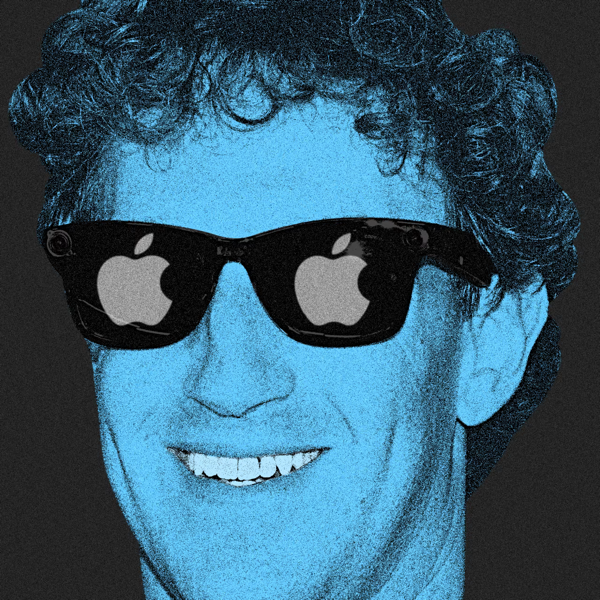
I usually expect this kind of nonsense from the half-a-gazillion blogs and social media accounts out there that like to ginny up controversy to generate clicks. With AI glasses will clicks become blinks?
Now that I think about it, I’m wrong in my expectations because the WSJ, like most of the mainstream media is trying hard (too hard) to follow that pattern these days. It’s an easy game to play in the short term, but then so is the game of companies and governments making big announcements about the future. Remember the “pivot to video?” Remember “virtual reality?” The faux legs went out from underneath that pretty quick.
Higgins does and mentions those failures to capture marketshare beyond the initial hype and funding fevers. Nevertheless, he forgets a few simple things during his embedded tour on this march to the promise of “Personal Super Intelligence.” (That’s this fiscal quarter’s new label.) Zuckerberg might indeed be banging the war drums by propagandizing AI glasses as the latest form factor of mass destruction, but it’s too much hype without enough rhythm to marshall the troops. And to be fair, most of Higgins’ column is just regurgitating old news (AI summary?) that has been bouncing around in what passes for new news these days, tacking Zuckerberg’s recent announcement on as the headline war cry.
Bottom line in my opinion, we’re not going to see any new form factor take down iPhones, smartphones as a category, or computers, as the way we live, work and play in any near future. Folks have been waiting for all kinds of second comings for quite awhile now. I love how even the coming of advanced AI is now referred to as “near emergence.”
One day perhaps. Long after most of us interested in what this technological moment might eventually yield will have forgotten what Medicare and Medicaid were actually about. If and when that day arrives, the real clicks (blinks?) will be in tutorials on how to turn off all of the notifications and other distractions and keep the tech from tracking you.
I’m old enough to remember when FourSquare came on the scene. The promise was you’d walk down the street and receive a notification from the coffee shop you just passed about the daily special. That never really materialized, but the tech was different then. Google and Waze later tried that and just annoyed any driver who stopped at stoplights looking for their next turn.
When the marketing survelllance mavens can figure out how not to send me ads for something I just bought I think there might actually be a chance for that kind of thing to work. A small chance, but a chance. But they’re not even close to that on the backend, let alone integrating them into some device that might pinch your nostrils after wearing them for too long.
Don’t get me wrong. I think it is indeed cool when companies create niche products that give some people joys and hobbies. Bits and pieces of that kind of innovation often creep into bigger things that do help our lives somewhere down the road. Even if they become creepy. Obviously I’d prefer they not become creepy, but that’s where the money is and the creeps always follow the money.
I’d much prefer to see the money and the hype meisters follow something like this that could probably actually help humanity. But even that kind of innovation can attract the creep factor.
Call me when a reporter can research, write, and submit for editing a column like this one I’m complaining about with a pair of AI glasses, an Alexa device, or a pendant, or any other smart device currently in the works.
Call me again, when the AI summary machines can actually deliver an accurate summarization of that article.
You can also find more of my writings on a variety of topics on Medium at this link, including in the publications Ellemeno and Rome. I can also be found on social media under my name as above.
-
Sunday Morning Reading
Some things defy understanding. Others appear less murky. Occasionally some hit the target. That’s why I read. That’s why I share. I’m still traveling and on the road for a bit, but there’s plenty to share in this week’s Sunday Morning Reading. Tomatoes and potatoes may be involved.

Phillip Bump recently accepted a buyout from The Washington Post and hasn’t announced new plans yet. But he’s still writing. Glad he is. He has always been one of my favorite writers and chroniclers. Check out his latest piece Humans Didn’t Evolve To Understand Our World.
When you reach a certain age (certain is alwasy self-defined) you start looking back to the beginning and wonder what will mark the ending. Cris Andrei calls them Bookends. This piece hit the target given that I’m visiting some old haunts on this trip. Oh, and approaching a certain age (self-defined.)
Tuning out news, noise and distractions is never easy. NatashMH takes a look through the marking of Ozzy Osbourne’s passing and other recent cultural touchpoints in Fractals of Modern Life. If you don’t look too hard, all the news, noise and distractions don’t really touch or point towards much in the grand scheme of things. But are we entertained or just dulled into carrying on?
Sometimes writers write just for the fun of it. David Todd McCarty says that’s where this piece, Killing Time Waiting for Friend, came from. I need to find more of the fun of it. Anyway his piece, gave me a chuckle. I did not read it at Denny’s, although I visited one of my favorite locations of the past during my travels.
I’ve linked to and written about Cory Doctorow’s theory of enshittification quite a bit. I’m doing so again with this piece You Can’t Fight Enshittification. I don’t think it’s a question of not fighting, I think it’s a question of not knowing there was a fight to begin with.
Staying in the tech vein, I’ve been linking to Mathew Ingram and others who are talking about the demise of Google Search. Take a look at Pete Pachal’s piece, What Content Strategy Looks Like In The Age of AI. Look beyond the headline on this one.
Speaking of Mathew Ingram, you should read Social Media Didn’t Start The Fire, It Just Fanned The Flames. I agree. That said, if you drink acclerants through a firehose you’re bound to bust.
On the political beat, Jon Pavlovitz offers up Everyone Believes They’re Esssentially A Good Human Being. Actors who play villains will always say that they look for what’s good in their evil character. It’s a form of coping. I happen to think this bunch of performance artists trying to burn down the country never bothered looking beyond the glee they take from their villainy. Apologies to real performance artists.
And to close things out on a competely different note, check out Will Dunham’s piece on the Evolutionary Origins of the Potato Revealed — and a Tomato Was Involved. Some things do defy understanding.
(Image from Mr. Abstract on Shutterstock.)
If you’re interested in just what the heck Sunday Morning Reading is all about you can read more about the origins of Sunday Morning Reading here. If you’d like more click on the Sunday Morning Reading link in the category column to check out what’s been shared on Sunday’s past. You can also find more of my writings on Medium at this link, including in the publications Ellemeno and Rome.
-
Crazy Economic Days
So, we’re traveling. Currently in Virginia. On Thursday I filled up the car at a price of $2.72 a gallon. When I drove past the station on Friday morning the price was $3.19.

The same all over town. This price jump hit on the day with all of the insane economic news, but most of that news was just breaking, so who knows what’s really behind it.
I think that might be the largest one day price jump in gas prices I can remember. I’m sure isn’t the end of this kind of volatilty in a volatile world.
-
Flora and Fauna Aliens
We’ve stayed in this same location in Virginia for a few summers now and it’s always a weird delight to see these Purple Passionflower blooms there as they appear almost alien.

-
Mark Zuckerberg Says We All Need AI Glasses
Mark Zuckerberg, trying to see his way clear to dominating the Artificial Intelligence race, is now saying that those of us who don’t use AI glasses will be at a disadvantage in the future. Reminds me of the X-Ray glasses hype from my childhood.

When you consider Zuckerberg’s checkered legend with starting what would eventually become Facebook, after running a college website called FaceSmash to rate girls, the comparison to the come on for X-Ray glasses does have a prurient parallel to many an adolescent boy’s fantasies.
I guess Zuckerberg needs to justify all of the money he’s spent building out AI infrastructure and wooing talent but it also is very reminiscent of the days he mucked up the media by declaring text was out and the pivot to video was in. In fact, much of this AI race feels very much like that. Sure, some of that stuck, but it mostly just made a mess and the legacy of that pivot left more than a few scars.
This entire AI race feels like that to me at the moment. I believe some of it is going to stick around and actually be useful. But mostly it’s just messing things up at the moment as everyone jumps into the deep end of a pool hoping to learn a new way to swim.
I’ve dealt with a few different companies of late trying to help some elder clients cut down on bills and solve some issues. Several of those companies have been switching much of their customer service to AI chatbots and the like. In those transitions they’ve more than made a mess of things for their customers and their employees who are left trying to clean up the mess.
I’m not completely down on Artificial Intelligence. I can see some benefits from the technology. At this point in the game it’s tough to sort out what that might be from the hype that seems to be authored by the folks who keep promising self-driving cars and those that promised X-Ray glasses.
You’d think by now someone would have developed an AI platform for investors and corporations that could see through the hype.
You can find more of my writings on a variety of topics on Medium at this link, including in the publications Ellemeno and Rome. I can also be found on social media under my name as above.
-
A Trip Worth Taking: Billy Joel Documentary ‘And So It Goes’
Talk about bringing back the memories and the feels. The excellent Billy Joel documentary, And So It Goes, is a must watch if you’re a fan. Or even if you’re not. I am a fan and have been since I worked a load-in, load-out shift for a Billy Joel concert back in my college days and partied with his road crew.
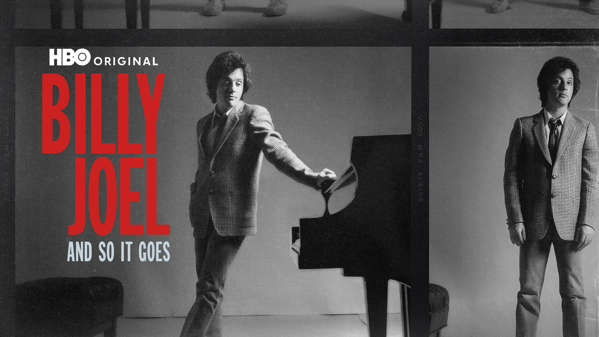
The excellent two-part documentary chronicles the ups, downs, and of course there’s plenty of Joel’s music, because it’s always about the music and where it took Joel and those of us who grew up with him. It’s more than a trip down memory lane, the four hours is a well spent vacation back in time. I highly recommend this.
It’s interesting, and I dare say rewarding, that two of the music artists I grew up with, Joel and Bruce Springsteen, have had excellent recent documentaries about their careers. As they and I both hit later decades of life it’s a good way to look back and dredge up memories often buried in the hurly burly of the current day to day. I consider these documentaries on HBO (or whatever it calls itself this week) gifts well received.
For those interested further, there’s a playlist of the music from And So It Goes available on all the usual music streaming services. If your library, like mine, is filled with the entire catalog of Joel’s music, it’s worth adding just to track and hear how some of his songs have matured, yet not lost any of relevance, and even gained both relevance and resonance with time.
You can find more of my writings on a variety of topics on Medium at this link, including in the publications Ellemeno and Rome. I can also be found on social media under my name as above.
-
Rest in Peace, Ryne Sandberg
Watcing the Chicago Cubs lose to the Brewers last night when word came over the broadcast that Ryne Sandberg, the Cubs superstar second baseman had died, succumbing to cancer.

Hit me harder than I would have thought imaginable. Not sure exactly why, but guessing it’s because Sandberg represented an era in my life when life itself seemed simpler, more sane, and as true as a line drive cleanly smacked to the outfiled.
I’m probably deluding myself with those thoughts, but that’s how it struck me last night.
Sandberg played baseball. He was a great at what he did. By all accounts he was genuinely kind to others. That’s all we should ever aspire to because in the end that’s all that matters.
And it is more than enough.
You can find more of my writings on a variety of topics on Medium at this link, including in the publications Ellemeno and Rome. I can also be found on social media under my name as above.
-
For No Particluar Reason
Just because. They were there. I was there. I had a camera. Goats.

Skip to content

Life on the Wicked Stage: Act 3
Musings on life, the theatre, technology, culture and the occasional emu sighting
 Life on the Wicked Stage: Act 3